
Using Big Data and Big Ideas to Improve
Using Big Data and Big Ideas to Improve the Health Care System One condition at a time Paul C. Hebert MD MHSc FCAHS Professor and Physician-in-Chief Research Centre, Centre Hospitalier Universite de Montreal
Some clinical context • At 3 am, you are asked to see an 85 year old man from a nursing home who fell from bed, has a low blood pressure and has difficulty breathing…No additional information • On initial inspection, blood pressure is 60/40, heart rate 130, and respiratory rate 35. He is semi-conscious, and screaming incoherently. Looks very thin and emaciated • He has bruises over his left eye, right flank and side of left leg. Leg is turned outward
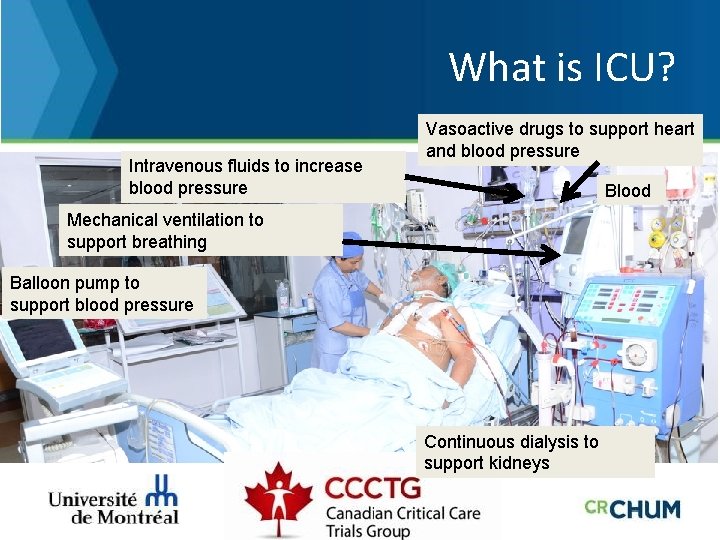
What is ICU? Intravenous fluids to increase blood pressure Vasoactive drugs to support heart and blood pressure Blood Mechanical ventilation to support breathing Balloon pump to support blood pressure Continuous dialysis to support kidneys
ICU by the numbers • • Average of patients: 65 years and 60% men Consumes 10 to 12% of health care budget $2000 per day on average 20% to 30% mortality rate 30% of all hospital deaths Age at admission rapidly increasing Less than 50% of interventions are evidence-based
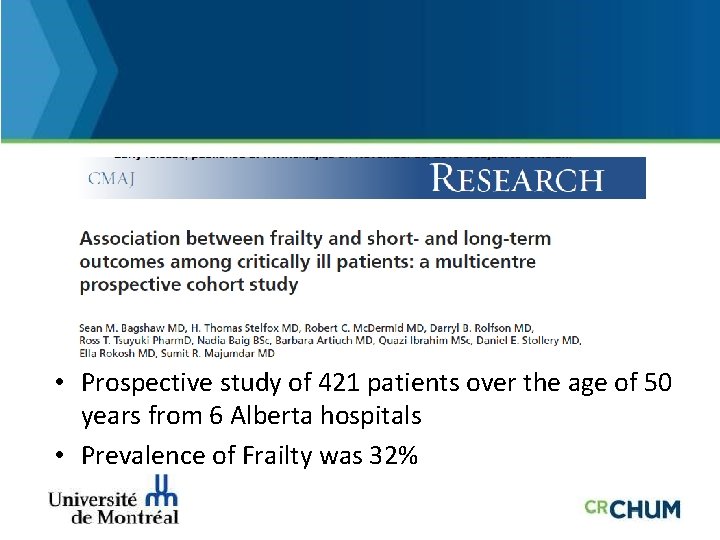
• Prospective study of 421 patients over the age of 50 years from 6 Alberta hospitals • Prevalence of Frailty was 32%
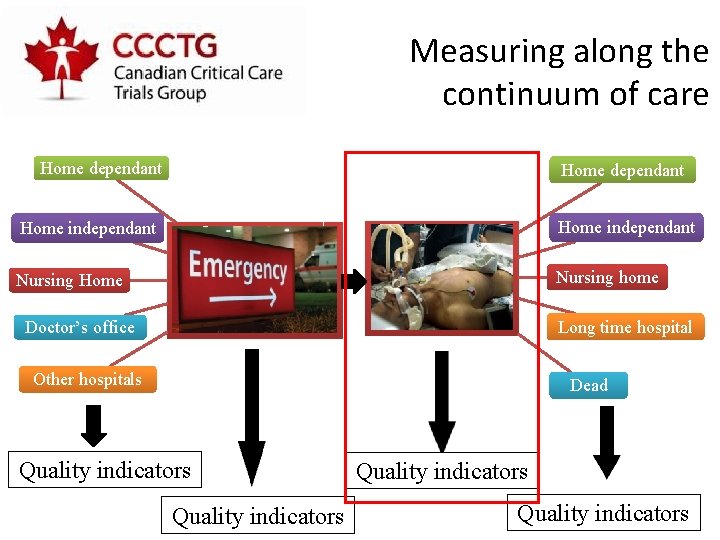
Measuring along the continuum of care Home dependant Home independant Nursing Home Nursing home Long time hospital Doctor’s office Other hospitals Dead Quality indicators
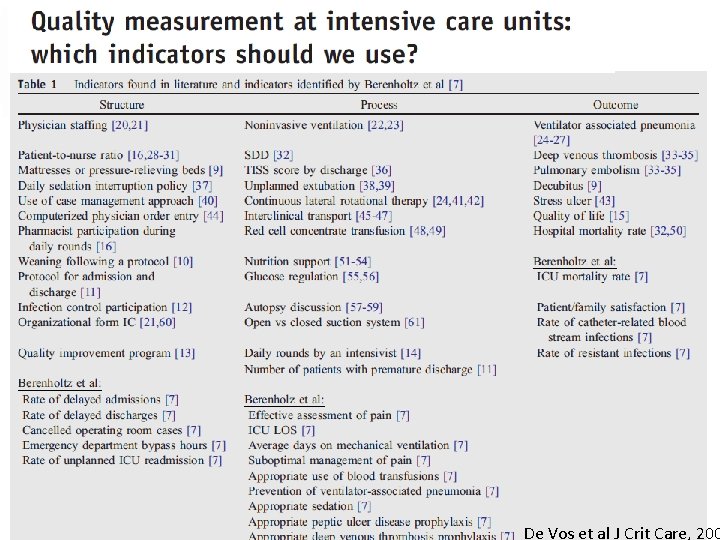
De Vos et al J Crit Care, 200
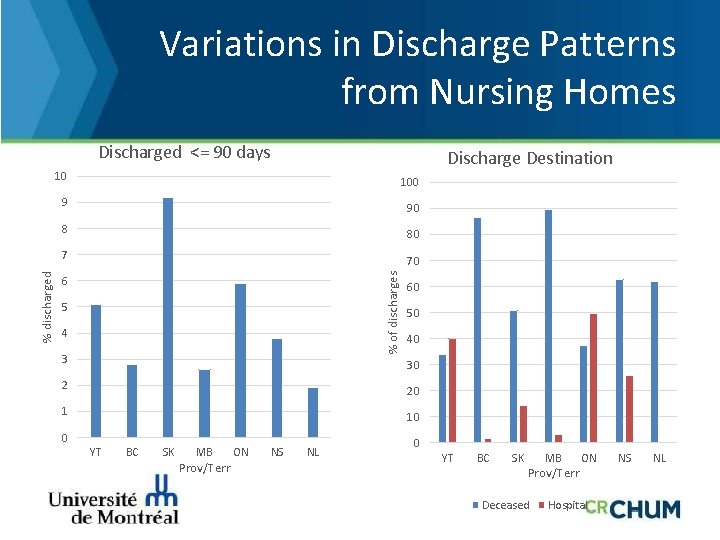
Variations in Discharge Patterns from Nursing Homes Discharged <= 90 days Discharge Destination 100 9 90 8 80 7 70 % of discharges % discharged 10 6 5 4 3 60 50 40 30 2 20 1 10 0 YT BC SK MB Prov/Terr ON NS NL 0 YT BC SK MB Prov/Terr Deceased ON Hospital NS NL
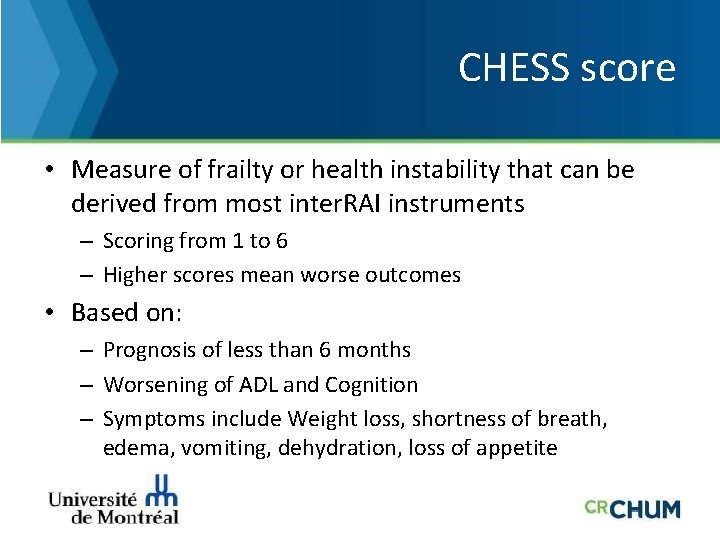
CHESS score • Measure of frailty or health instability that can be derived from most inter. RAI instruments – Scoring from 1 to 6 – Higher scores mean worse outcomes • Based on: – Prognosis of less than 6 months – Worsening of ADL and Cognition – Symptoms include Weight loss, shortness of breath, edema, vomiting, dehydration, loss of appetite
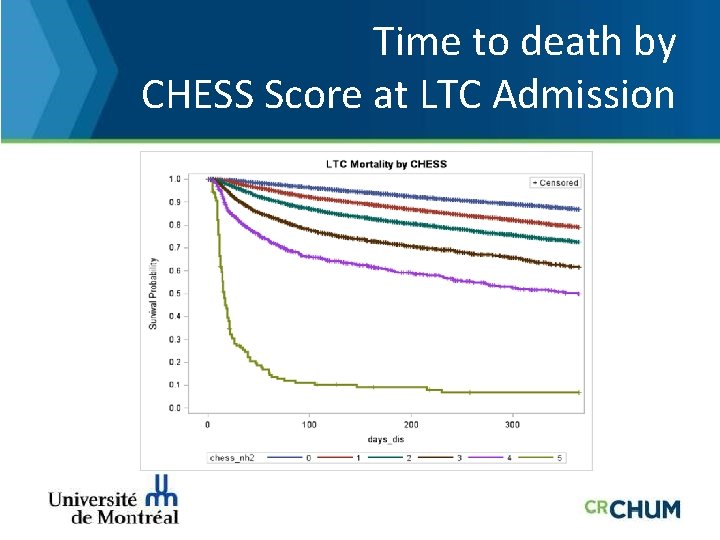
Time to death by CHESS Score at LTC Admission
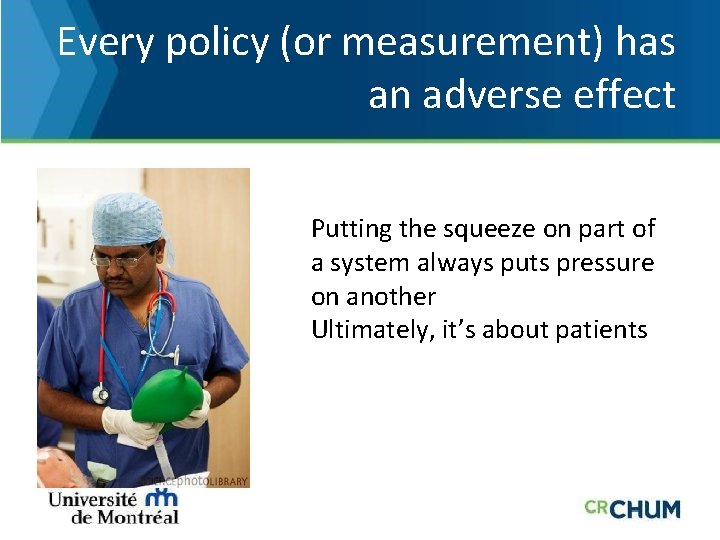
Every policy (or measurement) has an adverse effect Putting the squeeze on part of a system always puts pressure on another Ultimately, it’s about patients
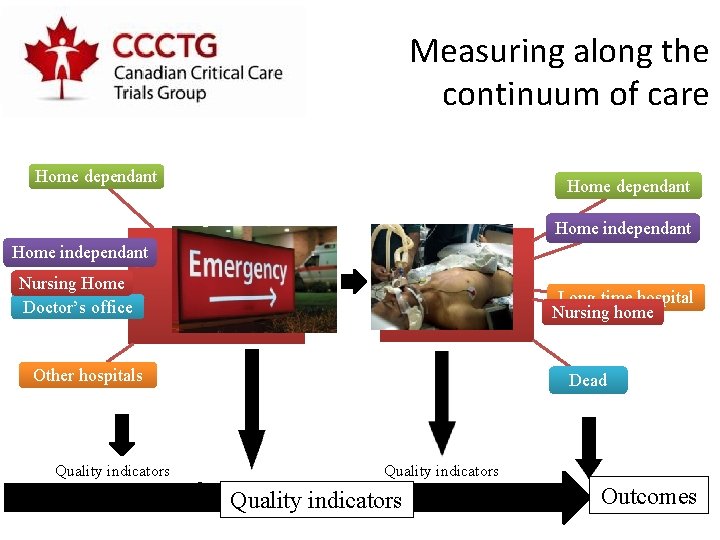
Measuring along the continuum of care Home dependant Home independant Nursing Home Doctor’s office Long time hospital Nursing home Other hospitals Quality indicators Dead Quality indicators Outcomes
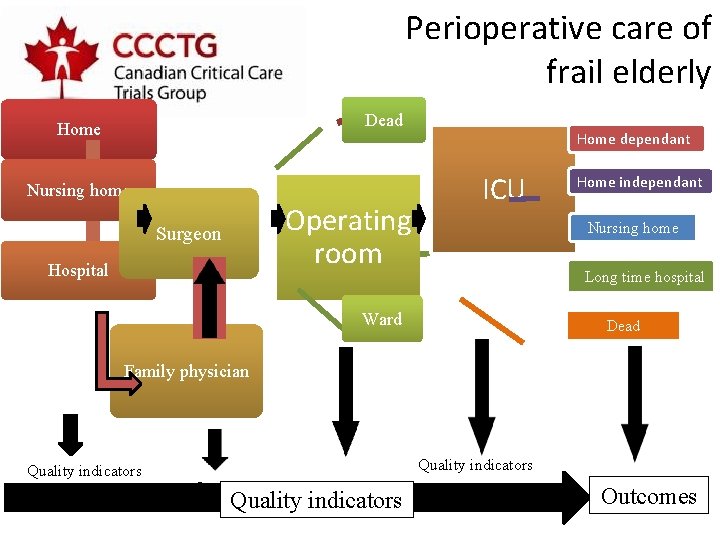
Perioperative care of frail elderly Dead Home dependant Nursing home Operating room Surgeon Hospital ICU Ward Home independant Nursinghome Nursing Long time hospital Dead Family physician Quality indicators Quality indicators Outcomes
Measuring care for elderly persons needing care ü Common language: consistent terminology across instruments ü Common conceptual basis triggers for care plans ü Common clinical emphasis: functional assessment rather than diagnosis ü Common data collection methods ü Common core elements: some domains in all instruments such as depression, cognition ü Common care planning protocols
Why system and institution measures matter? • Need measures along a continuum matter most in persons with complex needs • Frail Elderly • End of life care • Persons with mental illness • Ensuring people with comparable needs receive services in different sectors of the health care system • Improve transitions of care • Improve care planning • Dealing with multiple providers in a variety of settings
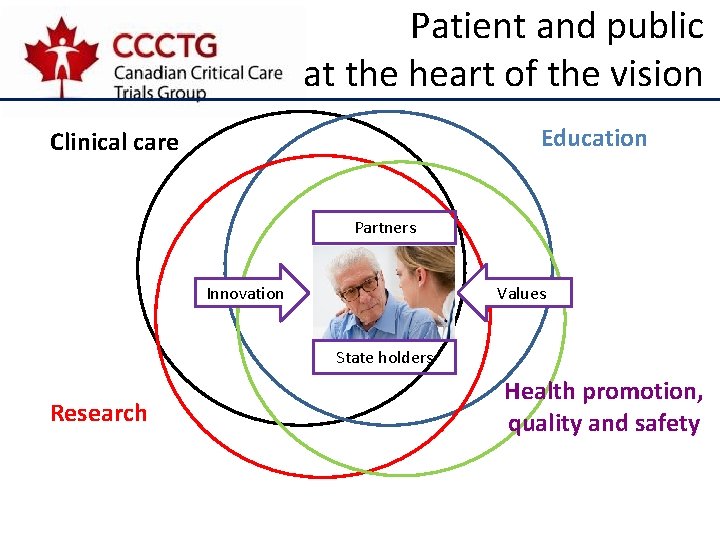
Patient and public at the heart of the vision Education Clinical care Partners Innovation Values State holders Research Health promotion, quality and safety
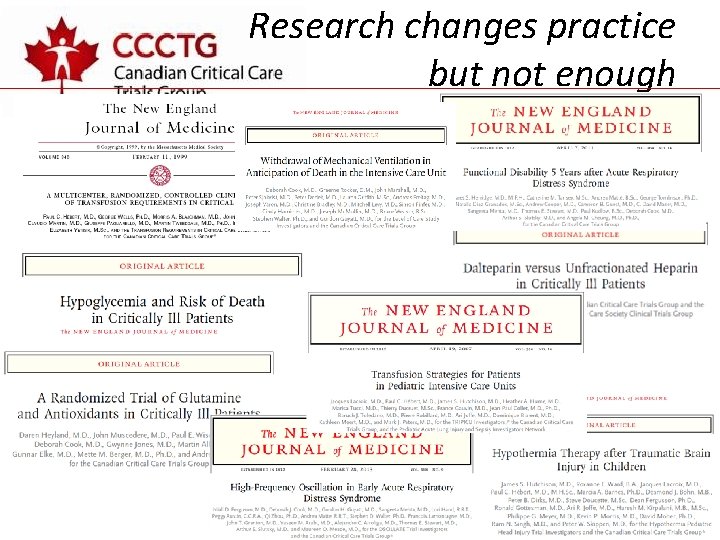
Research changes practice but not enough www. ccctg. ca 19
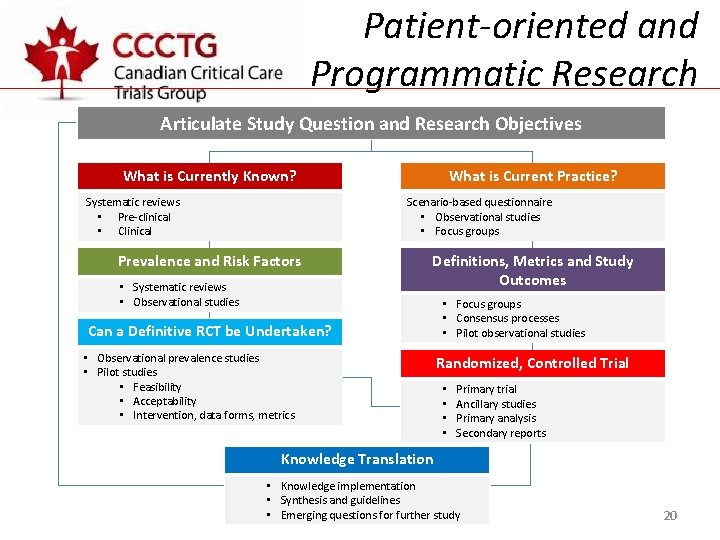
Patient-oriented and Programmatic Research Articulate Study Question and Research Objectives What is Currently Known? Systematic reviews • Pre-clinical • Clinical What is Current Practice? Scenario-based questionnaire • Observational studies • Focus groups Prevalence and Risk Factors • Systematic reviews • Observational studies Definitions, Metrics and Study Outcomes Can a Definitive RCT be Undertaken? • Observational prevalence studies • Pilot studies • Feasibility • Acceptability • Intervention, data forms, metrics • Focus groups • Consensus processes • Pilot observational studies Randomized, Controlled Trial • • Primary trial Ancillary studies Primary analysis Secondary reports Knowledge Translation • Knowledge implementation • Synthesis and guidelines • Emerging questions for further study www. ccctg. ca 20
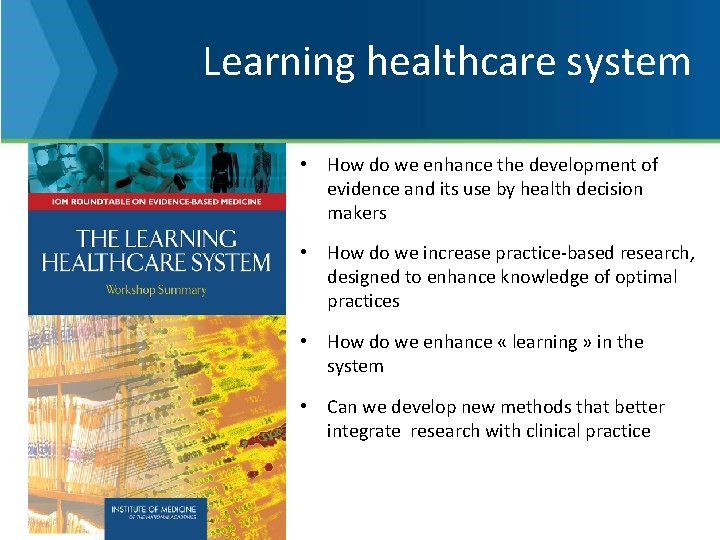
Learning healthcare system • How do we enhance the development of evidence and its use by health decision makers • How do we increase practice-based research, designed to enhance knowledge of optimal practices • How do we enhance « learning » in the system • Can we develop new methods that better integrate research with clinical practice
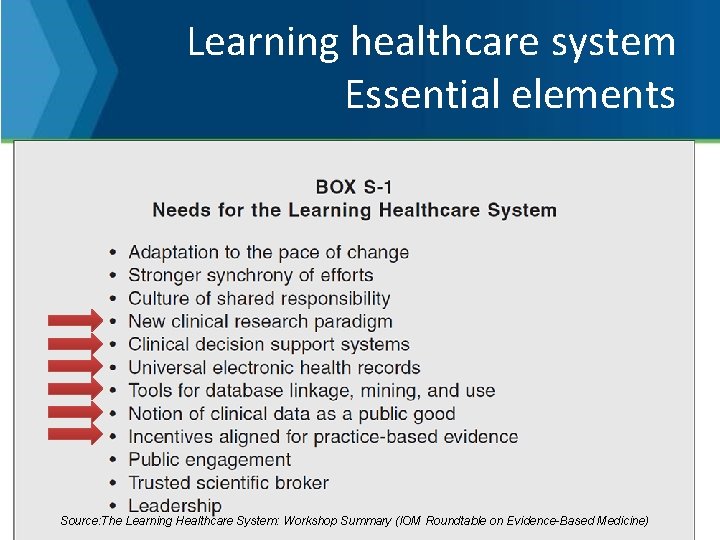
Learning healthcare system Essential elements Source: The Learning Healthcare System: Workshop Summary (IOM Roundtable on Evidence-Based Medicine)
Next steps • Ensure that we introduce inter. RAI: in hospitals and in Quebec • For the frail elderly, develop information infrastructure around networks or themes not only institutions • Adopt a common language using inter. RAI • Integrate research/evaluation into care
Integrating high quality evaluation into care • Imagine a day when every patient is enrolled in a clinical evaluation • A perpetual clinical trial where every patient will be compared to another using adaptive designs
- Slides: 24