
Using Behavioral Systems Analysis to Improve the Clinical
Using Behavioral Systems Analysis to Improve the Clinical, Administrative, and Supervision Functions in ABA Service Organizations KYABA 2016 Heather M. Mc. Gee, Ph. D.
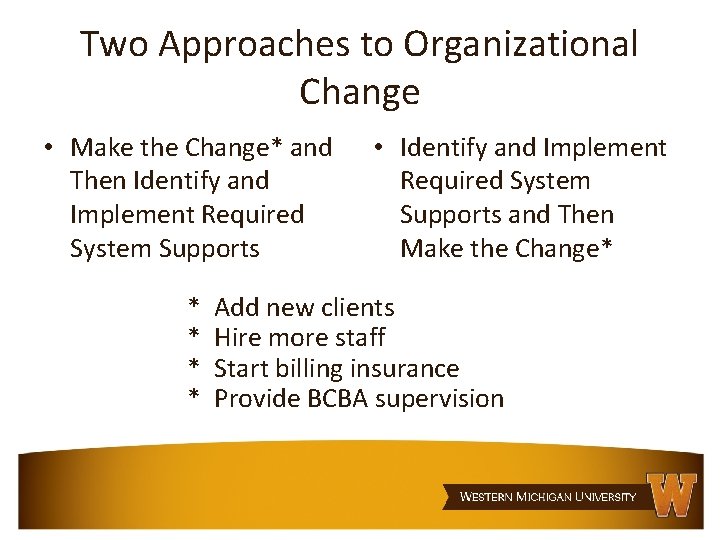
Two Approaches to Organizational Change • Make the Change* and Then Identify and Implement Required System Supports * * Unit name • Identify and Implement Required System Supports and Then Make the Change* Add new clients Hire more staff Start billing insurance Provide BCBA supervision
Choose Your Own Adventure * Add new clients * Hire more staff * Start billing insurance * Provide BCBA supervision Unit name
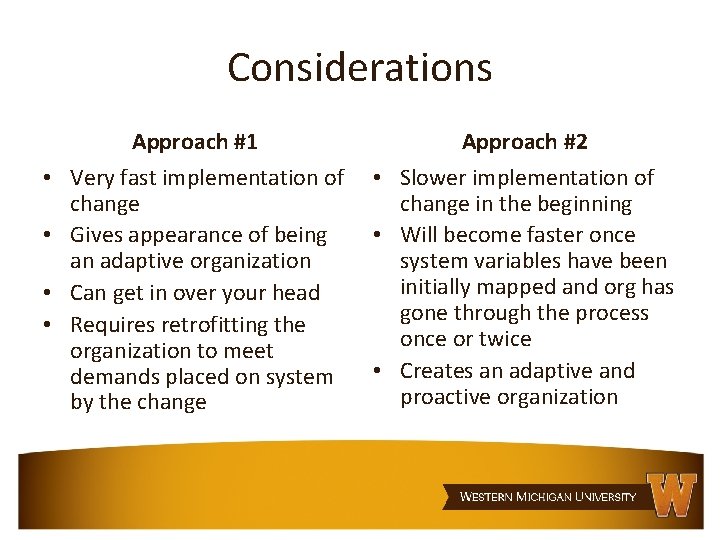
Considerations Approach #1 Approach #2 • Very fast implementation of change • Gives appearance of being an adaptive organization • Can get in over your head • Requires retrofitting the organization to meet demands placed on system by the change • Slower implementation of change in the beginning • Will become faster once system variables have been initially mapped and org has gone through the process once or twice • Creates an adaptive and proactive organization Unit name
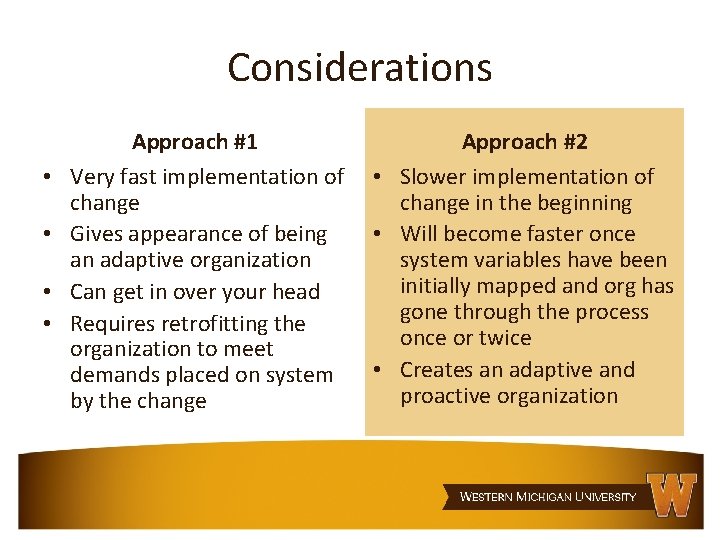
Considerations • • Approach #1 Very fast implementation of change Gives appearance of being an adaptive organization Can get in over your head Requires retrofitting the organization to meet demands placed on system by the change Unit name Approach #2 • Slower implementation of change in the beginning • Will become faster once system variables have been initially mapped and org has gone through the process once or twice • Creates an adaptive and proactive organization
Behavioral Systems Analysis (BSA) • Recognizing an organization as an adaptive system • Understanding that a change in one part of a system affects other parts of the system • Use BSA Tools to assess impact of change on organizational system • We’ll go through one tool (Organizational System Mapping) during this presentation and I will make suggestions at the end for other tools and how to use them Unit name
Define the Change • Our starting point, this is the change in the system that we are considering • Need to identify HOW this change impacts the parts of the system • Note that we are saying HOW and not WHETHER • BSA assumes a change in one part of system affects other parts of system Unit name
Define the Change • Add new clients: We would like to grow our client base by __ number of individuals over __ amount of time Unit name
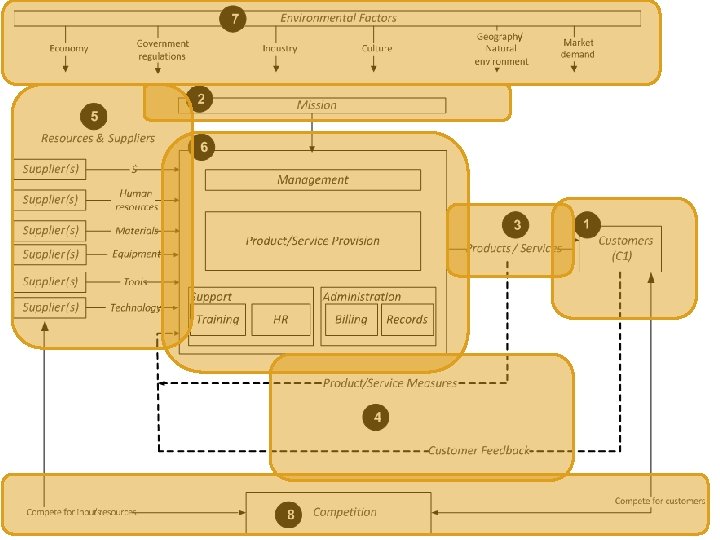
Analyze Impact on System • Once we have defined the change, we can begin analyzing how the change will impact the system • This allows us to determine whether the current system supports the change • Shows us where system changes need to occur in order to support the change Unit name
10
1. Clients • Where would these clients come from? • Would these clients fall into the same general demographics as our current clients? • If not, would this impact our service provision? Unit name
2. Mission What is our mission? Why do we exist? • Does growing our client base align with our mission? • Do we have a strategic plan and has it been updated in the last 3 -5 years? • Is client growth part of our strategic plan? Unit name
3. Products/Services • How would new clients impact our product and service provision? Add, eliminate, or alter services? • Would quality of service to our current clients be impacted? • Would quality of service to the new clients be to our standards of excellence given our current capacity? Unit name
4. Internal Standards & External Feedback • What are our current internal standards for client service? • How would these be impacted? • How satisfied are our current consumers and their families? • Would adding clients have a positive or negative impact on new or current clients? Unit name
5. Resources/Suppliers • Do we have the resources to grow our client base? • • Labor Technology Equipment & Materials Financial • Can we reasonably expect (afford) to increase resources in order to increase capacity? Unit name
5. Resources/Suppliers • If growing our client base requires an increase in resources, can suppliers support this? • Can we get more qualified staff? Where would they come from? • Would we need to utilize new technologies (new behavior analytic tools and techniques, electronic technologies, other)? Do we have or can we get that technology? Will current or new staff be able to effectively utilize the technology? Would it require training? Unit name
5. Resources/Suppliers • If growing our client base requires an increase in resources, can suppliers support this? • Can we afford to procure more materials and/or equipment? • Is more funding available? How would we secure it? Unit name
6. Organizational Functions • What would be the effect on the various functions of the organization? – Leadership/Supervision – Product/Service Provision – Support Functions – Administration Functions Unit name
6. Organizational Functions – Leadership/Supervision • Are organizational leaders prepared to make required systems changes? • Will strategy, policies, or procedures be affected? • How will leaders communicate changes? • Will new clients require more supervision of staff? • Are supervisors able to increase supervision load? Will quality of supervision suffer? Unit name
6. Organizational Functions – Product/Service Provision • Will new clients mean increased workload for staff? • What is the optimal staff to client ratio? • Will taking on new clients push us past this optimal ratio? • Do we have the physical space necessary to allow for quality service provision? Unit name
6. Organizational Functions – Support Functions • If new clients means hiring new staff, will it be possible to provide instructionally sound, performance-based training? Who will train? • How will the allocation of resources during training impact client service (both current and new clients)? Unit name
6. Organizational Functions – Support Functions • Will employee satisfaction and/or workplace morale be impacted? • Could employee retention be impacted? • Is the selection and placement process sound? Unit name
6. Organizational Functions – Administration Functions • Do intake, billing, and records keeping have the human and technology capacity to handle new/more client records? Unit name
7. Environmental Factors • How will external factors impact the organization if we increase the number of individuals we serve? • • • Regional Economy Funding Opportunities Regulations ACA/Insurance Licensure Certification Unit name
8. Competitive Advantages • Considering the impact on all other components of the system, would this change increase or decrease our competitive advantages? Unit name
What if we’ve ALREADY made a big change? Unit name
Are You Experiencing Negative Impact in One or More of These Areas? • • Clients Mission Products/Services Internal Standards/External Feedback • Resources/Suppliers Unit name • Organizational Functions – Leadership/Supervision – Product/Service Provision – Support Functions – Administration Functions • Environmental Factors • Competitive Advantage
1. Clients • Can we reduce the number of clients we’re serving right now or over time? • Can we (right now or over time) take on different types of clients to better meet our capacity constraints? Unit name
2. Mission • Does our mission need to be adjusted to match our current and future trajectory? Unit name
3. Products/Services • Can we add, eliminate, or alter services to reduce strain on the system? Unit name
4. Internal Standards & External Feedback • Do we need to adjust our internal standards? Are we ok with doing this? • Are there things we can do to bump consumer satisfaction that won’t put additional strain on the system? Unit name
5. Resources/Suppliers • Can we bring in more resources? • • Labor Technology Equipment & Materials Financial • Can we reallocate current resources to ease strain on the system? Unit name
6. Organizational Functions – Leadership/Supervision • What are our leaders doing to address the situation? • Should we bring in outside help (OBMers)? • What are we learning from this experience that we can apply in the future so we don’t keep making decisions that put undue strain on our system? Unit name
6. Organizational Functions – Product/Service Provision • Have we analyzed our processes? – Can we make our processes better? More efficient? – Can we improve cross-functional relationships to improve service provision? – What alterations to service provision, training, and supervision can we make to ease the strain? • Can we reassess job roles and responsibilities? Unit name
6. Organizational Functions – Support Functions • Are there changes we can make to our training and other support systems, using the resources we have? • Can we afford to bring in more support staff to help ease the strain? • Can we send our current staff to training, if we are experiencing a skills deficit issue? Unit name
6. Organizational Functions – Administration Functions • Are there changes we can make to our administrative systems, using the resources we have? • Can we afford to bring in more administrative staff to help ease the strain? • Can we send our current staff to training, if we are experiencing a skills deficit issue? Unit name
7. Environmental Factors • How can we better use environmental factors to our benefit? • Regional Economy • Funding Opportunities • Regulations • ACA/Insurance • Licensure • Certification • Can we put someone in charge of monitoring these variables and designing system responses to them? Unit name
8. Competitive Advantages • What can we learn from our competitors? • What are they doing better than us? • Do we still have competitive advantages? How do we leverage them? Unit name
The Big Take-Away Chaotic Growth Controlled Growth • Bring in clients now, figure it out later • Capacity concerns • Potential negative impact on quality of service • Potential negative impact on employee training and satisfaction • Turnover, client dissatisfaction, bad word of mouth, loss of clients • Understand the impact • Identify needed changes in advance • You don’t exist without your clients and employees, so the impact on these two groups is of critical importance Unit name
Questions or Comments? For more information: heather. mcgee@wmich. edu
- Slides: 40