
Using Assessment and Differentiation to Help All Learners
- Slides: 22
Using Assessment and Differentiation to Help All Learners Grow PRESENTED BY AMY FITCHETT
What is differentiation? �The process of looking at individual students needs and readiness in learning a particular skill, concept, standard, or process and modifying instruction to best meet those needs so that all students are able to grasp the concepts/skills/standards.
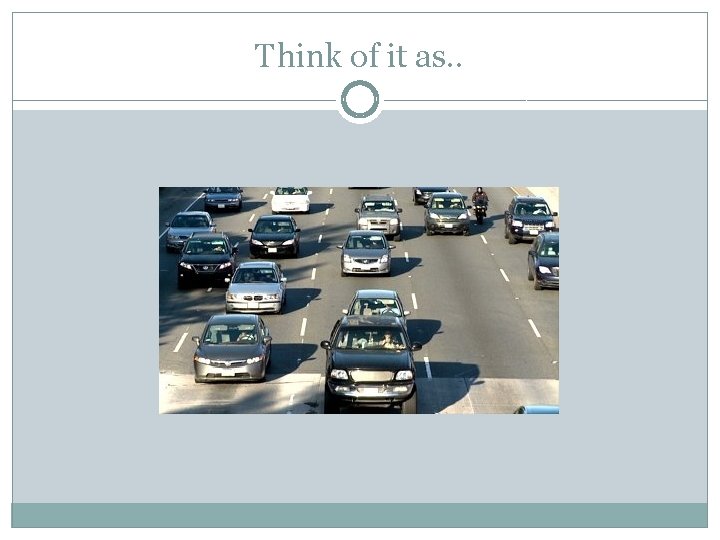
Think of it as. .
Why differentiate? �It works Achievement is higher on post tests growth for all students-gifted/students with learning challenges Engagement increases Student attitudes increase
Ways to differentiate �Content- what the students learn �Process-how the students learn �Product- the end result of student learning �Learning Environment- classroom operations and tone- the “mood” �Differentiated instruction includes respectful tasks, flexible grouping, and ongoing assessment
How does this work? �Big picture- In her own words- Carole Ann Tomlinson explains it
Assessment �Must be reliable and valid �Should be aligned to specific goals or standards �May be formative or summative in nature �Assessment should drive what will be taught, when it will be taught, how it will be taught, and grouping
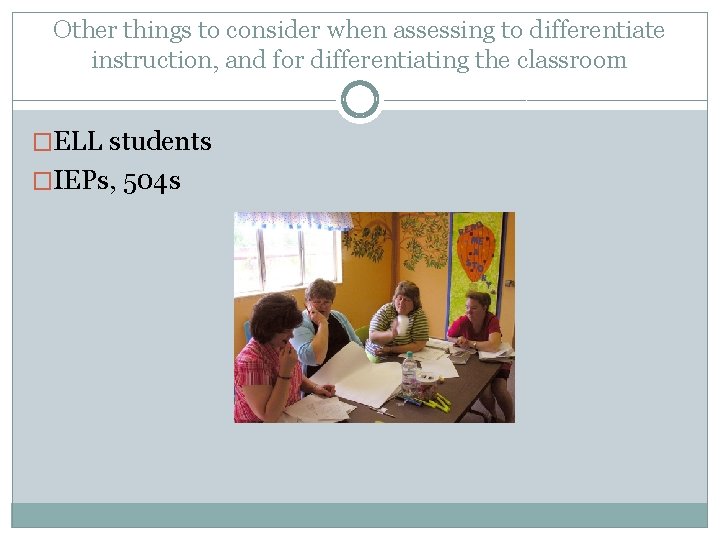
Other things to consider when assessing to differentiate instruction, and for differentiating the classroom �ELL students �IEPs, 504 s
Begin With the End in Mind �Designing assessments to give you the correct information starts with looking closely at the standards. �“The main function of assessment is to improve the quality of the instructional decisions that are made for student learning” Moon (2005)
Summative Assessment *Used to determine the effectiveness of the instruction and students’ levels of mastery *Important because it can give teachers critical feedback *The assessment MUST align with the instructional unit’s learning goals- if not it can lead to “fluff” or students not being able to fairly show what they know
Summative Assessments �Occurs after instruction has ended �Not just paper and pencil! Could be performance assessments or portfolios �Check this out: http: //www. arpisd. org/default/District/Inservice/m ultiple. htm �Can be used to pre-assess for next unit of study…
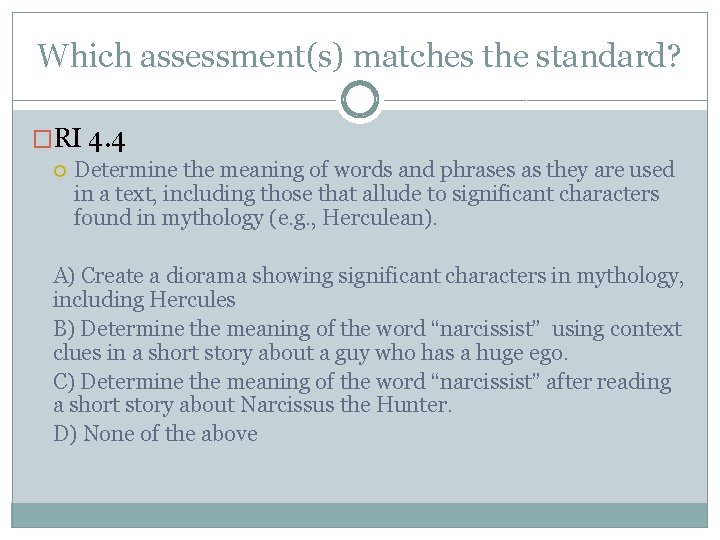
Which assessment(s) matches the standard? �RI 4. 4 Determine the meaning of words and phrases as they are used in a text, including those that allude to significant characters found in mythology (e. g. , Herculean). A) Create a diorama showing significant characters in mythology, including Hercules B) Determine the meaning of the word “narcissist” using context clues in a short story about a guy who has a huge ego. C) Determine the meaning of the word “narcissist” after reading a short story about Narcissus the Hunter. D) None of the above
Pre-assessment �Purpose- to determine student readiness, prior knowledge, interests, learning styles �Examples: pre-test, learning style inventory, interest survey, anticipation guides, kwl, abc chart, journals
Differentiation Options �Content �Process �Product �Learning Environment �Flexible Groupings
What is flexible grouping? �Students may work with a partner, in a small cooperative group, a teacher-led group, or even whole group (gasp). �The grouping is based on students’ interests or needs. �Groups are formed AND dissolved as needs change to allow for maximum flexibility
How do I form groups/pairs/teams Should be based on data- gathered through assessments and observations Can be by ability OR interest OR skill OR concept OR ability to work together OR you get the idea…. . One strategy for grouping in pairs based on data:
Strategies to differentiate instruction �Tiered instruction �Menus �Cubing it �Tic Tac Toe boards �Must dos/May dos �Learning paths �Technology
Formative Assessment �Let’s you know what they get and don’t get! �https: //nsformativeassessmentblog. files. wordpress. c om/2014/05/60 formativeassessment. pdf
Differentiation Options �Content �Process �Product �Learning Environment �Grouping
Summative Time �All of your students will participate in this, but you can always provide choices �Use the data to reflect and modify unit of study for next year �Opportunity for your students to reflect and provide feedback �Get ready for the next unit of study…. .
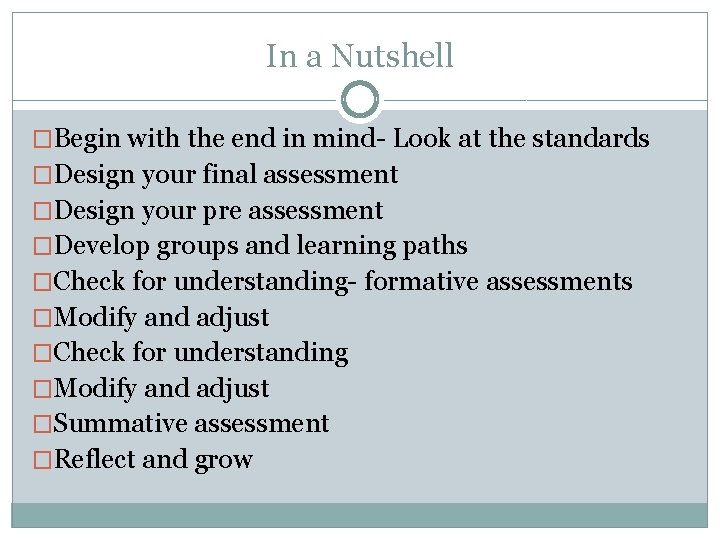
In a Nutshell �Begin with the end in mind- Look at the standards �Design your final assessment �Design your pre assessment �Develop groups and learning paths �Check for understanding- formative assessments �Modify and adjust �Check for understanding �Modify and adjust �Summative assessment �Reflect and grow
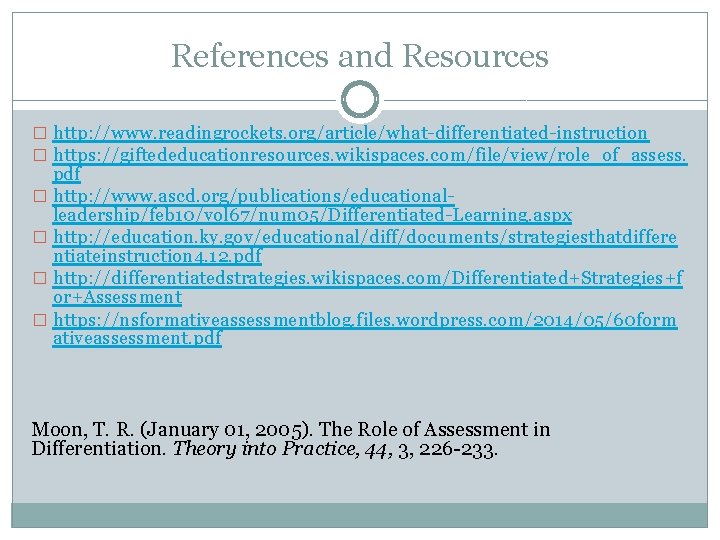
References and Resources � http: //www. readingrockets. org/article/what-differentiated-instruction � https: //giftededucationresources. wikispaces. com/file/view/role_of_assess. pdf � http: //www. ascd. org/publications/educationalleadership/feb 10/vol 67/num 05/Differentiated-Learning. aspx � http: //education. ky. gov/educational/diff/documents/strategiesthatdiffere ntiateinstruction 4. 12. pdf � http: //differentiatedstrategies. wikispaces. com/Differentiated+Strategies+f or+Assessment � https: //nsformativeassessmentblog. files. wordpress. com/2014/05/60 form ativeassessment. pdf Moon, T. R. (January 01, 2005). The Role of Assessment in Differentiation. Theory into Practice, 44, 3, 226 -233.