
Using ADDIE and Systems Thinking as the Framework
- Slides: 24
Using ADDIE and Systems Thinking as the Framework for Developing a MOOC A Case Study Rebecca A. Croxton, MLIS Anthony S. Chow, Ph. D University of North Carolina at Greensboro
Session Overview • Project Overview • Research Questions • Contemporary Issues Surrounding MOOCs • User Centered Design & ADDIE • Methods • Results • Q&A
Project Overview • A mid-sized university in the southeastern US wished to test out the MOOC space. • Two pilot courses identified by the university: Ø Web Design & Usability Ø The Soul & Search for Meaning • Web Design & Usability – Developed using ADDIE Framework
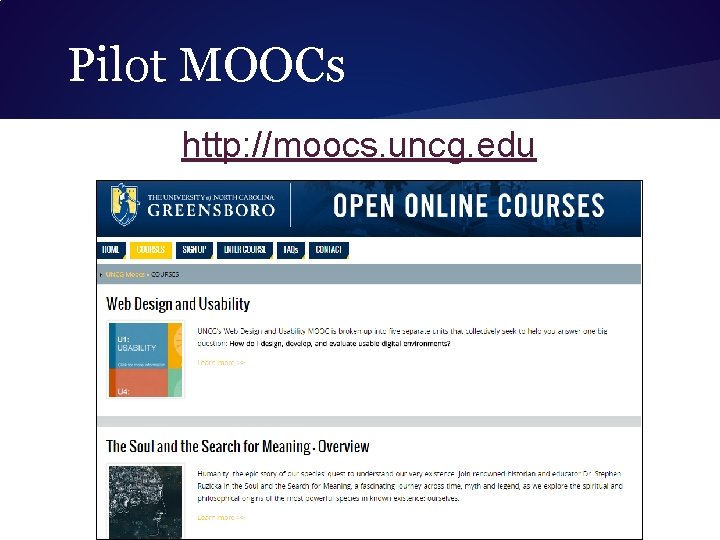
Pilot MOOCs http: //moocs. uncg. edu h
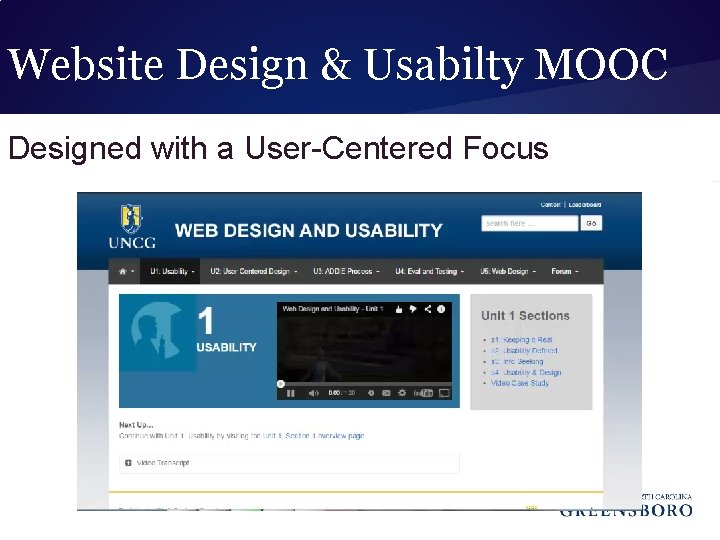
Website Design & Usabilty MOOC Designed with a User-Centered Focus
Research Questions RQ 1: What is the process for designing and developing a MOOC? RQ 2: What impact did using the ADDIE model have on MOOC design? RQ 3: What is the relationship between instructional design and MOOCs?
Contemporary Issues ü Low completion rates overall (5 -16%) ü Concerns regarding student engagement ü Concerns regarding quality of education MOOCs can offer. ü Limited opportunities for instructor connection and student interaction.
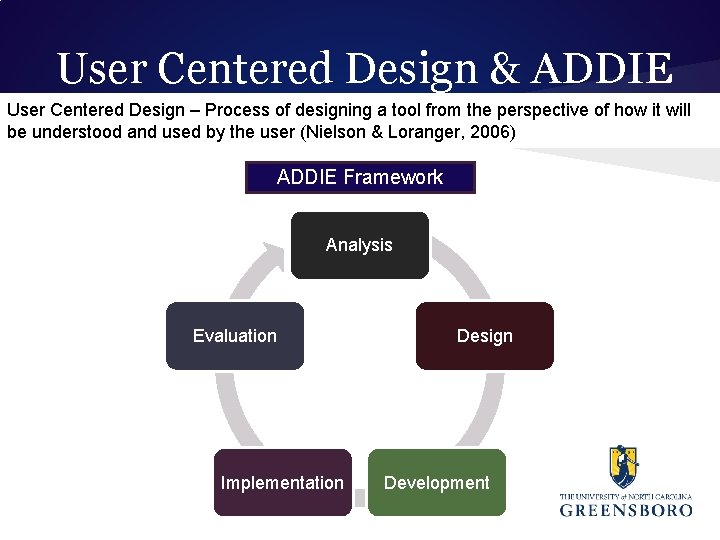
User Centered Design & ADDIE User Centered Design – Process of designing a tool from the perspective of how it will be understood and used by the user (Nielson & Loranger, 2006) ADDIE Framework Analysis Evaluation Implementation Design Development
Methods Ø Case Study Approach – Instructor & Co-Author of paper – closely followed through MOOC design & development Ø MOOC designed to teach web design & usability Ø Public, mid-sized regional university in southeastern United States Ø Interviews – administrators, design team, user group, and student (course completer) Ø Instructor added his own perspectives about project
RQ 1: Process for Designing & Developing a MOOC 1. Full design team assembled at onset of project § § § Project Manager Instructional Designer Graphic Designer Video Production Team Faculty Member 2. Lead Faculty Member – Ensured ADDIE was followed throughout 3. Financial Resources – University provided $13, 000 for project ($3500 for faculty compensation)
RQ 1: Designing & Developing a MOOC with ADDIE “A” is for Analysis University leaders, Chancellor, Production Team, & Lead Faculty Member identified goals of MOOC: 1. Teach, free of charge, how to design a website and basic usability concepts & methods 2. Publicize and brand university 3. Serve as test case for instructional strategies Target Audience: Young, Male, Tech-Savvy Professionals
RQ 1: Designing & Developing a MOOC with ADDIE “D” is for Design • Identify Course Objectives • Create Timeline • Determine Basic Course Architecture • • 5 asynchronous units (2 -5 sections each) Variety of Presentation Modes • Video introductions, unit reviews (MC questions, online discussion, hands on activities, readings, video case studies
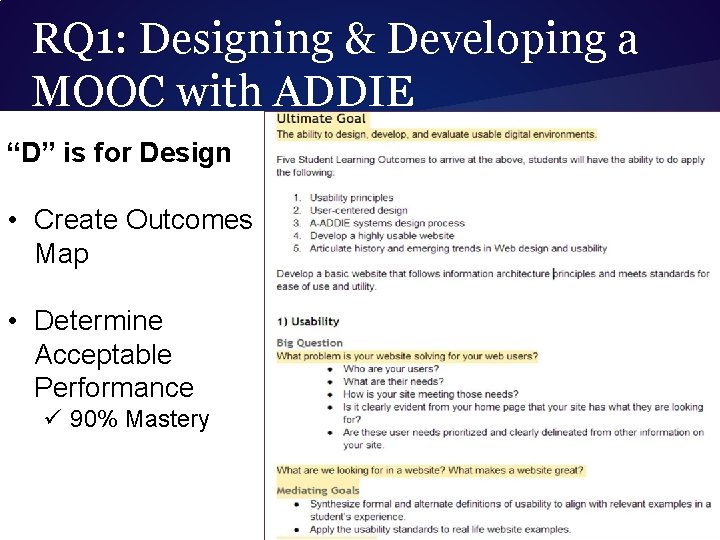
RQ 1: Designing & Developing a MOOC with ADDIE “D” is for Design • Create Outcomes Map • Determine Acceptable Performance ü 90% Mastery
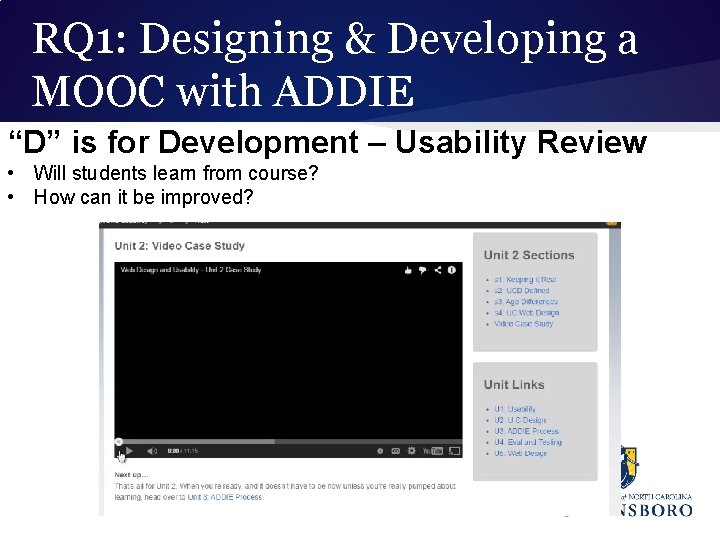
RQ 1: Designing & Developing a MOOC with ADDIE “D” is for Development – Usability Review • Will students learn from course? • How can it be improved?
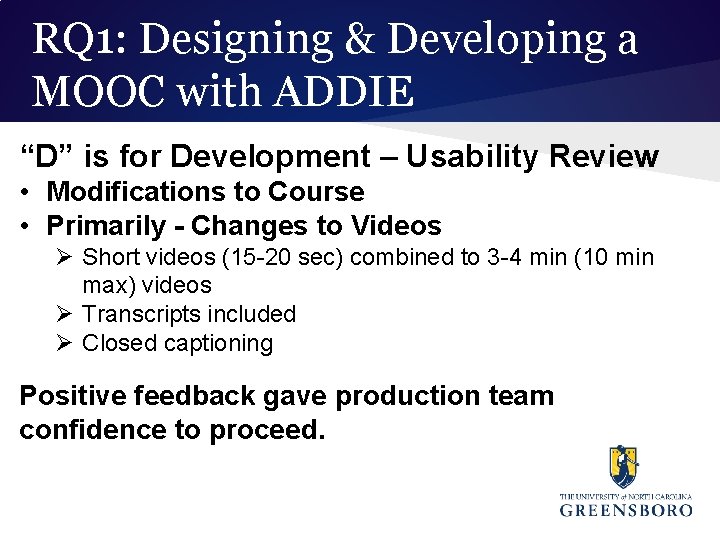
RQ 1: Designing & Developing a MOOC with ADDIE “D” is for Development – Usability Review • Modifications to Course • Primarily - Changes to Videos Ø Short videos (15 -20 sec) combined to 3 -4 min (10 min max) videos Ø Transcripts included Ø Closed captioning Positive feedback gave production team confidence to proceed.
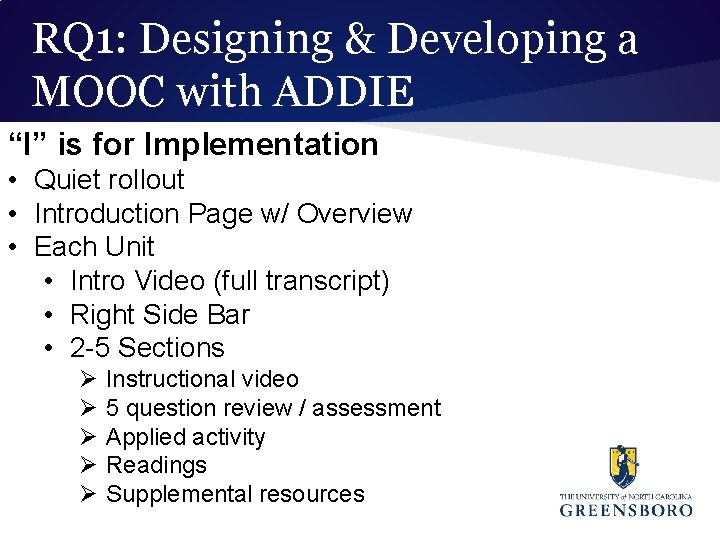
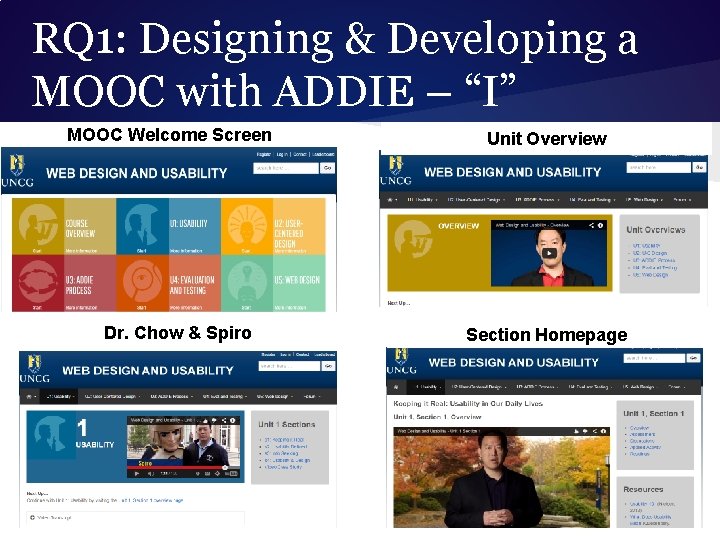
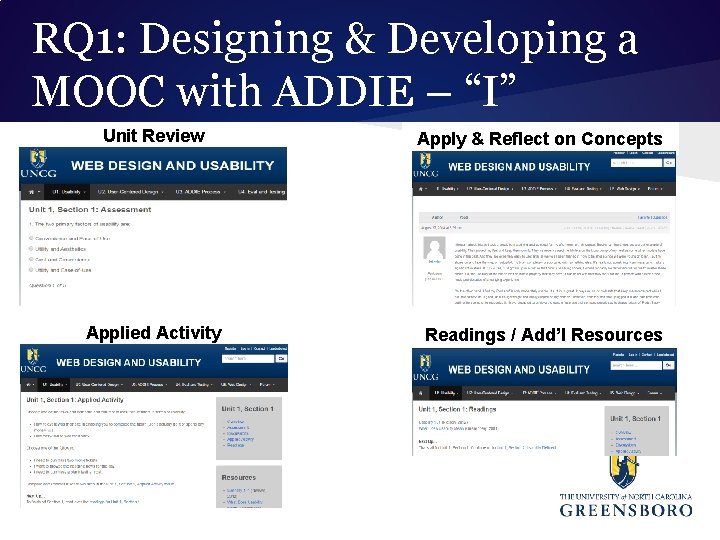
RQ 1: Designing & Developing a MOOC with ADDIE “I” is for Implementation • Quiet rollout • Introduction Page w/ Overview • Each Unit • Intro Video (full transcript) • Right Side Bar • 2 -5 Sections Ø Ø Ø Instructional video 5 question review / assessment Applied activity Readings Supplemental resources
RQ 1: Designing & Developing a MOOC with ADDIE – “I” MOOC Welcome Screen Dr. Chow & Spiro Unit Overview Section Homepage
RQ 1: Designing & Developing a MOOC with ADDIE – “I” Unit Review Apply & Reflect on Concepts Applied Activity Readings / Add’l Resources
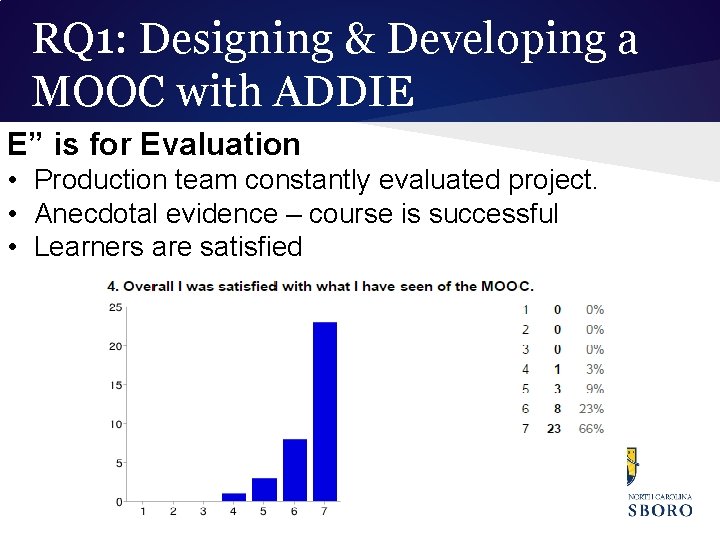
RQ 1: Designing & Developing a MOOC with ADDIE E” is for Evaluation • Production team constantly evaluated project. • Anecdotal evidence – course is successful • Learners are satisfied
RQ 2: Impact of ADDIE on MOOC Design The best thing about a model is that it gives you a process by which to structure what is otherwise a very tiring and complex process (Chow). ADDIE helped to: 1. Ensure goals are clearly defined 2. Create and timeline and outline needs 3. Keep the team to a timeline 4. Encourage feedback after initial implementation 5. Create environment for periodic feedback and ongoing refinement
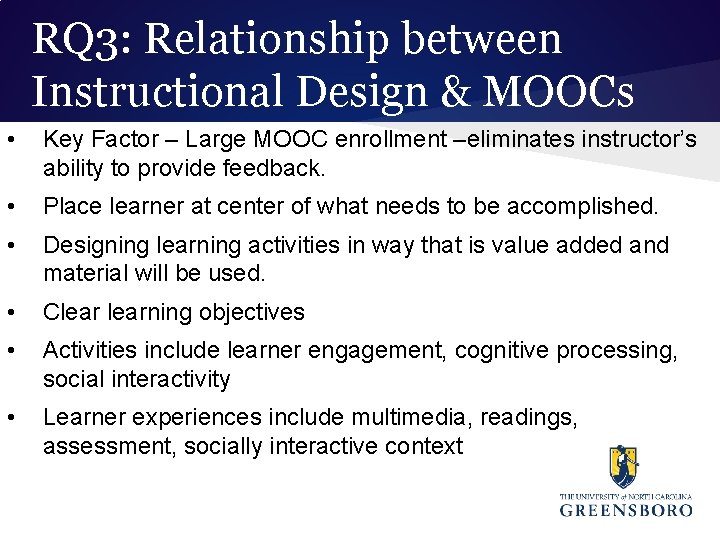
RQ 3: Relationship between Instructional Design & MOOCs • Key Factor – Large MOOC enrollment –eliminates instructor’s ability to provide feedback. • Place learner at center of what needs to be accomplished. • Designing learning activities in way that is value added and material will be used. • Clearning objectives • Activities include learner engagement, cognitive processing, social interactivity • Learner experiences include multimedia, readings, assessment, socially interactive context
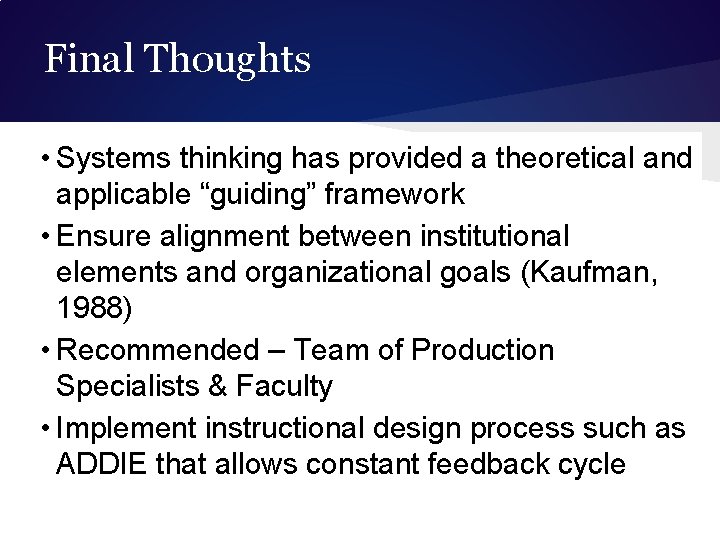
Final Thoughts • Systems thinking has provided a theoretical and applicable “guiding” framework • Ensure alignment between institutional elements and organizational goals (Kaufman, 1988) • Recommended – Team of Production Specialists & Faculty • Implement instructional design process such as ADDIE that allows constant feedback cycle
Final Thoughts Q&A
Thank you! For More Information: Anthony Chow – aschow@uncg. edu Becky Croxton - racroxto@uncg. edu Slides: http: //systemicchange. wordpress. com/researc h/aect-conferences/aect-2014/13/