
Using Adaptive Crisis Leadership Principles to Transition College
- Slides: 14
Using Adaptive & Crisis Leadership Principles to Transition College Mental Health during the Pandemic Katharine Oh & Brittany Sommers Cleveland State University December, 2020
Outline • How We Became an Adaptive Team before 2020 • • Managing resistance, Focusing on purpose/values, Experimenting March 2020 – Crisis Leadership What we did, How we did it, How it felt! • Prioritize, Delegate, Trust, Over-communicate, Provide Needs • • Discussion What values guided your team’s changes? • What principles from crisis leadership can you use? • How can you increase your team’s adaptability? •
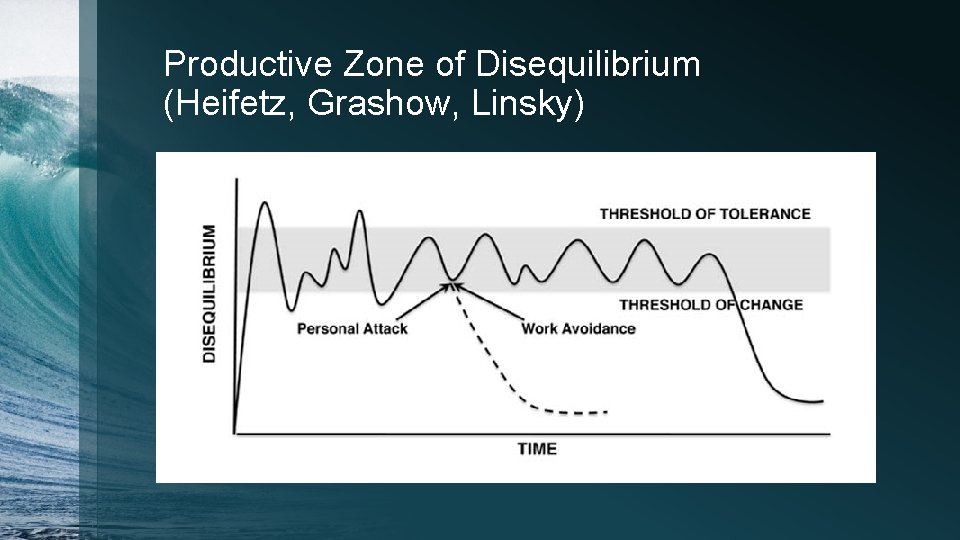
How We Became an Adaptive Team (Heifetz, Grashow, Linsky) • 2014: Director retired; Interim Director led change to hire PT counselors to see lots of clients; set first session limit (16) • 2015: External Director hired; VPSA increased the heat: need to develop new service delivery model to get rid of Waitlist – 1 month deadline • Managed Resistance – • • • Named the losses at risk Identified competing commitments Focused on essential purpose/ values Led collaborative process Maintained the heat at a productive level (clear deadline – if we didn’t design the model, the VPSA would)
Productive Zone of Disequilibrium (Heifetz, Grashow, Linsky)
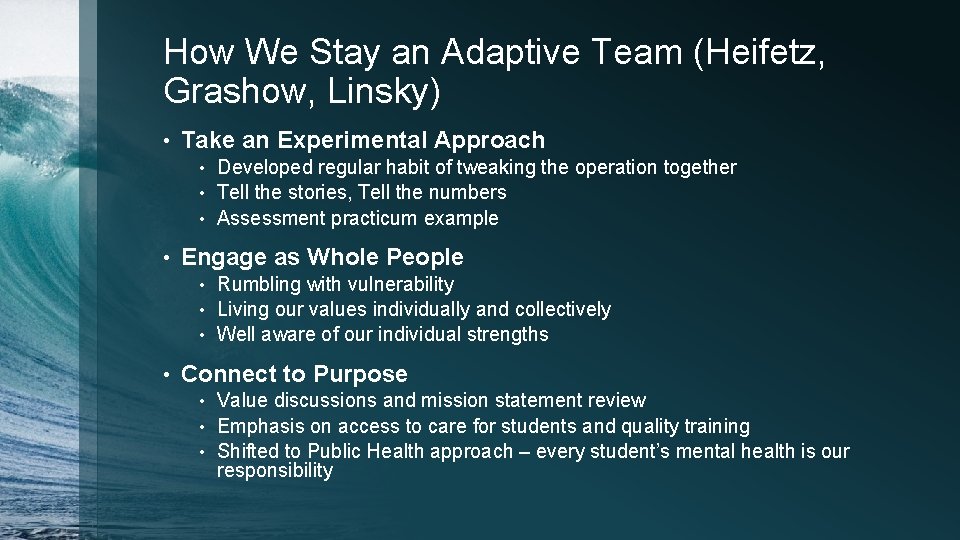
How We Stay an Adaptive Team (Heifetz, Grashow, Linsky) • Take an Experimental Approach Developed regular habit of tweaking the operation together • Tell the stories, Tell the numbers • Assessment practicum example • • Engage as Whole People Rumbling with vulnerability • Living our values individually and collectively • Well aware of our individual strengths • • Connect to Purpose Value discussions and mission statement review • Emphasis on access to care for students and quality training • Shifted to Public Health approach – every student’s mental health is our responsibility •
March 2020 World Health Organization Declares COVID-19 a Pandemic Cleveland State acts quickly to shift all non-essential employees off campus and remove to all-remote classes = Crisis Leadership needed.
Crisis Leadership - Prioritize - Delegate - Trust - Over-communicate - Meet Needs
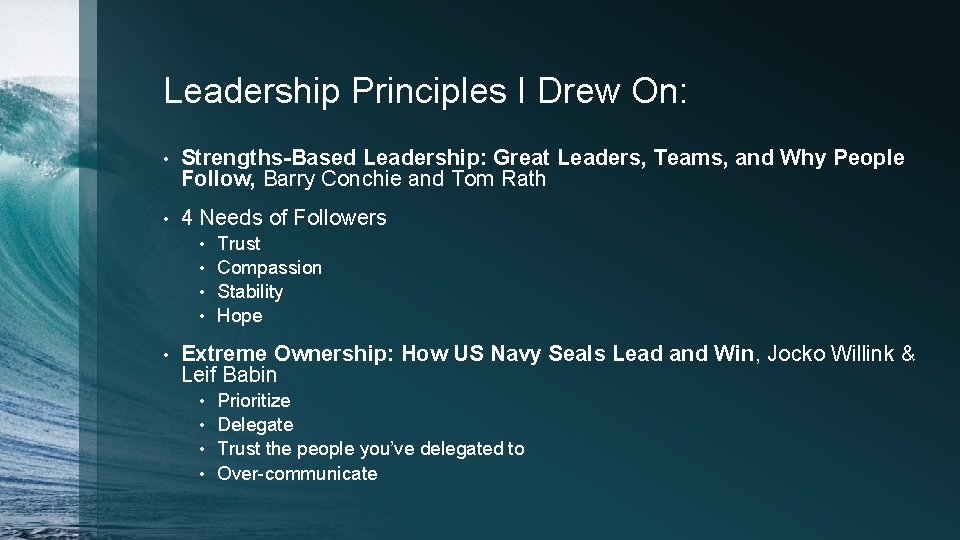
Leadership Principles I Drew On: • Strengths-Based Leadership: Great Leaders, Teams, and Why People Follow, Barry Conchie and Tom Rath • 4 Needs of Followers Trust • Compassion • Stability • Hope • • Extreme Ownership: How US Navy Seals Lead and Win, Jocko Willink & Leif Babin Prioritize • Delegate • Trust the people you’ve delegated to • Over-communicate •
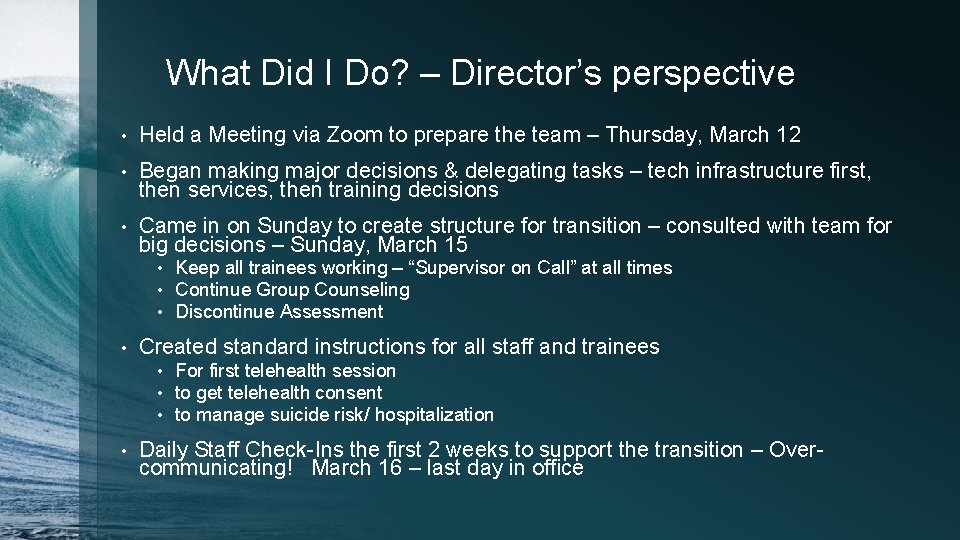
What Did I Do? – Director’s perspective • Held a Meeting via Zoom to prepare the team – Thursday, March 12 • Began making major decisions & delegating tasks – tech infrastructure first, then services, then training decisions • Came in on Sunday to create structure for transition – consulted with team for big decisions – Sunday, March 15 • • Created standard instructions for all staff and trainees • • Keep all trainees working – “Supervisor on Call” at all times Continue Group Counseling Discontinue Assessment For first telehealth session to get telehealth consent to manage suicide risk/ hospitalization Daily Staff Check-Ins the first 2 weeks to support the transition – Overcommunicating! March 16 – last day in office
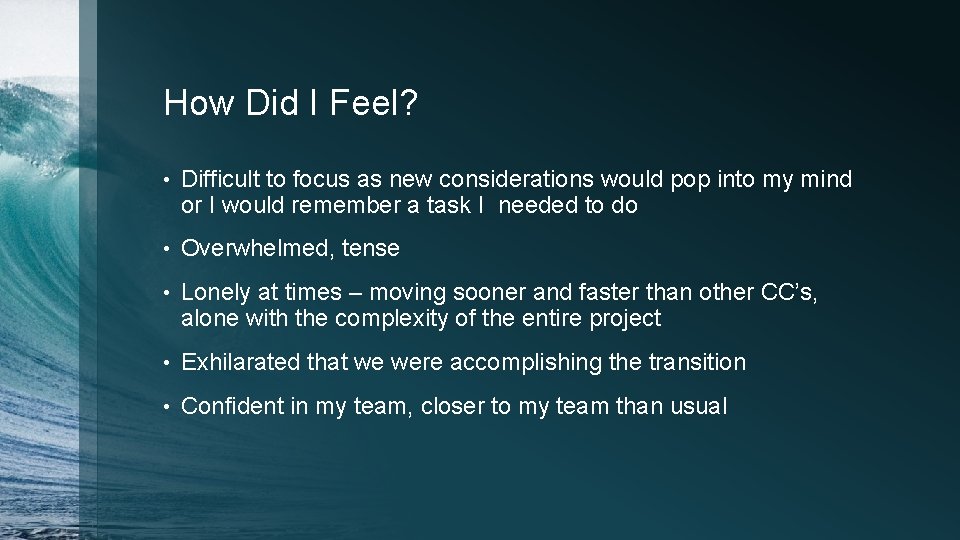
How Did I Feel? • Difficult to focus as new considerations would pop into my mind or I would remember a task I needed to do • Overwhelmed, tense • Lonely at times – moving sooner and faster than other CC’s, alone with the complexity of the entire project • Exhilarated that we were accomplishing the transition • Confident in my team, closer to my team than usual
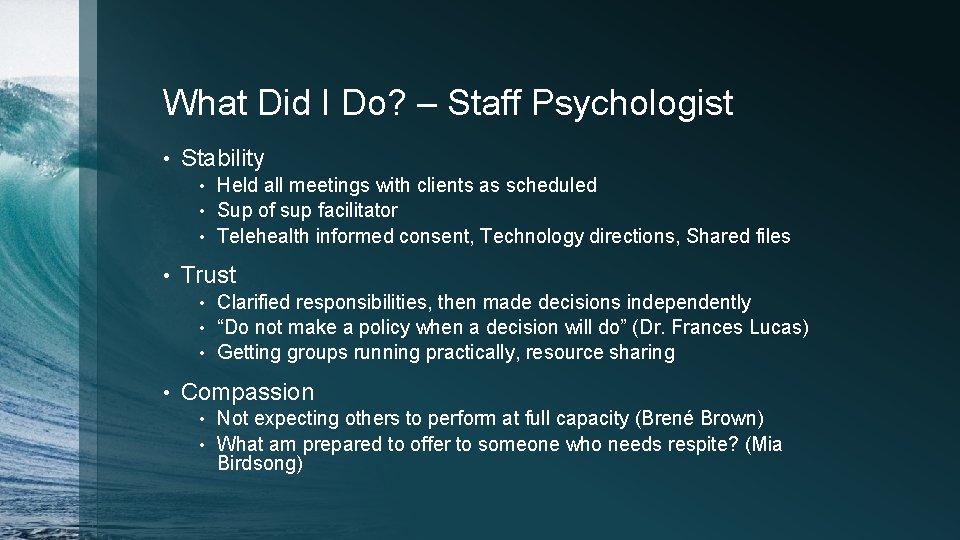
What Did I Do? – Staff Psychologist • Stability Held all meetings with clients as scheduled • Sup of sup facilitator • Telehealth informed consent, Technology directions, Shared files • • Trust Clarified responsibilities, then made decisions independently • “Do not make a policy when a decision will do” (Dr. Frances Lucas) • Getting groups running practically, resource sharing • • Compassion Not expecting others to perform at full capacity (Brené Brown) • What am prepared to offer to someone who needs respite? (Mia Birdsong) •
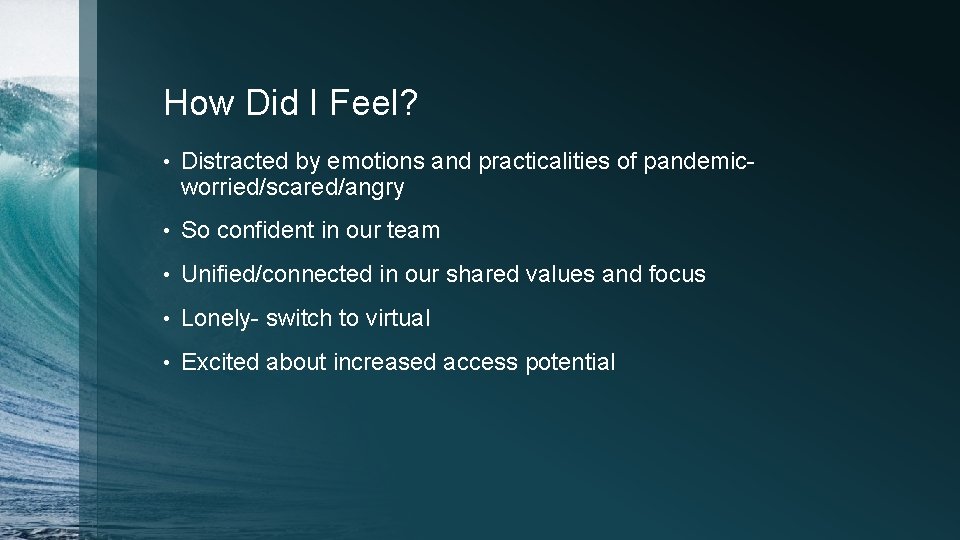
How Did I Feel? • Distracted by emotions and practicalities of pandemicworried/scared/angry • So confident in our team • Unified/connected in our shared values and focus • Lonely- switch to virtual • Excited about increased access potential
Discussion • What Values/ Purpose guided your team during your pandemic transition? • How might you use principles from Crisis Leadership in your work? (Prioritize, Delegate, Trust, Over-communicate) • How might you use Adaptive Leadership strategies to increase your team’s ability to adapt? (Manage resistance, Take an Experimental Approach, Engage as whole people, Focus on purpose)
References • Birdsong, M. (2020). How we show up: Reclaiming family, friendship, and community. New York City, NY: Hachette Go. • Brown, B. (2018). Dare to Lead Brave Work. Tough Conversations. Whole Hearts. New York CIty, NY: Random House. • Heifetz, R. A. , Grashow, A. , & Linsky, M. (2009). The practice of adaptive leadership: Tools and tactics for changing your organization and the world. Boston, MA: Harvard Business Press. • Rath, T. , & Conchie, B. (2008). Strengths based leadership: Great leaders, teams, and why people follow. New York City, NY: Gallup Press. • Willink, J. , & Babin, L. (2017). Extreme ownership: How U. S. Navy SEALs lead and win. New York City, NY: St. Martin's Press.