
Using Active and Passive Voice 8 th Grade
- Slides: 21
Using Active and Passive Voice 8 th Grade Advanced Language Arts Ms. Currie
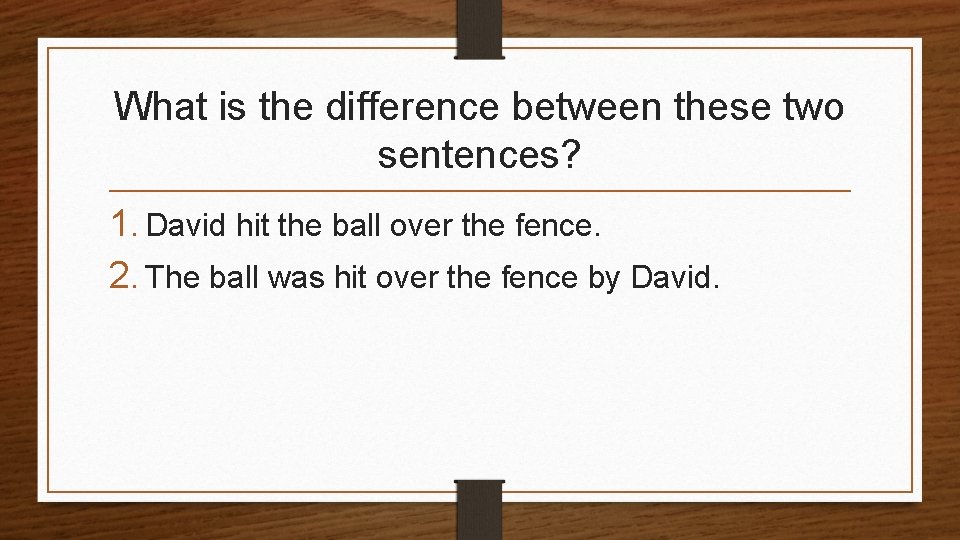
What is the difference between these two sentences? 1. David hit the ball over the fence. 2. The ball was hit over the fence by David.
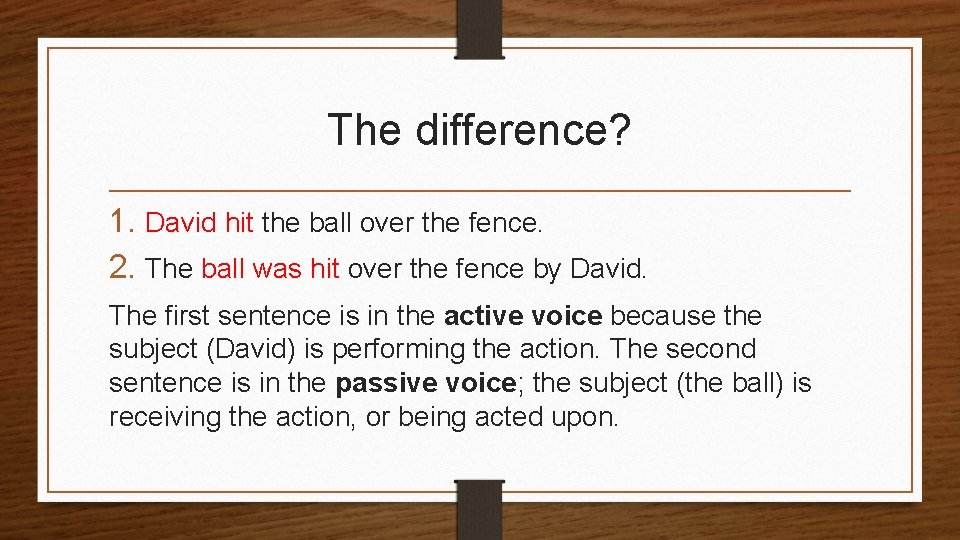
The difference? 1. David hit the ball over the fence. 2. The ball was hit over the fence by David. The first sentence is in the active voice because the subject (David) is performing the action. The second sentence is in the passive voice; the subject (the ball) is receiving the action, or being acted upon.
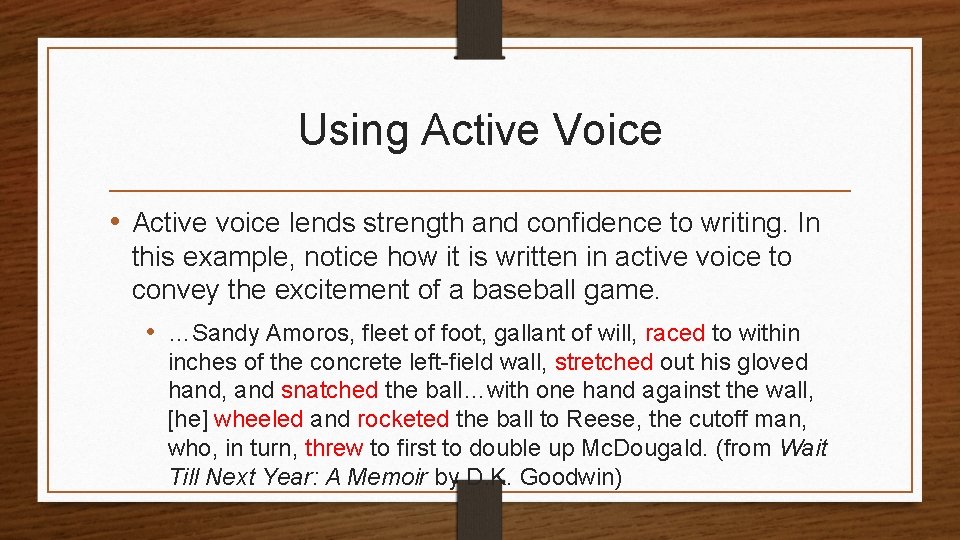
Using Active Voice • Active voice lends strength and confidence to writing. In this example, notice how it is written in active voice to convey the excitement of a baseball game. • …Sandy Amoros, fleet of foot, gallant of will, raced to within inches of the concrete left-field wall, stretched out his gloved hand, and snatched the ball…with one hand against the wall, [he] wheeled and rocketed the ball to Reese, the cutoff man, who, in turn, threw to first to double up Mc. Dougald. (from Wait Till Next Year: A Memoir by D. K. Goodwin)
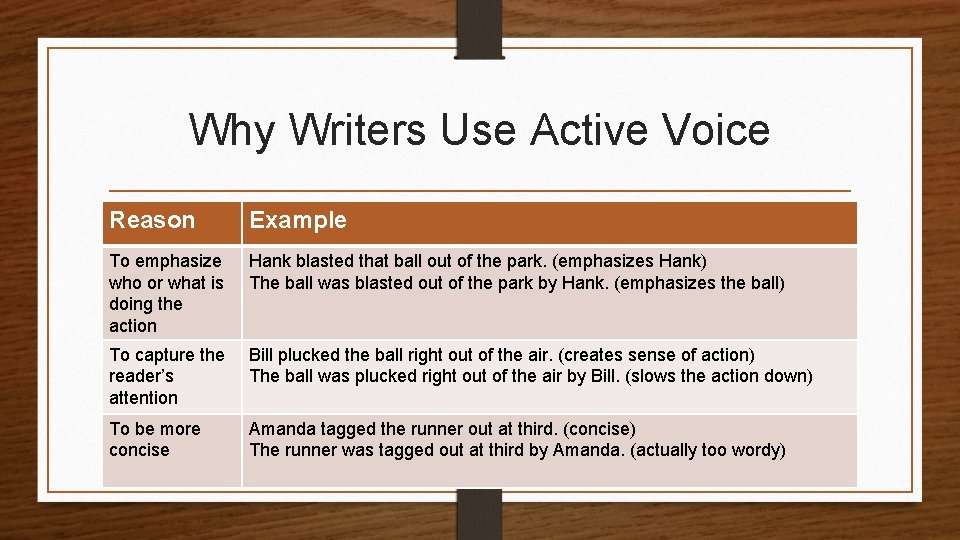
Why Writers Use Active Voice Reason Example To emphasize who or what is doing the action Hank blasted that ball out of the park. (emphasizes Hank) The ball was blasted out of the park by Hank. (emphasizes the ball) To capture the reader’s attention Bill plucked the ball right out of the air. (creates sense of action) The ball was plucked right out of the air by Bill. (slows the action down) To be more concise Amanda tagged the runner out at third. (concise) The runner was tagged out at third by Amanda. (actually too wordy)
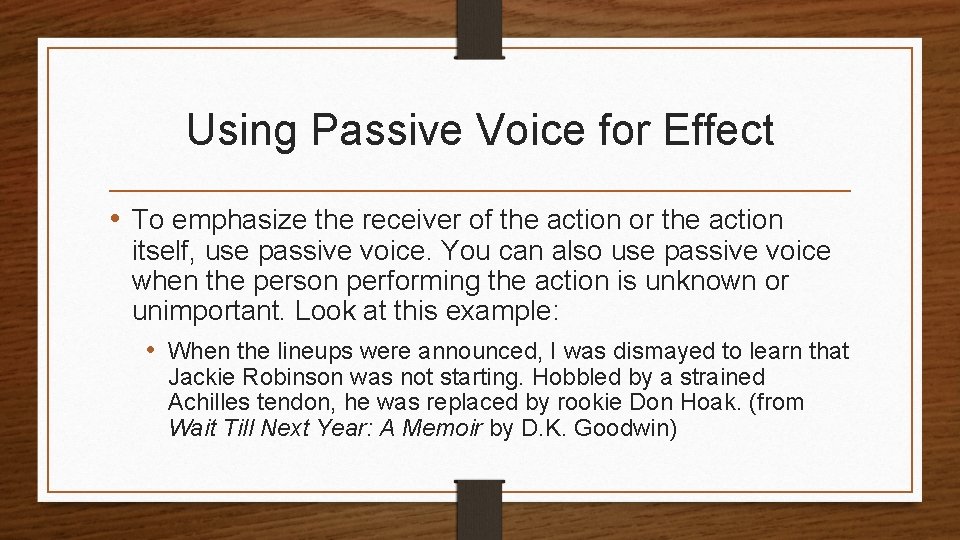
Using Passive Voice for Effect • To emphasize the receiver of the action or the action itself, use passive voice. You can also use passive voice when the person performing the action is unknown or unimportant. Look at this example: • When the lineups were announced, I was dismayed to learn that Jackie Robinson was not starting. Hobbled by a strained Achilles tendon, he was replaced by rookie Don Hoak. (from Wait Till Next Year: A Memoir by D. K. Goodwin)
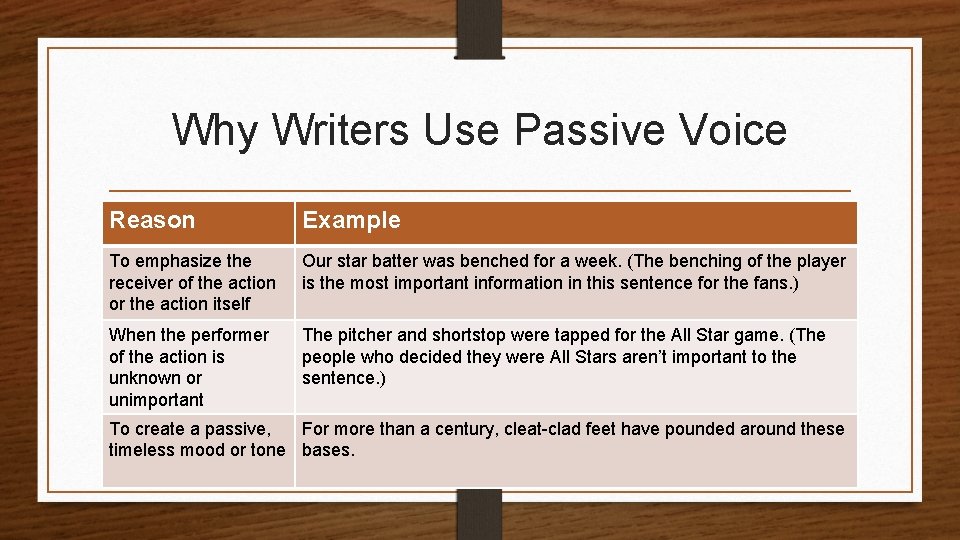
Why Writers Use Passive Voice Reason Example To emphasize the receiver of the action or the action itself Our star batter was benched for a week. (The benching of the player is the most important information in this sentence for the fans. ) When the performer of the action is unknown or unimportant The pitcher and shortstop were tapped for the All Star game. (The people who decided they were All Stars aren’t important to the sentence. ) To create a passive, For more than a century, cleat-clad feet have pounded around these timeless mood or tone bases.
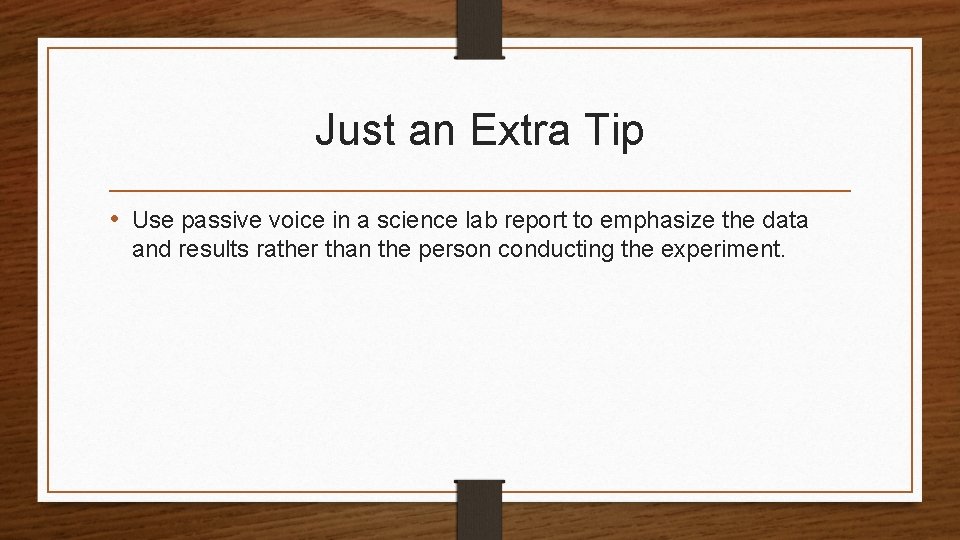
Just an Extra Tip • Use passive voice in a science lab report to emphasize the data and results rather than the person conducting the experiment.
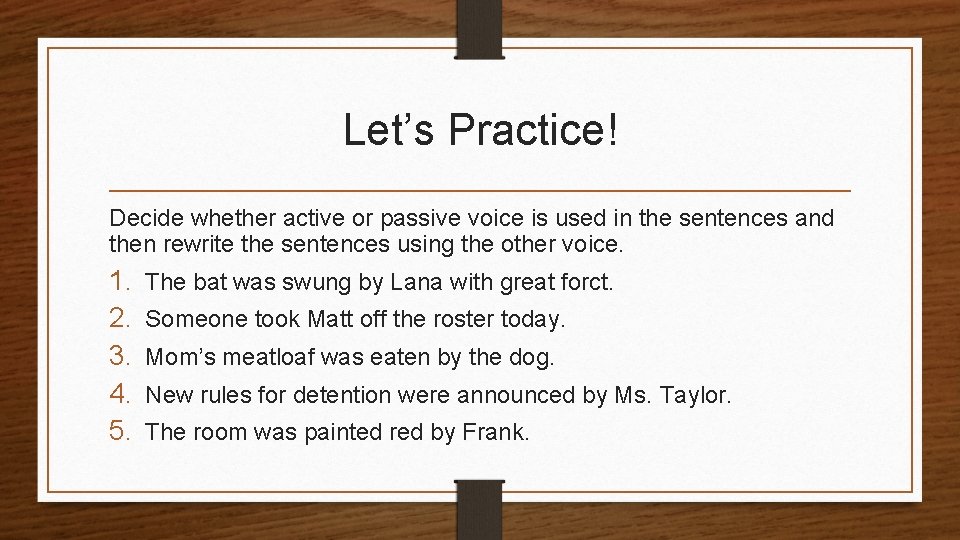
Let’s Practice! Decide whether active or passive voice is used in the sentences and then rewrite the sentences using the other voice. 1. 2. 3. 4. 5. The bat was swung by Lana with great forct. Someone took Matt off the roster today. Mom’s meatloaf was eaten by the dog. New rules for detention were announced by Ms. Taylor. The room was painted red by Frank.
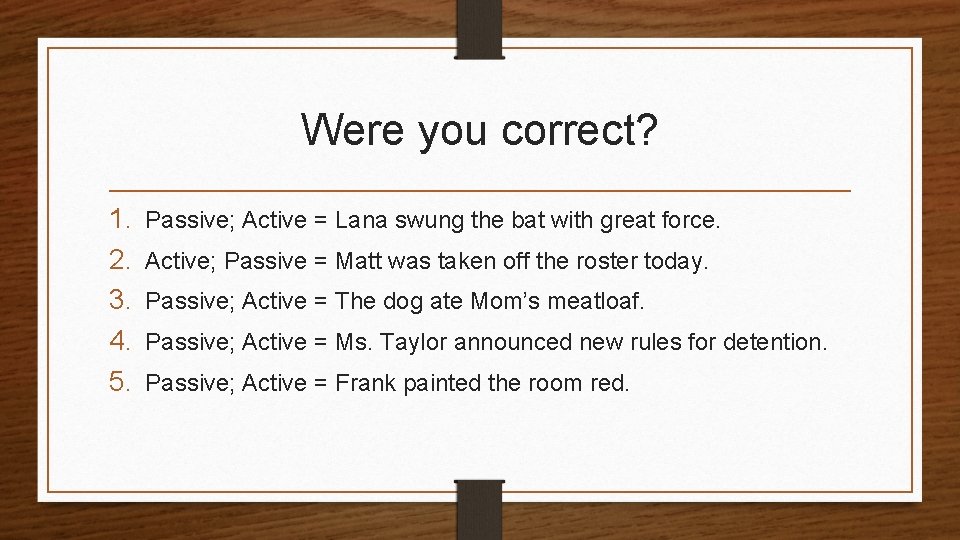
Were you correct? 1. 2. 3. 4. 5. Passive; Active = Lana swung the bat with great force. Active; Passive = Matt was taken off the roster today. Passive; Active = The dog ate Mom’s meatloaf. Passive; Active = Ms. Taylor announced new rules for detention. Passive; Active = Frank painted the room red.
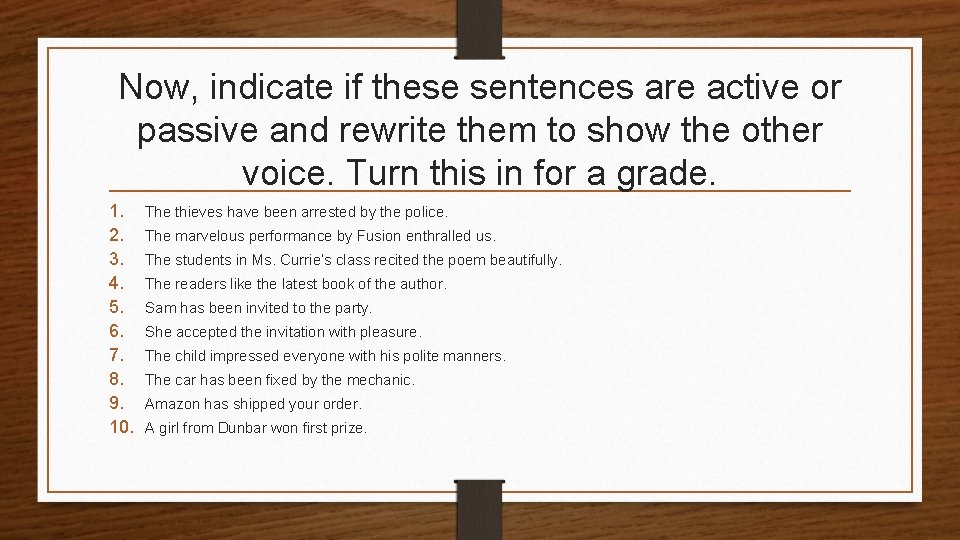
Now, indicate if these sentences are active or passive and rewrite them to show the other voice. Turn this in for a grade. 1. 2. 3. 4. 5. 6. 7. 8. 9. 10. The thieves have been arrested by the police. The marvelous performance by Fusion enthralled us. The students in Ms. Currie’s class recited the poem beautifully. The readers like the latest book of the author. Sam has been invited to the party. She accepted the invitation with pleasure. The child impressed everyone with his polite manners. The car has been fixed by the mechanic. Amazon has shipped your order. A girl from Dunbar won first prize.
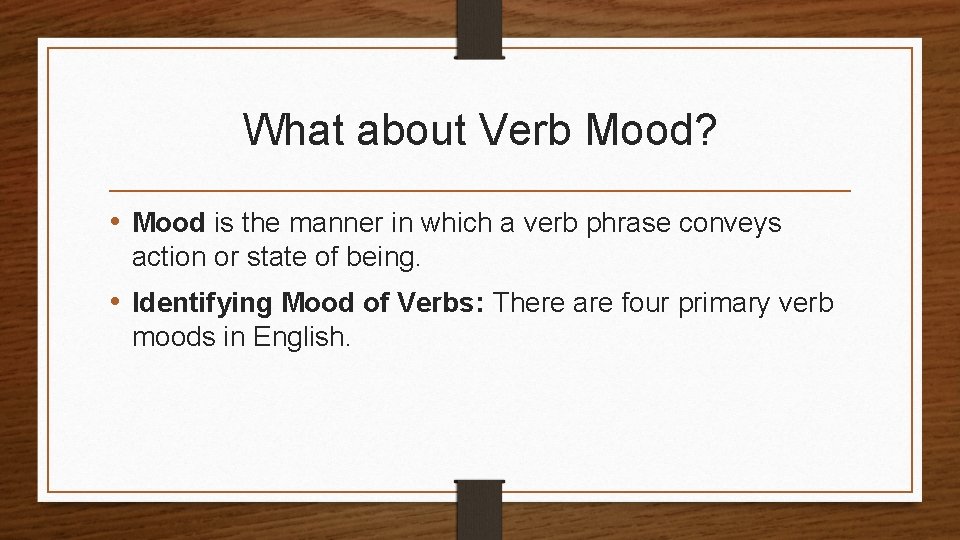
What about Verb Mood? • Mood is the manner in which a verb phrase conveys action or state of being. • Identifying Mood of Verbs: There are four primary verb moods in English.
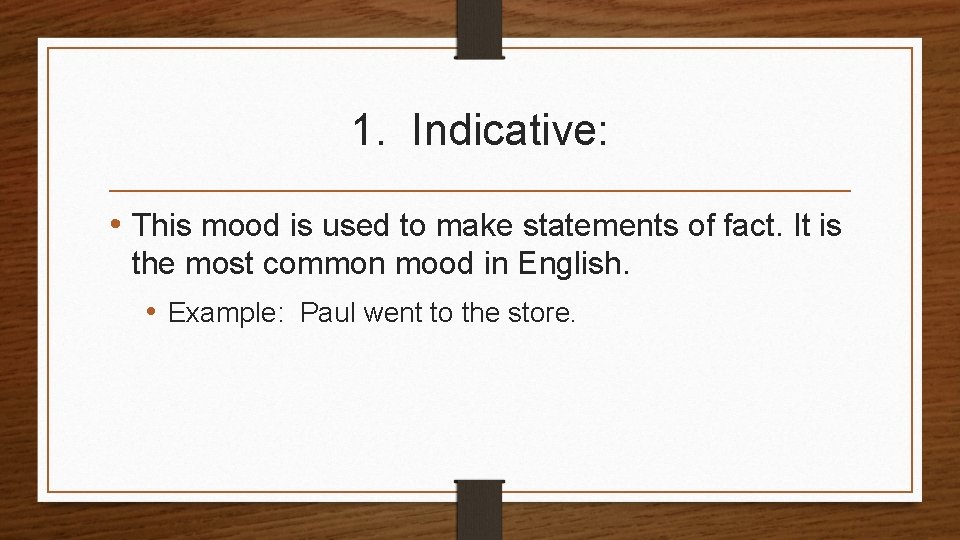
1. Indicative: • This mood is used to make statements of fact. It is the most common mood in English. • Example: Paul went to the store.
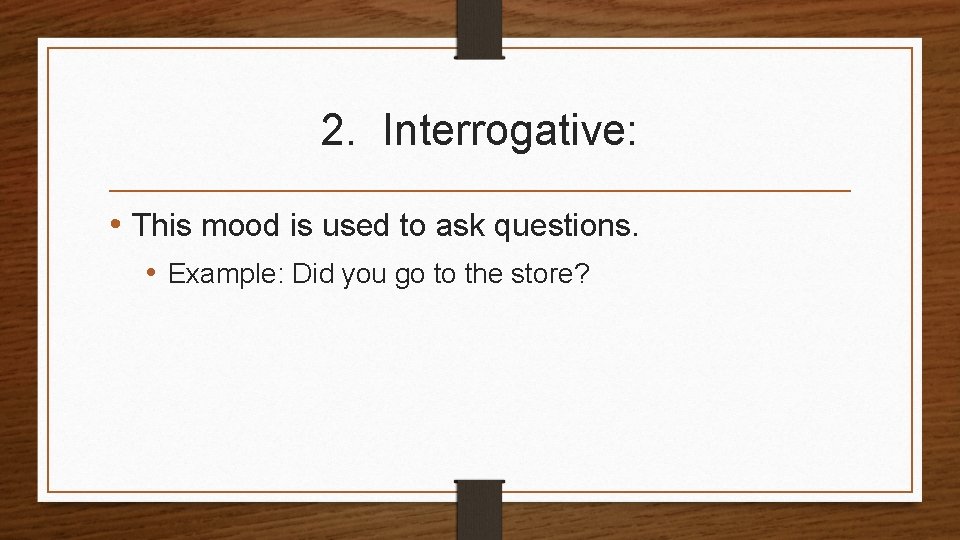
2. Interrogative: • This mood is used to ask questions. • Example: Did you go to the store?
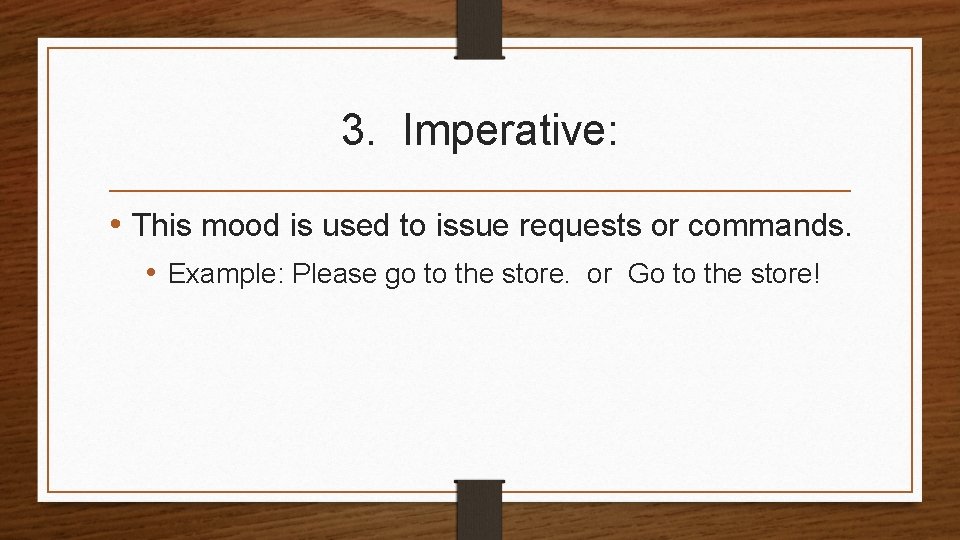
3. Imperative: • This mood is used to issue requests or commands. • Example: Please go to the store. or Go to the store!
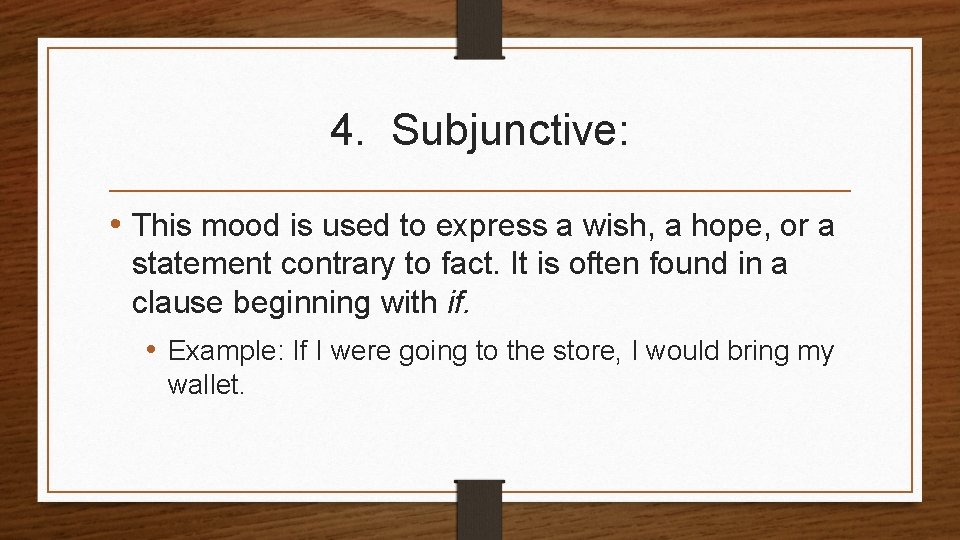
4. Subjunctive: • This mood is used to express a wish, a hope, or a statement contrary to fact. It is often found in a clause beginning with if. • Example: If I were going to the store, I would bring my wallet.
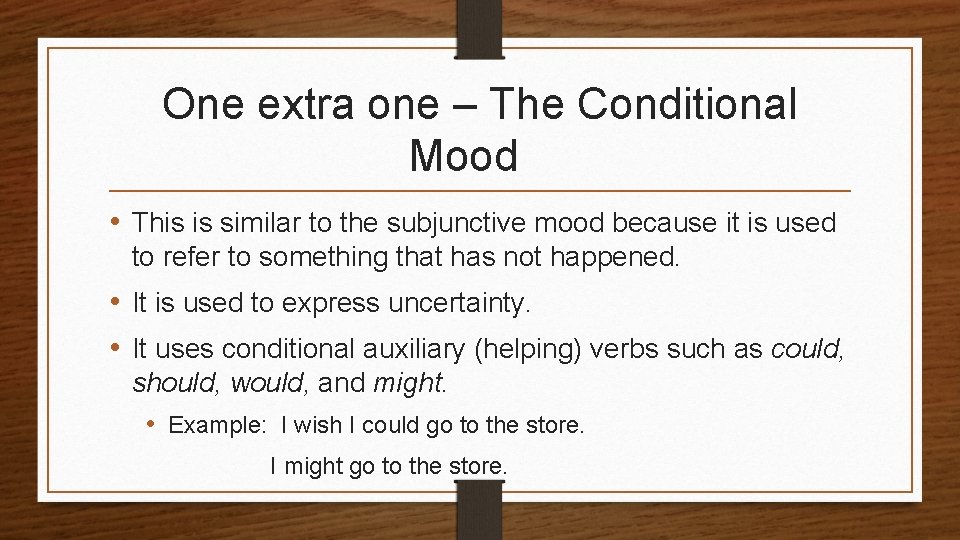
One extra one – The Conditional Mood • This is similar to the subjunctive mood because it is used to refer to something that has not happened. • It is used to express uncertainty. • It uses conditional auxiliary (helping) verbs such as could, should, would, and might. • Example: I wish I could go to the store. I might go to the store.
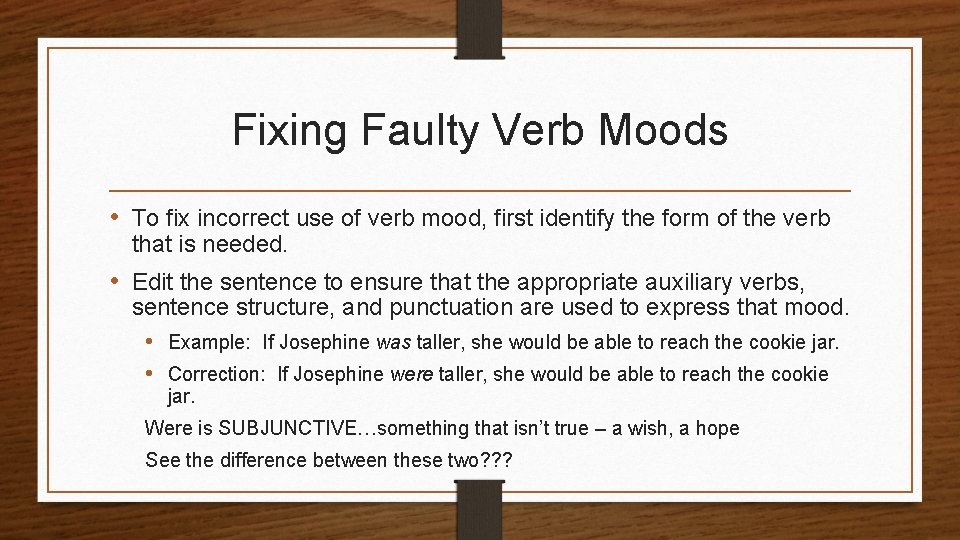
Fixing Faulty Verb Moods • To fix incorrect use of verb mood, first identify the form of the verb that is needed. • Edit the sentence to ensure that the appropriate auxiliary verbs, sentence structure, and punctuation are used to express that mood. • Example: If Josephine was taller, she would be able to reach the cookie jar. • Correction: If Josephine were taller, she would be able to reach the cookie jar. Were is SUBJUNCTIVE…something that isn’t true – a wish, a hope See the difference between these two? ? ?
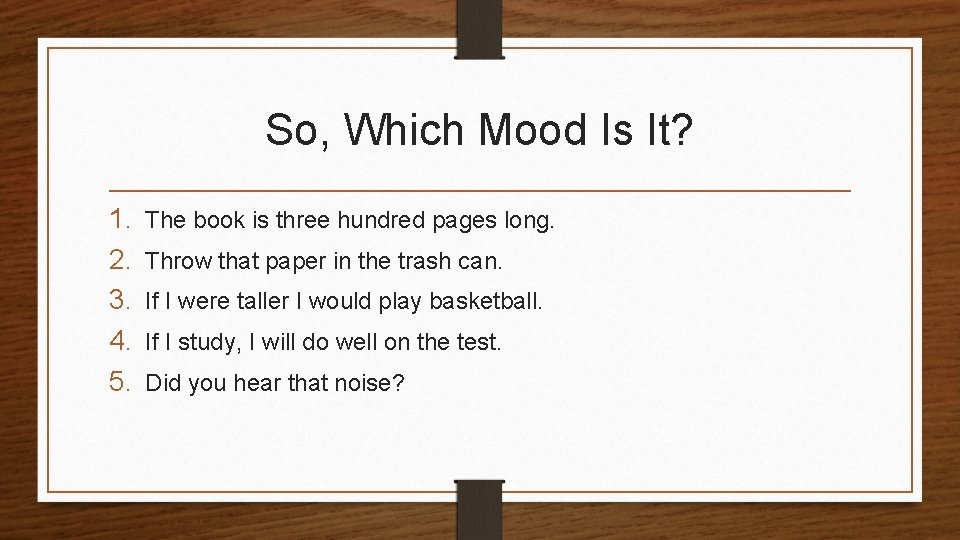
So, Which Mood Is It? 1. 2. 3. 4. 5. The book is three hundred pages long. Throw that paper in the trash can. If I were taller I would play basketball. If I study, I will do well on the test. Did you hear that noise?
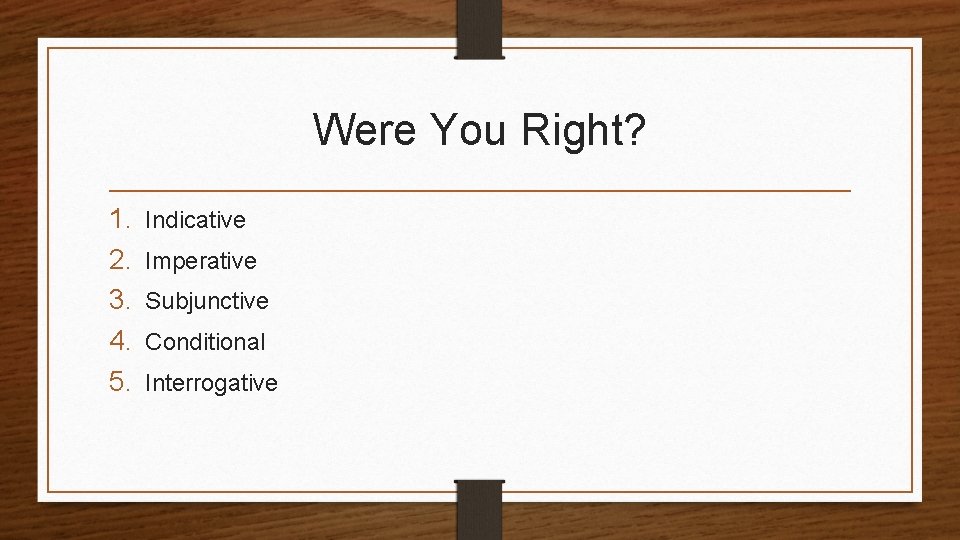
Were You Right? 1. 2. 3. 4. 5. Indicative Imperative Subjunctive Conditional Interrogative
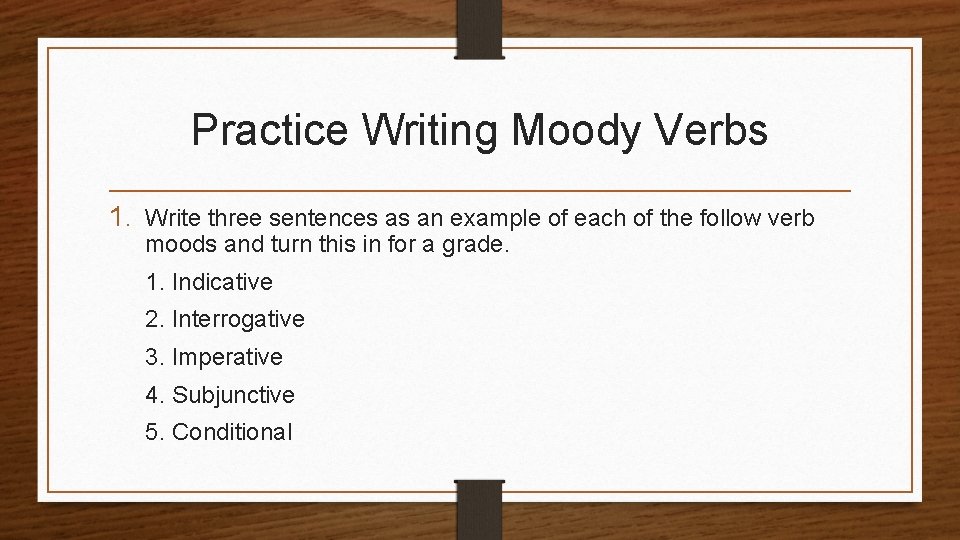
Practice Writing Moody Verbs 1. Write three sentences as an example of each of the follow verb moods and turn this in for a grade. 1. Indicative 2. Interrogative 3. Imperative 4. Subjunctive 5. Conditional