
USING ACTION RESEARCH TO GUIDE STUDENT LEARNING EXPERIENCES


- Slides: 12
USING ACTION RESEARCH TO GUIDE STUDENT LEARNING EXPERIENCES & ASSESSMENTS Josephine C. Seddon, Student Learning Assessment Specialist Office of Institutional Research and Assessment Josephine C. Seddon, RPI-OIRA, 2015
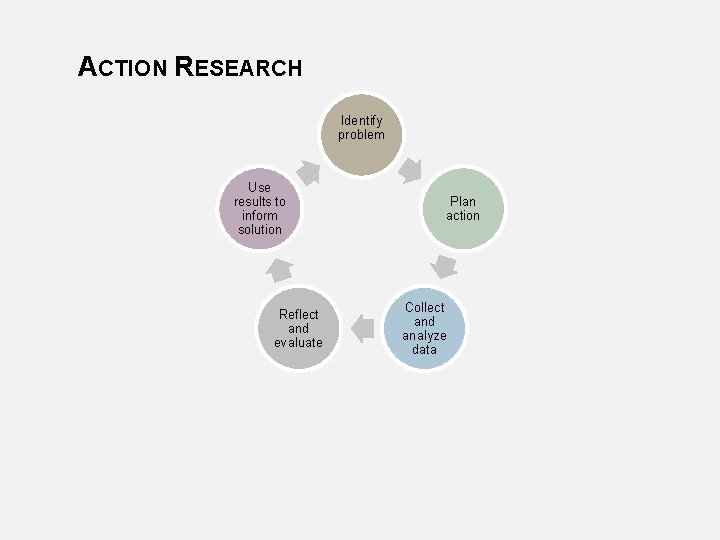
ACTION RESEARCH Identify problem Use results to inform solution Reflect and evaluate Plan action Collect and analyze data
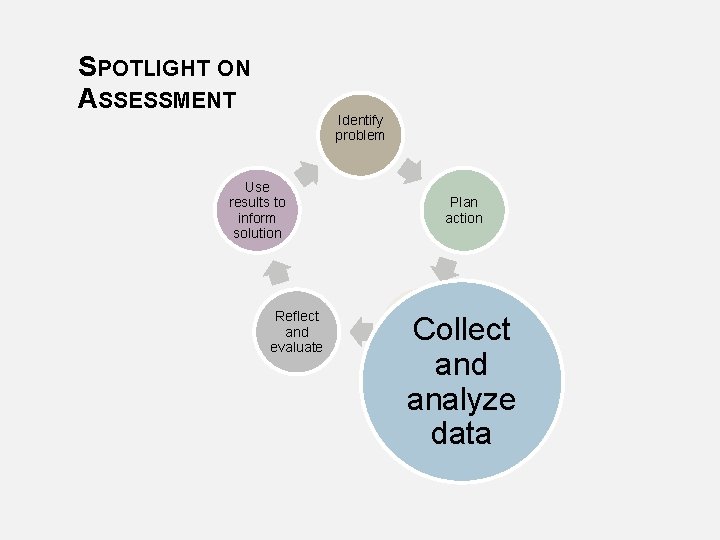
SPOTLIGHT ON ASSESSMENT Identify problem Use results to inform solution Reflect and evaluate Plan action Collect and analyze data
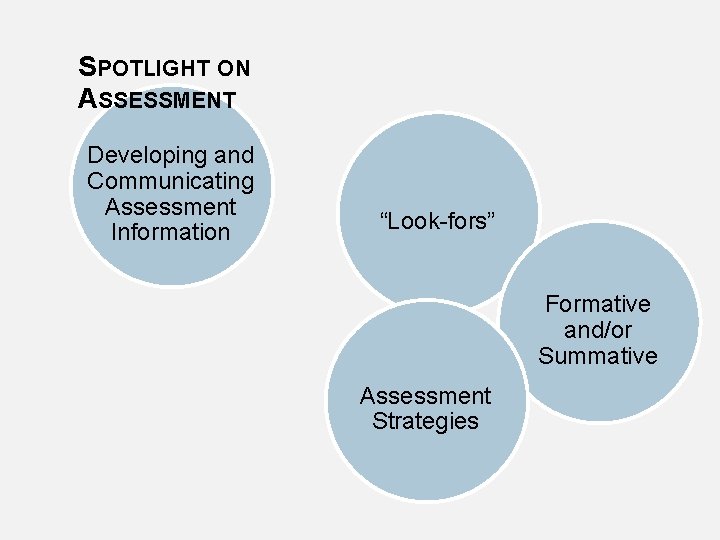
SPOTLIGHT ON ASSESSMENT Developing and Communicating Assessment Information “Look-fors” Formative and/or Summative Assessment Strategies
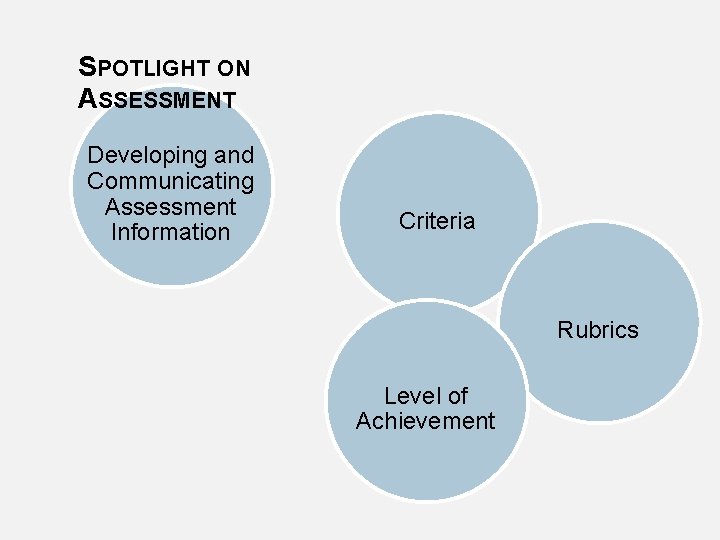
SPOTLIGHT ON ASSESSMENT Developing and Communicating Assessment Information Criteria Rubrics Level of Achievement
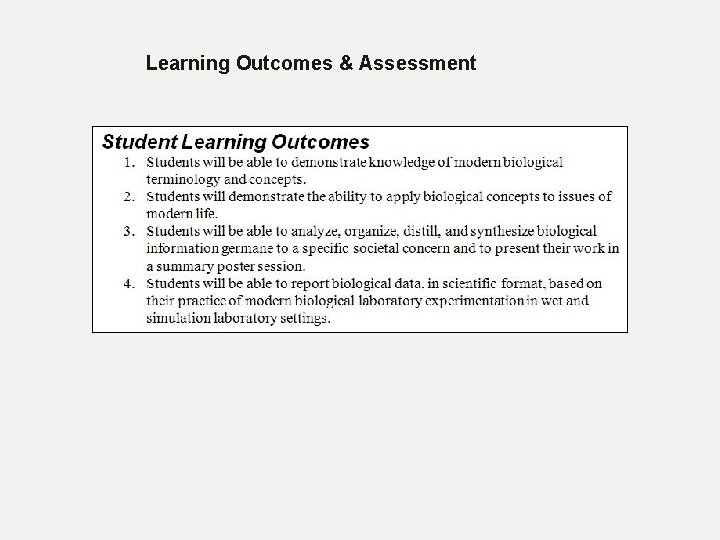
Learning Outcomes & Assessment
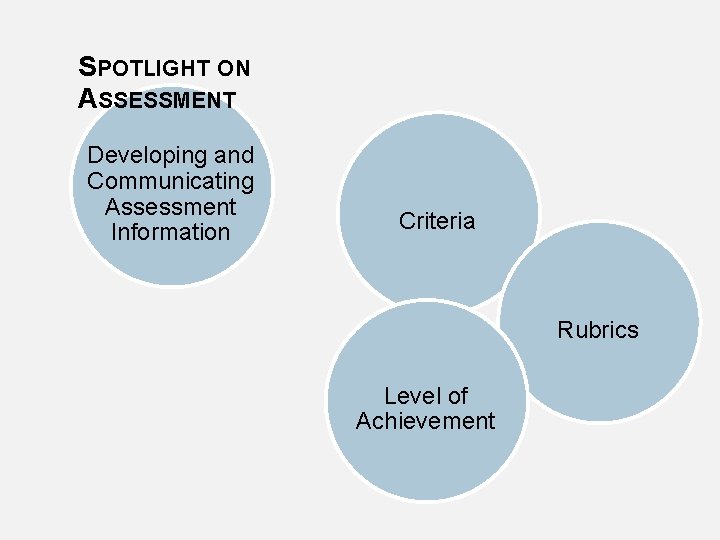
SPOTLIGHT ON ASSESSMENT Developing and Communicating Assessment Information Criteria Rubrics Level of Achievement
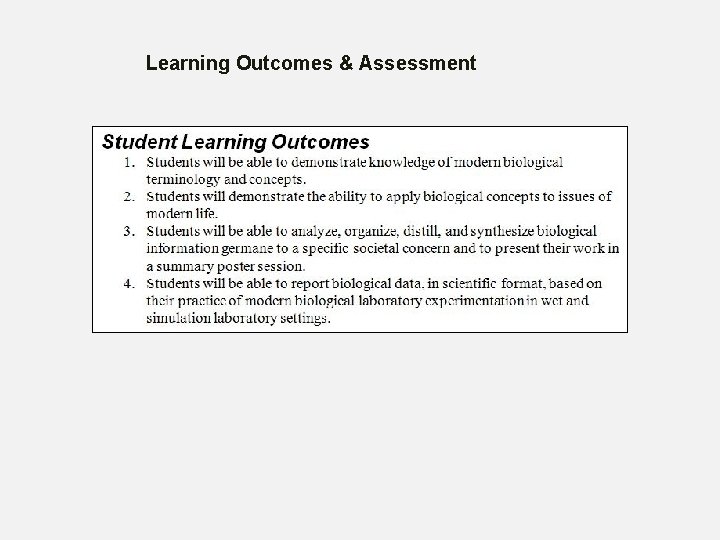
Learning Outcomes & Assessment
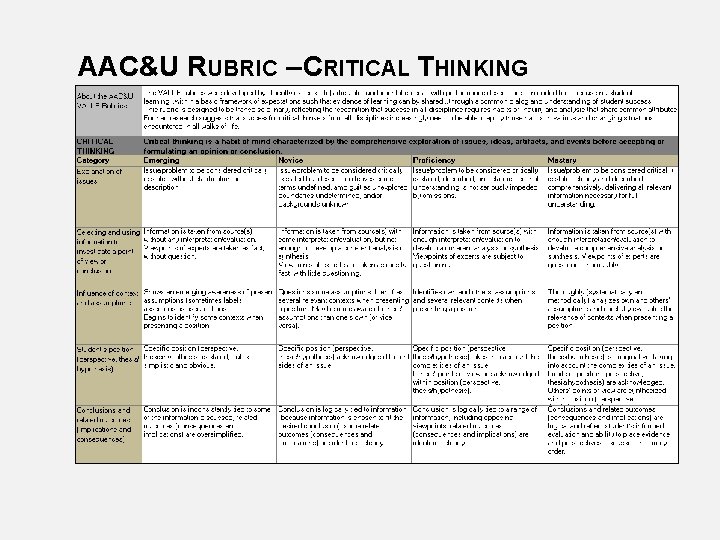
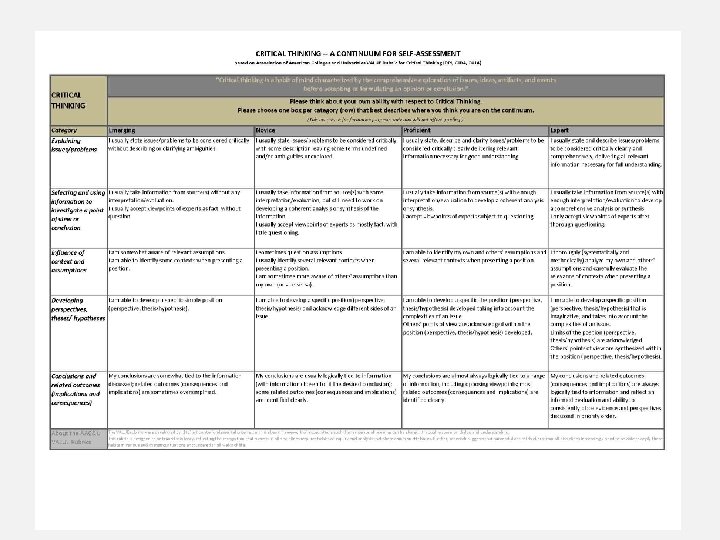
AAC&U RUBRIC – CRITICAL THINKING
EVOLUTION OF A RUBRIC… STEPS IN DESIGNING AND ASSESSING LEARNING 1. Review the learning outcome(s). 2. Consider the skills/competencies necessary for achievement of the outcome. 3. Design learning opportunities that will support achievement of the intended outcomes. 4. Consider the purpose of the assessment for which you are creating a rubric. 4. Consider how the assessment will provide opportunity for students to demonstrate level of achievement for the intended learning outcome. 5. Design the rating scale, and write descriptions for each level of the rating scale 6. Consider how the learner will be provided with the opportunity to demonstrate achievement, and design assessment accordingly. 7. Publish and share your rubric.
FOLLOW UP ACTIVITY… • Review YOUR learning outcome(s) and choose one OR use the assessment piece that you brought with you and determine the learning outcome you believe it was intended to assess. • Consider the skills/competencies necessary for achievement of that outcome and develop categories (definitions) that would help describe/define the skills/competencies involved. • Design a rating scale, and write descriptions or “look-fors” for each level of the rating scale. • Consider how the learner will be provided with the opportunity to demonstrate achievement on the assessment. What would you be sure to include in the design of the assessment? • Consider follow-up opportunities for additional learning and/or assessment to support greater levels of achievement of the learning outcome(s).