
Using a Viral Protein to Study DNA Replication

- Slides: 10
Using a Viral Protein to Study DNA Replication Mrs. Foster University of Delaware Department of Biological Sciences
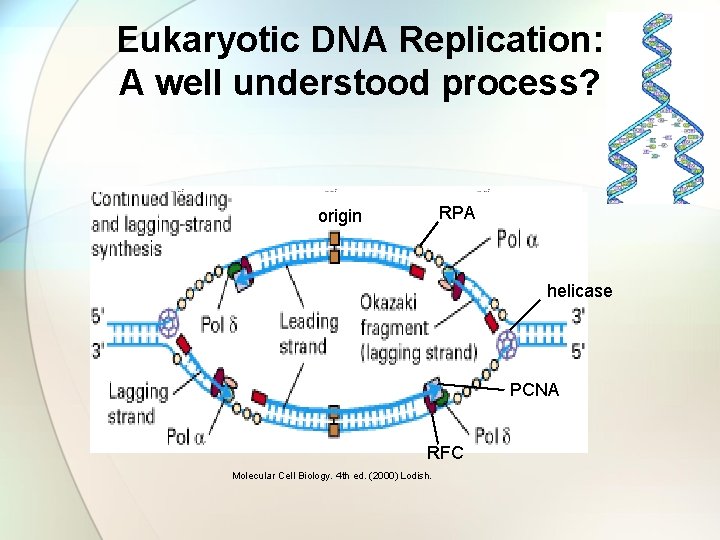
Eukaryotic DNA Replication: A well understood process? RPA origin helicase PCNA The Cell: A Molecular Approach. (2000) Cooper. RFC Molecular Cell Biology. 4 th ed. (2000) Lodish.
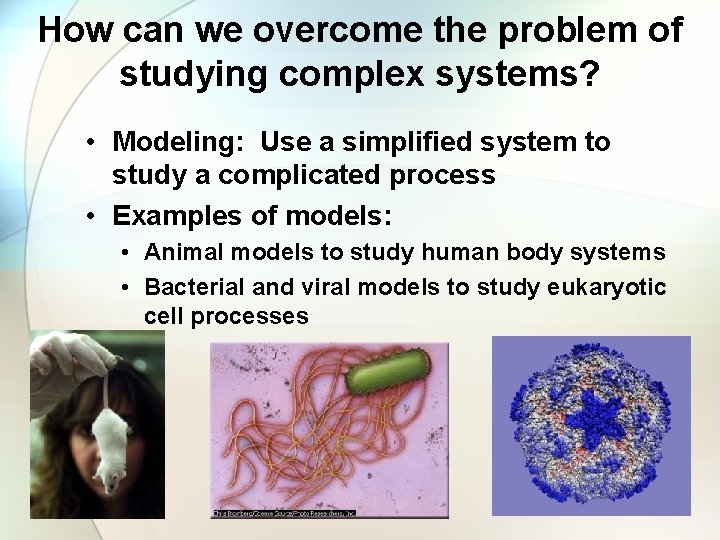
How can we overcome the problem of studying complex systems? • Modeling: Use a simplified system to study a complicated process • Examples of models: • Animal models to study human body systems • Bacterial and viral models to study eukaryotic cell processes
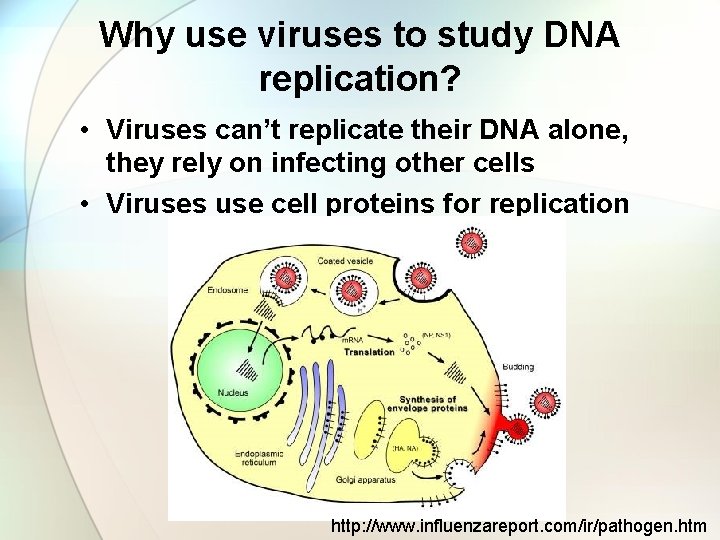
Why use viruses to study DNA replication? • Viruses can’t replicate their DNA alone, they rely on infecting other cells • Viruses use cell proteins for replication http: //www. influenzareport. com/ir/pathogen. htm
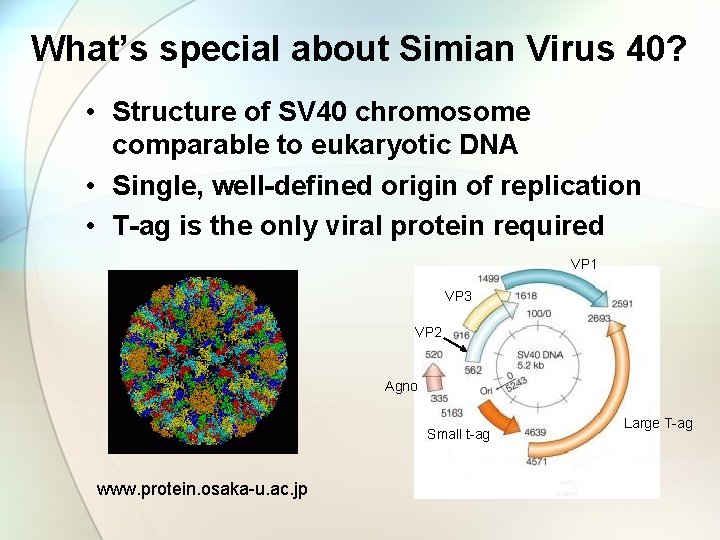
What’s special about Simian Virus 40? • Structure of SV 40 chromosome comparable to eukaryotic DNA • Single, well-defined origin of replication • T-ag is the only viral protein required VP 1 VP 3 VP 2 Agno Small t-ag www. protein. osaka-u. ac. jp Large T-ag
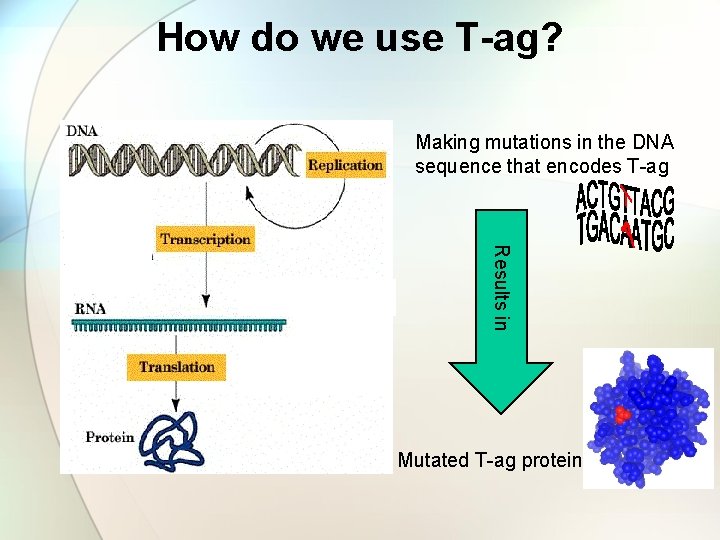
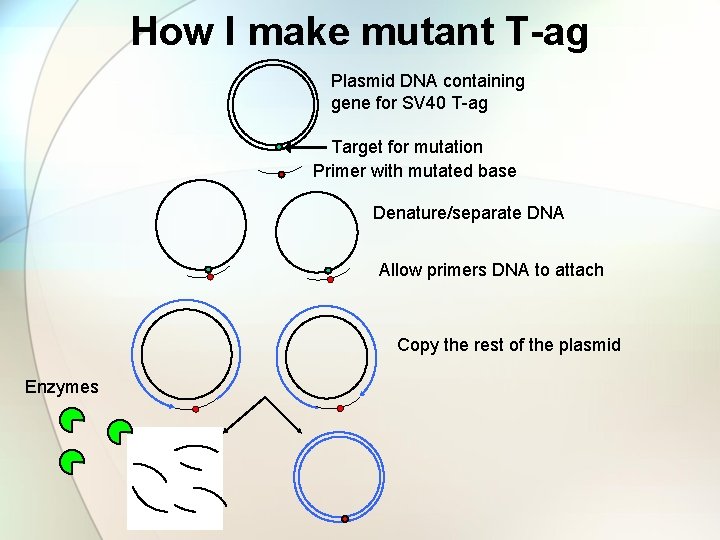
How do we use T-ag? Making mutations in the DNA sequence that encodes T-ag Results in Mutated T-ag protein
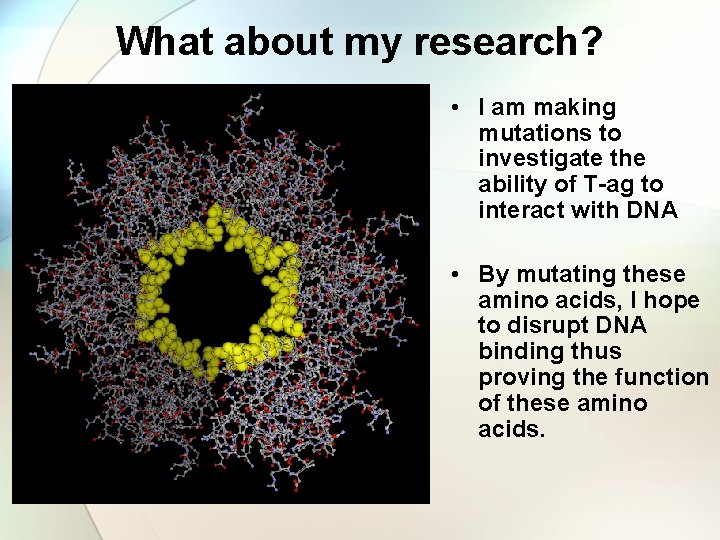
What about my research? • I am making mutations to investigate the ability of T-ag to interact with DNA • By mutating these amino acids, I hope to disrupt DNA binding thus proving the function of these amino acids.
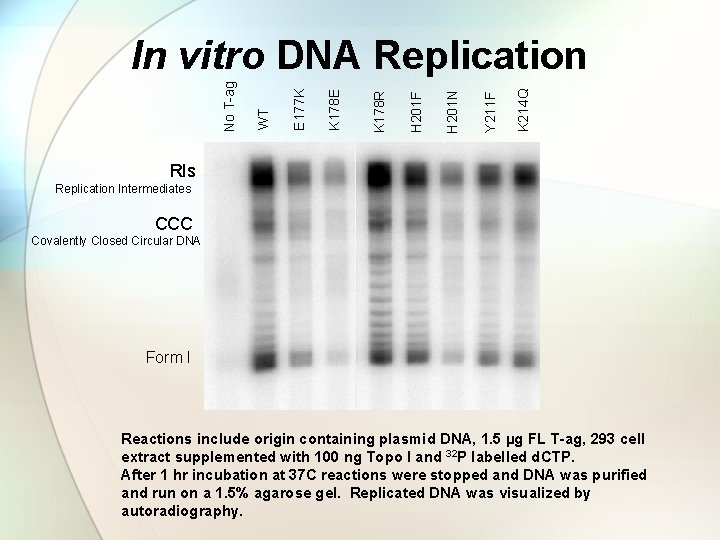
K 214 Q Y 211 F H 201 N H 201 F K 178 R K 178 E E 177 K WT No T-ag In vitro DNA Replication RIs Replication Intermediates CCC Covalently Closed Circular DNA Form I Reactions include origin containing plasmid DNA, 1. 5 µg FL T-ag, 293 cell extract supplemented with 100 ng Topo I and 32 P labelled d. CTP. After 1 hr incubation at 37 C reactions were stopped and DNA was purified and run on a 1. 5% agarose gel. Replicated DNA was visualized by autoradiography.
How I make mutant T-ag Plasmid DNA containing gene for SV 40 T-ag Target for mutation Primer with mutated base Denature/separate DNA Allow primers DNA to attach Copy the rest of the plasmid Enzymes