
Using a timeline to sequence historical events The

- Slides: 15
Using a timeline to sequence historical events The Vikings
Key Vocabulary Treaty - A treaty is an agreement that brings two or more countries together. Invade - To enter as an enemy, by force, in order to take over. Danelaw - The Danelaw was the part of England in the Viking times. Establish – To start or make something that did not exist before. Flee – To run away. Abroad - To travel to a country over seas. Piety – An act of being religious and having goodness. Conqueror – Someone who takes over somewhere. Monastery – A building or buildings occupied by a community of monks living under religious vows. Seafarers - A person who regularly travels by sea; a sailor. Inherited – Receiving something passed on from parent to child.
The Vikings in Britain The Viking Age in Britain began about 1, 200 years ago in the 9 th Century AD and lasted for just over 200 years. About the year 800, bands of fierce raiders began to attack our coasts. They were the Vikings (also called the Danes). The Vikings came across the North Sea, just as the Anglo. Saxons had done 400 years earlier. In time, like the Anglo. Saxons, the Vikings made their home here. They drove the Saxons out of part of the country and took it for themselves. King Alfred, Saxon king of Wessex, fought them in a great battle, but he could not drive them right away and had to let them have part of the country, called Danelaw.
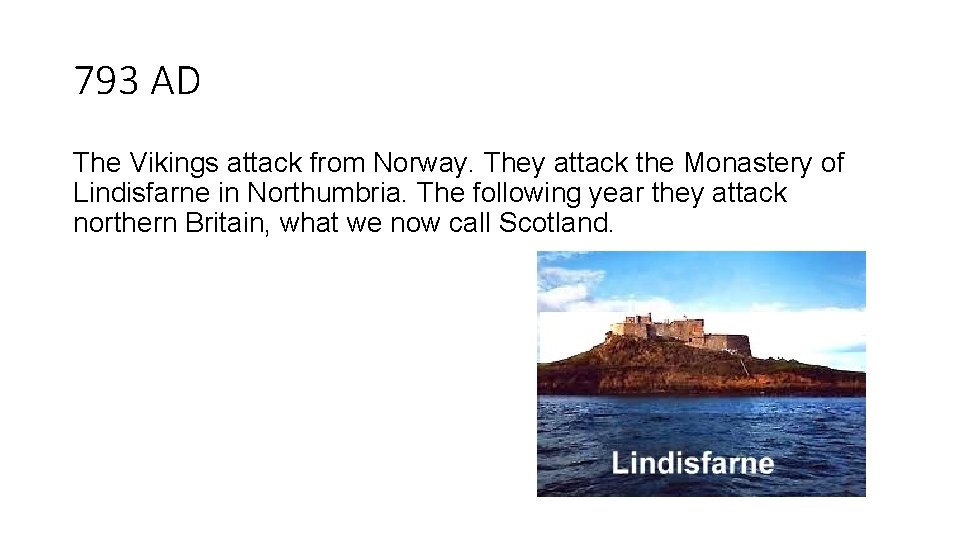
793 AD The Vikings attack from Norway. They attack the Monastery of Lindisfarne in Northumbria. The following year they attack northern Britain, what we now call Scotland.
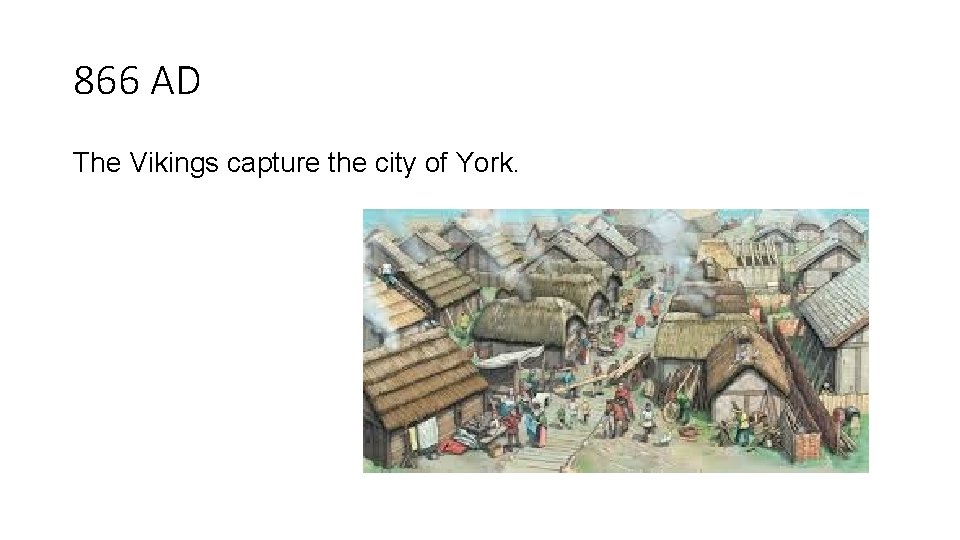
866 AD The Vikings capture the city of York.
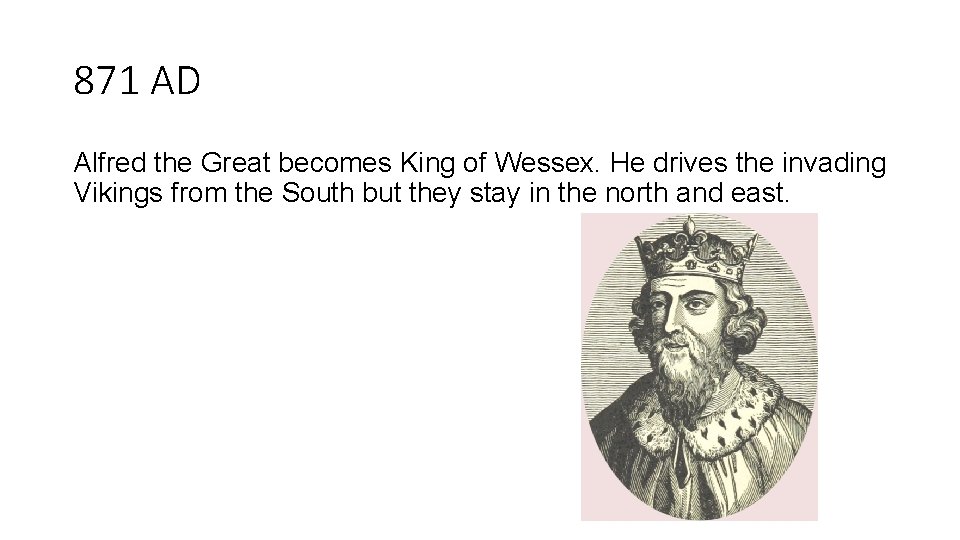
871 AD Alfred the Great becomes King of Wessex. He drives the invading Vikings from the South but they stay in the north and east.
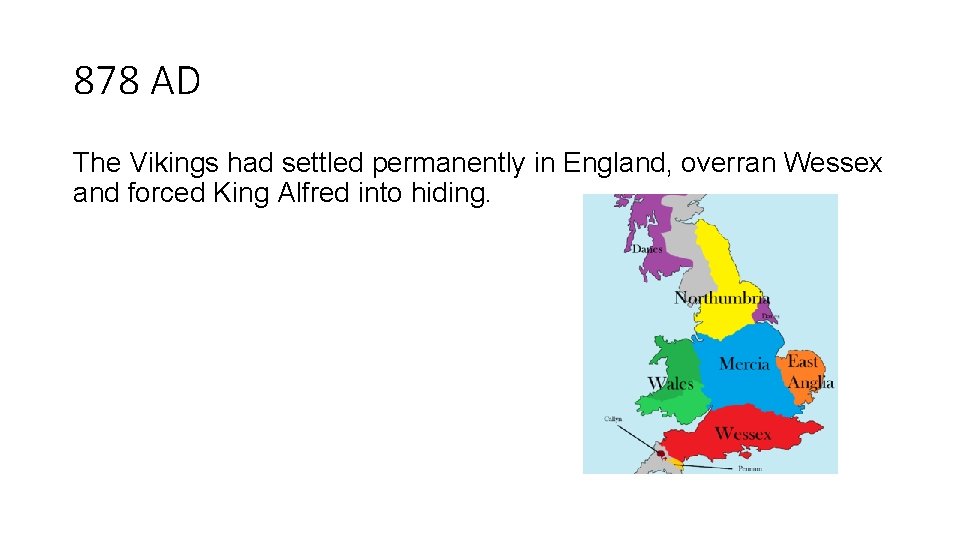
878 AD The Vikings had settled permanently in England, overran Wessex and forced King Alfred into hiding.
886 AD King Alfred agrees to a treaty with the Vikings. Alfred keeps the west and the Vikings are given the east which is later known as ‘Danelaw’.
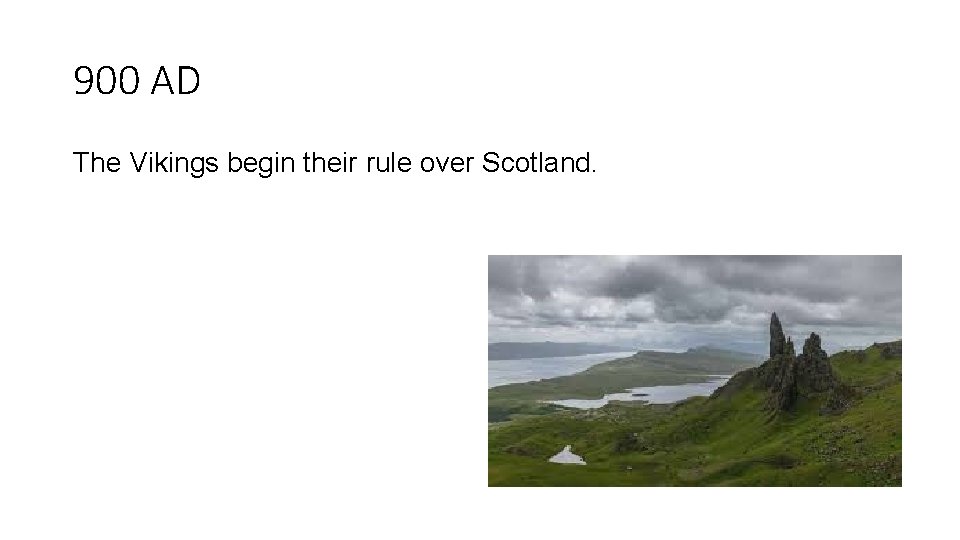
900 AD The Vikings begin their rule over Scotland.
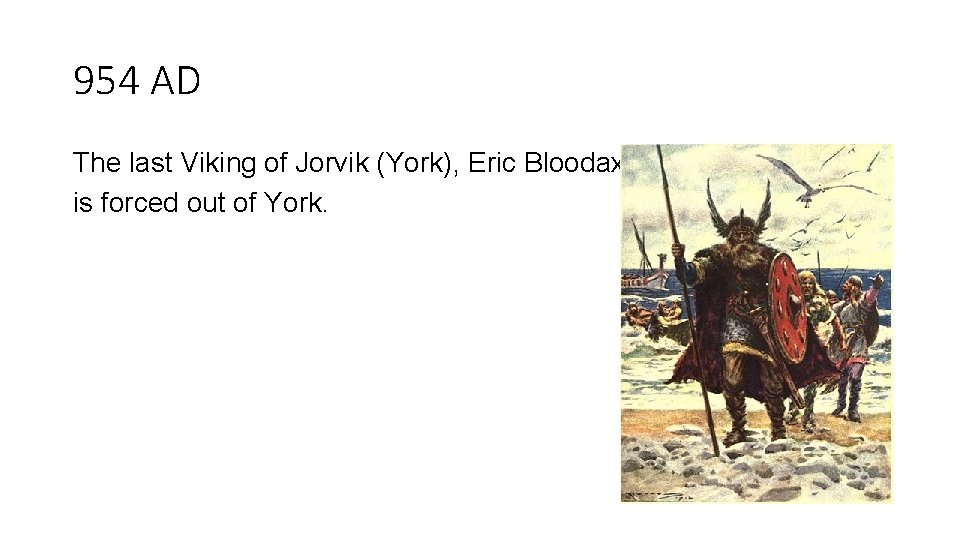
954 AD The last Viking of Jorvik (York), Eric Bloodaxe, is forced out of York.
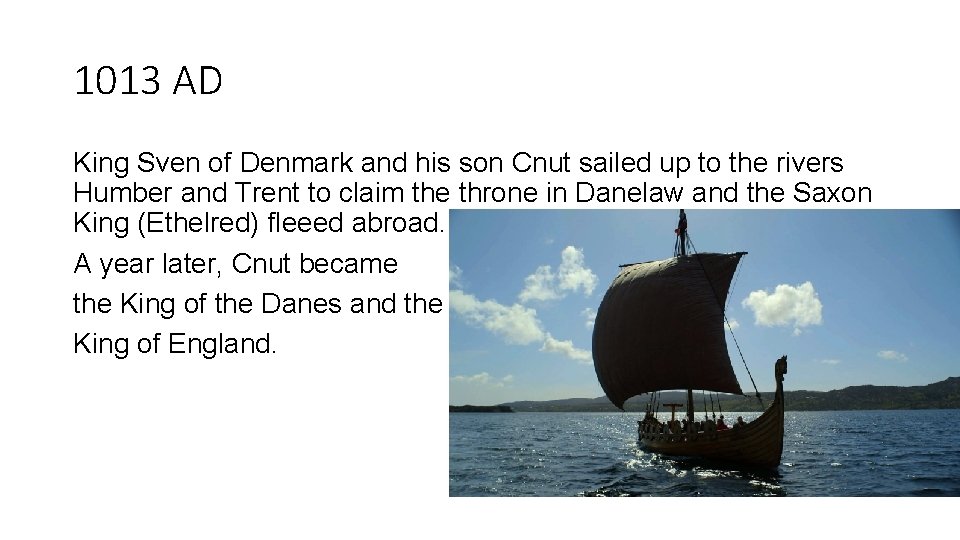
1013 AD King Sven of Denmark and his son Cnut sailed up to the rivers Humber and Trent to claim the throne in Danelaw and the Saxon King (Ethelred) fleeed abroad. A year later, Cnut became the King of the Danes and the King of England.
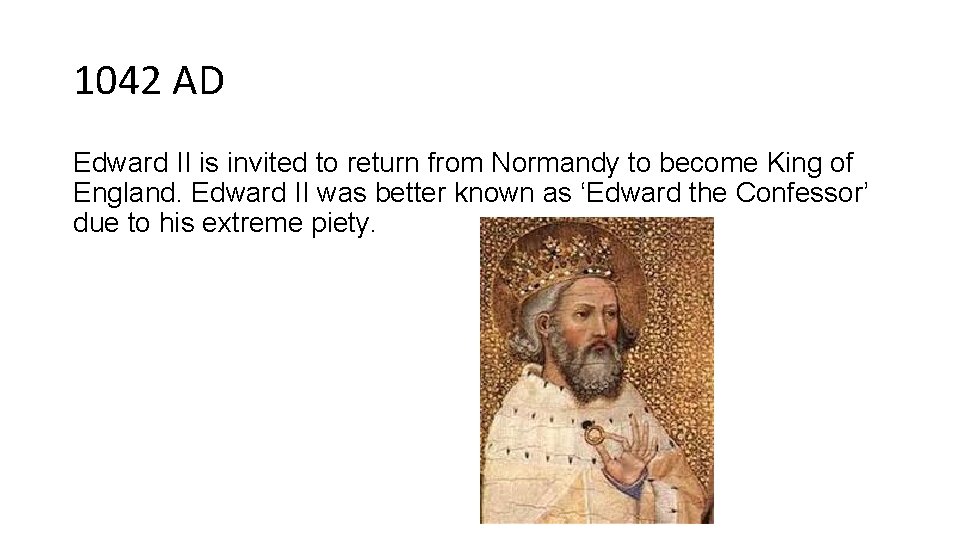
1042 AD Edward II is invited to return from Normandy to become King of England. Edward II was better known as ‘Edward the Confessor’ due to his extreme piety.
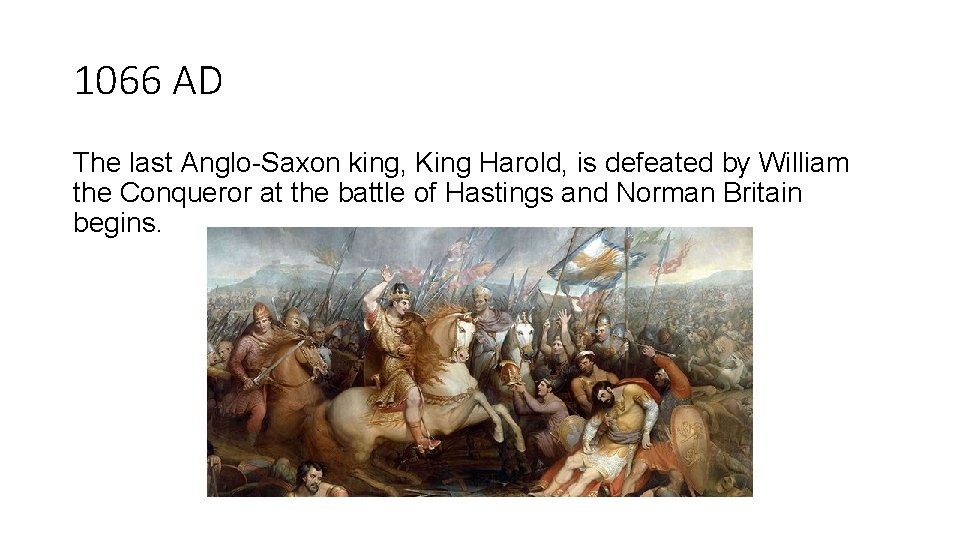
1066 AD The last Anglo-Saxon king, King Harold, is defeated by William the Conqueror at the battle of Hastings and Norman Britain begins.
Why did the Vikings travel to Britain? The Vikings travelled thousands of miles across the sea from their homeland of Scandinavia where they were farmers, fishermen, seafarers and traders. Better land Most Vikings were simply searching for better land for their farms. Their land was not very good for growing crops or raising animals: • Norway was very hilly, • Sweden was covered in forests, • Denmark had a lot of sandy soil. More Land Some historians believe the Vikings left their homes because of over crowding. There was not enough good land for everyone to share. In a Viking family only the eldest son inherited the family farm so younger brothers had to make their living elsewhere. Treasures The Vikings searched for treasures to make them rich. Britain was particularly a good place to raid, as there was much to steal. The Vikings were attracted by the wealth of the Monasteries and the easy treasure to be found within
Task Use what you have learned in the Power. Point to create a timeline of the Vikings invasion. Use the information to write each event in your own words.