
Using a Synthesis Matrix to Improve Information Literacy


- Slides: 12
Using a Synthesis Matrix to Improve Information Literacy and Scientific Writing Skills Tiffany Frey and Heather Lehman Biology Department, Dickinson College
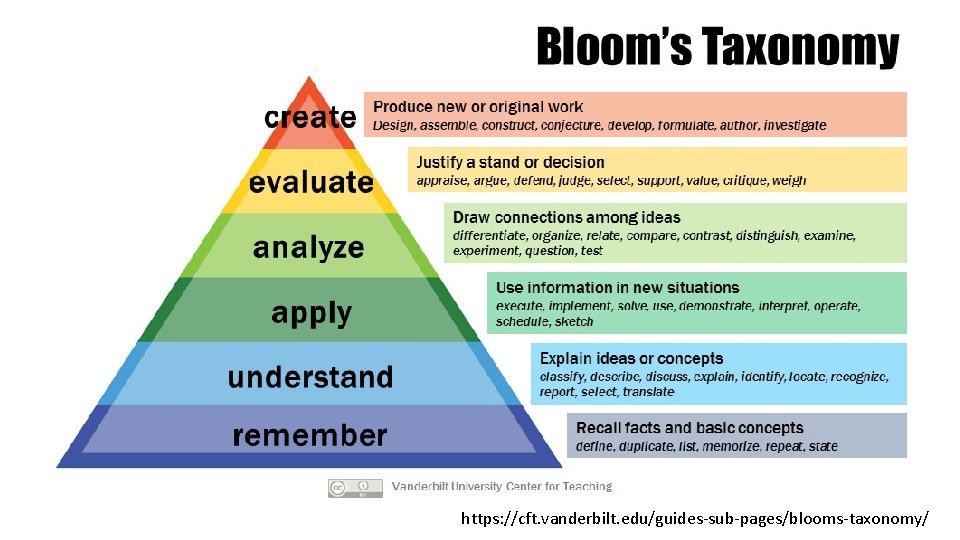
https: //cft. vanderbilt. edu/guides-sub-pages/blooms-taxonomy/
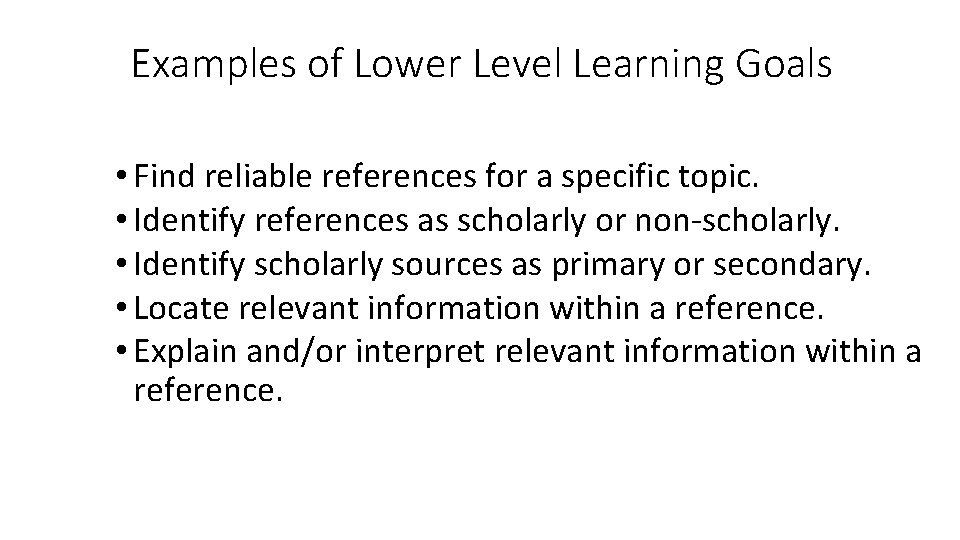
Examples of Lower Level Learning Goals • Find reliable references for a specific topic. • Identify references as scholarly or non-scholarly. • Identify scholarly sources as primary or secondary. • Locate relevant information within a reference. • Explain and/or interpret relevant information within a reference.
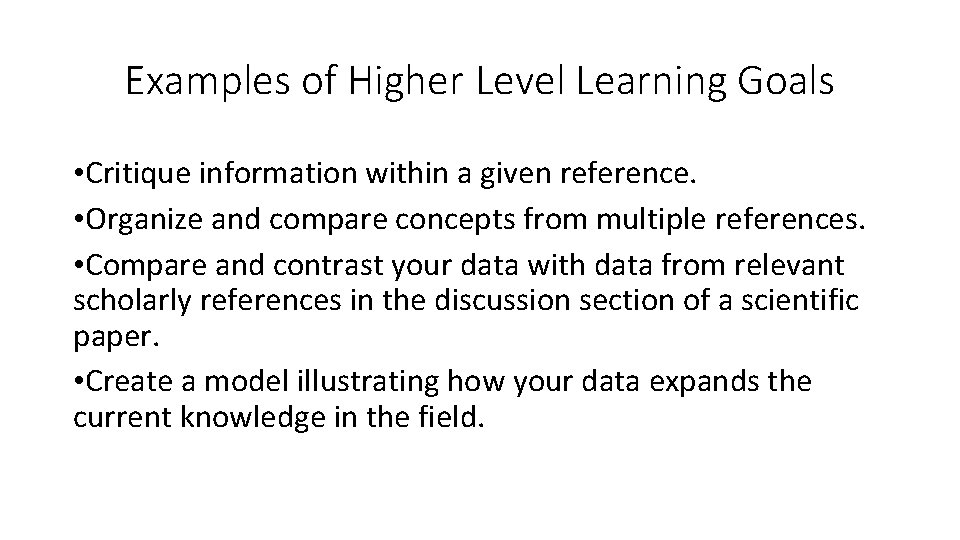
Examples of Higher Level Learning Goals • Critique information within a given reference. • Organize and compare concepts from multiple references. • Compare and contrast your data with data from relevant scholarly references in the discussion section of a scientific paper. • Create a model illustrating how your data expands the current knowledge in the field.
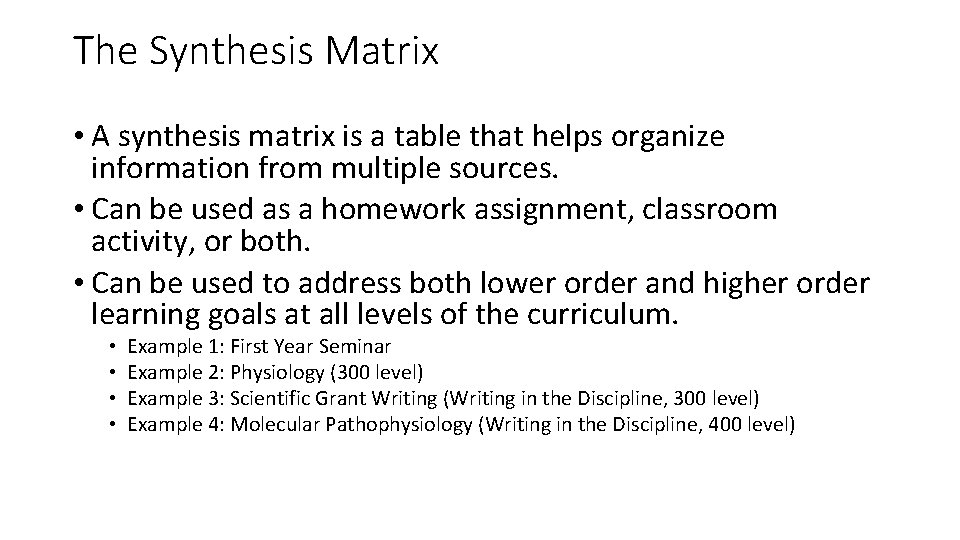
The Synthesis Matrix • A synthesis matrix is a table that helps organize information from multiple sources. • Can be used as a homework assignment, classroom activity, or both. • Can be used to address both lower order and higher order learning goals at all levels of the curriculum. • • Example 1: First Year Seminar Example 2: Physiology (300 level) Example 3: Scientific Grant Writing (Writing in the Discipline, 300 level) Example 4: Molecular Pathophysiology (Writing in the Discipline, 400 level)
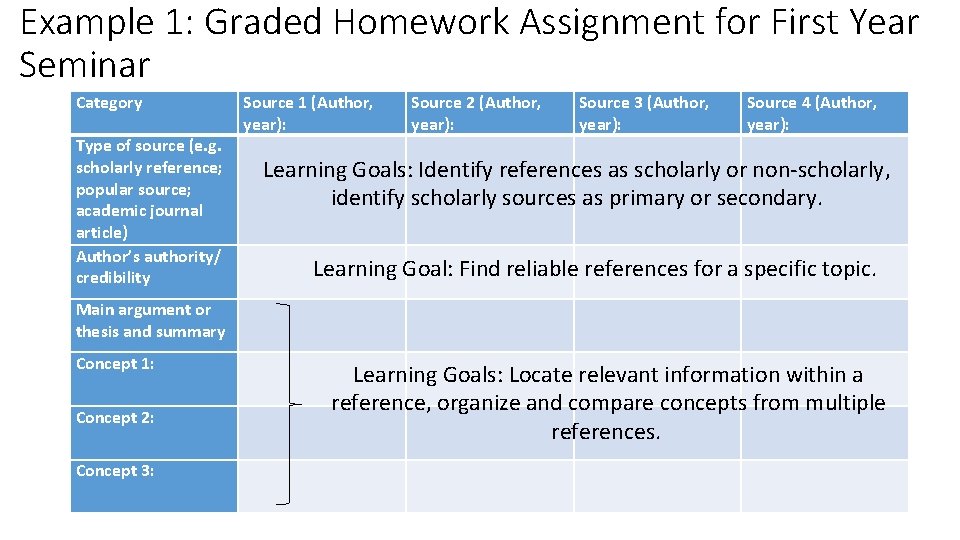
Example 1: Graded Homework Assignment for First Year Seminar Category Type of source (e. g. scholarly reference; popular source; academic journal article) Author’s authority/ credibility Source 1 (Author, year): Source 2 (Author, year): Source 3 (Author, year): Source 4 (Author, year): Learning Goals: Identify references as scholarly or non-scholarly, identify scholarly sources as primary or secondary. Learning Goal: Find reliable references for a specific topic. Main argument or thesis and summary Concept 1: Concept 2: Concept 3: Learning Goals: Locate relevant information within a reference, organize and compare concepts from multiple references.
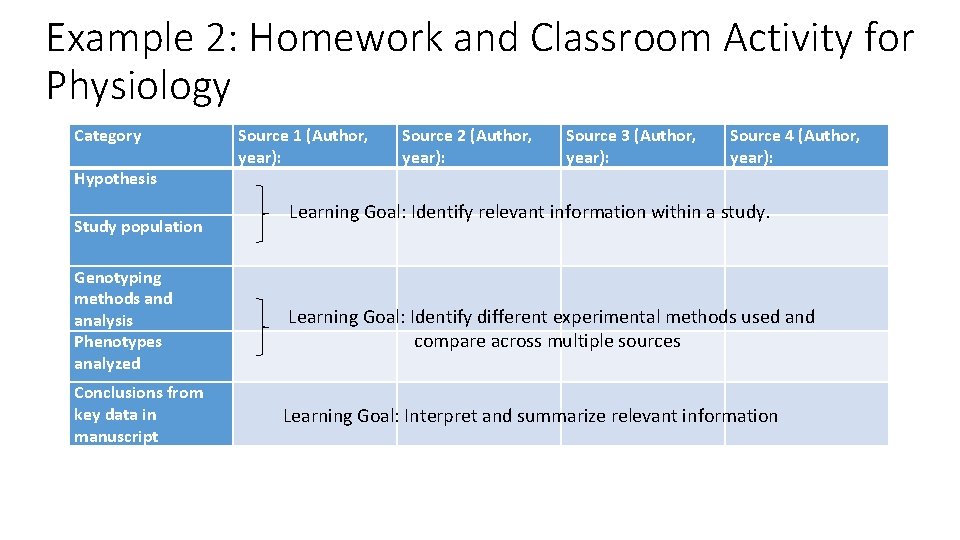
Example 2: Homework and Classroom Activity for Physiology Category Hypothesis Study population Genotyping methods and analysis Phenotypes analyzed Conclusions from key data in manuscript Source 1 (Author, year): Source 2 (Author, year): Source 3 (Author, year): Source 4 (Author, year): Learning Goal: Identify relevant information within a study. Learning Goal: Identify different experimental methods used and compare across multiple sources Learning Goal: Interpret and summarize relevant information
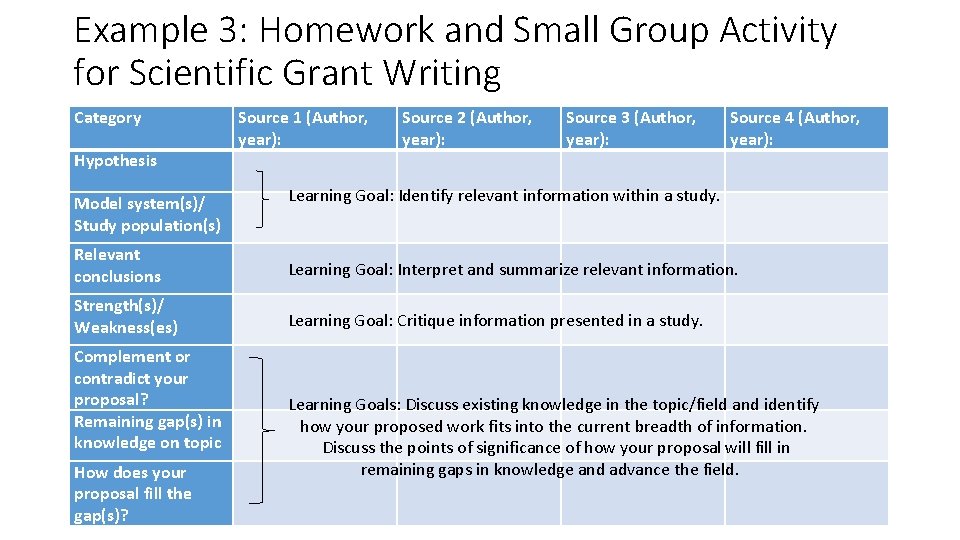
Example 3: Homework and Small Group Activity for Scientific Grant Writing Category Hypothesis Model system(s)/ Study population(s) Source 1 (Author, year): Source 2 (Author, year): Source 3 (Author, year): Source 4 (Author, year): Learning Goal: Identify relevant information within a study. Relevant conclusions Learning Goal: Interpret and summarize relevant information. Strength(s)/ Weakness(es) Learning Goal: Critique information presented in a study. Complement or contradict your proposal? Remaining gap(s) in knowledge on topic How does your proposal fill the gap(s)? Learning Goals: Discuss existing knowledge in the topic/field and identify how your proposed work fits into the current breadth of information. Discuss the points of significance of how your proposal will fill in remaining gaps in knowledge and advance the field.
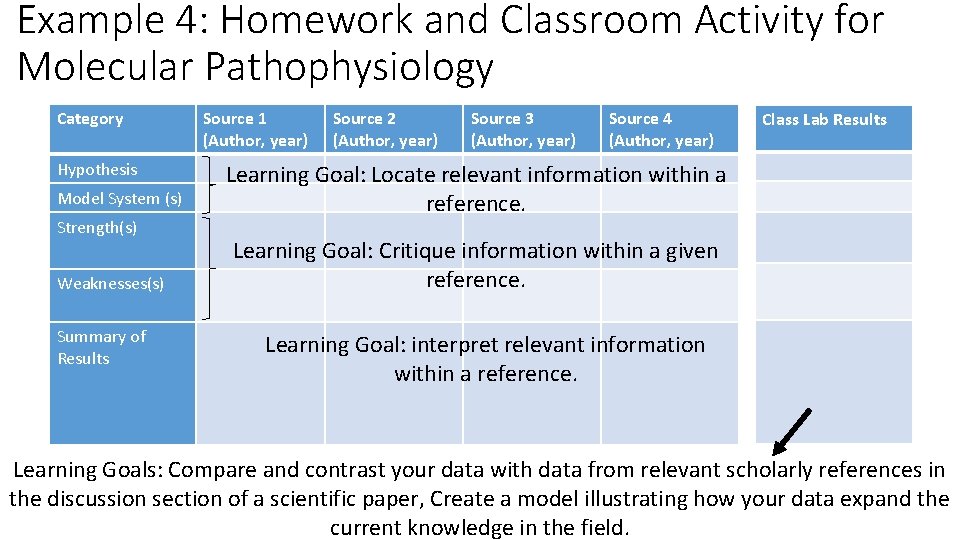
Example 4: Homework and Classroom Activity for Molecular Pathophysiology Category Hypothesis Model System (s) Strength(s) Weaknesses(s) Summary of Results Source 1 (Author, year) Source 2 (Author, year) Source 3 (Author, year) Source 4 (Author, year) Class Lab Results Learning Goal: Locate relevant information within a reference. Learning Goal: Critique information within a given reference. Learning Goal: interpret relevant information within a reference. Learning Goals: Compare and contrast your data with data from relevant scholarly references in the discussion section of a scientific paper, Create a model illustrating how your data expand the current knowledge in the field.
Summary • A synthesis matrix is a simple way to organize information and can: • be used at all levels of the curriculum to address both lower and higher level learning goals. • be used in many different ways for a course (homework, class activity, small group activity). • make grading and assessment easier.
Acknowledgements • Nick Lonergan and Jessica Howard, Dickinson College Librarians
Questions? • Contact information: Tiffany Frey: freyt@dickinson. edu Heather Lehman: lehmanhe@dickinson. edu