
Using a Fire Extinguisher Bureau of Workers Compensation
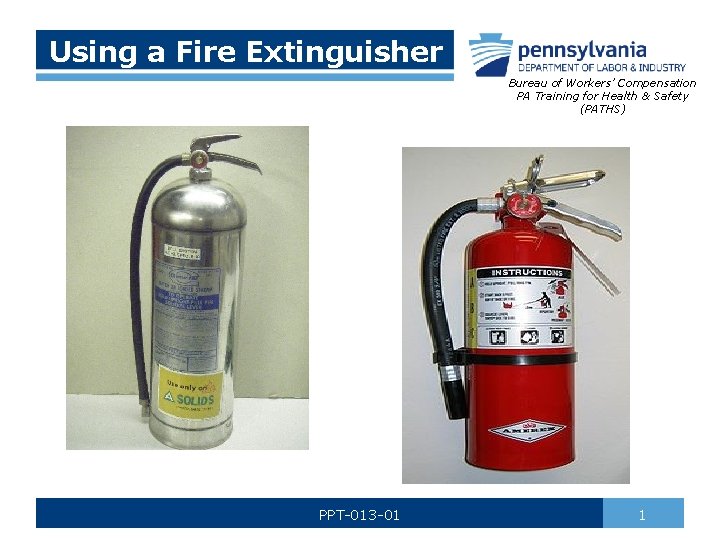
Using a Fire Extinguisher Bureau of Workers’ Compensation PA Training for Health & Safety (PATHS) PPT-013 -01 1
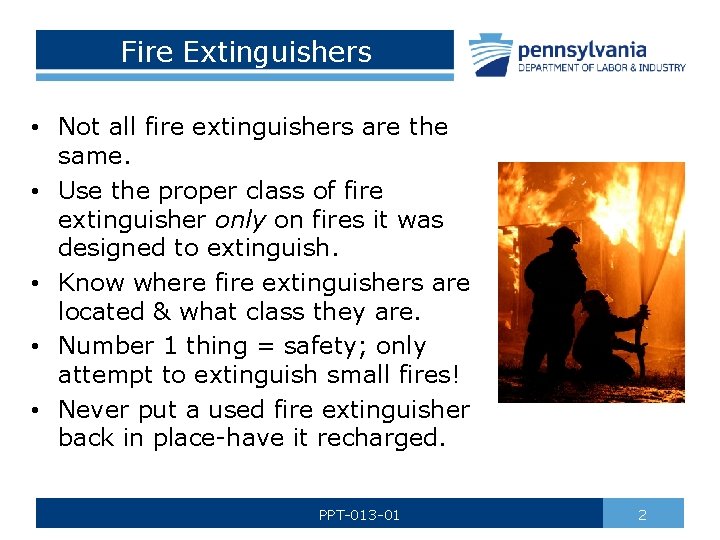
Fire Extinguishers • Not all fire extinguishers are the same. • Use the proper class of fire extinguisher only on fires it was designed to extinguish. • Know where fire extinguishers are located & what class they are. • Number 1 thing = safety; only attempt to extinguish small fires! • Never put a used fire extinguisher back in place-have it recharged. PPT-013 -01 2
General Requirements • Fire extinguishers must be easily accessible at all times! • Must not be obstructed by boxes, chairs, or other miscellaneous items. • Should not be placed on the ground. • Should be mounted in such a way they can’t easily fall and injure someone. PPT-013 -01 3
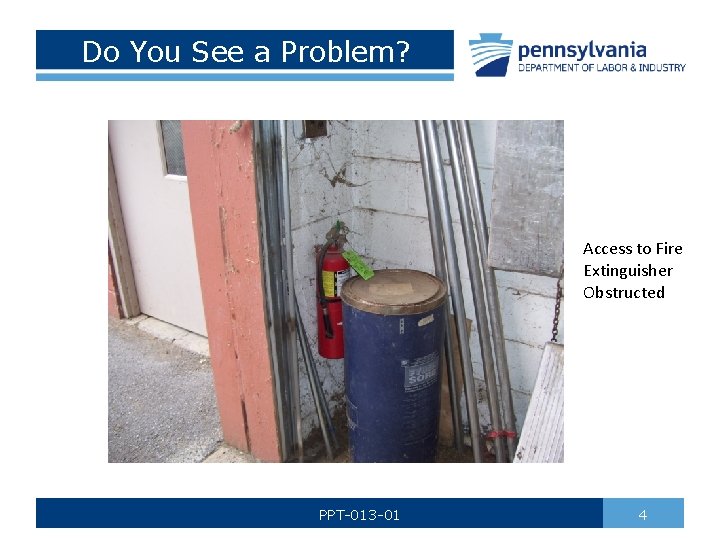
Do You See a Problem? Access to Fire Extinguisher Obstructed PPT-013 -01 4
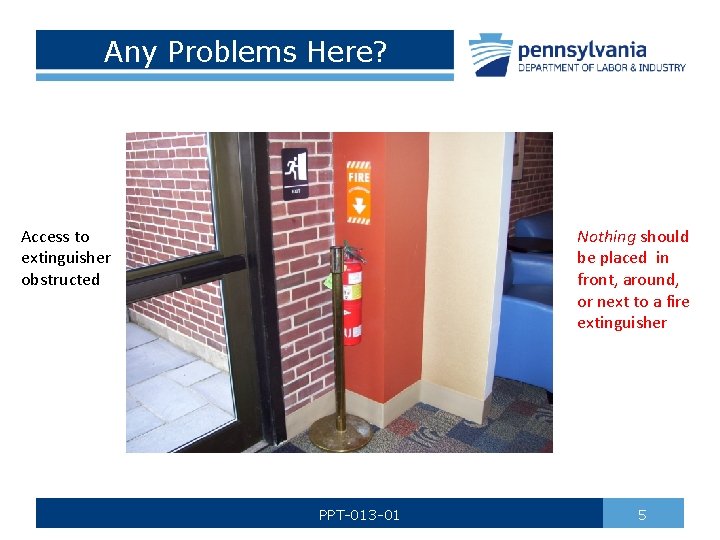
Any Problems Here? Access to extinguisher obstructed Nothing should be placed in front, around, or next to a fire extinguisher PPT-013 -01 5
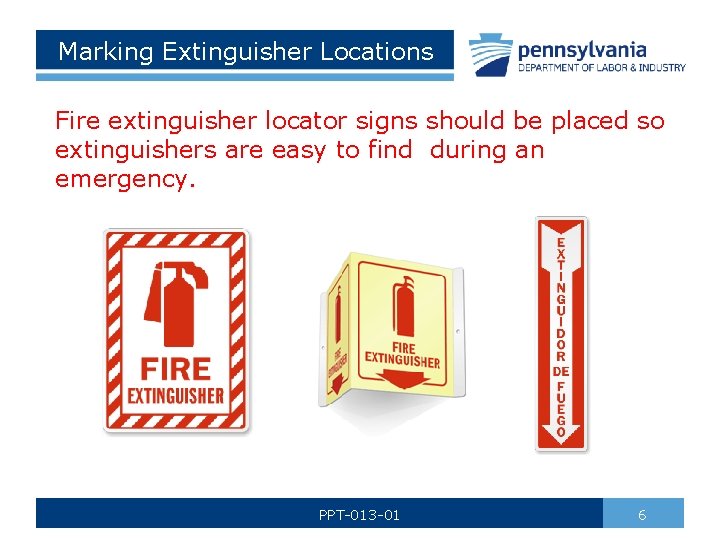
Marking Extinguisher Locations Fire extinguisher locator signs should be placed so extinguishers are easy to find during an emergency. PPT-013 -01 6

Fire Extinguisher Labels • All fire extinguishers should have a label to indicate what class of fire they will extinguish. • Most extinguishers use an international picture label. • Become familiar with fire extinguisher labels before you need to use an extinguisher. PPT-013 -01 7
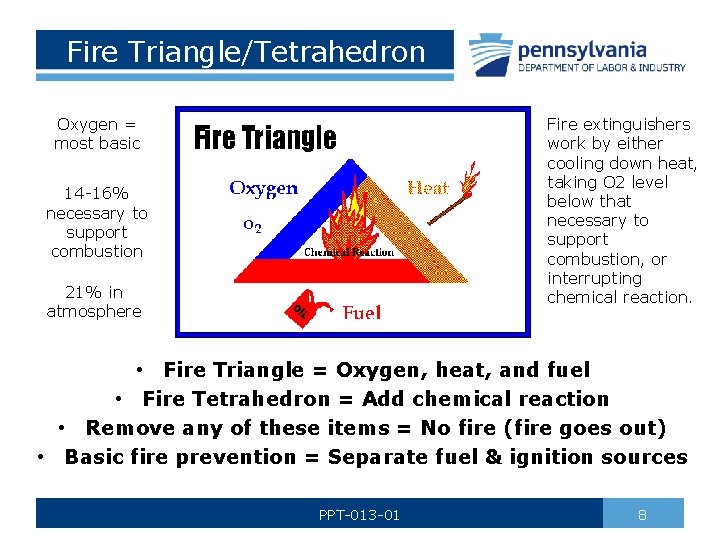
Fire Triangle/Tetrahedron Oxygen = most basic Fire extinguishers work by either cooling down heat, taking O 2 level below that necessary to support combustion, or interrupting chemical reaction. 14 -16% necessary to support combustion 21% in atmosphere • Fire Triangle = Oxygen, heat, and fuel • Fire Tetrahedron = Add chemical reaction • Remove any of these items = No fire (fire goes out) • Basic fire prevention = Separate fuel & ignition sources PPT-013 -01 8
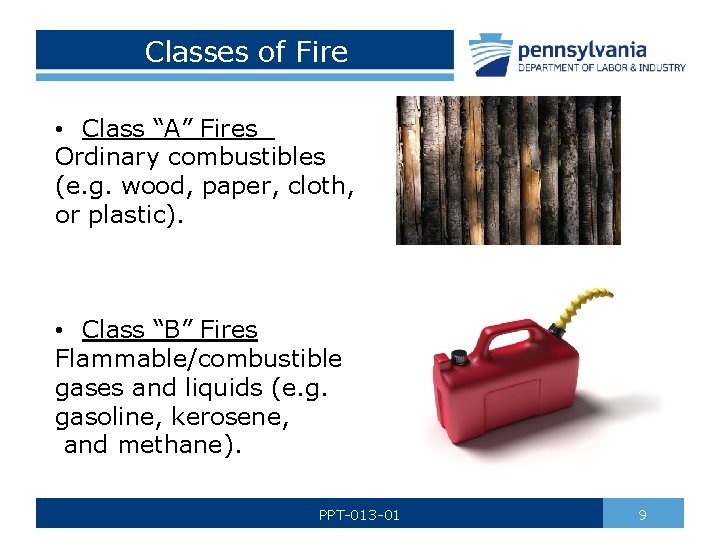
Classes of Fire • Class “A” Fires Ordinary combustibles (e. g. wood, paper, cloth, or plastic). • Class “B” Fires Flammable/combustible gases and liquids (e. g. gasoline, kerosene, and methane). PPT-013 -01 9

Classes of Fire • Class “C” Fires Energized electrical (e. g. power going to the device). • Class “D” Fires Combustible metals (e. g. titanium, zirconium, and magnesium). PPT-013 -01 10

Classes of Fire • Class “K” Fires Cooking grease made from animal fat. • These fires usually burn very hot. • Dangerous to extinguish. • Special fire extinguishers used for these classes of fires. • Usually in kitchen areas of restaurants/cafeterias. PPT-013 -01 11
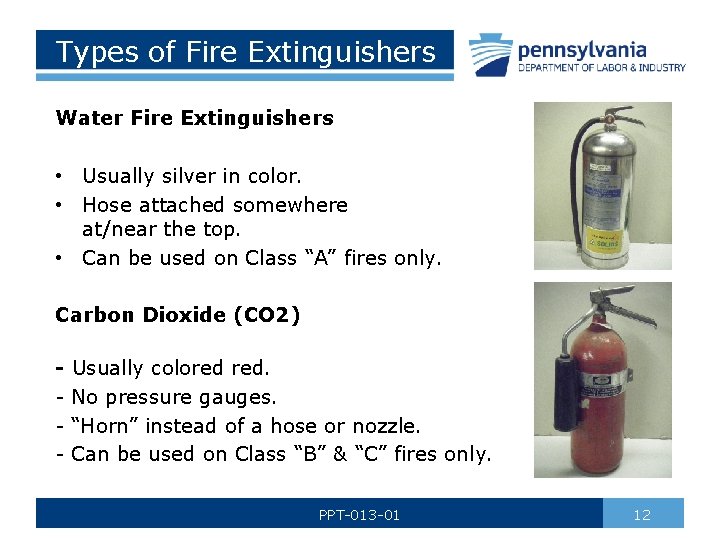
Types of Fire Extinguishers Water Fire Extinguishers • Usually silver in color. • Hose attached somewhere at/near the top. • Can be used on Class “A” fires only. Carbon Dioxide (CO 2) - Usually colored red. No pressure gauges. “Horn” instead of a hose or nozzle. Can be used on Class “B” & “C” fires only. PPT-013 -01 12
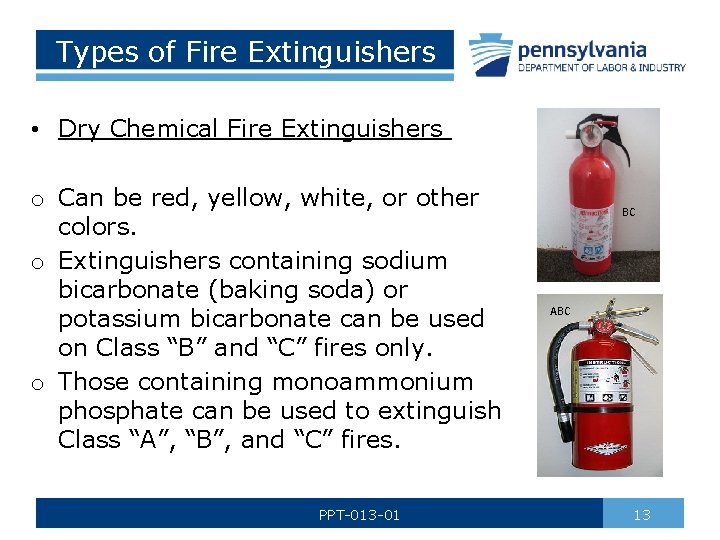
Types of Fire Extinguishers • Dry Chemical Fire Extinguishers o Can be red, yellow, white, or other colors. o Extinguishers containing sodium bicarbonate (baking soda) or potassium bicarbonate can be used on Class “B” and “C” fires only. o Those containing monoammonium phosphate can be used to extinguish Class “A”, “B”, and “C” fires. PPT-013 -01 BC ABC 13

Types of Fire Extinguishers • Class “D” Fire Extinguishers o Contain special material (e. g. graphite). o Use only on fires involving combustible metals (e. g. titanium, zirconium, etc. ). PPT-013 -01 14

Types of Fire Extinguishers • Halon Fire Extinguishers “Halogenated hydrocarbons. ” (similar to Freon) Primarily used to extinguish fires in sophisticated electrical/computer equipment (Class “C” fires). • “Wet Chemical” Fire Extinguishers Primarily used to extinguish Class “K” fires (cooking grease made with animal fats). PPT-013 -01 15
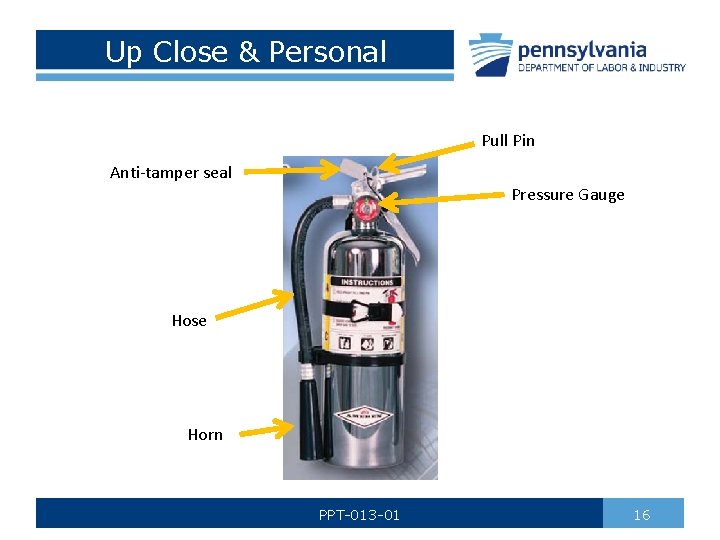
Up Close & Personal Pull Pin Anti-tamper seal Pressure Gauge Hose Horn PPT-013 -01 16
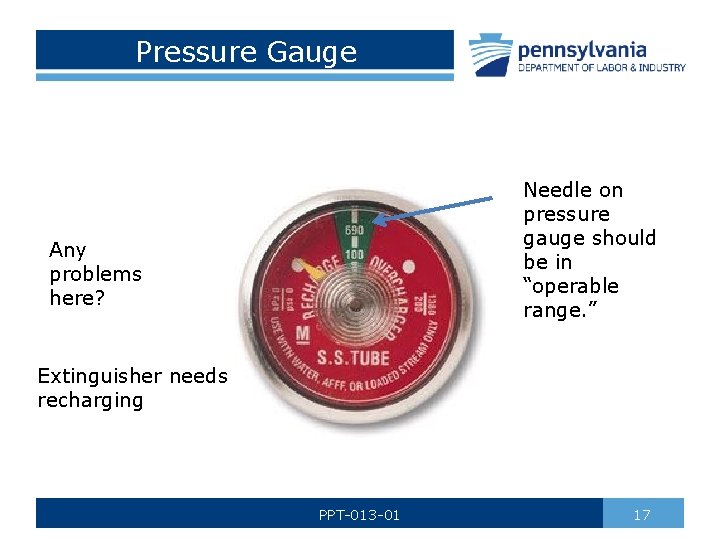
Pressure Gauge Needle on pressure gauge should be in “operable range. ” Any problems here? Extinguisher needs recharging PPT-013 -01 17
To Use a Fire Extinguisher Remember the word P. A. S. S. P = Pull the pin on the fire extinguisher handle. A = Aim the nozzle/horn of the extinguisher at the base/bottom of the fire. S = Squeeze the handles together to make the extinguisher work. S = Sweep the extinguisher from side to side as if using a broom. PPT-013 -01 18
After Using a Fire Extinguisher • Never put the used extinguisher back up on the wall (even if used for only five seconds)! • A fire extinguisher that’s been used may not operate again due to the pressure inside leaking out. • Notify the appropriate individual/department so the used extinguisher can be replaced and recharged as quickly as possible. PPT-013 -01 19
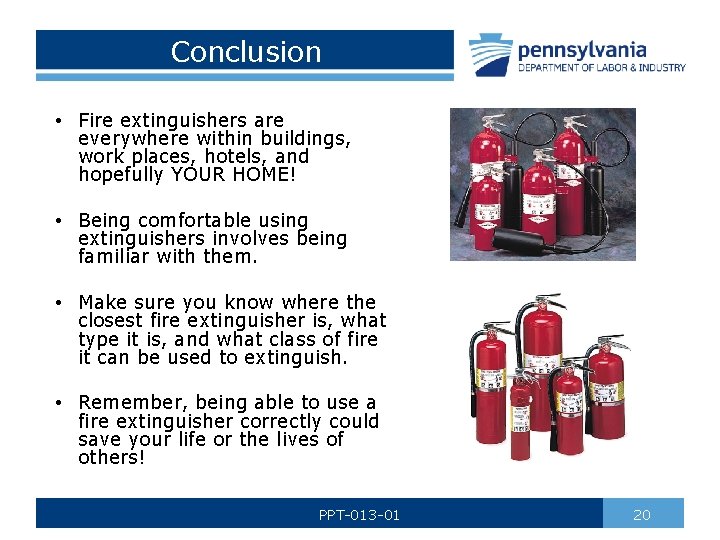
Conclusion • Fire extinguishers are everywhere within buildings, work places, hotels, and hopefully YOUR HOME! • Being comfortable using extinguishers involves being familiar with them. • Make sure you know where the closest fire extinguisher is, what type it is, and what class of fire it can be used to extinguish. • Remember, being able to use a fire extinguisher correctly could save your life or the lives of others! PPT-013 -01 20
Contact Information Health & Safety Training Specialists 1171 South Cameron Street, Room 324 Harrisburg, PA 17104 -2501 (717) 772 -1635 RA-LI-BWC-PATHS@pa. gov Like us on Facebook! https: //www. facebook. com/BWCPATHS PPT-013 -01 21
Questions PPT-013 -01 22
- Slides: 22