
USHER SYNDROME What we need to know Annette
- Slides: 28
USHER SYNDROME: What we need to know Annette Hurley, Ph. D LSU Health Sciences Center
Audience?
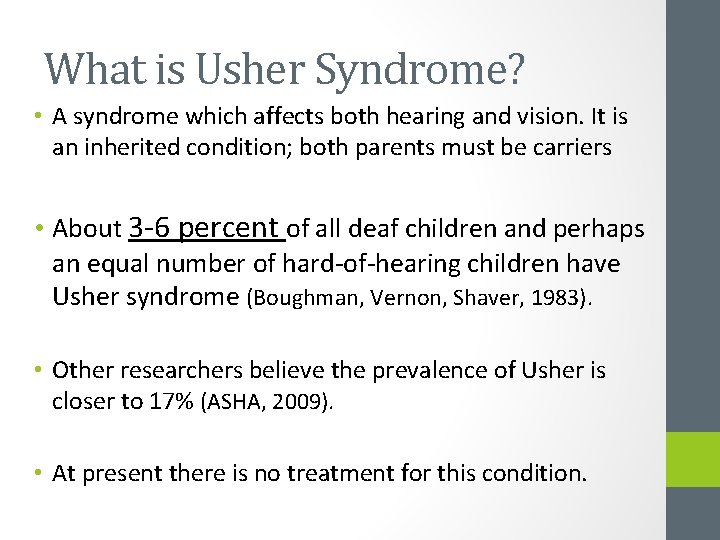
What is Usher Syndrome? • A syndrome which affects both hearing and vision. It is an inherited condition; both parents must be carriers • About 3 -6 percent of all deaf children and perhaps an equal number of hard-of-hearing children have Usher syndrome (Boughman, Vernon, Shaver, 1983). • Other researchers believe the prevalence of Usher is closer to 17% (ASHA, 2009). • At present there is no treatment for this condition.
Types of Usher Syndrome
Type 1 (USH 1) • Marked by profound deafness at birth and severe balance problems. • Many will not benefit from hearing aids • May use sign language to communicate. • May be implanted at an early age. • These children begin to develop vision problems by the time they are 10 and usually start with difficulty seeing at night; this progresses rapidly until blindness eventually occurs.
Type 2 (USH 2) • Marked by moderate to severe hearing loss at birth but no balance problems. • Most of these children benefit from hearing aids and will use speech to communicate. • The visual problems tend to progress more slowly than in USH 1 and are characterised by blind spots that begin to appear during the teenage years. Gradually, the vision deteriorates to blindness.
Type 3 (USH 3) • These children have normal hearing and near normal balance. • They usually develop hearing problems during their teenage years and become deaf by mid to late adulthood. • Night blindness usually starts during puberty, blind spots appear in early adulthood and the individual is usually blind by mid adulthood. • (Least represented in the US- more common in Finland. )
Hearing Loss • 95% of infants in the US are evaluated prior to discharge by early hearing detection and intervention programs. (NCHAM) lowering the age of identification of hearing loss. • Dx of Usher syndrome, typically lags 5 -10 years behind the identification of the hearing loss (Kimberling & Lindenmuth, 2007). Early diagnosis might affect management. • Genetics: • Connexin 26 responsible for 50% of non-syndromic hearing losses. • Cost? • Affect Management
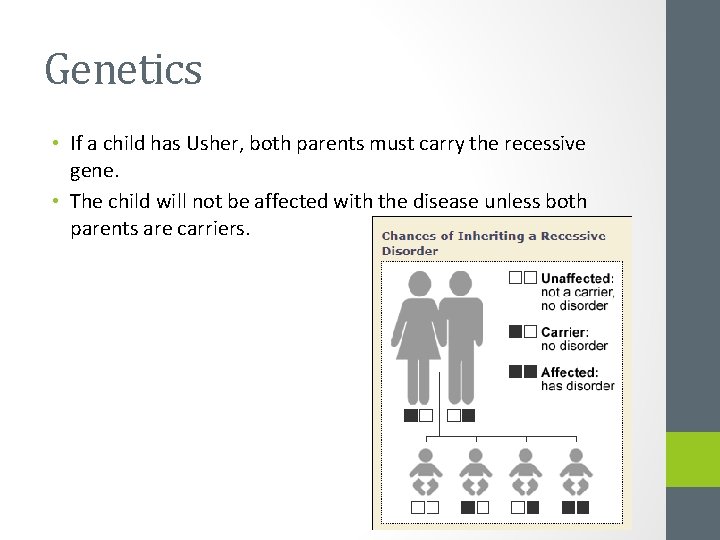
Genetics • If a child has Usher, both parents must carry the recessive gene. • The child will not be affected with the disease unless both parents are carriers.
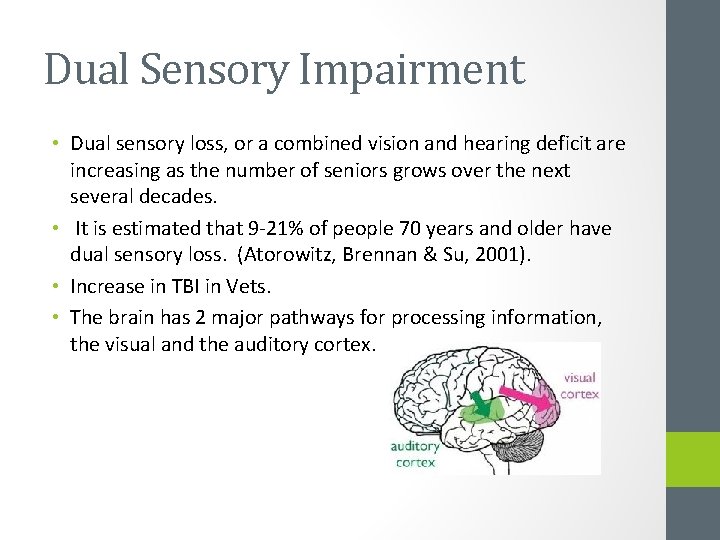
Dual Sensory Impairment • Dual sensory loss, or a combined vision and hearing deficit are increasing as the number of seniors grows over the next several decades. • It is estimated that 9 -21% of people 70 years and older have dual sensory loss. (Atorowitz, Brennan & Su, 2001). • Increase in TBI in Vets. • The brain has 2 major pathways for processing information, the visual and the auditory cortex.
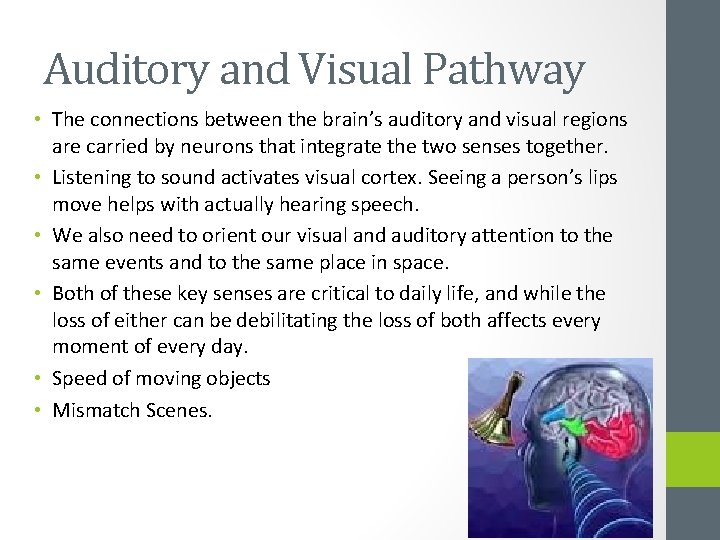
Auditory and Visual Pathway • The connections between the brain’s auditory and visual regions are carried by neurons that integrate the two senses together. • Listening to sound activates visual cortex. Seeing a person’s lips move helps with actually hearing speech. • We also need to orient our visual and auditory attention to the same events and to the same place in space. • Both of these key senses are critical to daily life, and while the loss of either can be debilitating the loss of both affects every moment of every day. • Speed of moving objects • Mismatch Scenes.
Auditory System • Develops in first 20 weeks of gestation • Early onset auditory deprivation can have a profound effect on development. • Brain changes without stimulation • Pre/Post lingual • Hearing Age? Vs Chronological Age
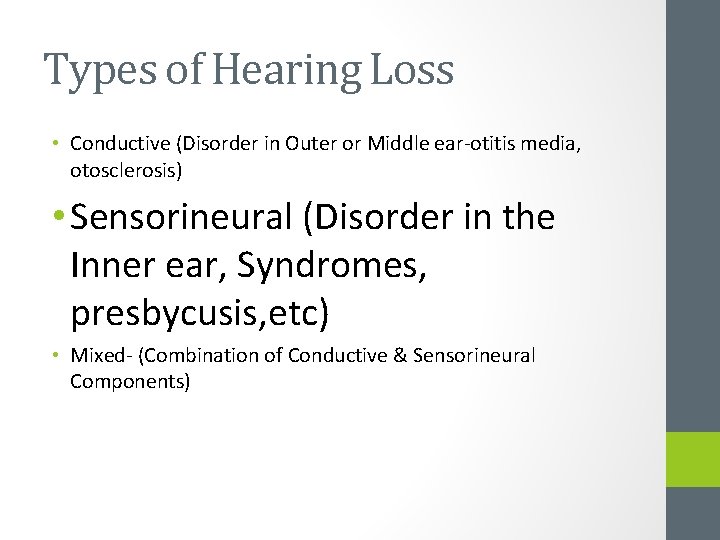
Types of Hearing Loss • Conductive (Disorder in Outer or Middle ear-otitis media, otosclerosis) • Sensorineural (Disorder in the Inner ear, Syndromes, presbycusis, etc) • Mixed- (Combination of Conductive & Sensorineural Components)
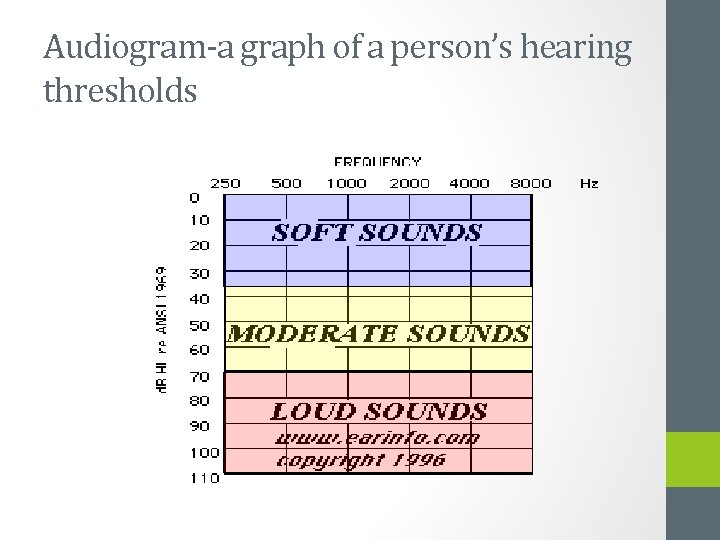
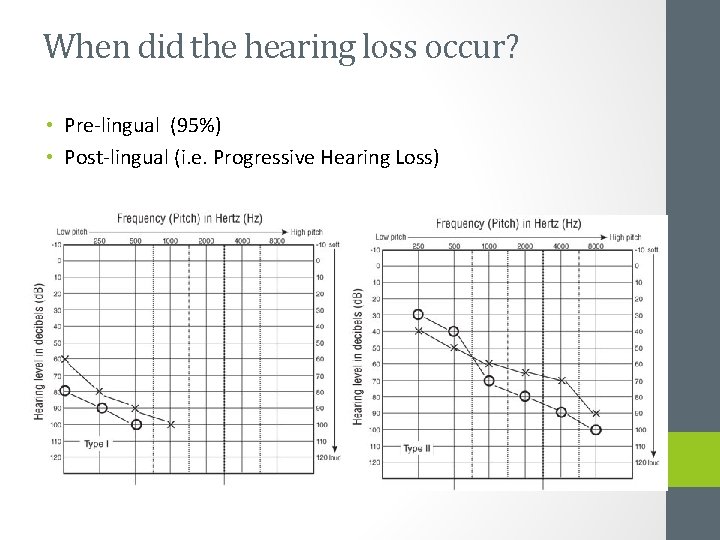
Audiogram-a graph of a person’s hearing thresholds
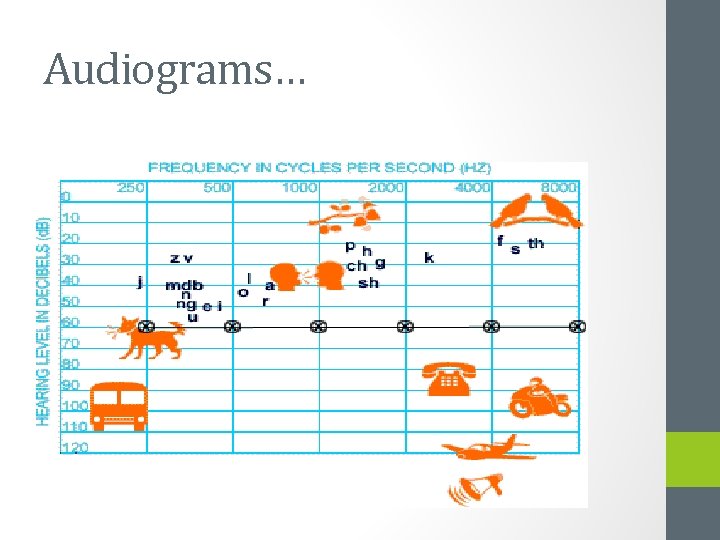
Audiograms…
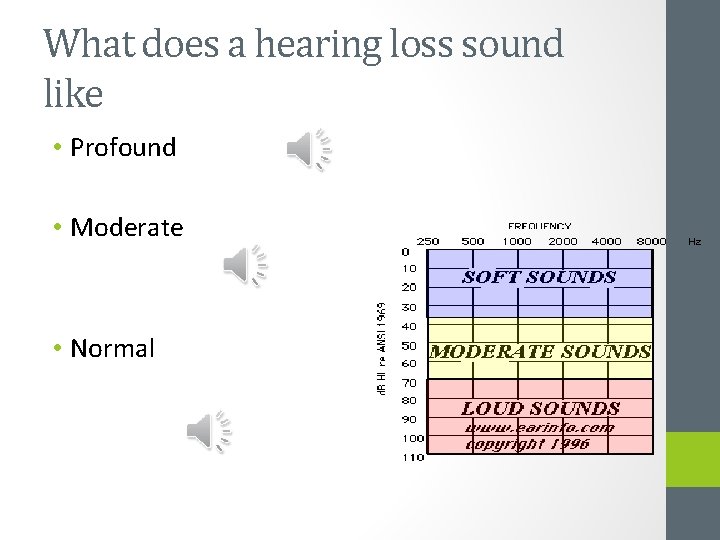
What does a hearing loss sound like • Profound • Moderate • Normal
When did the hearing loss occur? • Pre-lingual (95%) • Post-lingual (i. e. Progressive Hearing Loss)
Prevalence of Hearing Loss • 28 million Americans in the U. S. have a hearing loss. • 27, 000 individuals in the US have Usher (PPNET). • Children under 18 years of age have the lowest prevalence, but greatest educational impact!
How Many Children Are Affected? • Over 1 million children in the United States have a hearing loss. • For every 1000 children in this country, 83 have an educationally significant hearing impairment. • Approximately 3 -6% of deaf children have Usher Syndrome. Other researchers believe 17% of Deaf individuals.
Treatment for Usher Syndrome • Currently no medical treatment to prevent, slow the progression, or inhibit the transmission of Usher syndrome.
Cochlear Implants • A surgically implanted device that brings sound to the inner ear. This is used only for persons with profound hearing impairment.
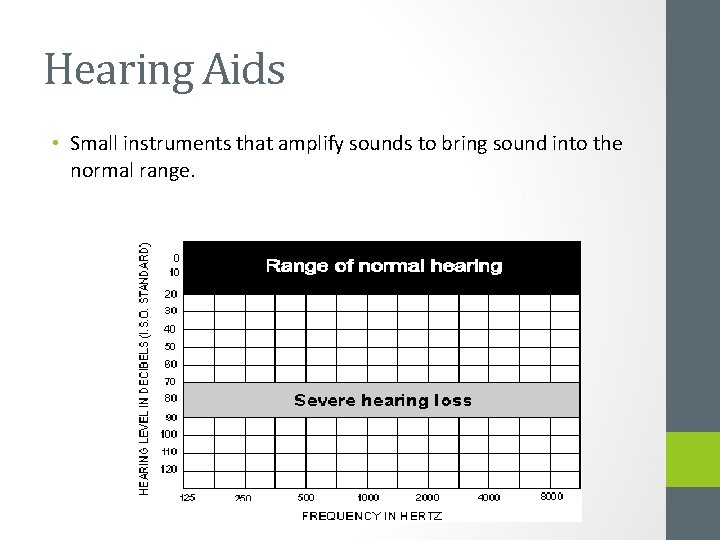
Hearing Aids • Small instruments that amplify sounds to bring sound into the normal range.
Assistive Devices FM systems • System which brings a signal such as the teacher’s voice directly to the student by means of frequency modulated radio waves. • Improves the signal to noise ratio
Deaf Culture American Sign Language • “Deaf” is a term used to describe a person who belongs to the “Deaf” community. They usually attend Deaf schools and use American Sign Language (ASL) for communication purposes. • 90% of children who are deaf have hearing parents. • Adaptive “Hands-On” Signing and Finger Spelling.
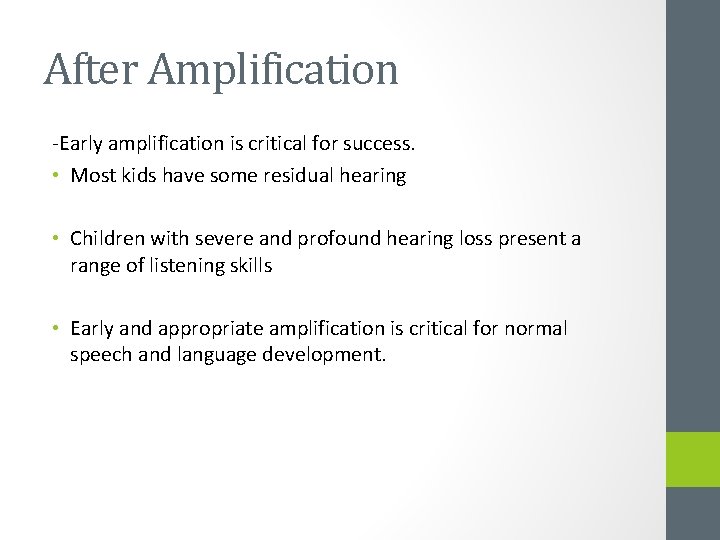
After Amplification -Early amplification is critical for success. • Most kids have some residual hearing • Children with severe and profound hearing loss present a range of listening skills • Early and appropriate amplification is critical for normal speech and language development.
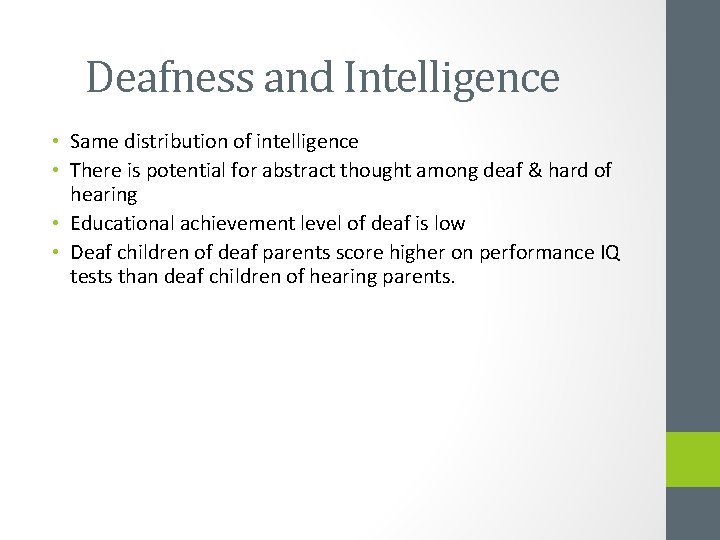
Deafness and Intelligence • Same distribution of intelligence • There is potential for abstract thought among deaf & hard of hearing • Educational achievement level of deaf is low • Deaf children of deaf parents score higher on performance IQ tests than deaf children of hearing parents.
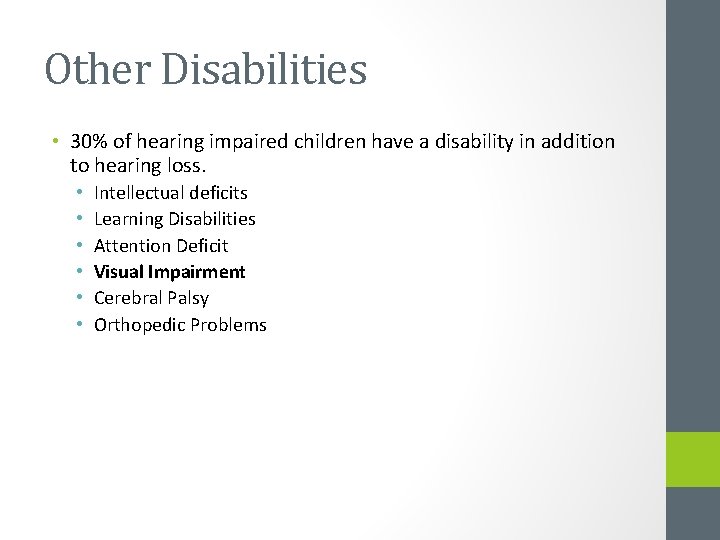
Other Disabilities • 30% of hearing impaired children have a disability in addition to hearing loss. • • • Intellectual deficits Learning Disabilities Attention Deficit Visual Impairment Cerebral Palsy Orthopedic Problems
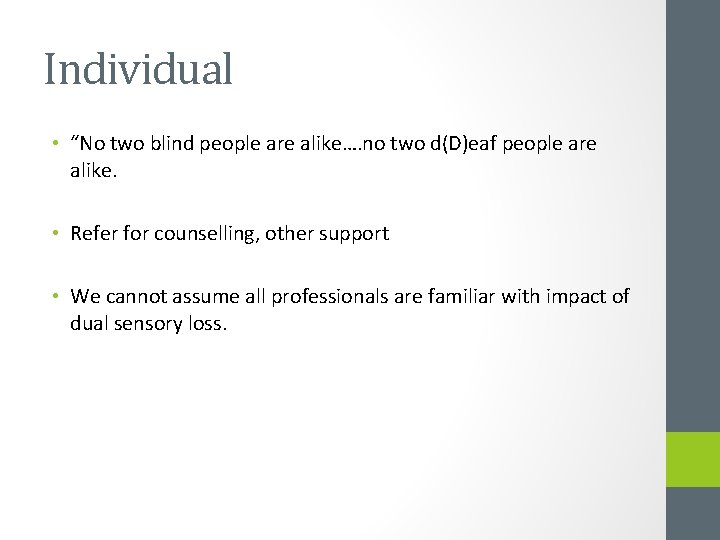
Individual • “No two blind people are alike…. no two d(D)eaf people are alike. • Refer for counselling, other support • We cannot assume all professionals are familiar with impact of dual sensory loss.