
USGS Famine Early Warning System Network Perspective on
- Slides: 20
USGS / Famine Early Warning System Network Perspective on FEWS NET Analytical Approaches in the Greater Horn of Africa Early Warning Workshop, 4 October 2006 Gideon Galu ggalu@fews. net
USGS / Famine Early Warning System Network Perspective: 1. Background/Context • • 2. Framework Network Partners Monitoring & Analytical Approaches • • 3. Monitoring field and remotely sensed data Livelihoods based analysis Development of new decision support tools Regular region-wide field assessments Capacity Building at National/District level • 4. Technical support in food security monitoring and analysis Major challenges • • • Availability & reliability of data / Partnership Understanding livelihoods Accurate identification of chronic vulnerable communities and response. . Early Warning Workshop, 4 October 2006
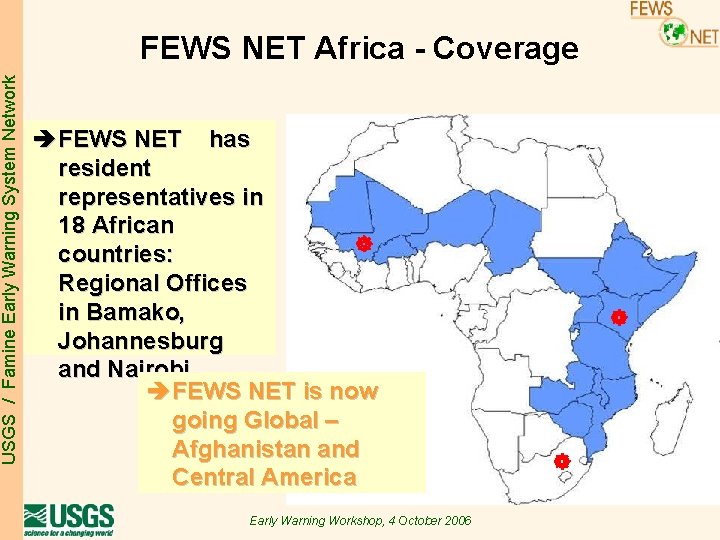
USGS / Famine Early Warning System Network FEWS NET Africa - Coverage è FEWS NET has resident representatives in 18 African countries: Regional Offices in Bamako, Johannesburg and Nairobi. è FEWS NET is now going Global – Afghanistan and Central America Early Warning Workshop, 4 October 2006
USGS / Famine Early Warning System Network THE FEWS NET VISION To provide decision makers and planners with accurate, timely, and actionable information to prevent hunger-related deaths, mitigate food insecurity and to strengthen livelihoods… Early Warning Workshop, 4 October 2006
USGS / Famine Early Warning System Network FEWS NET Mission Statement (cont. ) in Africa, Central America & the Caribbean, and Afghanistan through providing early warning information related to food security threats, developing information networks and building local capacity for information generation and dissemination. Early Warning Workshop, 4 October 2006
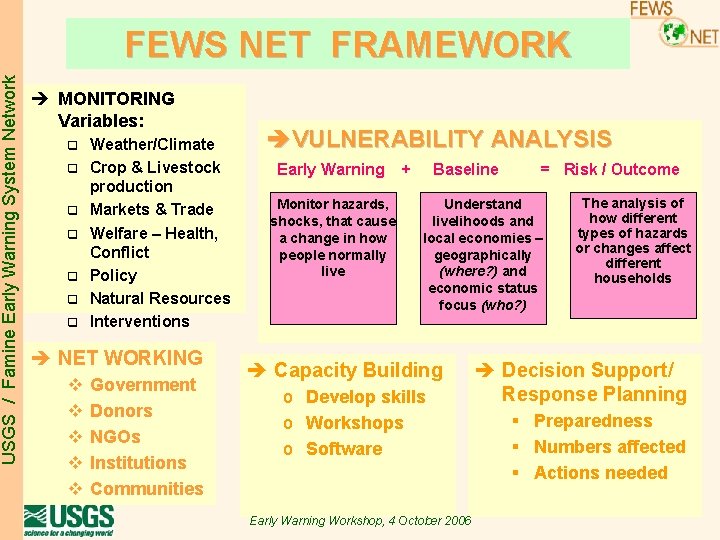
USGS / Famine Early Warning System Network FEWS NET FRAMEWORK è MONITORING Variables: q q q q Weather/Climate Crop & Livestock production Markets & Trade Welfare – Health, Conflict Policy Natural Resources Interventions è NET WORKING v v v Government Donors NGOs Institutions Communities è VULNERABILITY ANALYSIS Early Warning Monitor hazards, shocks, that cause a change in how people normally live + Baseline = Risk / Outcome Understand livelihoods and local economies – geographically (where? ) and economic status focus (who? ) è Capacity Building o Develop skills o Workshops o Software Early Warning Workshop, 4 October 2006 The analysis of how different types of hazards or changes affect different households è Decision Support/ Response Planning § Preparedness § Numbers affected § Actions needed
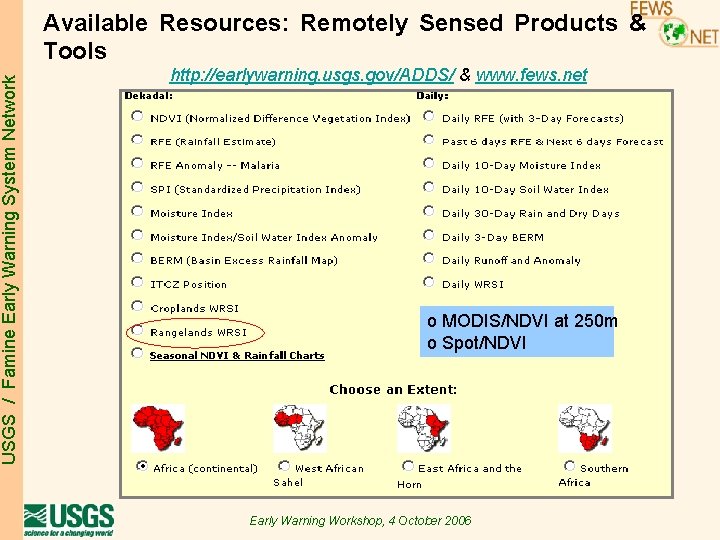
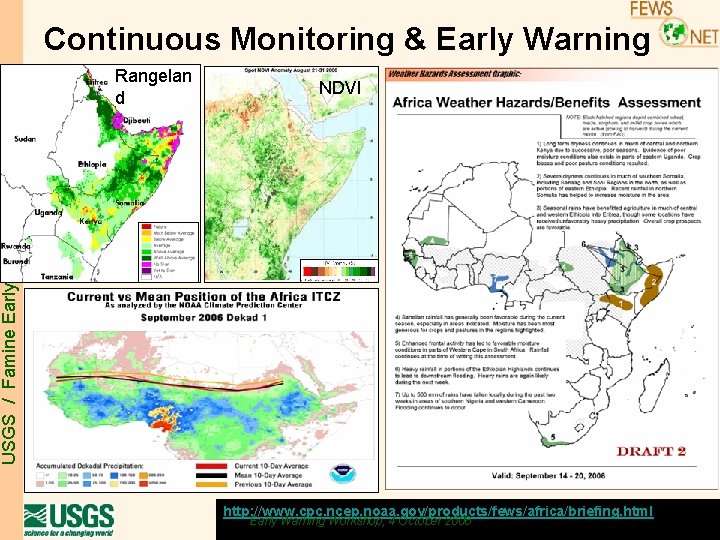
USGS / Famine Early Warning System Network Available Resources: Remotely Sensed Products & Tools http: //earlywarning. usgs. gov/ADDS/ & www. fews. net o MODIS/NDVI at 250 m o Spot/NDVI Early Warning Workshop, 4 October 2006
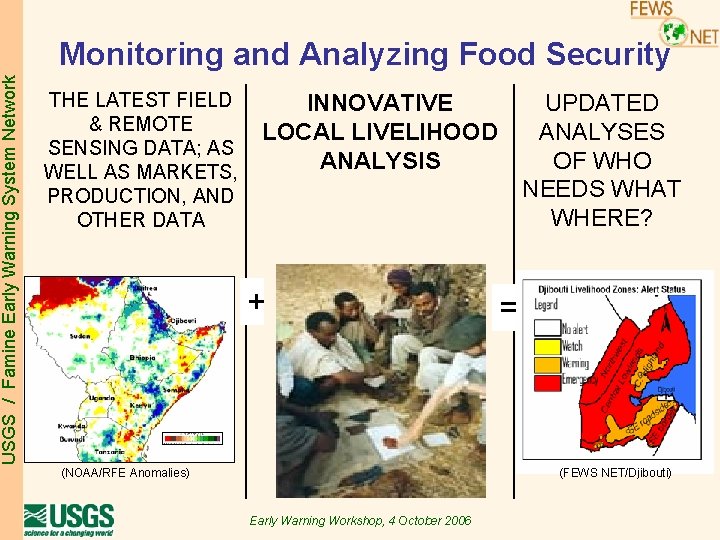
USGS / Famine Early Warning System Network Monitoring and Analyzing Food Security THE LATEST FIELD & REMOTE SENSING DATA; AS WELL AS MARKETS, PRODUCTION, AND OTHER DATA INNOVATIVE LOCAL LIVELIHOOD ANALYSIS + (NOAA/RFE Anomalies) UPDATED ANALYSES OF WHO NEEDS WHAT WHERE? = (FEWS NET/Djibouti) Early Warning Workshop, 4 October 2006
USGS / Famine Early Warning System Network Continuous Monitoring & Early Warning Rangelan d NDVI http: //www. cpc. ncep. noaa. gov/products/fews/africa/briefing. html Early Warning Workshop, 4 October 2006
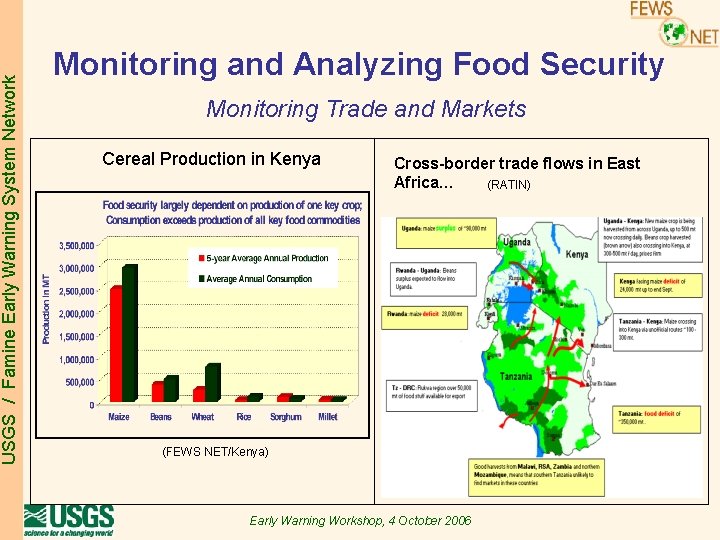
USGS / Famine Early Warning System Network Monitoring and Analyzing Food Security Monitoring Trade and Markets Cereal Production in Kenya Cross-border trade flows in East Africa… (RATIN) (FEWS NET/Kenya) Early Warning Workshop, 4 October 2006
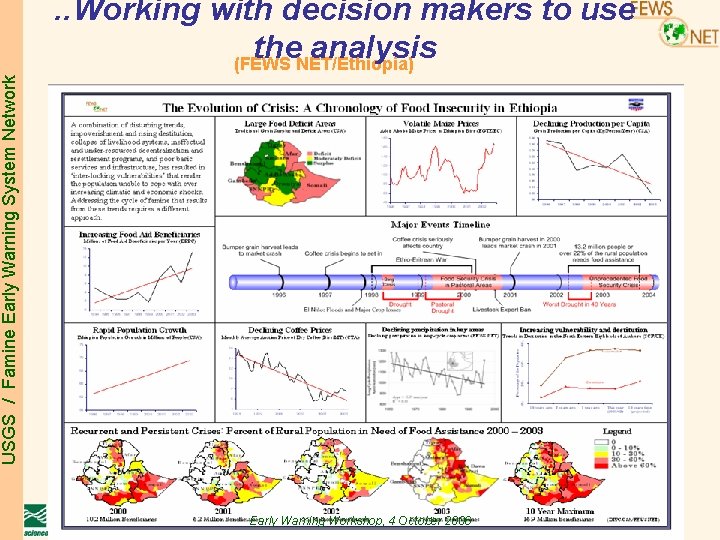
USGS / Famine Early Warning System Network . . Working with decision makers to use the analysis (FEWS NET/Ethiopia) Early Warning Workshop, 4 October 2006
USGS / Famine Early Warning System Network Drought Tendencies in Ethiopia (FEWS NET/Ethiopia) Early Warning Workshop, 4 October 2006
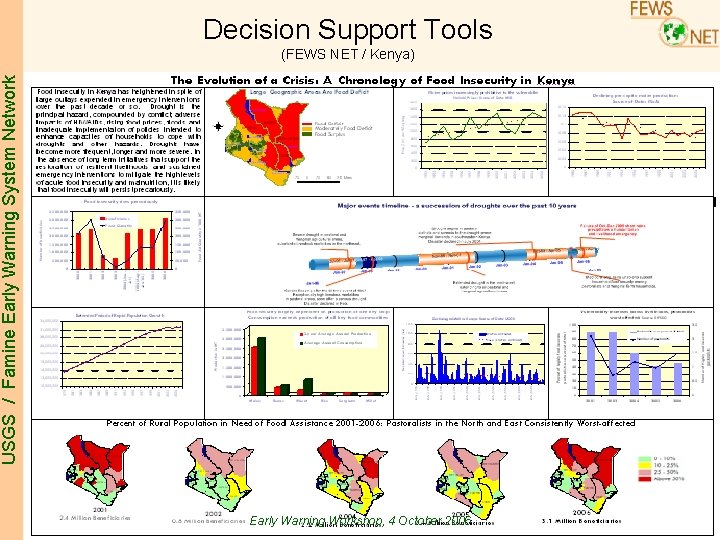
Decision Support Tools USGS / Famine Early Warning System Network (FEWS NET / Kenya) Early Warning Workshop, 4 October 2006
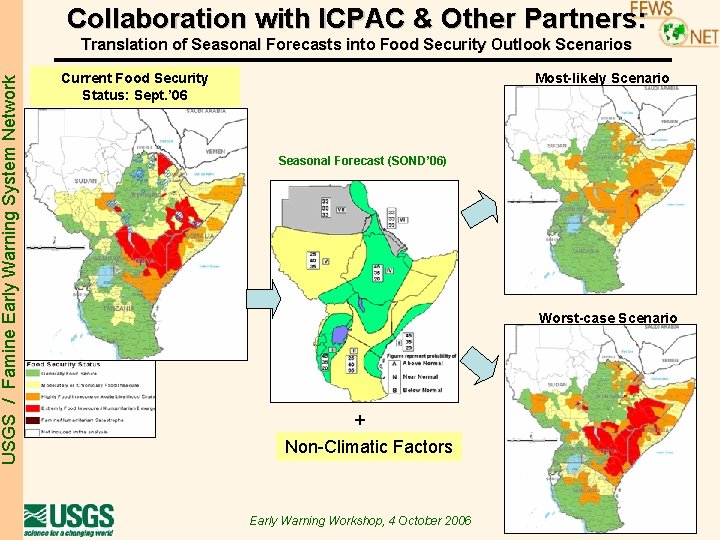
USGS / Famine Early Warning System Network Collaboration with ICPAC & Other Partners: Translation of Seasonal Forecasts into Food Security Outlook Scenarios Current Food Security Status: Sept. ’ 06 Most-likely Scenario Seasonal Forecast (SOND’ 06) Worst-case Scenario + Non-Climatic Factors Early Warning Workshop, 4 October 2006
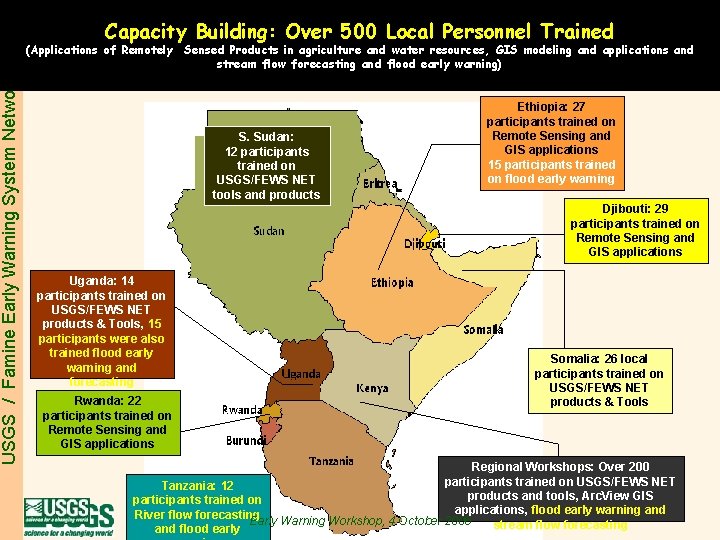
USGS / Famine Early Warning System Network Capacity Building: Over 500 Local Personnel Trained (Applications of Remotely Sensed Products in agriculture and water resources, GIS modeling and applications and stream flow forecasting and flood early warning) S. Sudan: 12 participants trained on USGS/FEWS NET tools and products Ethiopia: 27 participants trained on Remote Sensing and GIS applications 15 participants trained on flood early warning Djibouti: 29 participants trained on Remote Sensing and GIS applications Uganda: 14 participants trained on USGS/FEWS NET products & Tools, 15 participants were also trained flood early warning and forecasting Rwanda: 22 participants trained on Remote Sensing and GIS applications Somalia: 26 local participants trained on USGS/FEWS NET products & Tools Regional Workshops: Over 200 participants trained on USGS/FEWS NET Tanzania: 12 products and tools, Arc. View GIS participants trained on applications, flood early warning and River flow forecasting Early Warning Workshop, 4 October 2006 stream flow forecasting and flood early
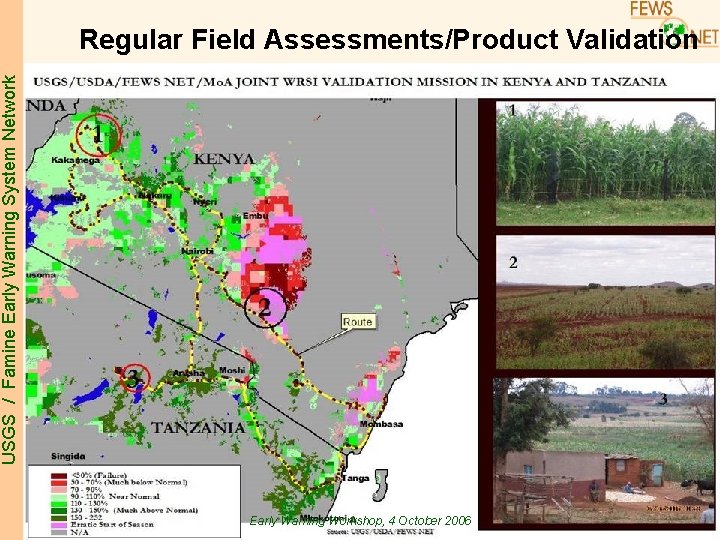
USGS / Famine Early Warning System Network Regular Field Assessments/Product Validation Early Warning Workshop, 4 October 2006
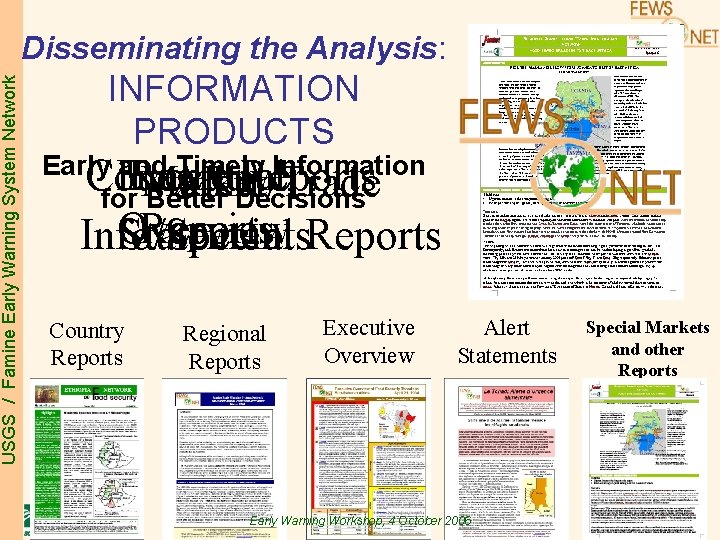
USGS / Famine Early Warning System Network Disseminating the Analysis: INFORMATION PRODUCTS Early and Timely Information Country Executive Regional Reports Market/Trade Alert for Better Decisions Overview Reports Info/Special Statements Country Reports Regional Reports Executive Overview Alert Statements Early Warning Workshop, 4 October 2006 Special Markets and other Reports
USGS / Famine Early Warning System Network Challenges Major challenges • Availability & reliability of data / Partnership • Understanding livelihoods • Accurate identification of chronic vulnerable communities and response. . Early Warning Workshop, 4 October 2006
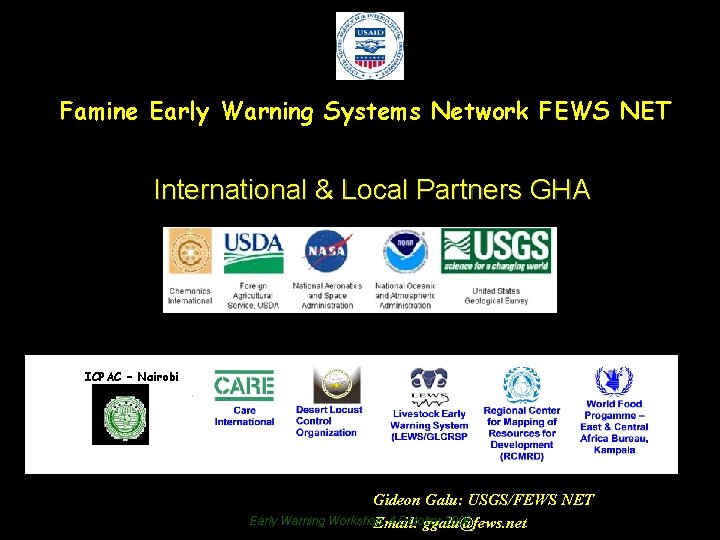
USGS / Famine Early Warning System Network Famine Early Warning Systems Network FEWS NET International & Local Partners GHA ICPAC – Nairobi Gideon Galu: USGS/FEWS NET Early Warning Workshop, 4 October 2006 Email: ggalu@fews. net
USGS / Famine Early Warning System Network Thank you… Early Warning Workshop, 4 October 2006