
Uses of Plasmas in Deposition PhysicalChemical Vapor and

- Slides: 22
Uses of Plasmas in Deposition: Physical/Chemical Vapor and Atomic Layer Deposition Methods
Outline • Some more additive processes • Plasma enhanced chemical vapor deposition (PECVD) • Plasma Enhanced atomic layer deposition (PEALD) • Applications of PECVD and PEALD.
Additive Processes • These are deposition processes--- adding a material • There are many types; e. g. , evaporation, sputtering, chemical vapor deposition, plasma enhanced deposition, atomic layer deposition.
The Additive Processes we will discuss in this lecture (plasma enhanced chemical vapor deposition and plasma enhanced atomic layer deposition) both employ plasmas in the additive chemical process
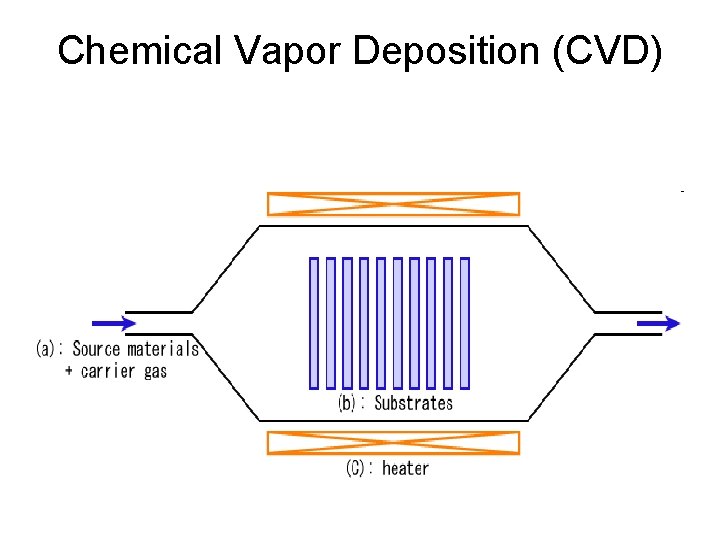
Chemical Vapor Deposition (CVD)
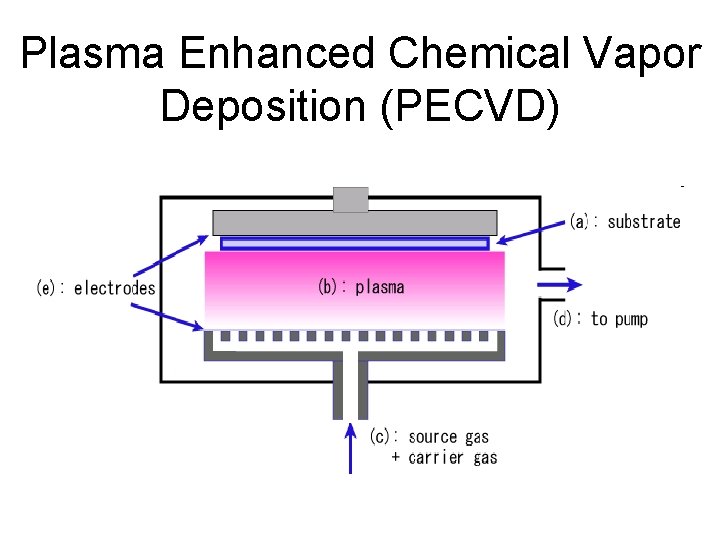
Plasma Enhanced Chemical Vapor Deposition (PECVD)
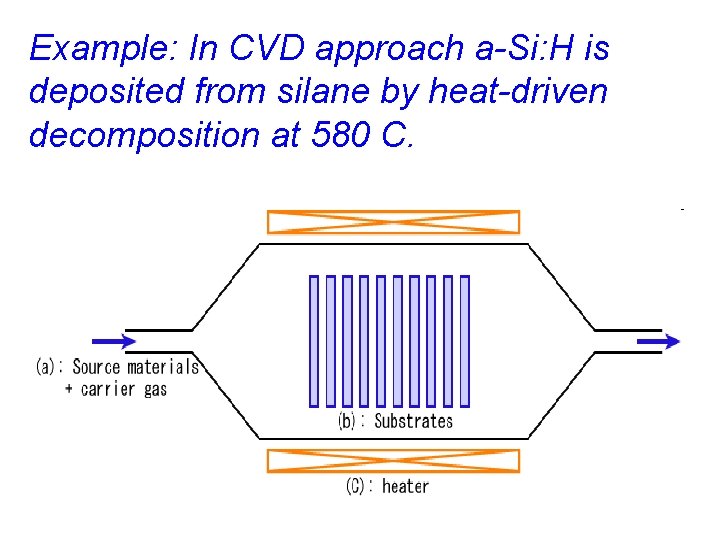
Example: In CVD approach a-Si: H is deposited from silane by heat-driven decomposition at 580 C.
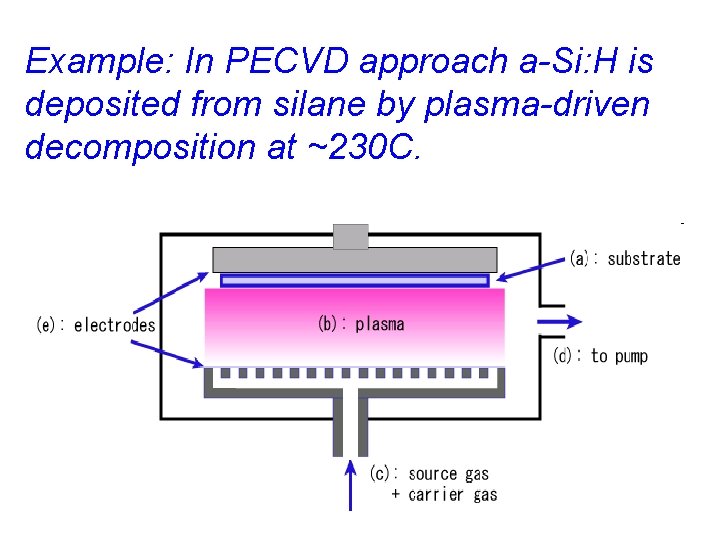
Example: In PECVD approach a-Si: H is deposited from silane by plasma-driven decomposition at ~230 C.
Comparison • • Big difference in processing temperatures Difference in a-Si: H films produced Difference in hydrogen content Difference in structure
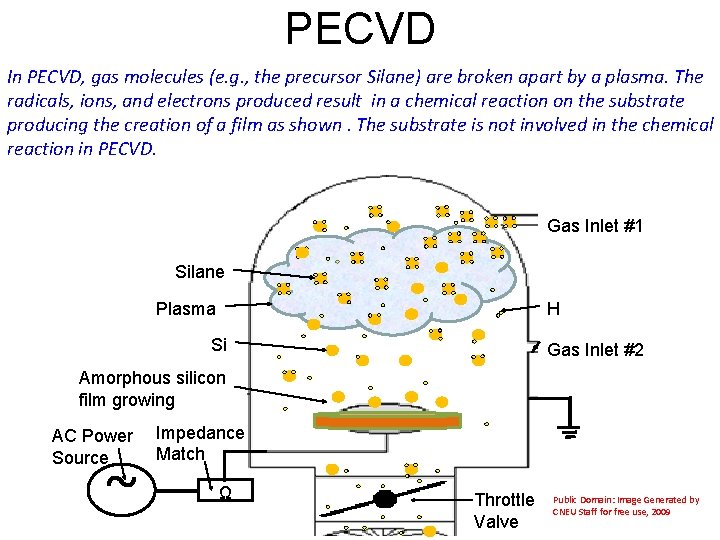
PECVD In PECVD, gas molecules (e. g. , the precursor Silane) are broken apart by a plasma. The radicals, ions, and electrons produced result in a chemical reaction on the substrate producing the creation of a film as shown. The substrate is not involved in the chemical reaction in PECVD. Gas Inlet #1 Silane Plasma H Si Gas Inlet #2 Amorphous silicon film growing AC Power Source ~ Impedance Match Ω Throttle Valve Public Domain: Image Generated by CNEU Staff for free use, 2009
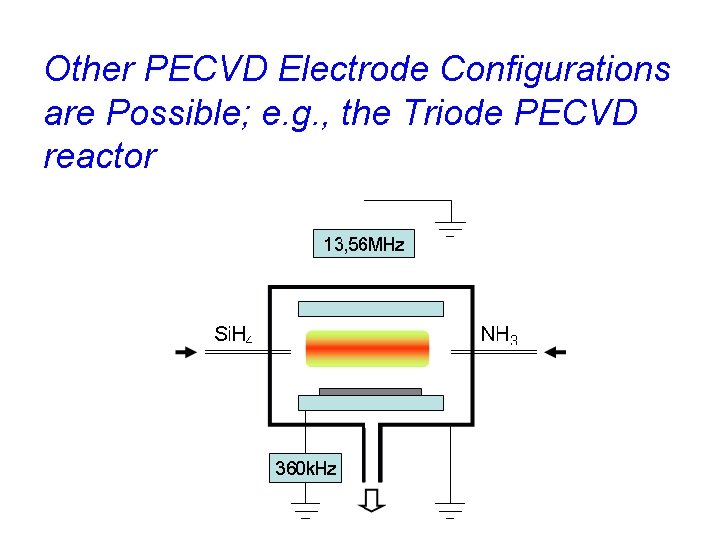
Other PECVD Electrode Configurations are Possible; e. g. , the Triode PECVD reactor
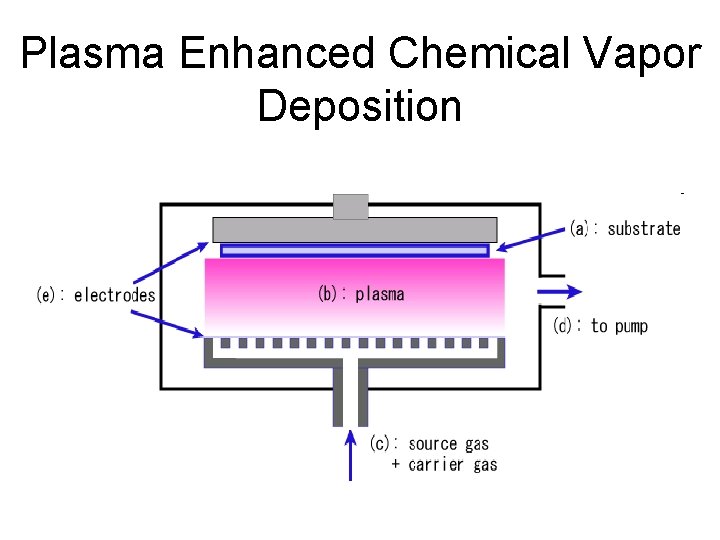
Plasma Enhanced Chemical Vapor Deposition
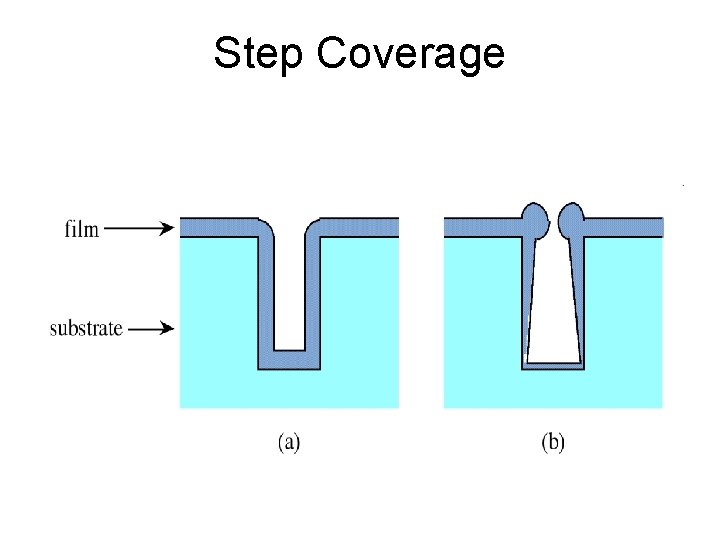
PECVD Summary • Lower temperature processes compared to conventional CVD • Film stress can be controlled by high/low frequency mixing techniques • Dry plasma cleaning process with end-point control can reduce need for physical/chemical chamber cleaning (use of load-locks) • Control over stoichiometry via process conditions • Offers a wide range of materials • Conformal step coverage or void-free good step coverage • ~ 60 nm/min for a-Si: H deposition rate
Step Coverage
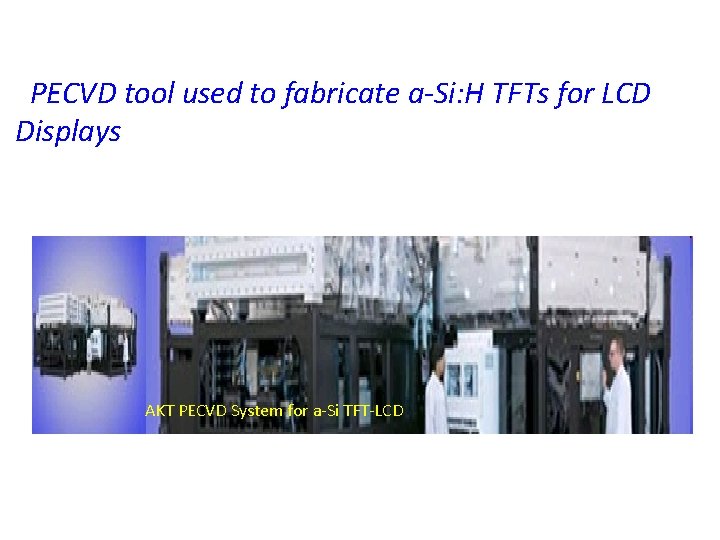
PECVD tool used to fabricate a-Si: H TFTs for LCD Displays AKT PECVD System for a-Si TFT-LCD
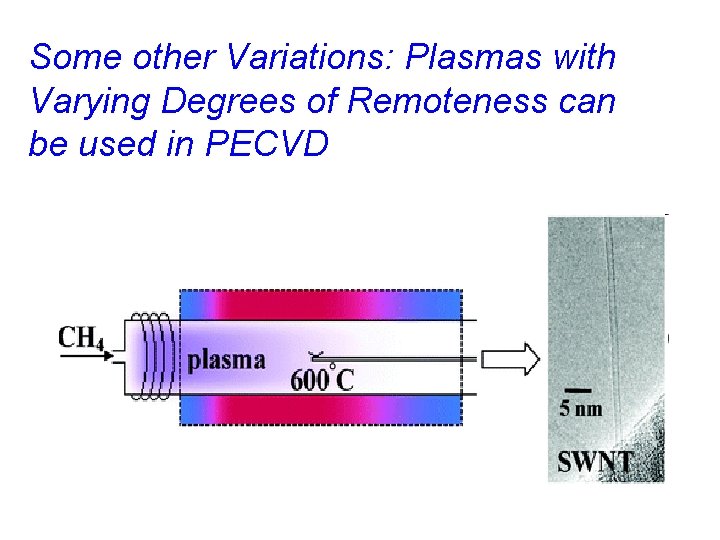
Some other Variations: Plasmas with Varying Degrees of Remoteness can be used in PECVD
Atomic Layer Deposition (ALD) and Plasma Enhanced Atomic Layer Deposition (PEALD)
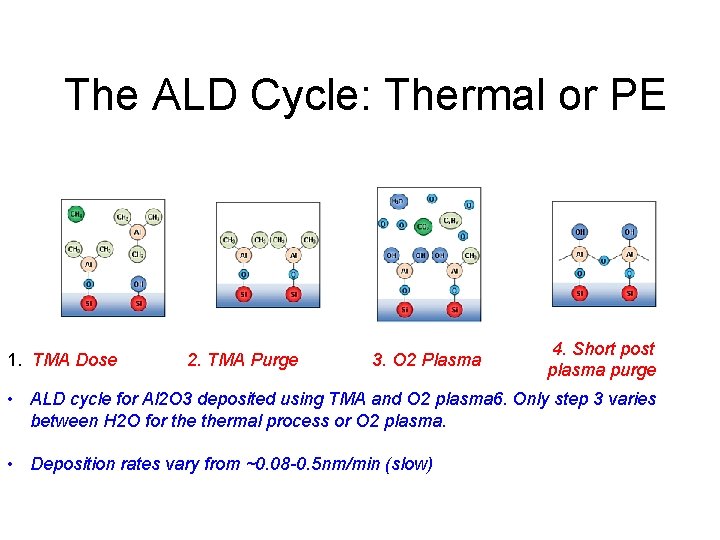
The ALD Cycle: Thermal or PE 1. TMA Dose 2. TMA Purge 3. O 2 Plasma 4. Short post plasma purge • ALD cycle for Al 2 O 3 deposited using TMA and O 2 plasma 6. Only step 3 varies between H 2 O for thermal process or O 2 plasma. • Deposition rates vary from ~0. 08 -0. 5 nm/min (slow)
Plasma Enhanced ALD Some Benefits of Remote Plasma Atomic Layer Deposition • In addition to the benefits of thermal ALD, remote plasma allows for a wider choice of precursor chemistry with enhanced film quality • Plasma enables low-temperature ALD processes and the remote source maintains low plasma damage • Effective metal chemistry through use of hydrogen plasma rather than complex thermal precursors • Eliminates the need for water as a precursor, reducing purge times between ALD cycles - especially for low temperatures • Higher quality films through improved removal of impurities, leading to lower resistivity, higher density, etc. • Ability to control stoichiometry • Plasma surface treatment • Plasma cleaning of chamber is possible for some materials
Applications of PECVD and PEALD. • PECVD—thin film deposition (semiconductors, insulators) • PECVD—nanoparticles (e. g. , CNTs) • PEALD—thin film deposition (insulators, some metals)
Summary • Plasma enhance deposition techniques are widely used and very powerful • Use of plasmas to enhance CVD lowers processing temperatures, gives different variations of a material (more knobs to tune for structure, stoichiometry) • Use of plasmas to enhance ALD expands variety of materials that can be deposited and can enhance through-put.