
Uses of ethanol Ethanol is used extensively as
- Slides: 12
Uses of ethanol : Ethanol is used extensively as a: • solvent in the manufacture of perfumes and pharmaceutical products. • preservative for biological specimens. • In the preparation of essences and flavorings. • In many medicines and drugs. • As a disinfectant in lab and hospital. • As a Biofuel and gasoline. • In Alcoholic beverages.
Objectives: • Be able to produce of ethyl alcohol by using fermentation techniques. • Be able to detect of ethyl alcohol by chemical test. • Be able to distillate the production by simple distillation method.
• Ethanol fermented from renewable sources for fuel additives are known as bio-ethanol. • Both yeasts and bacteria have been used for the production of ethanol. • Among the bacteria, the most widely used organism is Zymomonas mobilis. • Saccharomysis cerevisiae is the most commonly used yeast but Kluyveromyces fragilis has also been employed.
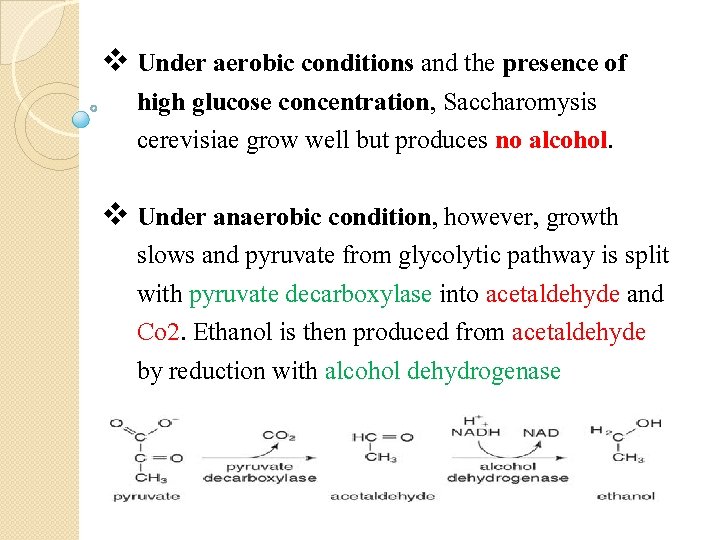
v Under aerobic conditions and the presence of high glucose concentration, Saccharomysis cerevisiae grow well but produces no alcohol. v Under anaerobic condition, however, growth slows and pyruvate from glycolytic pathway is split with pyruvate decarboxylase into acetaldehyde and Co 2. Ethanol is then produced from acetaldehyde by reduction with alcohol dehydrogenase
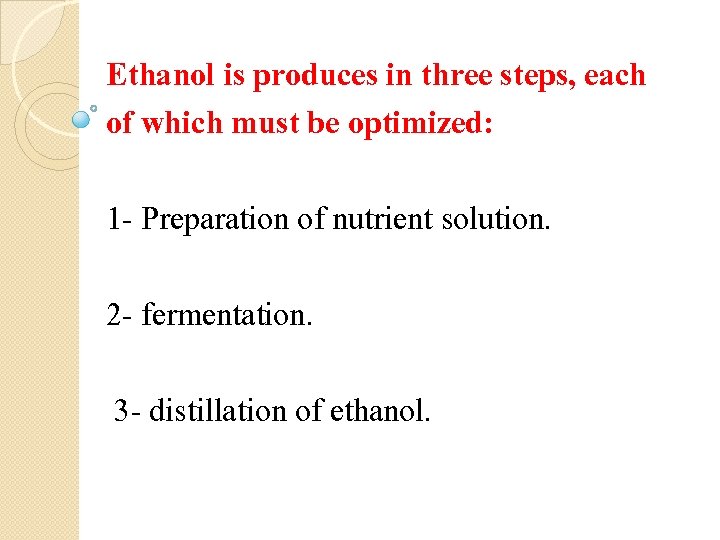
Ethanol is produces in three steps, each of which must be optimized: 1 - Preparation of nutrient solution. 2 - fermentation. 3 - distillation of ethanol.
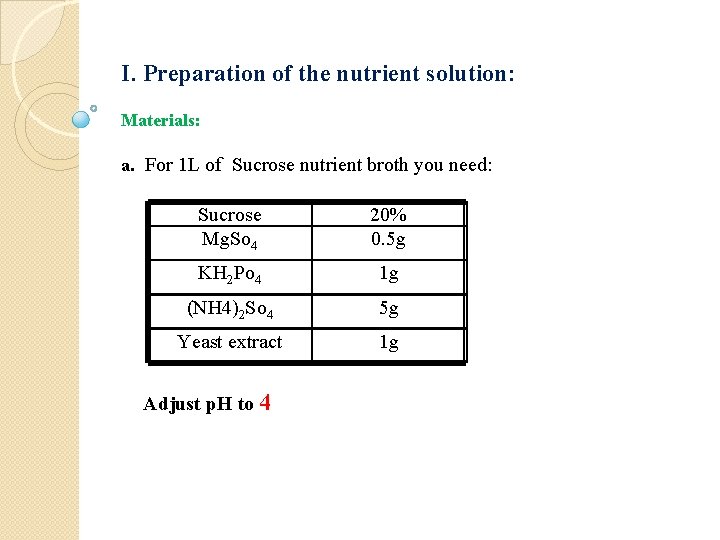
I. Preparation of the nutrient solution: Materials: a. For 1 L of Sucrose nutrient broth you need: Sucrose Mg. So 4 20% 0. 5 g KH 2 Po 4 1 g (NH 4)2 So 4 5 g Yeast extract 1 g Adjust p. H to 4
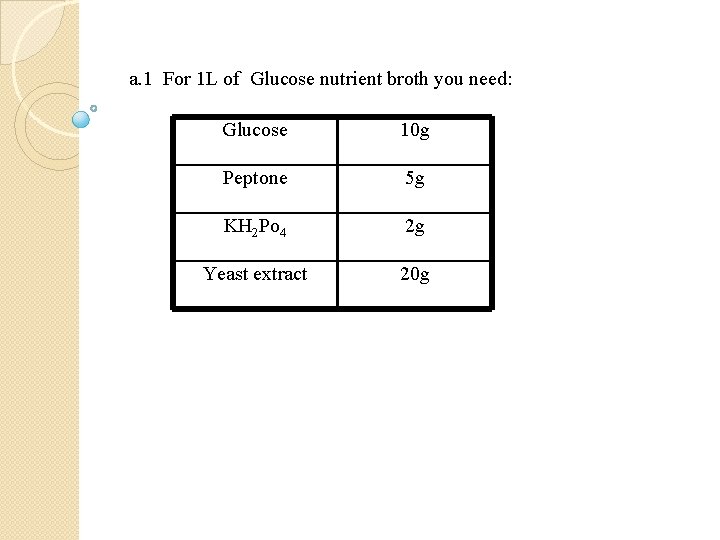
a. 1 For 1 L of Glucose nutrient broth you need: Glucose 10 g Peptone 5 g KH 2 Po 4 2 g Yeast extract 20 g
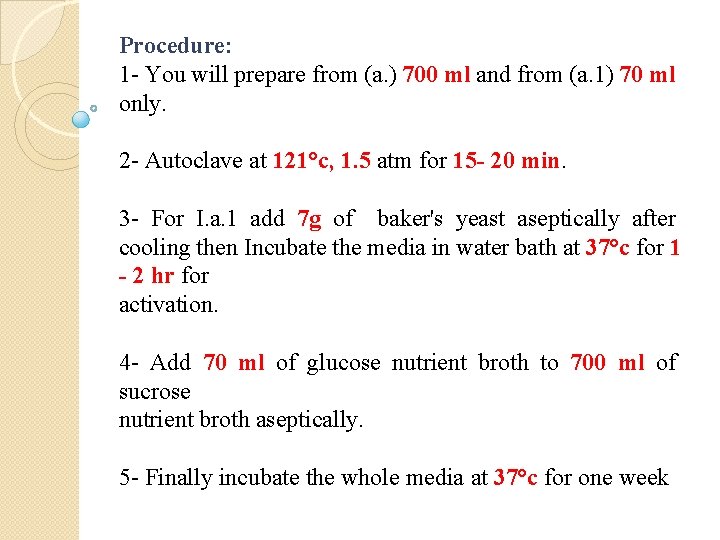
Procedure: 1 - You will prepare from (a. ) 700 ml and from (a. 1) 70 ml only. 2 - Autoclave at 121°c, 1. 5 atm for 15 - 20 min. 3 - For I. a. 1 add 7 g of baker's yeast aseptically after cooling then Incubate the media in water bath at 37°c for 1 - 2 hr for activation. 4 - Add 70 ml of glucose nutrient broth to 700 ml of sucrose nutrient broth aseptically. 5 - Finally incubate the whole media at 37°c for one week
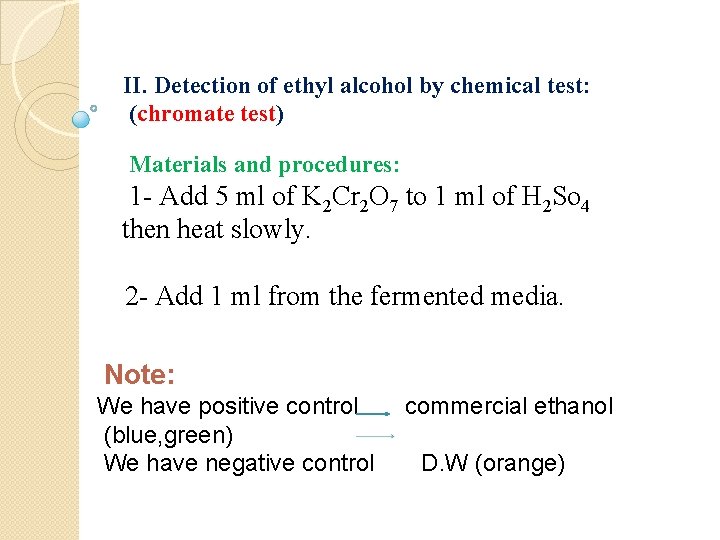
II. Detection of ethyl alcohol by chemical test: (chromate test) Materials and procedures: 1 - Add 5 ml of K 2 Cr 2 O 7 to 1 ml of H 2 So 4 then heat slowly. 2 - Add 1 ml from the fermented media. Note: We have positive control (blue, green) We have negative control commercial ethanol D. W (orange)
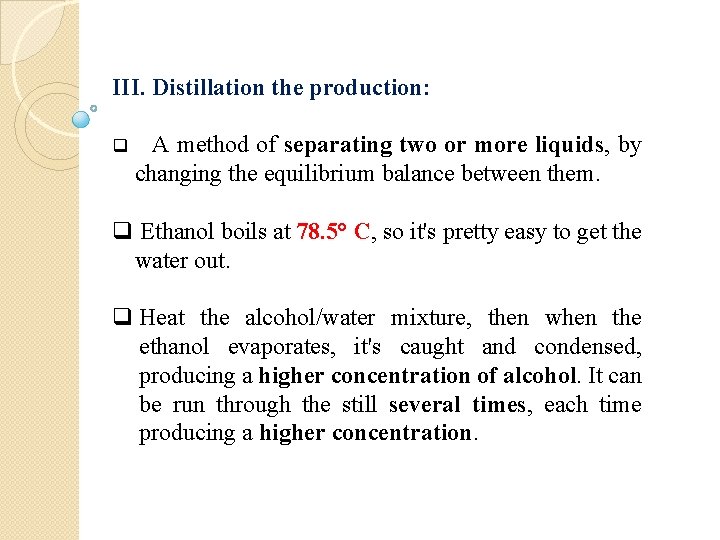
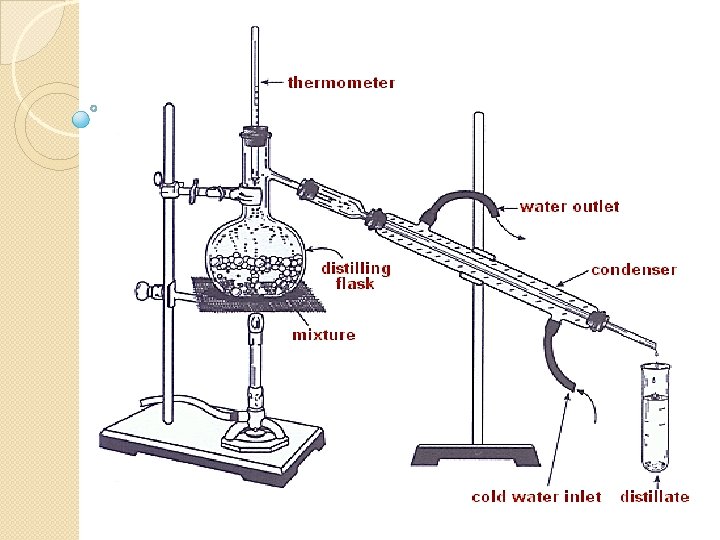
III. Distillation the production: q A method of separating two or more liquids, by changing the equilibrium balance between them. q Ethanol boils at 78. 5° C, so it's pretty easy to get the water out. q Heat the alcohol/water mixture, then when the ethanol evaporates, it's caught and condensed, producing a higher concentration of alcohol. It can be run through the still several times, each time producing a higher concentration.