
USER RESEARCH Understanding how users interpret and use
- Slides: 9
USER RESEARCH Understanding how users interpret and use products CHELSEA NEWMAN, MS Clinical Assistant Professor (PPT by Rebecca Cooney)
User Research vs. Market Research User research focuses on understanding user behaviors, needs, and motivations through observation techniques, task analysis, and other feedback methodologies. -usability. gov The process of gathering, analyzing and interpreting information about a market, about a product or service to be offered for sale in that market, and about the past, present and potential customers for the product or service; research into the characteristics, spending habits, location and needs of your business's target market, the industry as a whole, and the particular competitors you face. -entrepreneur. com
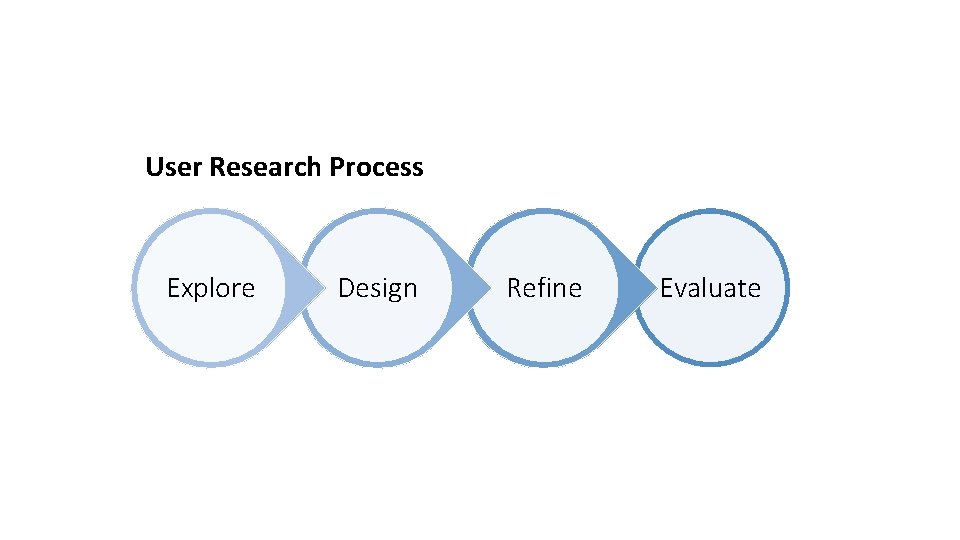
User Research Process Explore Design Refine Evaluate
Tools Used in User Research • Kick off agenda (stakeholders engaged) • Research plan (full collaboration and contribution by stakeholders) • Solicitation (seeking input from solicitation) • Screener • Schedule • Calendar invite (contains all logistics and instructions) • Guide (common note taking strategy, use of color sheets or post-its, standardized formats for X, Y, Z) • Shot list • Interview notes template(s) • Debrief sheets
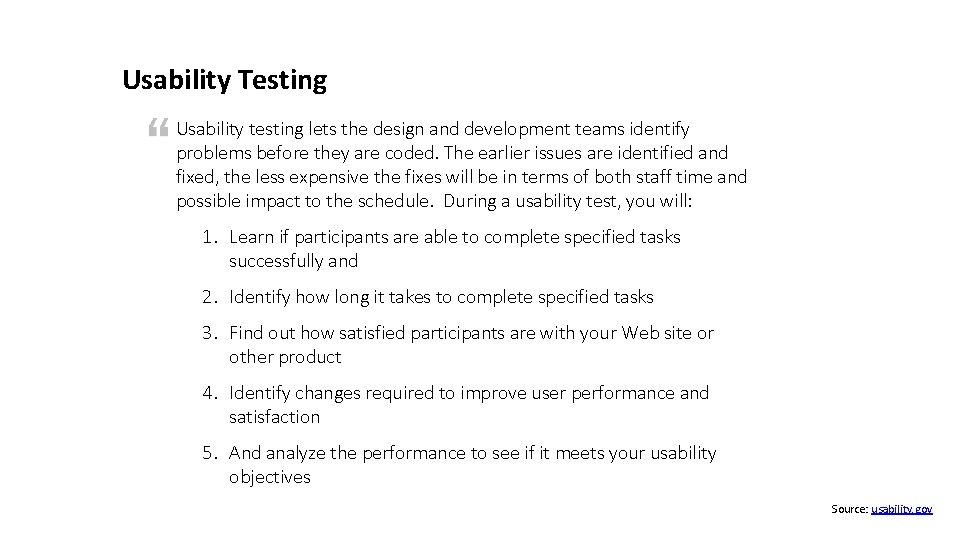
Usability Testing Usability testing lets the design and development teams identify problems before they are coded. The earlier issues are identified and fixed, the less expensive the fixes will be in terms of both staff time and possible impact to the schedule. During a usability test, you will: 1. Learn if participants are able to complete specified tasks successfully and 2. Identify how long it takes to complete specified tasks 3. Find out how satisfied participants are with your Web site or other product 4. Identify changes required to improve user performance and satisfaction 5. And analyze the performance to see if it meets your usability objectives Source: usability. gov
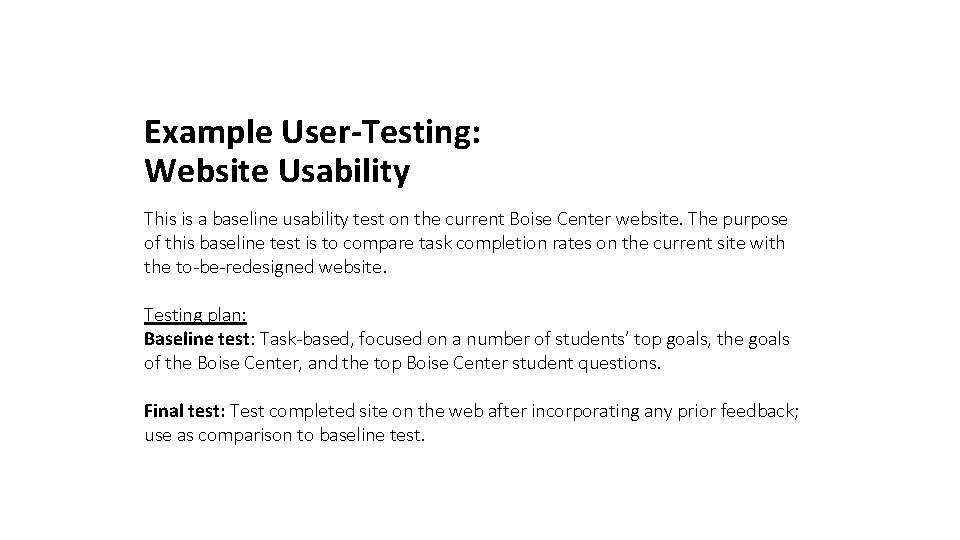
Example User-Testing: Website Usability This is a baseline usability test on the current Boise Center website. The purpose of this baseline test is to compare task completion rates on the current site with the to-be-redesigned website. Testing plan: Baseline test: Task-based, focused on a number of students’ top goals, the goals of the Boise Center, and the top Boise Center student questions. Final test: Test completed site on the web after incorporating any prior feedback; use as comparison to baseline test.
Other Types of User Research
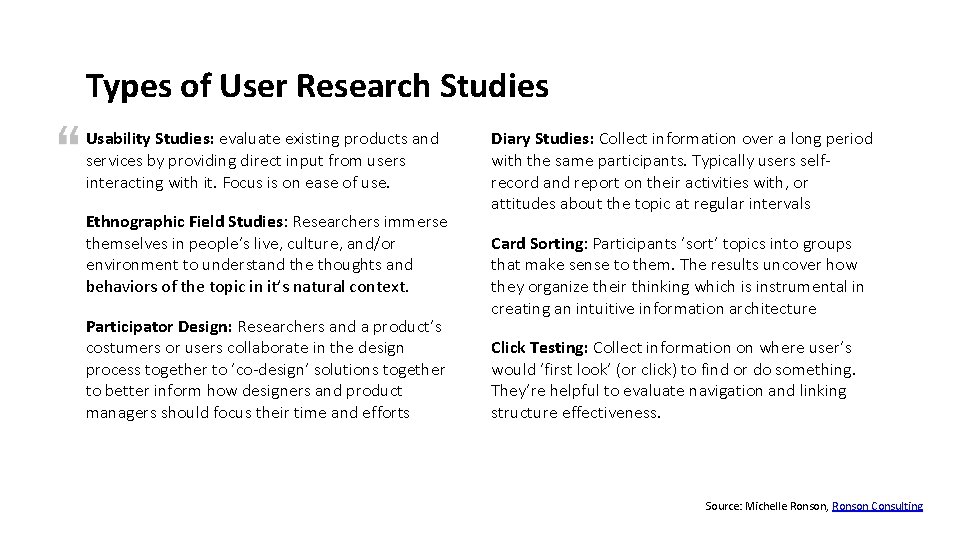
Types of User Research Studies Usability Studies: evaluate existing products and services by providing direct input from users interacting with it. Focus is on ease of use. Ethnographic Field Studies: Researchers immerse themselves in people’s live, culture, and/or environment to understand the thoughts and behaviors of the topic in it’s natural context. Participator Design: Researchers and a product’s costumers or users collaborate in the design process together to ‘co-design’ solutions together to better inform how designers and product managers should focus their time and efforts Diary Studies: Collect information over a long period with the same participants. Typically users selfrecord and report on their activities with, or attitudes about the topic at regular intervals Card Sorting: Participants ‘sort’ topics into groups that make sense to them. The results uncover how they organize their thinking which is instrumental in creating an intuitive information architecture Click Testing: Collect information on where user’s would ‘first look’ (or click) to find or do something. They’re helpful to evaluate navigation and linking structure effectiveness. Source: Michelle Ronson, Ronson Consulting
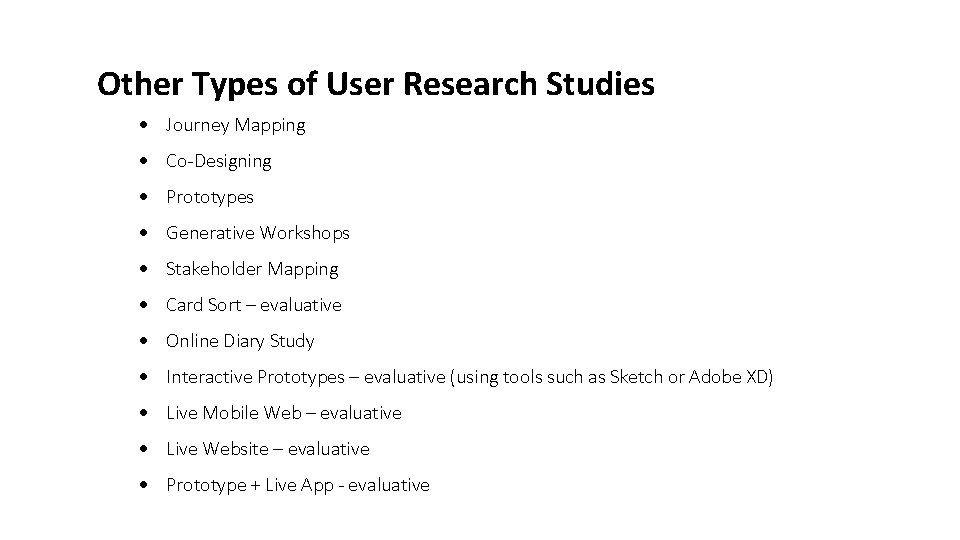
Other Types of User Research Studies · Journey Mapping · Co-Designing · Prototypes · Generative Workshops · Stakeholder Mapping · Card Sort – evaluative · Online Diary Study · Interactive Prototypes – evaluative (using tools such as Sketch or Adobe XD) · Live Mobile Web – evaluative · Live Website – evaluative · Prototype + Live App - evaluative