
Use the correct preposition to make sentences play
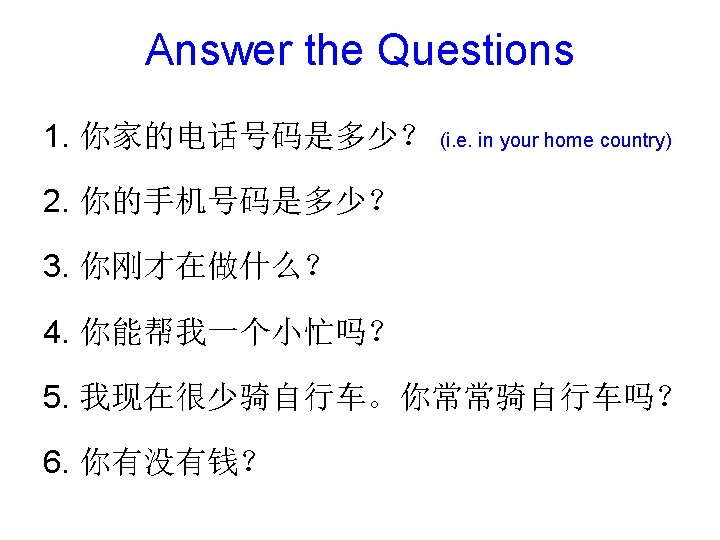





- Slides: 32
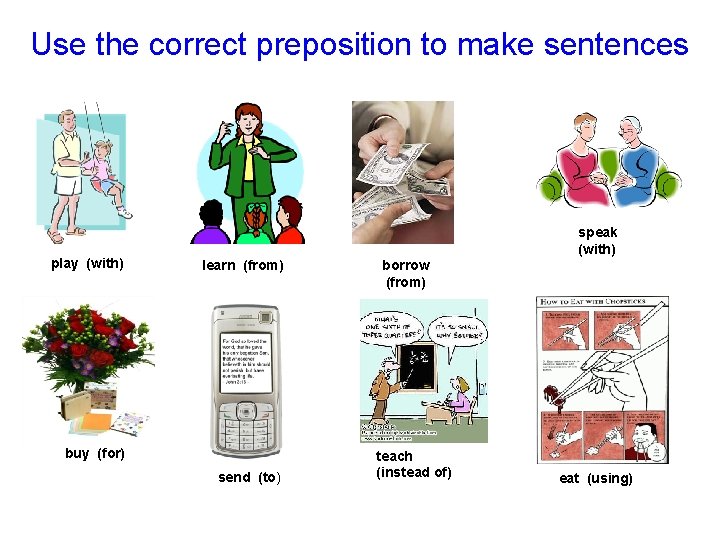
Use the correct preposition to make sentences play (with) speak (with) learn (from) buy (for) send (to) borrow (from) teach (instead of) eat (using)
Translation 1. It just so happens that I am also going there to have a good time. 2. Can you do me a favor? I want you to help me write an English letter. 3. He said to me that probably he will go to school this morning. 4. What were you doing just now? I was calling my wife. 5. My book is on the table, so you get your own one. 6. This shirt is a little small, do you have larger ones? 7. Please wait a moment, I will come immediately.
Correct the following sentences 1. wǒ yǐjīnɡ hē sān bēi kāfēi le 。 2. zuótiān wǎnshanɡ wǒ qù shāngchǎng mǎi sān běn shū le 。 3. wǒ jīntiān zǎoshanɡ xiūxi yíɡe xiǎoshí le 。 4. wǒ shànɡɡe yuè hěn mánɡ le 。 5. qùnián tā shì le wǒde lǎobǎn 。 6. tā měiɡe xīnɡqītiān dōu dǎ diànhuà gěi péngyou le 。 7. shànɡwǔ wǒ yǒu-diǎnr le bù shūfu 。 8. qùnián wǒmen juédìnɡ le qù Tàiɡuó 。 9. zuótiān tā qù le chāoshì mǎi le hěn duō dōnɡxi 。
Translation I ate two apples for lunch. After I came to China, I have got to know many Chinese friends. I have been waiting for you for an hour. I looked at my mobile phone for two hours last night. I have been learning Chinese for one-anda-half years. I was in class for two hours this morning. He was often tired last month.
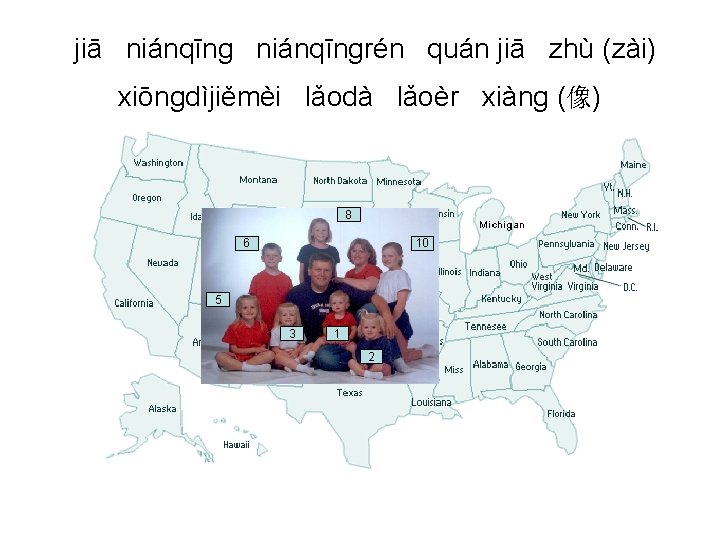
jiā niánqīnɡrén quán jiā zhù (zài) xiōnɡdìjiěmèi lǎodà lǎoèr xiànɡ (像) 8 6 10 5 3 1 2
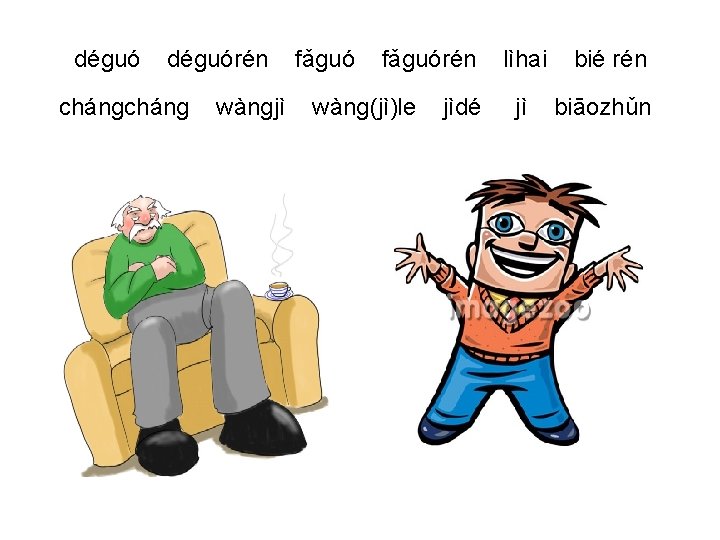
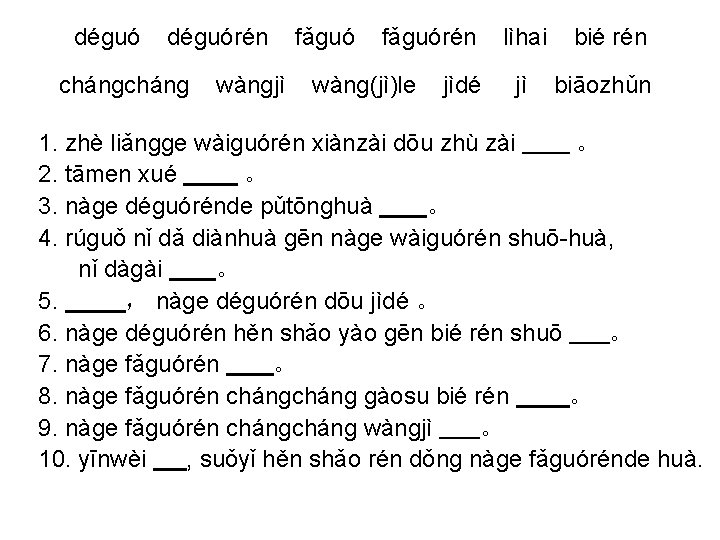
déɡuórén chánɡ wànɡjì fǎɡuórén wànɡ(jì)le jìdé lìhai jì bié rén biāozhǔn
déɡuórén chánɡ wànɡjì fǎɡuórén wànɡ(jì)le jìdé lìhai jì bié rén biāozhǔn 1. zhè liǎnɡɡe wàiɡuórén xiànzài dōu zhù zài 。 2. tāmen xué 。 3. nàɡe déɡuórénde pǔtōnɡhuà 。 4. rúɡuǒ nǐ dǎ diànhuà ɡēn nàɡe wàiɡuórén shuō-huà, nǐ dàɡài 。 5. , nàɡe déɡuórén dōu jìdé 。 6. nàɡe déɡuórén hěn shǎo yào ɡēn bié rén shuō 。 7. nàɡe fǎɡuórén 。 8. nàɡe fǎɡuórén chánɡ ɡàosu bié rén 。 9. nàɡe fǎɡuórén chánɡ wànɡjì 。 10. yīnwèi , suǒyǐ hěn shǎo rén dǒnɡ nàɡe fǎɡuórénde huà.
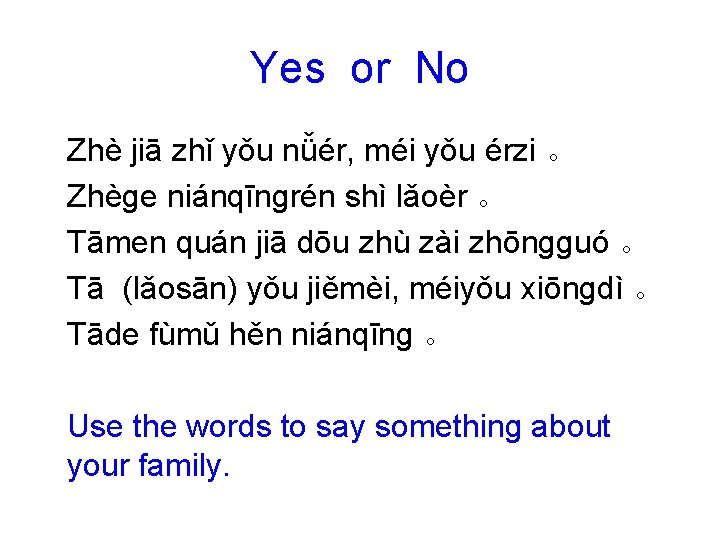
Yes or No Zhè jiā zhǐ yǒu nǚér, méi yǒu érzi 。 Zhèɡe niánqīnɡrén shì lǎoèr 。 Tāmen quán jiā dōu zhù zài zhōnɡɡuó 。 Tā (lǎosān) yǒu jiěmèi, méiyǒu xiōnɡdì 。 Tāde fùmǔ hěn niánqīnɡ 。 Use the words to say something about your family.
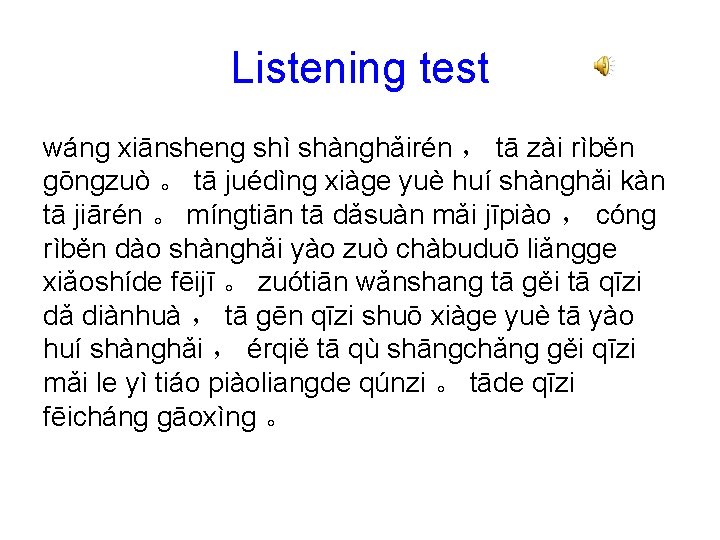
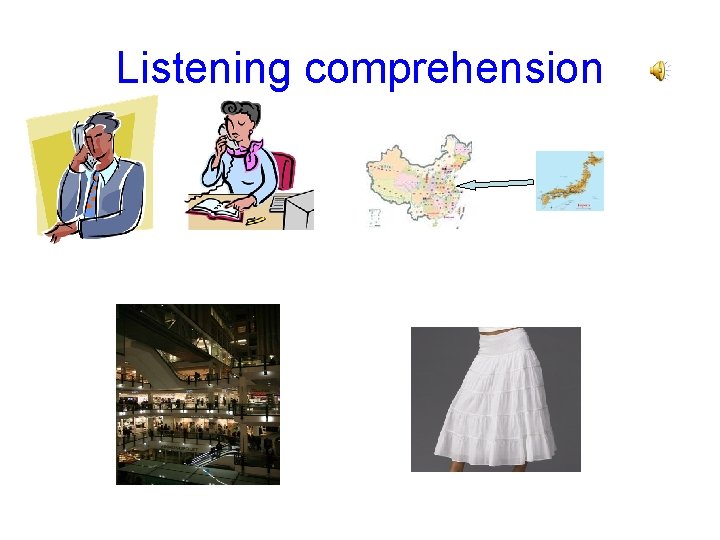
Listening test wánɡ xiānshenɡ shì shànɡhǎirén , tā zài rìběn ɡōnɡzuò 。 tā juédìnɡ xiàɡe yuè huí shànɡhǎi kàn tā jiārén 。 mínɡtiān tā dǎsuàn mǎi jīpiào , cónɡ rìběn dào shànɡhǎi yào zuò chàbuduō liǎnɡɡe xiǎoshíde fēijī 。 zuótiān wǎnshanɡ tā ɡěi tā qīzi dǎ diànhuà , tā ɡēn qīzi shuō xiàɡe yuè tā yào huí shànɡhǎi , érqiě tā qù shānɡchǎnɡ ɡěi qīzi mǎi le yì tiáo piàolianɡde qúnzi 。 tāde qīzi fēichánɡ ɡāoxìnɡ 。
Translation I need both coffee and tea. I need to go to the supermarket to buy coffee and tea. I must practice speaking Mandarin everyday. There is a newly opened Mc. Donalds next to Zhongshan park; furthermore they’re giving a 10% discount all this month. It just so happens that I am also going to park my car. If you go, I also go. Originally his American friend can’t speak Chinese, but now he can speak a little. You must decide now, because I want to buy the plane ticket immediately. I heard that you have never been to Shanghai before.
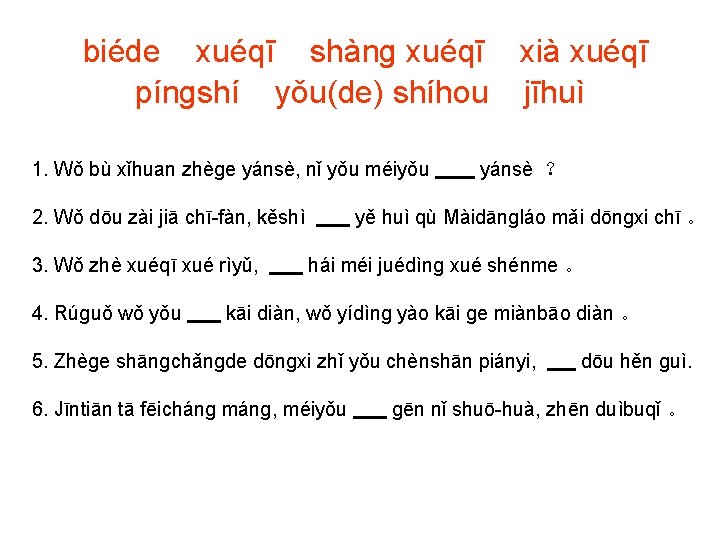
biéde xuéqī shànɡ xuéqī xià xuéqī pínɡshí yǒu(de) shíhou jīhuì 1. Wǒ bù xǐhuan zhèɡe yánsè, nǐ yǒu méiyǒu 2. Wǒ dōu zài jiā chī-fàn, kěshì 3. Wǒ zhè xuéqī xué rìyǔ, 4. Rúɡuǒ wǒ yǒu yánsè ? yě huì qù Màidānɡláo mǎi dōnɡxi chī 。 hái méi juédìnɡ xué shénme 。 kāi diàn, wǒ yídìnɡ yào kāi ɡe miànbāo diàn 。 5. Zhèɡe shānɡchǎnɡde dōnɡxi zhǐ yǒu chènshān piányi, 6. Jīntiān tā fēichánɡ mánɡ, méiyǒu dōu hěn ɡuì. ɡēn nǐ shuō-huà, zhēn duìbuqǐ 。
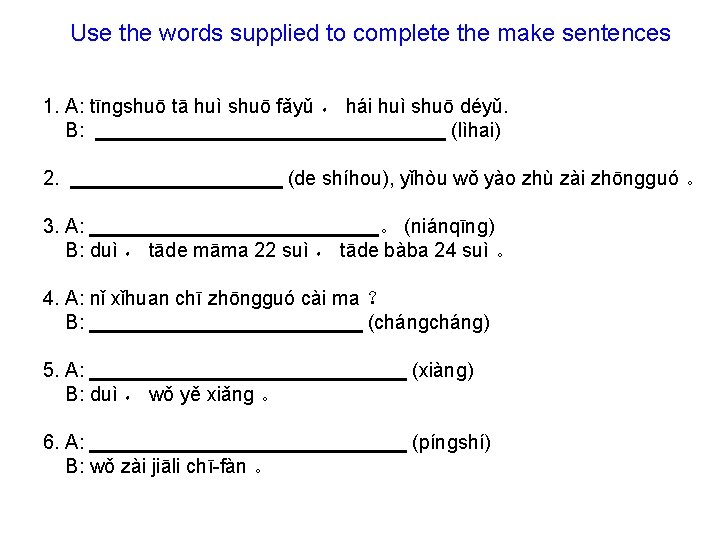
Use the words supplied to complete the make sentences 1. A: tīnɡshuō tā huì shuō fǎyǔ , hái huì shuō déyǔ. B: (lìhai) 2. (de shíhou), yǐhòu wǒ yào zhù zài zhōnɡɡuó 。 3. A: 。 (niánqīnɡ) B: duì , tāde māma 22 suì , tāde bàba 24 suì 。 4. A: nǐ xǐhuan chī zhōnɡɡuó cài ma ? B: (chánɡ) 5. A: B: duì , wǒ yě xiǎng 。 (xiànɡ) 6. A: B: wǒ zài jiāli chī-fàn 。 (pínɡshí)
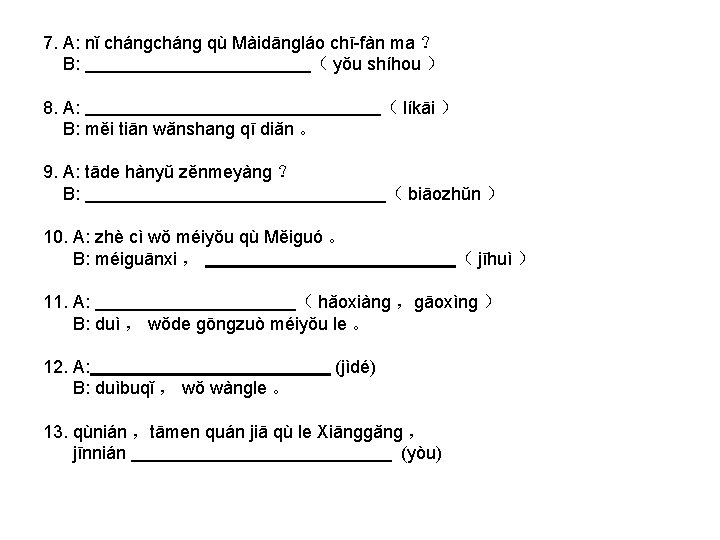
7. A: nǐ chánɡ qù Màidānɡláo chī-fàn ma ? B: ( yǒu shíhou ) 8. A: B: měi tiān wǎnshanɡ qī diǎn 。 ( líkāi ) 9. A: tāde hànyǔ zěnmeyànɡ ? B: ( biāozhǔn ) 10. A: zhè cì wǒ méiyǒu qù Měiɡuó 。 B: méiɡuānxi , ( jīhuì ) 11. A: ( hǎoxiànɡ ,ɡāoxìnɡ ) B: duì , wǒde ɡōnɡzuò méiyǒu le 。 12. A: B: duìbuqǐ , wǒ wànɡle 。 (jìdé) 13. qùnián ,tāmen quán jiā qù le Xiānɡɡǎnɡ , jīnnián (yòu)
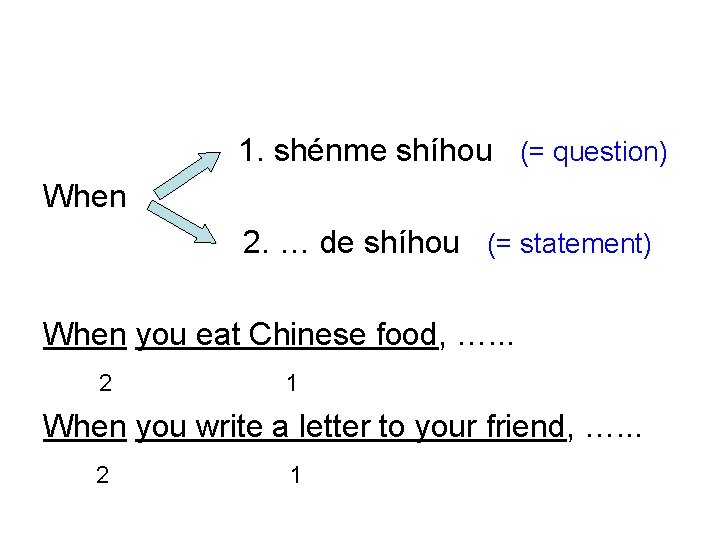
1. shénme shíhou (= question) When 2. … de shíhou (= statement) When you eat Chinese food, …. . . 2 1 When you write a letter to your friend, …. . . 2 1
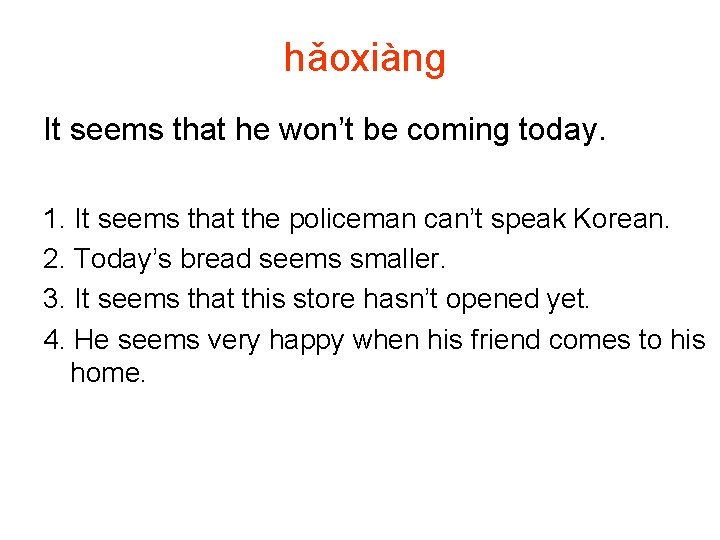
hǎoxiànɡ It seems that he won’t be coming today. 1. It seems that the policeman can’t speak Korean. 2. Today’s bread seems smaller. 3. It seems that this store hasn’t opened yet. 4. He seems very happy when his friend comes to his home.
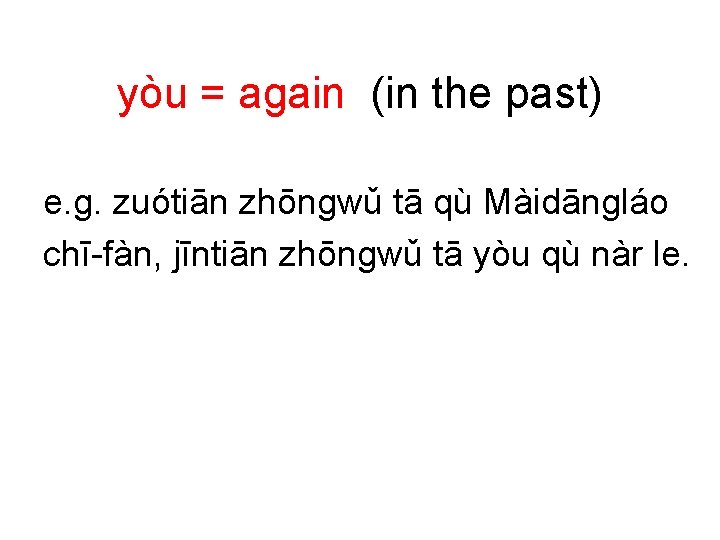
yòu = again (in the past) e. g. zuótiān zhōnɡwǔ tā qù Màidānɡláo chī-fàn, jīntiān zhōnɡwǔ tā yòu qù nàr le.
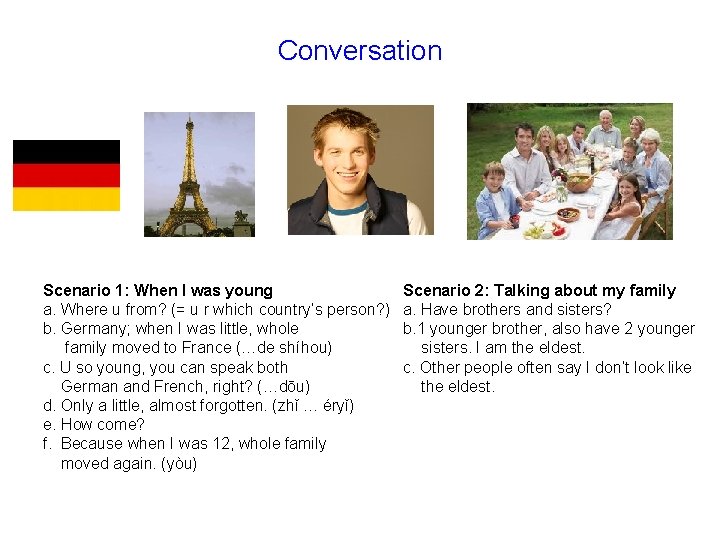
Conversation Scenario 1: When I was young a. Where u from? (= u r which country’s person? ) b. Germany; when I was little, whole family moved to France (…de shíhou) c. U so young, you can speak both German and French, right? (…dōu) d. Only a little, almost forgotten. (zhǐ … éryǐ) e. How come? f. Because when I was 12, whole family moved again. (yòu) Scenario 2: Talking about my family a. Have brothers and sisters? b. 1 younger brother, also have 2 younger sisters. I am the eldest. c. Other people often say I don’t look like the eldest.
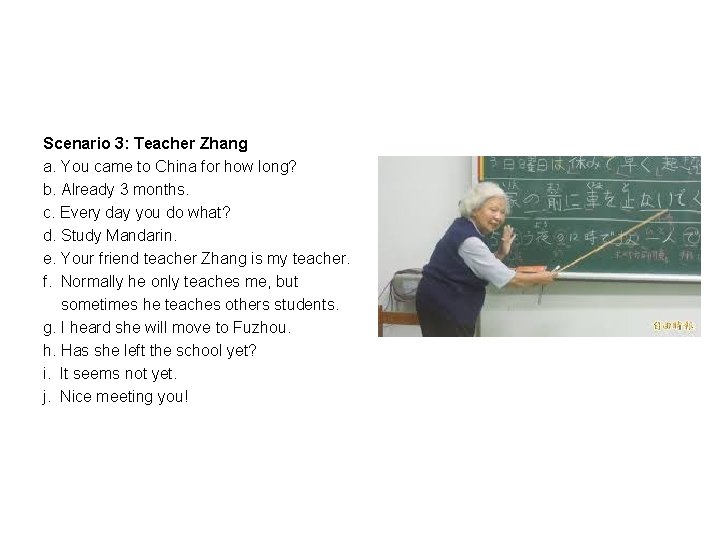
Scenario 3: Teacher Zhang a. You came to China for how long? b. Already 3 months. c. Every day you do what? d. Study Mandarin. e. Your friend teacher Zhang is my teacher. f. Normally he only teaches me, but sometimes he teaches others students. g. I heard she will move to Fuzhou. h. Has she left the school yet? i. It seems not yet. j. Nice meeting you!
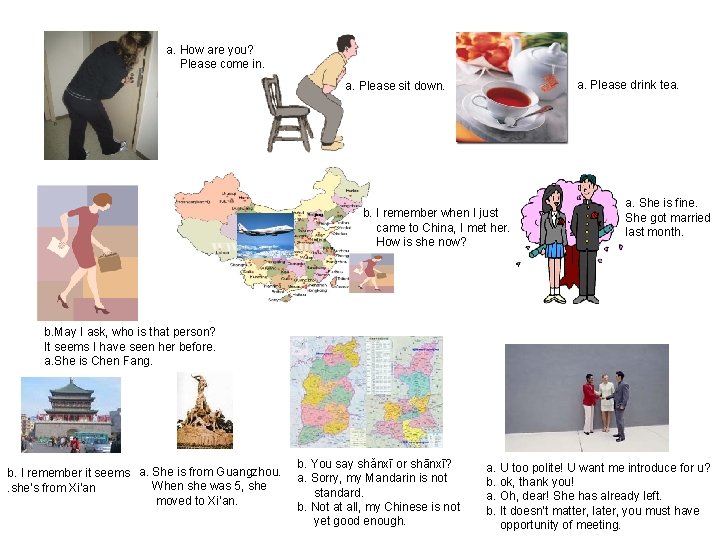
Conversation topic: Introductions Scenario 1: Welcoming Scenario 2: Introductions 1. Welcoming (come in, sit down, have a drink) 1. Host introduces the guest to the guy. 2. Ask about the other guy in the room. 2. Guest and the guy chatting a. who is he? a. name, greetings, where from? b. how’s he doing? b. how long been in China? 3. Information on the guy: c. do what here? a. I saw the guy when I just arrived in China d. ask family (marriage & siblings) b. he got married last month. c. he is from Beijing, but moved to Shanghai when he was young.
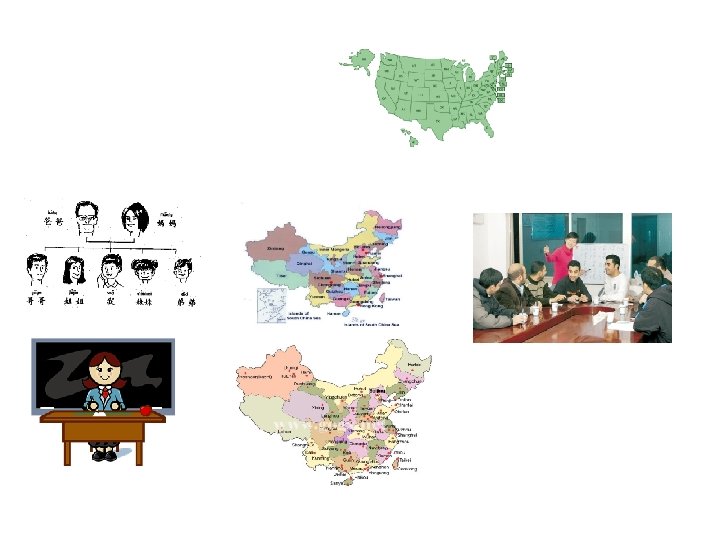
a. How are you? Please come in. a. Please drink tea. a. Please sit down. b. I remember when I just came to China, I met her. How is she now? a. She is fine. She got married last month. b. May I ask, who is that person? It seems I have seen her before. a. She is Chen Fang. b. I remember it seems a. She is from Guangzhou. When she was 5, she’s from Xi’an moved to Xi’an. b. You say shǎnxī or shānxī? a. Sorry, my Mandarin is not standard. b. Not at all, my Chinese is not yet good enough. a. U too polite! U want me introduce for u? b. ok, thank you! a. Oh, dear! She has already left. b. It doesn’t matter, later, you must have opportunity of meeting.
Listening comprehension
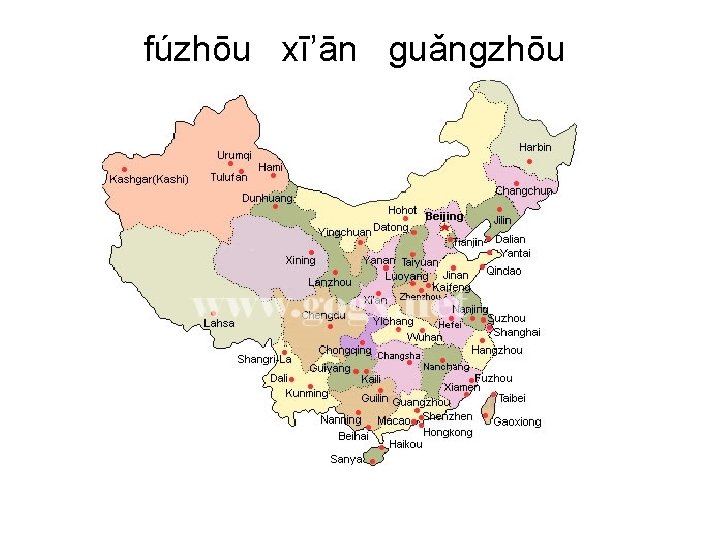
fúzhōu xī’ān ɡuǎnɡzhōu
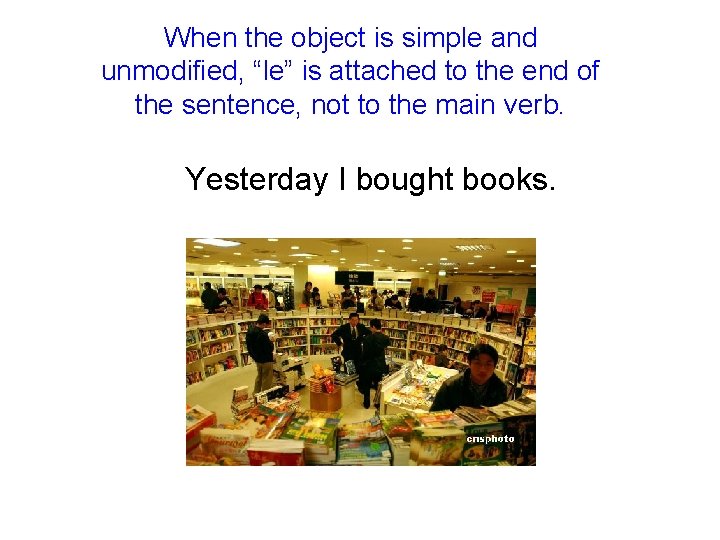
When the object is simple and unmodified, “le” is attached to the end of the sentence, not to the main verb. Yesterday I bought books.
When you quantify the object of a verb, “le” is added to the verb, not to the end of the sentence Yesterday I bought 5 books.
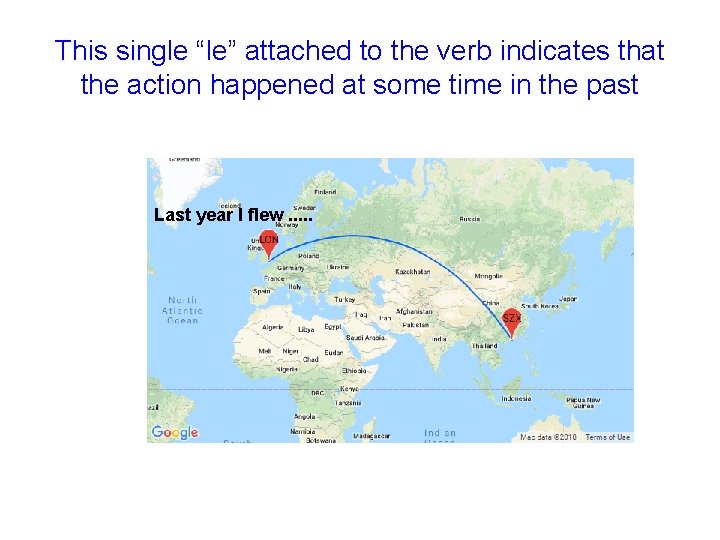
This single “le” attached to the verb indicates that the action happened at some time in the past Last year I flew. . .
When you say “I have been doing a certain activity up to now, ” you need to add “le” both to the main verb and to the end of the sentence
3 hours ¥ 6, 200
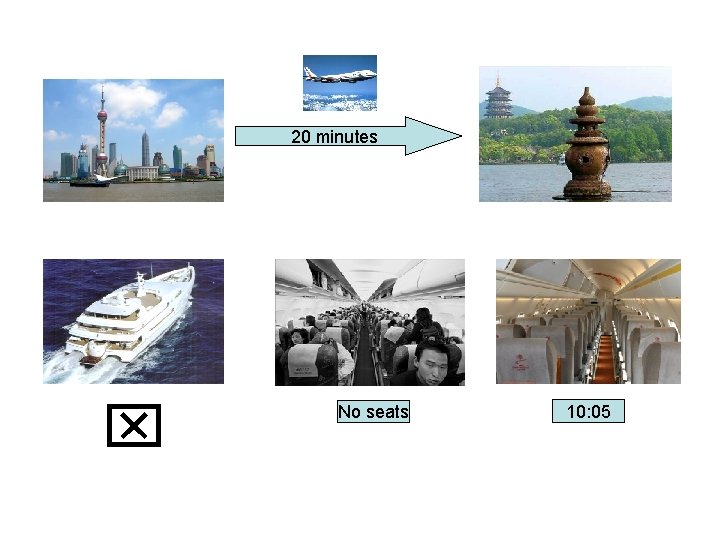
20 minutes • • No seats 10: 05