
Use the arrow keys on your keyboard to
Use the arrow keys on your keyboard to navigate this demonstration
PREDICTION & MANAGEMENT SYSTEM R TM Software package for Microsoft Windows
This is a demonstration disk For pricing or further information: Email: sales@emsoft. com Website: www. emsoft. com Telephone: 1 888 367 9580 Facsimile: 1 303 273 5070 Copyright C 1998 Peter M. Sandman LLC and QEST Consulting Engineers
There are three parts to this demonstration. . .
• • Controversies are no longer seen as “natural disasters. ” You don't have to batten down and wait for the storm to pass any more. Controversies can be predicted, then averted or minimized. Reputation management is part of normal “due diligence” activities. It can be statistically demonstrated that we predict human reactions more precisely than we predict safety, environmental and financial upsets. We calculate the others… why not outrage?
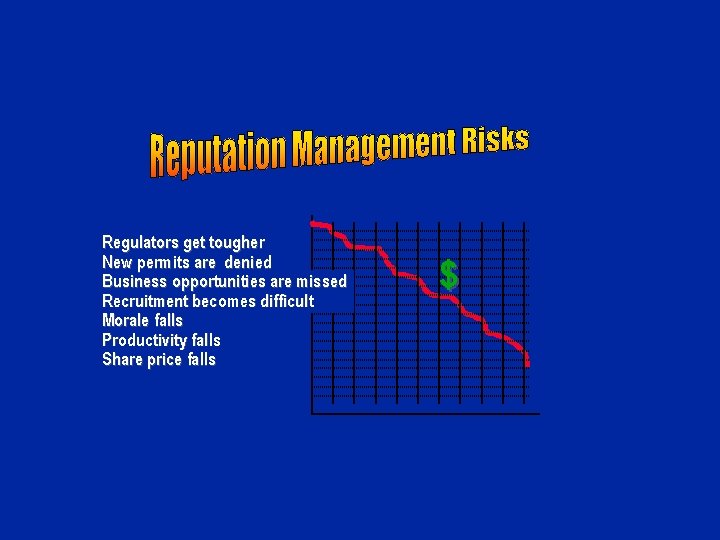
Regulators get tougher New permits are denied Business opportunities are missed Recruitment becomes difficult Morale falls Productivity falls Share price falls $
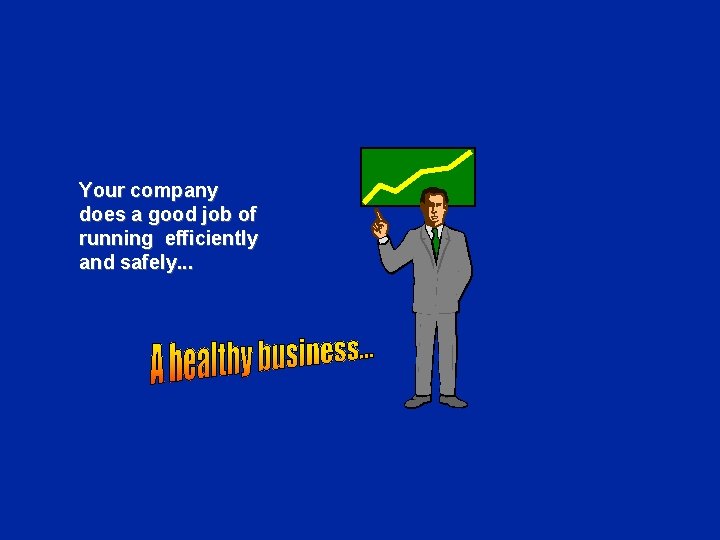
Your company does a good job of running efficiently and safely. . .
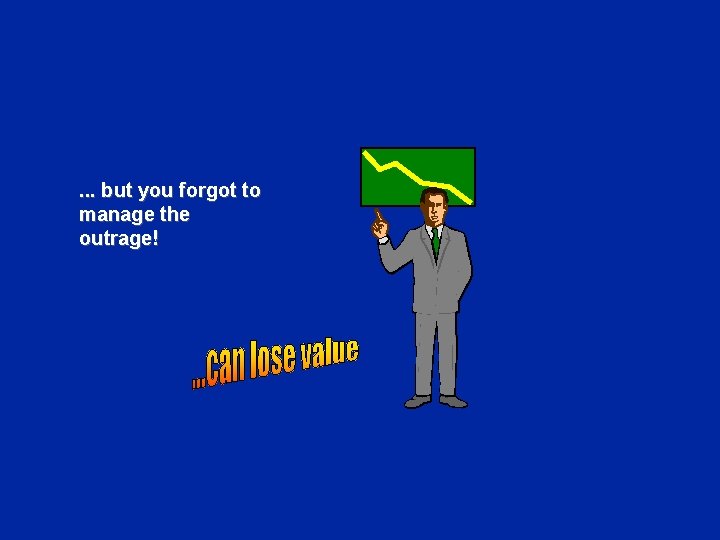
. . . but you forgot to manage the outrage!
Faced with a typical risk controversy, first make sure you’re righttechnically. Then since you are “right”: • Ignore your opponents • Bury them in data • Attack their motives • And when it’s all too late. . .
Manage your technical problem. . . And manage the outrage too.
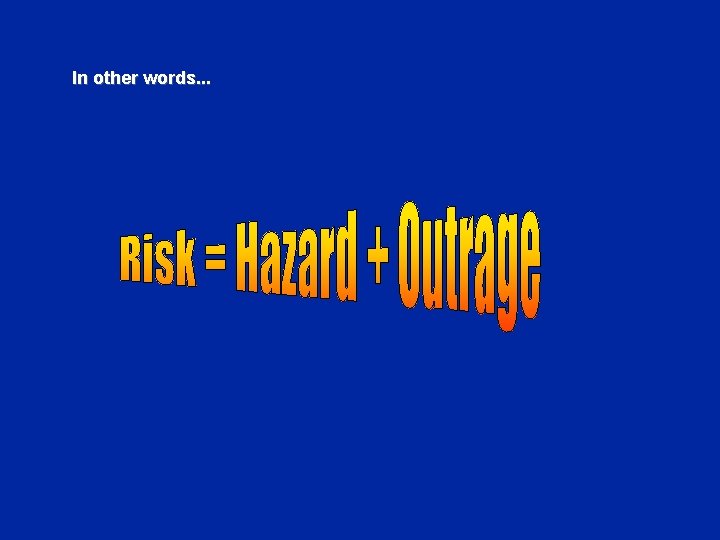
In other words. . .
• • If you have a hazard problem, reduce the hazard. If you have an outrage problem, reduce the outrage. • Better yet: Address the potential for outrage….
PREDICTION AND MANAGEMENT SYSTEM Peter Sandman is famous for his formula, “Risk = Hazard + Outrage. ” Could Sandman’s advice to companies on how to manage outrage be captured in a system? The guru’s initial reaction was “Interesting concept but NO WAY!” A risk management consultancy thought otherwise and hired Sandman by the hour to advise on a pilot program. His assessment of the first pilot: “AWFUL - but the concept will work. .
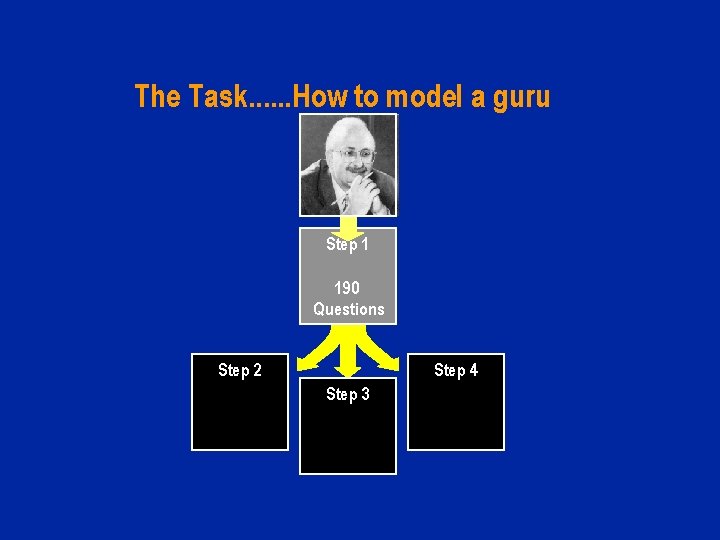
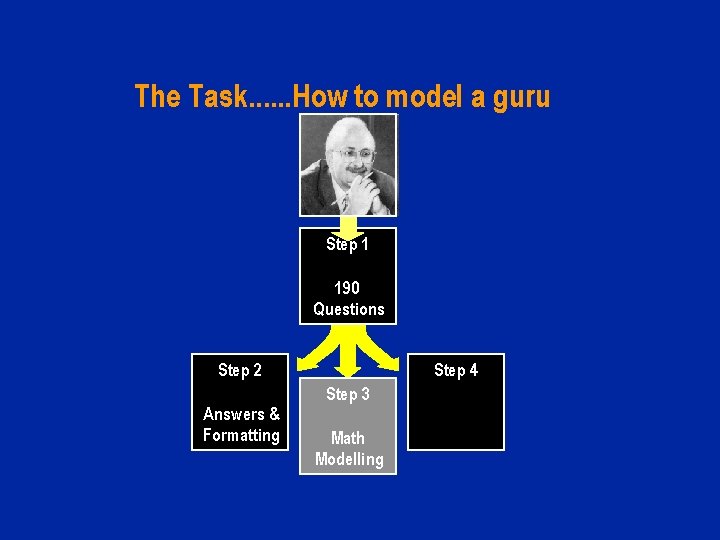
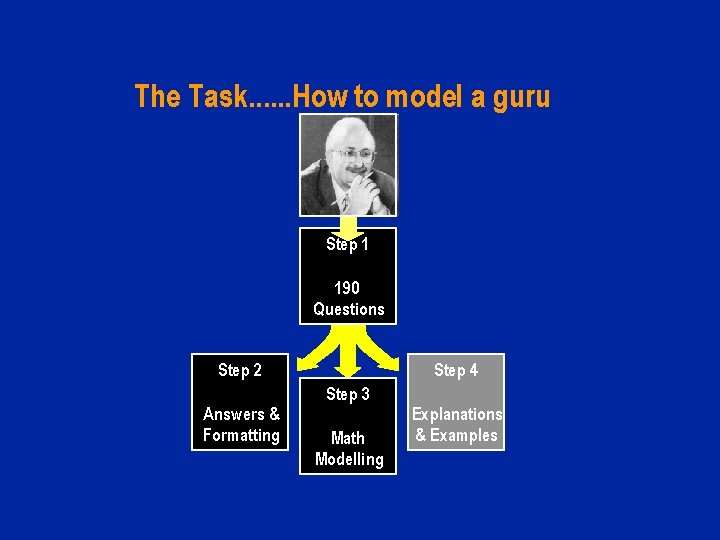
The Task. . . How to model a guru Step 1 190 Questions Step 2 Answers & Formatting Step 4 Step 3 Math Modelling Explanations & Examples
Step 1 190 Questions Peter had to probe his decades of experience (and even some data!) more than he had ever done before in order to rebuild from fundamentals a suite of 190 questions. The work was challenging but after a great deal of time, perspiration and inspiration he delivered: the components of outrage in bite-size chunks.
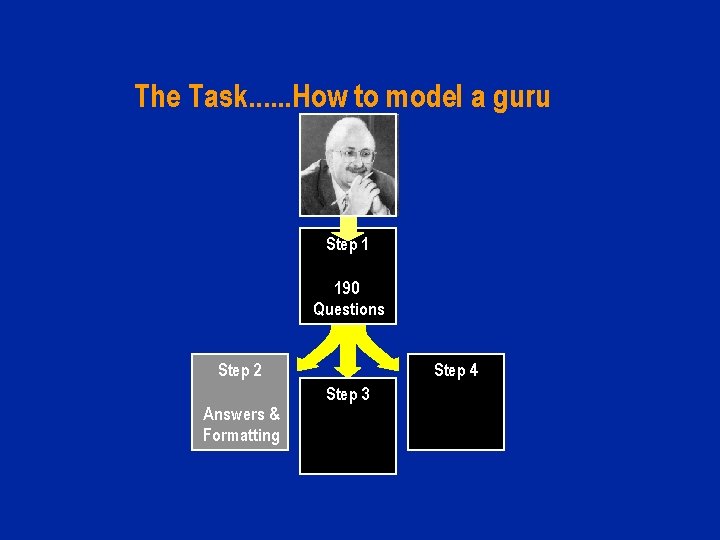
The Task. . . How to model a guru Step 1 190 Questions Step 2 Answers & Formatting Step 4 Step 3 Math Modelling Explanations & Examples
Step 2 Answers & Formatting The next step was to draft answers - not just the “right” answers to each question, but also wrong answers that captured the misjudgments Peter’s clients tended to fall prey to. Then the questions had to be formatted and ordered in a way that captured the complexity of the process.
The Task. . . How to model a guru Step 1 190 Questions Step 2 Answers & Formatting Step 4 Step 3 Math Modelling Explanations & Examples
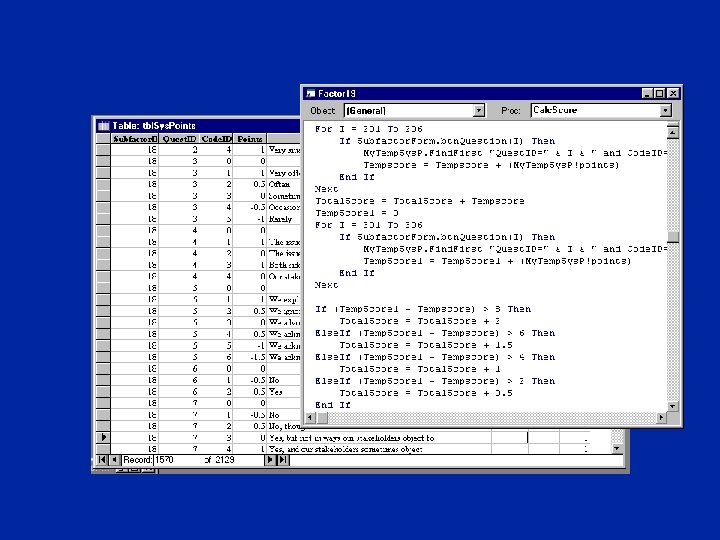
Step 3 Math Modelling Surely the work was complete now… or so we thought. We were wrong. Not all questions are equally important in scoring an outrage factor, and not all outrage factors are equally important in making up a total “outrage score. ” Having weighted the questions and factors, all that was left to do was some simple arithmetic, right? Wrong. When we tested our mathematical models on a range of cases, they didn’t always match Peter’s intuitions. He wasn’t about to change his intuitions. So it was back to the drawing board for the model. The weeks turned into months and the months felt like years, but we got there: A set of formulas that reliably replicated Peter’s intuitive outrage assessments.
The Task. . . How to model a guru Step 1 190 Questions Step 2 Answers & Formatting Step 4 Step 3 Math Modelling Explanations & Examples
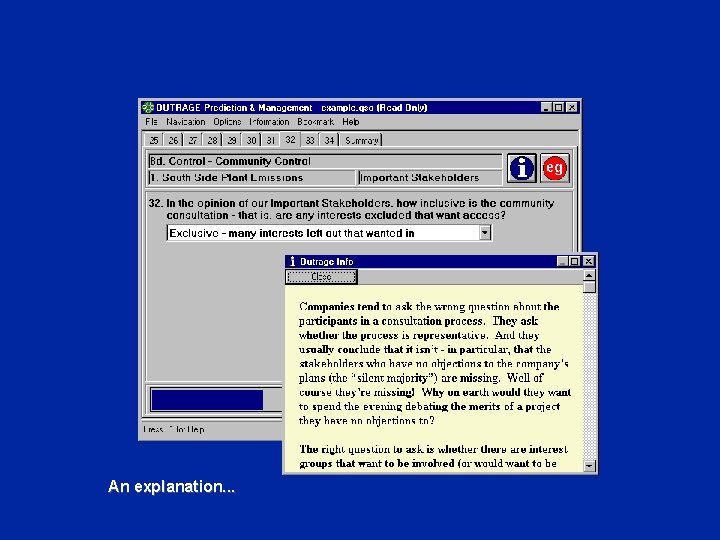
An explanation. . .
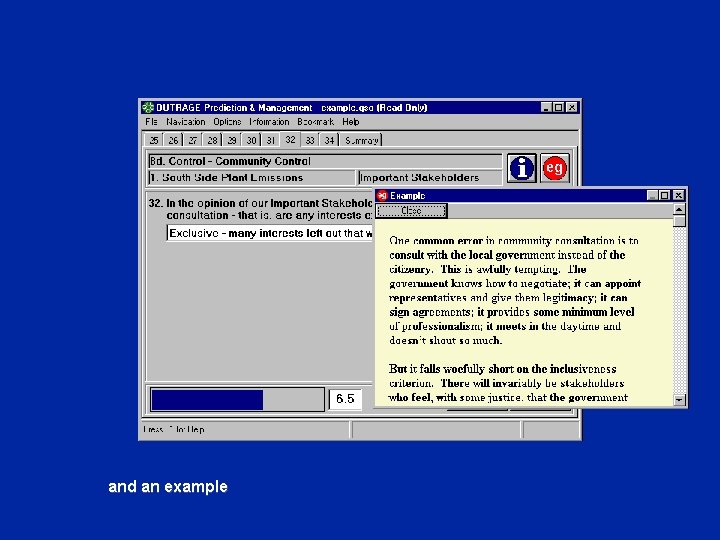
and an example
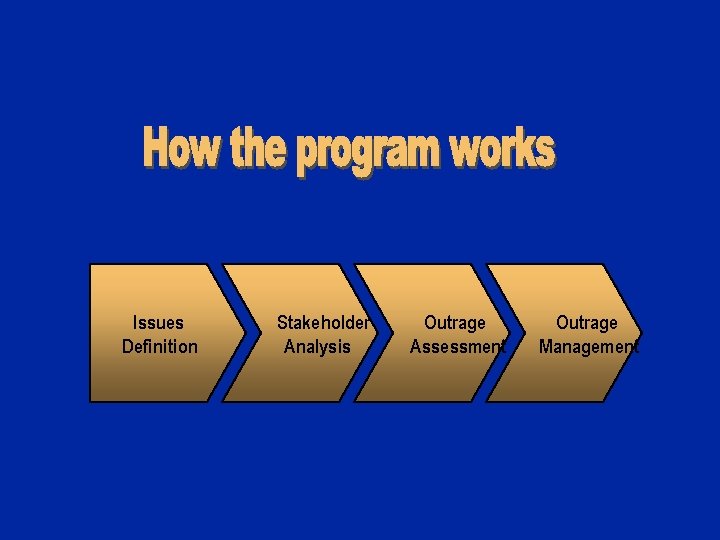
Issues Definition Stakeholder Analysis Outrage Assessment Outrage Management
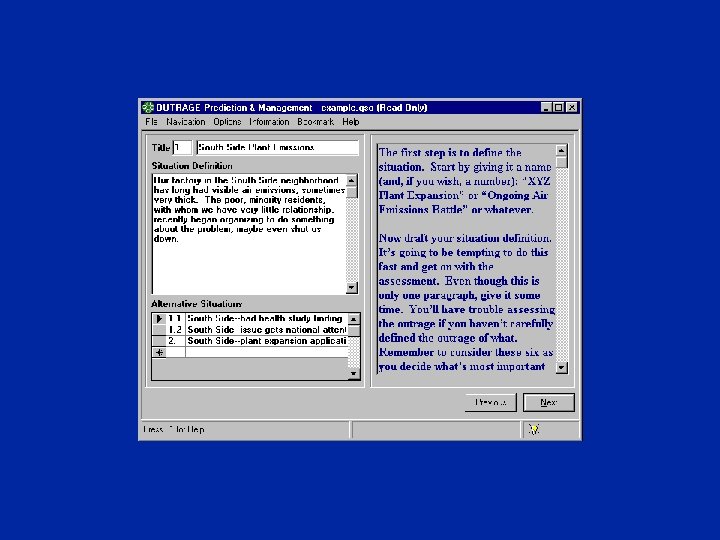
The definition of the situation may seem both obvious and unnecessary… it isn’t. For example, if you are about to put a new chemical factory in a fairly densely populated area it is very important to be clear whether you are assessing the outrage due to the announcement of the new plant (probability of occurrence = 1) and having a major toxic release (much smaller probability, higher outrage).
Before we can assess the outrage, we need to determine who it is that might get upset. Historically, corporations don’t do this well so Peter Sandman helps with a series of prompts like. . • • • Who’s given you problems before? Who have you forgotten in the past? Who lives over some physical or conceptual line? Who do you hate talking to most? Who may think they are a stakeholder even if they aren’t? • Etc.
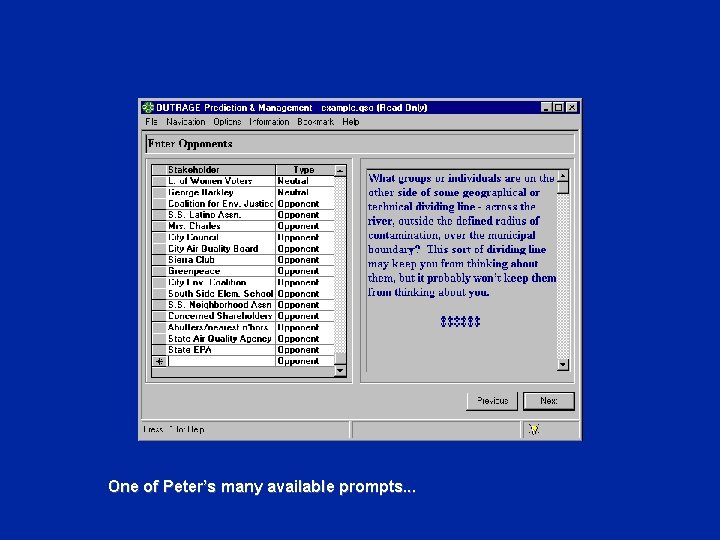
One of Peter’s many available prompts. . .
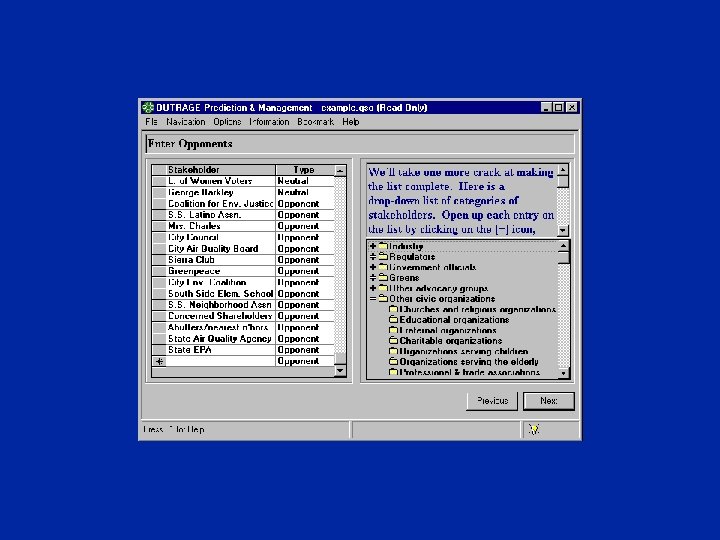
Now that you’ve done the work in identifying potential outrage subjects, Dr. Sandman offers you a proforma list as a final check. This is at the rear of the identification process just to make sure that you are making issue specific decisions and not “leaning” on the check list.
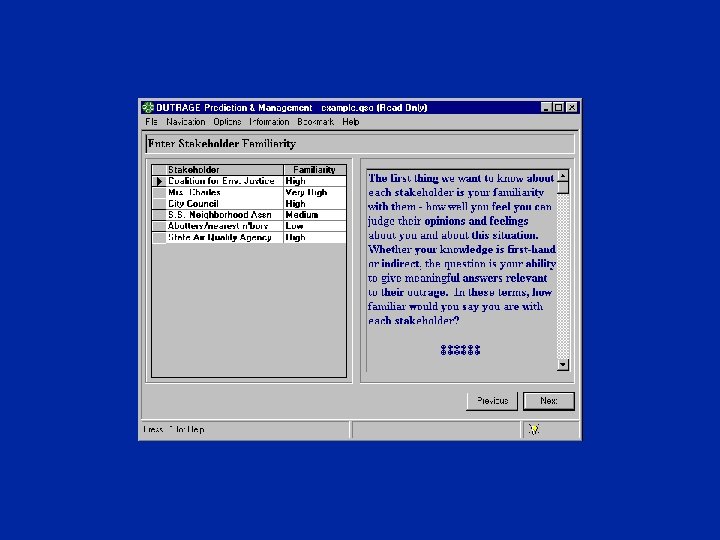
It’s not enough for us to list the stakeholders, we need to identify the more important ones and build up a character profile of them. • How well do we know them? • How much power, passion do they have and how much do they stand to lose? • What drives them?
It’s not enough for us to list the stakeholders, we need to identify the more important ones and build up a character profile of them. • How well do we know them? • How much stake, power and passion do they have and how much do they stand to lose? • What drives them?
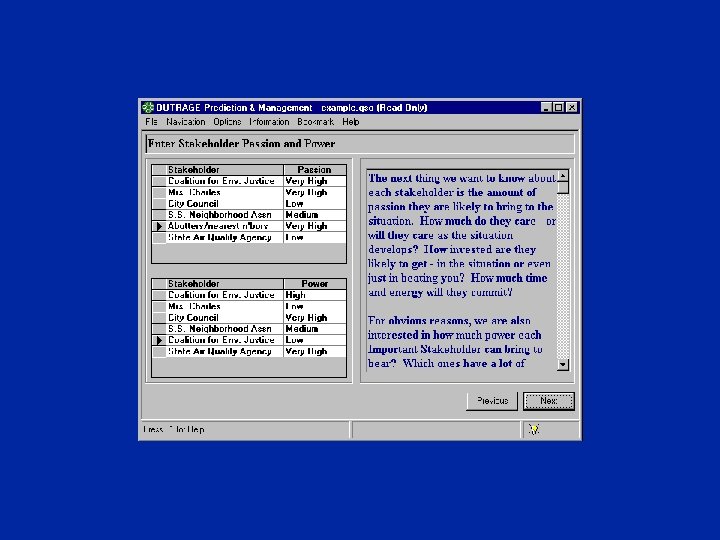
It’s not enough for us to list the stakeholders, we need to identify the more important ones and build up a character profile of them. • How well do we know them? • How much power, passion do they have and how much do they stand to lose? • What drives them?
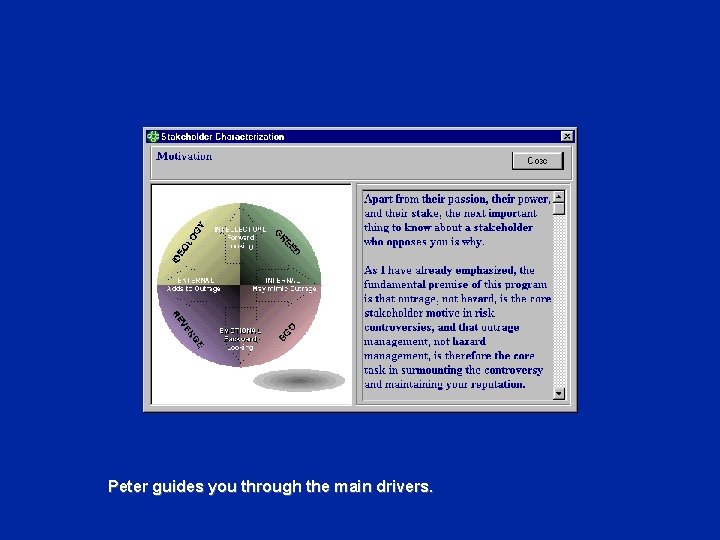
Peter guides you through the main drivers.
• If your stakeholder has great power but little passion it is often possible to acknowledge their power by offering them something else that they want but which doesn’t cost your company so badly. • If your stakeholder has lots of passion but little power (be careful, power can sometimes be indirect) then you can defeat them if you choose (assuming there is no real hazard). Whilst this is a valid option, be careful that you consider it’s effect on other corporate issues before proceeding. • If they have power and passion, get ready to bend or you might just break.
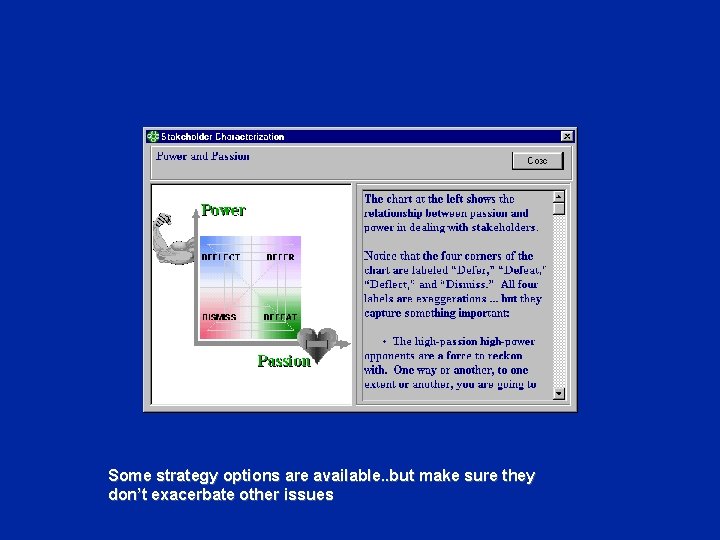
Some strategy options are available. . but make sure they don’t exacerbate other issues
This is the core of the system, where the essence of Peter Sandman is captured. This is where intuition has been melted down and reconstructed in 190 carefully formulated questions on the twelve Sandman Factors. How well did we succeed? Let’s say we delivered about 70% to 80% of the man himself PLUS A level of repeatability and transparency that even Dr. Sandman concedes he can’t match.
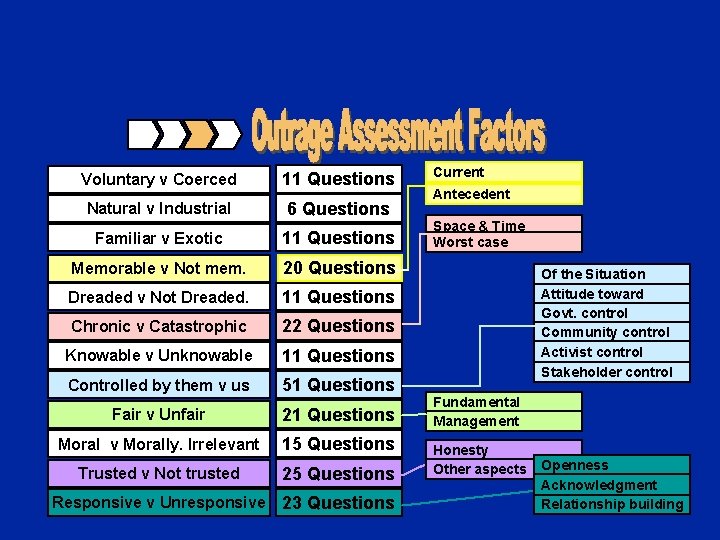
Voluntary v Coerced 11 Questions Natural v Industrial 6 Questions Familiar v Exotic 11 Questions Memorable v Not mem. 20 Questions Dreaded v Not Dreaded. 11 Questions Chronic v Catastrophic 22 Questions Knowable v Unknowable 11 Questions Controlled by them v us 51 Questions Fair v Unfair 21 Questions Moral v Morally. Irrelevant 15 Questions Trusted v Not trusted 25 Questions Responsive v Unresponsive 23 Questions Current Antecedent Space & Time Worst case Of the Situation Attitude toward Govt. control Community control Activist control Stakeholder control Fundamental Management Honesty Other aspects Openness Acknowledgment Relationship building
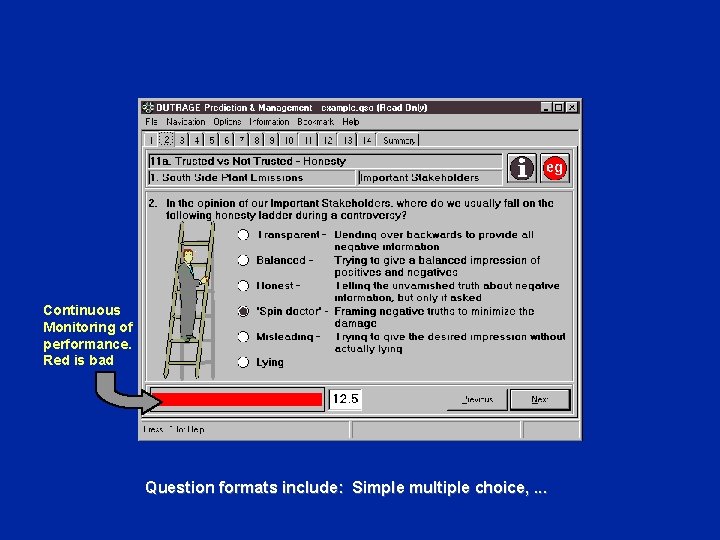
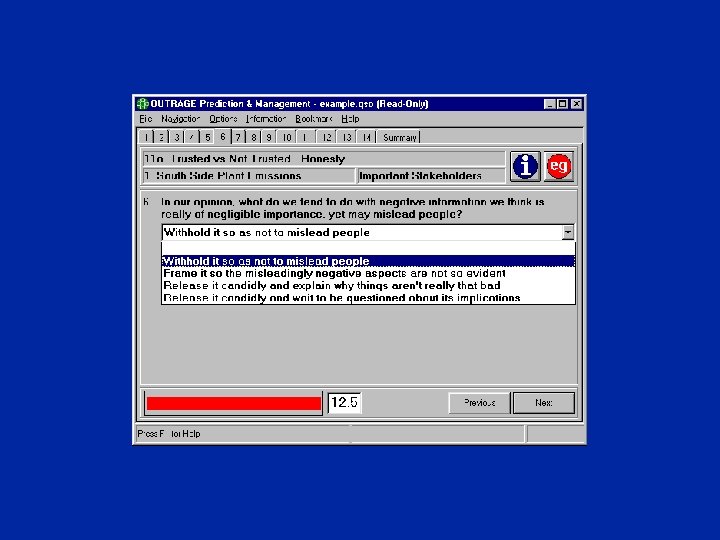
Continuous Monitoring of performance. Red is bad Question formats include: Simple multiple choice, . . .
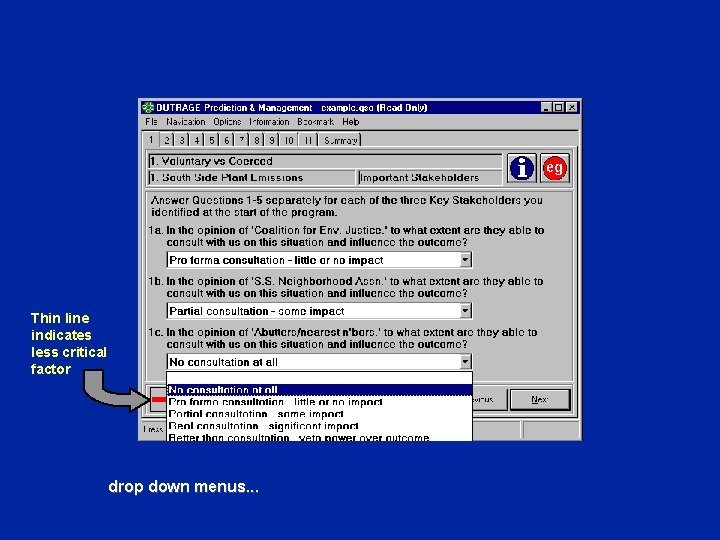
Thin line indicates less critical factor drop down menus. . .
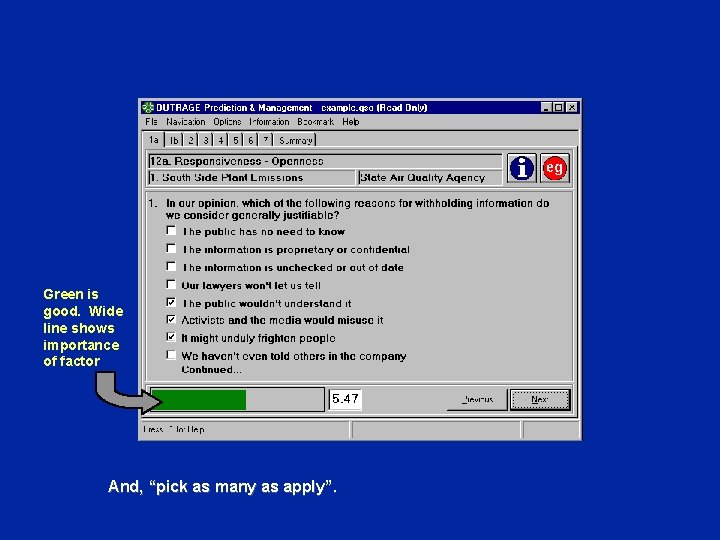
Green is good. Wide line shows importance of factor And, “pick as many as apply”.
• Finished the questions? . . – How well did we go? – Is this acceptable? – What are our main problems?
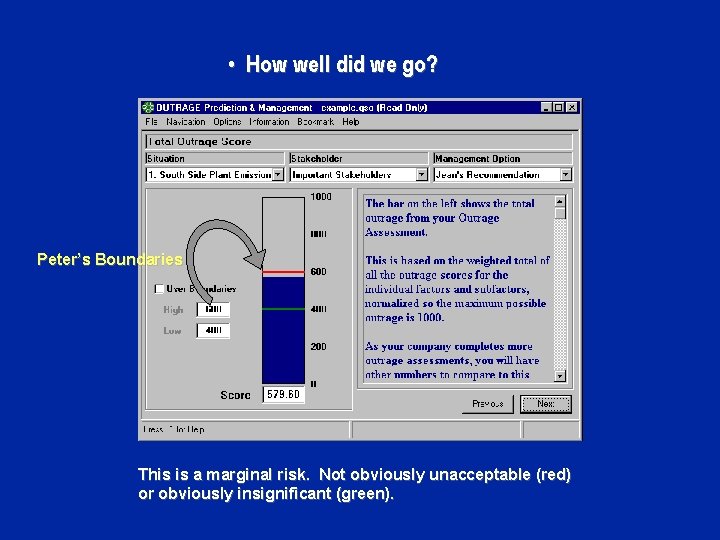
• How well did we go? Peter’s Boundaries This is a marginal risk. Not obviously unacceptable (red) or obviously insignificant (green).
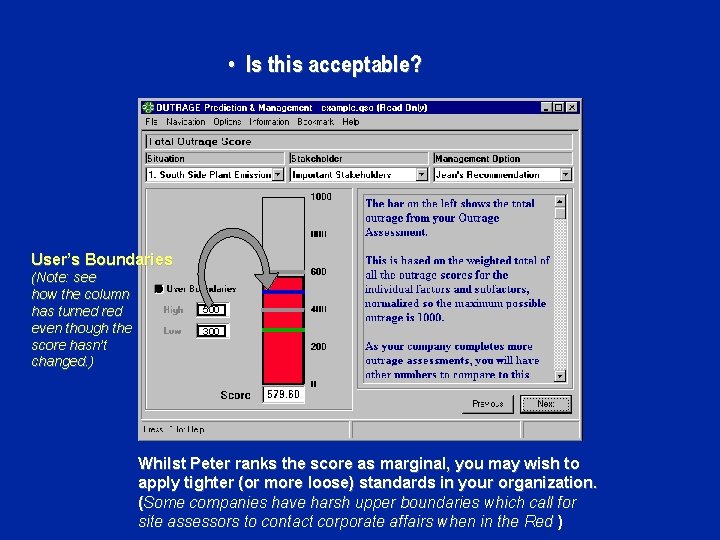
• Is this acceptable? User’s Boundaries (Note: see how the column has turned red even though the score hasn’t changed. ) 500 300 Whilst Peter ranks the score as marginal, you may wish to apply tighter (or more loose) standards in your organization. (Some companies have harsh upper boundaries which call for site assessors to contact corporate affairs when in the Red )
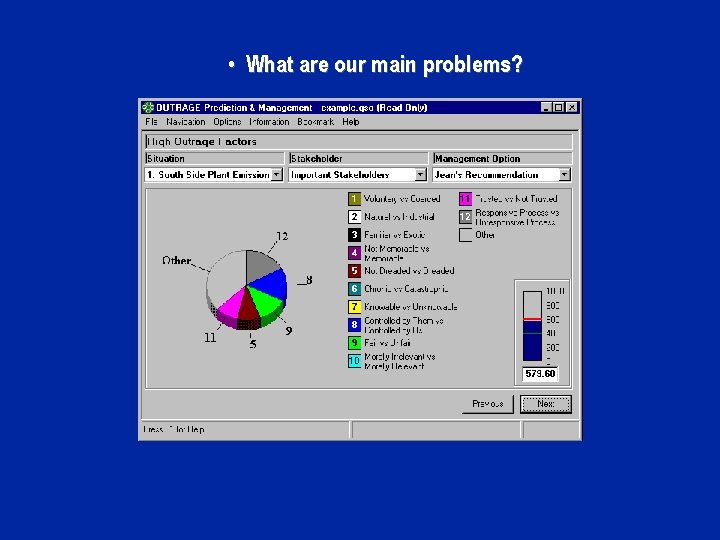
• What are our main problems?
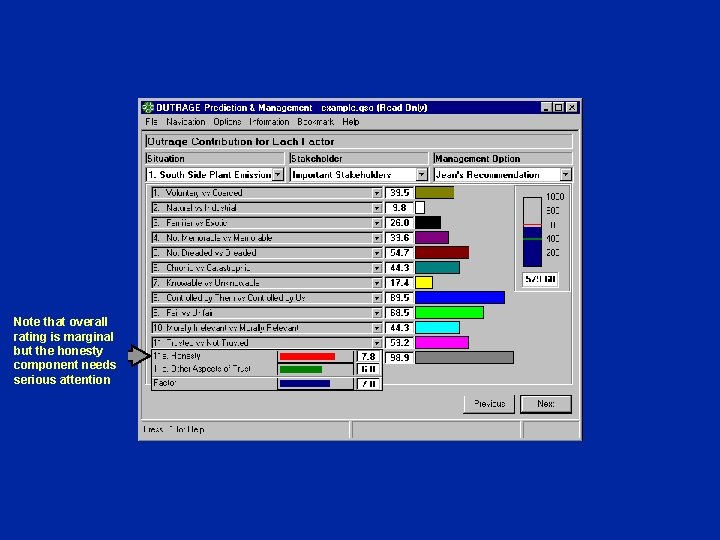
Note that overall rating is marginal but the honesty component needs serious attention
If we help you confirm that you have an outrage problem and then walk away… you may well be OUTRAGED. On the other hand, we can’t tell you specifically what to do in an individual situation to lower outrage, if we did you’d (correctly) call us charlatans or fools. Our approach to helping you manage outrage is to let you know where your most damaging characteristics are and help you experiment with different levels of change so that you can decide the cost effective solution that can work within yourorganization. . . .
The first thing the program does is ask two questions: • Which answers hurt us most? • Can we do anything about it? From the answers it receives from the data you’ve already provided, the software will highlight the questions to you starting with the most damaging factor. . .
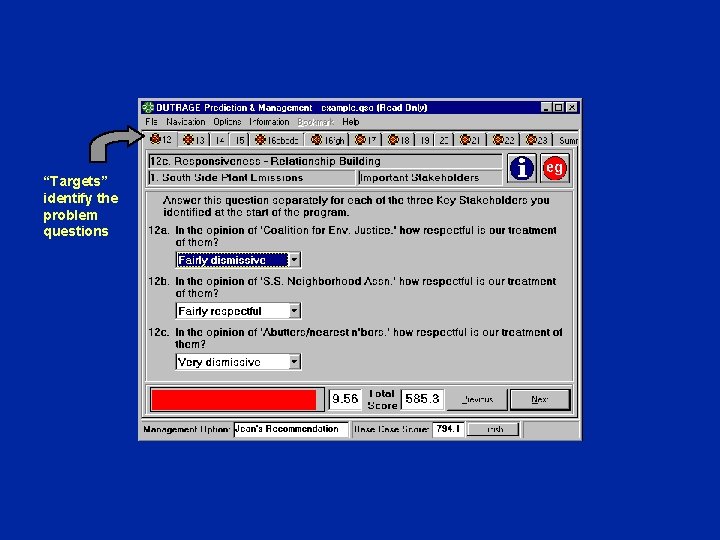
“Targets” identify the problem questions
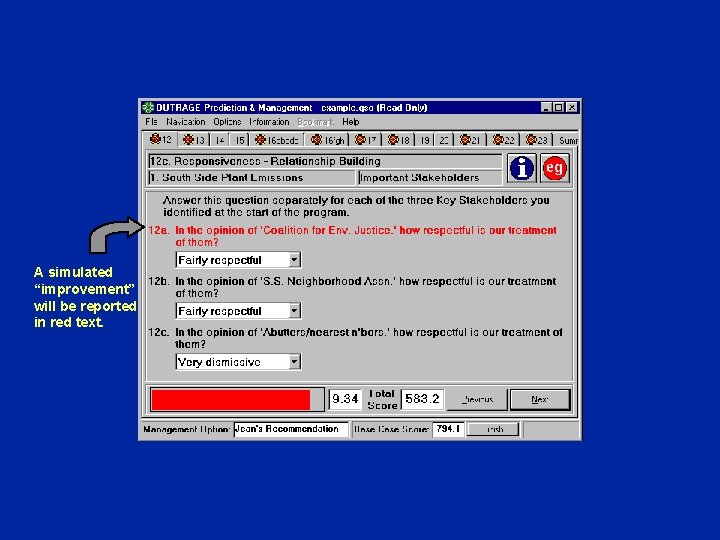
A simulated “improvement” will be reported in red text.
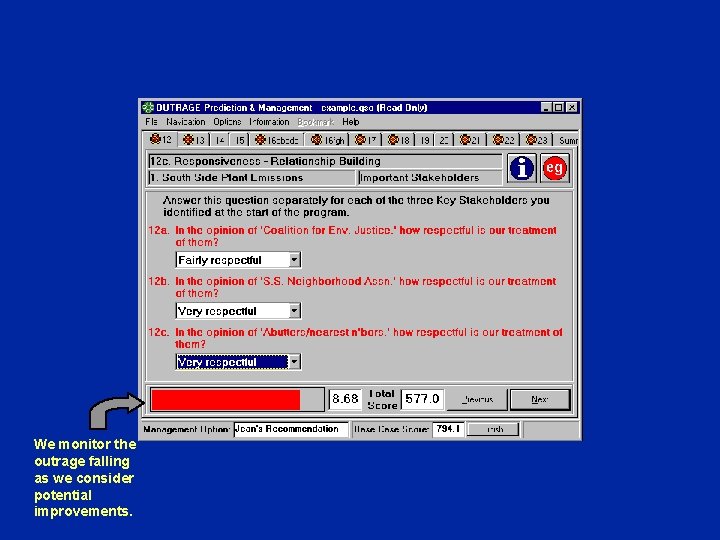
We monitor the outrage falling as we consider potential improvements.
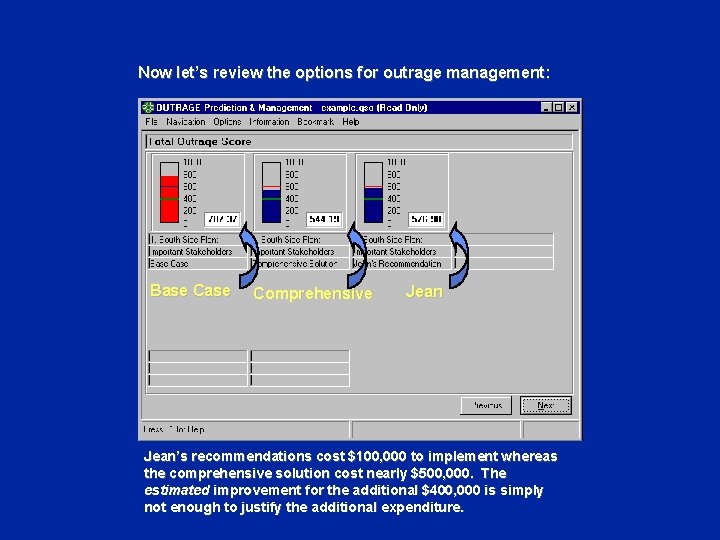
Now let’s review the options for outrage management: Base Comprehensive Jean’s recommendations cost $100, 000 to implement whereas the comprehensive solution cost nearly $500, 000. The estimated improvement for the additional $400, 000 is simply not enough to justify the additional expenditure.
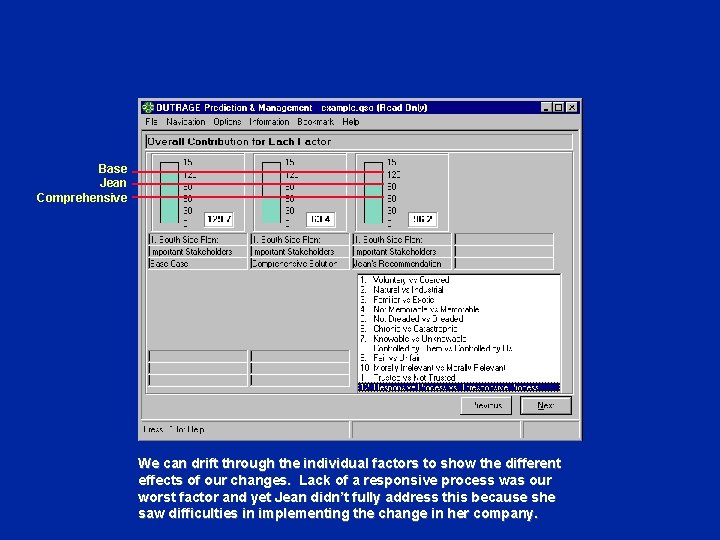
Base Jean Comprehensive We can drift through the individual factors to show the different effects of our changes. Lack of a responsive process was our worst factor and yet Jean didn’t fully address this because she saw difficulties in implementing the change in her company.
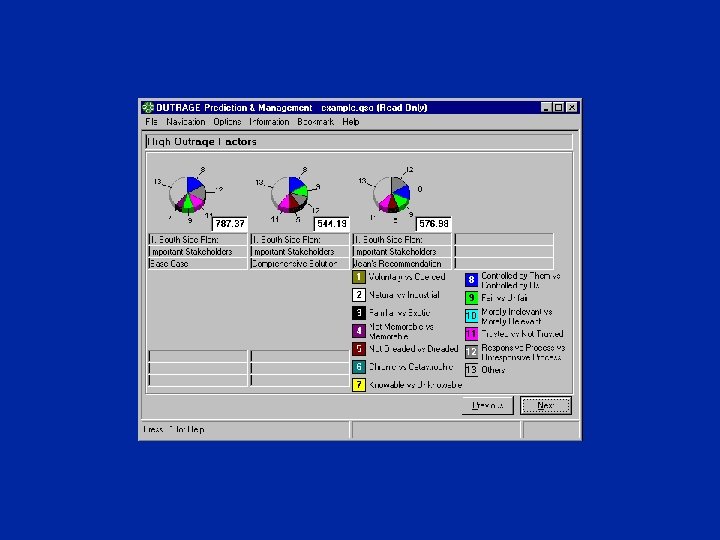
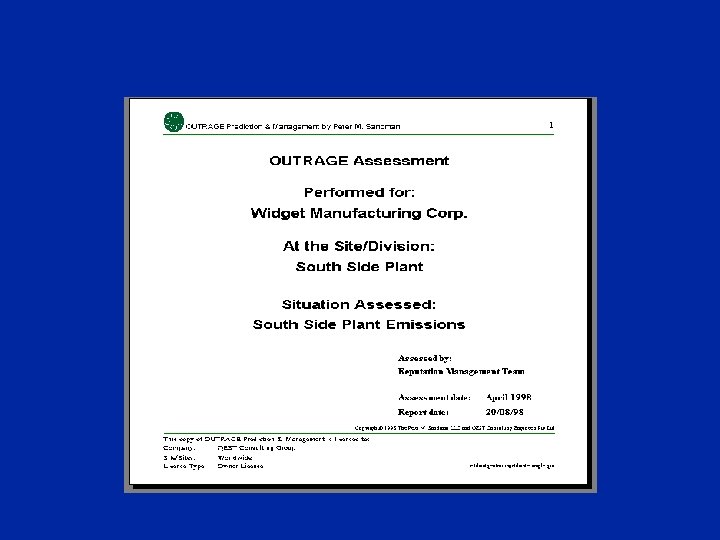
• The “OUTRAGE” report will allow you to: – Prioritize actions – Integrate with other risk management processes – Make results accessible and understandable to operational and financial management – Let them see that it is transparent, repeatable and non-threatening
This is a demonstration disk For pricing or further information: Email: sales@emsoft. com Website: www. emsoft. com Telephone: 1 888 367 9580 Facsimile: 1 303 273 5070 Copyright C 1998 Peter M. Sandman LLC and QEST Consulting Engineers
- Slides: 63