
Use of variety mixtures to reduce disease increase
- Slides: 10
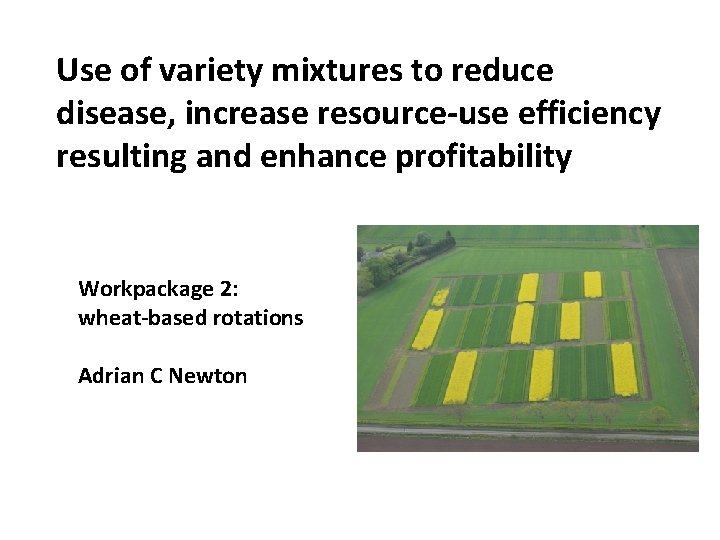
Use of variety mixtures to reduce disease, increase resource-use efficiency resulting and enhance profitability Workpackage 2: wheat-based rotations Adrian C Newton
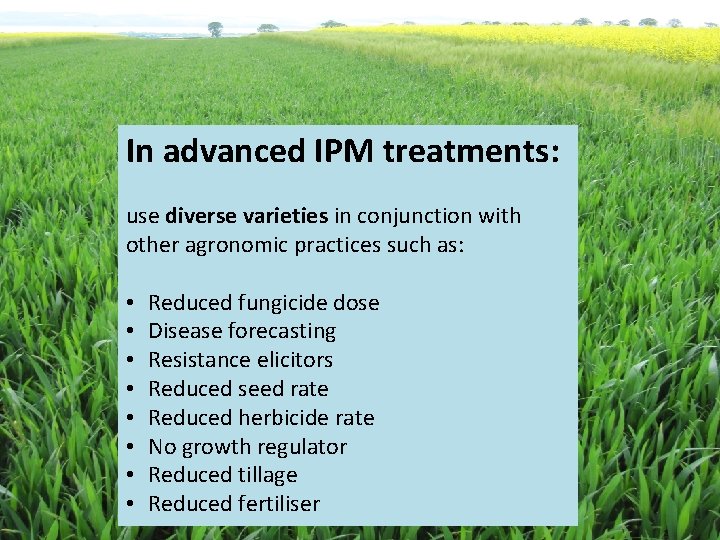
In advanced IPM treatments: use diverse varieties in conjunction with other agronomic practices such as: • • Reduced fungicide dose Disease forecasting Resistance elicitors Reduced seed rate Reduced herbicide rate No growth regulator Reduced tillage Reduced fertiliser
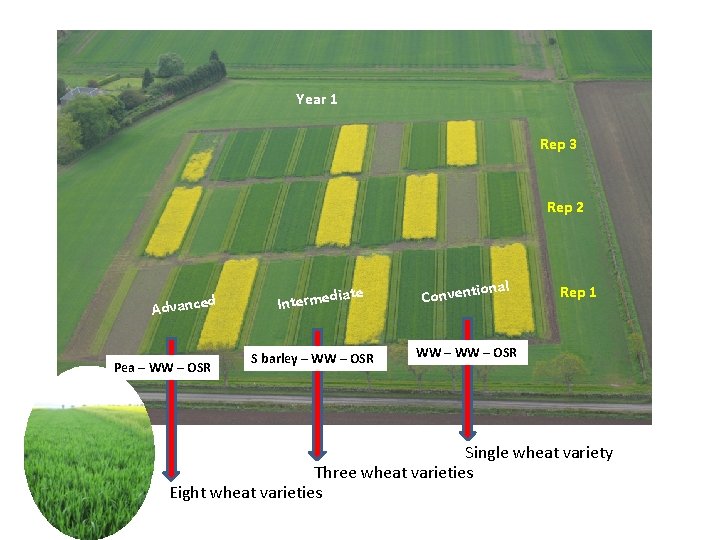
Year 1 Rep 3 Rep 2 d Advance Pea – WW – OSR iate Intermed S barley – WW – OSR ional Convent Rep 1 WW – OSR Single wheat variety Three wheat varieties Eight wheat varieties
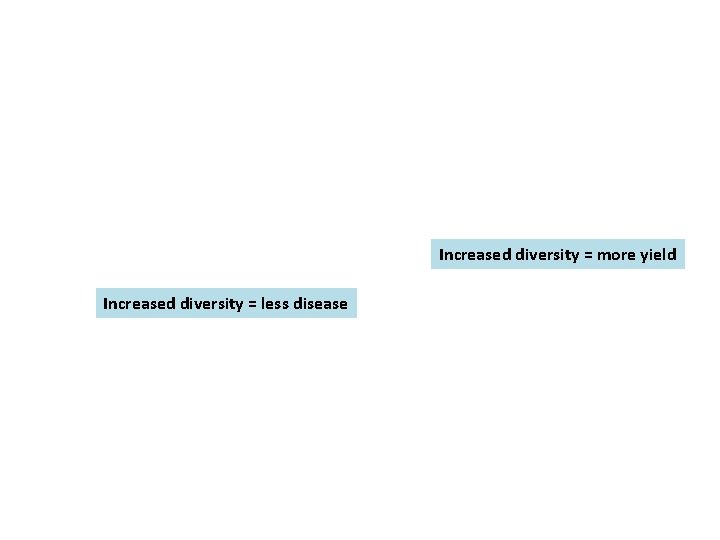
Increased diversity = more yield Increased diversity = less disease
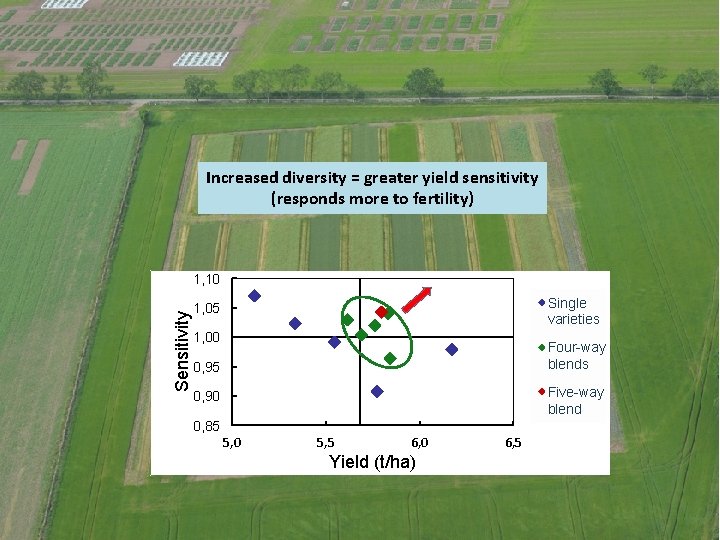
Increased diversity = greater yield sensitivity (responds more to fertility) Sensitivity 1, 10 Single varieties 1, 05 1, 00 Four-way blends 0, 95 Five-way blend 0, 90 0, 85 5, 0 5, 5 6, 0 Yield (t/ha) 6, 5
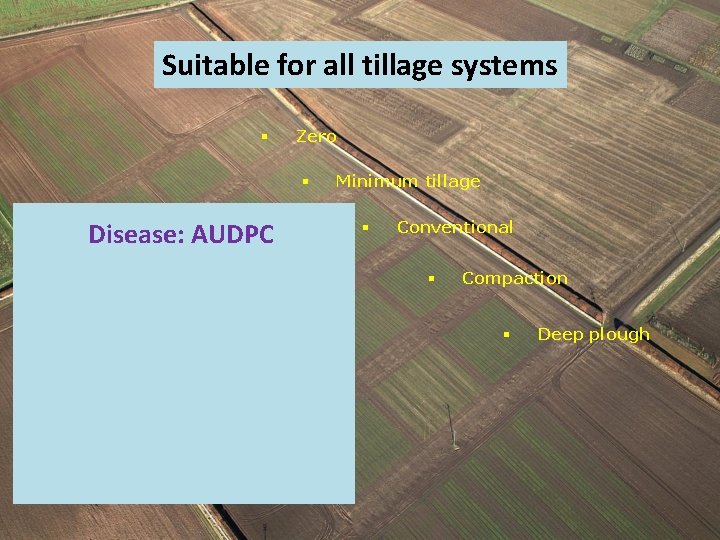
Suitable for all tillage systems § Zero § Disease: AUDPC Minimum tillage § Conventional § Compaction § Deep plough
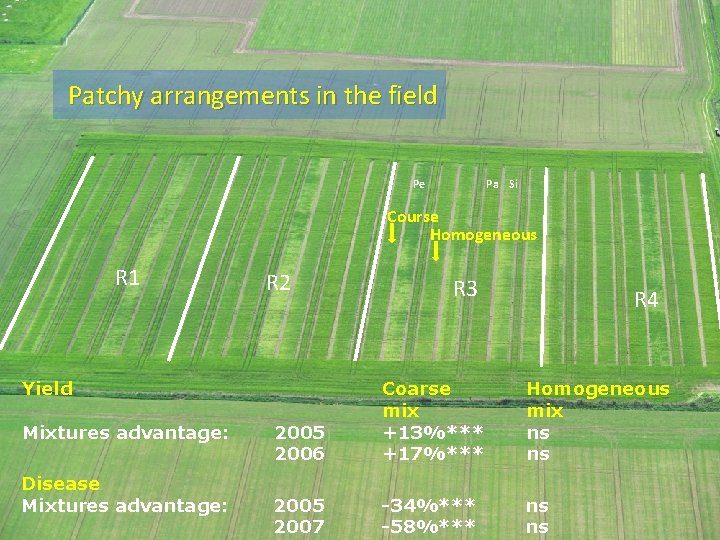
Patchy arrangements in the field Pe Pa Si Course Homogeneous R 1 R 2 Yield Mixtures advantage: Disease Mixtures advantage: R 3 R 4 2005 2006 Coarse mix +13%*** +17%*** Homogeneous mix ns ns 2005 2007 -34%*** -58%*** ns ns
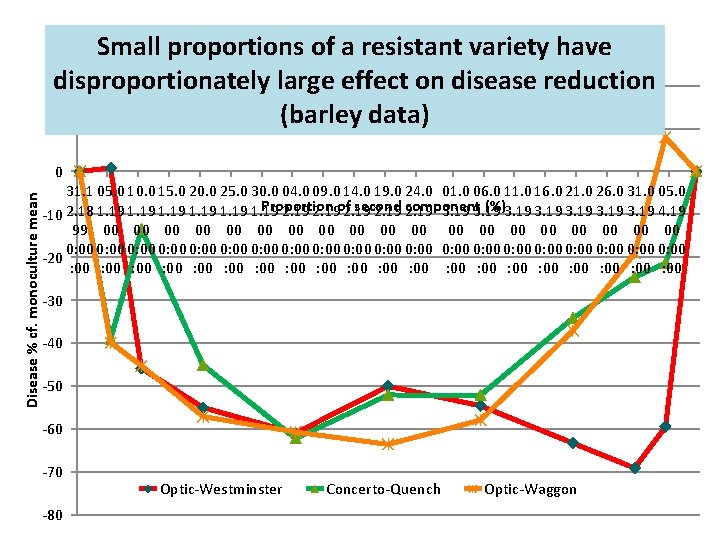
Small proportions of a resistant variety have disproportionately large effect on disease reduction 20 (barley data) 10 Disease % cf. monoculture mean 0 31. 1 05. 0 10. 0 15. 0 20. 0 25. 0 30. 0 04. 0 09. 0 14. 0 19. 0 24. 0 01. 0 06. 0 11. 0 16. 0 21. 0 26. 0 31. 0 05. 0 Proportion of second component (%) -10 2. 18 1. 19 2. 19 3. 19 4. 19 99 00 00 00 00 00 0: 00 0: 00 0: 00 0: 00 0: 00 -20 : 00 : 00 : 00 : 00 : 00 -30 -40 -50 -60 -70 -80 Optic-Westminster Concerto-Quench Optic-Waggon
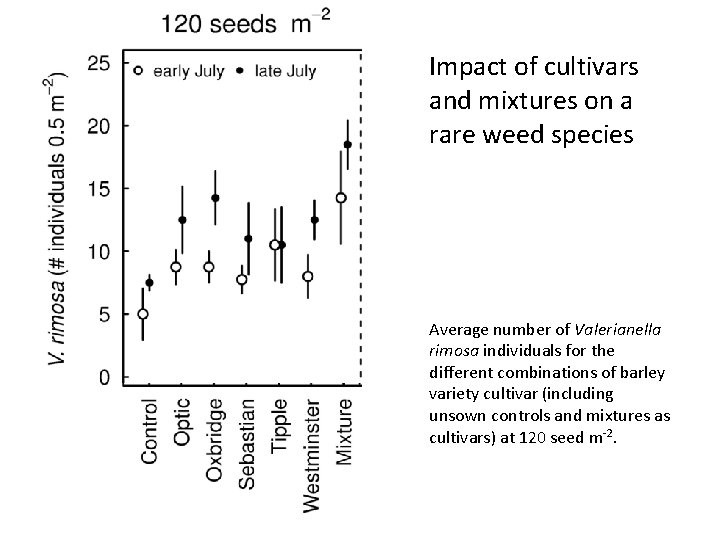
Impact of cultivars and mixtures on a rare weed species Average number of Valerianella rimosa individuals for the different combinations of barley variety cultivar (including unsown controls and mixtures as cultivars) at 120 seed m-2.
Conclusions • Variety mixtures are an important agronomic method that can contribute to Integrated Pest Management • Mixtures contribute to stability and increased resource use efficiency • Mixtures to 76% disease reduction and 17% increase in yield (winter barley data) • The greater the number of components the more disease is reduced • The spatial arrangement, patch size and distribution can affect their efficacy • Resistance components can contribute disproportionately, a 10% proportion of a resistant component accounting for up to 50% disease reduction • Mixtures can help maintain functional diversity amongst weeds