
Use of the Prepositional Case Review of Adjectives


- Slides: 23
Use of the Prepositional Case & Review of Adjectives © 2016 1
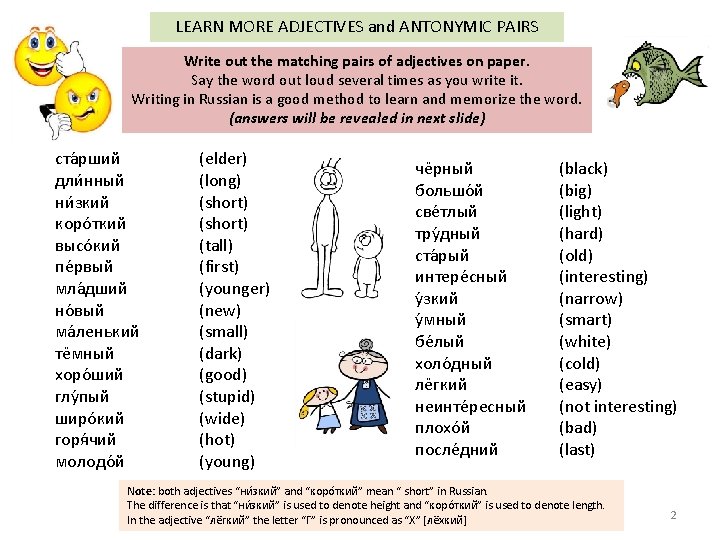
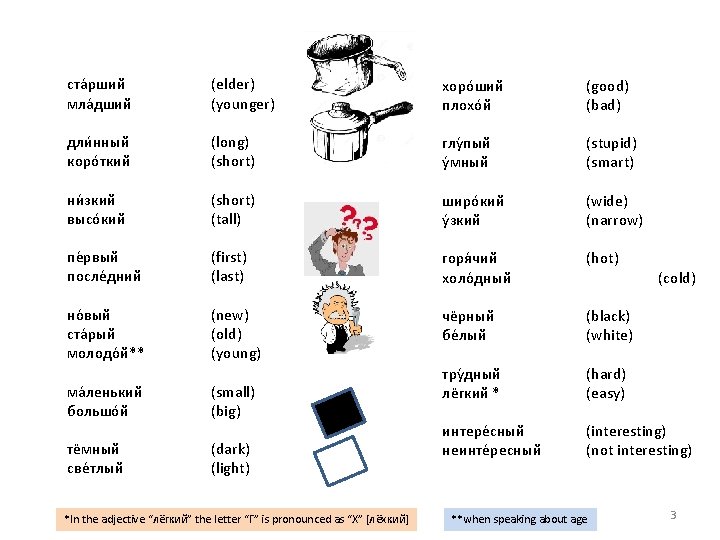
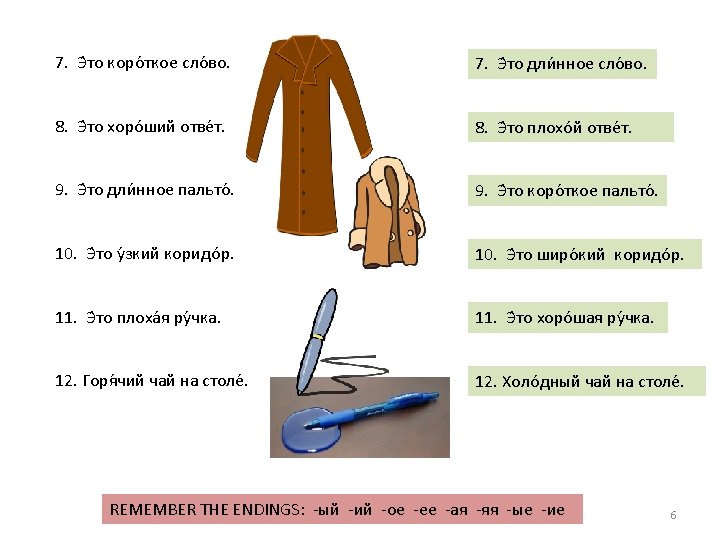
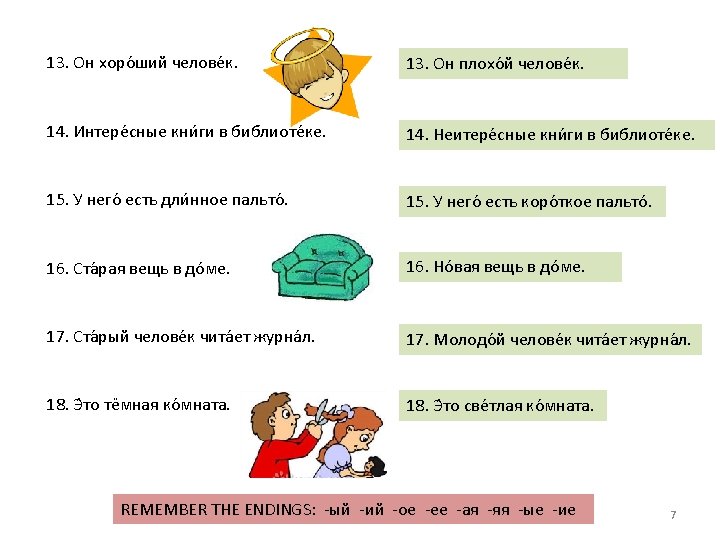
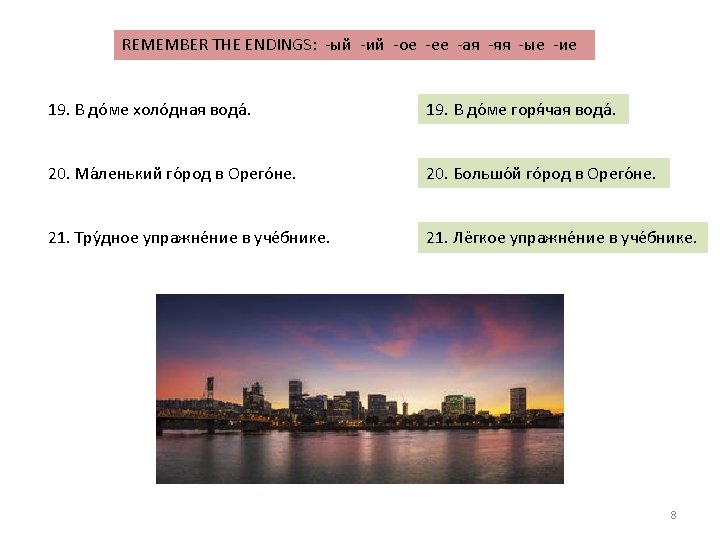
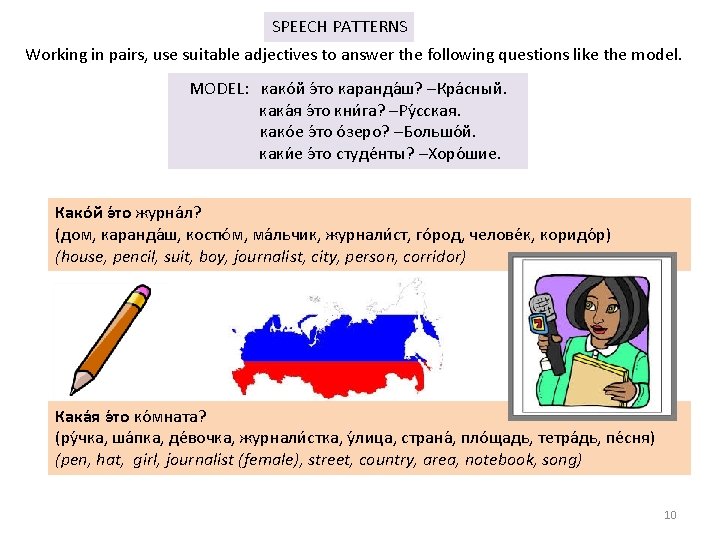
LEARN MORE ADJECTIVES and ANTONYMIC PAIRS Write out the matching pairs of adjectives on paper. Say the word out loud several times as you write it. Writing in Russian is a good method to learn and memorize the word. (answers will be revealed in next slide) ста рший дли нный ни зкий коро ткий высо кий пе рвый мла дший но вый ма ленький тёмный хоро ший глу пый широ кий горя чий молодо й (elder) (long) (short) (tall) (first) (younger) (new) (small) (dark) (good) (stupid) (wide) (hot) (young) чёрный большо й све тлый тру дный ста рый интере сный у зкий у мный бе лый холо дный лёгкий неинте ресный плохо й после дний (black) (big) (light) (hard) (old) (interesting) (narrow) (smart) (white) (cold) (easy) (not interesting) (bad) (last) Note: both adjectives “ни зкий” and “коро ткий” mean “ short” in Russian. The difference is that “ни зкий” is used to denote height and “коро ткий” is used to denote length. In the adjective “лёгкий” the letter “Г” is pronounced as “X” [лёхкий] 2
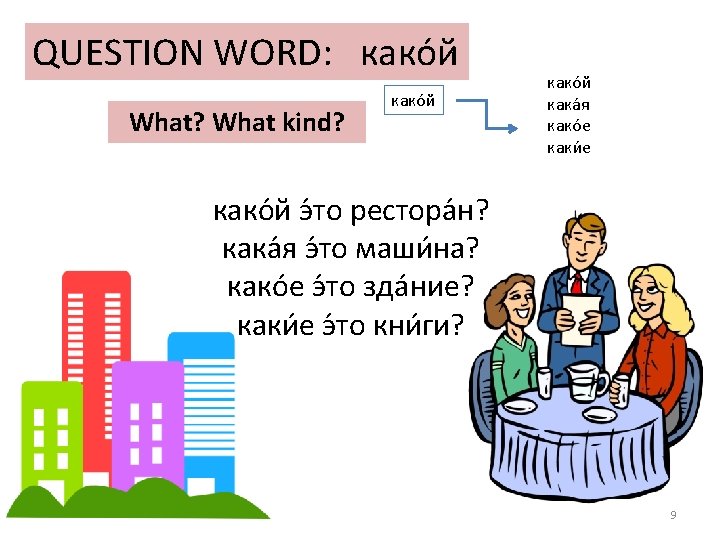
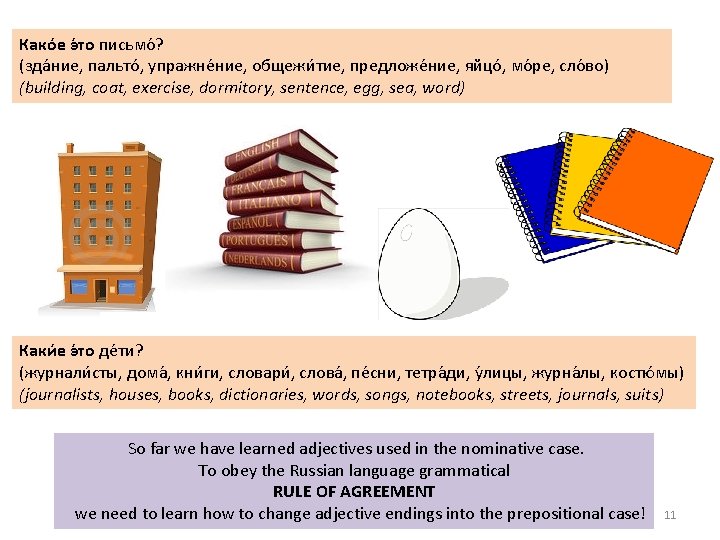
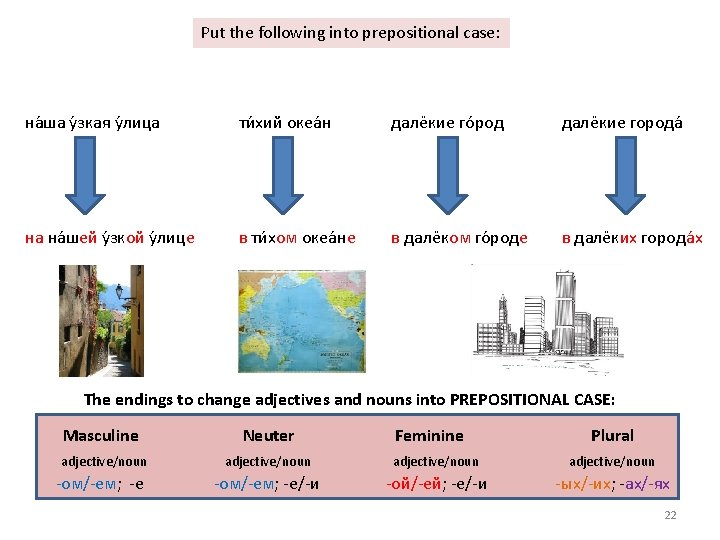
Како е э то письмо ? (зда ние, пальто , упражне ние, общежи тие, предложе ние, яйцо , мо ре, сло во) (building, coat, exercise, dormitory, sentence, egg, sea, word) Каки е э то де ти? (журнали сты, дома , кни ги, словари , слова , пе сни, тетра ди, у лицы, журна лы, костю мы) (journalists, houses, books, dictionaries, words, songs, notebooks, streets, journals, suits) So far we have learned adjectives used in the nominative case. To obey the Russian language grammatical RULE OF AGREEMENT we need to learn how to change adjective endings into the prepositional case! 11
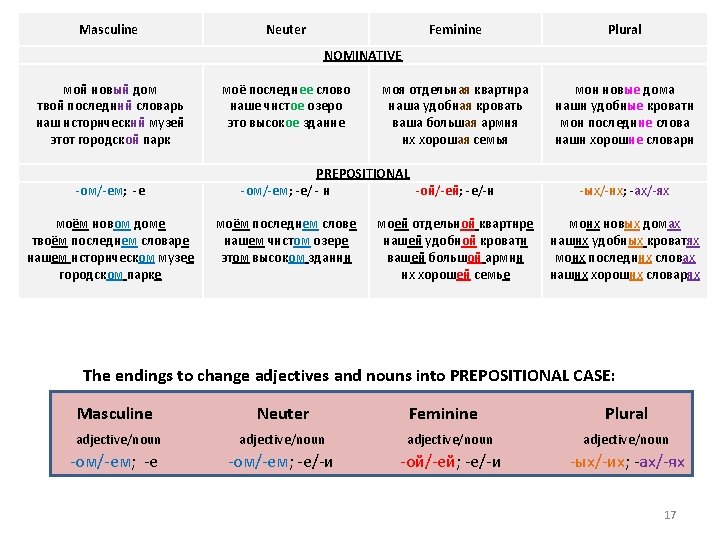
REVIEW THE USE OF THE PREPOSITIONAL CASE Prepositional case is used to denote location with prepositions «в» and «на» Preposition «в» means inside of something Preposition «на» means on the surface, on the top of something где? - where? Я живу на ю ге Портла нда*. (где? ) Мой оте ц рабо тает на заво де. (где? ) Я изуча ю ру сский язы к в ко лледже. (где? ) “Портла нда” is in the genitive case for the construction of this sentence. 12
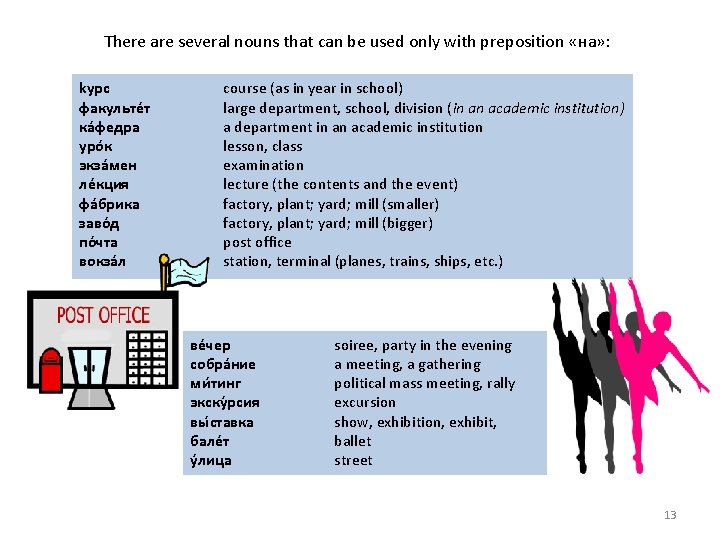
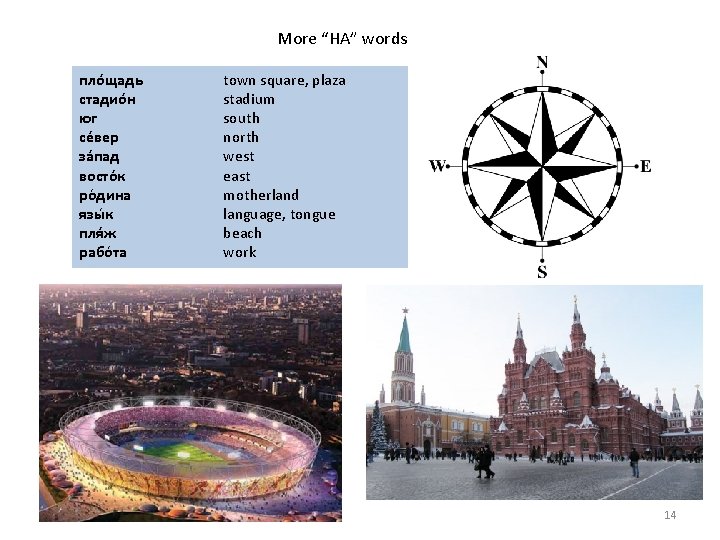
There are several nouns that can be used only with preposition «на» : kурс факульте т ка федра уро к экза мен ле кция фа брика заво д по чта вокза л course (as in year in school) large department, school, division (in an academic institution) a department in an academic institution lesson, class examination lecture (the contents and the event) factory, plant; yard; mill (smaller) factory, plant; yard; mill (bigger) post office station, terminal (planes, trains, ships, etc. ) ве чер собра ние ми тинг экску рсия вы ставка бале т у лица soiree, party in the evening a meeting, a gathering political mass meeting, rally excursion show, exhibition, exhibit, ballet street 13
More “HA” words пло щадь стадио н юг се вер за пад восто к ро дина язы к пля ж рабо та town square, plaza stadium south north west east motherland language, tongue beach work 14
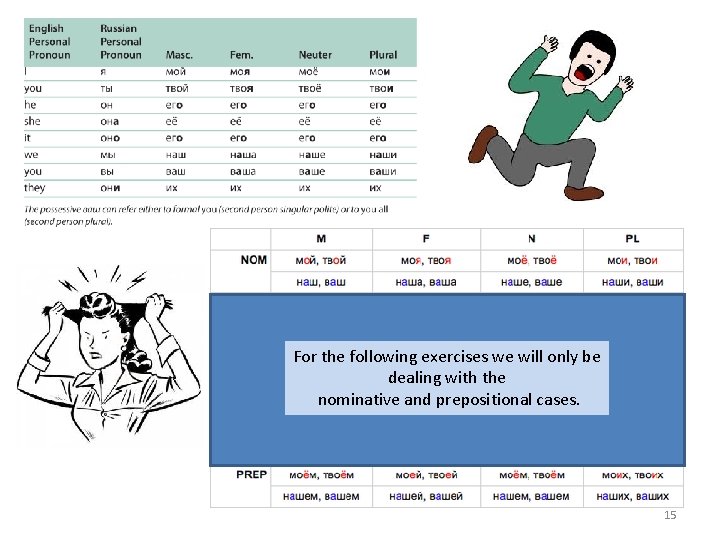
For the following exercises we will only be dealing with the nominative and prepositional cases. 15
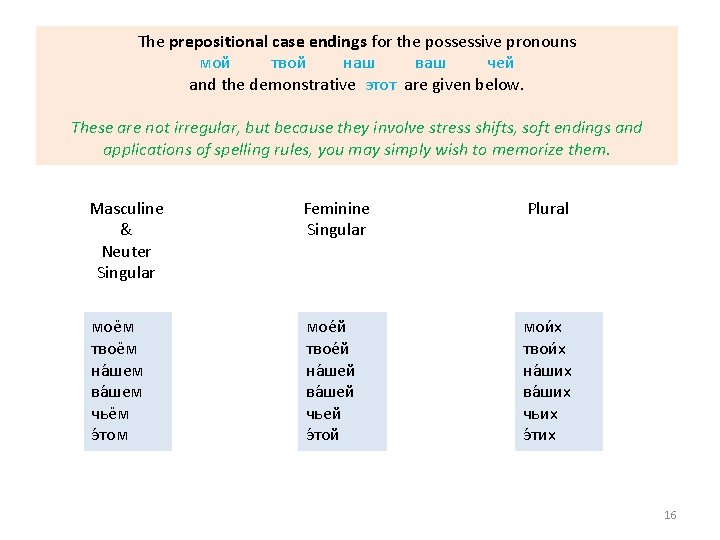
The prepositional case endings for the possessive pronouns мой твой наш ваш чей and the demonstrative этот are given below. These are not irregular, but because they involve stress shifts, soft endings and applications of spelling rules, you may simply wish to memorize them. Masculine & Neuter Singular Feminine Singular Plural моём твоём на шем ва шем чьём э том мое й твое й на шей ва шей чьей э той мои х твои х на ших ва ших чьих э тих 16
23