
Use of Technology for Better Data Visualization and
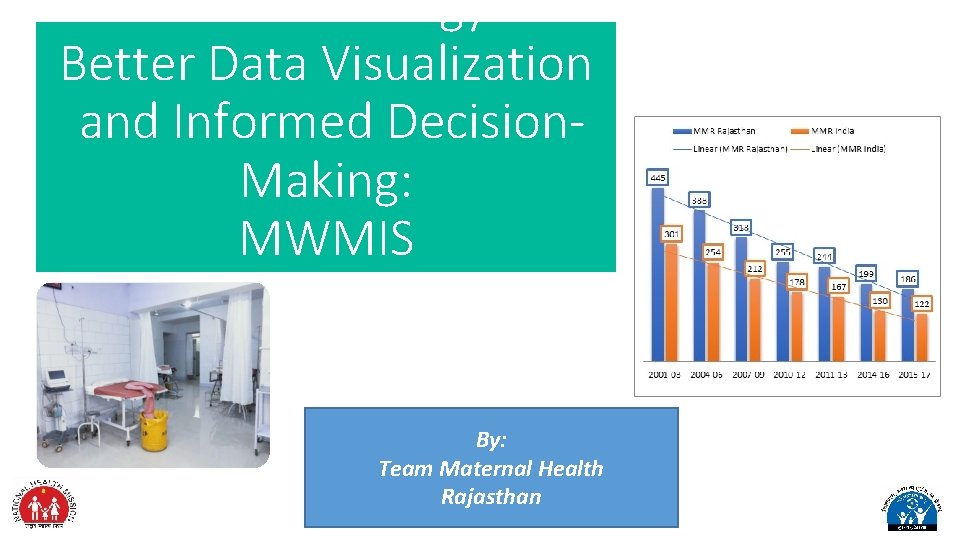
Use of Technology for Better Data Visualization and Informed Decision. Making: MWMIS By: Team Maternal Health Rajasthan
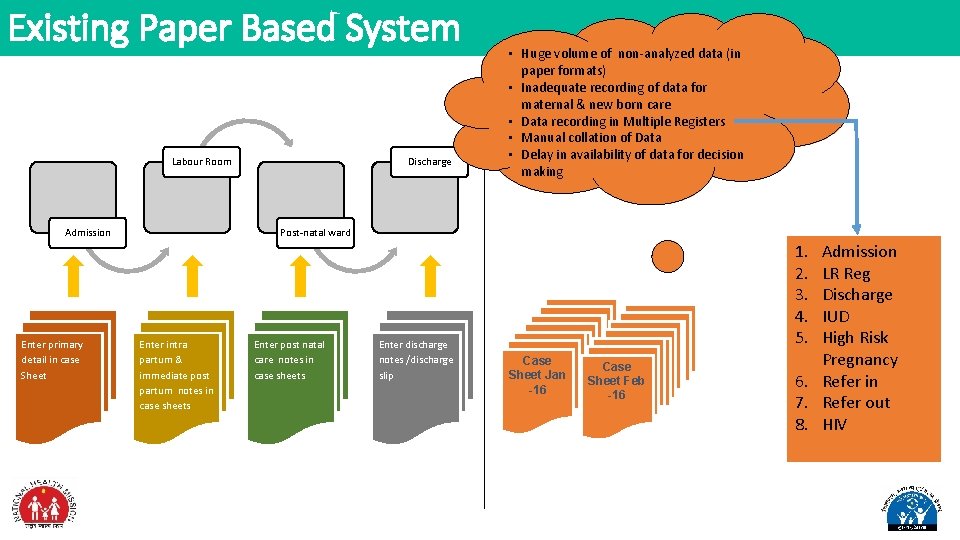
Existing Paper Based System Labour Room Admission Enter primary detail in case Sheet Discharge • Huge volume of non-analyzed data (in paper formats) • Inadequate recording of data for maternal & new born care • Data recording in Multiple Registers • Manual collation of Data • Delay in availability of data for decision making Post-natal ward Enter intra partum & immediate post partum notes in case sheets Enter post natal care notes in case sheets Enter discharge notes /discharge slip 1. 2. 3. 4. 5. Case Sheet Jan -16 Case Sheet Feb -16 Admission LR Reg Discharge IUD High Risk Pregnancy 6. Refer in 7. Refer out 8. HIV

Need for Collection and Utilization of Data from LR Five Deming Principles that Help Healthcare Process Improvement
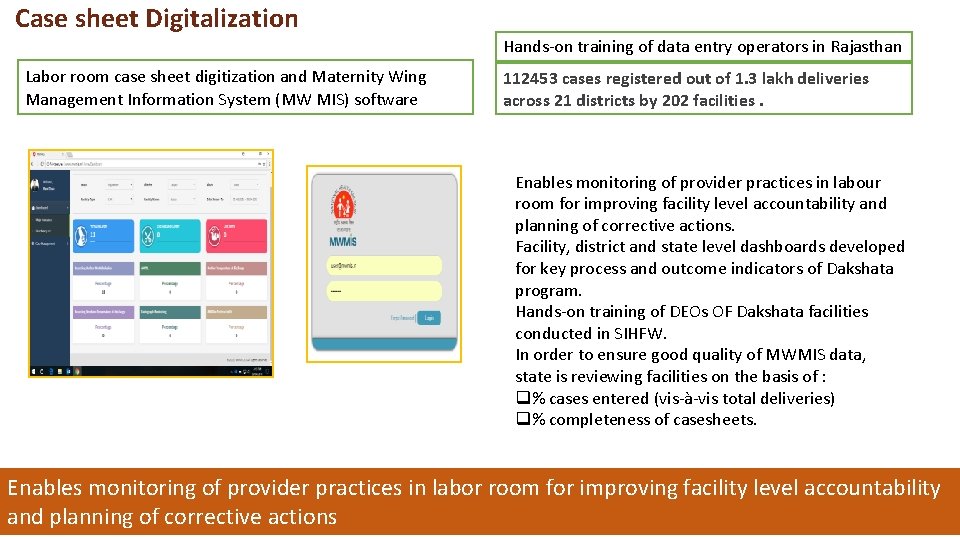
Case sheet Digitalization Hands-on training of data entry operators in Rajasthan Labor room case sheet digitization and Maternity Wing Management Information System (MW MIS) software 112453 cases registered out of 1. 3 lakh deliveries across 21 districts by 202 facilities. Enables monitoring of provider practices in labour room for improving facility level accountability and planning of corrective actions. Facility, district and state level dashboards developed for key process and outcome indicators of Dakshata program. Hands-on training of DEOs OF Dakshata facilities conducted in SIHFW. In order to ensure good quality of MWMIS data, state is reviewing facilities on the basis of : q% cases entered (vis-à-vis total deliveries) q% completeness of casesheets. Enables monitoring of provider practices in labor room for improving facility level accountability and planning of corrective actions
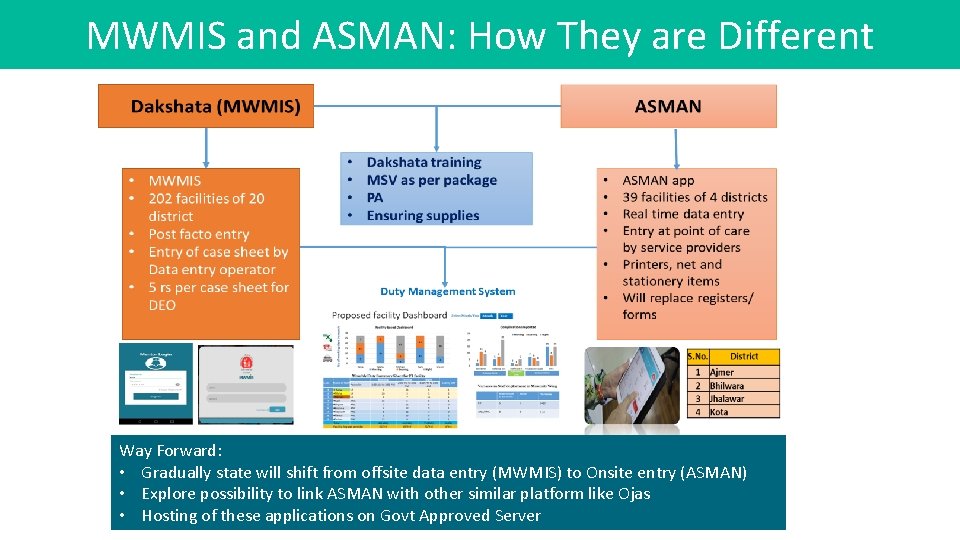
MWMIS and ASMAN: How They are Different Way Forward: • Gradually state will shift from offsite data entry (MWMIS) to Onsite entry (ASMAN) • Explore possibility to link ASMAN with other similar platform like Ojas • Hosting of these applications on Govt Approved Server
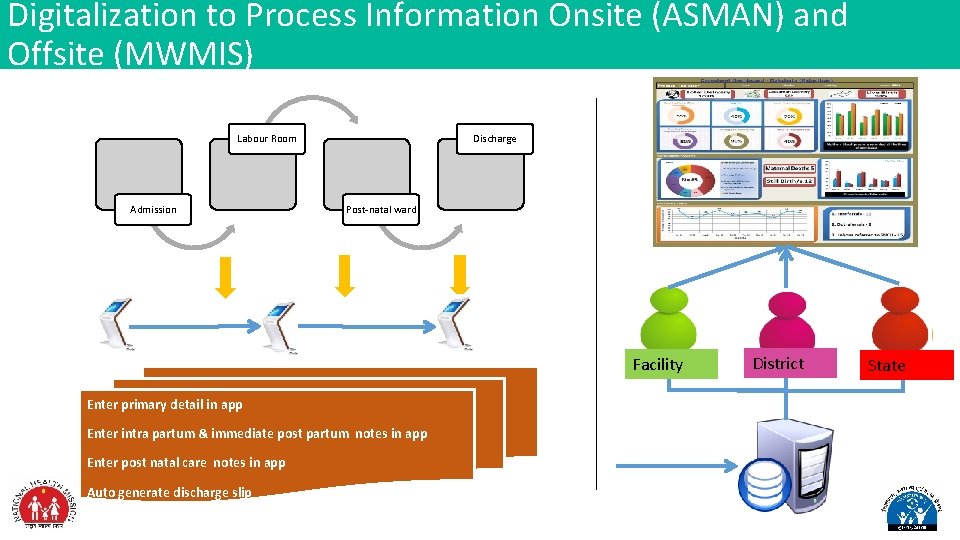
Digitalization to Process Information Onsite (ASMAN) and Offsite (MWMIS) Labour Room Admission Discharge Post-natal ward Facility Enter primary detail in app Enter intra partum & immediate post partum notes in app Enter post natal care notes in app Auto generate discharge slip District State
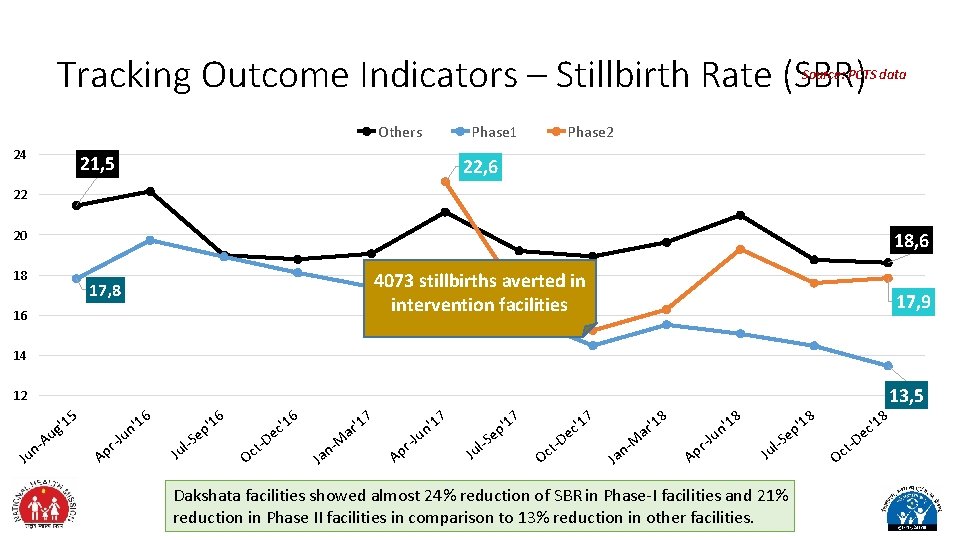
Tracking Outcome Indicators – Stillbirth Rate (SBR) Source: PCTS data Others 24 Phase 1 21, 5 Phase 2 22, 6 22 20 18, 6 18 4073 stillbirths averted in intervention facilities 17, 8 16 17, 9 14 13, 5 12 J un 6 6 5 '1 g u -A r Ap -J '1 n u l-S '1 p e Ju 7 6 t. Oc D '1 ec J an M '1 ar 7 7 r Ap -J '1 n u Ju '1 p e l-S '18 r a -M 7 t. Oc D '1 ec J an 8 8 r-J p A '1 n u l-S Ju Dakshata facilities showed almost 24% reduction of SBR in Phase-I facilities and 21% reduction in Phase II facilities in comparison to 13% reduction in other facilities. '1 p e t. Oc D '1 ec 8
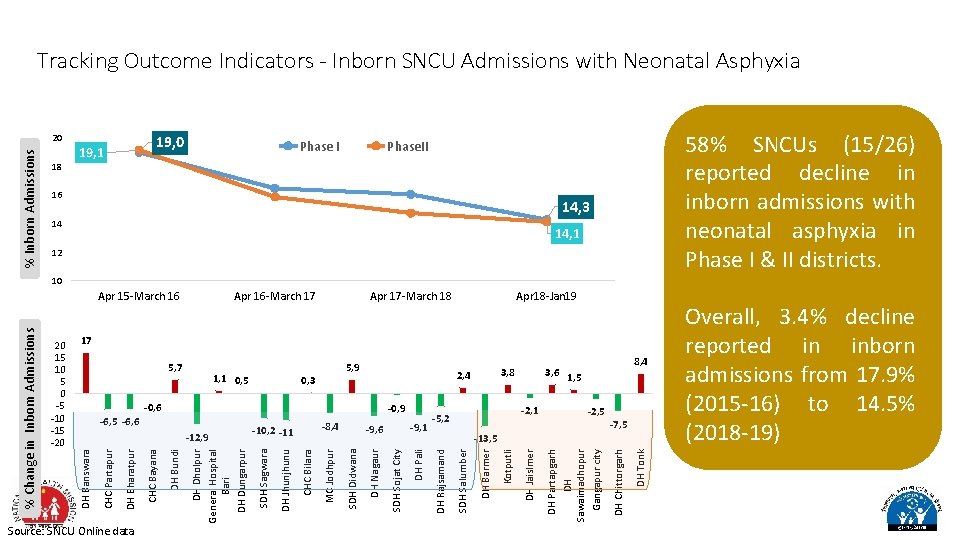
Tracking Outcome Indicators - Inborn SNCU Admissions with Neonatal Asphyxia % Inborn Admissions 20 18 19, 0 19, 1 Phase I 58% SNCUs (15/26) reported decline in inborn admissions with neonatal asphyxia in Phase I & II districts. Phase. II 16 14, 3 14 14, 1 12 10 Apr 16 -March 17 Apr 17 -March 18 Apr 18 -Jan 19 17 -5, 2 -2, 1 -2, 5 -7, 5 DH Tonk -13, 5 DH Chittorgarh SDH Sojat City DH Nagaur DH Pali -9, 1 -9, 6 SDH Didwana MC Jodhpur CHC Bilara DH Jhunjhunu DH Bundi DH Dholpur General Hospital Bari DH Dungarpur Source: SNCU Online data CHC Bayana DH Bharatpur -12, 9 -8, 4 -10, 2 -11 SDH Sagwara -6, 5 -6, 6 Kotputli -0, 9 DH Barmer -0, 6 8, 4 3, 6 1, 5 DH Partapgarh DH Sawaimadhopur Gangapur city 0, 3 SDH Salumber 1, 1 0, 5 3, 8 2, 4 DH Jaislmer 5, 9 DH Rajsamand 5, 7 CHC Partapur 20 15 10 5 0 -5 -10 -15 -20 DH Banswara % Change in Inborn Admissions Apr 15 -March 16 Overall, 3. 4% decline reported in inborn admissions from 17. 9% (2015 -16) to 14. 5% (2018 -19)
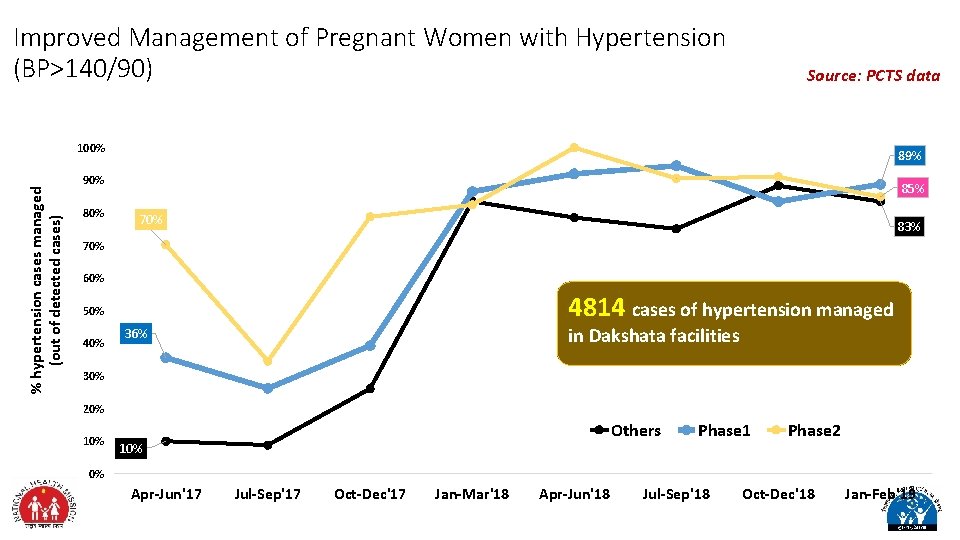
Improved Management of Pregnant Women with Hypertension (BP>140/90) Source: PCTS data % hypertension cases managed (out of detected cases) 100% 89% 90% 85% 70% 83% 70% 60% 4814 cases of hypertension managed 50% 40% in Dakshata facilities 36% 30% 20% 10% Others 10% Phase 1 Phase 2 0% Apr-Jun'17 Jul-Sep'17 Oct-Dec'17 Jan-Mar'18 Apr-Jun'18 Jul-Sep'18 Oct-Dec'18 Jan-Feb'19

Identification and appropriate referral of PE/ cases PE/E referral decreased by 6% (from 40% to 36%) Contextualization-PE/E referral trend at different level to facilities Source: Facility Complication data
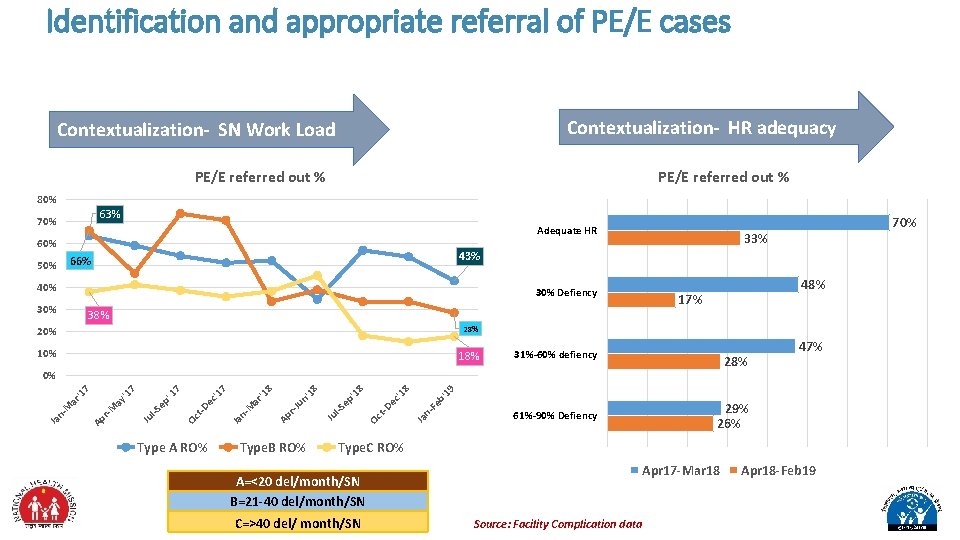
Identification and appropriate referral of PE/E cases Contextualization- HR adequacy Contextualization- SN Work Load PE/E referred out % 80% 63% 70% Adequate HR 60% 33% 43% 66% 50% 40% 30% Defiency 30% 28% 10% 18% 48% 17% 38% 31%-60% defiency 28% Type A RO% Type. B RO% 47% 19 8 b' Fe n. Ja Oc t-D ec '1 '1 l-S ep Ju r-J un '1 8 8 8 Ap ar M n. Ja ec '1 '1 7 7 Oc t-D '1 ep l-S Ju ay r-M Ap n- M ar '1 '1 7 7 0% Ja 70% 29% 26% 61%-90% Defiency Type. C RO% A=<20 del/month/SN B=21 -40 del/month/SN C=>40 del/ month/SN Apr 17 -Mar 18 Source: Facility Complication data Apr 18 -Feb 19
Identification and appropriate referral of PPH cases PPH referral decreased by 8% (from 27. 8% to 19. 4%) Contextualization-PPH referral trend at different level to facilities Source: Facility Complication data
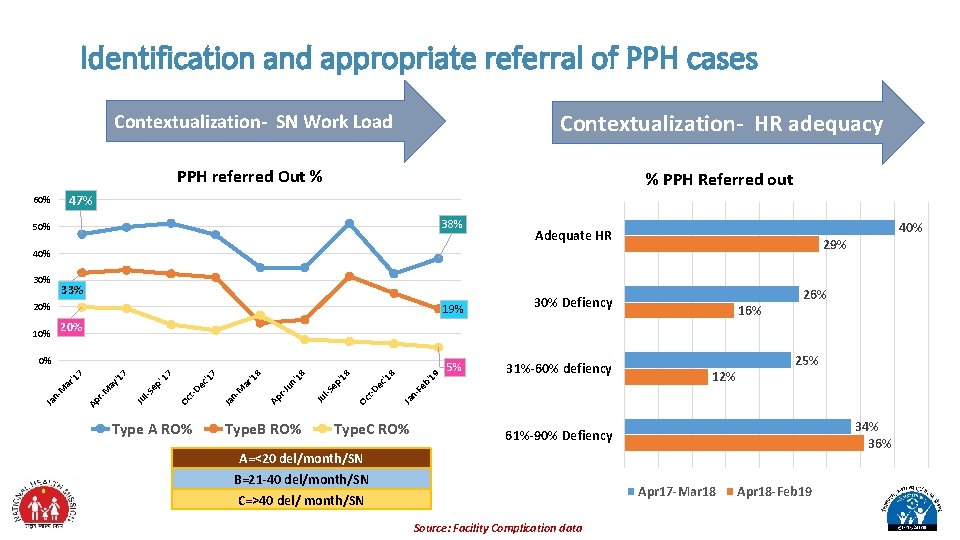
Identification and appropriate referral of PPH cases Contextualization- SN Work Load Contextualization- HR adequacy PPH referred Out % % PPH Referred out 47% 60% 38% 50% Adequate HR 29% 40% 33% 20% 10% 5% 31%-60% defiency 16% 20% Type A RO% Type. B RO% '1 9 8 '1 12% 25% Ja n- Fe b ec t-D Oc Ju l-S ep '1 8 '1 un Ap r-J M n. Ja 8 8 ar '1 7 Oc t-D ec '1 7 Ju l-S ep '1 '1 ay Ap r-M n. M ar '1 7 7 0% Ja 19% 30% Defiency 40% Type. C RO% 34% 36% 61%-90% Defiency A=<20 del/month/SN B=21 -40 del/month/SN Apr 17 -Mar 18 C=>40 del/ month/SN Source: Facility Complication data Apr 18 -Feb 19
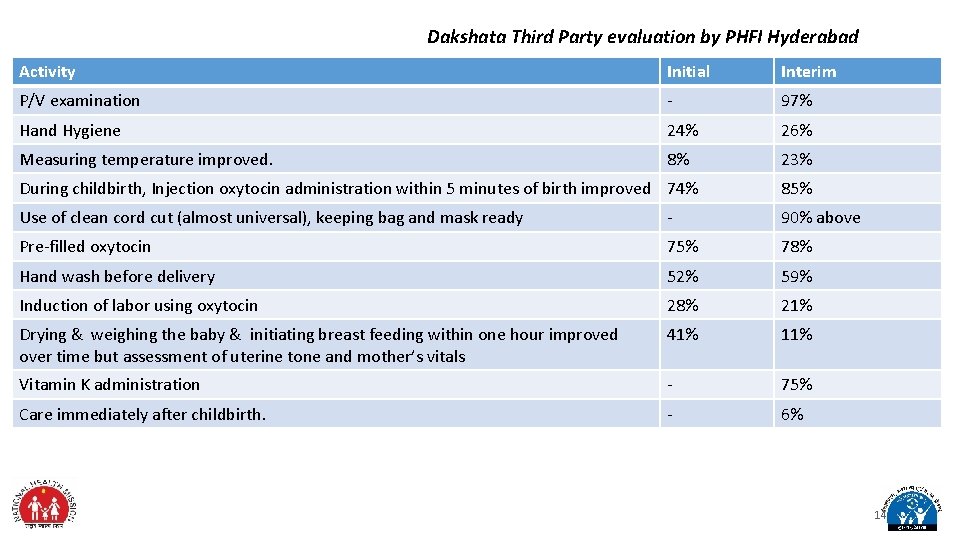
Dakshata Third Party evaluation by PHFI Hyderabad Activity Initial Interim P/V examination - 97% Hand Hygiene 24% 26% Measuring temperature improved. 8% 23% During childbirth, Injection oxytocin administration within 5 minutes of birth improved 74% 85% Use of clean cord cut (almost universal), keeping bag and mask ready - 90% above Pre-filled oxytocin 75% 78% Hand wash before delivery 52% 59% Induction of labor using oxytocin 28% 21% Drying & weighing the baby & initiating breast feeding within one hour improved over time but assessment of uterine tone and mother’s vitals 41% 11% Vitamin K administration - 75% Care immediately after childbirth. - 6% 14
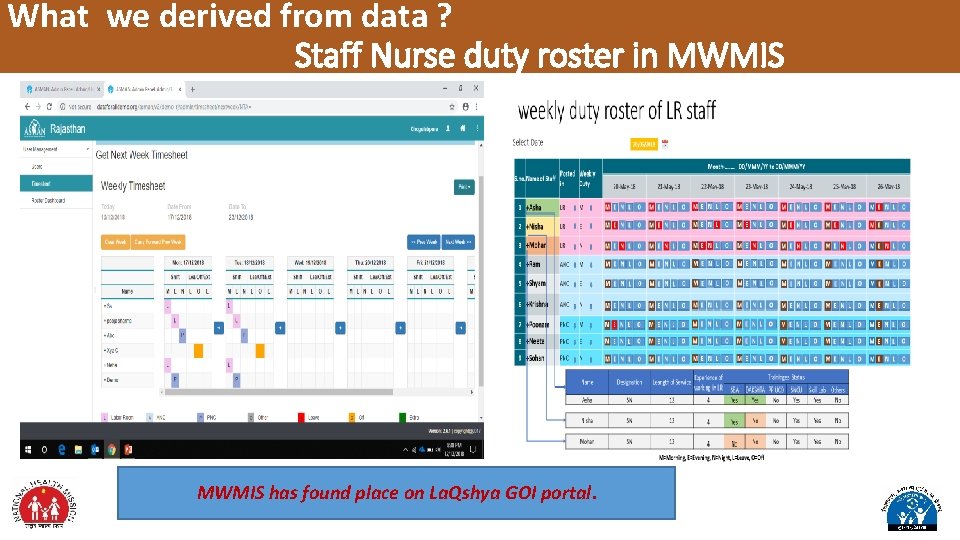
What we derived from data ? Staff Nurse duty roster in MWMIS has found place on La. Qshya GOI portal.

Group PNC or Discharge Counselling: Initial Results - Group counselling sessions in PNC ward on key messages - Development and printing of a leaflet of pictorial messages which are attached along with discharge ticket. - Display posters on danger signs, breastfeeding in the ANC/PNC wards - Bulk of Women can get the common health promotive messages SDH Kuchaman , nagaur Dr. kalpana Result: 100% 87% 90% 93%100% 93% 80% 70% 67% 71% 60% 50% 40% 30% 20% 10% 0% Before Intervention After Intervention (till Jul'19) Counsels on danger signs to mother at time of discharge Counsels on post partum family planning to mother at discharge Counsels on exclusive breast feeding to mother at discharge Information on mother and baby danger signs shared (Client feedback) Source Periodic Assessment, Client feedback form CHC bhindar , udaipur Sn- smt. meena
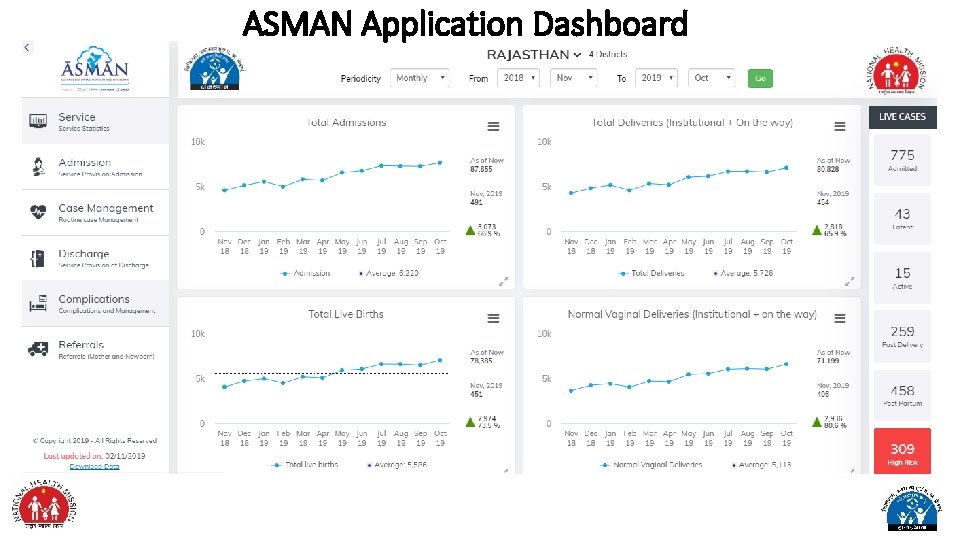
ASMAN Application Dashboard

Thank You…
- Slides: 18