
Use of SelfRegulated Learning Strategies among High and


- Slides: 19
Use of Self-Regulated Learning Strategies among High and Low Achiever Undergraduate Students in Open and Distance Learning
Amina Latif Instructor Education Virtual University of Pakistan Dr. Munawar Sultana Mirza Advisor Acadamics Virtual University of Pakistan 2
What is self regulated learning? why is it important in online distant environment?
Pintrich (2000) “An active and constructivist process whereby learners attempt to monitor, regulate, and control their cognition, motivation and behaviors after setting goals for their learning, are guided and restricted by their own goals and the learning environment they are in" (p. 453). 4
Background/Introduction Self Regulated learning (SRL) predictor/ correlate of learning achievement. ➜ SRL strongly related with other student relate variables e. g. motivation, exhaustion etc. which may affect their learning achievement ➜ SRL is more desired trait from students in online distant learning (ODL) settings as compared to conventional settings. ➜ 5
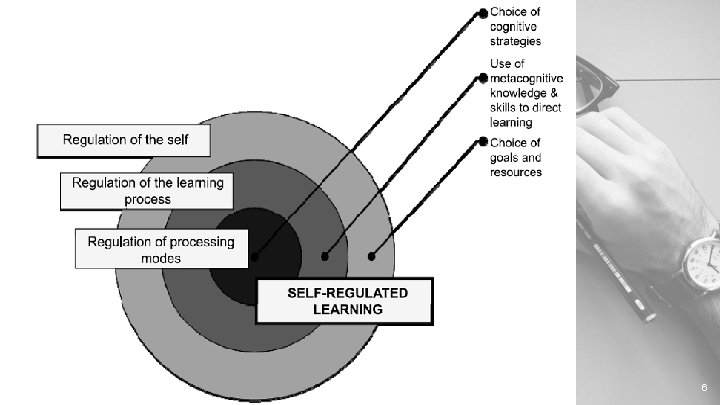
BIG CONCEPT Bring the attention of your audience over a key concept using icons or illustrations 6
Research Objectives To find out the use of Self-regulated learning strategies among ODL students. 2. To compare the level of selfregulation among high and low achieving students. 3. Cross discipline comparison of students for the use of self-regulated learning strategies. 4. To compare the use of self-regulated learning strategies among male and female students 1. 7
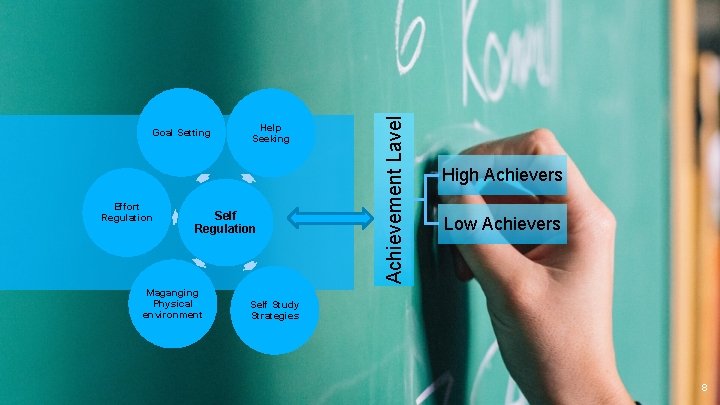
Effort Regulation Help Seeking Self Regulation Maganging Physical environment Achievement Lavel Goal Setting High Achievers Low Achievers Self Study Strategies 8
Methods ➜ ➜ ➜ Quantitative descriptive study Survey research design Questionnaire 9
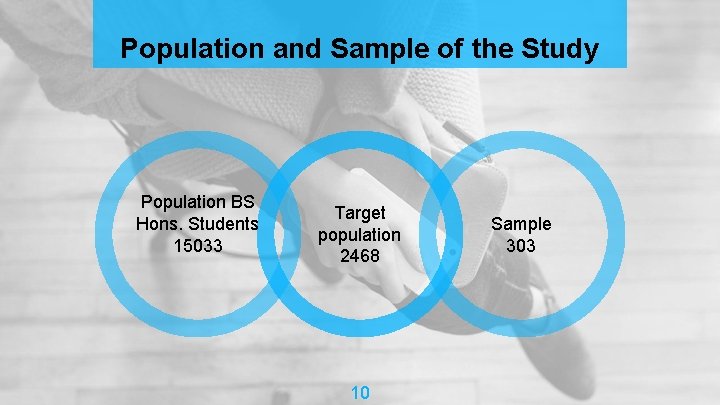
Population and Sample of the Study Population BS Hons. Students 15033 Target population 2468 10 Sample 303
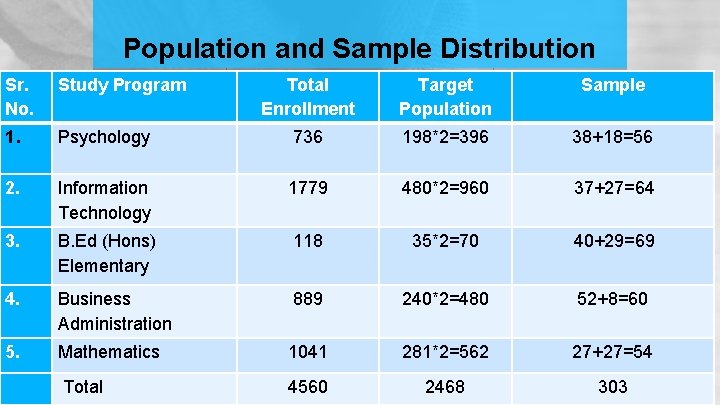
Population and Sample Distribution Sr. No. Study Program 1. Psychology 2. Information Yellow Technology 3. B. Ed (Hons) Elementary 4. Business Administration 5. Mathematics Total Blue Orange Total Enrollment A 736 Target Population B 198*2=396 C 1779 10 480*2=960 7 118 35*2=70 20 30 15 889 240*2=480 1041 281*2=562 5 4560 24 11 2468 Sample 38+18=56 37+27=64 40+29=69 10 52+8=60 27+27=54 16 303
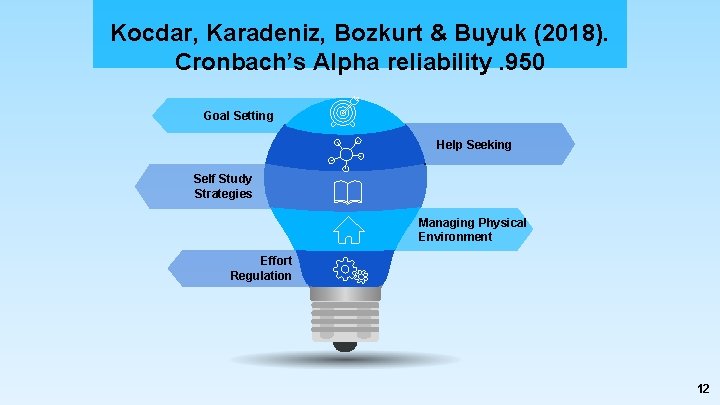
Kocdar, Karadeniz, Bozkurt & Buyuk (2018). Cronbach’s Alpha reliability. 950 Goal Setting Help Seeking Self Study Strategies Managing Physical Environment Effort Regulation 12
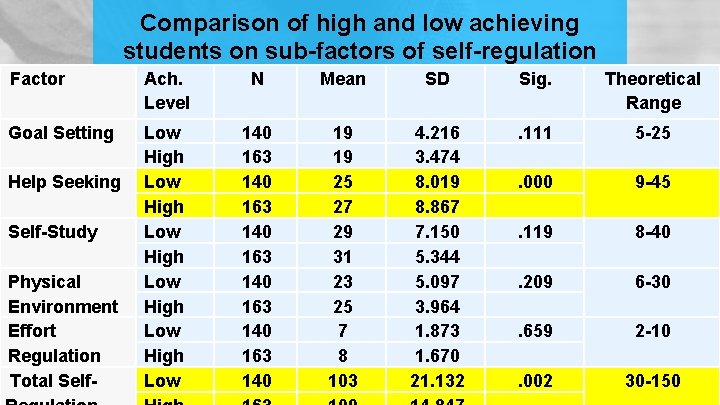
Comparison of high and low achieving students on sub-factors of self-regulation Factor Ach. Level N Mean SD Sig. Theoretical Range Goal Setting Low High Low High Low 140 163 140 163 140 19 19 25 27 29 31 23 25 7 8 10313 4. 216 3. 474 8. 019 8. 867 7. 150 5. 344 5. 097 3. 964 1. 873 1. 670 21. 132 . 111 5 -25 . 000 9 -45 . 119 8 -40 . 209 6 -30 . 659 2 -10 . 002 30 -150 Help Seeking Self-Study Physical Environment Effort Regulation Total Self-
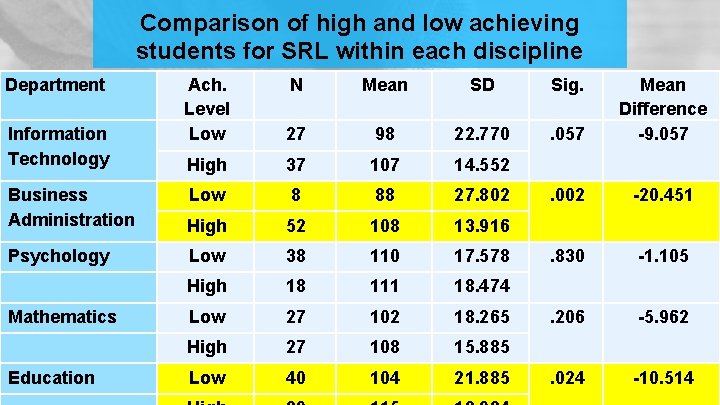
Comparison of high and low achieving students for SRL within each discipline Department Information Technology Ach. Level Low N Mean SD Sig. 27 98 22. 770 . 057 Mean Difference -9. 057 High 37 107 14. 552. 002 -20. 451 . 830 -1. 105 . 206 -5. 962 . 024 -10. 514 Business Administration Low 8 88 27. 802 High 52 108 13. 916 Psychology Low 38 110 17. 578 High 18 111 18. 474 Low 27 102 18. 265 High 27 108 15. 885 Low 40 104 21. 885 Mathematics Education 14
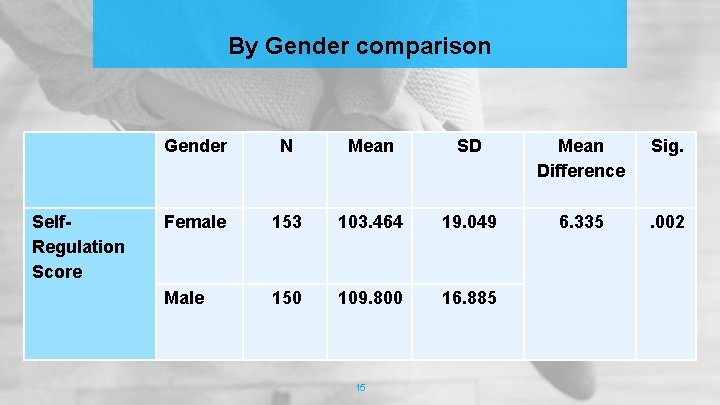
By Gender comparison Self. Regulation Score Gender N Mean SD Mean Difference Sig. Female 153 103. 464 19. 049 6. 335 . 002 Male 150 109. 800 16. 885 15
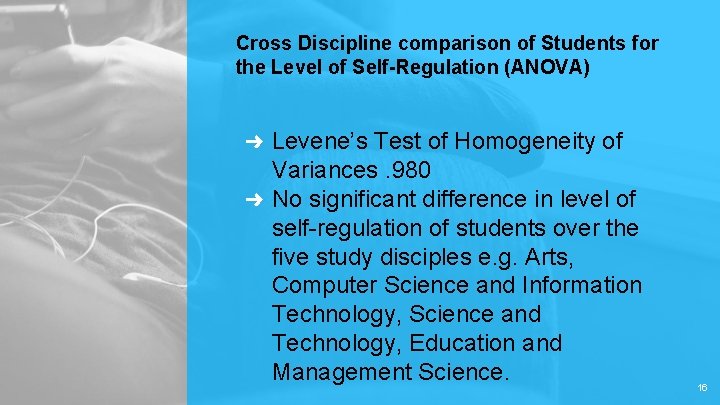
Cross Discipline comparison of Students for the Level of Self-Regulation (ANOVA) Levene’s Test of Homogeneity of Variances. 980 ➜ No significant difference in level of self-regulation of students over the five study disciples e. g. Arts, Computer Science and Information Technology, Science and Technology, Education and Management Science. ➜ 16
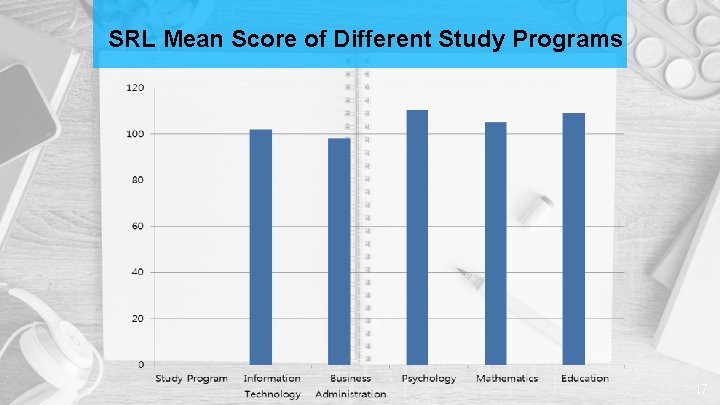
SRL Mean Score of Different Study Programs 17
Recommendations ➜ Self-regulated learning strategies shall be promoted among ODL student with a special focus to build help seeking behavior among students regarding their study needs. 18
Thanks! Any questions? You can find me at: amina. latif@vu. edu. pk 19