
USE OF SCANNING ELECTRON MICROSCOPY TO EXPLAIN CHANGE



- Slides: 23
USE OF SCANNING ELECTRON MICROSCOPY TO EXPLAIN CHANGE IN HYDRAULIC CONDUCTIVITY OF HYDROCARBONCONTAMINATED AQUIFER SAND Qays J. Saud 1, 2 and Syed E. Hasan 2 Department of Geosciences 1 Ministry of Higher Education and Scientific Research –Iraq 2 University of Missouri-Kansas City October 30, 2013 qjsfgd@mail. umkc. edu Hasan. S@umkc. edu 1
RESEARCH OBJECTIVE Utilize a scanning electron microscope (SEM) to study reduction of hydraulic conductivity of aquifer sand upon exposure to common organic contaminants 2
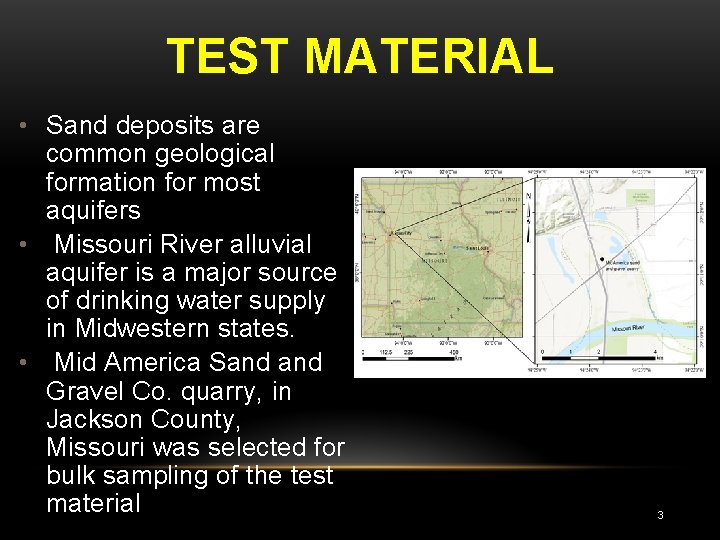
TEST MATERIAL • Sand deposits are common geological formation for most aquifers • Missouri River alluvial aquifer is a major source of drinking water supply in Midwestern states. • Mid America Sand Gravel Co. quarry, in Jackson County, Missouri was selected for bulk sampling of the test material 3
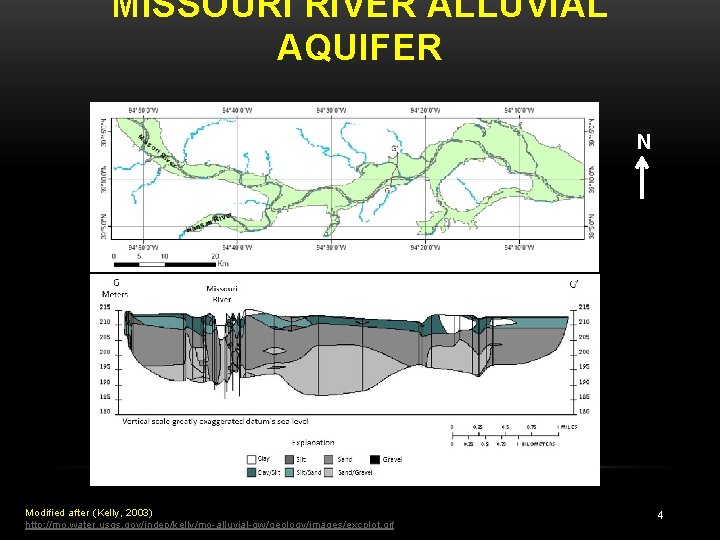
MISSOURI RIVER ALLUVIAL AQUIFER N Modified after (Kelly, 2003) http: //mo. water. usgs. gov/indep/kelly/mo-alluvial-gw/geology/images/excplot. gif 4
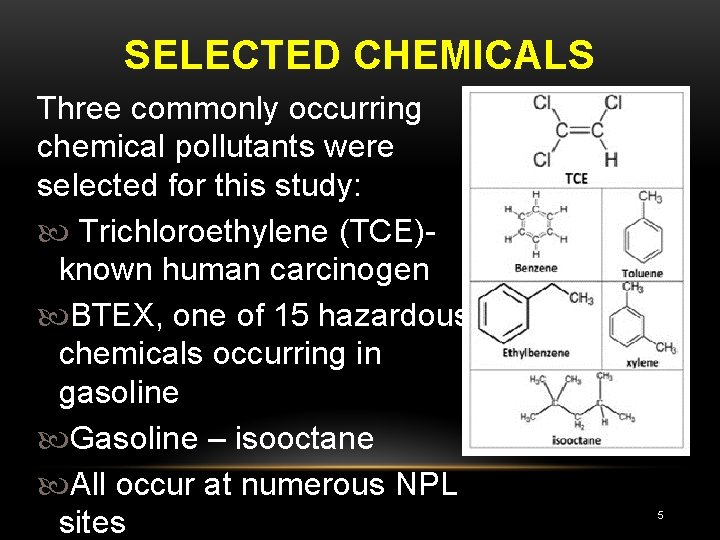
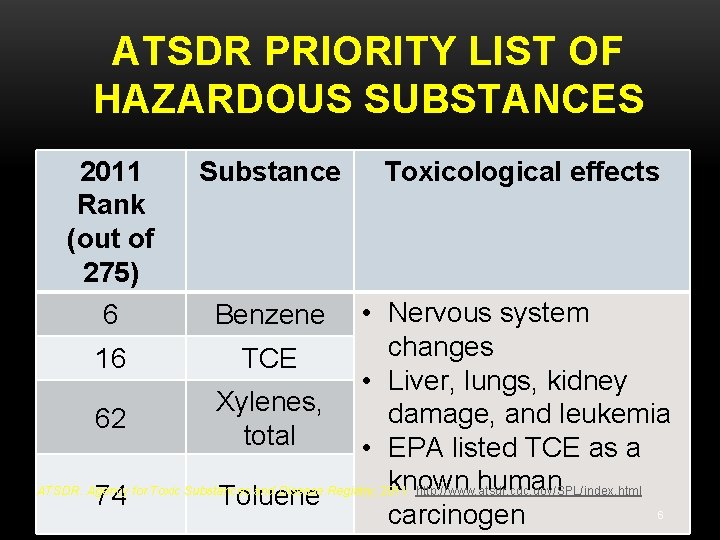
SELECTED CHEMICALS Three commonly occurring chemical pollutants were selected for this study: Trichloroethylene (TCE)known human carcinogen BTEX, one of 15 hazardous chemicals occurring in gasoline Gasoline – isooctane All occur at numerous NPL sites 5
ATSDR PRIORITY LIST OF HAZARDOUS SUBSTANCES 2011 Rank (out of 275) Substance Toxicological effects • Nervous system changes 16 TCE • Liver, lungs, kidney Xylenes, damage, and leukemia 62 total • EPA listed TCE as a known human ATSDR. Agency for Toxic Substances and Disease Registry; 2011 http: //www. atsdr. cdc. gov/SPL/index. html 74 Toluene carcinogen 6 Benzene 6
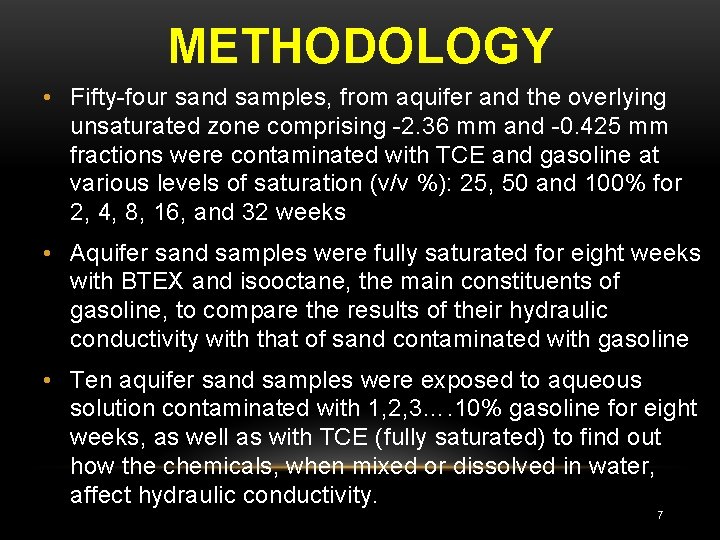
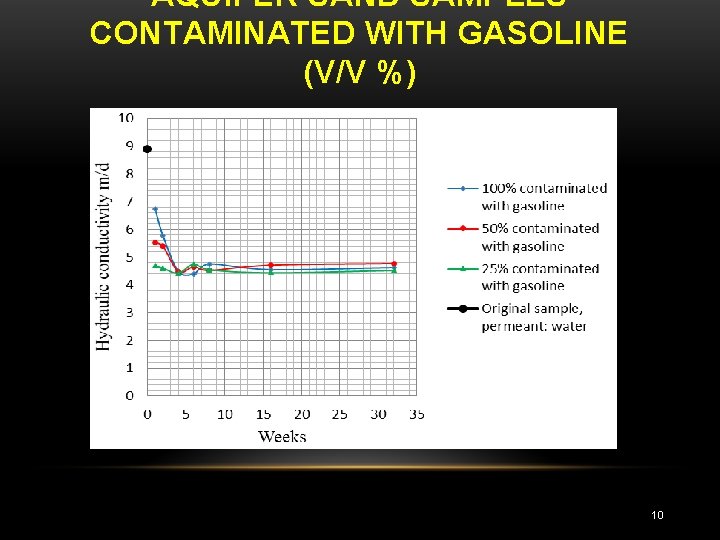
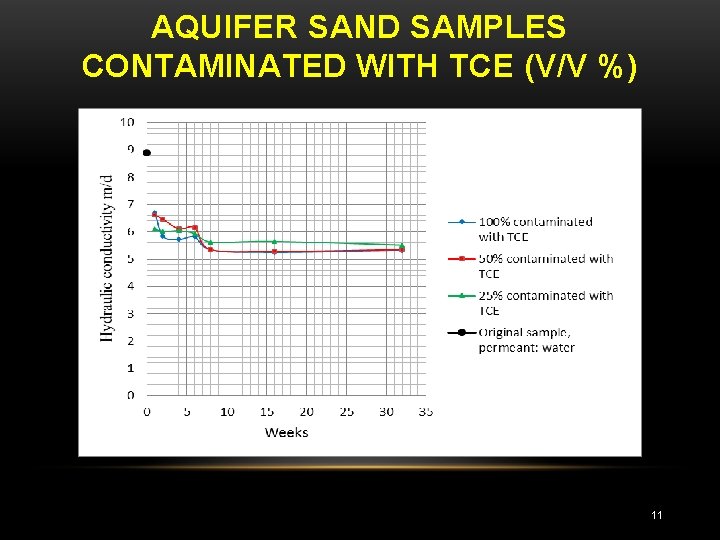
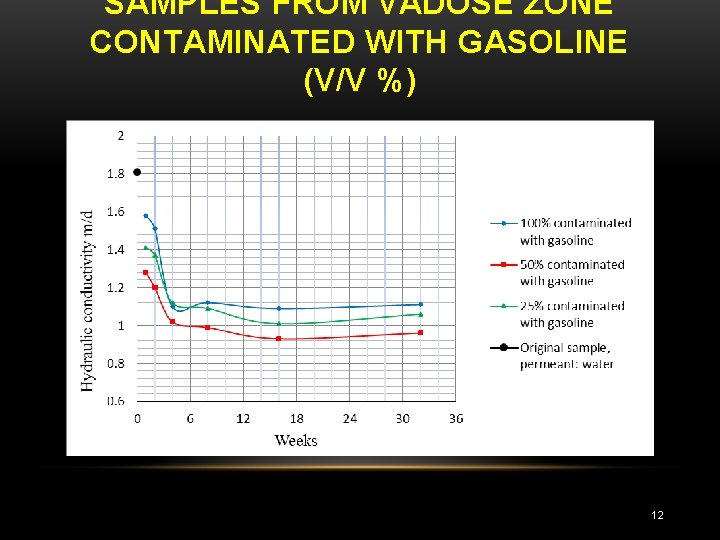
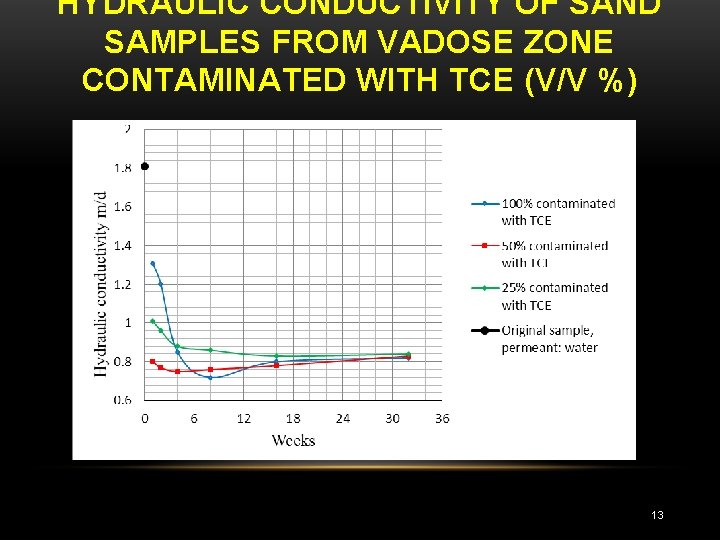
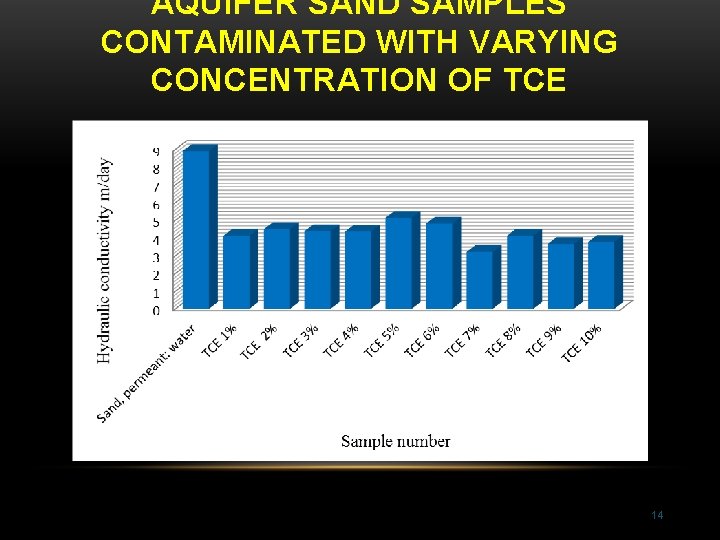
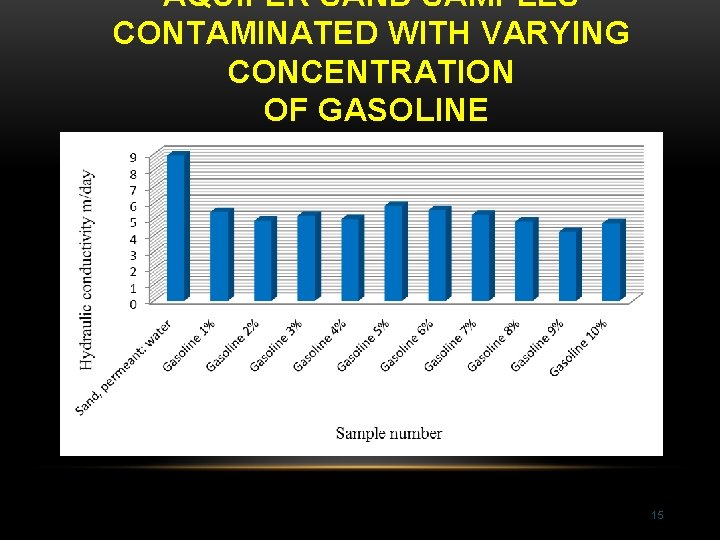
METHODOLOGY • Fifty-four sand samples, from aquifer and the overlying unsaturated zone comprising -2. 36 mm and -0. 425 mm fractions were contaminated with TCE and gasoline at various levels of saturation (v/v %): 25, 50 and 100% for 2, 4, 8, 16, and 32 weeks • Aquifer sand samples were fully saturated for eight weeks with BTEX and isooctane, the main constituents of gasoline, to compare the results of their hydraulic conductivity with that of sand contaminated with gasoline • Ten aquifer sand samples were exposed to aqueous solution contaminated with 1, 2, 3…. 10% gasoline for eight weeks, as well as with TCE (fully saturated) to find out how the chemicals, when mixed or dissolved in water, affect hydraulic conductivity. 7
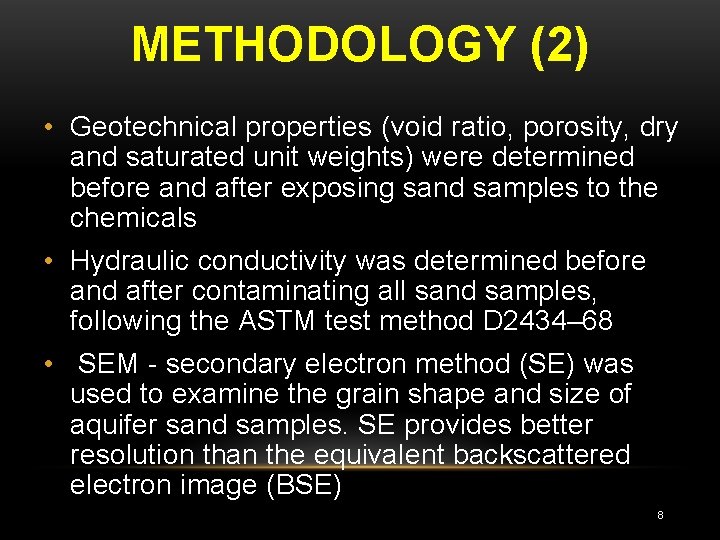
METHODOLOGY (2) • Geotechnical properties (void ratio, porosity, dry and saturated unit weights) were determined before and after exposing sand samples to the chemicals • Hydraulic conductivity was determined before and after contaminating all sand samples, following the ASTM test method D 2434– 68 • SEM - secondary electron method (SE) was used to examine the grain shape and size of aquifer sand samples. SE provides better resolution than the equivalent backscattered electron image (BSE) 8
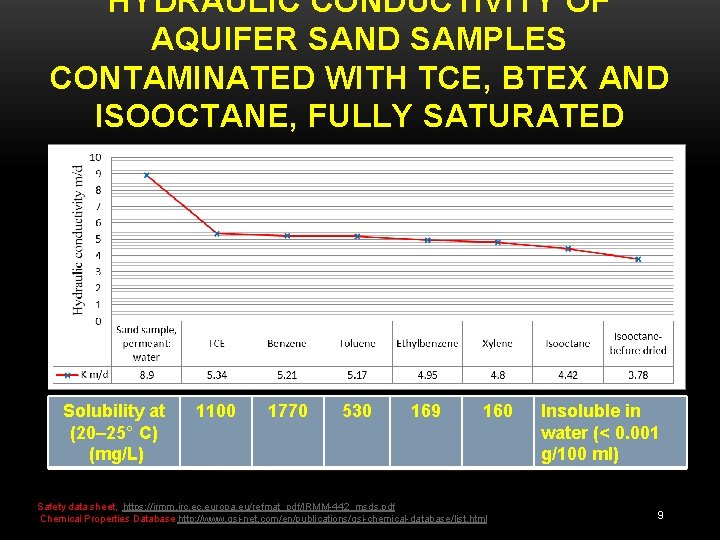
HYDRAULIC CONDUCTIVITY OF AQUIFER SAND SAMPLES CONTAMINATED WITH TCE, BTEX AND ISOOCTANE, FULLY SATURATED Solubility at (20– 25° C) (mg/L) 1100 1770 530 169 160 Safety data sheet, https: //irmm. jrc. europa. eu/refmat_pdf/IRMM-442_msds. pdf Chemical Properties Database http: //www. gsi-net. com/en/publications/gsi-chemical-database/list. html Insoluble in water (< 0. 001 g/100 ml) 9
AQUIFER SAND SAMPLES CONTAMINATED WITH GASOLINE (V/V %) 10
AQUIFER SAND SAMPLES CONTAMINATED WITH TCE (V/V %) 11
SAMPLES FROM VADOSE ZONE CONTAMINATED WITH GASOLINE (V/V %) 12
HYDRAULIC CONDUCTIVITY OF SAND SAMPLES FROM VADOSE ZONE CONTAMINATED WITH TCE (V/V %) 13
AQUIFER SAND SAMPLES CONTAMINATED WITH VARYING CONCENTRATION OF TCE 14
AQUIFER SAND SAMPLES CONTAMINATED WITH VARYING CONCENTRATION OF GASOLINE 15
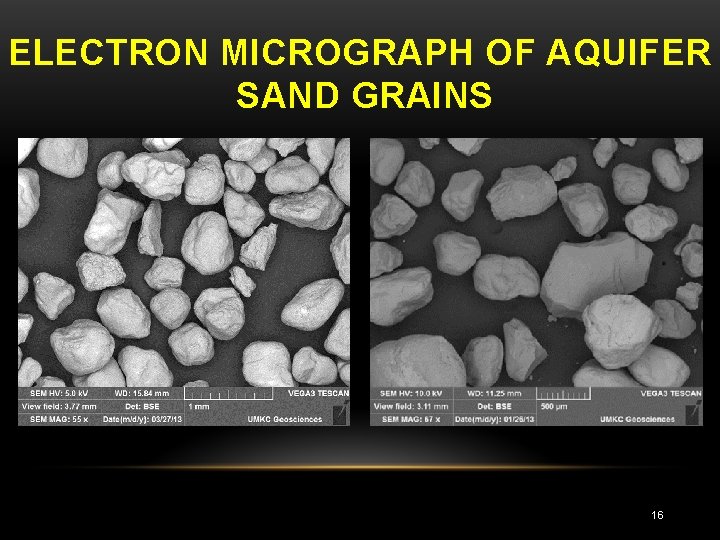
ELECTRON MICROGRAPH OF AQUIFER SAND GRAINS 16
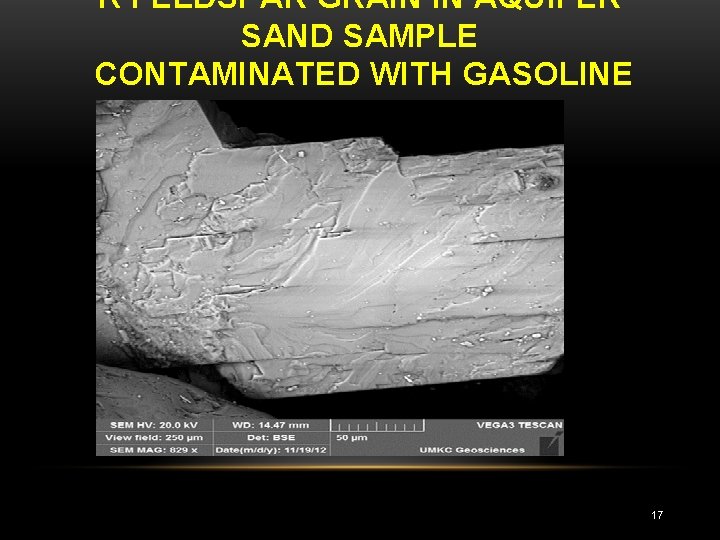
K FELDSPAR GRAIN IN AQUIFER SAND SAMPLE CONTAMINATED WITH GASOLINE 17
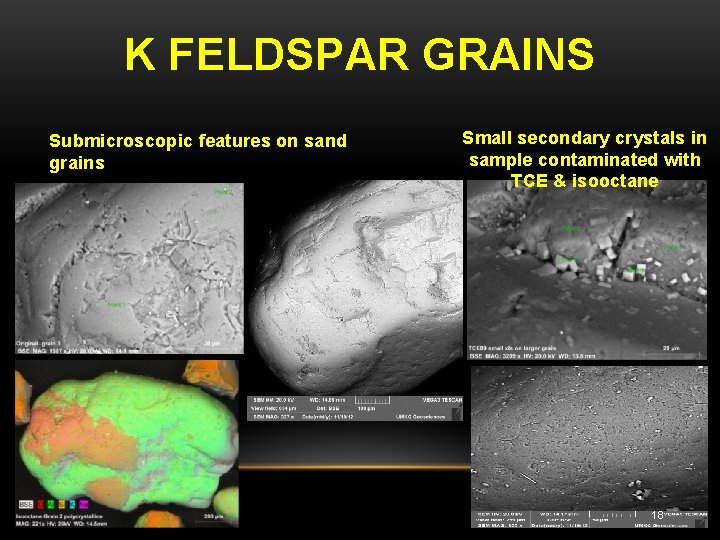
K FELDSPAR GRAINS Submicroscopic features on sand grains Small secondary crystals in sample contaminated with TCE & isooctane 18
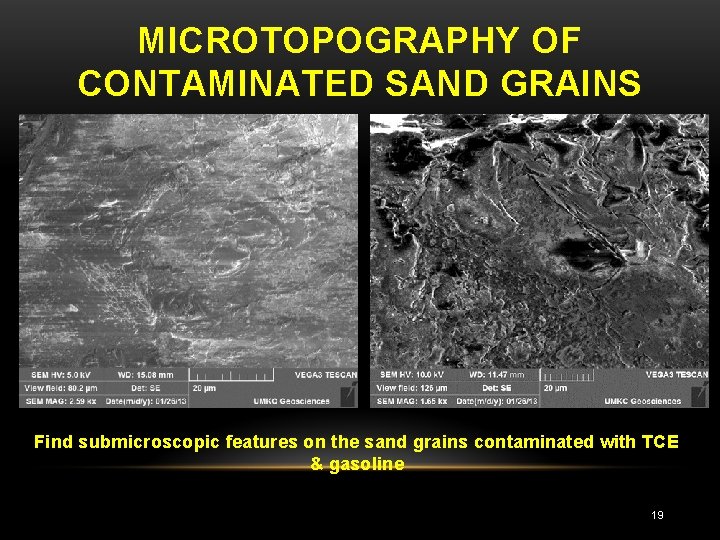
MICROTOPOGRAPHY OF CONTAMINATED SAND GRAINS Find submicroscopic features on the sand grains contaminated with TCE & gasoline 19
CONCLUSION (1) SEM of contaminated sand grains revealed highly irregular surfaces with presence of grooves along with presence of prominent granules and fragmented grains. All contribute to increase in surface area with attendant increase in surface tension. This explains the reduction in hydraulic conductivity of sand after contamination. 20
CONCLUSION (2) Organic hydrocarbons have different chemical structures, which cause different chemical reactions with sand grains and liquids moving through it. The inherent differences in the structure and nature of contaminating chemicals influenced hydraulic conductivity such that the observed decrease was greater for aliphatic than aromatic and chlorinated hydrocarbons. 21
CONCLUSION (3) Three possible mechanisms for hydraulic conductivity reduction seem to be: (a) decreased porosity due to fine particles filling the voids, (b) overall increase in surface tension and other intragranular forces caused by adsorption of hydrocarbons around sand grains, aided by large surface area of the fine fragments, and (c) control of chemical structure of contaminating fluids on hydraulic conductivity reduction in the following way: Chlorinated hydrocarbon < aromatic << aliphatic 22
THANK YOU Questions? 23