
Use of Oral Suction in the community Competency
- Slides: 16
Use of Oral Suction in the community Competency Training for Staff, Patients, Family and Carers Draft February 2019
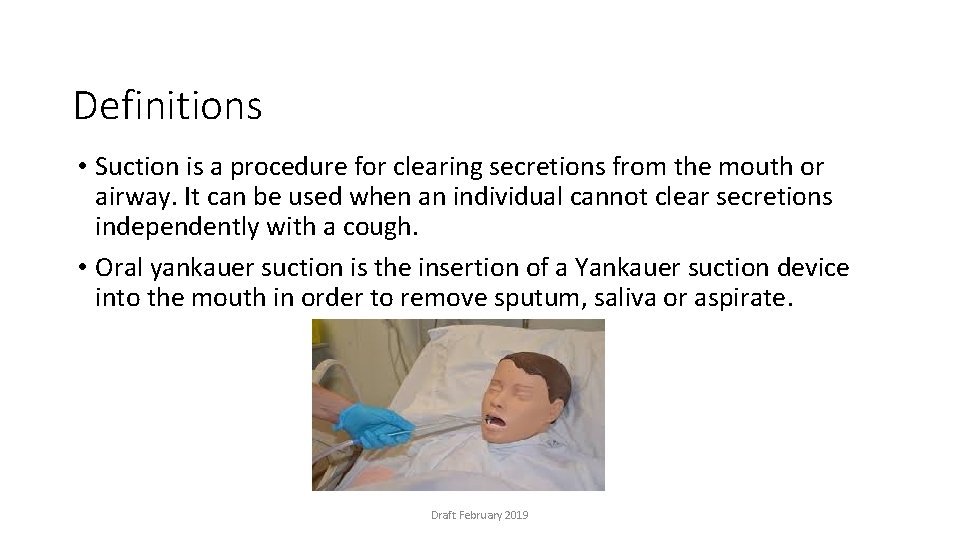
Definitions • Suction is a procedure for clearing secretions from the mouth or airway. It can be used when an individual cannot clear secretions independently with a cough. • Oral yankauer suction is the insertion of a Yankauer suction device into the mouth in order to remove sputum, saliva or aspirate. Draft February 2019
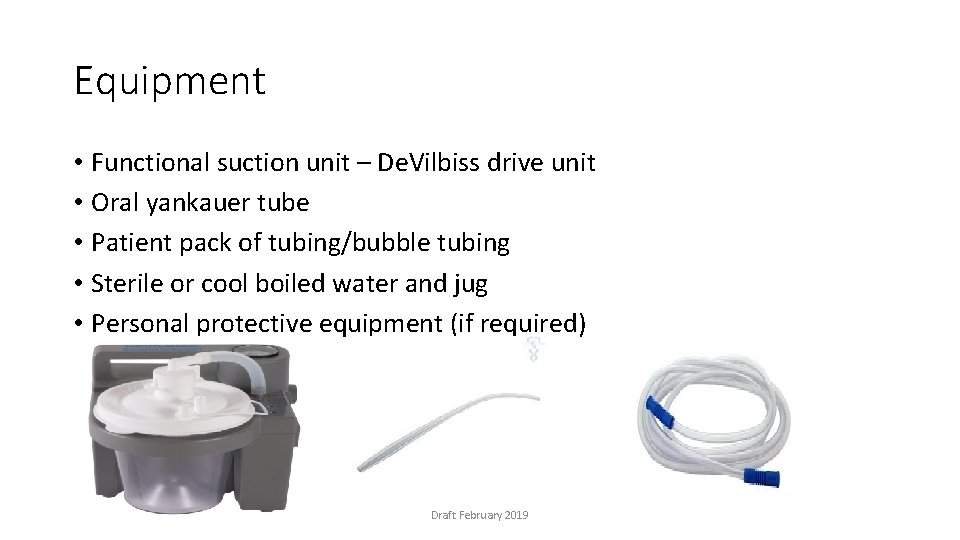
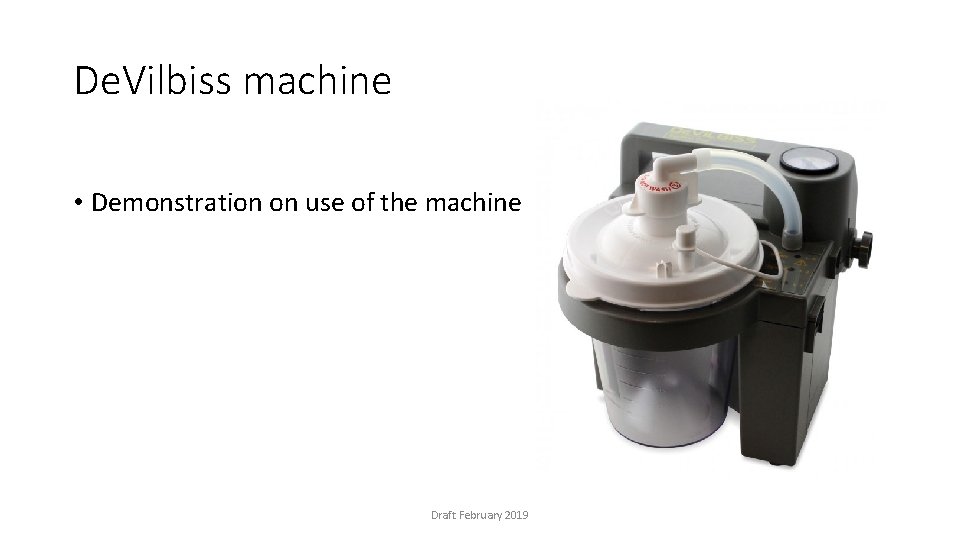
Equipment • Functional suction unit – De. Vilbiss drive unit • Oral yankauer tube • Patient pack of tubing/bubble tubing • Sterile or cool boiled water and jug • Personal protective equipment (if required) Draft February 2019
Process for ordering equipment • Consumables required for oral suction in the community; • Suction Canister – this fits into suction unit itself. Single use – to be used for one patient only, as long as required. • Filters – fit into the lid of the canister. Filters are to be changed every 2 months or sooner if soiled. They must not get wet. • Yankauers • Suction tubing Draft February 2019
Procedure – Oral Suction with Yankauer Tube Precautions: • Facial fractures • Loose teeth/Dentures • Clotting disorders • Laryngeal / oral carcinoma • Severe bronchospasm • Stridor • Restless / anxious client • Head and Neck Surgery • Sore mouth/damaged mucosa • Fitting patient/ spasms or increased muscle tone of face and neck muscles Draft February 2019
Indications for Oral Suction Some indications for suction: • Inability to clear own secretions • Frequent productive cough • Audible coarse secretions • Visible secretions • Otherwise unexplained shortness of breath (SOB) • Decrease Sp 02 (oxygen saturations) as assessed by HCP (Health Care Professional) • Suspected aspiration of stomach contents into airway – Aspiration Draft February 2019
Clinical Procedure - 1 • Explain procedure to patient and gain consent • Switch on machine and ensure working correctly • Check suction pressure - 100 -150 mm Hg for use with adults • Wash hands and apply PPE if appropriate Draft February 2019
De. Vilbiss machine • Demonstration on use of the machine Draft February 2019
Clinical Procedure - 2 • Position the patient in a comfortable, head up position with their head turned towards you. • Open yankauer suction tube and attach to tubing. Insert into patient’s mouth, ensuring it does not go beyond the teeth. If the patient is able allow them to self-suction. • Ensure you have a view of the oral cavity during suction to ensure the tube does not come into contact with the oral mucosa. • Apply suction on withdrawl of the yankauer tube, working around the mouth. • Note quantity, colour and tenacity of secretions. If there has been a change in secretions or they look infected, liaise with the patient’s GP to allow a sputum sample to be taken. Document use of suction and secretions obtained in care notes. Draft February 2019
Clinical Procedure - 3 • Ensure the mouth cavity is clear and the patient is breathing comfortably. • Assess the patient’s response to suctioning and reassess the need for further suction. • Rinse the yankauer tube and suction tubing through with sterile or cool boiled water. • Dispose of PPE and wash hands. Draft February 2019
Points to note • Do not pass the yankauer sucker pass the back of the teeth to avoid stimulation of airway reflexes. • Ensure that the soft tissue does not come into contact with the suction tube to prevent tissue damage. • To set the suction pressure: Turn on the suction at the unit/ machine. Ensure the patient tubing is attached to the suction unit/ machine. Kink the suction tubing. Observe the dial on the suction unit; adjust the pressure using the pressure regulator knob to the desired level: • Adult 12 -20 k. Pa or 100 -150 mm Hg Draft February 2019
Possible complications of suction • Distress to client • Trauma to oral mucosa – particularly important for those individuals with clotting disorders. • Bronchospasm/bronchoconstriction • Airway infection • Bleeding • Pain / discomfort Draft February 2019
Machine Maintenance Disconnect the tubing and remove the container from the holder Carefully remove the lid and empty contents into the toilet Note – container should be emptied and cleaned after each use Remove the filter cartridge and set aside. Wash container, lid and splash guard in warm water/dishwashing solution. Rinse with clean, warm water and air dry. • A vinegar solution (1 part vinegar to 3 parts hot water for 60 minutes) can be used if preferred. • The disassembled container may also be washed in a dishwasher, top shelf only, using a cycle with a water temperature between 55 -65 degrees Celsius. • The machine filter must be changed is overflow occurs, or every 2 months. • • • Draft February 2019
Machine Maintenance • Healthcare equipment providers, NRS will maintain the suction unit by performing annual checks. • If you have any problems with the unit, please ring NRS will repair/replace faulty equipment. Draft February 2019
Disposal of consumables • Yankauer and suction tubing should be changed when they become soiled or discoloured and are unable to be cleaned or if they split. • Filters should be changed every 2 months. • The canister should remain in place for the entire time the patient requires suctioning. • Consumables can be disposed of in the black bin collection. Draft February 2019
Queries and Questions Advice for family/patient/carers If you have any concerns or questions about the suction process, please contact the professional prescribing the suction machine. If you have any concerns about the suction machine itself – please contact NRS. Draft February 2019