
Use of ICT for Quality Teaching Learning Evaluation

- Slides: 39
Use of ICT for Quality: Teaching, Learning & Evaluation Dr. Prerna Mahajan Head of Department(Computer Science ) IITM, Janakpuri
“There must be an industrial revolution in education in which educational science and the ingenuity of educational technology combine to modernize the grossly inefficient and clumsy procedures of conventional education. ” 1924 - Sidney Pressey, , inventor of the Automatic Teacher, the first electronic device used in schools The motion picture is destined to revolutionize our educational system and. . . in a few years it will supplant largely, if not entirely, the use of textbooks. —Thomas Edison, 1922
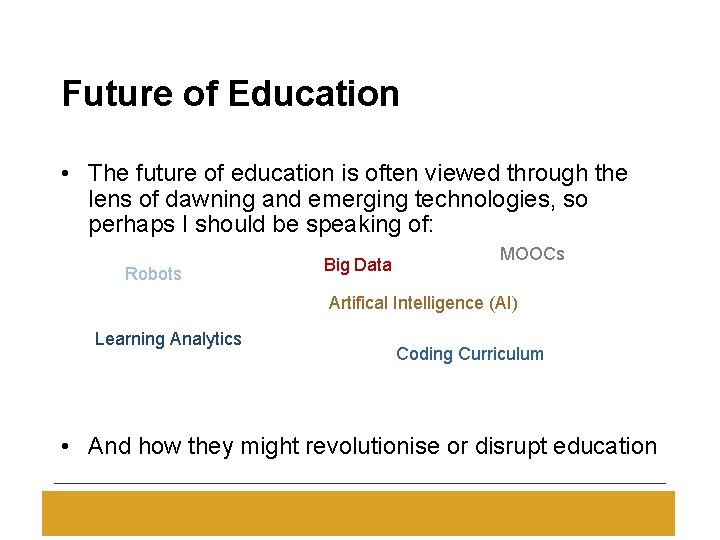
Future of Education • The future of education is often viewed through the lens of dawning and emerging technologies, so perhaps I should be speaking of: Robots Big Data MOOCs Artifical Intelligence (AI) Learning Analytics Coding Curriculum • And how they might revolutionise or disrupt education
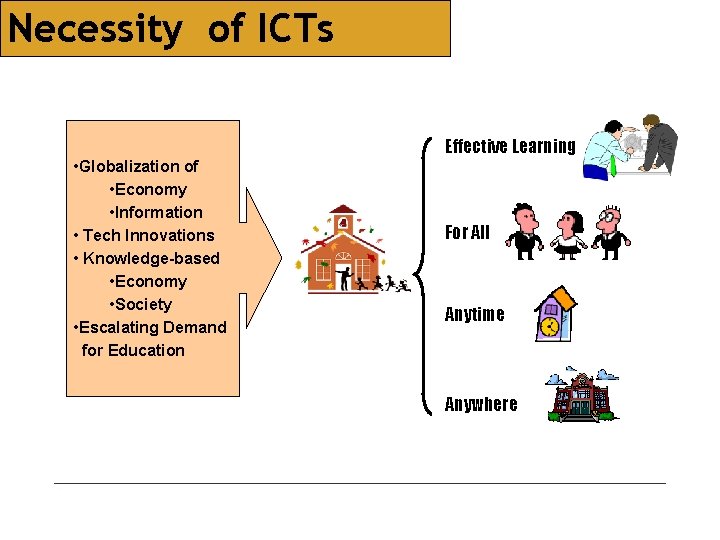
Necessity of ICTs • Globalization of • Economy • Information • Tech Innovations • Knowledge-based • Economy • Society • Escalating Demand for Education Effective Learning For All Anytime Anywhere
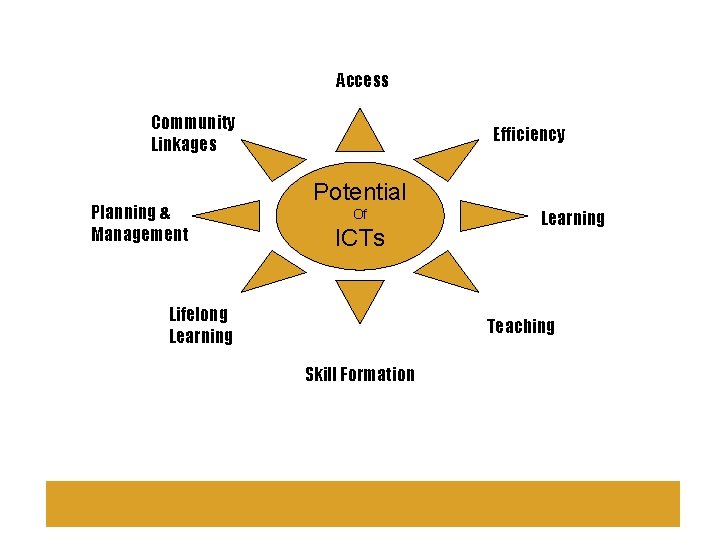
Access Community Linkages Planning & Management Efficiency Potential Of ICTs Lifelong Learning Teaching Skill Formation
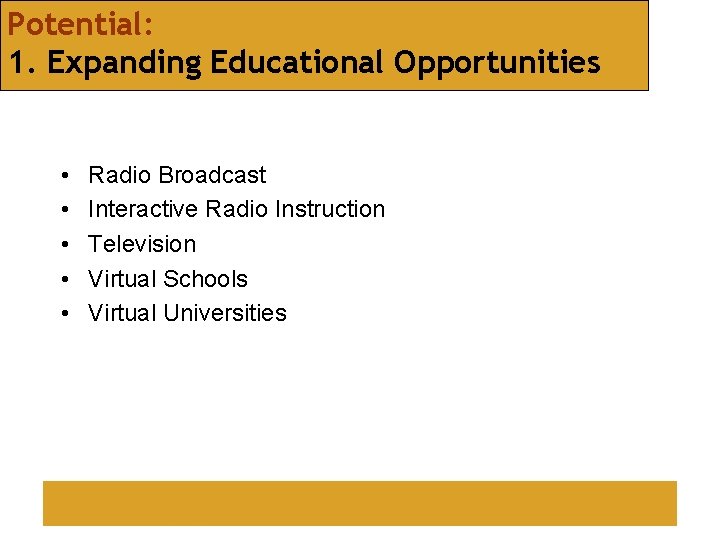
Potential: 1. Expanding Educational Opportunities • • • Radio Broadcast Interactive Radio Instruction Television Virtual Schools Virtual Universities
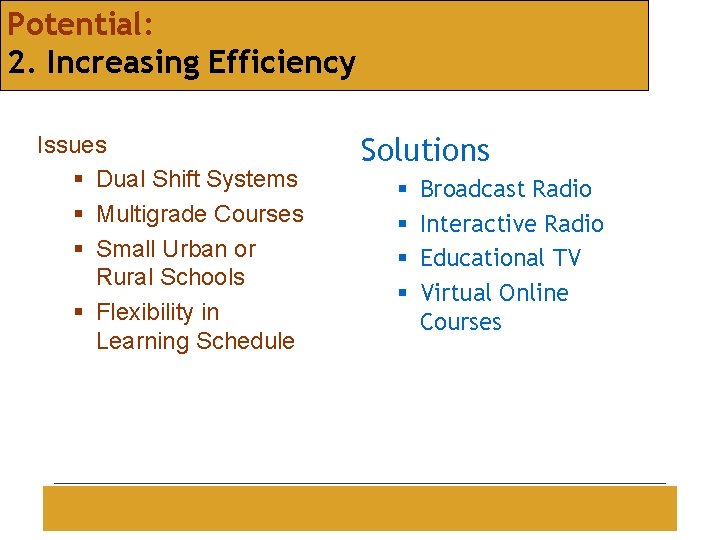
Potential: 2. Increasing Efficiency Issues § Dual Shift Systems § Multigrade Courses § Small Urban or Rural Schools § Flexibility in Learning Schedule Solutions § § Broadcast Radio Interactive Radio Educational TV Virtual Online Courses
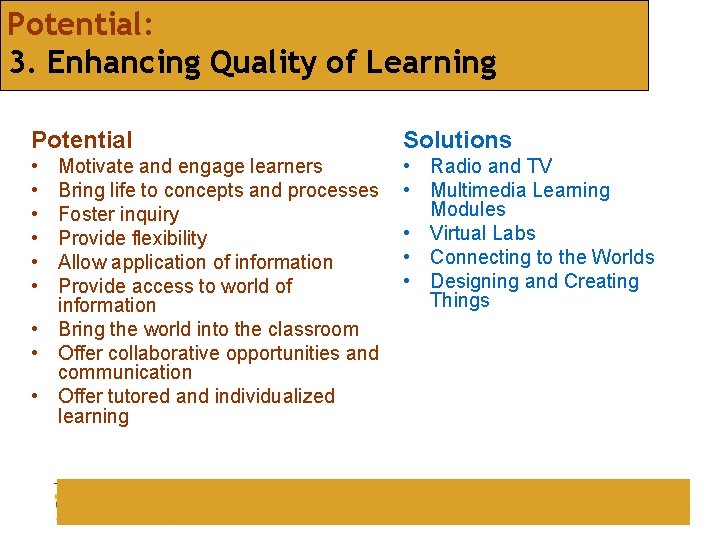
Potential: 3. Enhancing Quality of Learning Potential Solutions • • Radio and TV • Multimedia Learning Modules • Virtual Labs • Connecting to the Worlds • Designing and Creating Things Motivate and engage learners Bring life to concepts and processes Foster inquiry Provide flexibility Allow application of information Provide access to world of information • Bring the world into the classroom • Offer collaborative opportunities and communication • Offer tutored and individualized learning
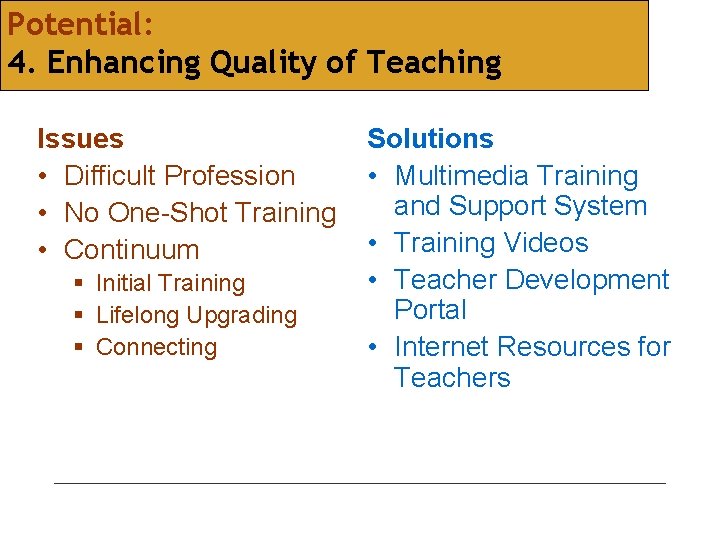
Potential: 4. Enhancing Quality of Teaching Issues • Difficult Profession • No One-Shot Training • Continuum § Initial Training § Lifelong Upgrading § Connecting Solutions • Multimedia Training and Support System • Training Videos • Teacher Development Portal • Internet Resources for Teachers
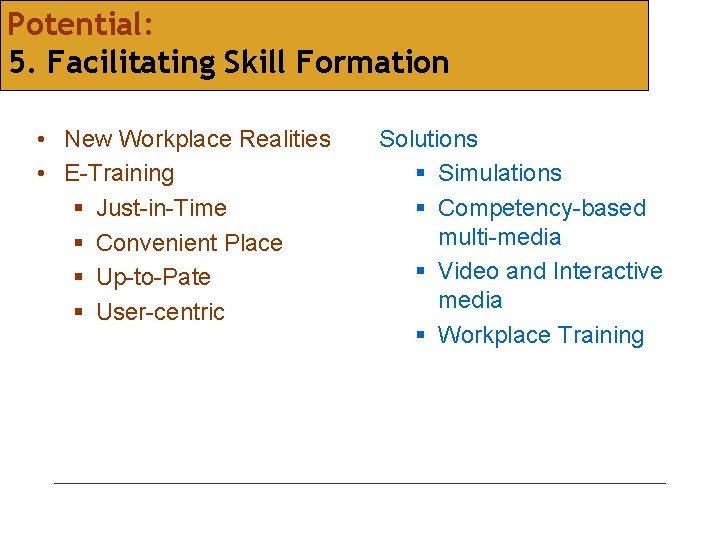
Potential: 5. Facilitating Skill Formation • New Workplace Realities • E-Training § Just-in-Time § Convenient Place § Up-to-Pate § User-centric Solutions § Simulations § Competency-based multi-media § Video and Interactive media § Workplace Training
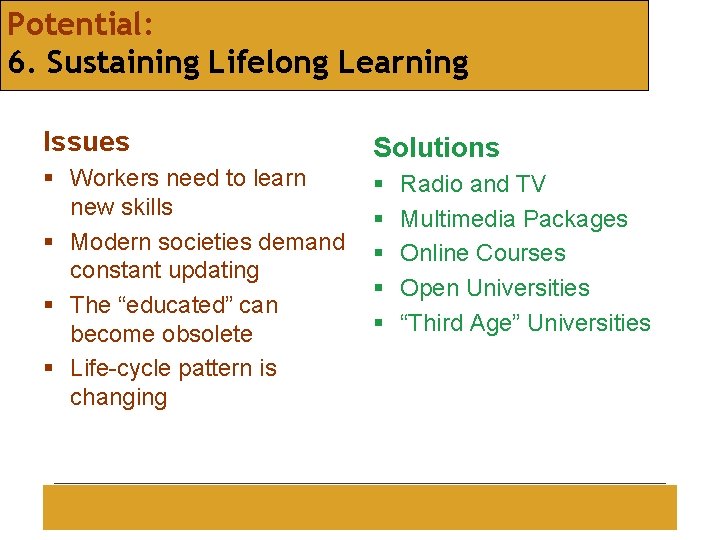
Potential: 6. Sustaining Lifelong Learning Issues Solutions § Workers need to learn new skills § Modern societies demand constant updating § The “educated” can become obsolete § Life-cycle pattern is changing § § § Radio and TV Multimedia Packages Online Courses Open Universities “Third Age” Universities
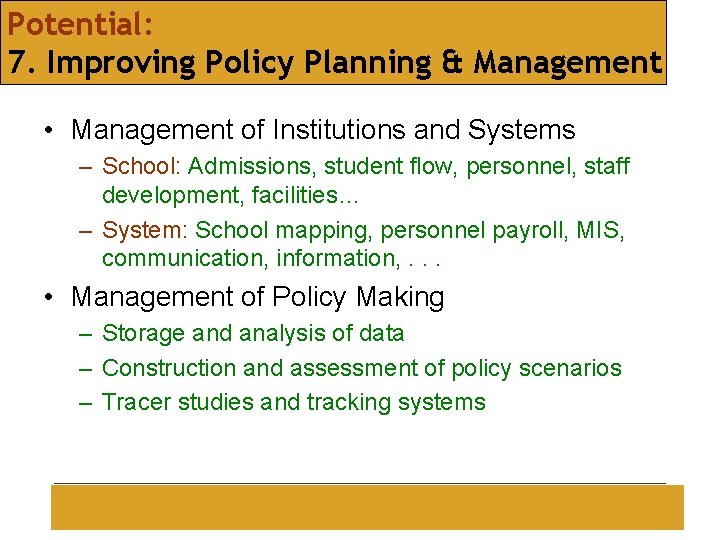
Potential: 7. Improving Policy Planning & Management • Management of Institutions and Systems – School: Admissions, student flow, personnel, staff development, facilities… – System: School mapping, personnel payroll, MIS, communication, information, . . . • Management of Policy Making – Storage and analysis of data – Construction and assessment of policy scenarios – Tracer studies and tracking systems
Potential: 8. Advancing Community Linkages • • ICT access varies within countries Disparities is magnified by gender factor ICT access contributes to escape from poverty ICT access for all requires attention to – Infrastructure – Cost – Laws and regulations
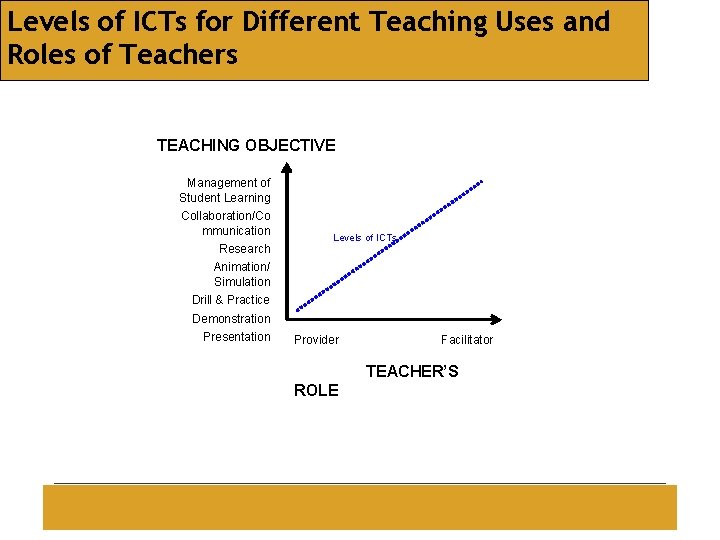
Levels of ICTs for Different Teaching Uses and Roles of Teachers TEACHING OBJECTIVE Management of Student Learning Collaboration/Co mmunication Research Levels of ICTs Animation/ Simulation Drill & Practice Demonstration Presentation Provider Facilitator TEACHER’S ROLE
Why "Technology Adoption" in classroom ? Benefits of Technology Adoption: • offer students new instructional and learning experiences; • promote deep processing of ideas; • increase students interaction with subject matter; • provide students with significantly expanded learning opportunities; • equip students to independently organize their learning process; : • links with increased level of academic achievement.
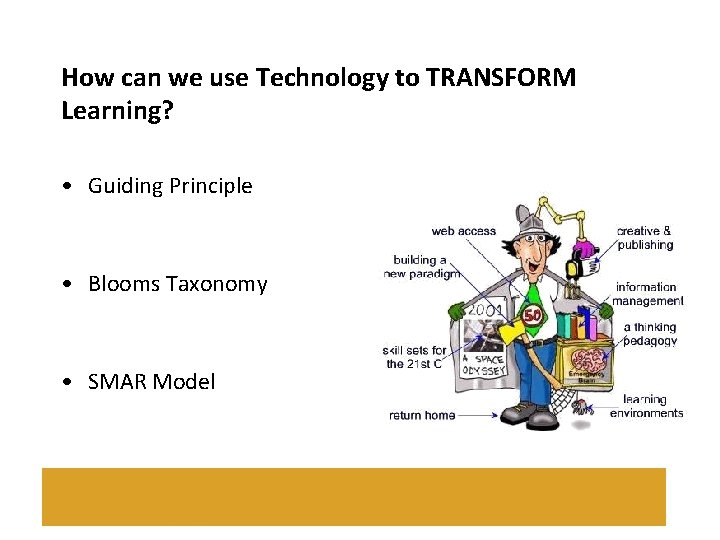
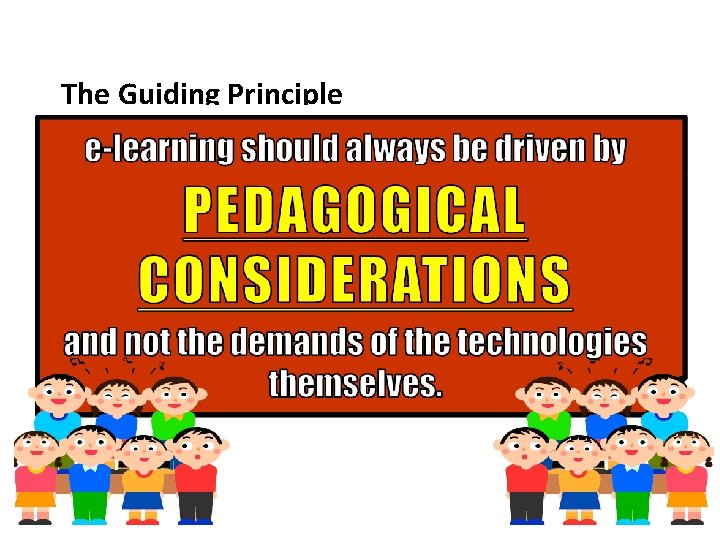
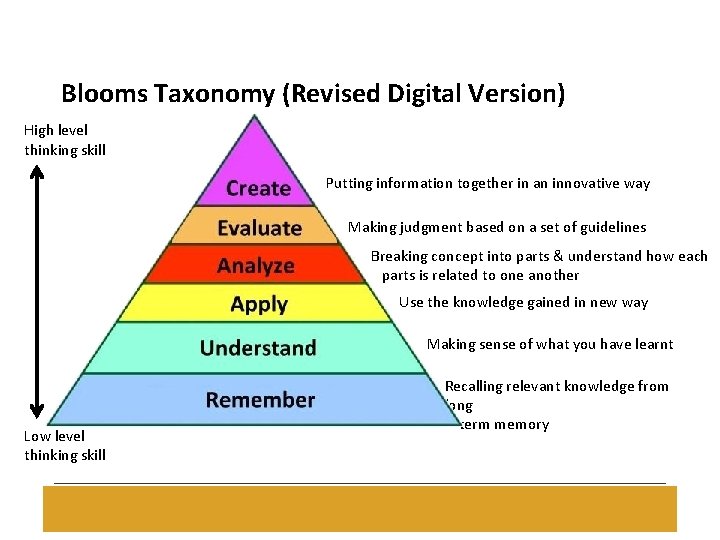
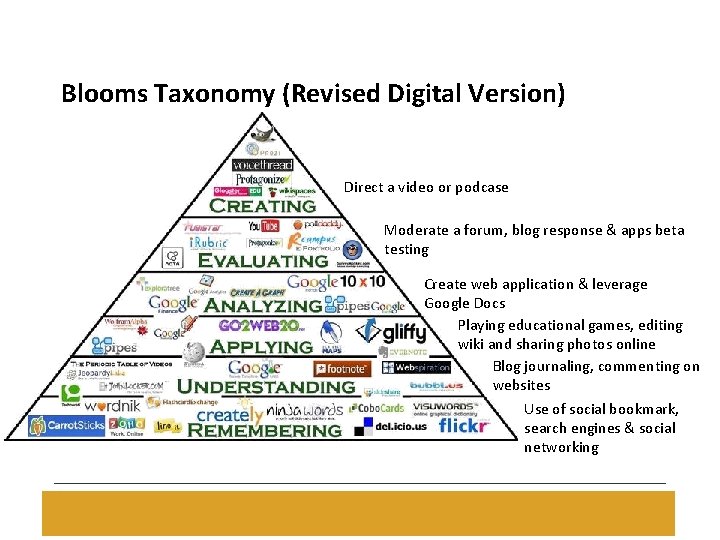
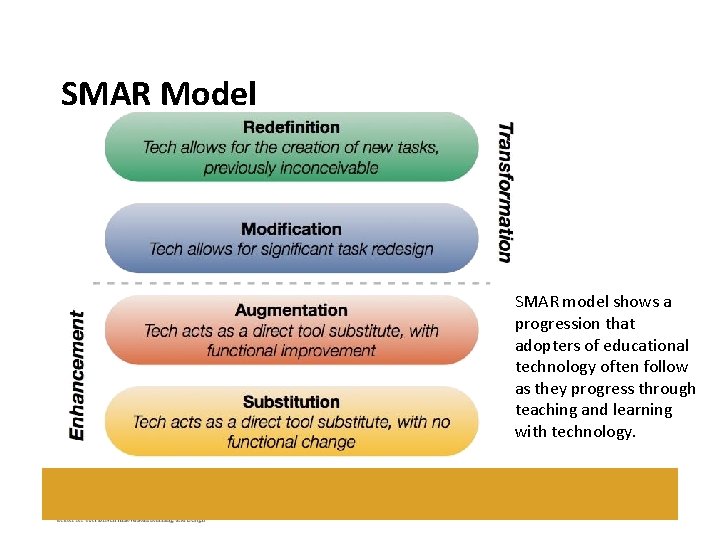
How can we use Technology to TRANSFORM Learning? • Guiding Principle • Blooms Taxonomy • SMAR Model
The Guiding Principle
Blooms Taxonomy (Revised Digital Version) High level thinking skill Putting information together in an innovative way Making judgment based on a set of guidelines Breaking concept into parts & understand how each parts is related to one another Use the knowledge gained in new way Making sense of what you have learnt Low level thinking skill Recalling relevant knowledge from long term memory
Blooms Taxonomy (Revised Digital Version) Direct a video or podcase Moderate a forum, blog response & apps beta testing Create web application & leverage Google Docs Playing educational games, editing wiki and sharing photos online Blog journaling, commenting on websites Use of social bookmark, search engines & social networking
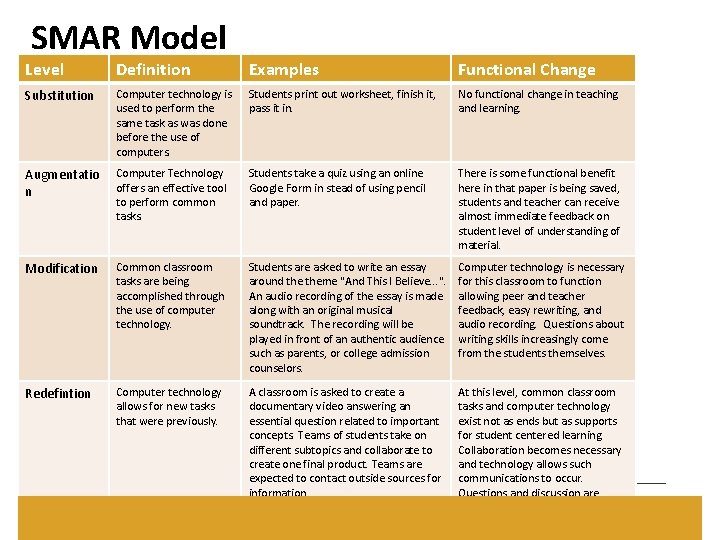
SMAR Model SMAR model shows a progression that adopters of educational technology often follow as they progress through teaching and learning with technology.
SMAR Model Level Definition Examples Functional Change Substitution Computer technology is used to perform the same task as was done before the use of computers. Students print out worksheet, finish it, pass it in. No functional change in teaching and learning. Augmentatio n Computer Technology offers an effective tool to perform common tasks. Students take a quiz using an online Google Form in stead of using pencil and paper. There is some functional benefit here in that paper is being saved, students and teacher can receive almost immediate feedback on student level of understanding of material. Modification Common classroom tasks are being accomplished through the use of computer technology. Students are asked to write an essay around theme "And This I Believe. . . ". An audio recording of the essay is made along with an original musical soundtrack. The recording will be played in front of an authentic audience such as parents, or college admission counselors. Computer technology is necessary for this classroom to function allowing peer and teacher feedback, easy rewriting, and audio recording. Questions about writing skills increasingly come from the students themselves. Redefintion Computer technology allows for new tasks that were previously. A classroom is asked to create a documentary video answering an essential question related to important concepts. Teams of students take on different subtopics and collaborate to create one final product. Teams are expected to contact outside sources for information. At this level, common classroom tasks and computer technology exist not as ends but as supports for student centered learning. Collaboration becomes necessary and technology allows such communications to occur. Questions and discussion are increasingly student generated.
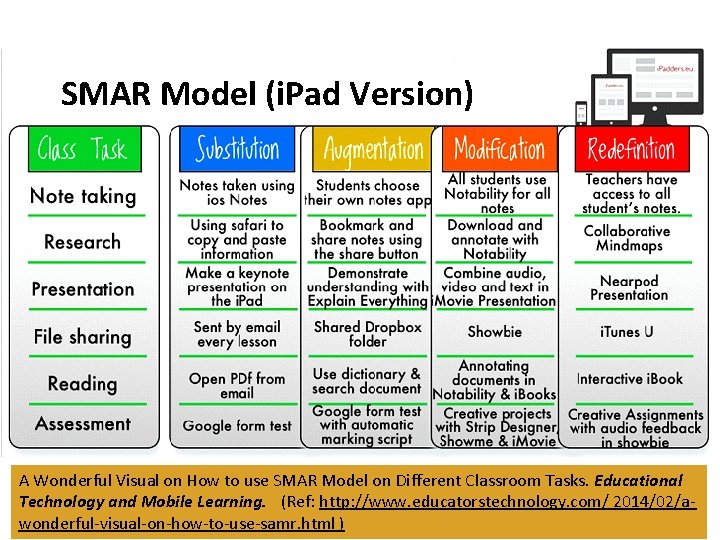
SMAR Model (i. Pad Version) A Wonderful Visual on How to use SMAR Model on Different Classroom Tasks. Educational Technology and Mobile Learning. (Ref: http: //www. educatorstechnology. com/ 2014/02/awonderful-visual-on-how-to-use-samr. html )
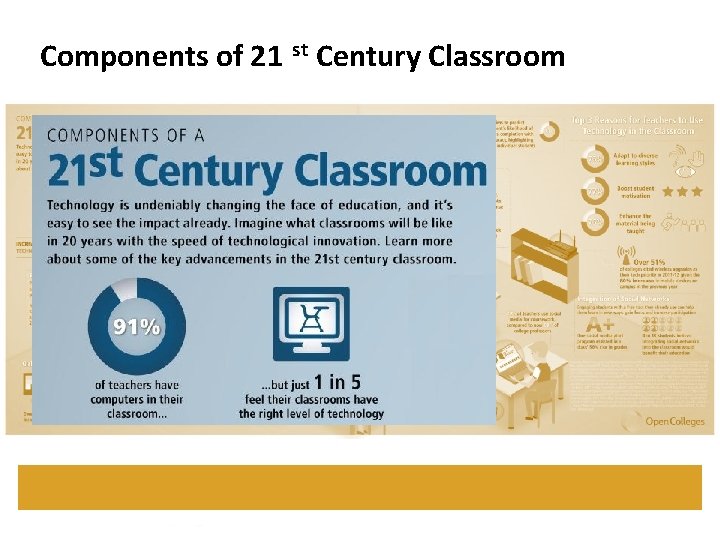
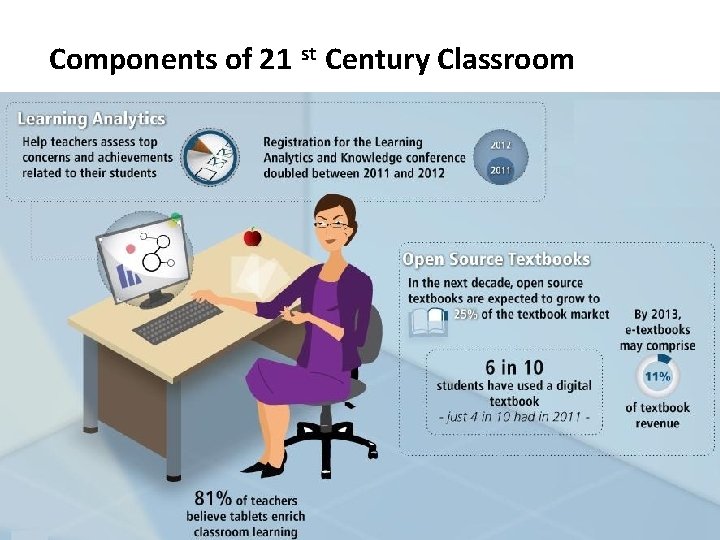
Components of 21 st Century Classroom
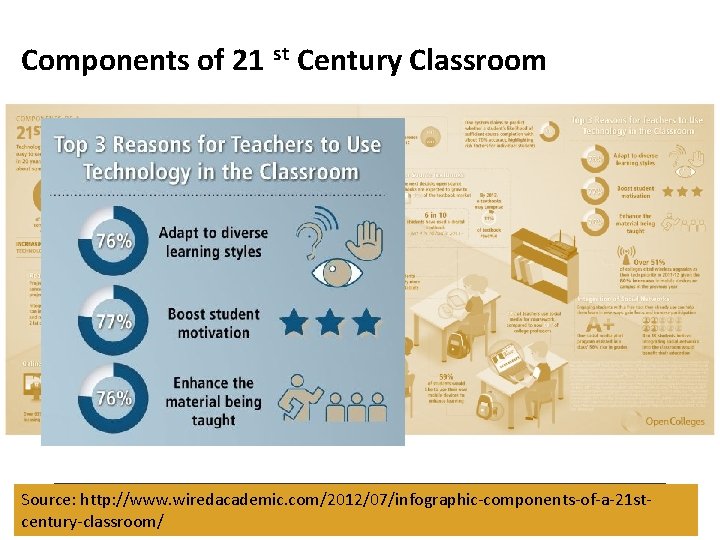
Components of 21 st Century Classroom Source: http: //www. wiredacademic. com/2012/07/infographic-components-of-a-21 stcentury-classroom/
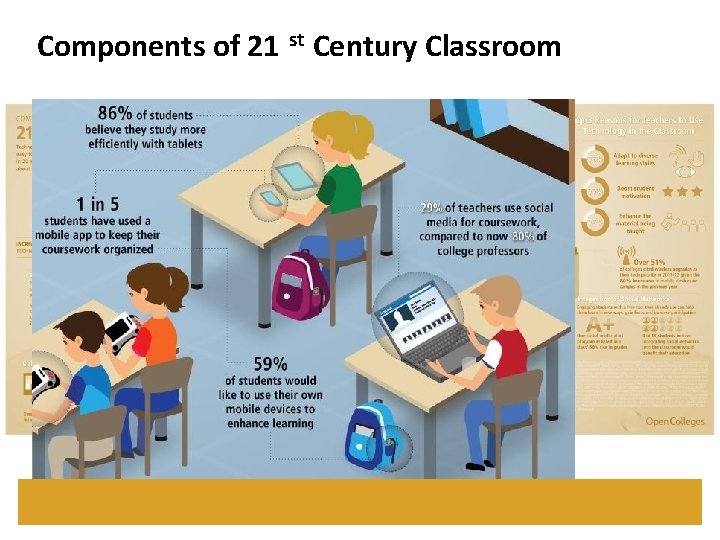
Components of 21 st Century Classroom Source: http: //www. wiredacademic. com/2012/07/infographic-components-of-a-21 st-century-classroom/
Components of 21 st Century Classroom
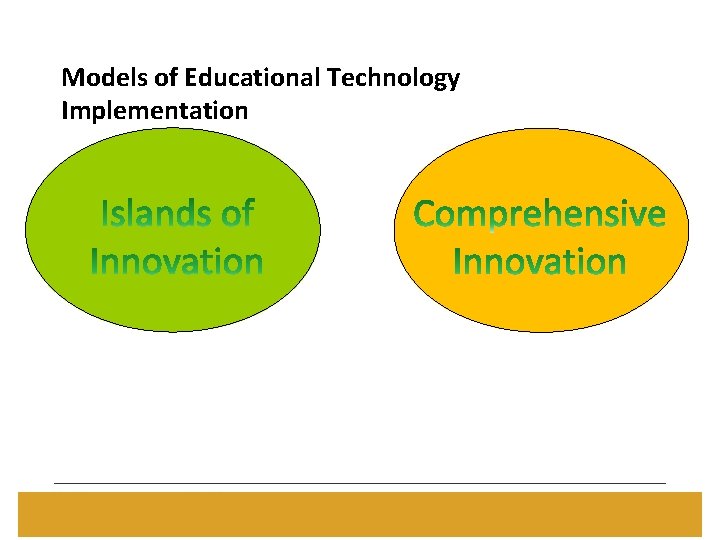
Models of Educational Technology Implementation
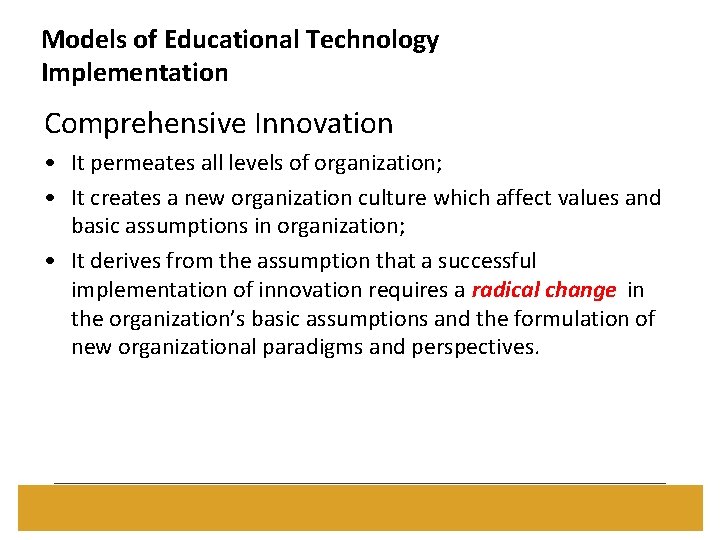
Models of Educational Technology Implementation Comprehensive Innovation • It permeates all levels of organization; • It creates a new organization culture which affect values and basic assumptions in organization; • It derives from the assumption that a successful implementation of innovation requires a radical change in the organization’s basic assumptions and the formulation of new organizational paradigms and perspectives.
Models of Educational Technology Implementation Islands of Innovation • It is implemented in form of pilot project; • It usually leads to first degree changes which mainly involve changes in the characteristics and behaviors of the organization, without a significant change in the organization’s culture, norms & basic assumption; • It is assumed the success of the islands will serve as a role model, slowly dissipate to the rest of the organization and finally lead to a comprehensive innovation.
Models of Educational Technology Implementation Islands of Innovation • It is preferred strategy for education system because – it uses up only a small portion of resources; – it is less threatening to organization’s overall values and basic assumption; – it does not adversely impact the existing hierarchies of organization; – it minimizes the damage of lost; – it is assumed will, in turn, create a ripple effect leading to comprehensive innovation.
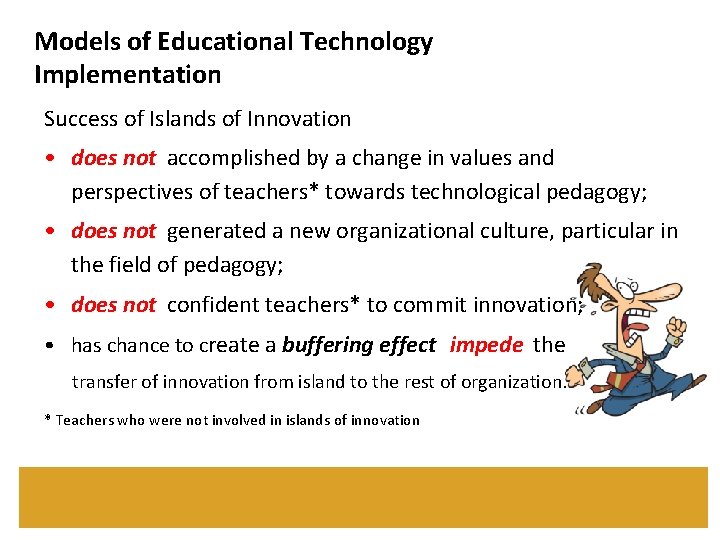
Models of Educational Technology Implementation Success of Islands of Innovation • does not accomplished by a change in values and perspectives of teachers* towards technological pedagogy; • does not generated a new organizational culture, particular in the field of pedagogy; • does not confident teachers* to commit innovation; • has chance to create a buffering effect impede the transfer of innovation from island to the rest of organization. * Teachers who were not involved in islands of innovation
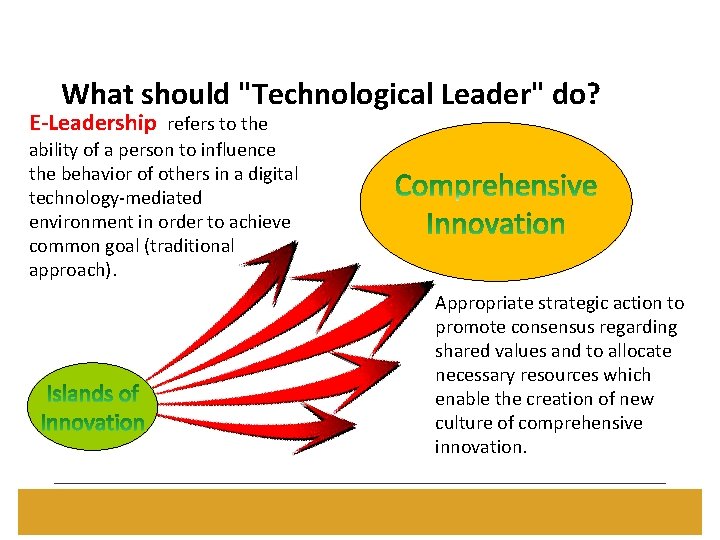
What should "Technological Leader" do? E-Leadership refers to the ability of a person to influence the behavior of others in a digital technology-mediated environment in order to achieve common goal (traditional approach). Appropriate strategic action to promote consensus regarding shared values and to allocate necessary resources which enable the creation of new culture of comprehensive innovation.
What should "Technological Leader" do? Factors interfering with technological integration identified by a number of researches (2005 – 2011) : • Beliefs about the role of technology in education; • Fundamental disjunction between traditional teaching approaches and technology-enhanced teaching methods; • Lack of availability of technology tools; • Lack of adequate technological training for teachers.
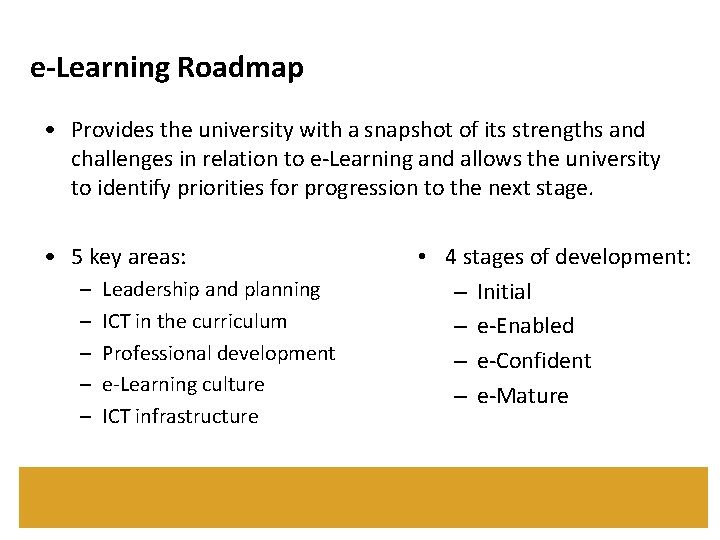
e-Learning Roadmap • Provides the university with a snapshot of its strengths and challenges in relation to e-Learning and allows the university to identify priorities for progression to the next stage. • 5 key areas: – – – Leadership and planning ICT in the curriculum Professional development e-Learning culture ICT infrastructure • 4 stages of development: – Initial – e-Enabled – e-Confident – e-Mature
21 st Century e-Leadership is defined as the usage of a school management information system, not just only educational technology, for exchanging updated pedagogical data in order to increase school effectiveness through data-based decision making and instant interactions among different stakeholders.
School Management Information System • School MIS emphasize organizational aspects and the transfer of pedagogical information, such as curriculum performance and student activity and achievement. • Each member of the organization receives access to the data according to his or her position. • e-Leadership by school principals is empowered by providing extensive on-demand up-to date data at different levels and enabling data-based pedagogical decisions.
Conclusion E-Leadership refers to • the ability of a person to influence the behavior of others in a digital technology-mediated environment in order to achieve technological adoption in pedagogy ; • the usage of a school management information system for exchanging updated pedagogical data in order to increase school effectiveness.
References • SMAR Model Explained for Teachers. Educational Technology and Mobile Learning. (Ref: http: //www. educatorstechnology. com/2013/06/samr-modelexplained-for-teachers. html) • Blau, I & Presser, O. (2013). e-Leadership of School Principals: Increasing School Effectiveness by a School Management Information System. British Journal of Educational Technology , 44(6), 1000 – 1011. • http: //www. ncte. ie/media/Leadership_and_Planning_area. pdf • http: //www. ncte. ie/media/ENG_Getting_started. pdf • Kurt, Serhat. (2013). Creating Technology-Enriched Classrooms: Implementation Challenges in Turkish Education. Learning, Media and Technology, 39(1), 90 – 106. • Orit Avidov-Ungar and Yoram Eshet-Alkakay. (2011). The Islands of Innovation Model: Opportunities • and Threats for Effective Implementation of Technological Innovation in the Education System • Issues in Informing Science and Information Technology , 8, 363 - 376. • APA adaption of Anderson, L. W. & Krathwohl, D. R. (Source: http: //www. apa. org)
Thank You