
Use of Electrosurgery and Argon Plasma Coagulation Therapeutic



- Slides: 63
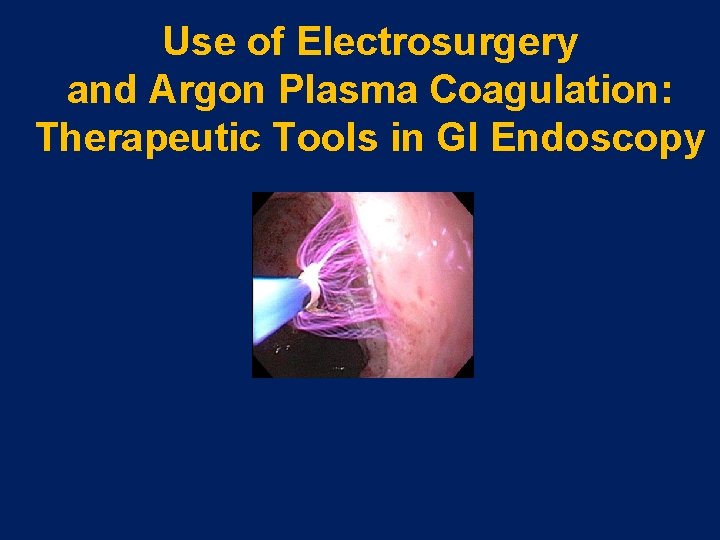
Use of Electrosurgery and Argon Plasma Coagulation: Therapeutic Tools in GI Endoscopy
Objectives • Define the basics of Electrosurgery and how it is adapted for clinical use. • Describe how to effectively use Electrosurgery and APC in GI Endoscopy. • Describe the nursing considerations for safe use of Electrosurgery and APC.
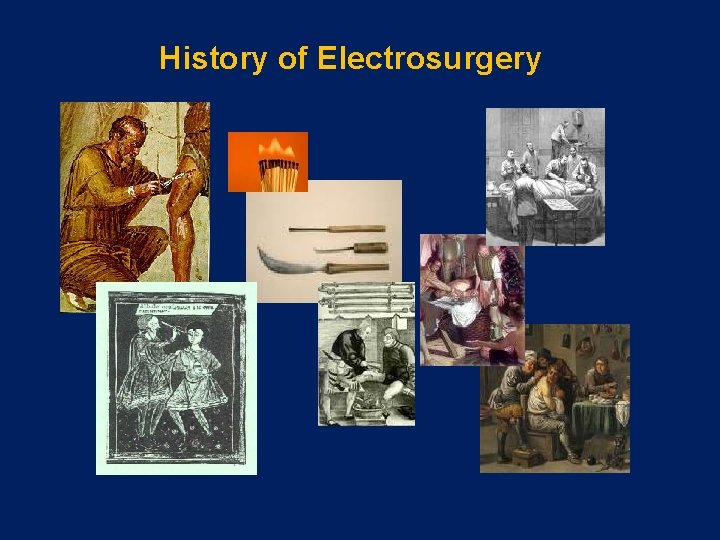
History of Electrosurgery
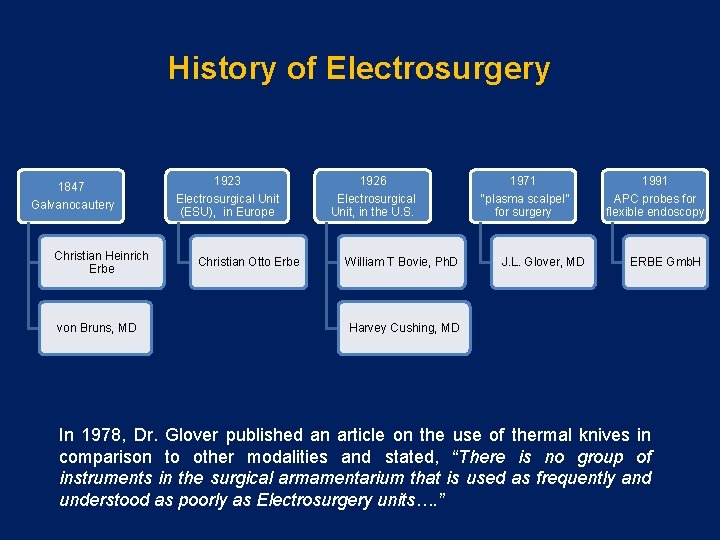
History of Electrosurgery 1847 Galvanocautery Christian Heinrich Erbe von Bruns, MD 1923 1926 1971 1991 Electrosurgical Unit (ESU), in Europe Electrosurgical Unit, in the U. S. “plasma scalpel” for surgery APC probes for flexible endoscopy Christian Otto Erbe William T Bovie, Ph. D J. L. Glover, MD ERBE Gmb. H Harvey Cushing, MD In 1978, Dr. Glover published an article on the use of thermal knives in comparison to other modalities and stated, “There is no group of instruments in the surgical armamentarium that is used as frequently and understood as poorly as Electrosurgery units…. ”
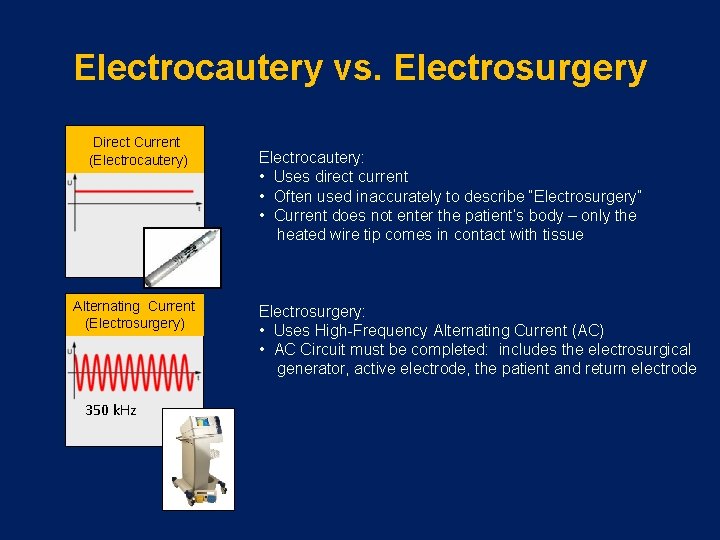
Electrocautery vs. Electrosurgery Direct Current (Electrocautery) Alternating Current (Electrosurgery) 350 k. Hz Electrocautery: • Uses direct current • Often used inaccurately to describe “Electrosurgery” • Current does not enter the patient’s body – only the heated wire tip comes in contact with tissue Electrosurgery: • Uses High-Frequency Alternating Current (AC) • AC Circuit must be completed: includes the electrosurgical generator, active electrode, the patient and return electrode
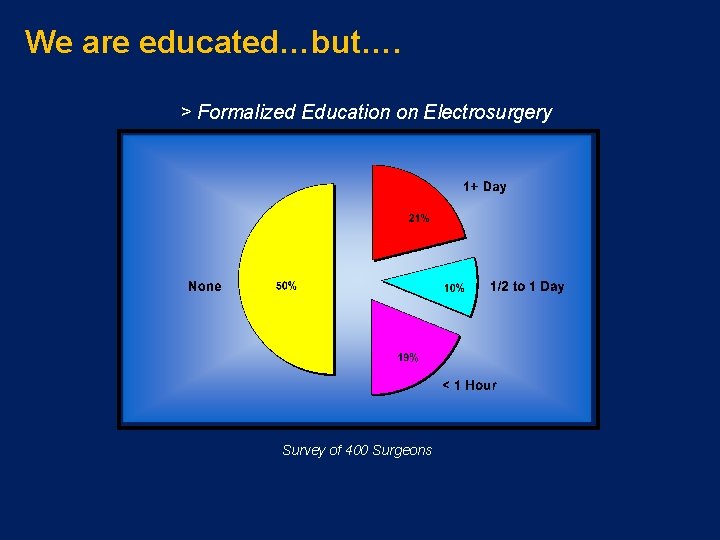
We are educated…but…. > Formalized Education on Electrosurgery Survey of 400 Surgeons
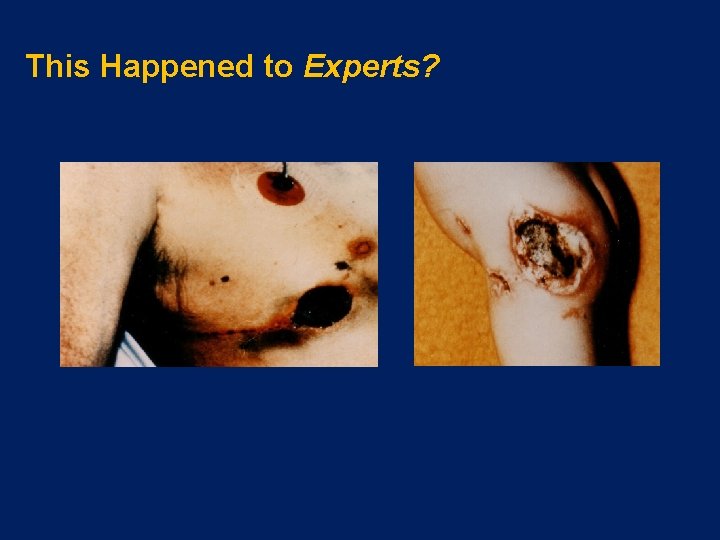
This Happened to Experts?
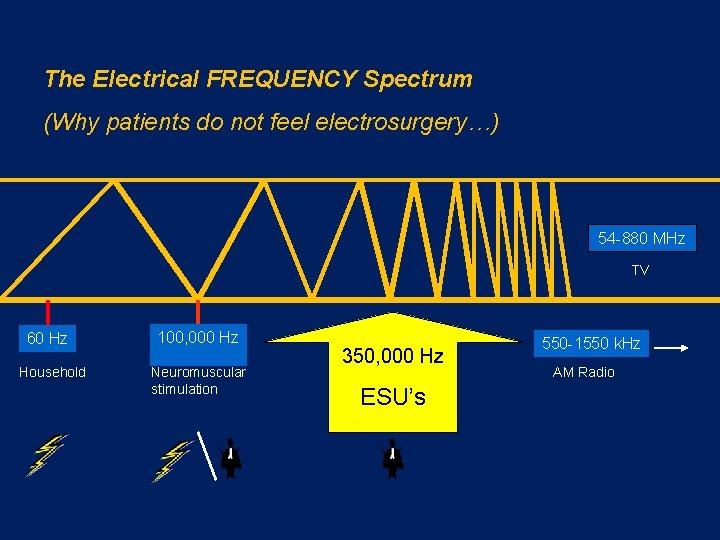
The Electrical FREQUENCY Spectrum (Why patients do not feel electrosurgery…) 54 -880 MHz TV 60 Hz Household 100, 000 Hz Neuromuscular stimulation 350, 000 Hz ESU’s 550 -1550 k. Hz AM Radio
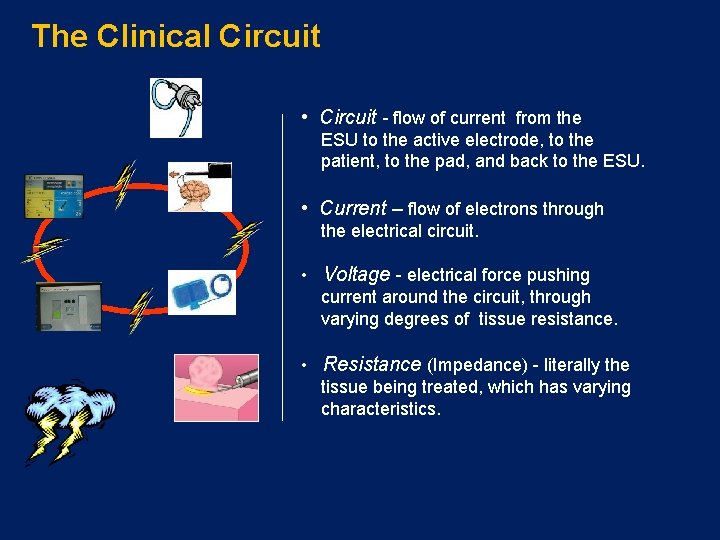
The Clinical Circuit • Circuit - flow of current from the ESU to the active electrode, to the patient, to the pad, and back to the ESU. • Current – flow of electrons through the electrical circuit. • Voltage - electrical force pushing current around the circuit, through varying degrees of tissue resistance. • Resistance (Impedance) - literally the tissue being treated, which has varying characteristics.
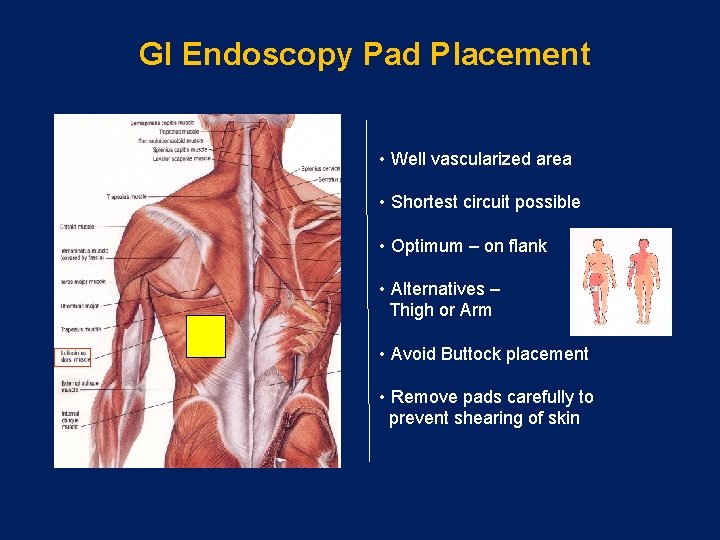
GI Endoscopy Pad Placement • Well vascularized area • Shortest circuit possible • Optimum – on flank • Alternatives – Thigh or Arm • Avoid Buttock placement • Remove pads carefully to prevent shearing of skin
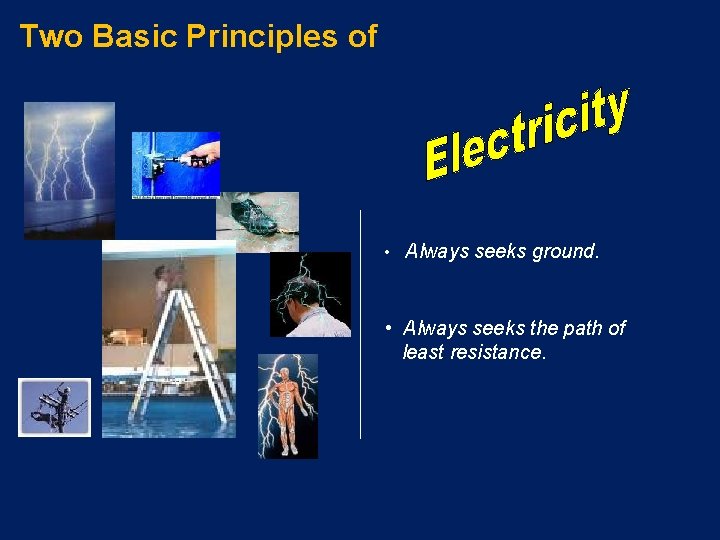
Two Basic Principles of • Always seeks ground. • Always seeks the path of least resistance.
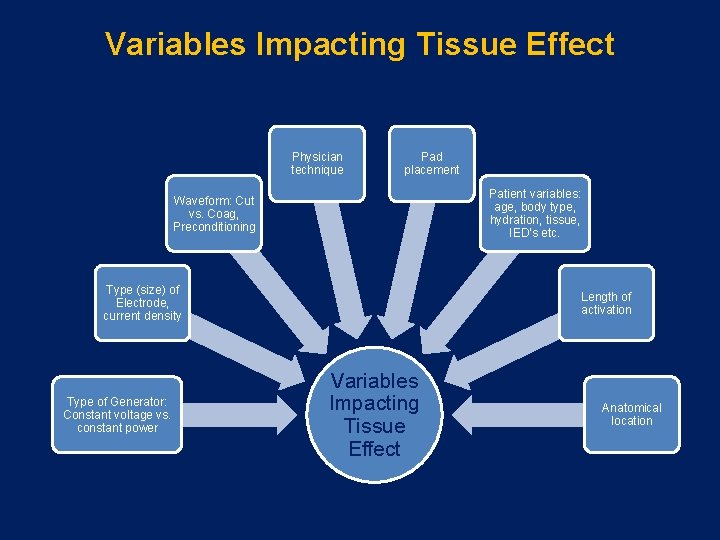
Variables Impacting Tissue Effect Physician technique Pad placement Patient variables: age, body type, hydration, tissue, IED’s etc. Waveform: Cut vs. Coag, Preconditioning Type (size) of Electrode, current density Type of Generator: Constant voltage vs. constant power Length of activation Variables Impacting Tissue Effect Anatomical location
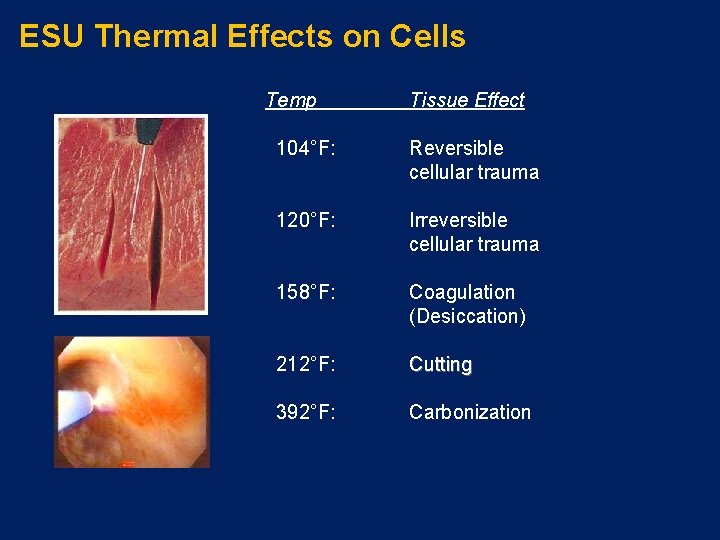
ESU Thermal Effects on Cells Temp Tissue Effect 104°F: Reversible cellular trauma 120°F: Irreversible cellular trauma 158°F: Coagulation (Desiccation) 212°F: Cutting 392°F: Carbonization
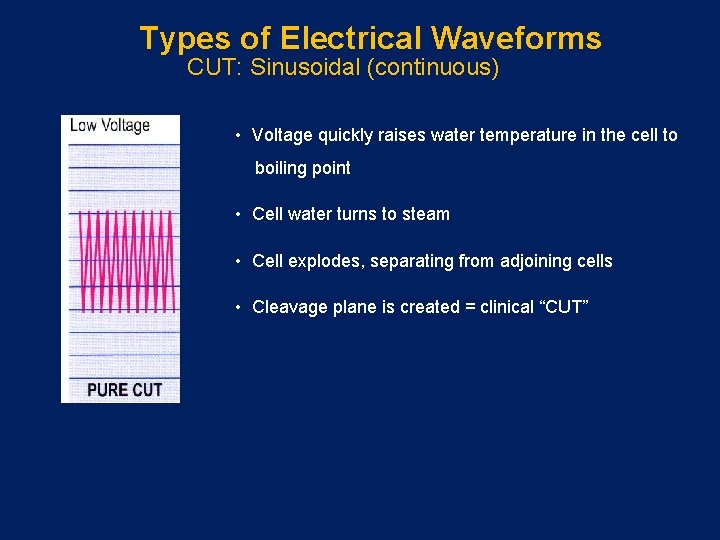
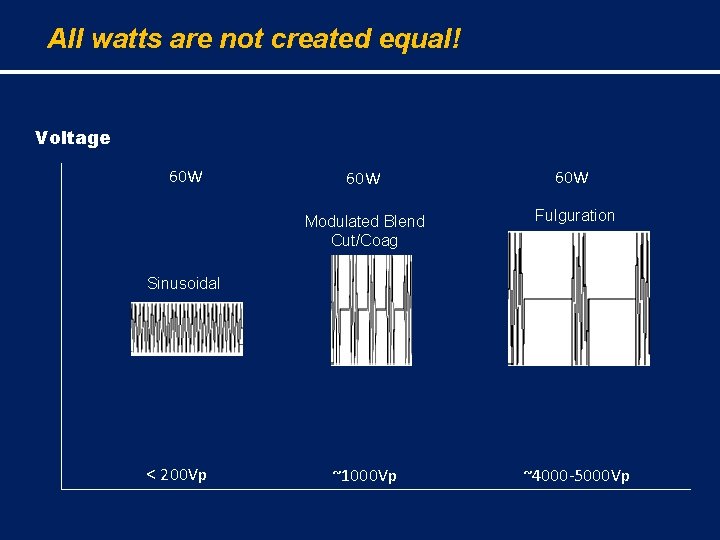
Types of Electrical Waveforms CUT: Sinusoidal (continuous) • Voltage quickly raises water temperature in the cell to boiling point • Cell water turns to steam • Cell explodes, separating from adjoining cells • Cleavage plane is created = clinical “CUT”
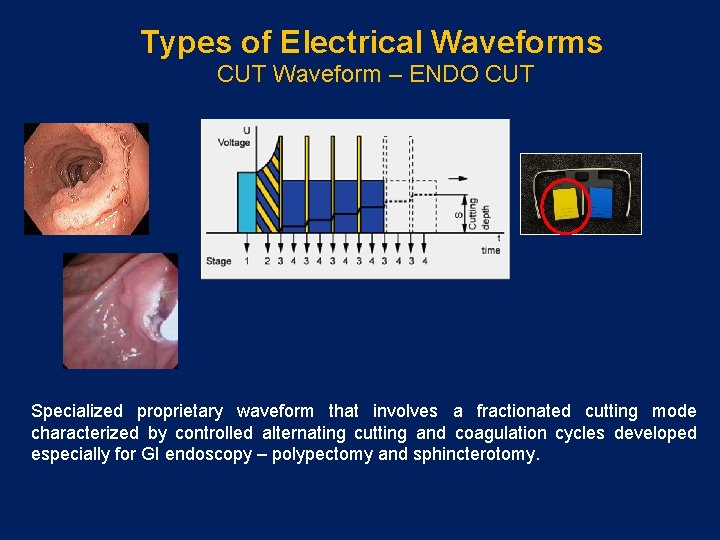
Types of Electrical Waveforms CUT Waveform – ENDO CUT Specialized proprietary waveform that involves a fractionated cutting mode characterized by controlled alternating cutting and coagulation cycles developed especially for GI endoscopy – polypectomy and sphincterotomy.
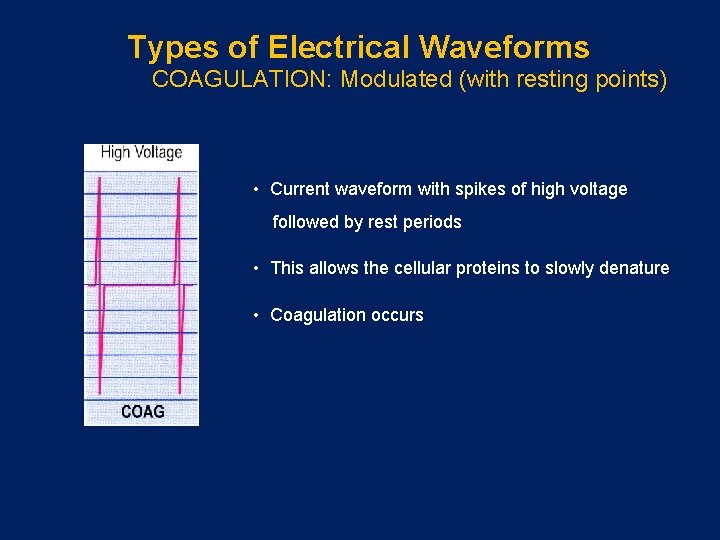
Types of Electrical Waveforms COAGULATION: Modulated (with resting points) • Current waveform with spikes of high voltage followed by rest periods • This allows the cellular proteins to slowly denature • Coagulation occurs
All watts are not created equal! Voltage 60 W Modulated Blend Cut/Coag 60 W Fulguration Sinusoidal < 200 Vp ~1000 Vp ~4000 -5000 Vp
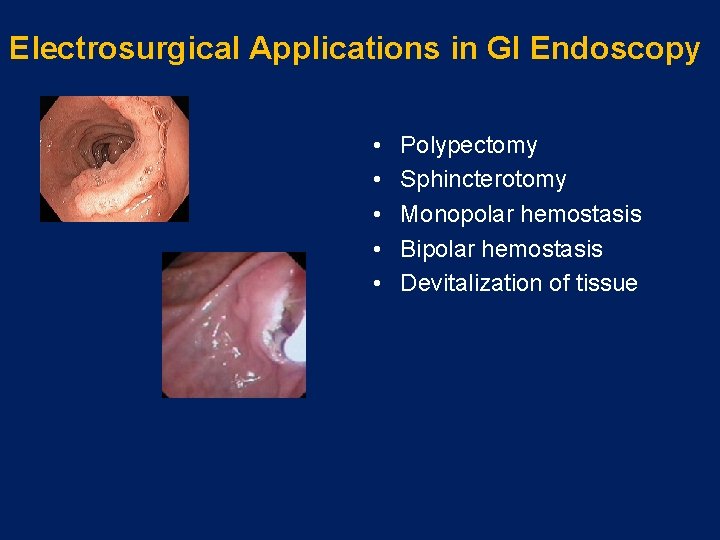
Electrosurgical Applications in GI Endoscopy • • • Polypectomy Sphincterotomy Monopolar hemostasis Bipolar hemostasis Devitalization of tissue
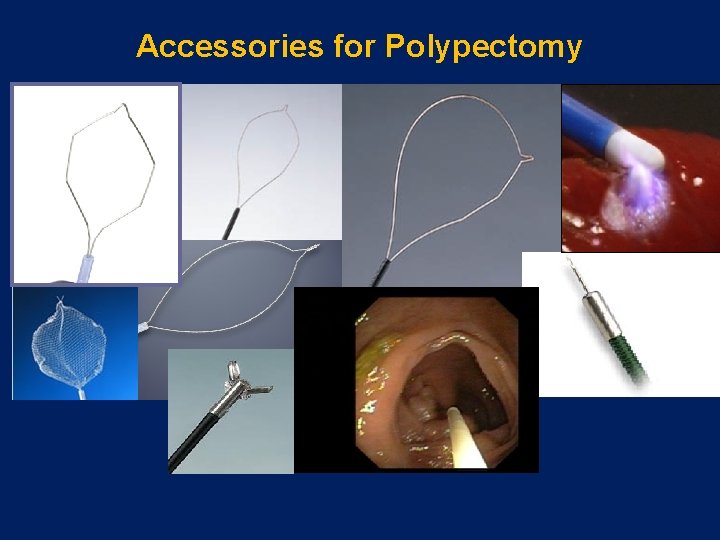
Accessories for Polypectomy
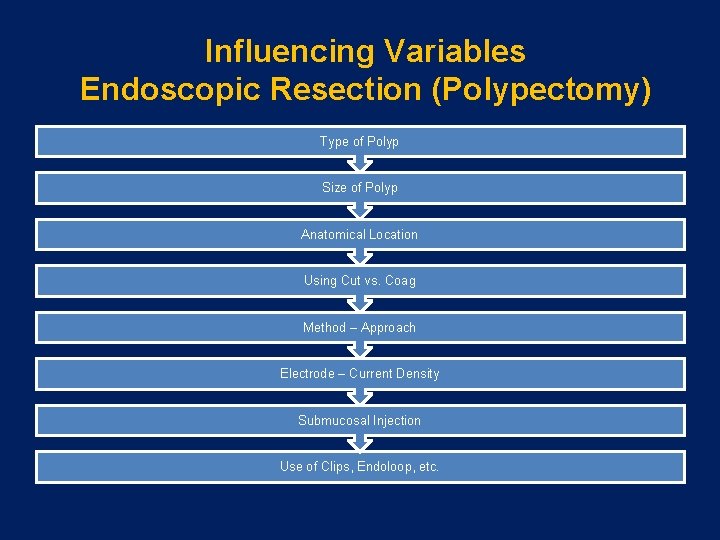
Influencing Variables Endoscopic Resection (Polypectomy) Type of Polyp Size of Polyp Anatomical Location Using Cut vs. Coag Method – Approach Electrode – Current Density Submucosal Injection Use of Clips, Endoloop, etc.
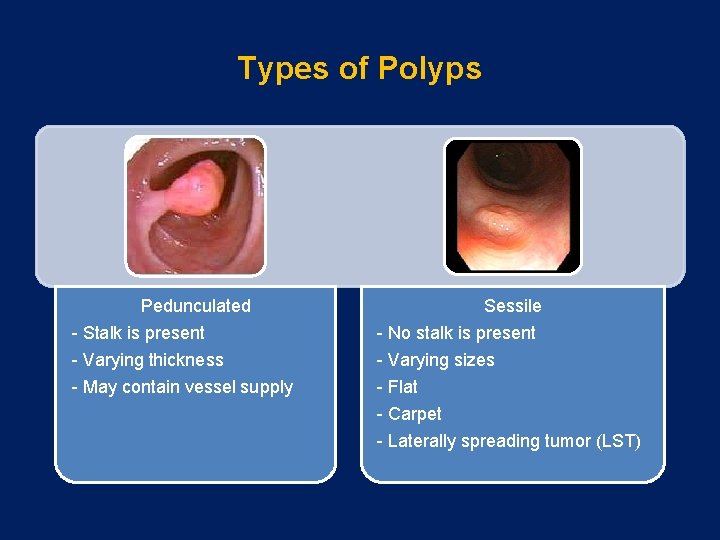
Types of Polyps Pedunculated - Stalk is present - Varying thickness - May contain vessel supply Sessile - No stalk is present - Varying sizes - Flat - Carpet - Laterally spreading tumor (LST)
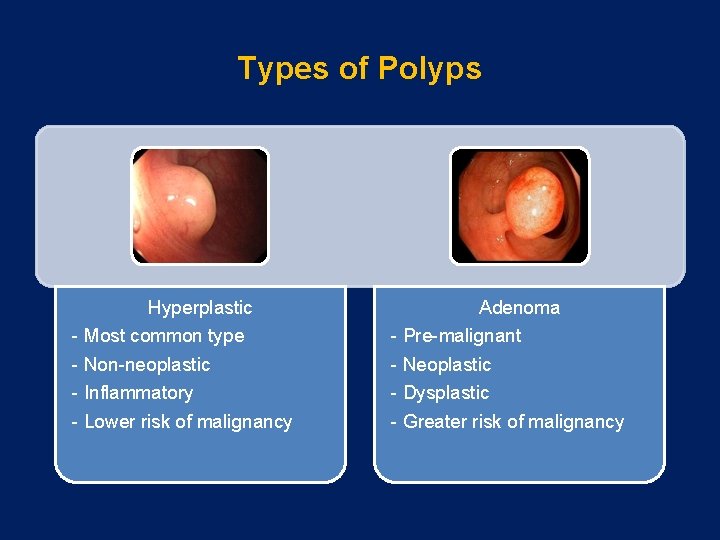
Types of Polyps Hyperplastic Adenoma - Most common type - Pre-malignant - Non-neoplastic - Inflammatory - Lower risk of malignancy - Neoplastic - Dysplastic - Greater risk of malignancy
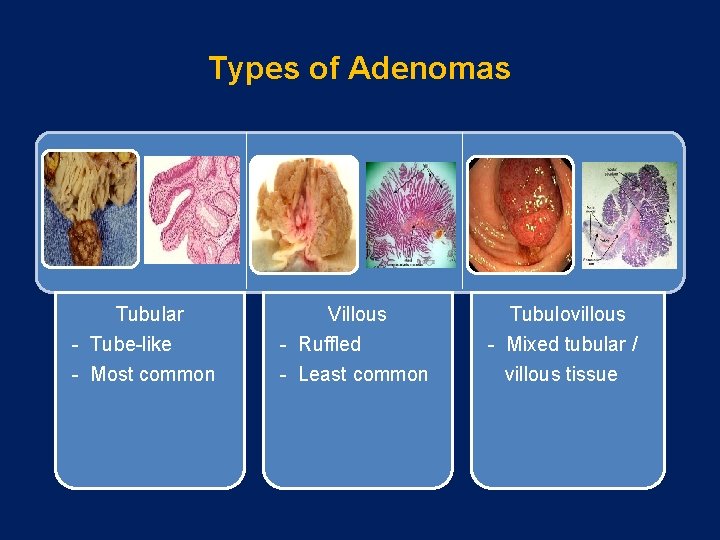
Types of Adenomas Tubular - Tube-like - Most common Villous - Ruffled - Least common Tubulovillous - Mixed tubular / villous tissue
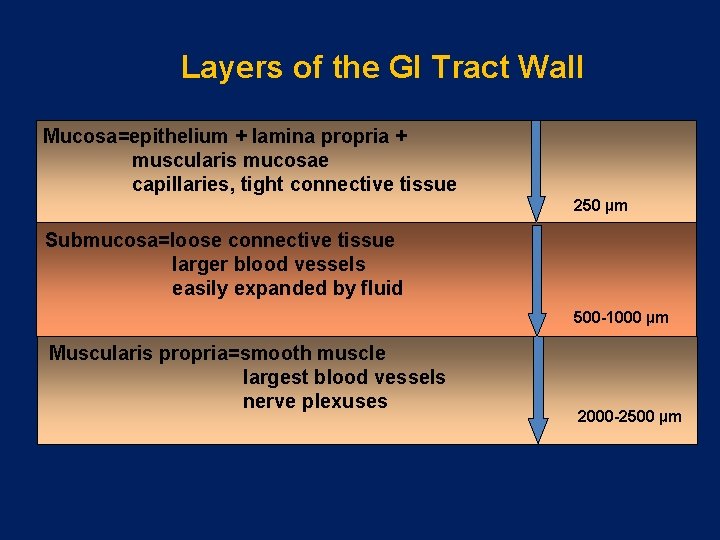
Layers of the GI Tract Wall Mucosa=epithelium + lamina propria + muscularis mucosae capillaries, tight connective tissue 250 µm Submucosa=loose connective tissue larger blood vessels easily expanded by fluid 500 -1000 µm Muscularis propria=smooth muscle largest blood vessels nerve plexuses 2000 -2500 µm
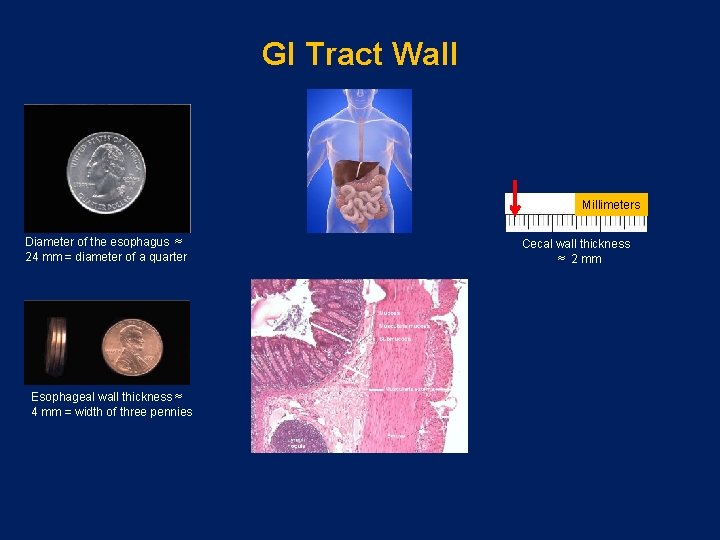
GI Tract Wall Millimeters Diameter of the esophagus ≈ 24 mm = diameter of a quarter Esophageal wall thickness ≈ 4 mm = width of three pennies Cecal wall thickness ≈ 2 mm
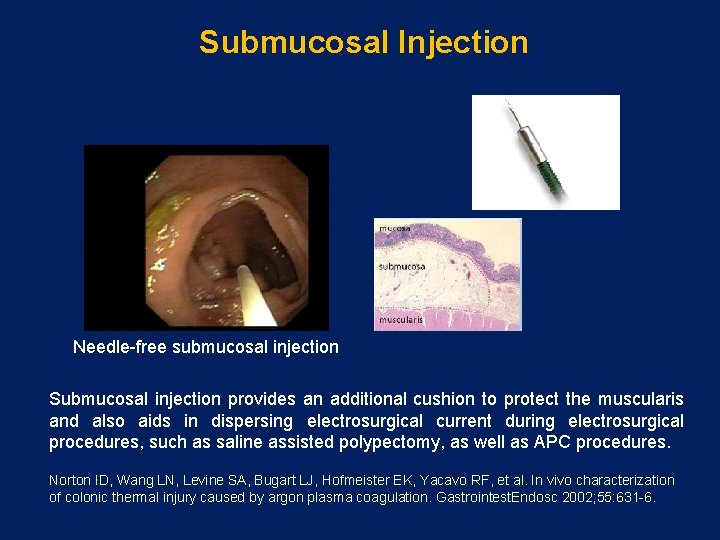
Submucosal Injection Needle-free submucosal injection Submucosal injection provides an additional cushion to protect the muscularis and also aids in dispersing electrosurgical current during electrosurgical procedures, such as saline assisted polypectomy, as well as APC procedures. Norton ID, Wang LN, Levine SA, Bugart LJ, Hofmeister EK, Yacavo RF, et al. In vivo characterization of colonic thermal injury caused by argon plasma coagulation. Gastrointest. Endosc 2002; 55: 631 -6.
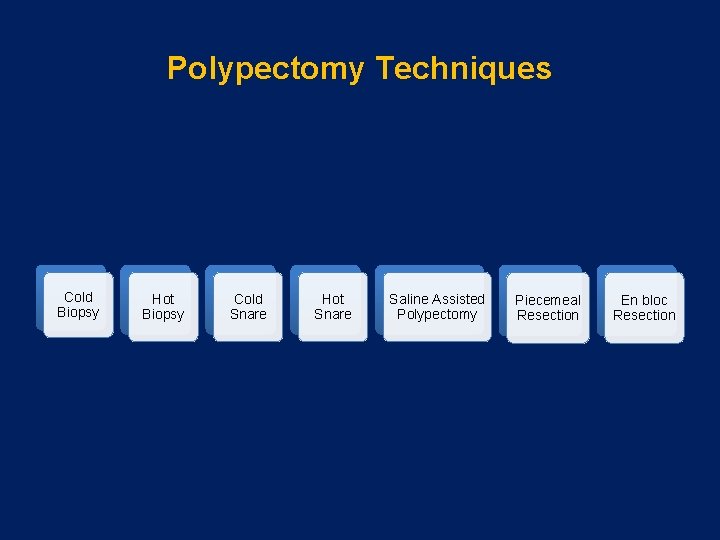
Polypectomy Techniques Cold Biopsy Hot Biopsy Cold Snare Hot Snare Saline Assisted Polypectomy Piecemeal Resection En bloc Resection
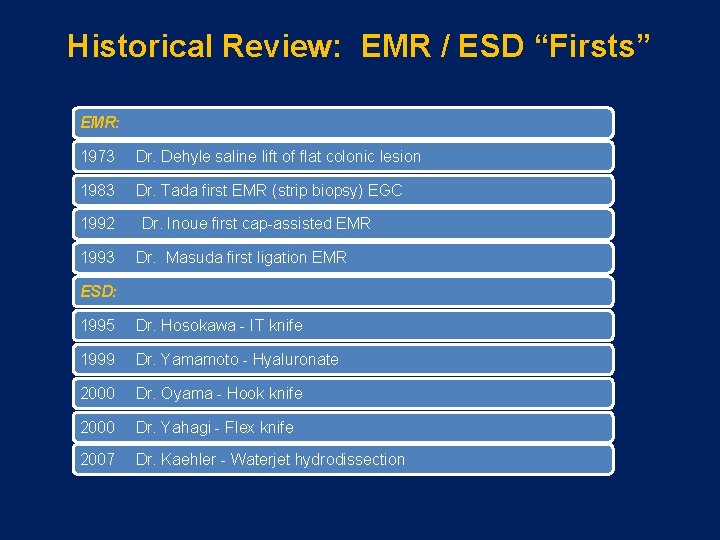
Historical Review: EMR / ESD “Firsts” EMR: 1973 Dr. Dehyle saline lift of flat colonic lesion 1983 Dr. Tada first EMR (strip biopsy) EGC 1992 Dr. Inoue first cap-assisted EMR 1993 Dr. Masuda first ligation EMR ESD: 1995 Dr. Hosokawa - IT knife 1999 Dr. Yamamoto - Hyaluronate 2000 Dr. Oyama - Hook knife 2000 Dr. Yahagi - Flex knife 2007 Dr. Kaehler - Waterjet hydrodissection
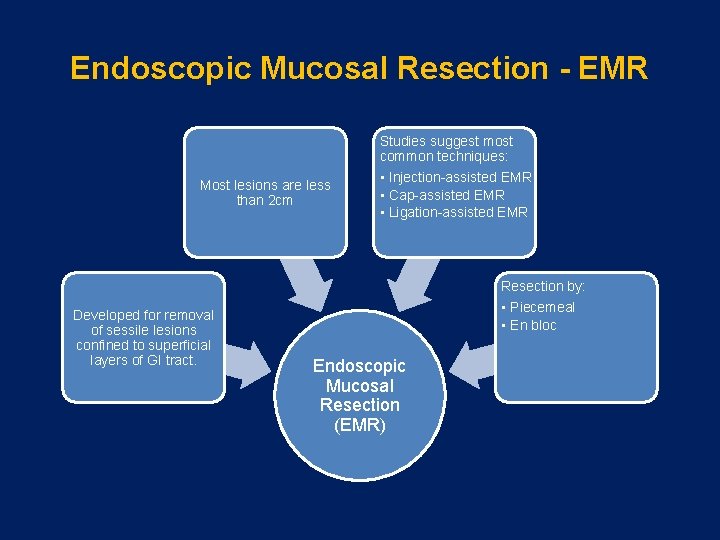
Endoscopic Mucosal Resection - EMR Most lesions are less than 2 cm Studies suggest most common techniques: • Injection-assisted EMR • Cap-assisted EMR • Ligation-assisted EMR Resection by: Developed for removal of sessile lesions confined to superficial layers of GI tract. • Piecemeal • En bloc Endoscopic Mucosal Resection (EMR)
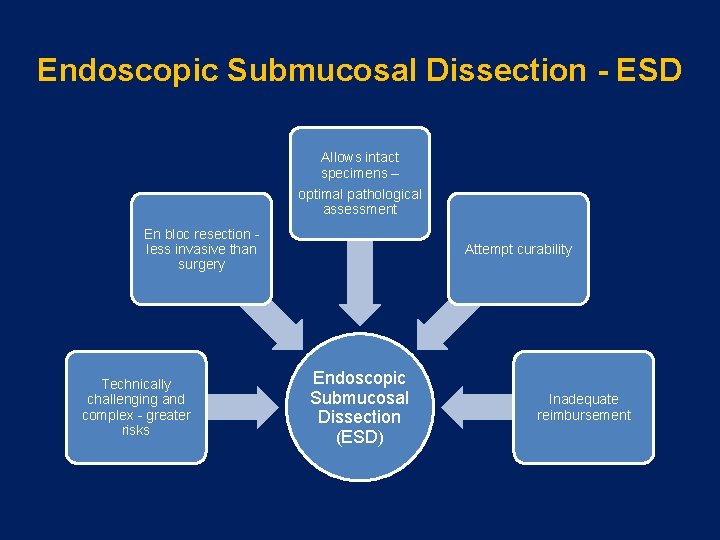
Endoscopic Submucosal Dissection - ESD Allows intact specimens – optimal pathological assessment En bloc resection - less invasive than surgery Technically challenging and complex - greater risks Attempt curability Endoscopic Submucosal Dissection (ESD) Inadequate reimbursement
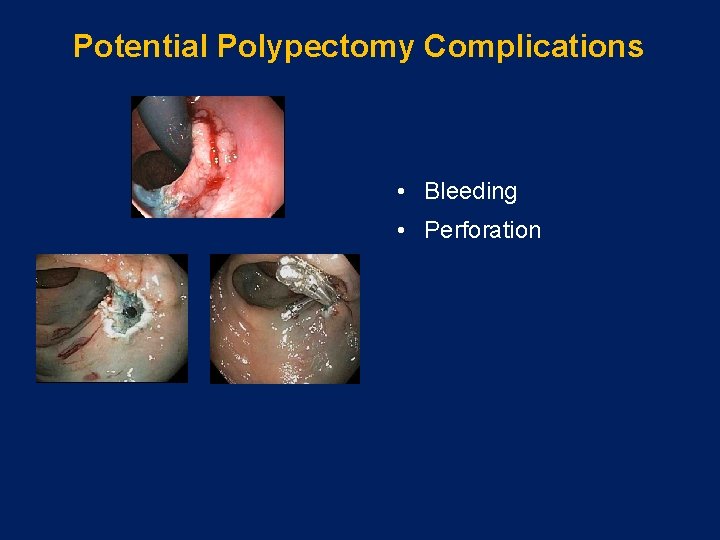
Potential Polypectomy Complications • Bleeding • Perforation
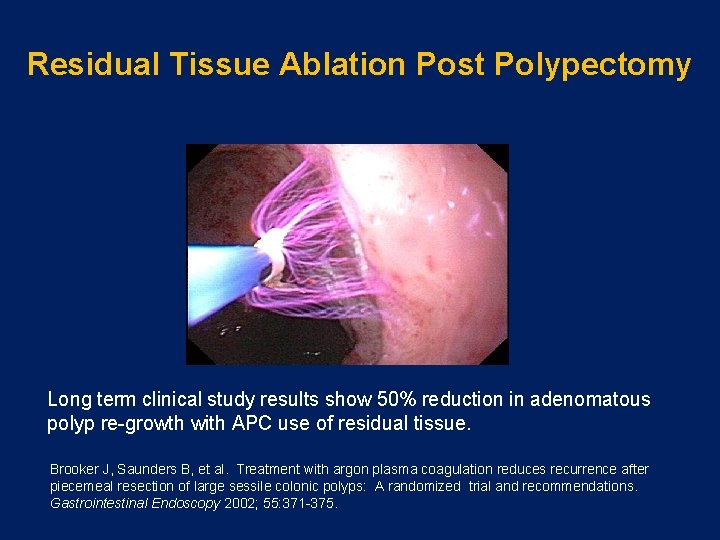
Residual Tissue Ablation Post Polypectomy Long term clinical study results show 50% reduction in adenomatous polyp re-growth with APC use of residual tissue. Brooker J, Saunders B, et al. Treatment with argon plasma coagulation reduces recurrence after piecemeal resection of large sessile colonic polyps: A randomized trial and recommendations. Gastrointestinal Endoscopy 2002; 55: 371 -375.
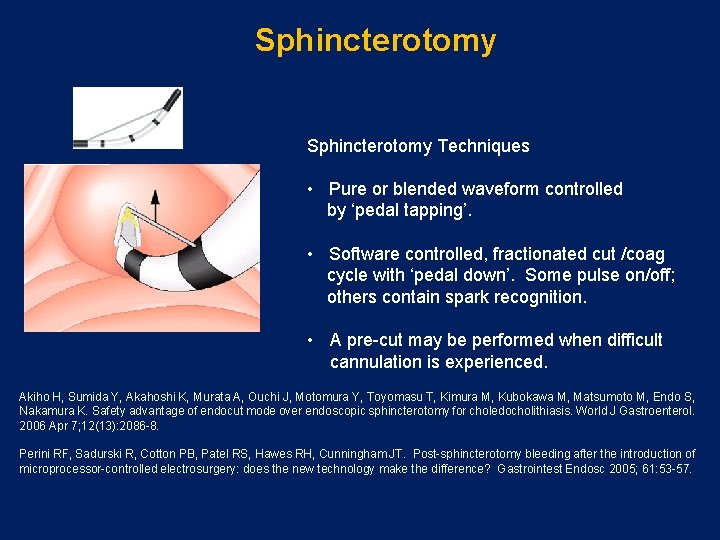
Sphincterotomy Techniques • Pure or blended waveform controlled by ‘pedal tapping’. • Software controlled, fractionated cut /coag cycle with ‘pedal down’. Some pulse on/off; others contain spark recognition. • A pre-cut may be performed when difficult cannulation is experienced. Akiho H, Sumida Y, Akahoshi K, Murata A, Ouchi J, Motomura Y, Toyomasu T, Kimura M, Kubokawa M, Matsumoto M, Endo S, Nakamura K. Safety advantage of endocut mode over endoscopic sphincterotomy for choledocholithiasis. World J Gastroenterol. 2006 Apr 7; 12(13): 2086 -8. Perini RF, Sadurski R, Cotton PB, Patel RS, Hawes RH, Cunningham JT. Post-sphincterotomy bleeding after the introduction of microprocessor-controlled electrosurgery: does the new technology make the difference? Gastrointest Endosc 2005; 61: 53 -57.
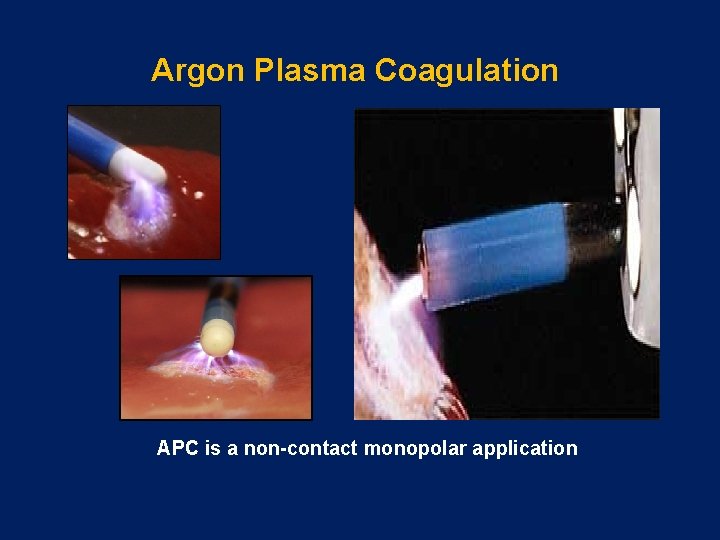
Argon Plasma Coagulation APC is a non-contact monopolar application
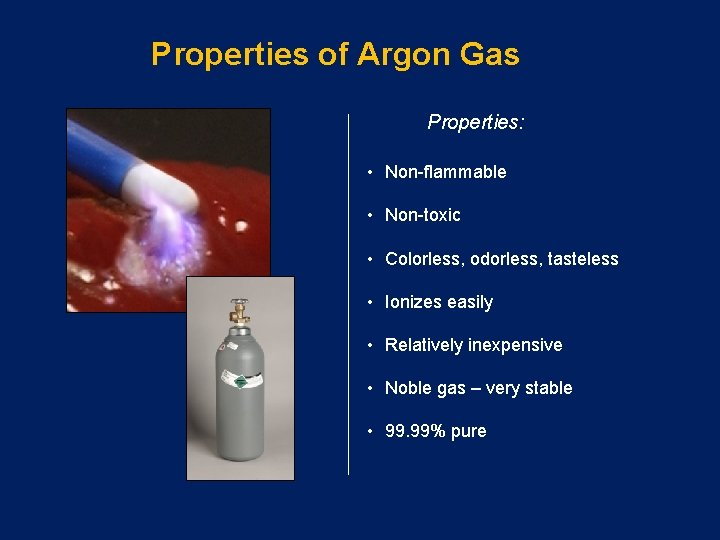
Properties of Argon Gas Properties: • Non-flammable • Non-toxic • Colorless, odorless, tasteless • Ionizes easily • Relatively inexpensive • Noble gas – very stable • 99. 99% pure
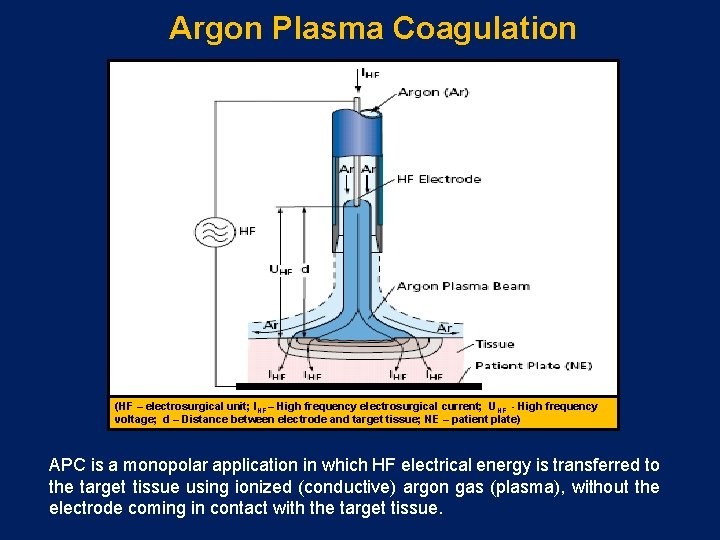
Argon Plasma Coagulation (HF – electrosurgical unit; IHF – High frequency electrosurgical current; UHF - High frequency voltage; d – Distance between electrode and target tissue; NE – patient plate) APC is a monopolar application in which HF electrical energy is transferred to the target tissue using ionized (conductive) argon gas (plasma), without the electrode coming in contact with the target tissue.
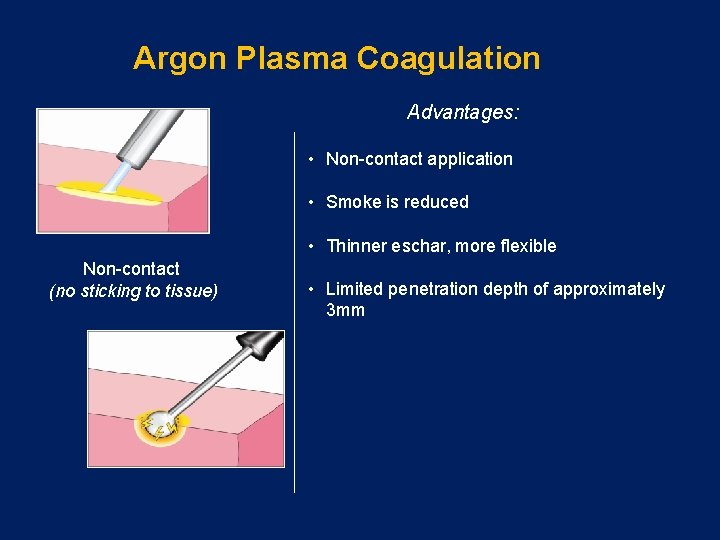
Argon Plasma Coagulation Advantages: • Non-contact application • Smoke is reduced • Thinner eschar, more flexible Non-contact (no sticking to tissue) • Limited penetration depth of approximately 3 mm
Argon Plasma Coagulation En face APC Ar Ar Ar Tangential APC Ionized Argon Gas Argon Plasma Coagulation offers particular advantages for endoscopic applications as it allows APC to be applied en face or tangentially, enabling less accessible areas to be easily treated.
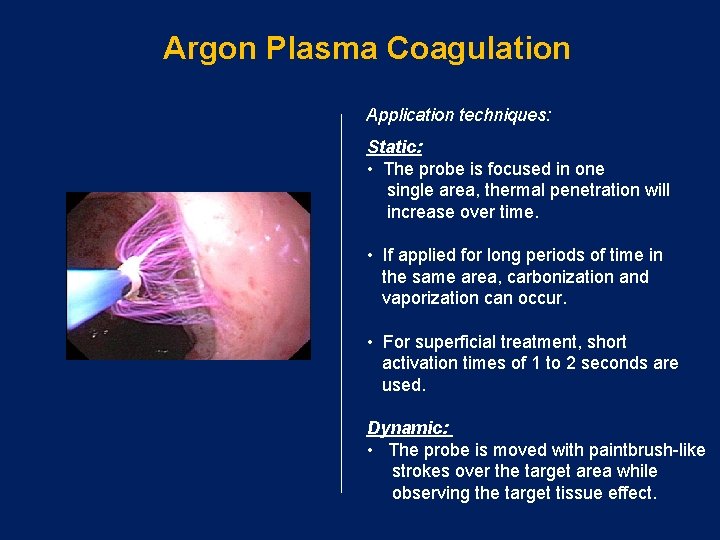
Argon Plasma Coagulation Application techniques: Static: • The probe is focused in one single area, thermal penetration will increase over time. • If applied for long periods of time in the same area, carbonization and vaporization can occur. • For superficial treatment, short activation times of 1 to 2 seconds are used. Dynamic: • The probe is moved with paintbrush-like strokes over the target area while observing the target tissue effect.
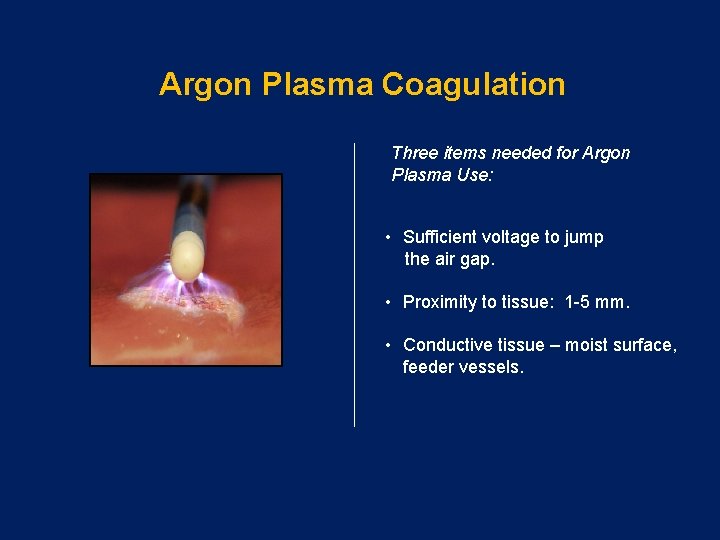
Argon Plasma Coagulation Three items needed for Argon Plasma Use: • Sufficient voltage to jump the air gap. • Proximity to tissue: 1 -5 mm. • Conductive tissue – moist surface, feeder vessels.
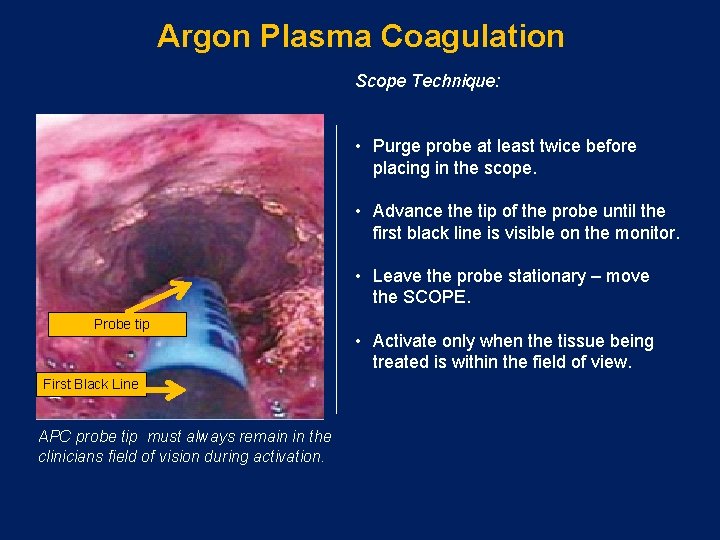
Argon Plasma Coagulation Scope Technique: • Purge probe at least twice before placing in the scope. • Advance the tip of the probe until the first black line is visible on the monitor. • Leave the probe stationary – move the SCOPE. Probe tip First Black Line APC probe tip must always remain in the clinicians field of vision during activation. • Activate only when the tissue being treated is within the field of view.
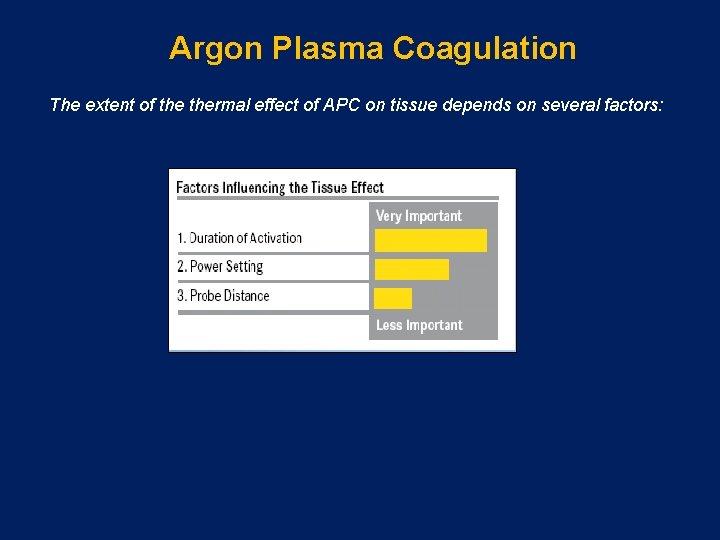
Argon Plasma Coagulation The extent of thermal effect of APC on tissue depends on several factors:
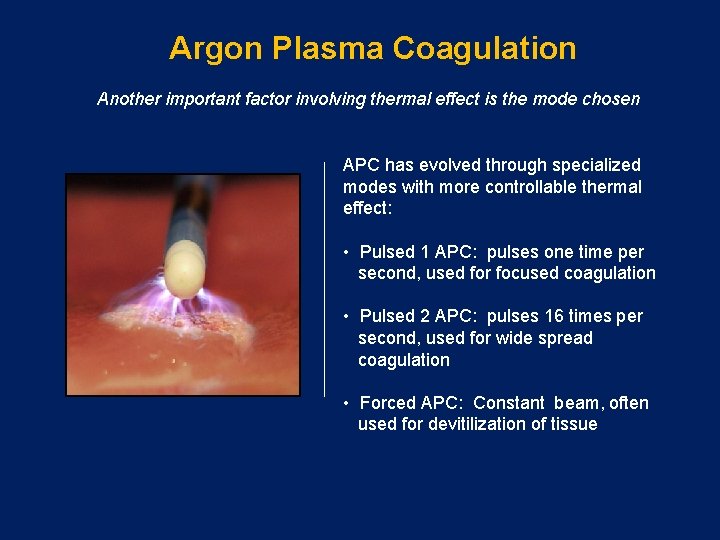
Argon Plasma Coagulation Another important factor involving thermal effect is the mode chosen APC has evolved through specialized modes with more controllable thermal effect: • Pulsed 1 APC: pulses one time per second, used for focused coagulation • Pulsed 2 APC: pulses 16 times per second, used for wide spread coagulation • Forced APC: Constant beam, often used for devitilization of tissue
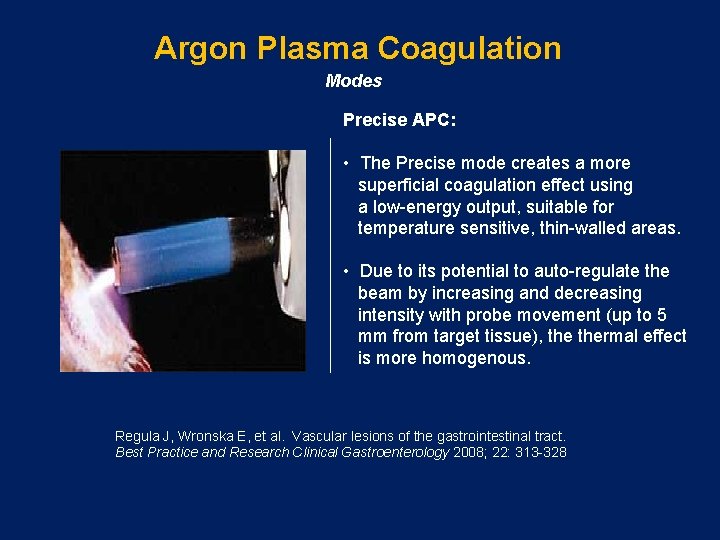
Argon Plasma Coagulation Modes Precise APC: • The Precise mode creates a more superficial coagulation effect using a low-energy output, suitable for temperature sensitive, thin-walled areas. • Due to its potential to auto-regulate the beam by increasing and decreasing intensity with probe movement (up to 5 mm from target tissue), thermal effect is more homogenous. Regula J, Wronska E, et al. Vascular lesions of the gastrointestinal tract. Best Practice and Research Clinical Gastroenterology 2008; 22: 313 -328
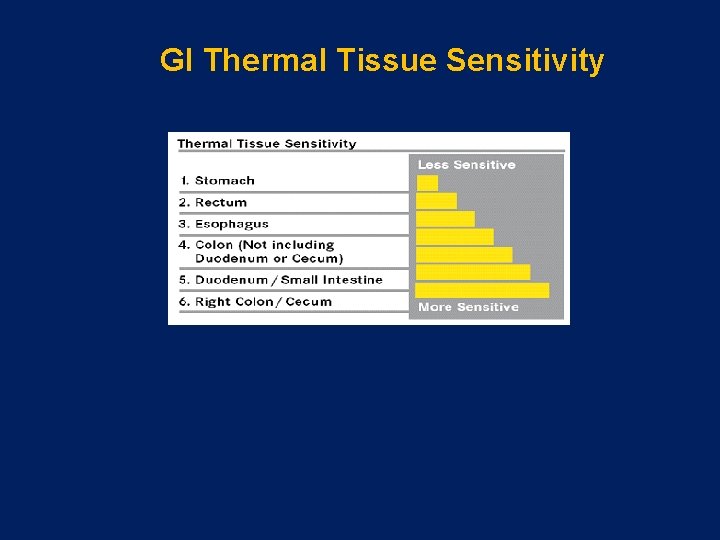
GI Thermal Tissue Sensitivity
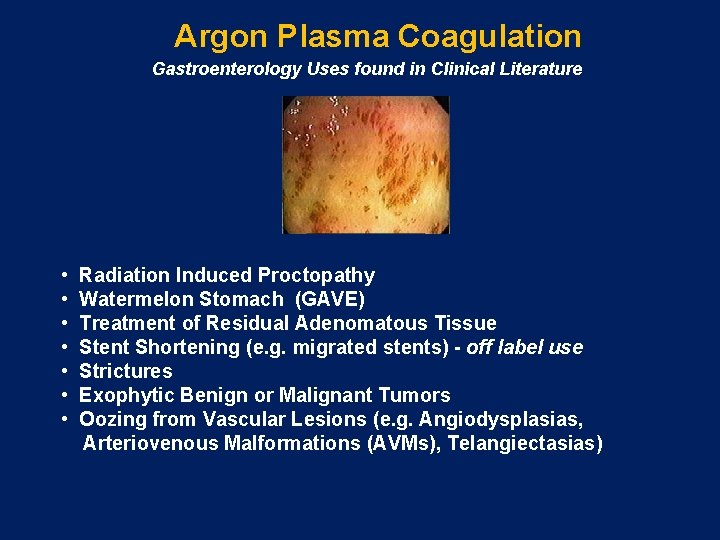
Argon Plasma Coagulation Gastroenterology Uses found in Clinical Literature • Radiation Induced Proctopathy • Watermelon Stomach (GAVE) • Treatment of Residual Adenomatous Tissue • Stent Shortening (e. g. migrated stents) - off label use • Strictures • Exophytic Benign or Malignant Tumors • Oozing from Vascular Lesions (e. g. Angiodysplasias, Arteriovenous Malformations (AVMs), Telangiectasias)
Nursing Considerations for Clinical Safety
Electrosurgical Clinical Safety Argon Plasma Coagulation Minimizing risks of Emphysemas, Embolisms and Perforations: • ALWAYS verbally confirm settings prior to activation and document confirmation. • Avoid probe contact with the tissue. • Keep 1 -5 mm distance between probe and tissue during activations. • Activation in static applications should be short (1 -2 sec). • Output settings, mode, and application durations should be based on clinical indications, anatomical location and wall thickness.
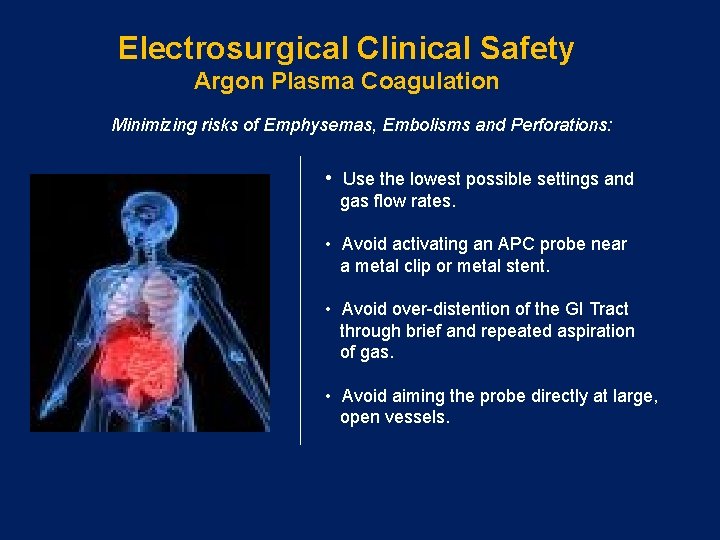
Electrosurgical Clinical Safety Argon Plasma Coagulation Minimizing risks of Emphysemas, Embolisms and Perforations: • Use the lowest possible settings and gas flow rates. • Avoid activating an APC probe near a metal clip or metal stent. • Avoid over-distention of the GI Tract through brief and repeated aspiration of gas. • Avoid aiming the probe directly at large, open vessels.
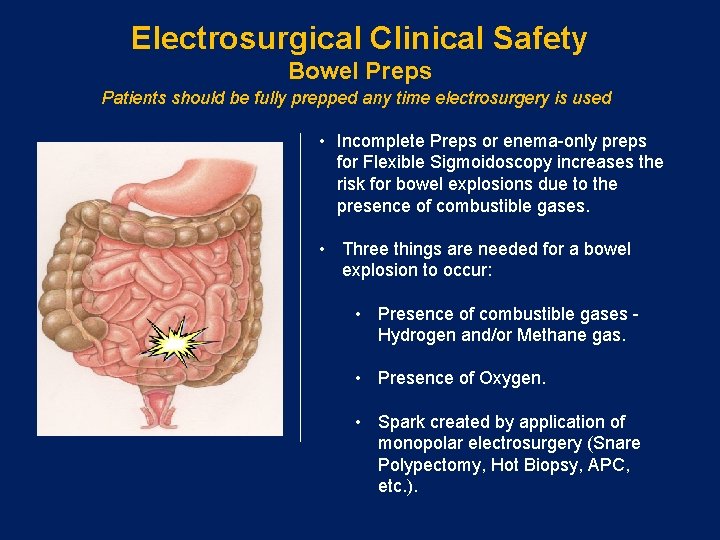
Electrosurgical Clinical Safety Bowel Preps Patients should be fully prepped any time electrosurgery is used • Incomplete Preps or enema-only preps for Flexible Sigmoidoscopy increases the risk for bowel explosions due to the presence of combustible gases. • Three things are needed for a bowel explosion to occur: • Presence of combustible gases Hydrogen and/or Methane gas. • Presence of Oxygen. • Spark created by application of monopolar electrosurgery (Snare Polypectomy, Hot Biopsy, APC, etc. ).
Electrosurgical Clinical Safety Clinical Benefits of Carbon Dioxide (CO 2) Insufflation • CO 2 does not support combustion during electrosurgical procedures. • Absorbed 150 times faster than room air – less distention, less intra and post operative pain. • Due to the rapid absorption, diminished distention/pain post procedure occurs, allowing the physician to quickly rule out insufflation pain, in the event of possible complications, i. e. pancreatitis or perforation. Note: Caution should be used with patients with severe cardiopulmonary disease, i. e. COPD or compromised absorption, i. e. Sickle Cell Anemia. • Rogers, BHG. The safety of carbon dioxide insufflation during colonoscopic electrosurgical polypectomy. Gastrointestinal Endoscopy 1974; 20: 115 -117. • Bretthauer M, et al. Carbon dioxide insufflations for more comfortable endoscopic retrograde cholangiopancreatoagraphy: a randomized, controlled, double-blind trial. Endoscopy 2007; 39: 58 -64. • Dellon E, et al. The use of carbon dioxide for insufflation during GI endoscopy: a systemic review. Gastrointestinal Endoscopy. 2009; 69: 843 -49.
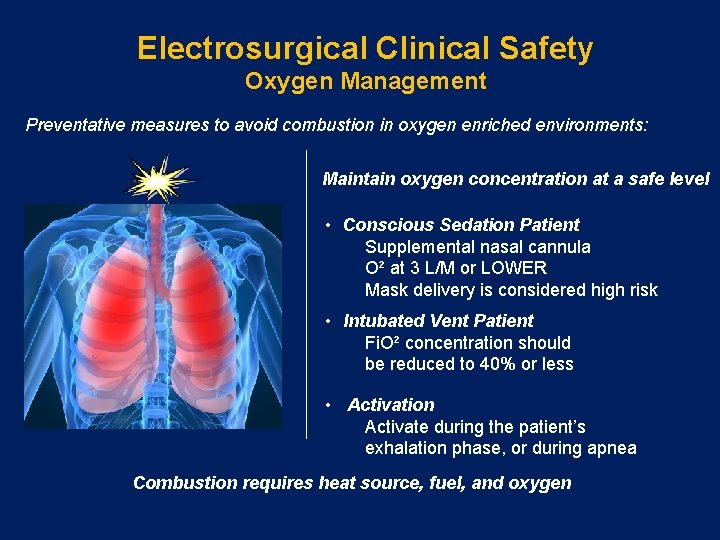
Electrosurgical Clinical Safety Oxygen Management Preventative measures to avoid combustion in oxygen enriched environments: Maintain oxygen concentration at a safe level • Conscious Sedation Patient Supplemental nasal cannula O² at 3 L/M or LOWER Mask delivery is considered high risk • Intubated Vent Patient Fi. O² concentration should be reduced to 40% or less • Activation Activate during the patient’s exhalation phase, or during apnea Combustion requires heat source, fuel, and oxygen
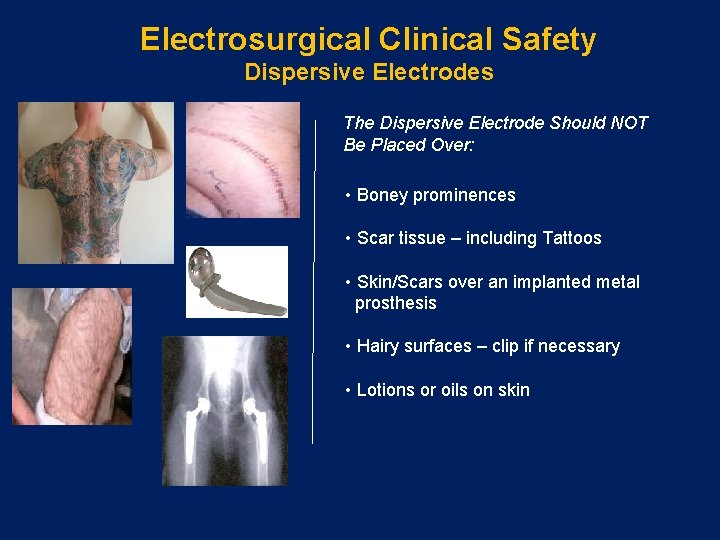
Electrosurgical Clinical Safety Dispersive Electrodes The Dispersive Electrode Should NOT Be Placed Over: • Boney prominences • Scar tissue – including Tattoos • Skin/Scars over an implanted metal prosthesis • Hairy surfaces – clip if necessary • Lotions or oils on skin
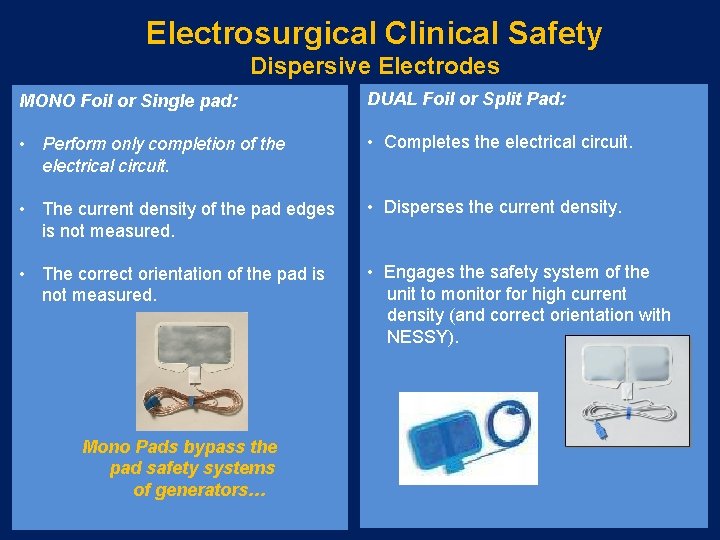
Electrosurgical Clinical Safety Dispersive Electrodes MONO Foil or Single pad: DUAL Foil or Split Pad: • Perform only completion of the electrical circuit. • Completes the electrical circuit. • Disperses the current density. • The current density of the pad edges is not measured. • The correct orientation of the pad is not measured. Mono Pads bypass the pad safety systems of generators… • Engages the safety system of the unit to monitor for high current density (and correct orientation with NESSY).
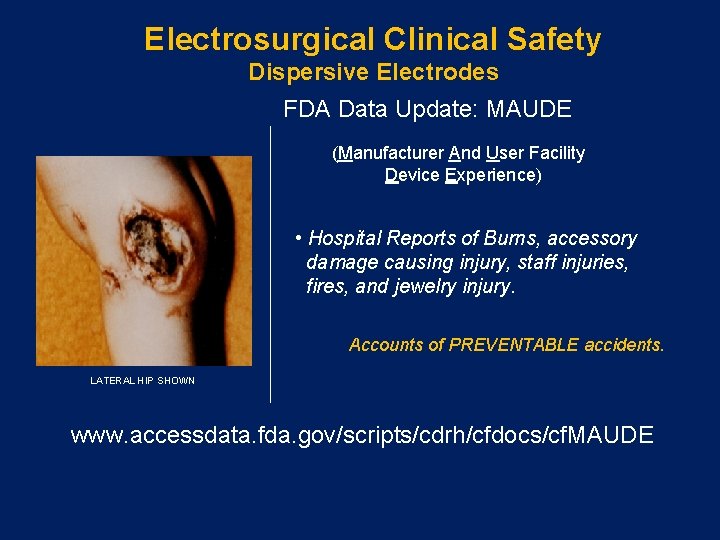
Electrosurgical Clinical Safety Dispersive Electrodes FDA Data Update: MAUDE (Manufacturer And User Facility Device Experience) • Hospital Reports of Burns, accessory damage causing injury, staff injuries, fires, and jewelry injury. Accounts of PREVENTABLE accidents. LATERAL HIP SHOWN www. accessdata. fda. gov/scripts/cdrh/cfdocs/cf. MAUDE
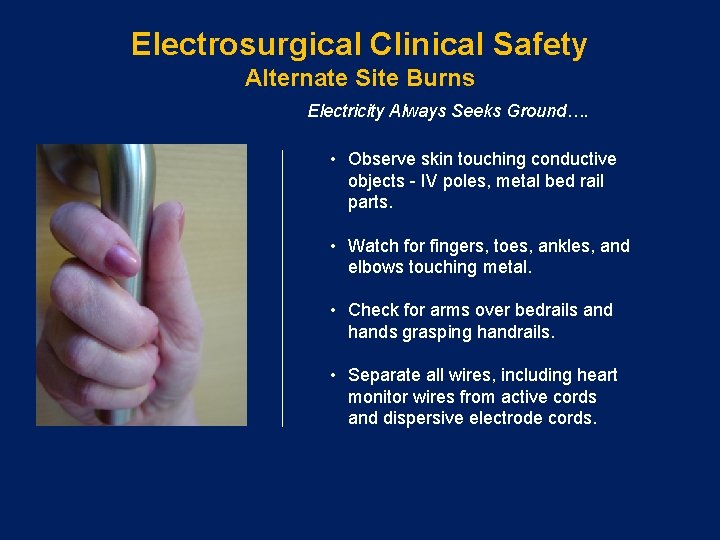
Electrosurgical Clinical Safety Alternate Site Burns Electricity Always Seeks Ground…. • Observe skin touching conductive objects - IV poles, metal bed rail parts. • Watch for fingers, toes, ankles, and elbows touching metal. • Check for arms over bedrails and hands grasping handrails. • Separate all wires, including heart monitor wires from active cords and dispersive electrode cords.
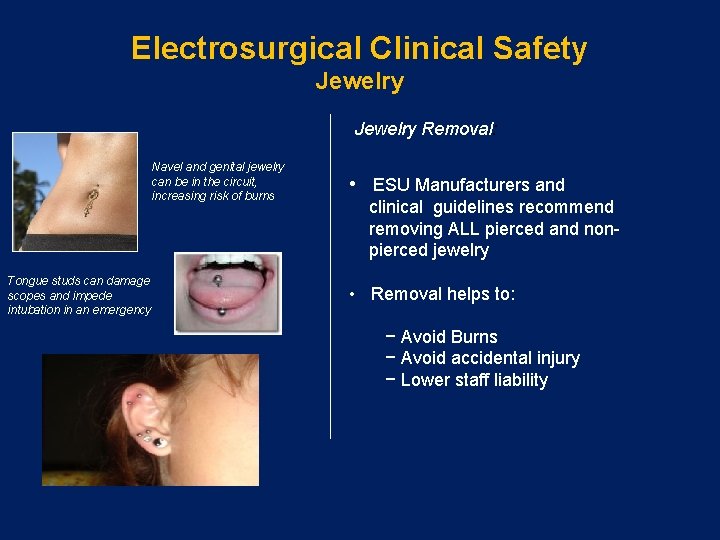
Electrosurgical Clinical Safety Jewelry Removal: Navel and genital jewelry can be in the circuit, increasing risk of burns Tongue studs can damage scopes and impede intubation in an emergency • ESU Manufacturers and clinical guidelines recommend removing ALL pierced and non pierced jewelry • Removal helps to: − Avoid Burns − Avoid accidental injury − Lower staff liability
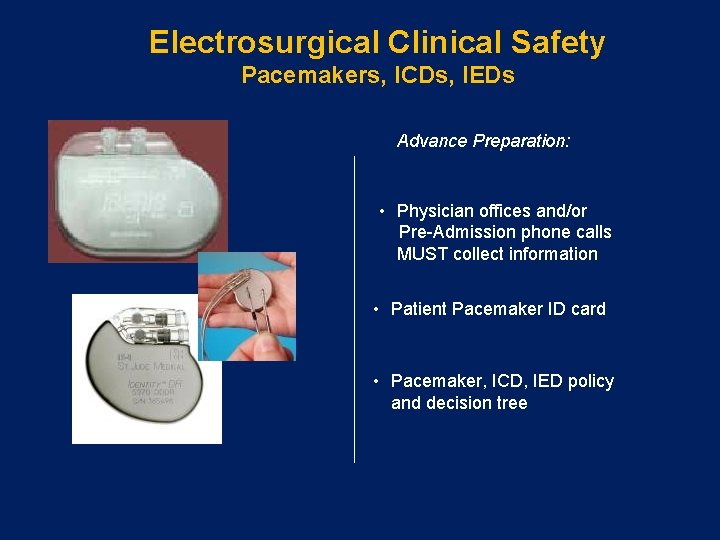
Electrosurgical Clinical Safety Pacemakers, ICDs, IEDs Advance Preparation: • Physician offices and/or Pre-Admission phone calls MUST collect information • Patient Pacemaker ID card • Pacemaker, ICD, IED policy and decision tree
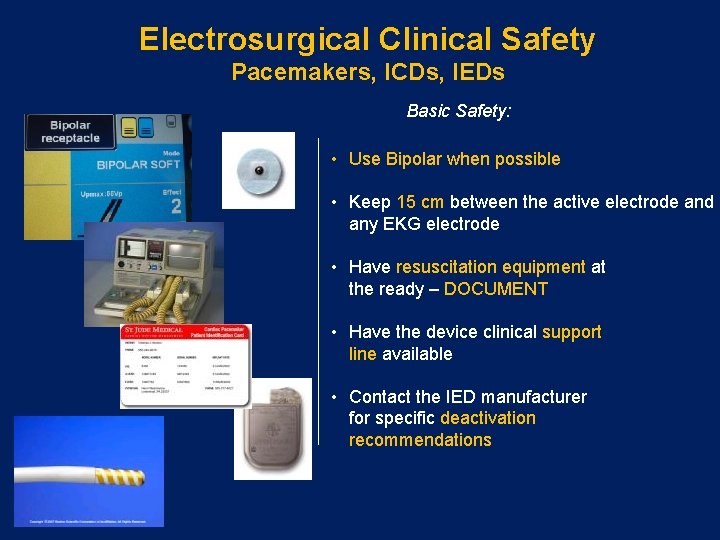
Electrosurgical Clinical Safety Pacemakers, ICDs, IEDs Basic Safety: • Use Bipolar when possible • Keep 15 cm between the active electrode and any EKG electrode • Have resuscitation equipment at the ready – DOCUMENT • Have the device clinical support line available • Contact the IED manufacturer for specific deactivation recommendations
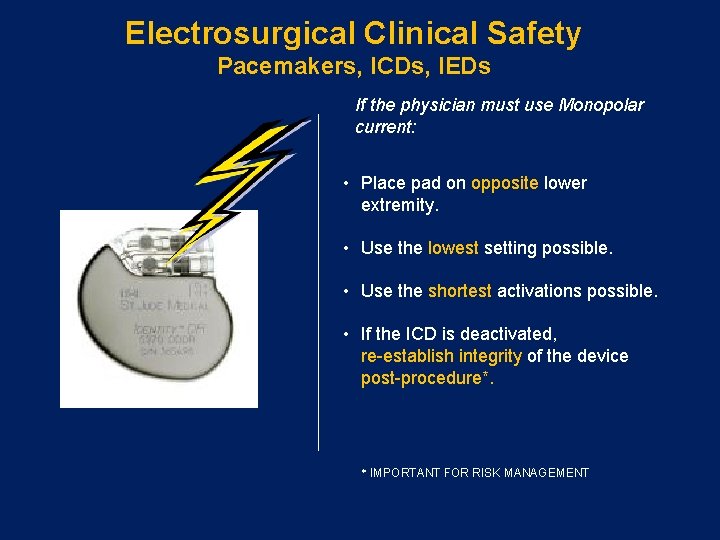
Electrosurgical Clinical Safety Pacemakers, ICDs, IEDs If the physician must use Monopolar current: • Place pad on opposite lower extremity. • Use the lowest setting possible. • Use the shortest activations possible. • If the ICD is deactivated, re-establish integrity of the device post-procedure*. * IMPORTANT FOR RISK MANAGEMENT
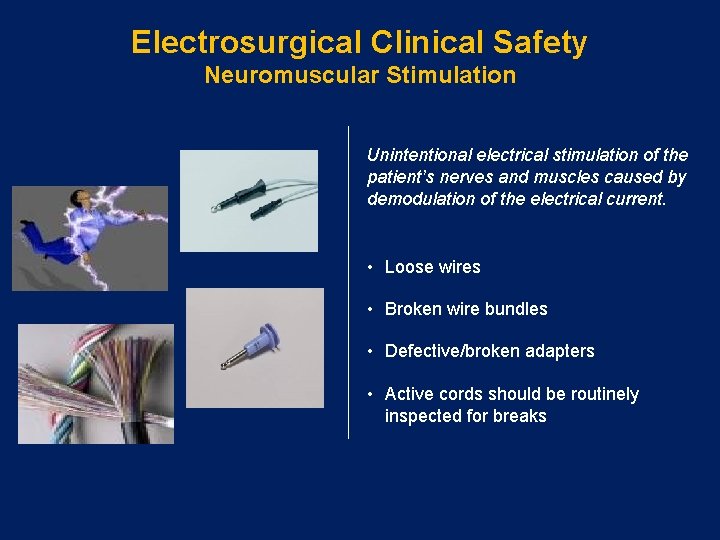
Electrosurgical Clinical Safety Neuromuscular Stimulation Unintentional electrical stimulation of the patient’s nerves and muscles caused by demodulation of the electrical current. • Loose wires • Broken wire bundles • Defective/broken adapters • Active cords should be routinely inspected for breaks
Summary • Electrosurgery and APC are useful therapeutic tools in GI endoscopy. • Clinical safety is enhanced when clinicians understand the basic principles and properties of electricity, Electrosurgery and APC, and how it is adapted for clinical use. • To insure optimal patient outcomes, nurses should adhere to the accepted current standards and recommended practices for clinical safety e. g. SGNA and AORN.
Copyright © 2011 ERBE USA, Inc. 2225 Northwest Pkwy Marietta, GA 30067 Tel: 800. 778. ERBE www. erbe-usa. com