
Use of Data for Monitoring Part C and





- Slides: 43
Use of Data for Monitoring Part C and 619 Debbie Cate, ECTA Krista Scott, DC 619 Bruce Bull, Da. Sy Consultant Improving Data, Improving Outcomes Washington, DC September 15 - 17, 2013 1
Session Agenda 672 months �Defining Monitoring �State Efforts �Resources �State Challenges �With opportunities for questions and smaller group discussion 35 months 9 months 21 months 2
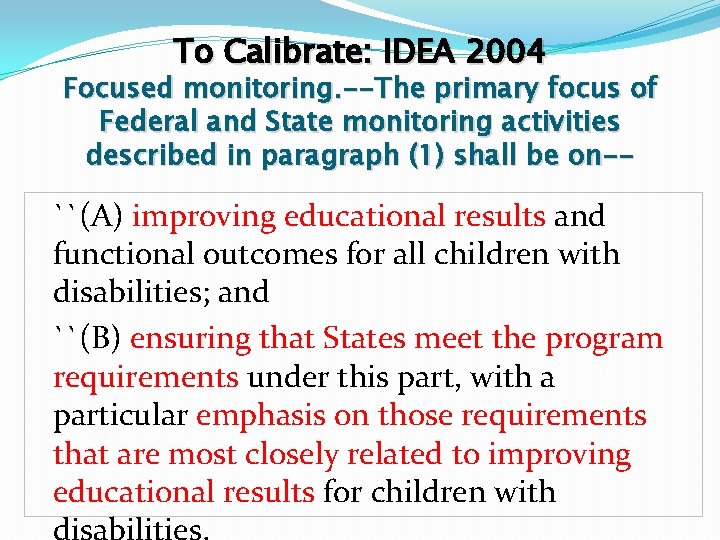
To Calibrate: IDEA 2004 Focused monitoring. --The primary focus of Federal and State monitoring activities described in paragraph (1) shall be on-- ``(A) improving educational results and functional outcomes for all children with disabilities; and ``(B) ensuring that States meet the program requirements under this part, with a particular emphasis on those requirements that are most closely related to improving educational results for children with
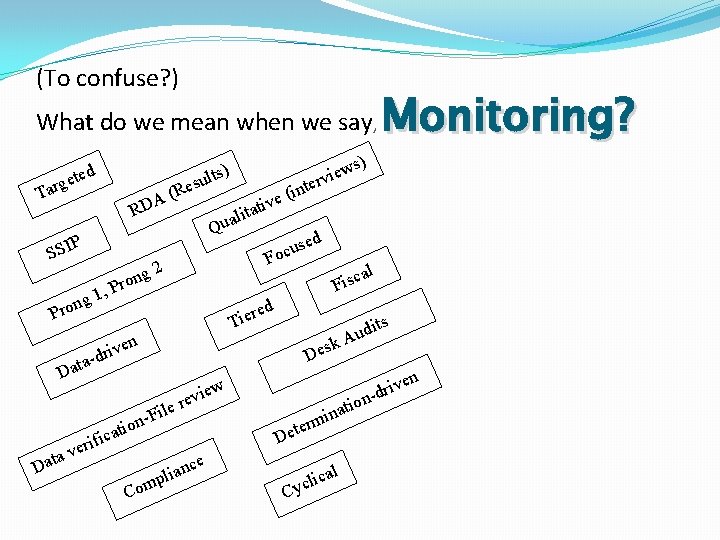
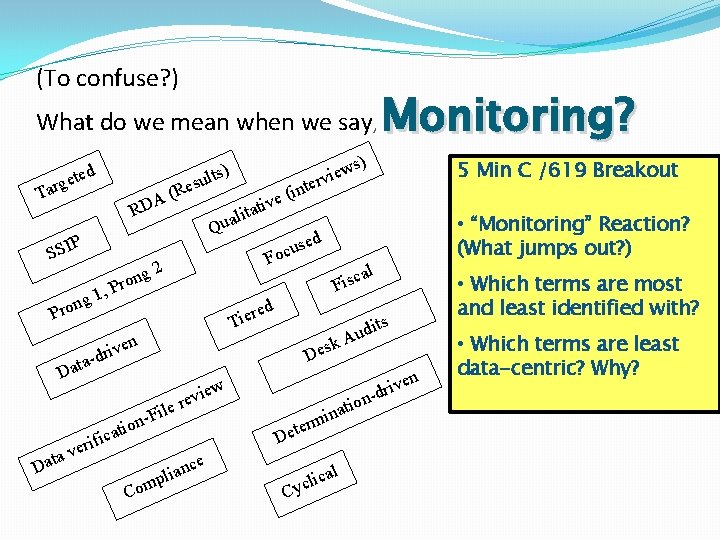
(To confuse? ) Monitoring? What do we mean when we say, ) ults d gete Res ( A Tar RD P SSI g ron P 1, ng o r P a ti sed u c Fo ica f i r e al Fisc ts k ve i r d - Des ile F on v r Com ce n a i pl i Aud en w evie ti a Dat int ( e v red e i T n Dat e lita a u Q 2 s) w e rvi atio n i rm e Det al lic c y C riv d n
(To confuse? ) Monitoring? What do we mean when we say, d gete Tar Res ( A D R P SSI , g 1 n Pro ) ults ng o r P a Dat ica f i r e al Fisc k Des ile F on v Com • Which terms are most and least identified with? i Aud en w evie r ce n a i pl • “Monitoring” Reaction? (What jumps out? ) ts ve i r d - ti a Dat sed u c Fo red e i T n 5 Min C /619 Breakout inte e( v i t a alit Qu 2 s) w e rvi atio n i rm e Det al lic c y C riv d n • Which terms are least data-centric? Why?
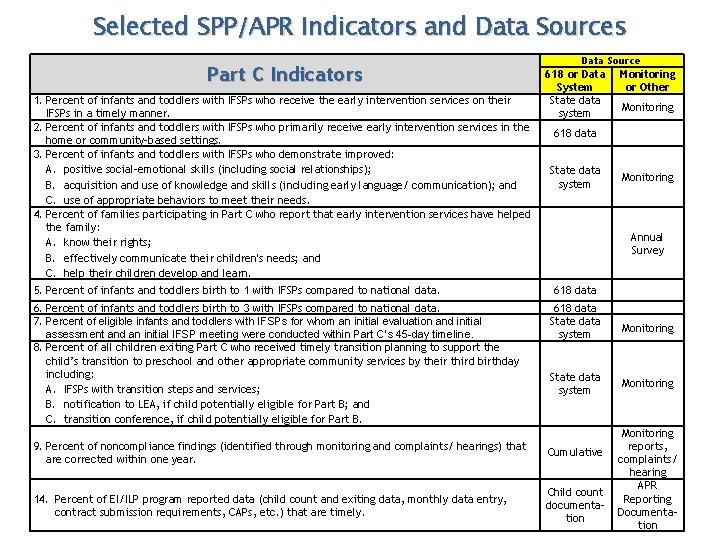
Selected SPP/APR Indicators and Data Sources Part C Indicators 1. Percent of infants and toddlers with IFSPs who receive the early intervention services on their IFSPs in a timely manner. 2. Percent of infants and toddlers with IFSPs who primarily receive early intervention services in the home or community-based settings. 3. Percent of infants and toddlers with IFSPs who demonstrate improved: A. positive social-emotional skills (including social relationships); B. acquisition and use of knowledge and skills (including early language/ communication); and C. use of appropriate behaviors to meet their needs. 4. Percent of families participating in Part C who report that early intervention services have helped the family: A. know their rights; B. effectively communicate their children's needs; and C. help their children develop and learn. 5. Percent of infants and toddlers birth to 1 with IFSPs compared to national data. 6. Percent of infants and toddlers birth to 3 with IFSPs compared to national data. 7. Percent of eligible infants and toddlers with IFSPs for whom an initial evaluation and initial assessment and an initial IFSP meeting were conducted within Part C’s 45 -day timeline. 8. Percent of all children exiting Part C who received timely transition planning to support the child’s transition to preschool and other appropriate community services by their third birthday including: A. IFSPs with transition steps and services; B. notification to LEA, if child potentially eligible for Part B; and C. transition conference, if child potentially eligible for Part B. Data Source 618 or Data Monitoring System or Other State data Monitoring system 618 data State data system Monitoring Annual Survey 618 data State data system 9. Percent of noncompliance findings (identified through monitoring and complaints/ hearings) that are corrected within one year. Cumulative 14. Percent of EI/ILP program reported data (child count and exiting data, monthly data entry, contract submission requirements, CAPs, etc. ) that are timely. Child count documentation Monitoring reports, complaints/ hearing APR Reporting Documentation
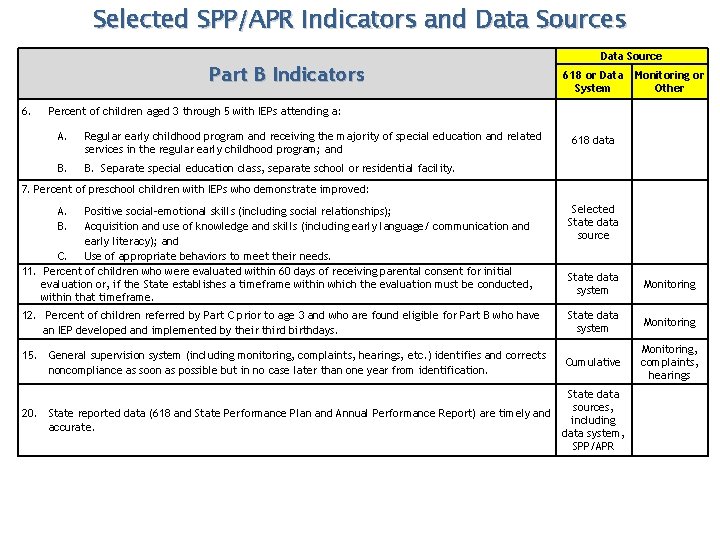
Selected SPP/APR Indicators and Data Sources Part B Indicators 6. Data Source 618 or Data System Monitoring or Other Percent of children aged 3 through 5 with IEPs attending a: A. Regular early childhood program and receiving the majority of special education and related services in the regular early childhood program; and B. Separate special education class, separate school or residential facility. 618 data 7. Percent of preschool children with IEPs who demonstrate improved: Positive social-emotional skills (including social relationships); Acquisition and use of knowledge and skills (including early language/ communication and early literacy); and C. Use of appropriate behaviors to meet their needs. 11. Percent of children who were evaluated within 60 days of receiving parental consent for initial evaluation or, if the State establishes a timeframe within which the evaluation must be conducted, within that timeframe. Selected State data source State data system Monitoring 12. Percent of children referred by Part C prior to age 3 and who are found eligible for Part B who have an IEP developed and implemented by their third birthdays. State data system Monitoring 15. General supervision system (including monitoring, complaints, hearings, etc. ) identifies and corrects noncompliance as soon as possible but in no case later than one year from identification. Cumulative Monitoring, complaints, hearings A. B. State data sources, 20. State reported data (618 and State Performance Plan and Annual Performance Report) are timely and including accurate. data system, SPP/APR
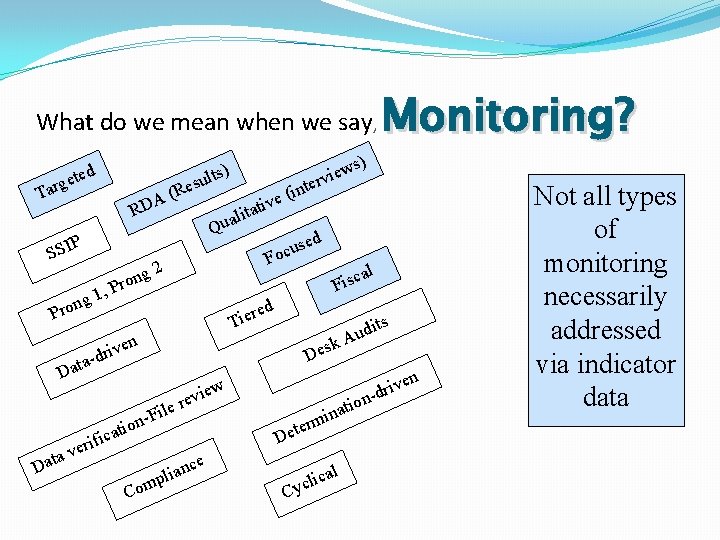
Monitoring? What do we mean when we say, ) ults d gete Res ( A Tar RD P SSI g ron P 1, ng o r P a Q 2 sed u c Fo ts k ve i r d - ica f i r e al Fisc red e i T Des ile F on v r Com ce n a i pl i Aud en w evie ti a Dat e int ( e v ati t i l ua n Dat s) w e rvi atio n i rm e Det al lic c y C riv d n Not all types of monitoring necessarily addressed via indicator data
�Questions/Comments Data sets, monitoring activities. �Next: State Sharing: Krista Scott, DC
DISTRICT OF COLUMBIA PART C MONITORING: HISTORY Housed in a larger Quality Assurance and Monitoring (QAM) Unit Monitor both contracted programs AND a state-run local program Initially, only onsite monitoring � Interviews, monitoring file reviews and no database
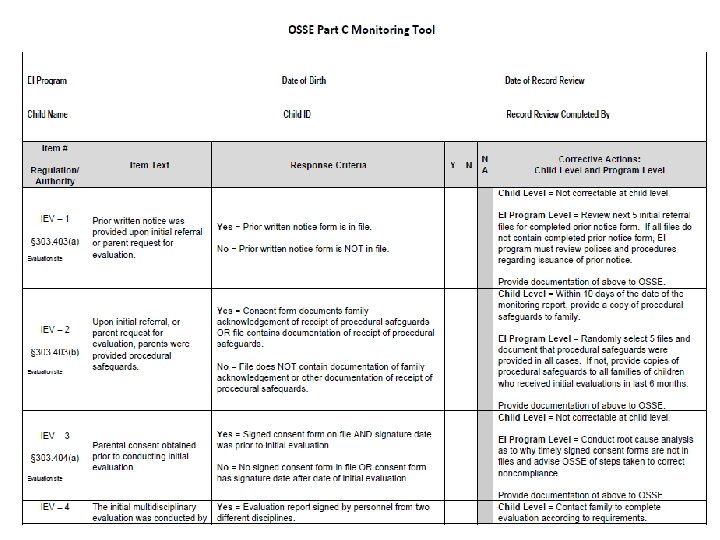
DISTRICT OF COLUMBIA PART C MONITORING: PRESENT AND FUTURE Bi-annual data reviews for compliance indicators Onsite monitoring � File review tool � Interview protocols that provide quantitative feedback of qualitative information for training and TA. Capacity to identify areas for focused monitoring; template for focused monitoring process that is customized to the topic area
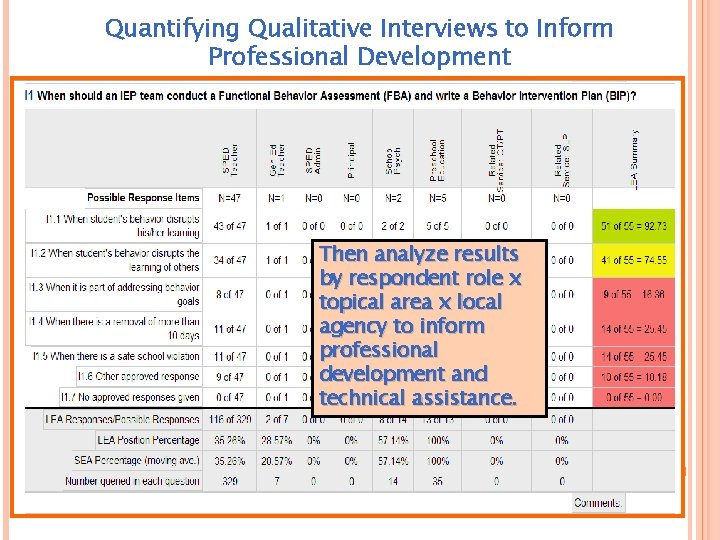
Quantifying Qualitative Interviews to Inform Professional Development Quantify interview collection by asking questions in such a way that you can track responses numerically.
Quantifying Qualitative Interviews to Inform Professional Development Then analyze results by respondent role x topical area x local agency to inform professional development and technical assistance.
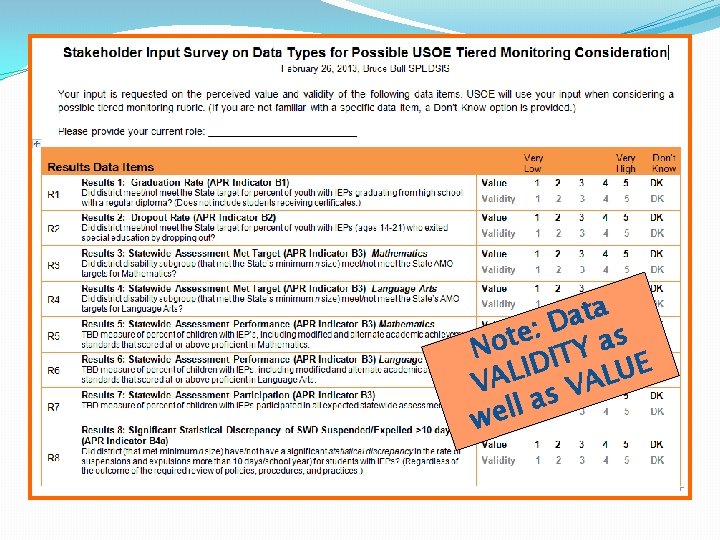
�Questions for Krista �Next: Process one state used to move to tiered monitoring incorporating stakeholder input on results, compliance, and other data sets. (Part B, 3 -21)
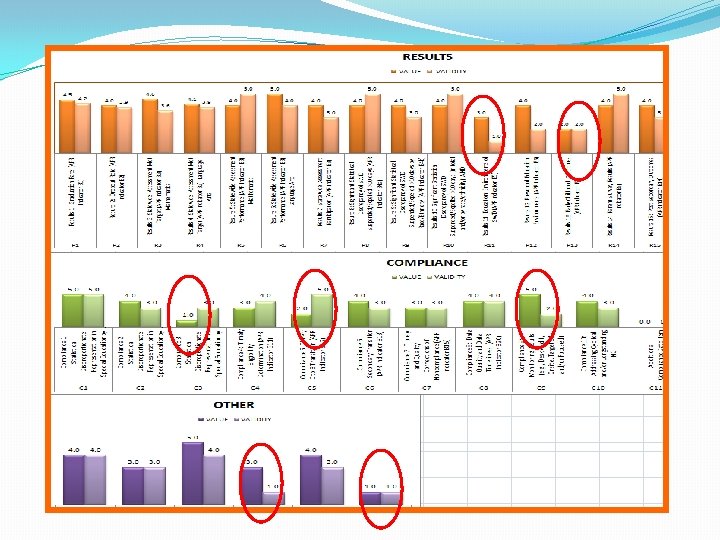
a t a D : e s t a No Y T I D E I U L L A A V V s a l l we
This state continues to monitor IDEA compliance, but has renewed focus on the impact of special education services on student results. IV. Intensive 1 -2% of LEAs III. In Depth 3 -5% of LEAs II. Targeted 5 -15% of LEAs I. Universal 75 -80% of LEAs This state has reconceptualized monitoring to better support LEA’s that must to increase perfor-mance of students with disabilities.
�Questions/Discuss: Tiered monitoring, data sets, determinations in relation to differentiated monitoring activities. �Next: Integrating Results Driven Accountability with SSIP. Beyond compliance a draft of model one state is considering.
TN: Results-Based Monitoring for Improvement T F A R D 20
TN’s Results-Based Monitoring for Improvement is an opportunity the Tennessee Early Intervention System is considering to update and align Part C work to the broader work of the TN DOE to increase performance of all students. RBMI takes advantage of TEIS location within TDOE to coordinate with 619 and Part B. 21
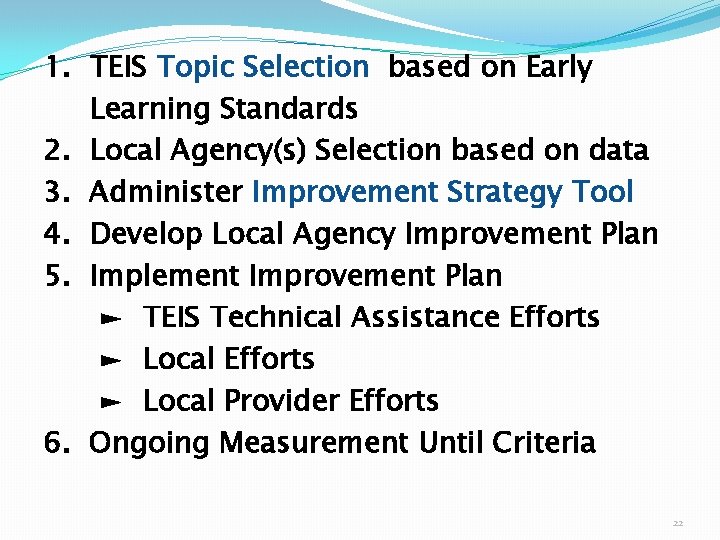
1. TEIS Topic Selection based on Early Learning Standards 2. Local Agency(s) Selection based on data 3. Administer Improvement Strategy Tool 4. Develop Local Agency Improvement Plan 5. Implement Improvement Plan ► TEIS Technical Assistance Efforts ► Local Provider Efforts 6. Ongoing Measurement Until Criteria 22
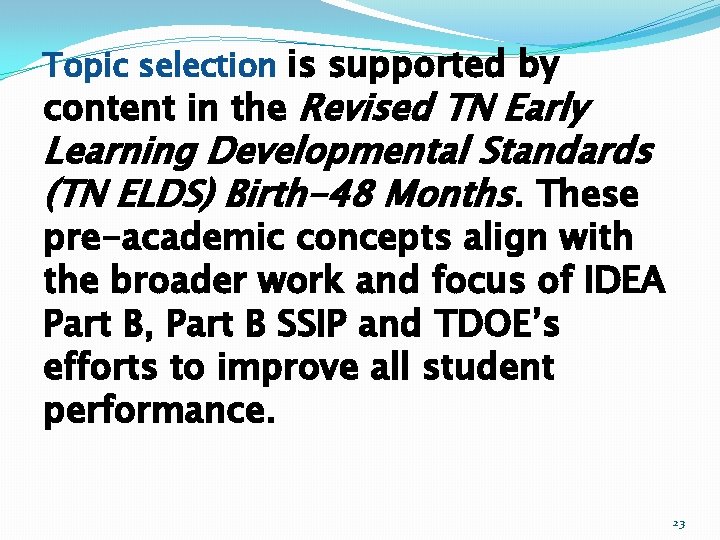
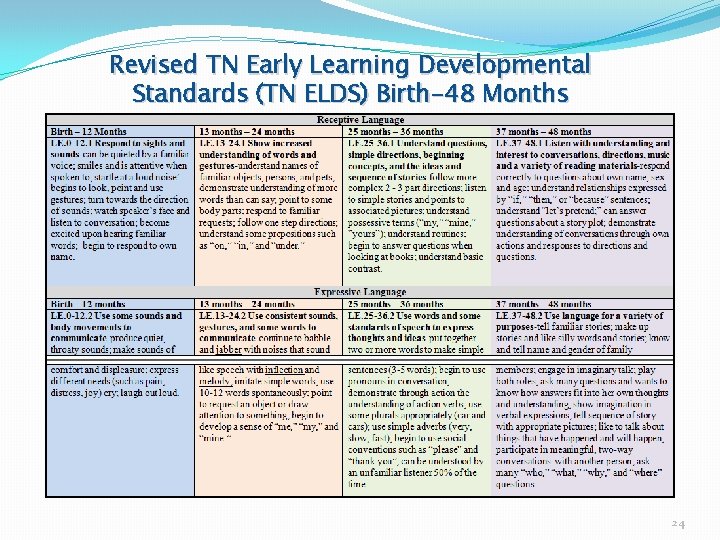
Topic selection is supported by content in the Revised TN Early Learning Developmental Standards (TN ELDS) Birth-48 Months. These pre-academic concepts align with the broader work and focus of IDEA Part B, Part B SSIP and TDOE’s efforts to improve all student performance. 23
Revised TN Early Learning Developmental Standards (TN ELDS) Birth-48 Months 24
�Qustions/Discuss RBMI, integrating Results Driven Accountability with SSIP. �Next: Other resources, Debbie Cate, ECTA
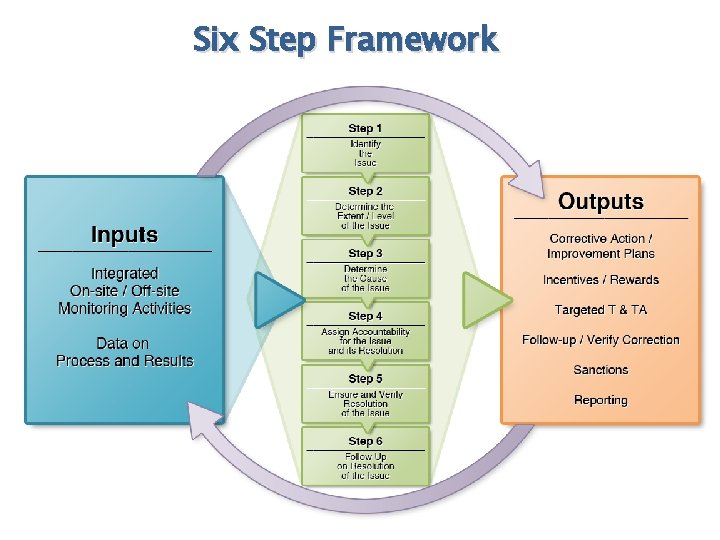
Six Step Framework
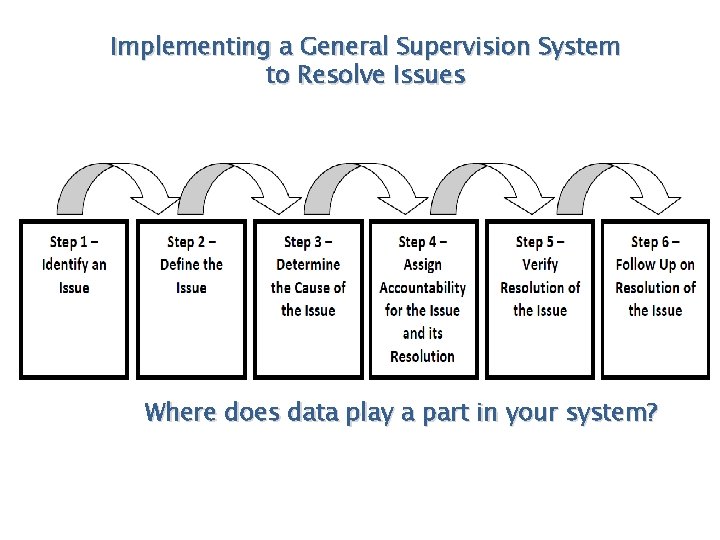
Implementing a General Supervision System to Resolve Issues Where does data play a part in your system?
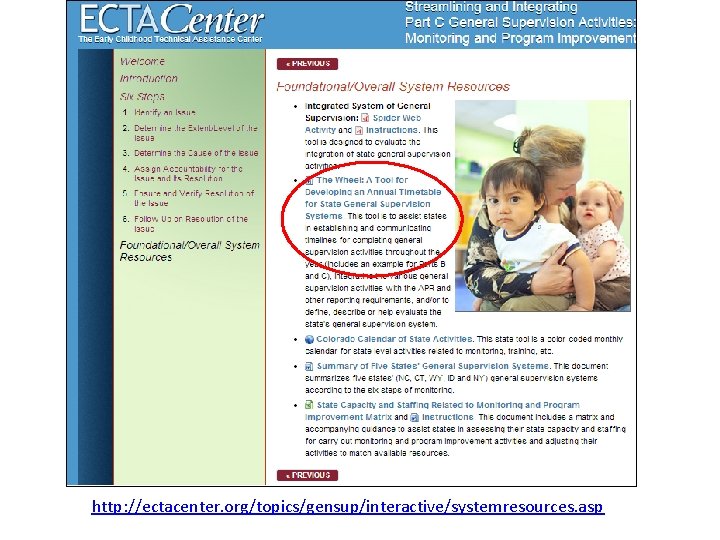
http: //ectacenter. org/topics/gensup/interactive/systemresources. asp
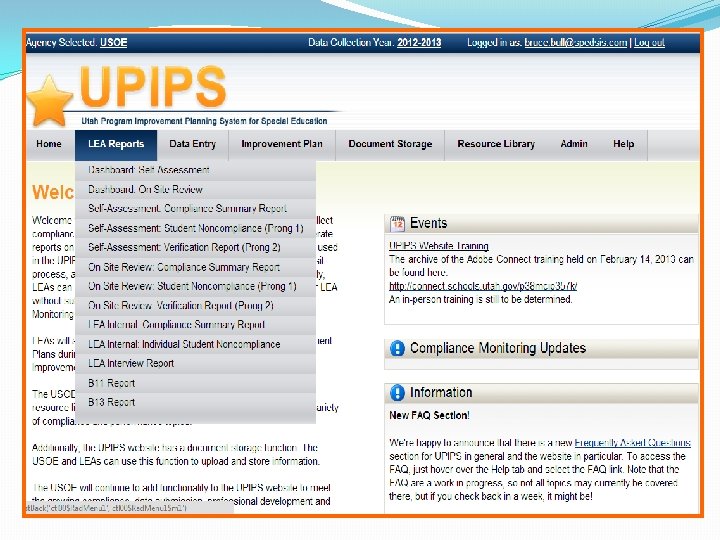
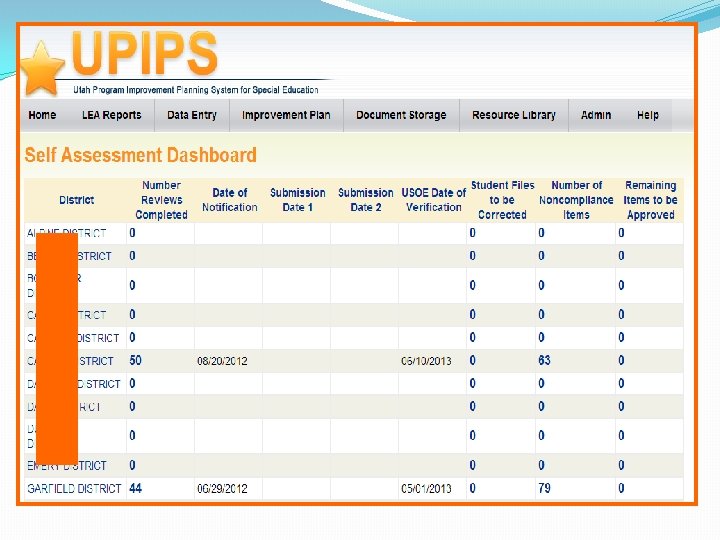
Screen shot here of above here. .
�Questions/Discuss Resources �Next Where is your monitoring heading?
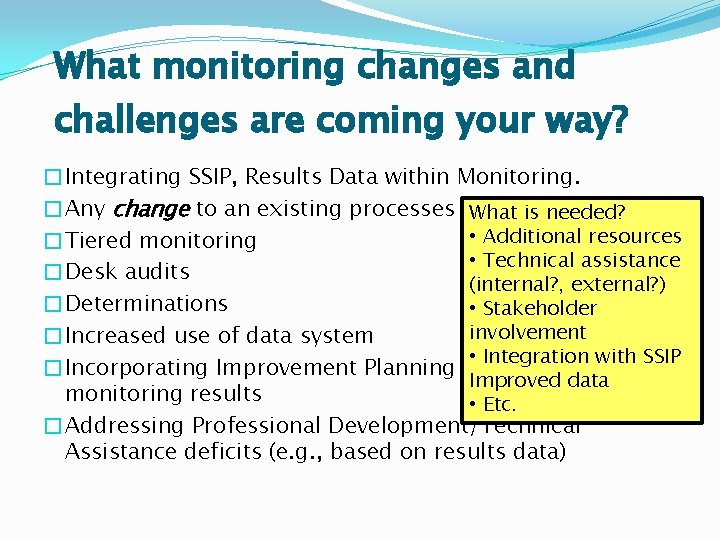
What monitoring changes and challenges are coming your way? �Integrating SSIP, Results Data within Monitoring. �Any change to an existing processes. What. . is needed? • Additional resources �Tiered monitoring • Technical assistance Breakout and Report �Desk audits (internal? , external? ) back to large group. �Determinations • Stakeholder involvement �Increased use of data system • Integration with SSIP �Incorporating Improvement Planning based on Improved data monitoring results • Etc. �Addressing Professional Development/Technical Assistance deficits (e. g. , based on results data)
. . . and they monitored happily ever after. The End
(Go ahead, contact us. ) Debbie Cate Debbie. Cate@unc. edu Krista Scott Krista. Scott@dc. gov Bruce Bull, Da. Sy Consultant Bruce. Bull@spedsis. com
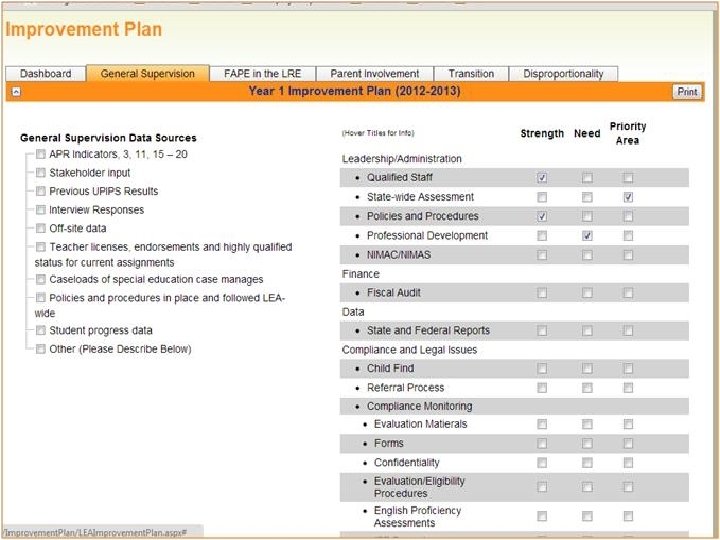
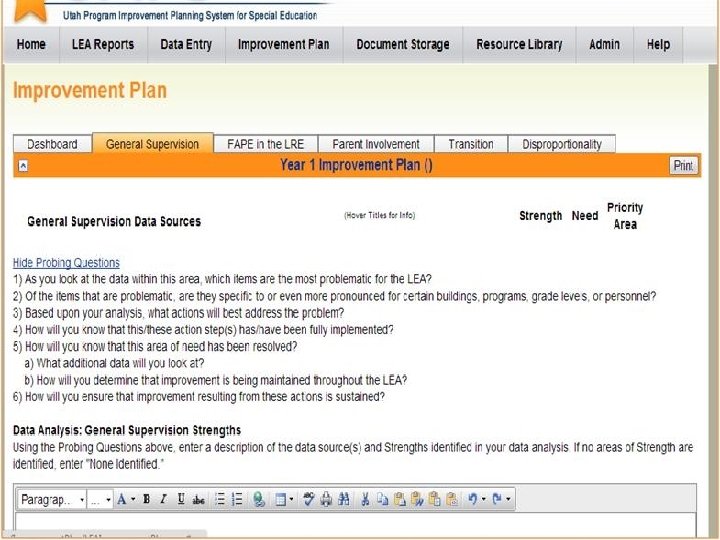
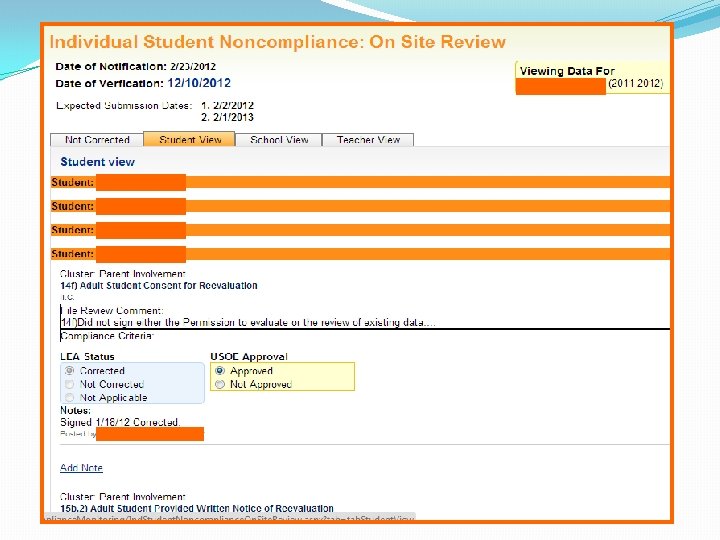
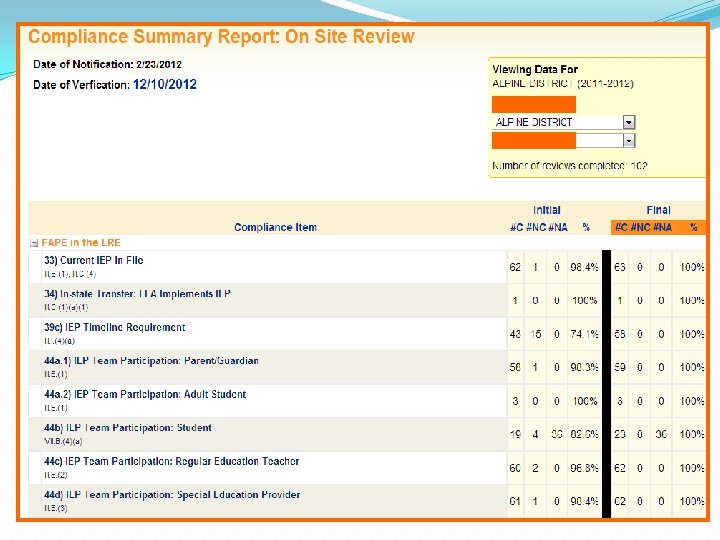
Appendices (possible reference during presentation) �Improvement Planning �Based on review of data �Priority needs established based on local review �Compliance Monitoring Collection and Management �View of tools to support compliance