
Use of CVS plot data to guide restoration
- Slides: 27
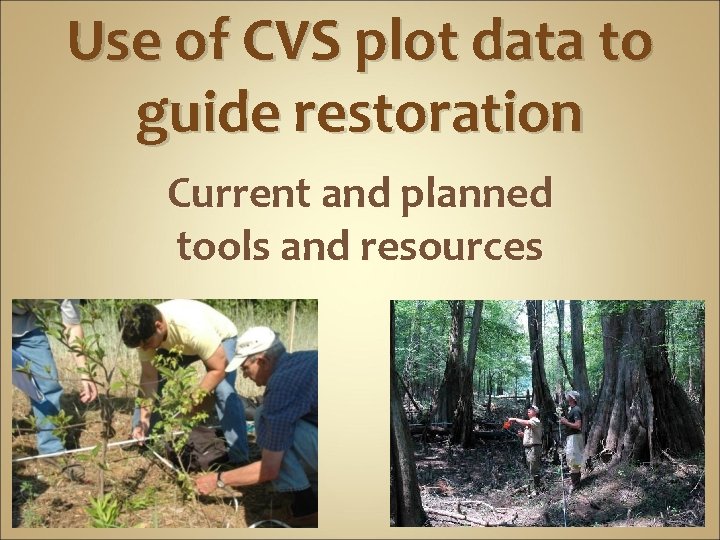
Use of CVS plot data to guide restoration Current and planned tools and resources
CVS team Project Leaders Robert Peet, UNC-CH Thomas Wentworth, NCSU Alan Weakley, NC Botanical Garden Michael Schafale, NC Natural Heritage Program Staff Forbes Boyle, Project Manager Michael Lee, Database Administrator
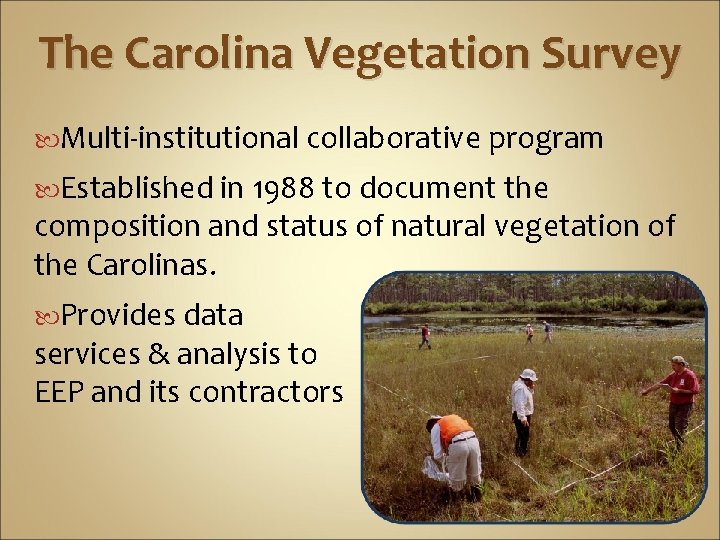
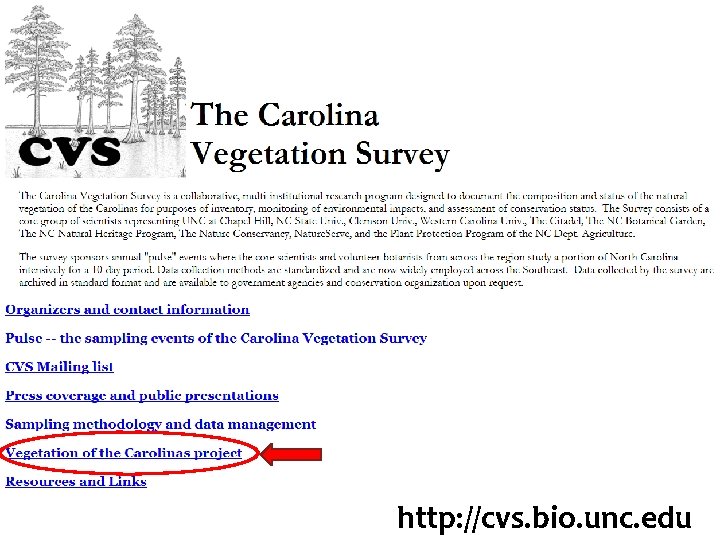
The Carolina Vegetation Survey Multi-institutional collaborative program Established in 1988 to document the composition and status of natural vegetation of the Carolinas. Provides data services & analysis to EEP and its contractors
CVS vision Public Carolina vegetation plot database Revision & documentation of the National Vegetation Classification (NVC) to better serve NC users Tools for identification and prediction of existing and potential vegetation Reference information on all vegetation types of the Carolinas
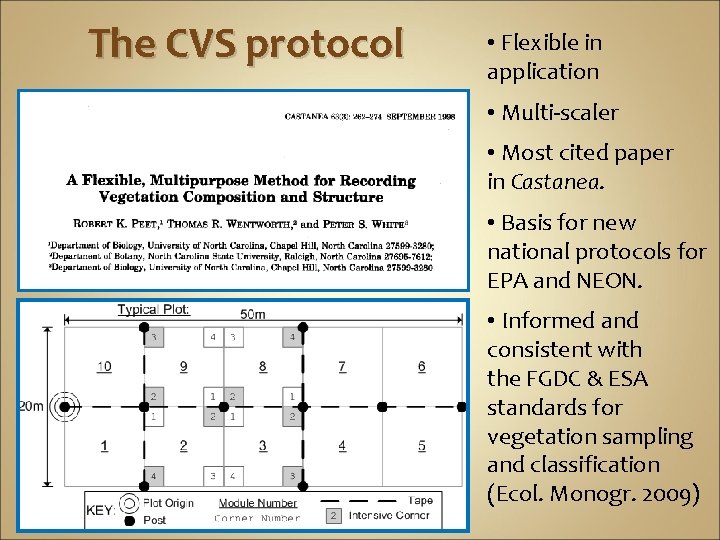
The CVS protocol • Flexible in application • Multi-scaler • Most cited paper in Castanea. • Basis for new national protocols for EPA and NEON. • Informed and consistent with the FGDC & ESA standards for vegetation sampling and classification (Ecol. Monogr. 2009)
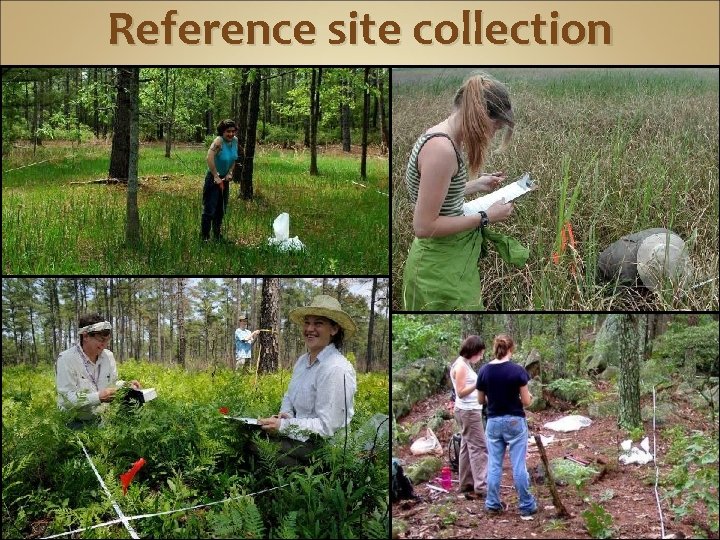
Reference site collection
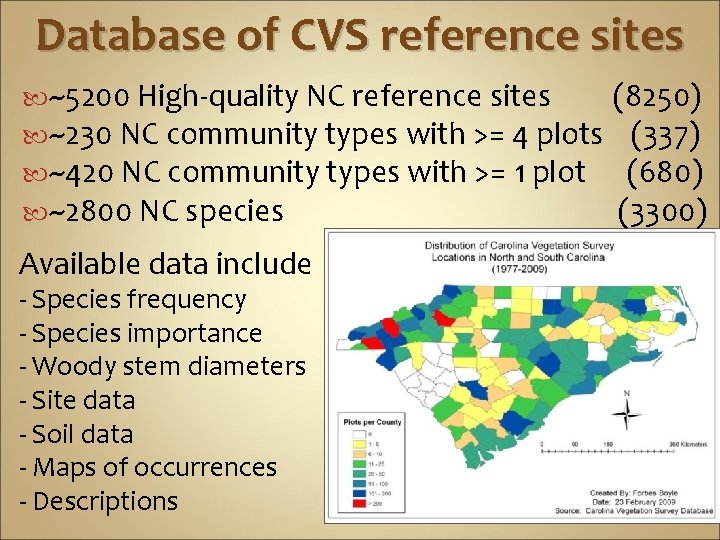
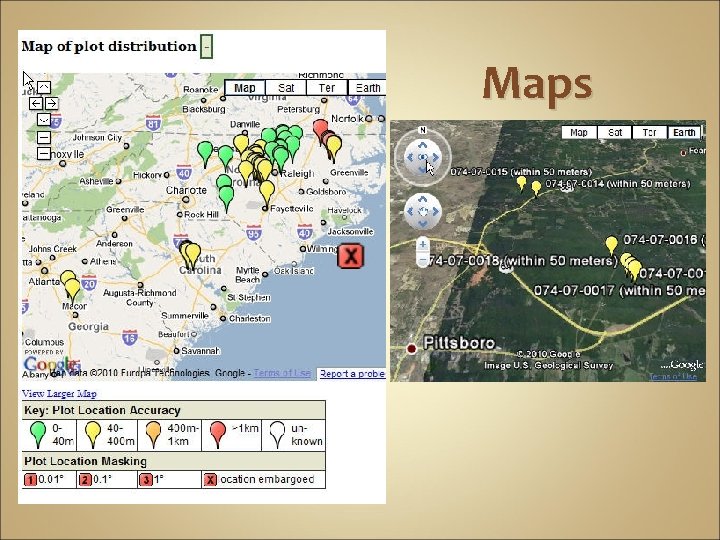
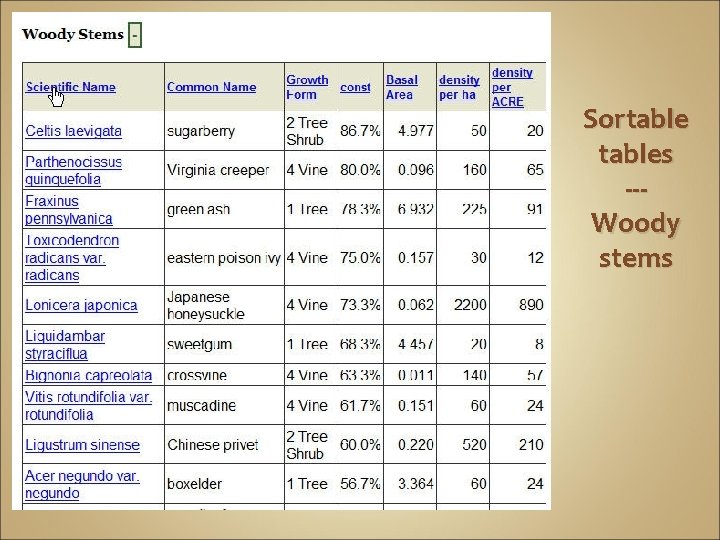
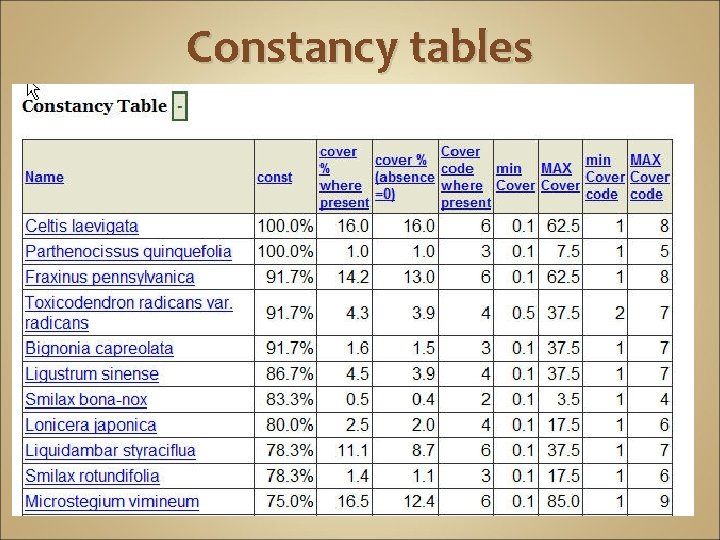
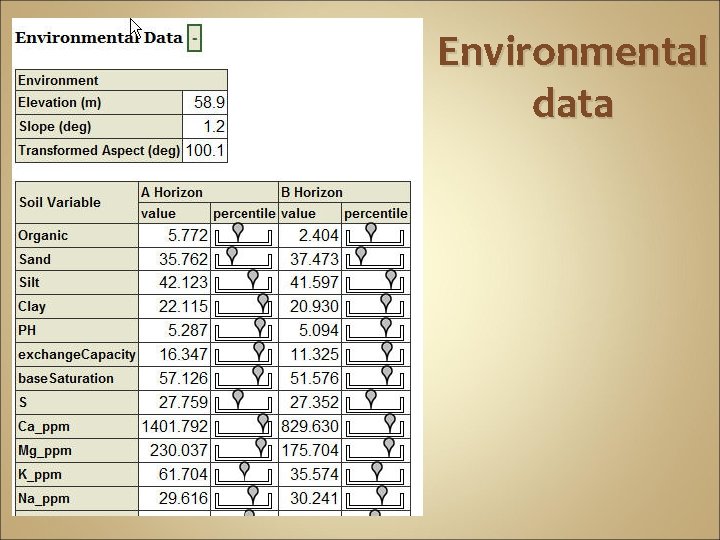
Database of CVS reference sites ~5200 High-quality NC reference sites ~230 NC community types with >= 4 plots ~420 NC community types with >= 1 plot ~2800 NC species Available data include - Species frequency - Species importance - Woody stem diameters - Site data - Soil data - Maps of occurrences - Descriptions (8250) (337) (680) (3300)
Restoration targets EEP contractors can use plot & NVC data to establish site-specific restoration targets. Cheaper and better than the traditional approach Growers can better predict material needs. EEP can better evaluate plans and anticipate significantly higher success.
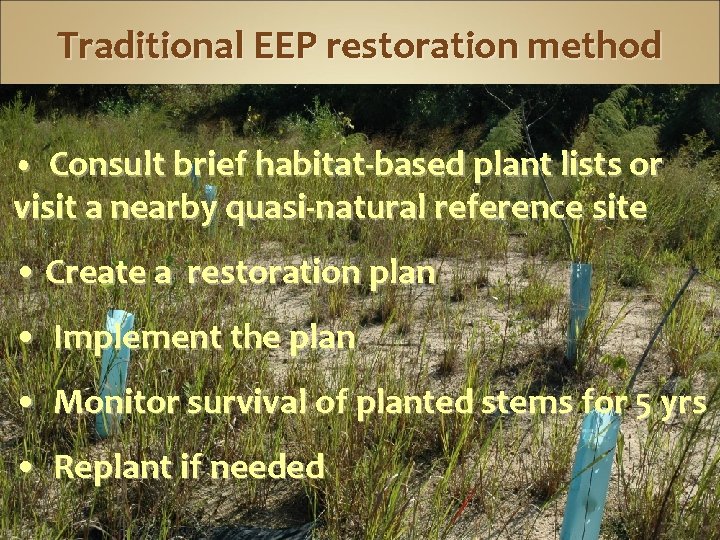
Traditional EEP restoration method • Consult brief habitat-based plant lists or visit a nearby quasi-natural reference site • Create a restoration plan • Implement the plan • Monitor survival of planted stems for 5 yrs • Replant if needed
CVS-EEP restoration protocol Exploit a broad array of reference plots to derive site-specific restoration targets (cheaper and more accurate) Design site-specific restoration plan (site variables increase likelihood of success) Implement the plan Monitor change and continuously predict likelihood of success Employ adaptive management along the way
Meaningful restoration targets Detailed, justifiable, & efficient generation of restoration targets. State-of-the-art predictions that satisfy the most stringent current and future restoration guidelines.
Better, cheaper, more defendable restoration targets Phase 1 – Web tool for documenting reference conditions by NVC types (partially implemented). Phase 2 – Constrain NVC types and plots by geographic region (in development). Phase 3 – Web tool for predicting a target from site conditions (prototype complete -- future development).
http: //cvs. bio. unc. edu
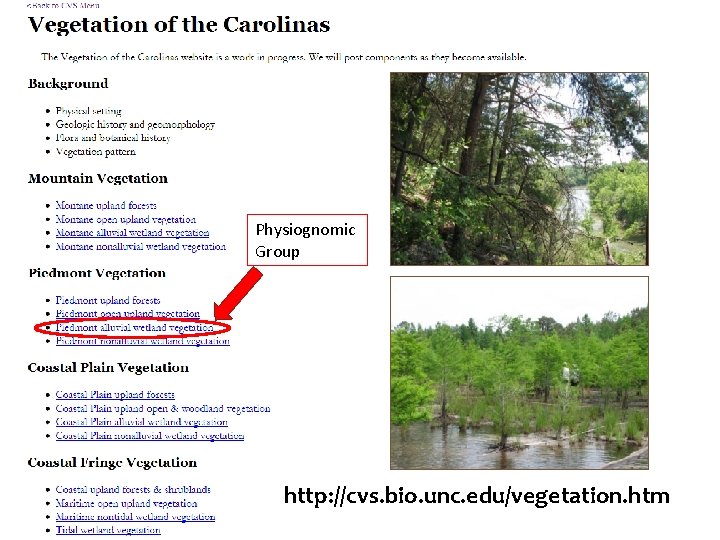
Physiognomic Group http: //cvs. bio. unc. edu/vegetation. htm
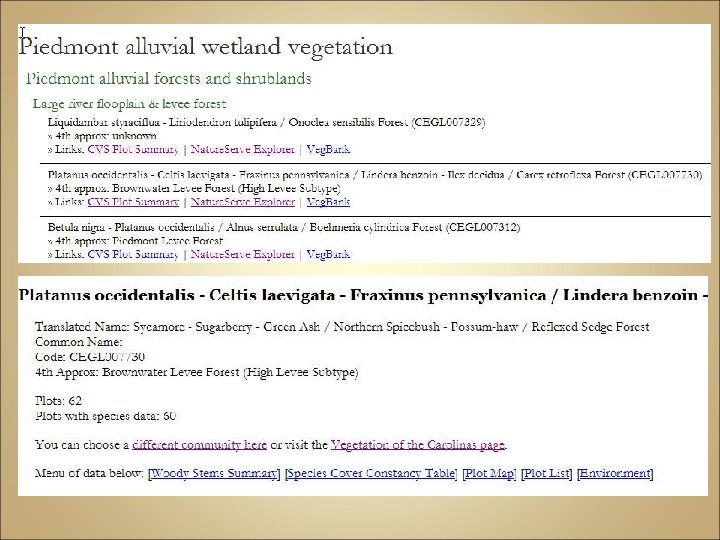
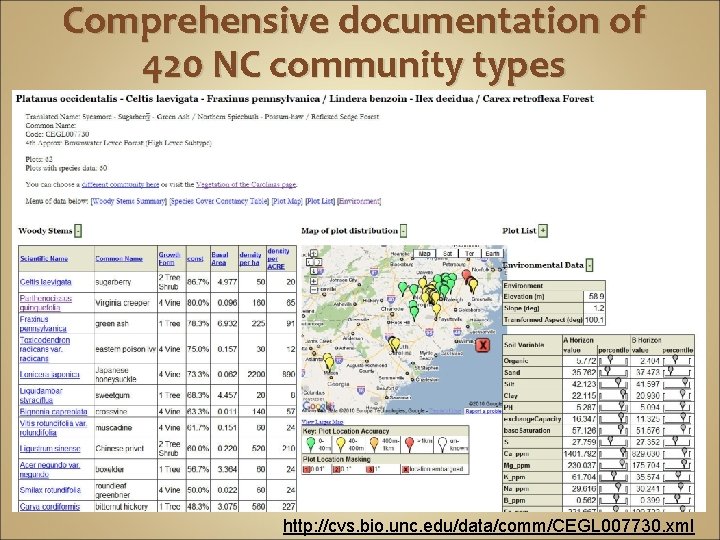
Comprehensive documentation of 420 NC community types http: //cvs. bio. unc. edu/data/comm/CEGL 007730. xml
Maps
Sortables --Woody stems
Constancy tables
Environmental data
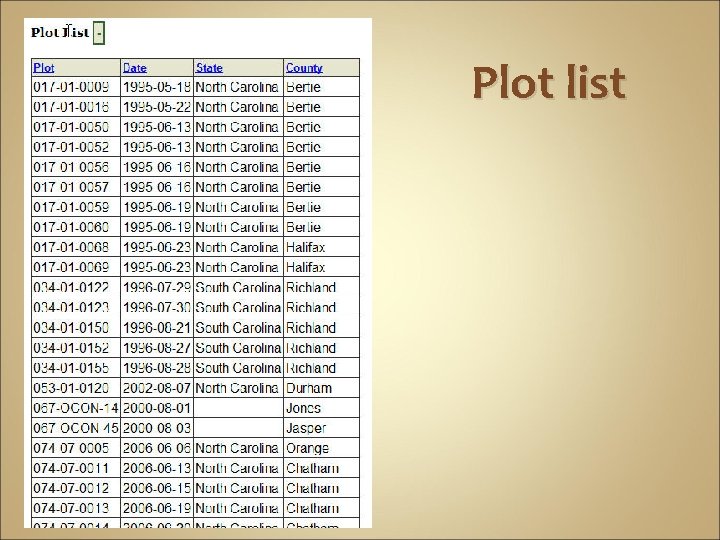
Plot list
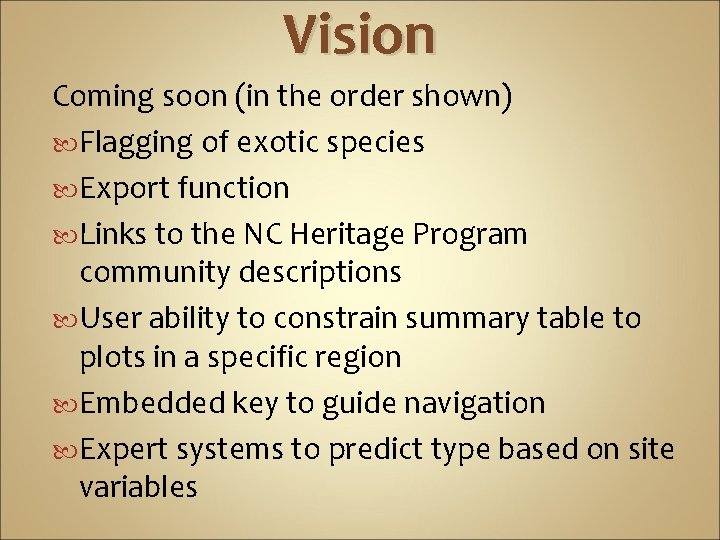
Vision Coming soon (in the order shown) Flagging of exotic species Export function Links to the NC Heritage Program community descriptions User ability to constrain summary table to plots in a specific region Embedded key to guide navigation Expert systems to predict type based on site variables
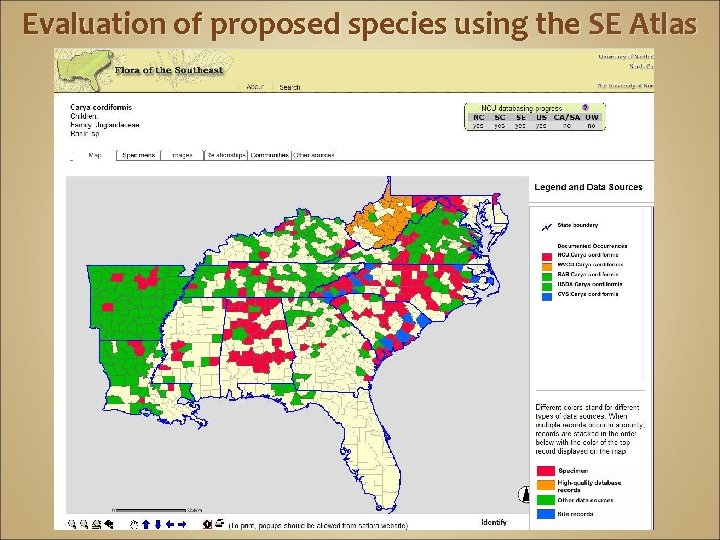
Evaluation of proposed species using the SE Atlas
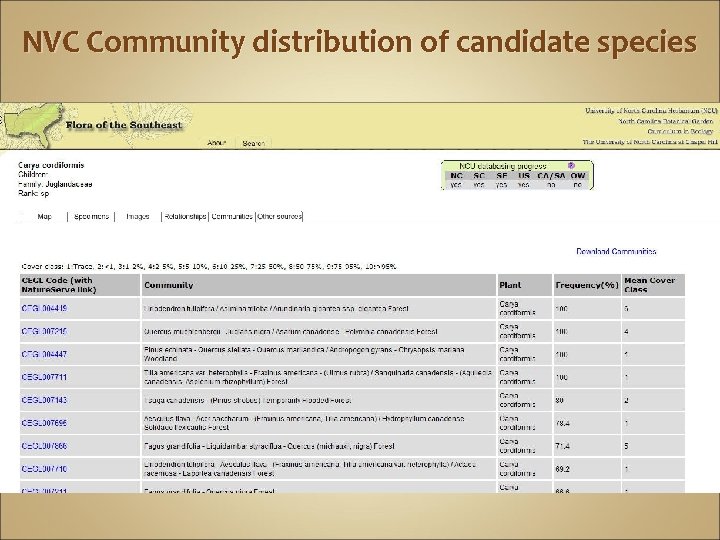
NVC Community distribution of candidate species
Tools to select and evaluate plant materials CVS proposes to develop a tool that draws on multiple datasets to aid in selection and evaluation of species for planting designs. This will help: Design firms in selecting planting materials, EEP in evaluating proposed planting materials, Growers to better predict demand.
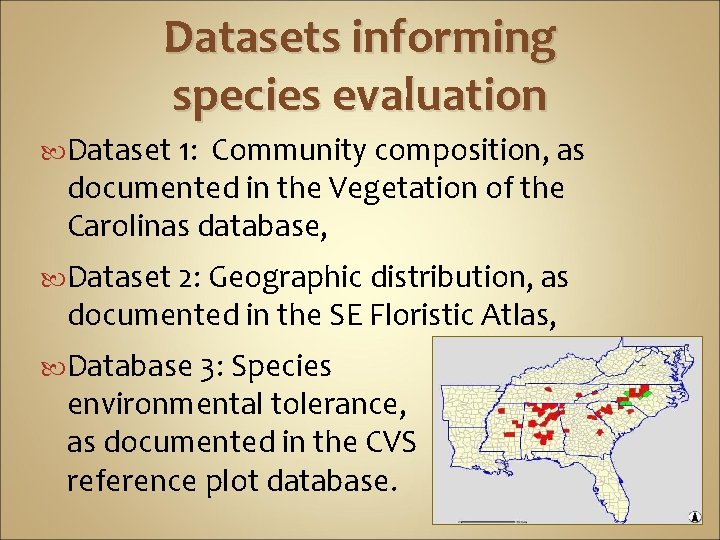
Datasets informing species evaluation Dataset 1: Community composition, as documented in the Vegetation of the Carolinas database, Dataset 2: Geographic distribution, as documented in the SE Floristic Atlas, Database 3: Species environmental tolerance, as documented in the CVS reference plot database.
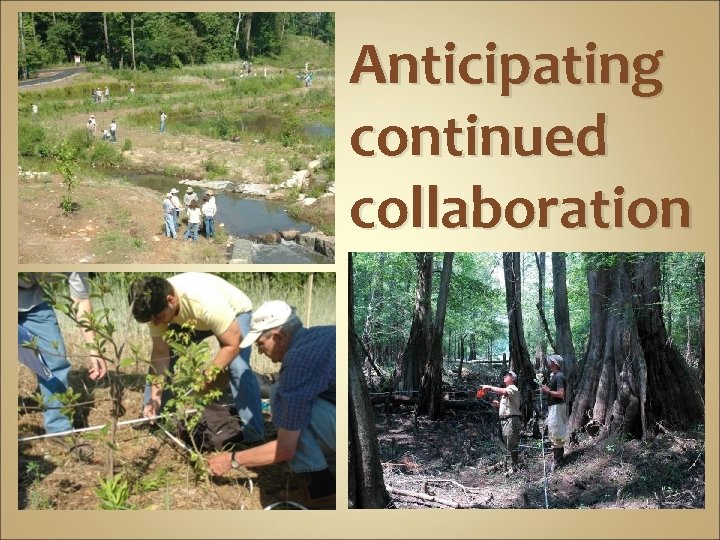
Anticipating continued collaboration