
Use of Components and Agents in WebBased Simulation
Use of Components and Agents in Web-Based Simulation Perakath Benjamin pbenjamin@kbsi. com www. kbsi. com Knowledge Based Systems, Inc. “Innovative Ideas and Technologies”
Position Web-Based Simulation Benefits From Component Technology (Near Term) and Agent Technology (Medium Term)
Outline z Web-based simulation z Challenges and opportunities z The component technology opportunity y Component-based software development y Role of components in web simulation z The agent technology opportunity y Agent software technology y Role of agents in web-based simulation z Potential benefits z Future challenges and research opportunities
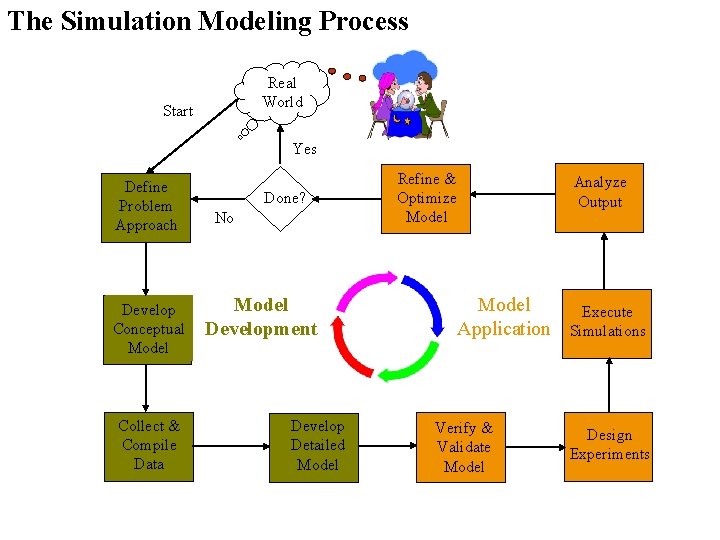
The Simulation Modeling Process Real World Start Yes Define Problem Approach Develop Conceptual Model Collect & Compile Data Done? No Model Development Develop Detailed Model Refine & Optimize Model Analyze Output Model Application Verify & Validate Model Execute Simulations Design Experiments
Problems and Opportunities z Simulation modeling is expert-dependent y expensive y distributed y collaborative z Absence of simulation knowledge management y domain knowledge and simulation knowledge xcapture, representation, and re-use y failure to exploit rationale and experience between projects y lack of inter-operability between multiple tools z Aging commercial simulation tools y no fundamental change over the last two decades x- monolithic, non-composable, inflexible, non adapting
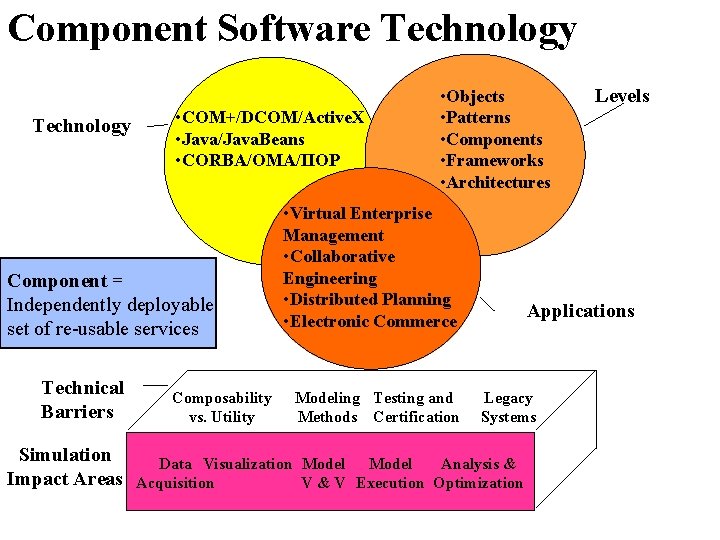
Component Software Technology • COM+/DCOM/Active. X • Java/Java. Beans • CORBA/OMA/IIOP Component = Independently deployable set of re-usable services Technical Barriers Simulation Impact Areas Composability vs. Utility • Objects • Patterns • Components • Frameworks • Architectures • Virtual Enterprise Management • Collaborative Engineering • Distributed Planning • Electronic Commerce Modeling Testing and Methods Certification Levels Applications Legacy Systems Data Visualization Model Analysis & Acquisition V & V Execution Optimization
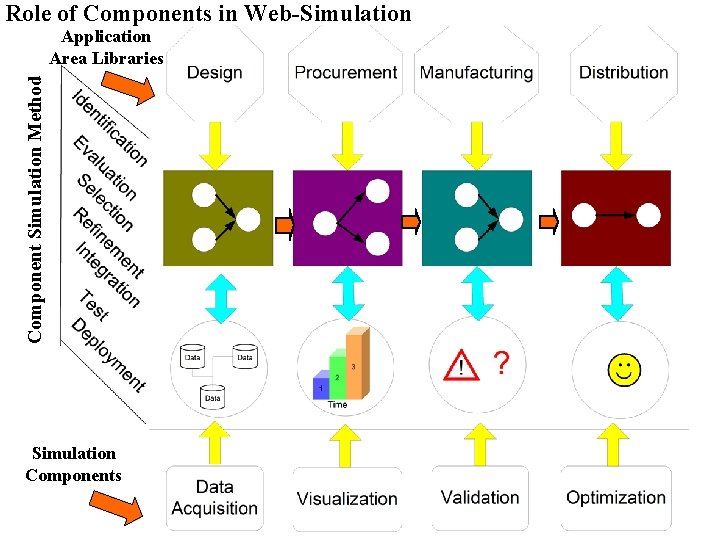
Role of Components in Web-Simulation Component Simulation Method Application Area Libraries Simulation Components

Agent Software Technology Properties Agent = An autonomous software entity that can communicate and interact with the environment and with other agents Technical Barriers Simulation Impact Areas • Collaborative • Interface • Information • Mobile • Reactive • Hybrid • Smart • Autonomy • Cooperation • Learning • Knowledge sharing • Reasoning • Planning • Mobility • Personal Assistants • Entertainment • Collaborative Work • Economic Modeling • Monitoring Knowledge Legacy Ontology Discovery Systems Model Data Model Design Management V & V Types Applications Reasoning, Monitoring Coordination Model Analysis & Execution Optimization
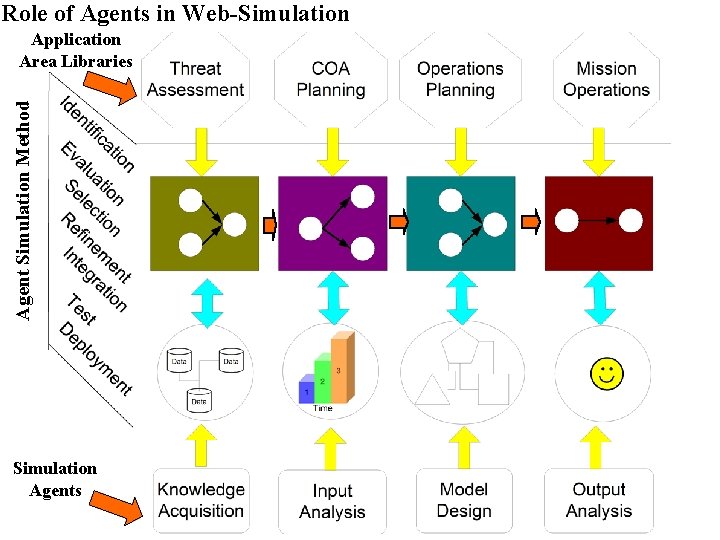
Role of Agents in Web-Simulation Agent Simulation Method Application Area Libraries Simulation Agents
Potential Benefits z Distributed Modeling z Global Resource Exploitation z Modeling Agility z Robustness z Low Life Cycle Costs z Effective Knowledge Management z Rationale Capture and Re-use
Challenges z Knowledge sharing y Semantic interoperability y Shared ontologies z Composability vs. utility z Learning, cooperation, control z Legacy systems z Standards and languages z Lack of technology readiness y Components more mature than agents z Need for industry and research initiatives y Problem->Solution and Solution->Problem
Opportunities z Need paradigm shift within simulation modeling community y Learn from HLA, components, agents z Architecture, frameworks, and methods z Standards and languages z Component and agent simulation development tools z Simulation knowledge libraries y Build and sell z Components and agents y Build and sell
- Slides: 12