
USE OF ACUTE HEPATITIS SURVEILLANCE TO EVALUATE PROGRAM
- Slides: 26
USE OF ACUTE HEPATITIS SURVEILLANCE TO EVALUATE PROGRAM FOR VIRAL HEPATITIS PREVENTION AND CONTROL Central Asian Program, DIH, EPO, CDC
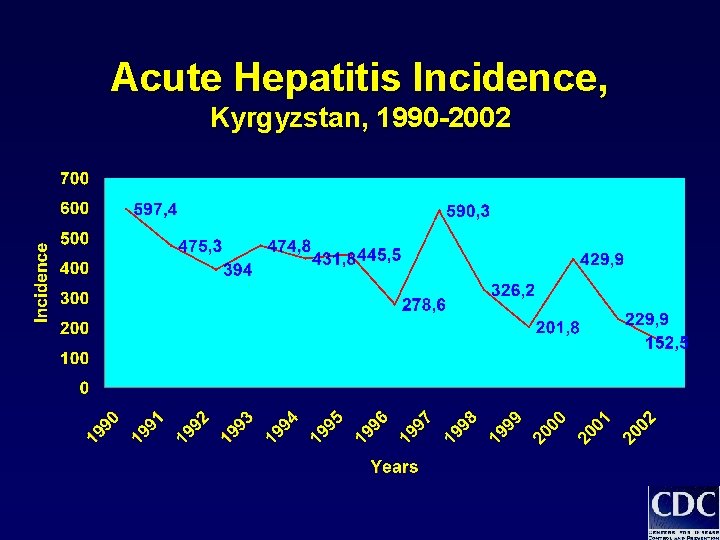
Acute Hepatitis Incidence, Kyrgyzstan, 1990 -2002
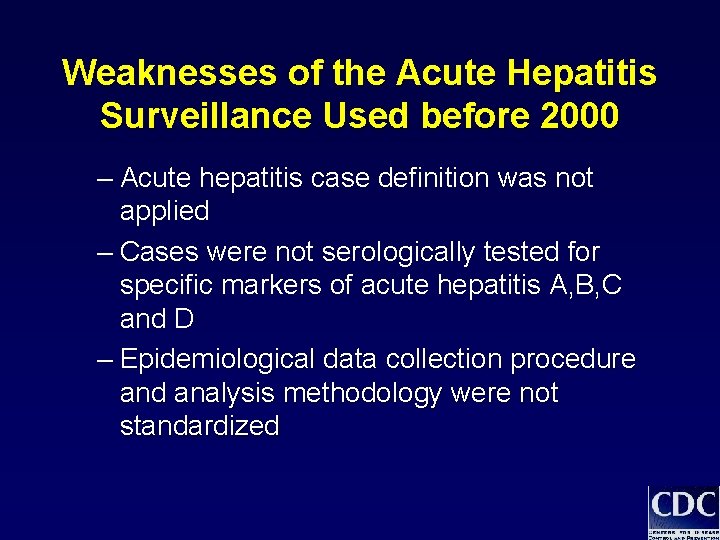
Weaknesses of the Acute Hepatitis Surveillance Used before 2000 – Acute hepatitis case definition was not applied – Cases were not serologically tested for specific markers of acute hepatitis A, B, C and D – Epidemiological data collection procedure and analysis methodology were not standardized
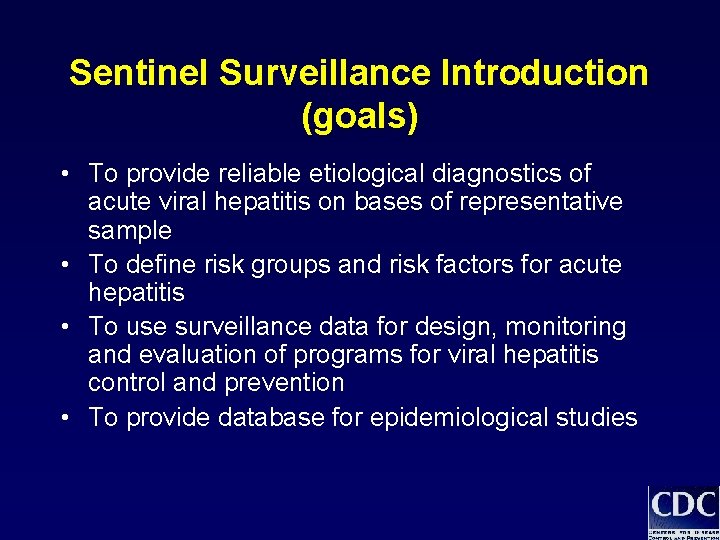
Sentinel Surveillance Introduction (goals) • To provide reliable etiological diagnostics of acute viral hepatitis on bases of representative sample • To define risk groups and risk factors for acute hepatitis • To use surveillance data for design, monitoring and evaluation of programs for viral hepatitis control and prevention • To provide database for epidemiological studies
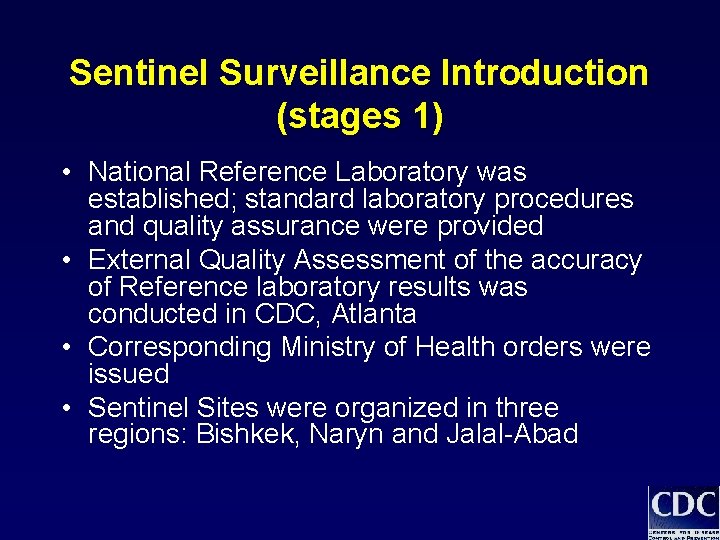
Sentinel Surveillance Introduction (stages 1) • National Reference Laboratory was established; standard laboratory procedures and quality assurance were provided • External Quality Assessment of the accuracy of Reference laboratory results was conducted in CDC, Atlanta • Corresponding Ministry of Health orders were issued • Sentinel Sites were organized in three regions: Bishkek, Naryn and Jalal-Abad
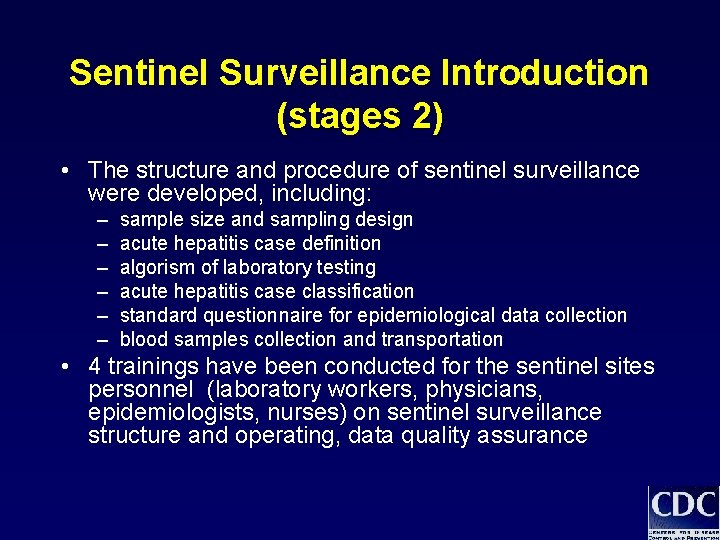
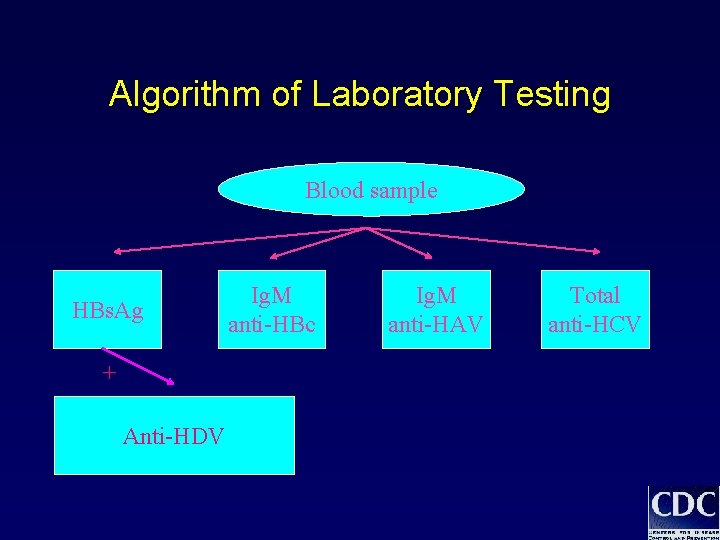
Sentinel Surveillance Introduction (stages 2) • The structure and procedure of sentinel surveillance were developed, including: – – – sample size and sampling design acute hepatitis case definition algorism of laboratory testing acute hepatitis case classification standard questionnaire for epidemiological data collection blood samples collection and transportation • 4 trainings have been conducted for the sentinel sites personnel (laboratory workers, physicians, epidemiologists, nurses) on sentinel surveillance structure and operating, data quality assurance
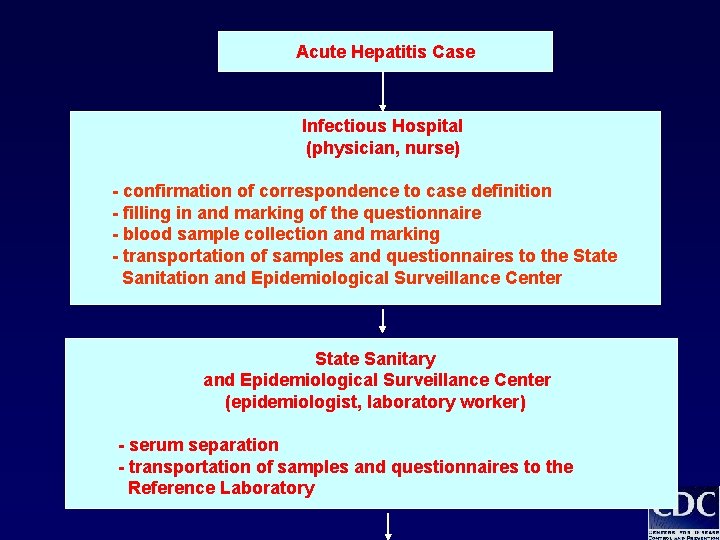
Acute Hepatitis Case Infectious Hospital (physician, nurse) - confirmation of correspondence to case definition - filling in and marking of the questionnaire - blood sample collection and marking - transportation of samples and questionnaires to the State Sanitation and Epidemiological Surveillance Center State Sanitary and Epidemiological Surveillance Center (epidemiologist, laboratory worker) - serum separation - transportation of samples and questionnaires to the Reference Laboratory
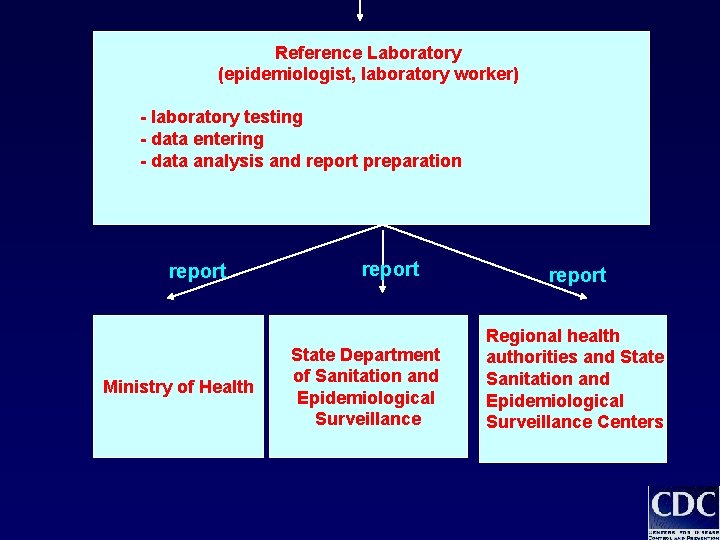
Reference Laboratory (epidemiologist, laboratory worker) - laboratory testing - data entering - data analysis and report preparation report Ministry of Health report State Department of Sanitation and Epidemiological Surveillance report Regional health authorities and State Sanitation and Epidemiological Surveillance Centers
Algorithm of Laboratory Testing Blood sample HBs. Ag + Anti-HDV Ig. M anti-HBc Ig. M anti-HAV Total anti-HCV
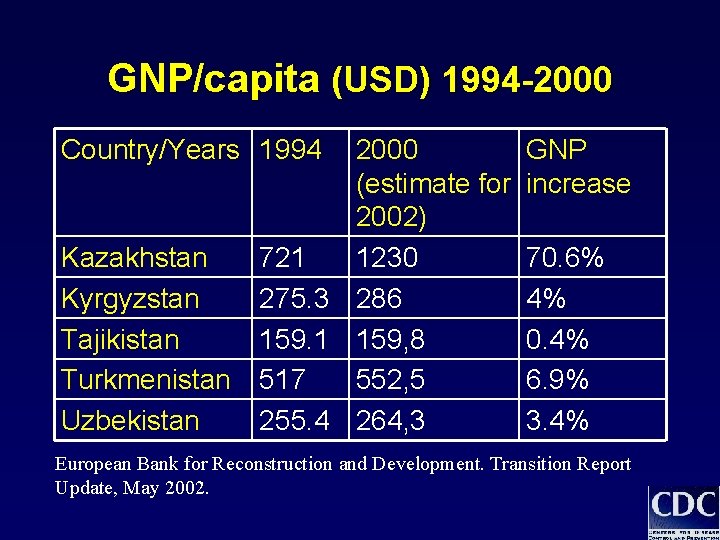
GNP/capita (USD) 1994 -2000 Country/Years 1994 2000 (estimate for 2002) 721 1230 275. 3 286 159. 1 159, 8 517 552, 5 255. 4 264, 3 GNP increase Kazakhstan Kyrgyzstan Tajikistan Turkmenistan Uzbekistan 70. 6% 4% 0. 4% 6. 9% 3. 4% European Bank for Reconstruction and Development. Transition Report Update, May 2002.
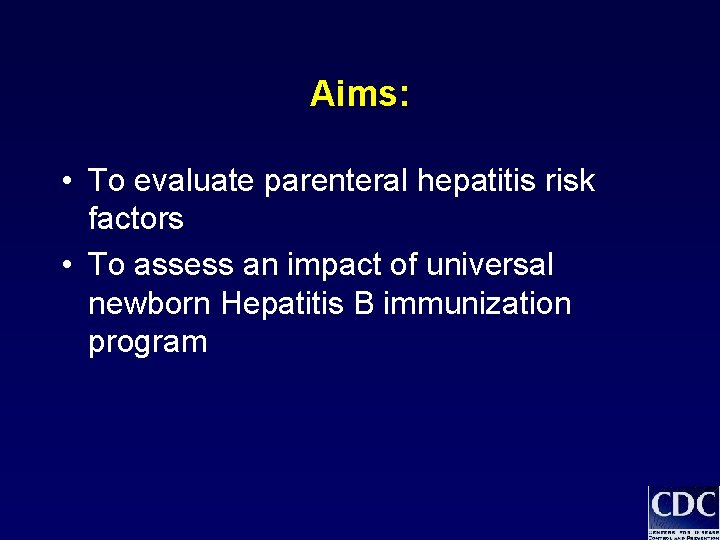
Aims: • To evaluate parenteral hepatitis risk factors • To assess an impact of universal newborn Hepatitis B immunization program
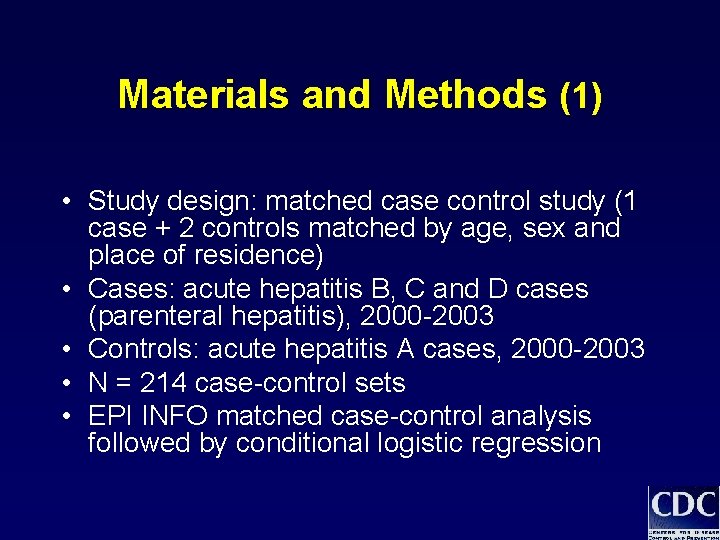
Materials and Methods (1) • Study design: matched case control study (1 case + 2 controls matched by age, sex and place of residence) • Cases: acute hepatitis B, C and D cases (parenteral hepatitis), 2000 -2003 • Controls: acute hepatitis A cases, 2000 -2003 • N = 214 case-control sets • EPI INFO matched case-control analysis followed by conditional logistic regression
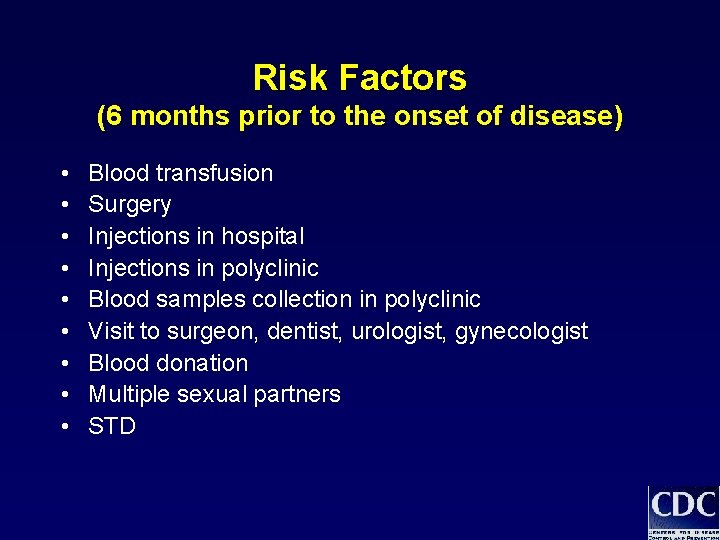
Risk Factors (6 months prior to the onset of disease) • • • Blood transfusion Surgery Injections in hospital Injections in polyclinic Blood samples collection in polyclinic Visit to surgeon, dentist, urologist, gynecologist Blood donation Multiple sexual partners STD
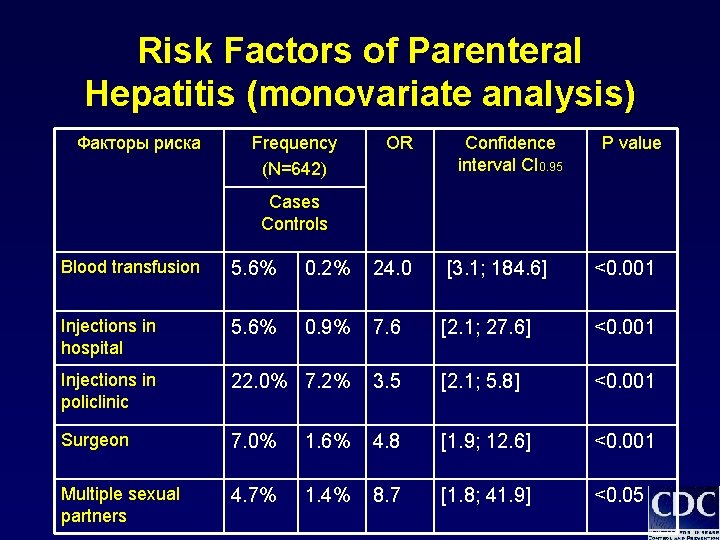
Risk Factors of Parenteral Hepatitis (monovariate analysis) Факторы риска Frequency (N=642) OR Confidence interval СI 0. 95 P value Cases Controls Blood transfusion 5. 6% 0. 2% 24. 0 [3. 1; 184. 6] <0. 001 Injections in hospital 5. 6% 0. 9% 7. 6 [2. 1; 27. 6] <0. 001 Injections in policlinic 22. 0% 7. 2% 3. 5 [2. 1; 5. 8] <0. 001 Surgeon 7. 0% 1. 6% 4. 8 [1. 9; 12. 6] <0. 001 Multiple sexual partners 4. 7% 1. 4% 8. 7 [1. 8; 41. 9] <0. 05
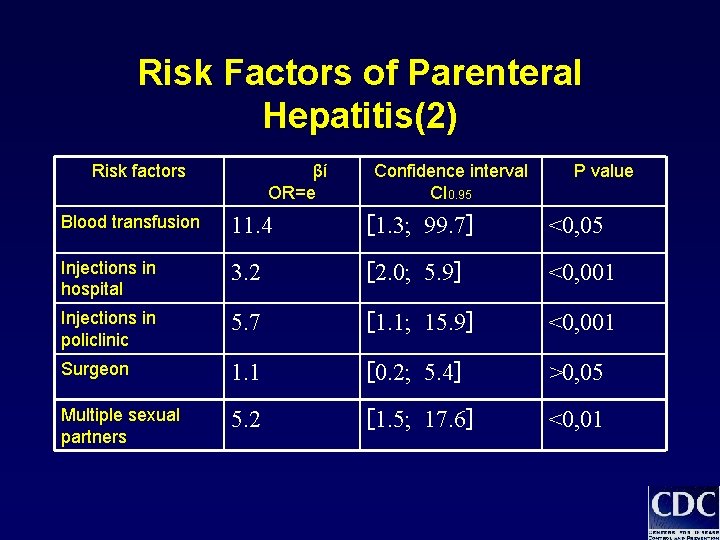
Risk Factors of Parenteral Hepatitis(2) Risk factors βί OR=e Confidence interval СI 0. 95 P value Blood transfusion 11. 4 [1. 3; 99. 7] <0, 05 Injections in hospital 3. 2 [2. 0; 5. 9] <0, 001 Injections in policlinic 5. 7 [1. 1; 15. 9] <0, 001 Surgeon 1. 1 [0. 2; 5. 4] >0, 05 Multiple sexual partners 5. 2 [1. 5; 17. 6] <0, 01
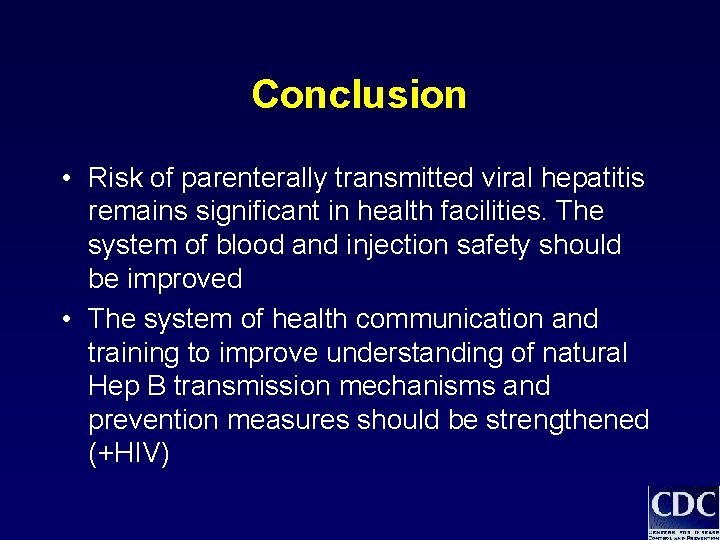
Conclusion • Risk of parenterally transmitted viral hepatitis remains significant in health facilities. The system of blood and injection safety should be improved • The system of health communication and training to improve understanding of natural Hep B transmission mechanisms and prevention measures should be strengthened (+HIV)
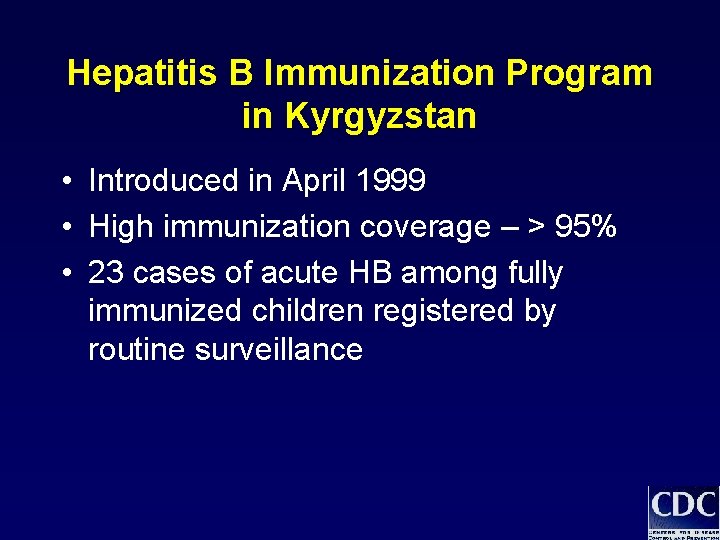
Hepatitis B Immunization Program in Kyrgyzstan • Introduced in April 1999 • High immunization coverage – > 95% • 23 cases of acute HB among fully immunized children registered by routine surveillance
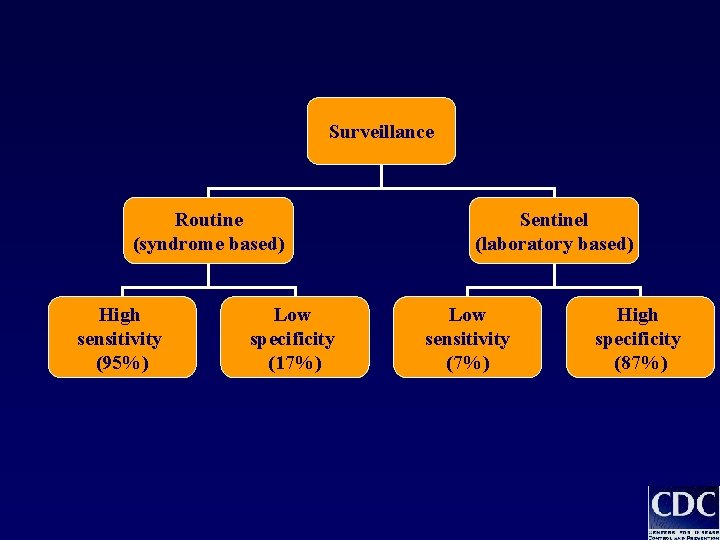
Surveillance Routine (syndrome based) High sensitivity (95%) Low specificity (17%) Sentinel (laboratory based) Low sensitivity (7%) High specificity (87%)
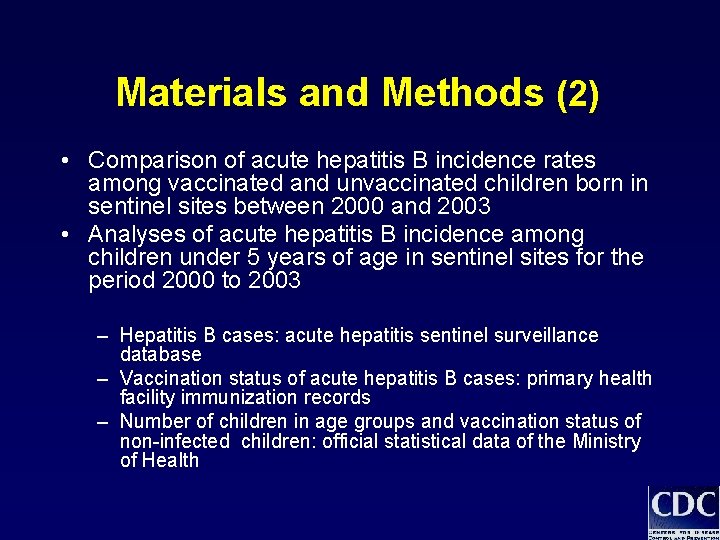
Materials and Methods (2) • Comparison of acute hepatitis B incidence rates among vaccinated and unvaccinated children born in sentinel sites between 2000 and 2003 • Analyses of acute hepatitis B incidence among children under 5 years of age in sentinel sites for the period 2000 to 2003 – Hepatitis B cases: acute hepatitis sentinel surveillance database – Vaccination status of acute hepatitis B cases: primary health facility immunization records – Number of children in age groups and vaccination status of non-infected children: official statistical data of the Ministry of Health
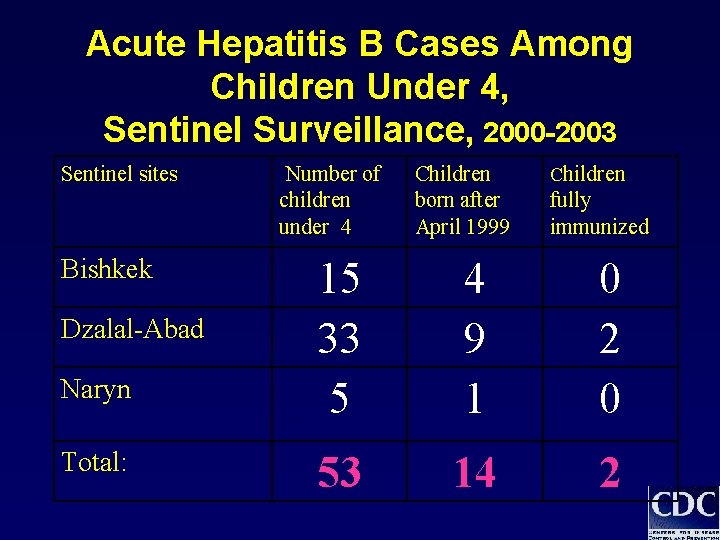
Acute Hepatitis B Cases Among Children Under 4, Sentinel Surveillance, 2000 -2003 Sentinel sites Bishkek Dzalal-Abad Naryn Total: Number of children under 4 Children born after April 1999 Children fully immunized 15 33 5 4 9 1 0 2 0 53 14 2
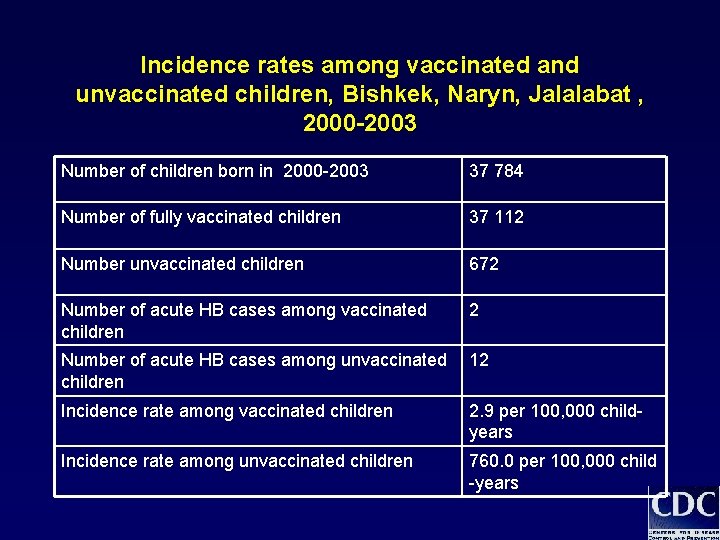
Incidence rates among vaccinated and unvaccinated children, Bishkek, Naryn, Jalalabat , 2000 -2003 Number of children born in 2000 -2003 37 784 Number of fully vaccinated children 37 112 Number unvaccinated children 672 Number of acute HB cases among vaccinated children 2 Number of acute HB cases among unvaccinated children 12 Incidence rate among vaccinated children 2. 9 per 100, 000 childyears Incidence rate among unvaccinated children 760. 0 per 100, 000 child -years
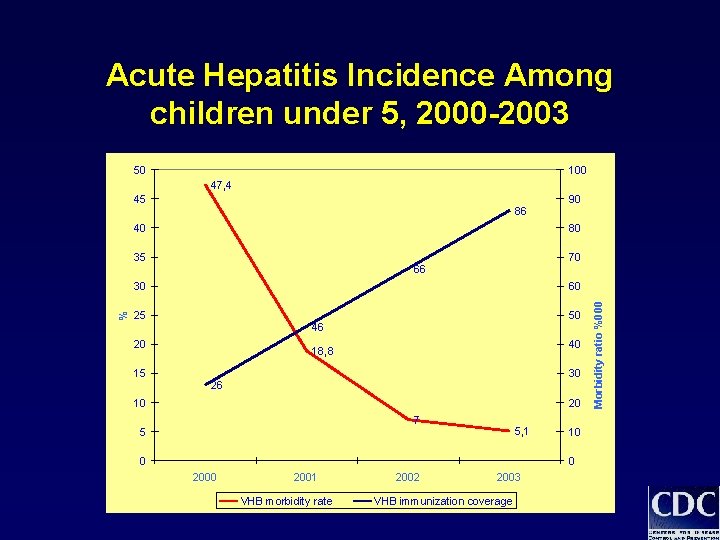
Acute Hepatitis Incidence Among children under 5, 2000 -2003 50 100 47, 4 45 86 40 80 35 70 66 60 25 50 46 20 40 18, 8 30 26 10 20 7 5 5, 1 0 10 0 2001 VHB morbidity rate 2002 2003 VHB immunization coverage Morbidity ratio %000 % 30 15 90
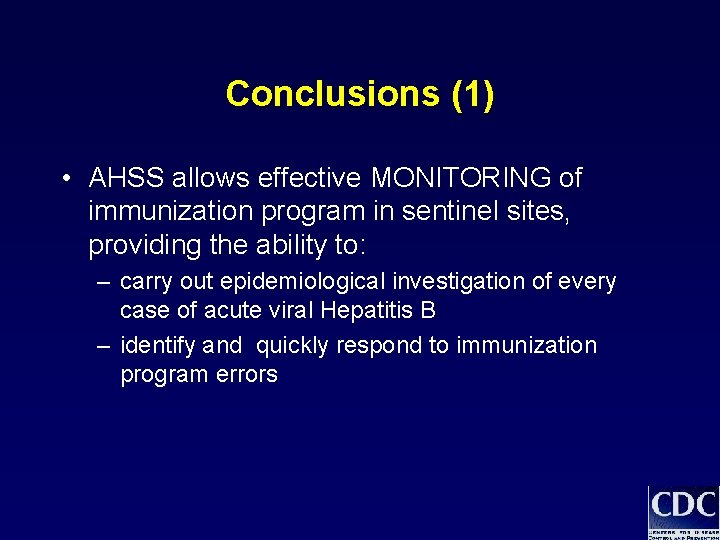
Conclusions (1) • AHSS allows effective MONITORING of immunization program in sentinel sites, providing the ability to: – carry out epidemiological investigation of every case of acute viral Hepatitis B – identify and quickly respond to immunization program errors
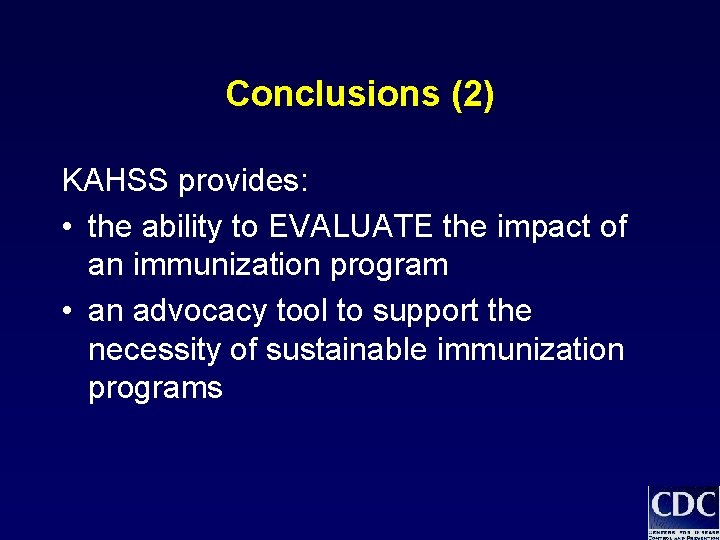
Conclusions (2) KAHSS provides: • the ability to EVALUATE the impact of an immunization program • an advocacy tool to support the necessity of sustainable immunization programs
Study Limitations • Evaluation of risk factors: – Use of acute hepatitis A cases as controls; – Aggregation of acute hepatitis B, C and D cases into one group of parenteral hepatitis • Evaluation of Immunization program: – Use of official statistical data to define the size of target age groups and vaccinated and unvaccinated children
Acknowledgements • The Ministry of Health of the Kyrgyz Republic • Republican Center for Viral Hepatitis Prevention • State Department of Sanitation and Epidemiological Surveillance • Republican Center for Immunization