
Use of a Radar Wind Profiler and Sodar
- Slides: 17
Use of a Radar Wind Profiler and Sodar to Characterize PM 2. 5 Air Pollution in Cleveland, Ohio Clinton P. Mac. Donald 1, Adam N. Pasch 1, Robert Gilliam 2, Charley A. Knoderer 1, Paul T. Roberts 1, and Gary Norris 2 1 Sonoma Technology, Inc. 2 U. S. Environmental Protection Agency Presented at the National Air Quality Conferences March 7 -10, 2011 San Diego, CA 4070
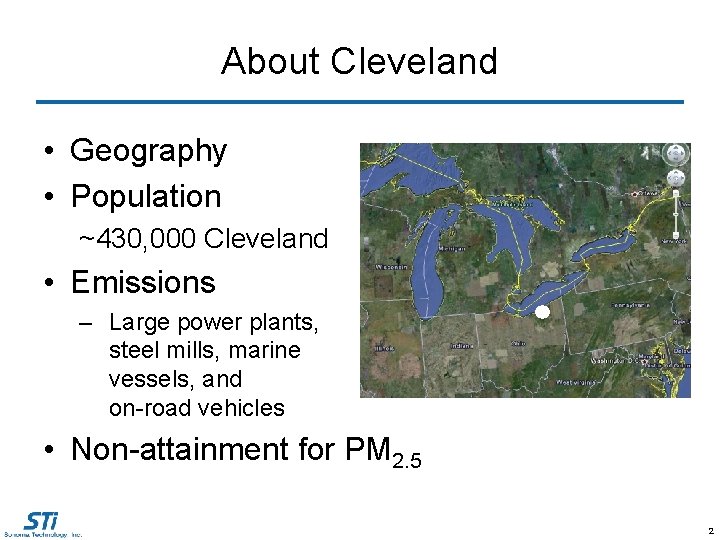
About Cleveland • Geography • Population ~430, 000 Cleveland • Emissions – Large power plants, steel mills, marine vessels, and on-road vehicles Cleveland Regional scale • Non-attainment for PM 2. 5 2
About EPA’s CMAPS • Cleveland Multiple Air Pollutant Study from August 2009 to August 2010 – – identify particulate matter (PM) and mercury (Hg) sources characterize emissions understand the role of meteorology characterize the spatial and temporal variability of multipollutant exposures • Two five-week intensives • EPA Principal Investigators include Gary Norris, Matthew Landis, and Ian Gilmour 3
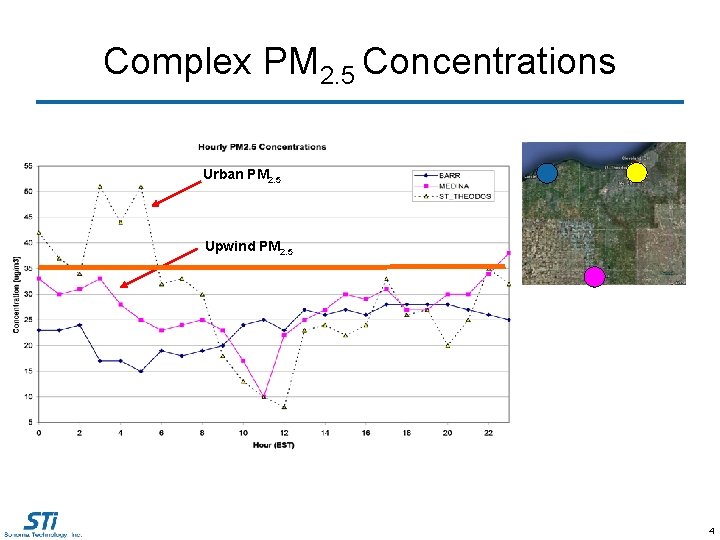
Complex PM 2. 5 Concentrations Urban PM 2. 5 Upwind PM 2. 5 4
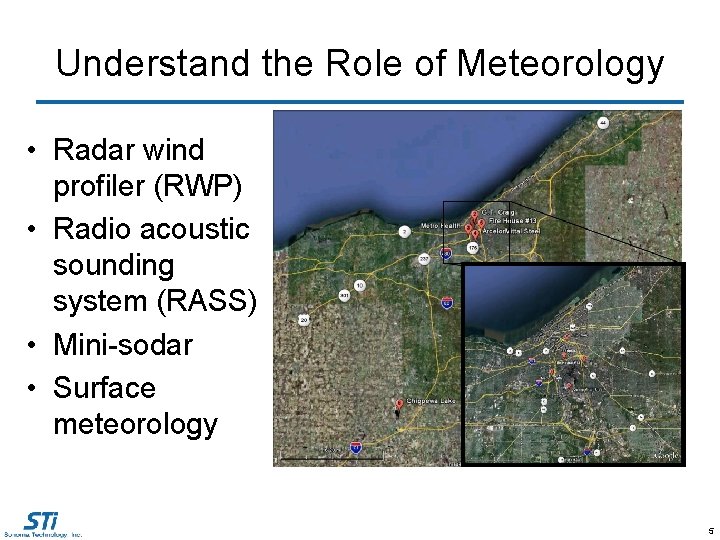
Understand the Role of Meteorology • Radar wind profiler (RWP) • Radio acoustic sounding system (RASS) • Mini-sodar • Surface meteorology 5
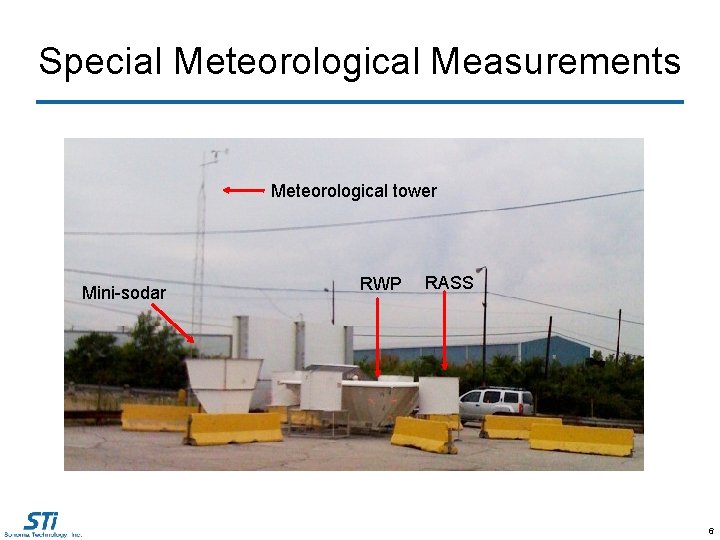
Special Meteorological Measurements Meteorological tower Mini-sodar RWP RASS 6
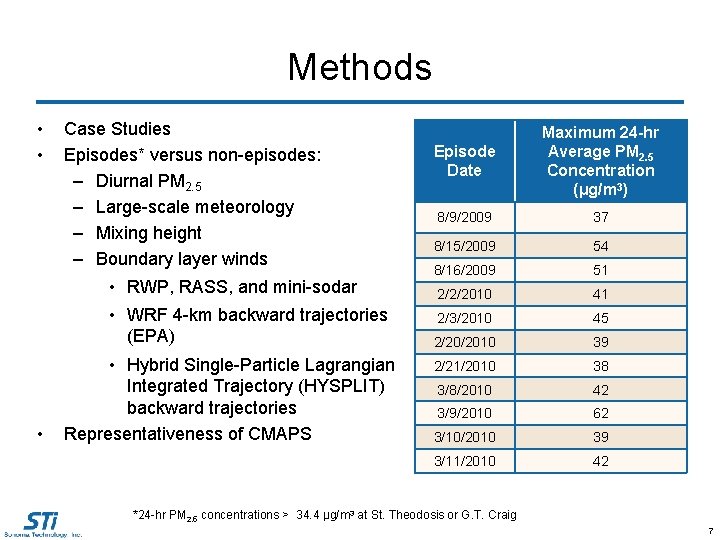
Methods • • Case Studies Episodes* versus non-episodes: – Diurnal PM 2. 5 – Large-scale meteorology – Mixing height – Boundary layer winds • RWP, RASS, and mini-sodar • WRF 4 -km backward trajectories (EPA) • • Hybrid Single-Particle Lagrangian Integrated Trajectory (HYSPLIT) backward trajectories Representativeness of CMAPS Episode Date Maximum 24 -hr Average PM 2. 5 Concentration (μg/m 3) 8/9/2009 37 8/15/2009 54 8/16/2009 51 2/2/2010 41 2/3/2010 45 2/20/2010 39 2/21/2010 38 3/8/2010 42 3/9/2010 62 3/10/2010 39 3/11/2010 42 *24 -hr PM 2. 5 concentrations > 34. 4 μg/m 3 at St. Theodosis or G. T. Craig 7
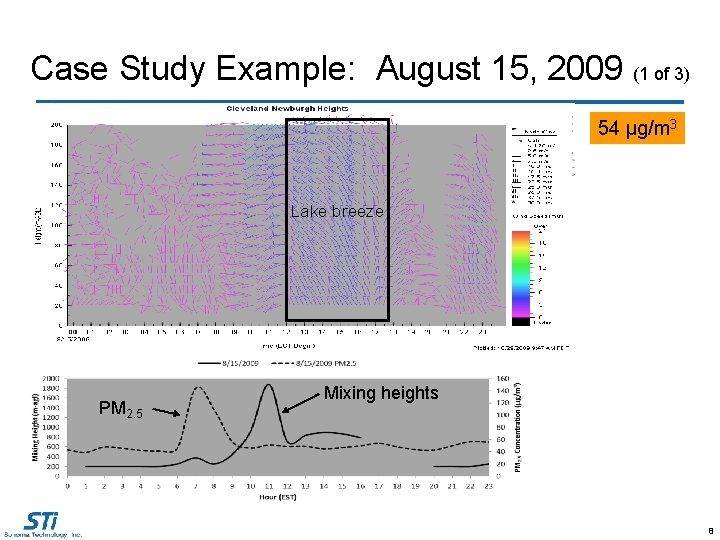
Case Study Example: August 15, 2009 (1 of 3) 54 μg/m 3 Lake breeze PM 2. 5 Mixing heights 8
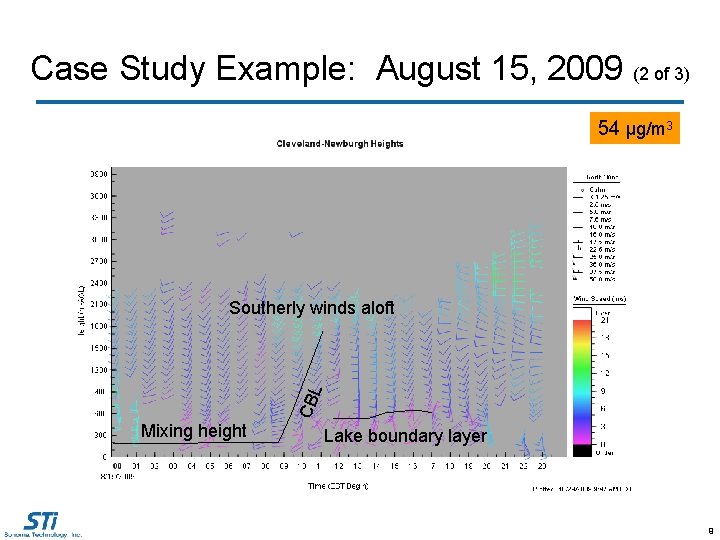
Case Study Example: August 15, 2009 (2 of 3) 54 μg/m 3 CB L Southerly winds aloft Mixing height Lake boundary layer 9
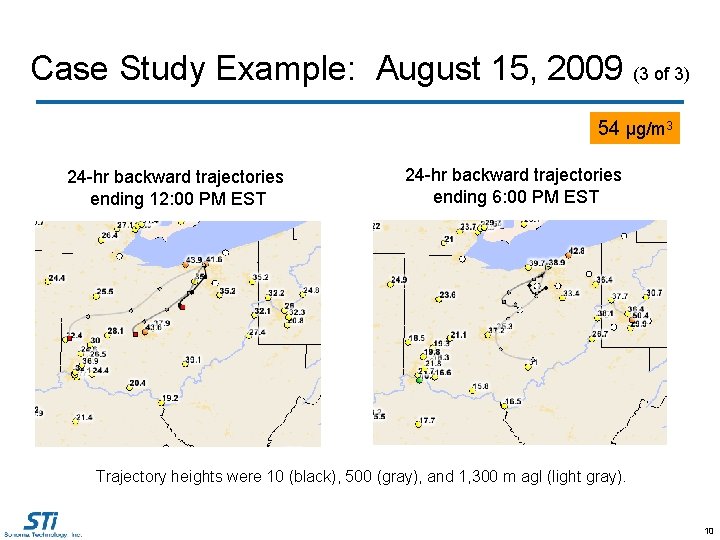
Case Study Example: August 15, 2009 (3 of 3) 54 μg/m 3 24 -hr backward trajectories ending 12: 00 PM EST 24 -hr backward trajectories ending 6: 00 PM EST Trajectory heights were 10 (black), 500 (gray), and 1, 300 m agl (light gray). 10
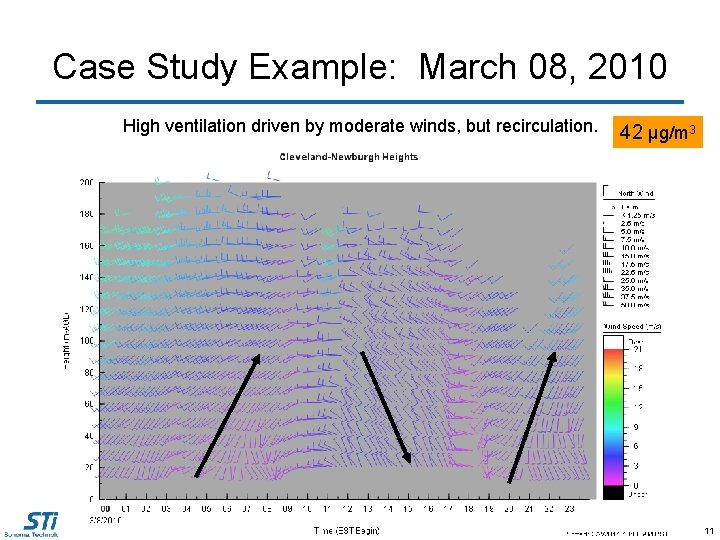
Case Study Example: March 08, 2010 High ventilation driven by moderate winds, but recirculation. 42 μg/m 3 11
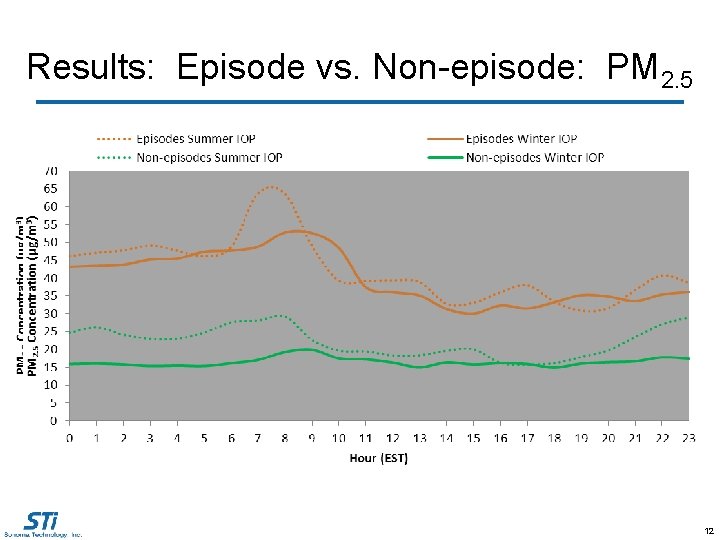
Results: Episode vs. Non-episode: PM 2. 5 12
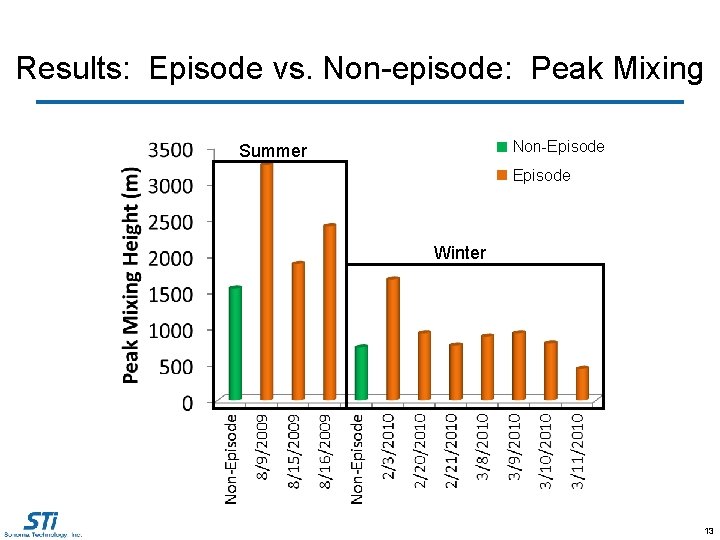
Results: Episode vs. Non-episode: Peak Mixing Non-Episode Summer Episode Winter 13
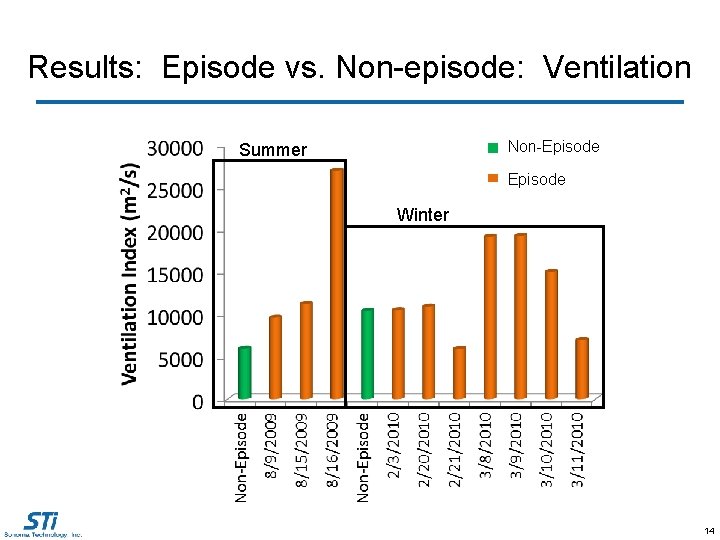
Results: Episode vs. Non-episode: Ventilation Non-Episode Summer Episode Winter 14
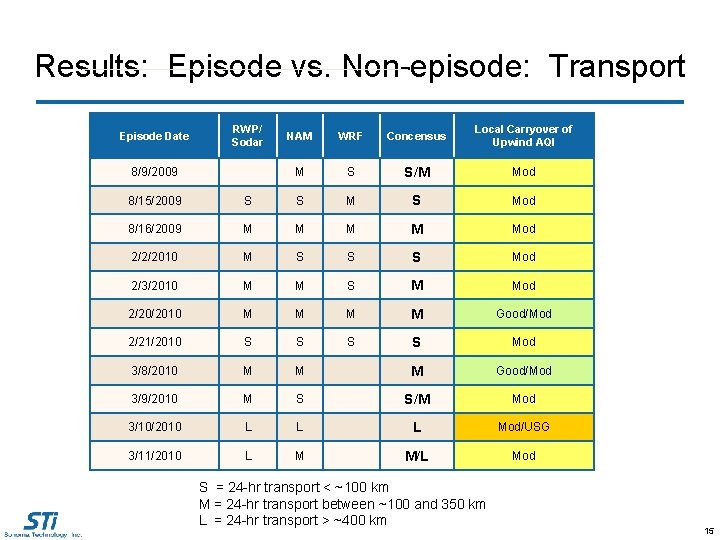
Results: Episode vs. Non-episode: Transport Episode Date RWP/ Sodar 8/9/2009 NAM WRF Concensus Local Carryover of Upwind AQI M S S/M Mod 8/15/2009 S S Mod 8/16/2009 M M Mod 2/2/2010 M S S S Mod 2/3/2010 M M S M Mod 2/20/2010 M M Good/Mod 2/21/2010 S S Mod 3/8/2010 M M M Good/Mod 3/9/2010 M S S/M Mod 3/10/2010 L L L Mod/USG 3/11/2010 L M M/L Mod S = 24 -hr transport < ~100 km M = 24 -hr transport between ~100 and 350 km L = 24 -hr transport > ~400 km 15
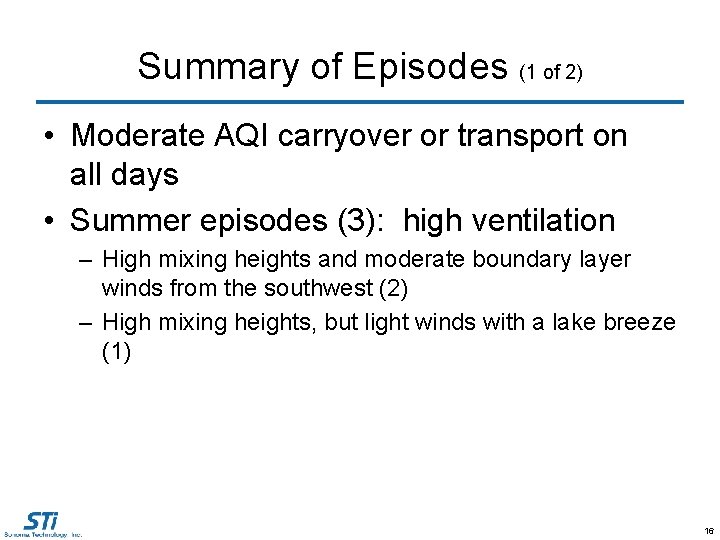
Summary of Episodes (1 of 2) • Moderate AQI carryover or transport on all days • Summer episodes (3): high ventilation – High mixing heights and moderate boundary layer winds from the southwest (2) – High mixing heights, but light winds with a lake breeze (1) 16
Summary of Episodes (2 of 2) Winter episodes (7): wide variety of conditions – High ventilation driven by moderate winds, but recirculation (3) – Moderate ventilation driven by moderate west winds (2) – Low ventilation (low mixing and light winds) (2) 17