
Use of a modified SBAR framework for evidence
Use of a modified SBAR framework for evidence requests Roxanne Hart & Siobhan Linsey HLG 2018
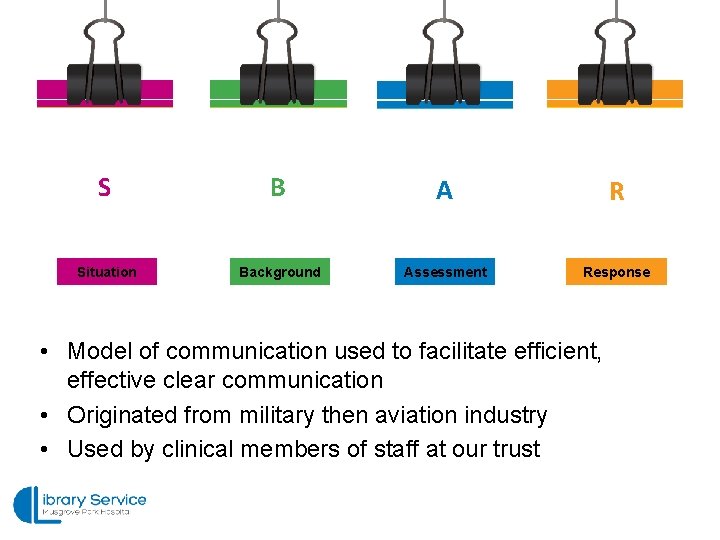
S B A R Situation Background Assessment Response • Model of communication used to facilitate efficient, effective clear communication • Originated from military then aviation industry • Used by clinical members of staff at our trust
What was the problem? • • Large volume of requests coming in Normal methods for prioritisation not effective Requests received over email needed follow up Unsure of best q’s to ask
The Aim • Create a way to manage and prioritise literature search (evidence) requests • Enable (effective) requests via email • To be used by 100% of the Improvement team by December 2017
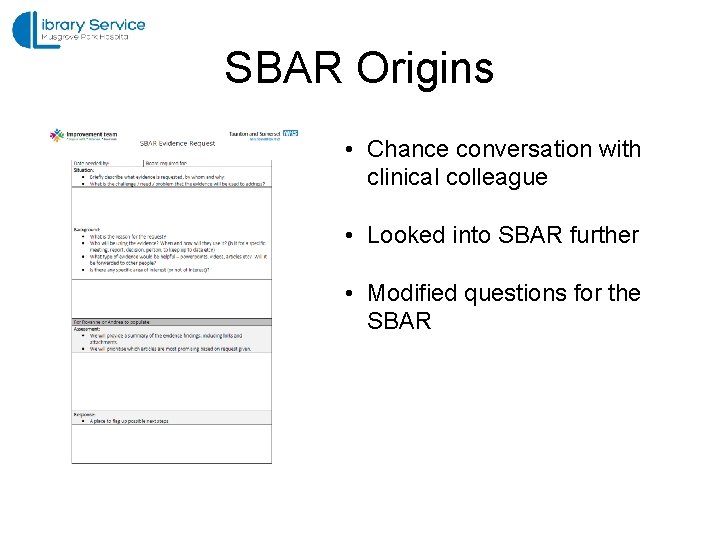
SBAR Origins • Chance conversation with clinical colleague • Looked into SBAR further • Modified questions for the SBAR
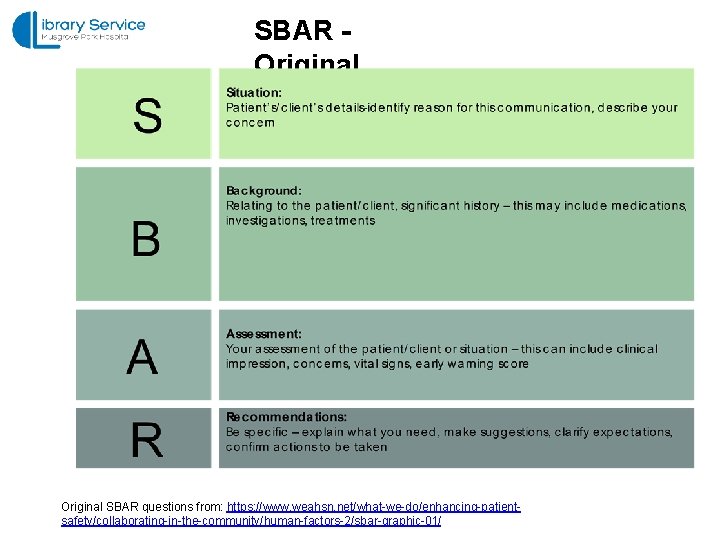
SBAR Original SBAR questions from: https: //www. weahsn. net/what-we-do/enhancing-patientsafety/collaborating-in-the-community/human-factors-2/sbar-graphic-01/
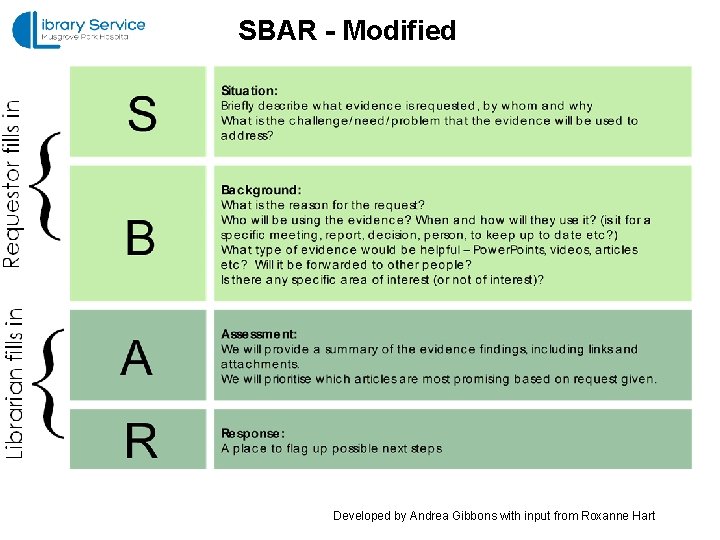
SBAR - Modified Developed by Andrea Gibbons with input from Roxanne Hart
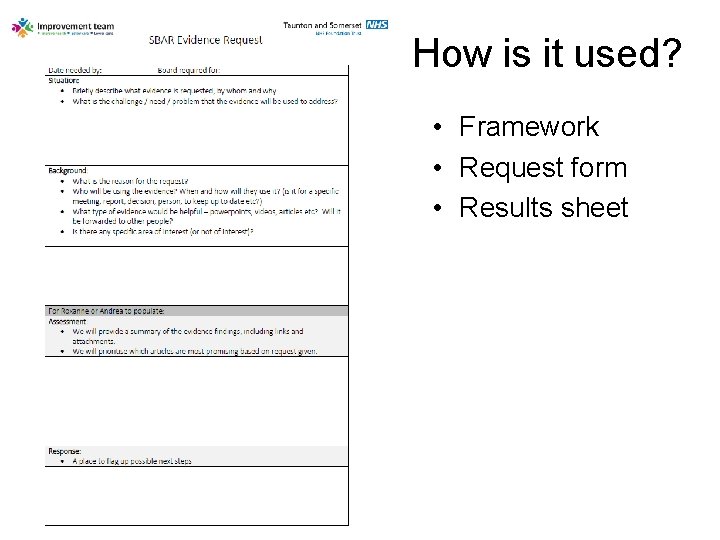
How is it used? • Framework • Request form • Results sheet
Why SBAR ? • SBAR a household name for clinical staff • Our SBAR model suited to non-clinical requests too • Looking for more than a search framework
Literature search request forms (NHS) • Too clinically focused? • Very little capture of contextual info
Rolling it out • 32 Members of the Improvement Team • Email of the new form • 90% of requests returned in SBAR format
Test and Learn 1 • Add box for board • Add box for date required by Test and Learn 2 • Used an outlook mail template
+ SBAR Advantages • Alignment with clinical SBAR rollout • Right amount of structure • Keeps request together with evidence • Encourages synthesis • Helps to avoid duplication
Evaluation/Impact • 90% of requests used SBAR format • Closer alignment with true needs • User feedback good
Feedback “Frances and I use SBAR’s regularly to submit research requests to Roxanne for improvement project research. Before the launch of the SBAR we would send an email with our request, although this was quick we struggled to know what information was needed to enable Roxanne to fulfil our requests. Filling in the form takes a little bit more time, however, this time is more than paid back in the increased relevancy of results which comes from her knowing more about factors surrounding the request. ” Felicity Chamberlain and Frances Venn - Project Support Officers, (Improvement Team) Musgrove Park Hospital
Use for clinical queries • Tested on small number of literature search requests • Feedback from clinical users on SBAR form
Next steps • Use response section for cycle of feedback for users • Roll it out to wider library users rather than for a select group
Thank you Roxanne Hart roxanne. hart@tst. nhs. uk & Siobhan Linsey siobhan. linsey@tst. nhs. uk
- Slides: 18