
Use negative numbers in context of temperature calculate
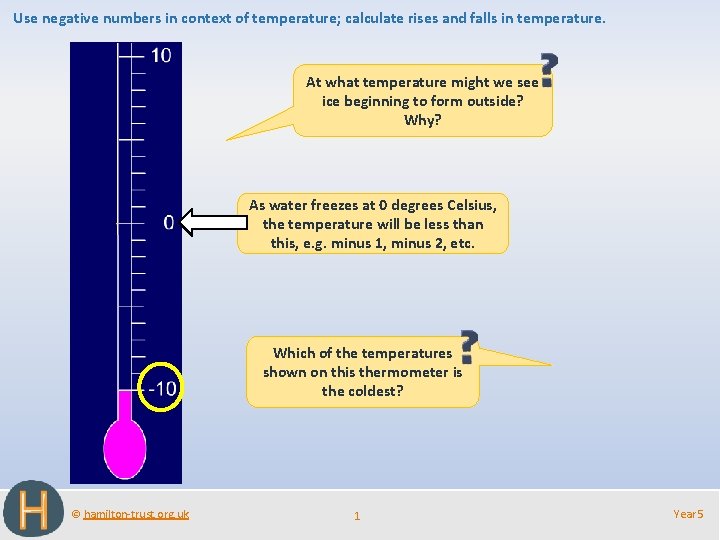
Use negative numbers in context of temperature; calculate rises and falls in temperature. At what temperature might we see ice beginning to form outside? Why? As water freezes at 0 degrees Celsius, the temperature will be less than this, e. g. minus 1, minus 2, etc. Which of the temperatures shown on this thermometer is the coldest? © hamilton-trust. org. uk 1 Year 5
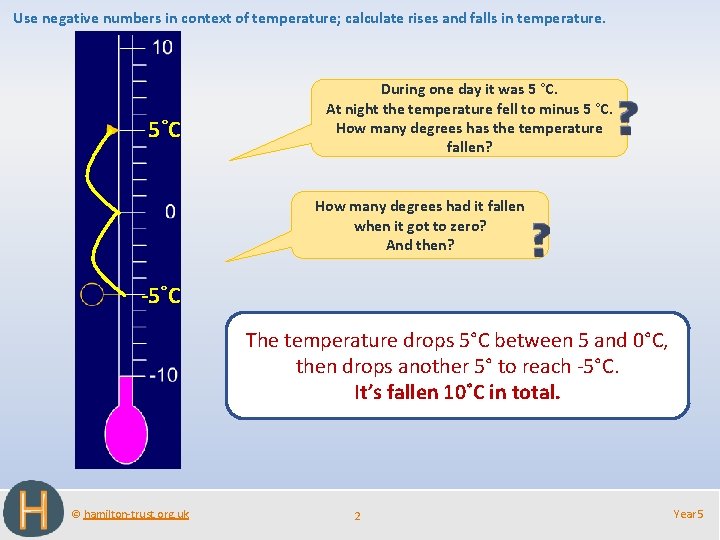
Use negative numbers in context of temperature; calculate rises and falls in temperature. 5˚C During one day it was 5 °C. At night the temperature fell to minus 5 °C. How many degrees has the temperature fallen? How many degrees had it fallen when it got to zero? And then? -5˚C The temperature drops 5°C between 5 and 0°C, then drops another 5° to reach -5°C. It’s fallen 10˚C in total. © hamilton-trust. org. uk 2 Year 5
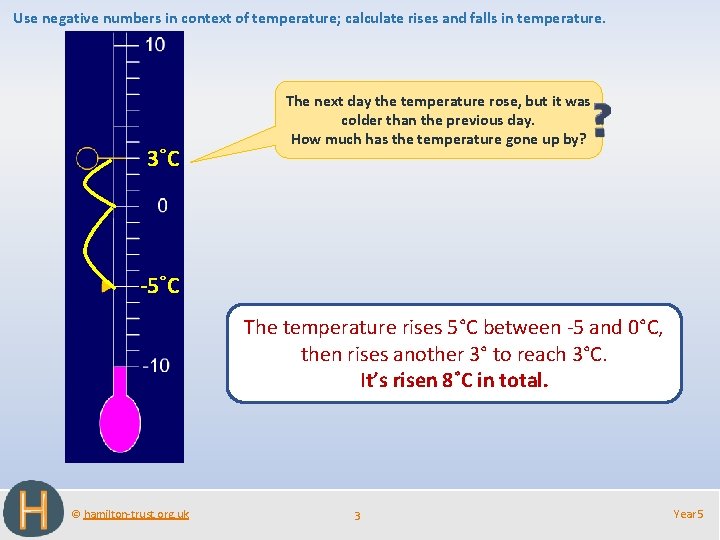
Use negative numbers in context of temperature; calculate rises and falls in temperature. 3˚C The next day the temperature rose, but it was colder than the previous day. How much has the temperature gone up by? -5˚C The temperature rises 5°C between -5 and 0°C, then rises another 3° to reach 3°C. It’s risen 8˚C in total. © hamilton-trust. org. uk 3 Year 5
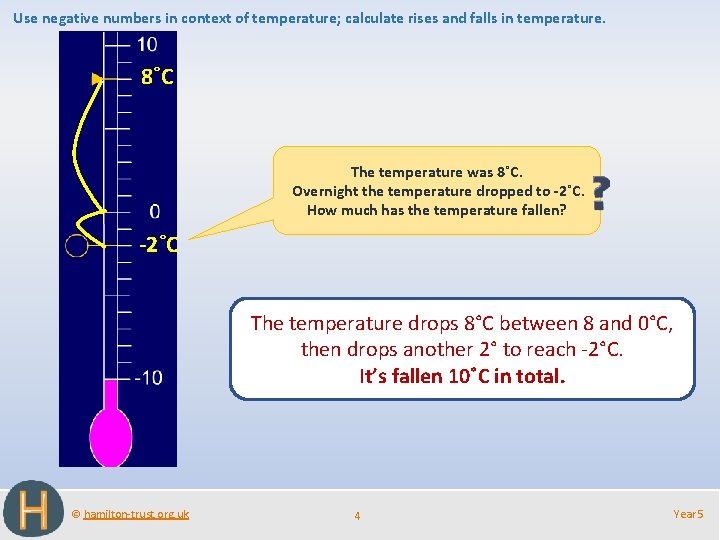
Use negative numbers in context of temperature; calculate rises and falls in temperature. 8˚C The temperature was 8˚C. Overnight the temperature dropped to -2˚C. How much has the temperature fallen? -2˚C The temperature drops 8°C between 8 and 0°C, then drops another 2° to reach -2°C. It’s fallen 10˚C in total. © hamilton-trust. org. uk 4 Year 5
- Slides: 4