
Use Cases Cryo Services Speaker Klaus Barth on
Use Cases - Cryo Services Speaker: Klaus Barth on behalf of TE/CRG TETRA Forum Wednesday 09 March 2011 from 14: 00 to 17: 05 (Europe/Zurich) at CERN ( 503 -1 -001 - Council Chamber )
Outline • LHC Accelerator and Detector Cryogenics Service – accelerator cryogenics operation – detector cryogenics operation • Cryogenics services related to activities for other detectors and test facilities • Outlook/Conclusion
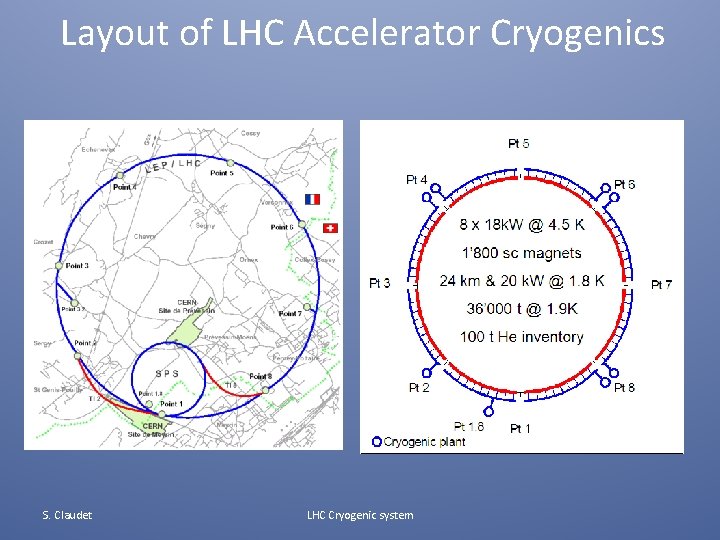
Layout of LHC Accelerator Cryogenics S. Claudet LHC Cryogenic system
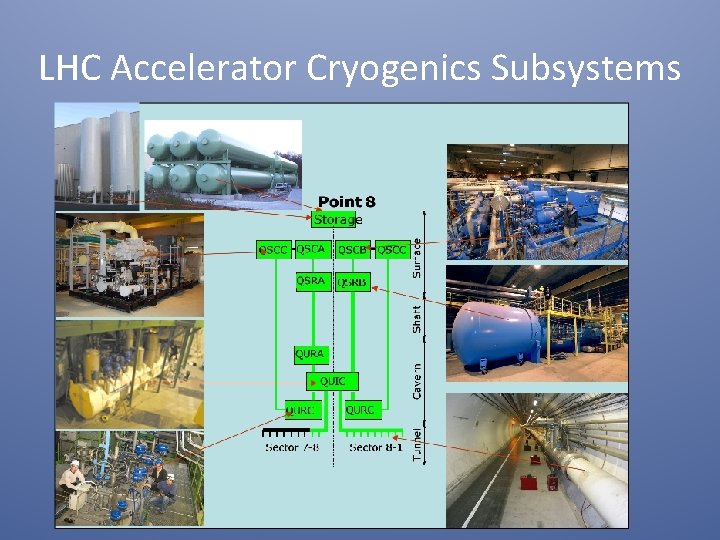
LHC Accelerator Cryogenics Subsystems
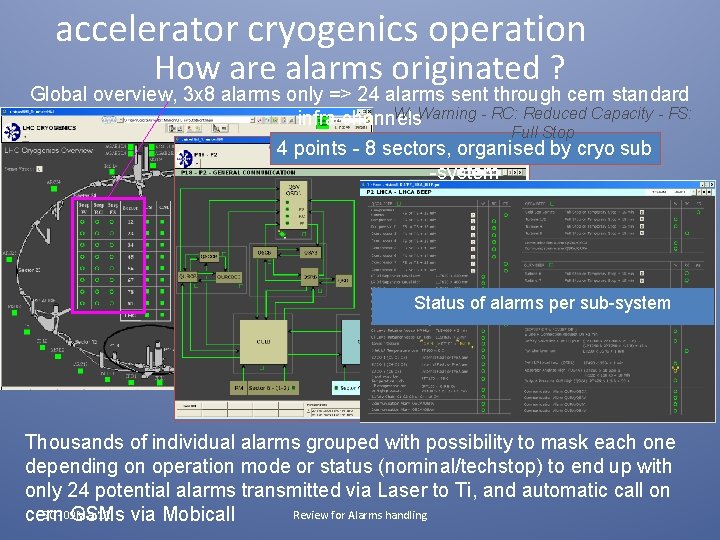
accelerator cryogenics operation How are alarms originated ? Global overview, 3 x 8 alarms only => 24 alarms sent through cern standard W: Warning - RC: Reduced Capacity - FS: infra channels Full Stop 4 points - 8 sectors, organised by cryo sub -system Status of alarms per sub-system Thousands of individual alarms grouped with possibility to mask each one depending on operation mode or status (nominal/techstop) to end up with only 24 potential alarms transmitted via Laser to Ti, and automatic call on SC - 09 Mar'11 Review for Alarms handling cern GSMs via Mobicall
• How do we deal with alarms ? Normal case: – – Taking alarm in consideration, early diagnostic Confirming to Ti that alarm is being treated Taking action that could lead to sending people (1 or 2) on site Once treated, confirming to Ti that operation is back to nominal • Abnormal case: Easy thanks to shift crew 11 months/year, done at few occasions – In case of network/Laser issue, visual or verbal information Cryo shift / Ti shift as we sit next to each other in CCC … – We can always check our supervision panels with flashing alarms !!! Not against using a new system, but happy with present situation, and very low probability to have a GSM issue during an intervention on site putting people safety in delicate situation! SC - 09 Mar'11 Review for Alarms handling
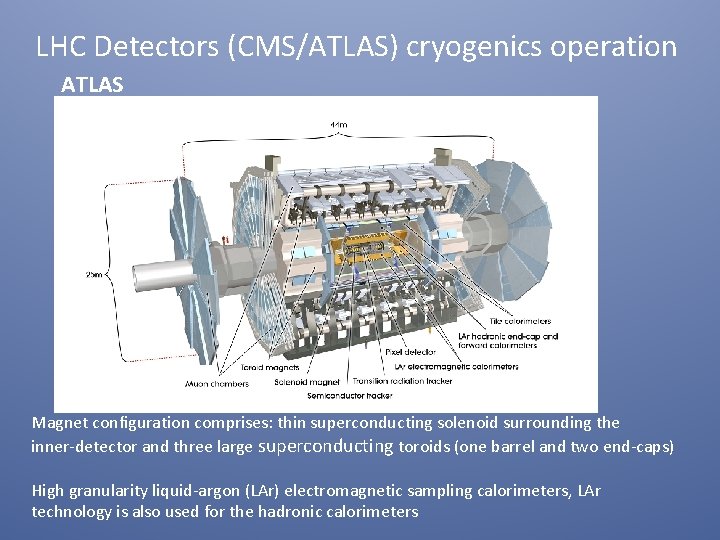
LHC Detectors (CMS/ATLAS) cryogenics operation ATLAS Magnet configuration comprises: thin superconducting solenoid surrounding the inner-detector and three large superconducting toroids (one barrel and two end-caps) High granularity liquid-argon (LAr) electromagnetic sampling calorimeters, LAr technology is also used for the hadronic calorimeters
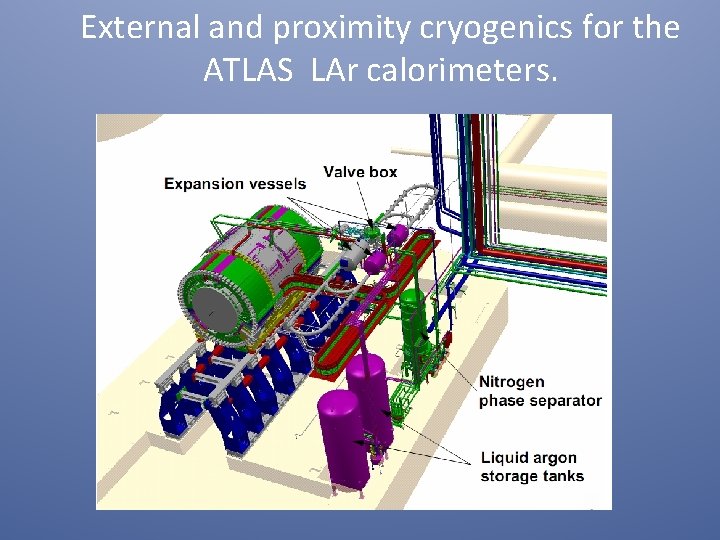
External and proximity cryogenics for the ATLAS LAr calorimeters.
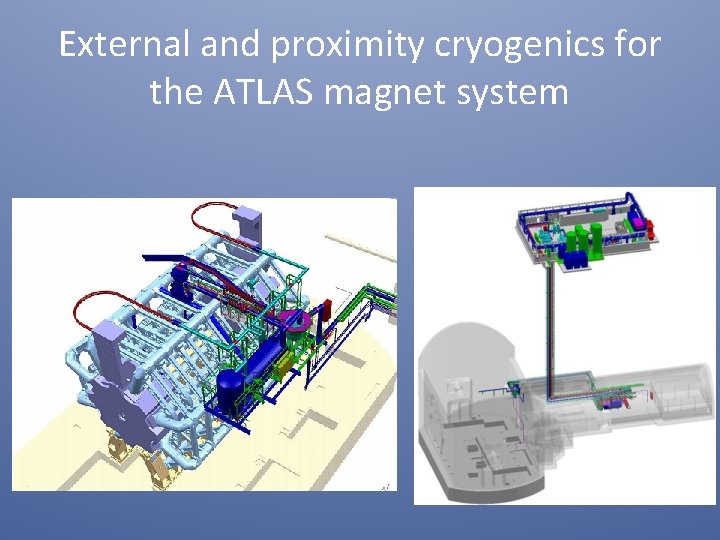
External and proximity cryogenics for the ATLAS magnet system
Cryogenics services related to activities for other detectors and test facilities • North Area fixed target experiment cryogenics (EHN 1/EHN 2/EHN 3): NA 61, NA 62 (LKr calorimeter), H 8 + RD 5 test beams • CAST (LHC-P 8) cryogenics • SC Magnet and Cable Test Facilities @ SM 18 and Meyrin Site bldg. 163 • Cryolab Central LHe distribution service @ Meyrin Site bldg. 165
Organization of the cryogenics operation service CRG-OD • Dedicated CERN operation team of 5 technicians (on-call) for LHC detector cryogenics • FSU operation team (on-call) with CERN expert technician and engineer support for cryogenics related to activities at North Area, CAST, Meyrin Site bldg. 163/165 • FSU operation team (on-call) with CERN expert technician and engineer support for cryogenics at SM 18 test facility • Alarming (grouped and prioritized) is done via MOBICALL and the CCC-TI shift team. Works very reliable. • Interventions of cryogenics operation team are coordinated via CCC-TI and the experiment control rooms of ATLAS/CMS • Tech. expert support (mechanics, instrumentation, control system) can be called in by operation teams if required (oncall).
Outlook/Conclusion • The cryogenics alarming service works well and reliable, based on several components (cryo shifter, CCC-TI, MOBICALL) • TETRAS could be a complementary system for cryogenic services for replacing/standardising existing safety devices/procedures (ODH, “Homme Mort”) • TETRAS could be complementary communication system giving fire brigade, CCC-TI direct access to information from cryo operation.
- Slides: 12