
Use Case Realizations 1 Use Case Realizations System
- Slides: 8
Use Case Realizations 1
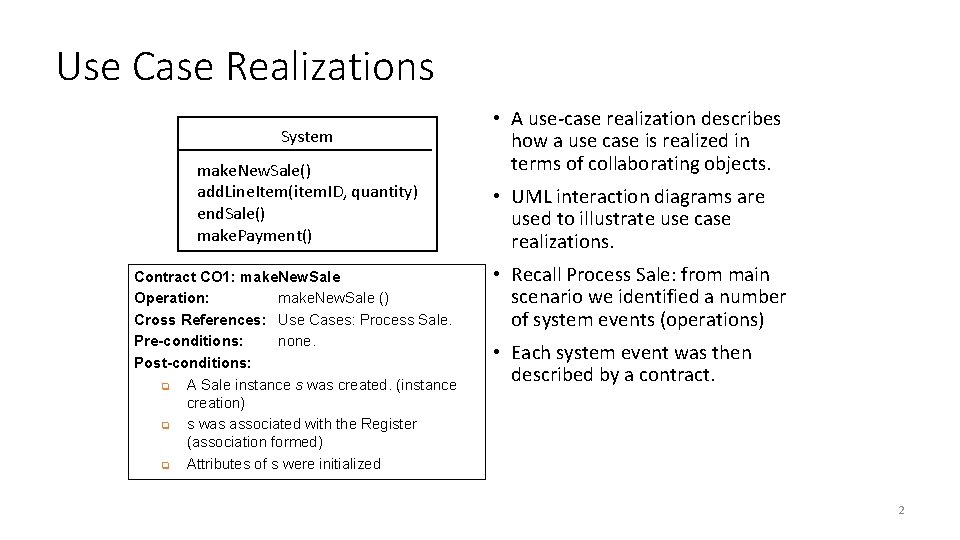
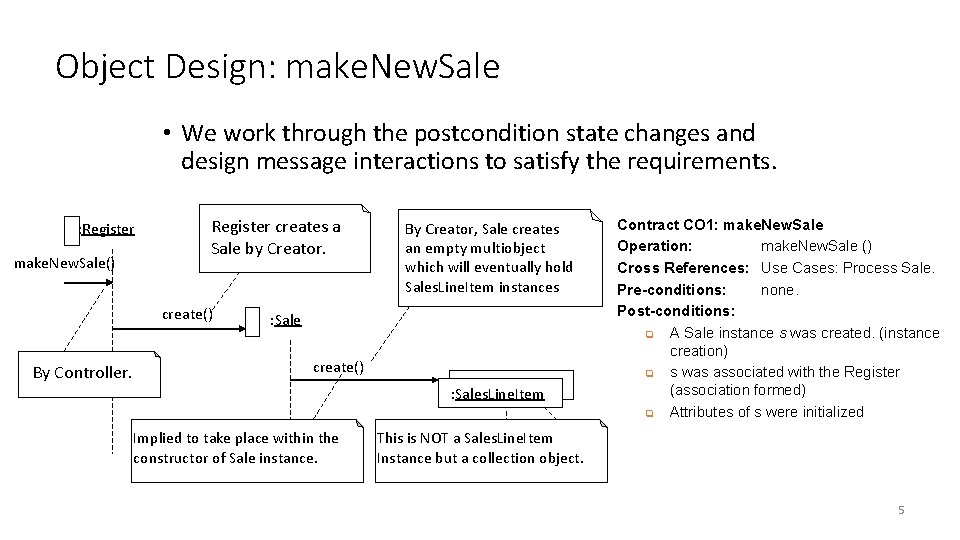
Use Case Realizations System make. New. Sale() add. Line. Item(item. ID, quantity) end. Sale() make. Payment() Contract CO 1: make. New. Sale Operation: make. New. Sale () Cross References: Use Cases: Process Sale. Pre-conditions: none. Post-conditions: q A Sale instance s was created. (instance creation) q s was associated with the Register (association formed) q Attributes of s were initialized • A use-case realization describes how a use case is realized in terms of collaborating objects. • UML interaction diagrams are used to illustrate use case realizations. • Recall Process Sale: from main scenario we identified a number of system events (operations) • Each system event was then described by a contract. 2
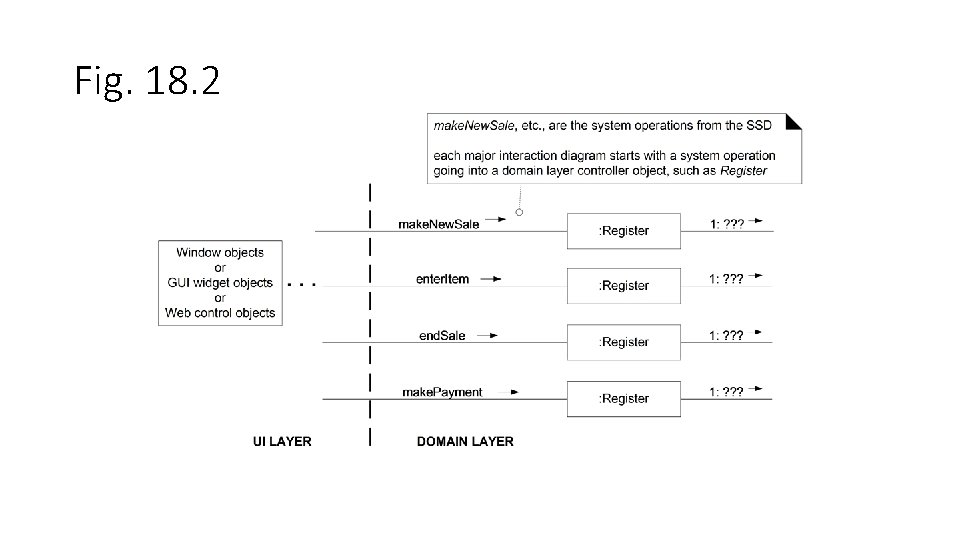
Fig. 18. 2
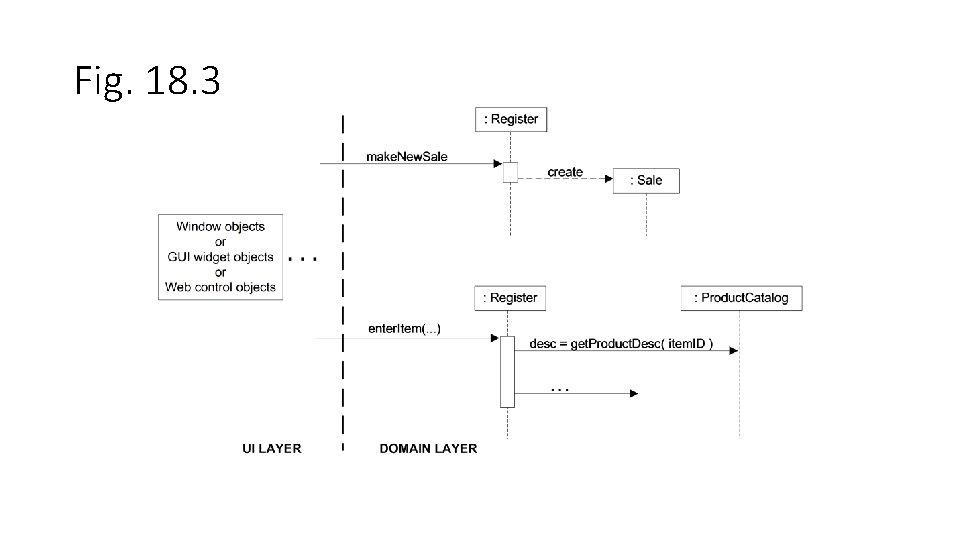
Fig. 18. 3
Object Design: make. New. Sale • We work through the postcondition state changes and design message interactions to satisfy the requirements. : Register make. New. Sale() Register creates a Sale by Creator. create() By Controller. By Creator, Sale creates an empty multiobject which will eventually hold Sales. Line. Item instances : Sale create() : Sales. Line. Item Implied to take place within the constructor of Sale instance. Contract CO 1: make. New. Sale Operation: make. New. Sale () Cross References: Use Cases: Process Sale. Pre-conditions: none. Post-conditions: q A Sale instance s was created. (instance creation) q s was associated with the Register (association formed) q Attributes of s were initialized This is NOT a Sales. Line. Item Instance but a collection object. 5
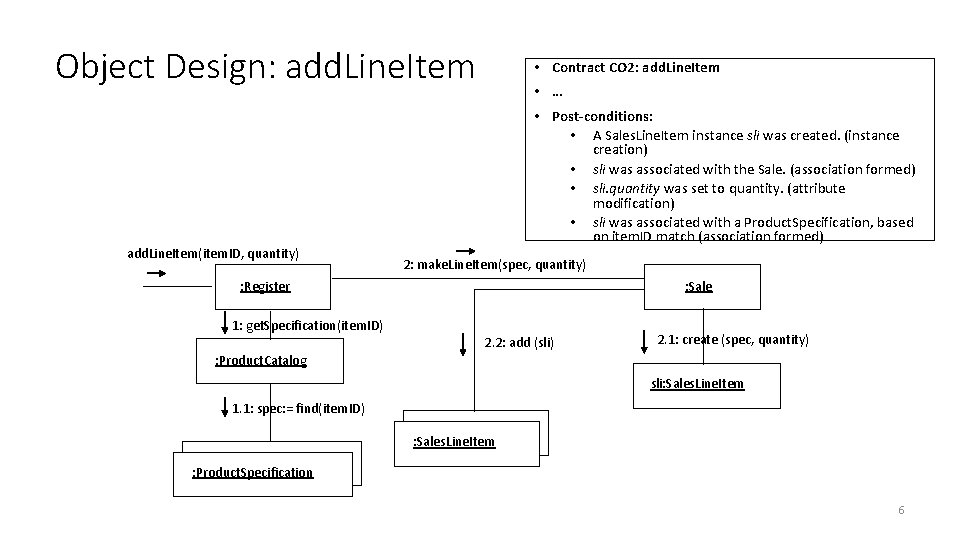
Object Design: add. Line. Item(item. ID, quantity) • Contract CO 2: add. Line. Item • … • Post-conditions: • A Sales. Line. Item instance sli was created. (instance creation) • sli was associated with the Sale. (association formed) • sli. quantity was set to quantity. (attribute modification) • sli was associated with a Product. Specification, based on item. ID match (association formed) 2: make. Line. Item(spec, quantity) : Sale : Register 1: get. Specification(item. ID) 2. 2: add (sli) 2. 1: create (spec, quantity) : Product. Catalog sli: Sales. Line. Item 1. 1: spec: = find(item. ID) : Sales. Line. Item : Product. Specification 6
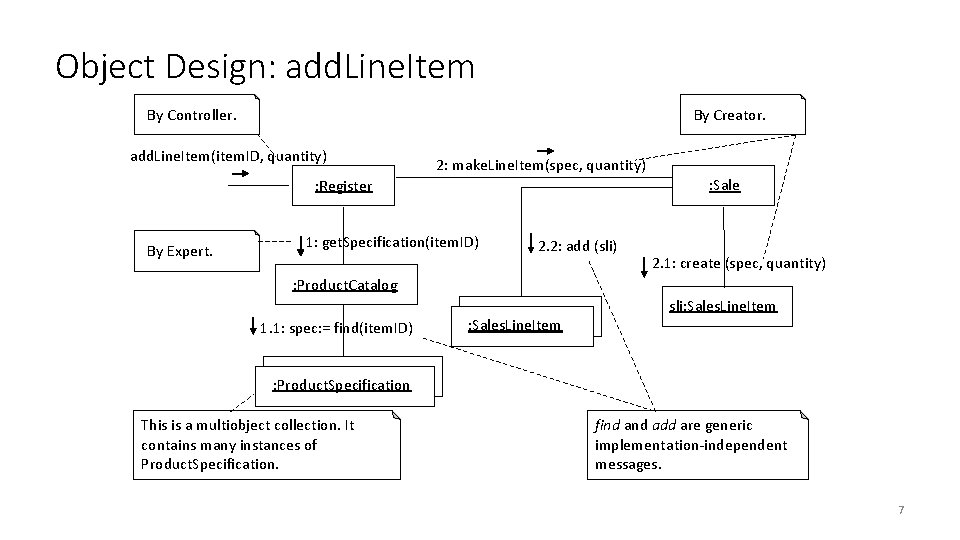
Object Design: add. Line. Item By Controller. By Creator. add. Line. Item(item. ID, quantity) 2: make. Line. Item(spec, quantity) : Sale : Register By Expert. 1: get. Specification(item. ID) 2. 2: add (sli) 2. 1: create (spec, quantity) : Product. Catalog 1. 1: spec: = find(item. ID) : Sales. Line. Item sli: Sales. Line. Item : Product. Specification This is a multiobject collection. It contains many instances of Product. Specification. find add are generic implementation-independent messages. 7
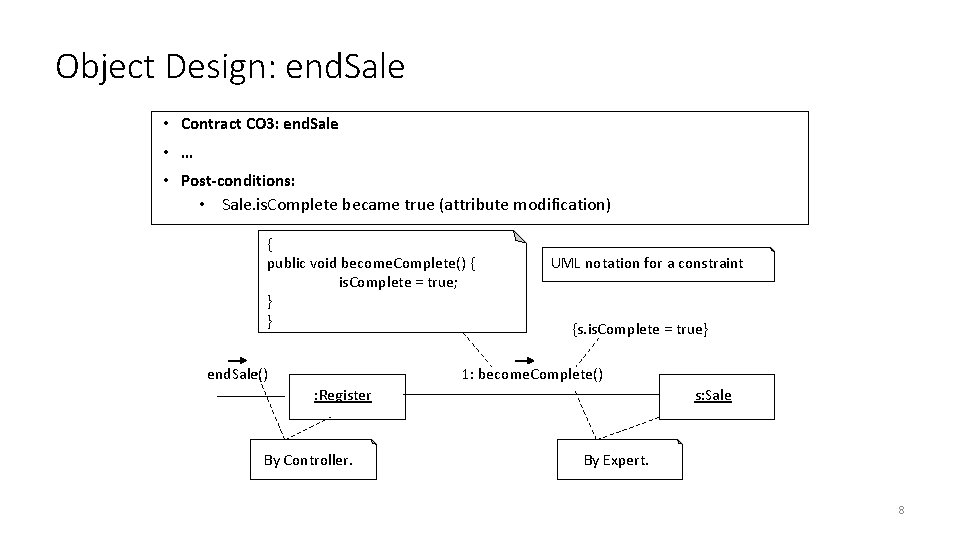
Object Design: end. Sale • Contract CO 3: end. Sale • … • Post-conditions: • Sale. is. Complete became true (attribute modification) { public void become. Complete() { is. Complete = true; } } end. Sale() UML notation for a constraint {s. is. Complete = true} 1: become. Complete() s: Sale : Register By Controller. By Expert. 8