
Use Case Diagrams2 Relationships between Use Cases 1
Use Case Diagrams-2

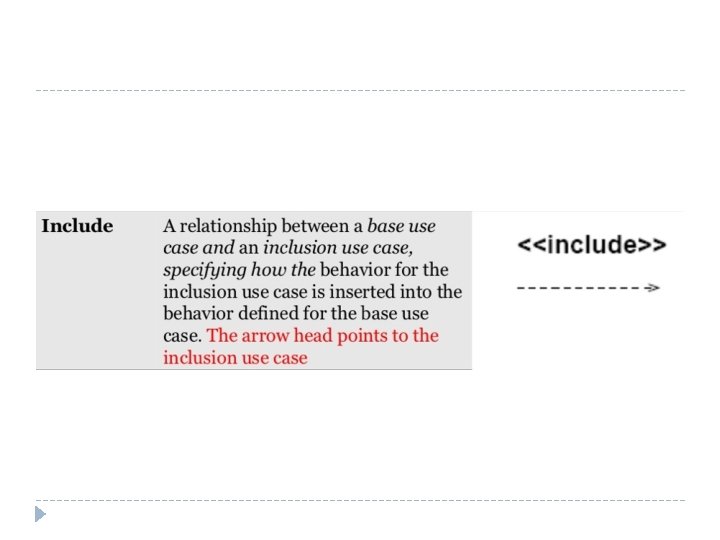
Relationships between Use Cases 1. Generalization - use cases that are specialized versions of other use cases. 2. Include - use cases that are included as parts of other use cases. Contain the functionality of another use case as part of their normal processing. 3. Extend - use cases that extend the behavior of other core use cases. Enable to factor variants. 2
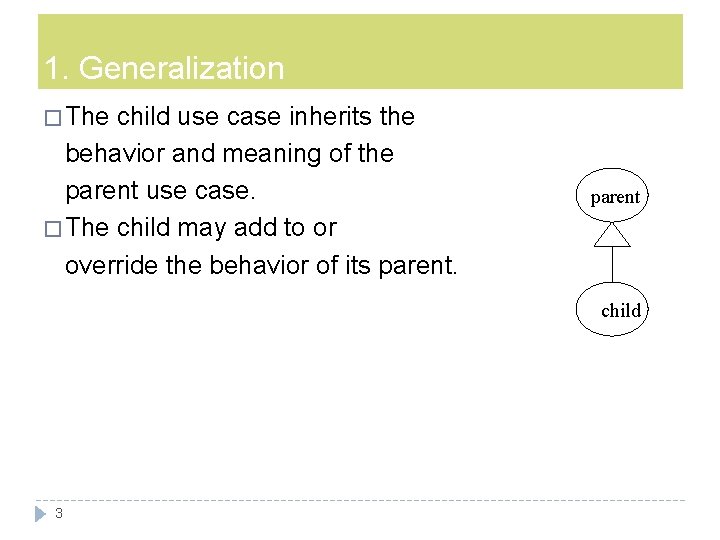
1. Generalization � The child use case inherits the behavior and meaning of the parent use case. � The child may add to or override the behavior of its parent child 3
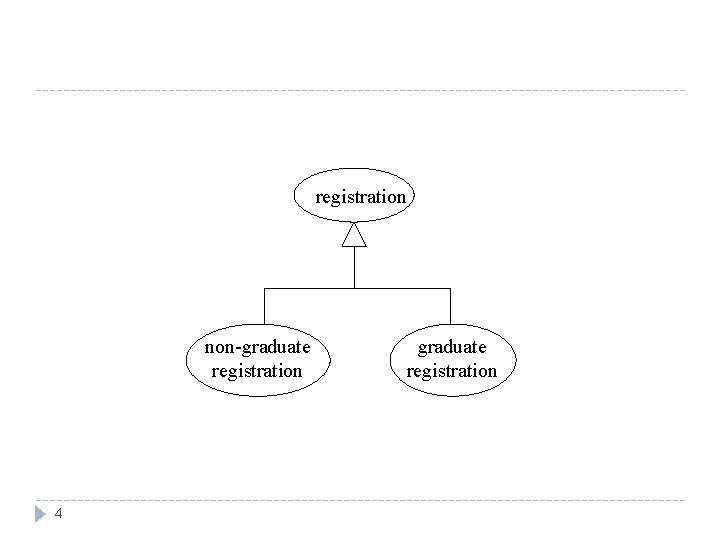
registration non-graduate registration 4 graduate registration
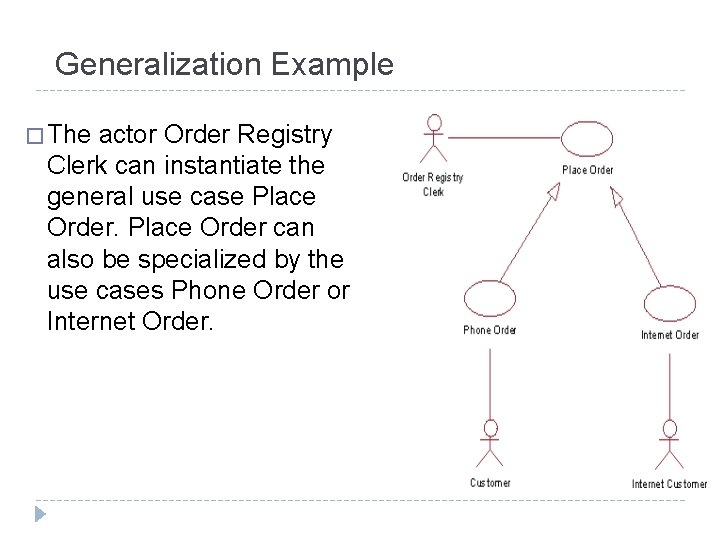
Generalization Example � The actor Order Registry Clerk can instantiate the general use case Place Order can also be specialized by the use cases Phone Order or Internet Order.
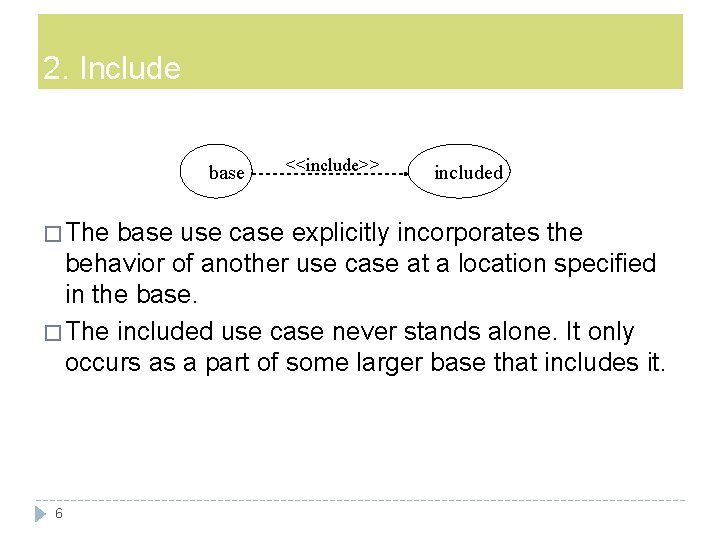
2. Include base � The <<include>> included base use case explicitly incorporates the behavior of another use case at a location specified in the base. � The included use case never stands alone. It only occurs as a part of some larger base that includes it. 6
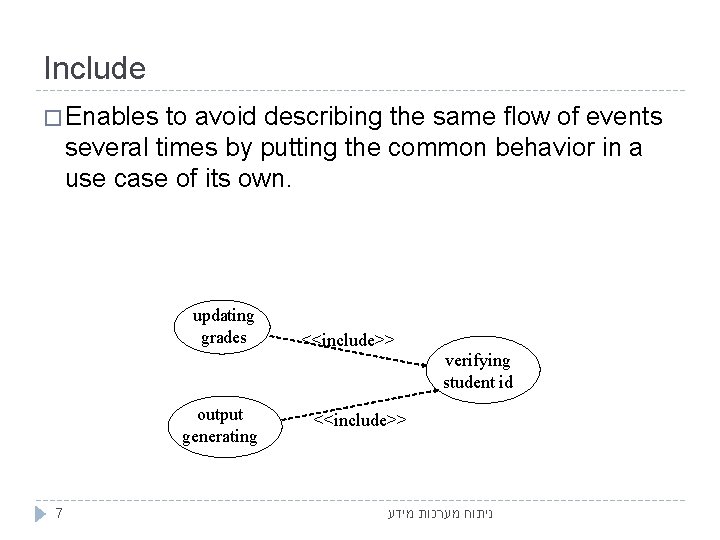
Include � Enables to avoid describing the same flow of events several times by putting the common behavior in a use case of its own. updating grades <<include>> verifying student id output generating 7 <<include>> ניתוח מערכות מידע
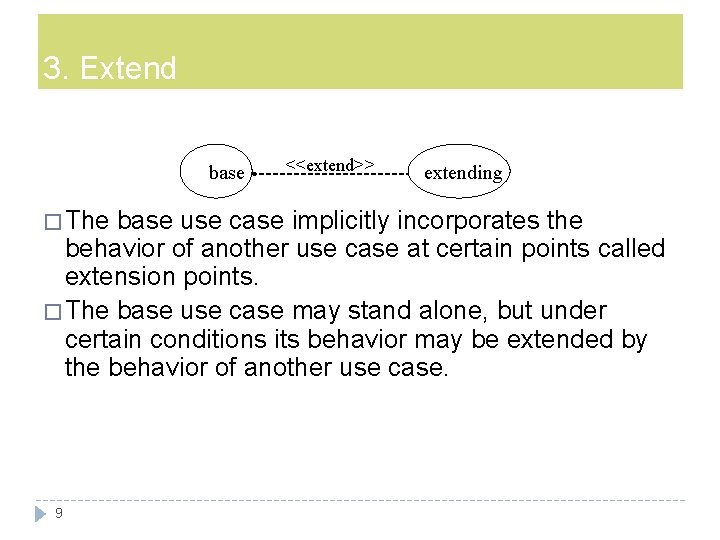
3. Extend base � The <<extend>> extending base use case implicitly incorporates the behavior of another use case at certain points called extension points. � The base use case may stand alone, but under certain conditions its behavior may be extended by the behavior of another use case. 9
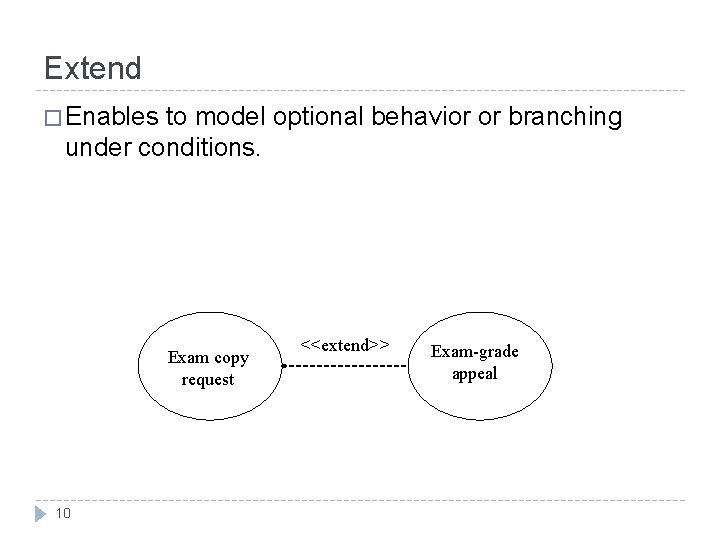
Extend � Enables to model optional behavior or branching under conditions. Exam copy request 10 <<extend>> Exam-grade appeal

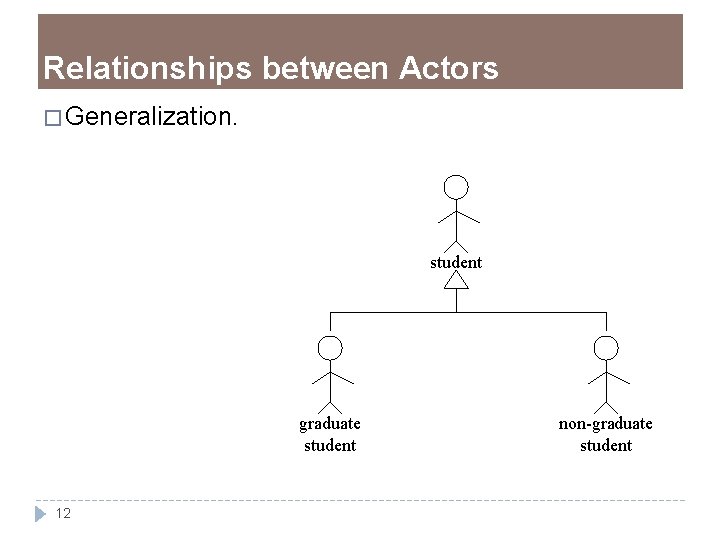
Relationships between Actors � Generalization. student graduate student 12 non-graduate student
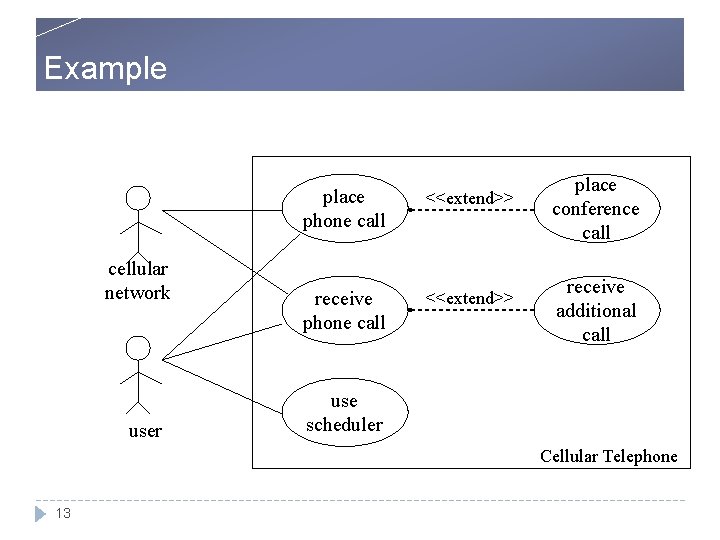
Example cellular network user place phone call <<extend>> receive phone call <<extend>> place conference call receive additional call use scheduler Cellular Telephone 13
EXAMPLE
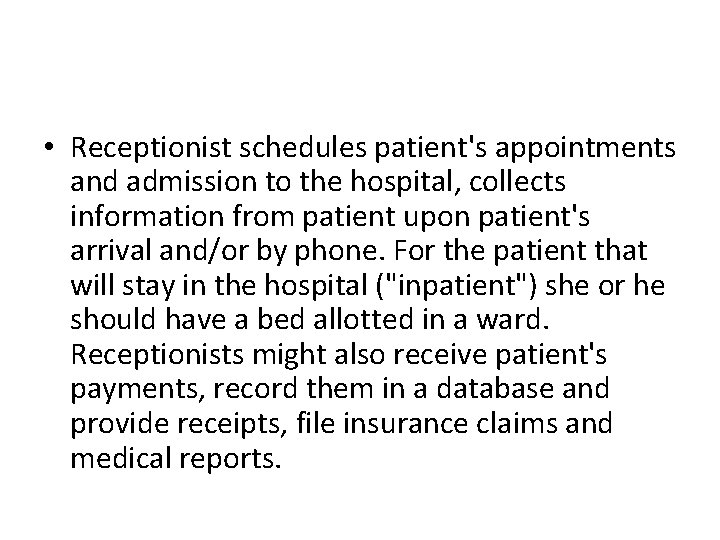
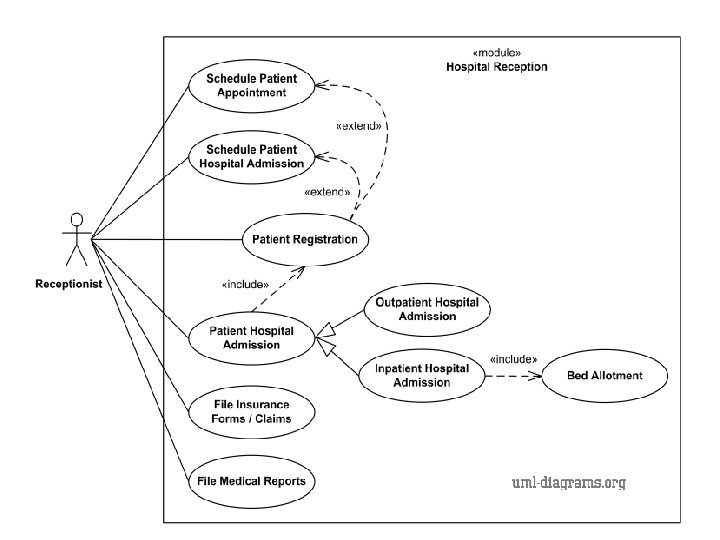
• Receptionist schedules patient's appointments and admission to the hospital, collects information from patient upon patient's arrival and/or by phone. For the patient that will stay in the hospital ("inpatient") she or he should have a bed allotted in a ward. Receptionists might also receive patient's payments, record them in a database and provide receipts, file insurance claims and medical reports.
- Slides: 16