
Usages of ICT A user oriented innovation process
- Slides: 23
Usages of ICT A user oriented innovation process Sylvain Dejean - Coordinator
The Gis M@rsouin • Gathers Breton laboratories which have two common denominators – Human and Social Sciences expertises – The study of Internet « usages » • Is able to: – Lead research program – Evaluate public policy – Collaborate with industrial in a user oriented conception process
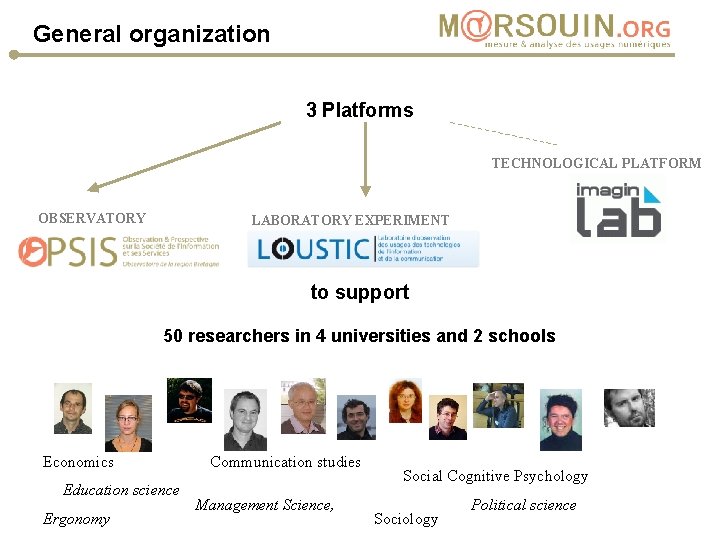
General organization 3 Platforms TECHNOLOGICAL PLATFORM OBSERVATORY LABORATORY EXPERIMENT to support 50 researchers in 4 universities and 2 schools Economics Education science Ergonomy Communication studies Management Science, Social Cognitive Psychology Sociology Political science
4 main fields of research • Learning – How digital technologies change and contribute to news forms of learning. • Social interaction – New technologies enable to create new sociability, new sharing process, news information and knowledge production, news media. • Public area – How can new digital technologies help public policy makers and citizen. • Market – Economic impact of digital technologies, e-commerce development, network economics.
The strengths of M@rsouin • Interdisciplinary – Diversity of expertise, methodology and knowledge M@rsouin is able to coordinate and integrate all these various approaches • Put users at the core process – Observation in real context – Specific situation experimented in laboratory – Target users as regard to issues and needs addressed. • Ability to bring expertise's at each stage of the conception process.
The observatory • Couples questionnaire and research issues to produce original and meaningful analysis. – Content: • Photography of equipment and usages, prospective analysis, need assessment, satisfaction analysis, profiling. – Methodology: • Building questionnaire, sampling, definition of quotas and representatively, monitoring the survey (recovering respondents) – Treatment: • cleaning database, statistical analysis (cross and frequency tab) specific treatment, multivariate analysis (typology, factorial analysis), econometrics.
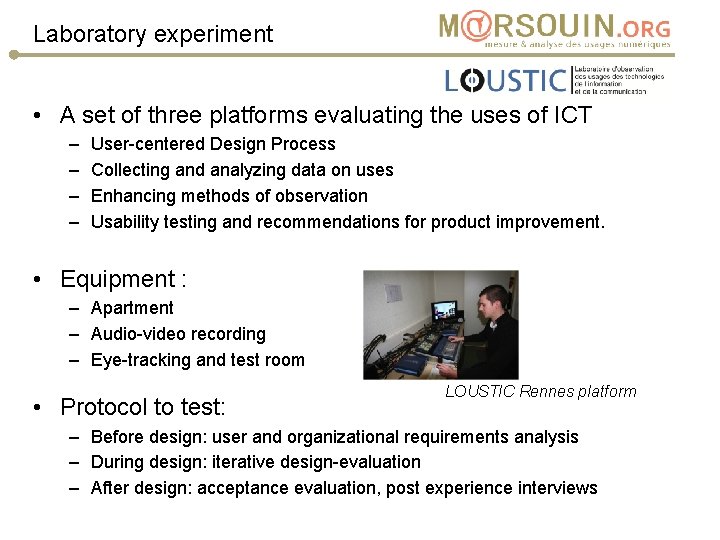
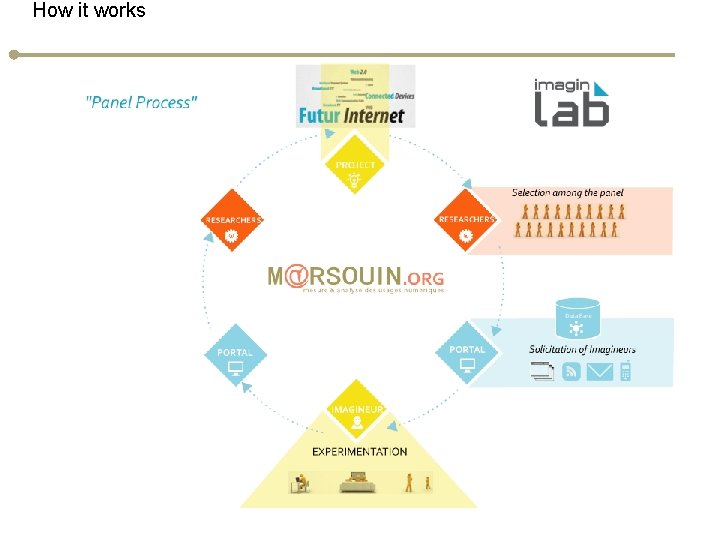
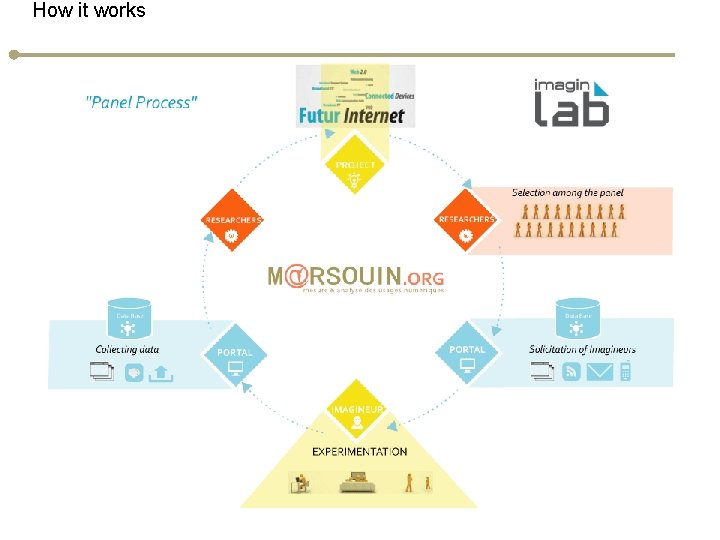
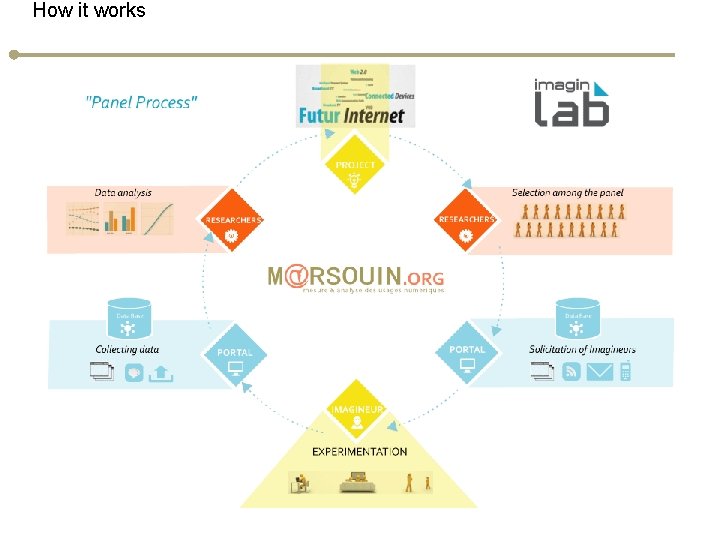
Laboratory experiment • A set of three platforms evaluating the uses of ICT – – User-centered Design Process Collecting and analyzing data on uses Enhancing methods of observation Usability testing and recommendations for product improvement. • Equipment : – Apartment – Audio-video recording – Eye-tracking and test room • Protocol to test: LOUSTIC Rennes platform – Before design: user and organizational requirements analysis – During design: iterative design-evaluation – After design: acceptance evaluation, post experience interviews
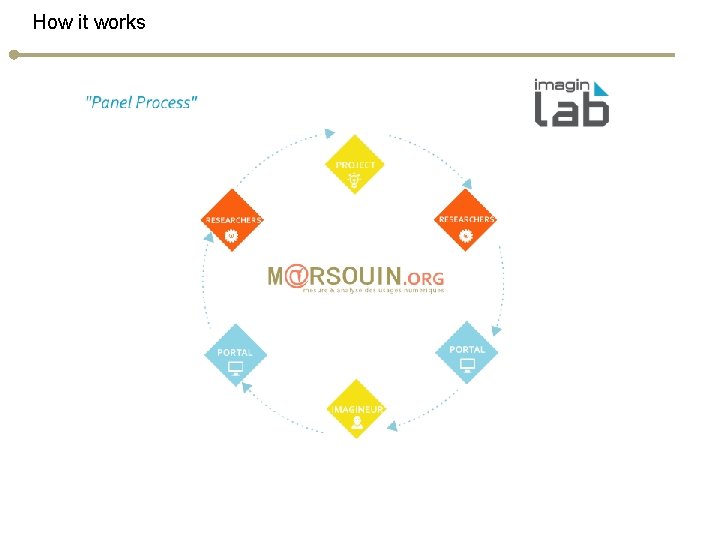
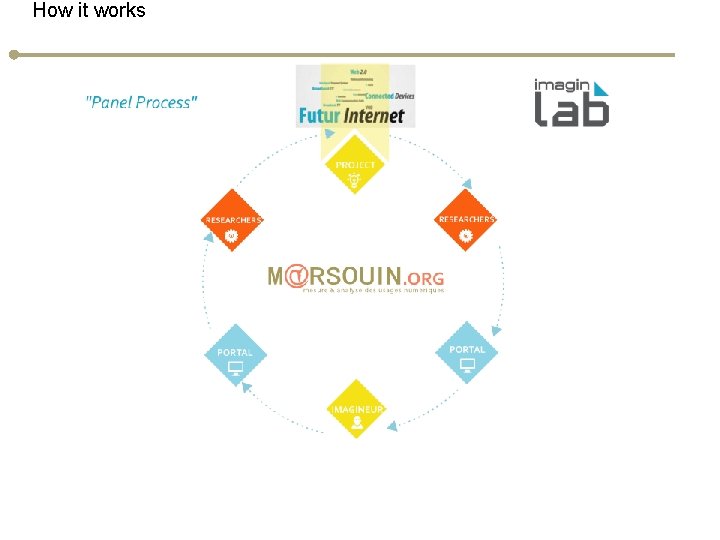
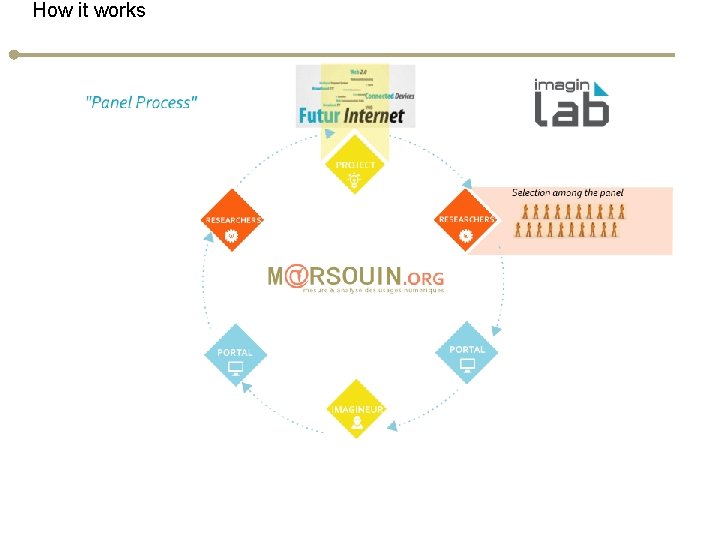
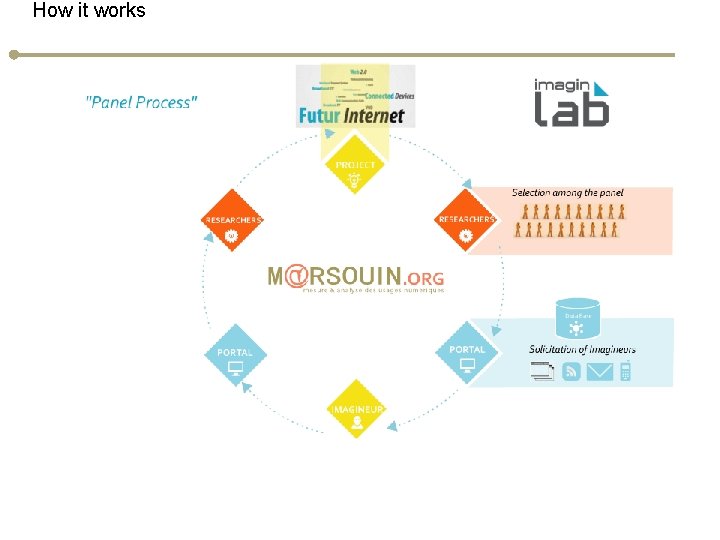
Technological platform • Imagin. Lab is an open platform dedicated to integration test, interoperability and usages experiment of new digital technologies on fixed and mobile networks. – Lannion: Broadband connexion (FTTH, FTTO) – Brest: high speed wireless technology (LTE/4 G) – Rennes: Digital TV (DVB-T 2) • On each platform a panel of users “Imagineurs” are available to experiment, test and observe innovative services and products.
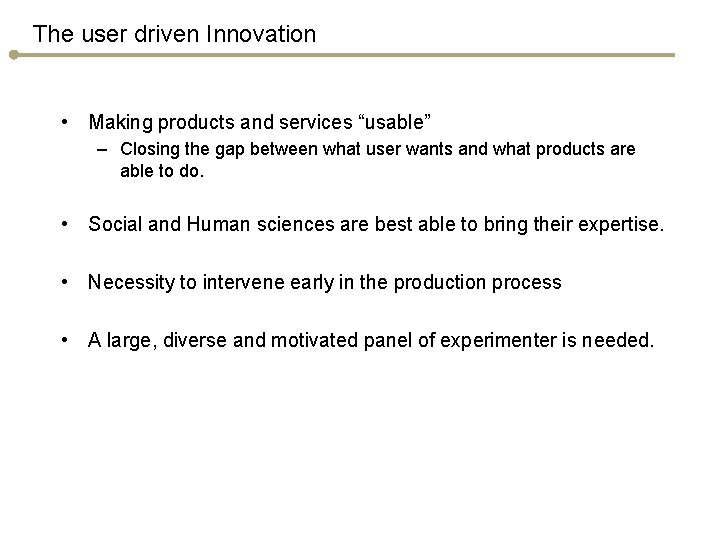
The user driven Innovation • Making products and services “usable” – Closing the gap between what user wants and what products are able to do. • Social and Human sciences are best able to bring their expertise. • Necessity to intervene early in the production process • A large, diverse and motivated panel of experimenter is needed.
How it works
How it works
How it works
How it works
How it works
How it works
How it works
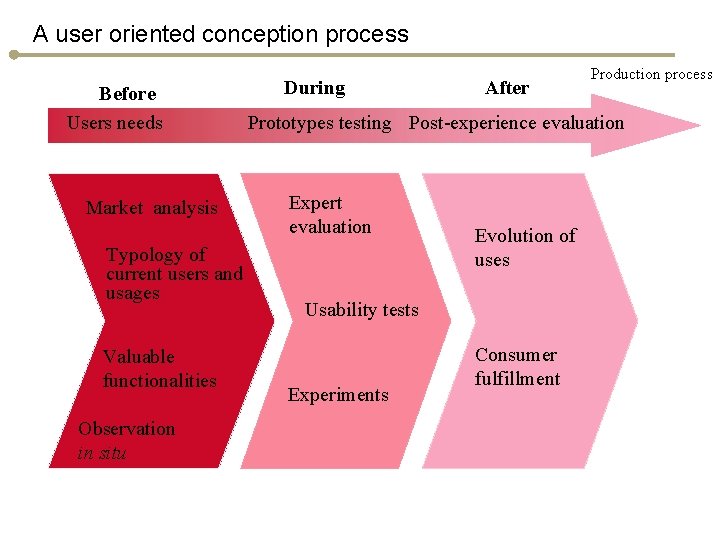
A user oriented conception process Before Users needs Market analysis Typology of current users and usages Valuable functionalities Observation in situ During After Production process Prototypes testing Post-experience evaluation Expert evaluation Evolution of uses Usability tests Experiments Consumer fulfillment
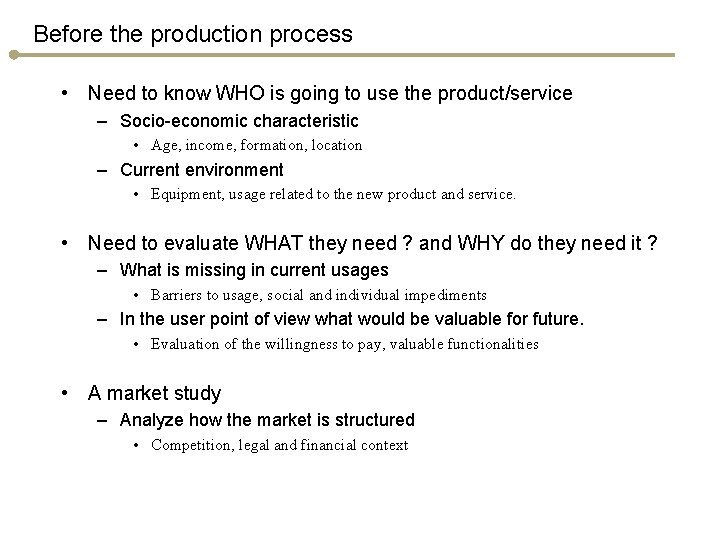
Before the production process • Need to know WHO is going to use the product/service – Socio-economic characteristic • Age, income, formation, location – Current environment • Equipment, usage related to the new product and service. • Need to evaluate WHAT they need ? and WHY do they need it ? – What is missing in current usages • Barriers to usage, social and individual impediments – In the user point of view what would be valuable for future. • Evaluation of the willingness to pay, valuable functionalities • A market study – Analyze how the market is structured • Competition, legal and financial context
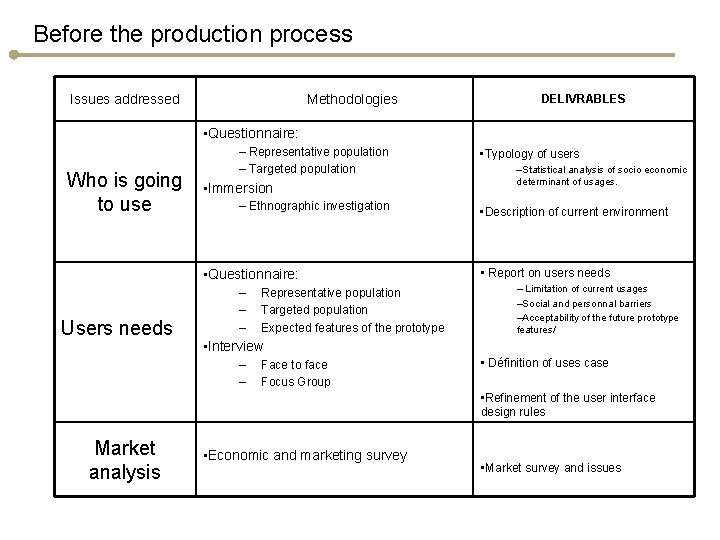
Before the production process Issues addressed Methodologies DELIVRABLES • Questionnaire: Who is going to use – Representative population – Targeted population • Immersion – Ethnographic investigation • Questionnaire: Users needs – – – Representative population Targeted population Expected features of the prototype • Typology of users –Statistical analysis of socio economic determinant of usages. • Description of current environment • Report on users needs – Limitation of current usages –Social and personnal barriers –Acceptability of the future prototype features/ • Interview – – Face to face Focus Group • Définition of uses case • Refinement of the user interface design rules Market analysis • Economic and marketing survey • Market survey and issues
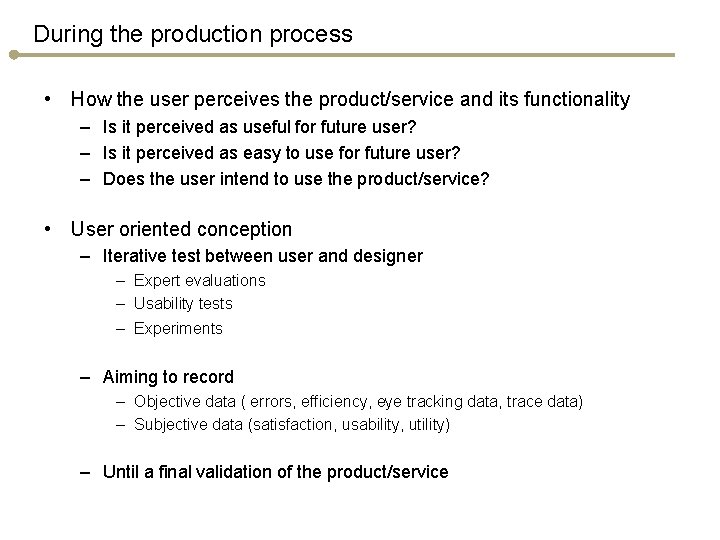
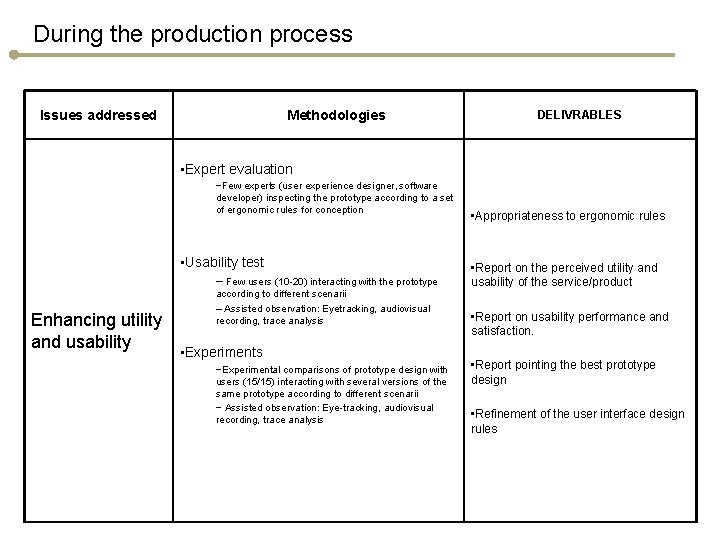
During the production process • How the user perceives the product/service and its functionality – Is it perceived as useful for future user? – Is it perceived as easy to use for future user? – Does the user intend to use the product/service? • User oriented conception – Iterative test between user and designer – Expert evaluations – Usability tests – Experiments – Aiming to record – Objective data ( errors, efficiency, eye tracking data, trace data) – Subjective data (satisfaction, usability, utility) – Until a final validation of the product/service
During the production process Issues addressed Methodologies DELIVRABLES • Expert evaluation −Few experts (user experience designer, software developer) inspecting the prototype according to a set of ergonomic rules for conception • Usability test – Few users (10 -20) interacting with the prototype Enhancing utility and usability according to different scenarii – Assisted observation: Eyetracking, audiovisual recording, trace analysis • Experiments −Experimental comparisons of prototype design with users (15/15) interacting with several versions of the same prototype according to different scenarii − Assisted observation: Eye-tracking, audiovisual recording, trace analysis • Appropriateness to ergonomic rules • Report on the perceived utility and usability of the service/product • Report on usability performance and satisfaction. • Report pointing the best prototype design • Refinement of the user interface design rules
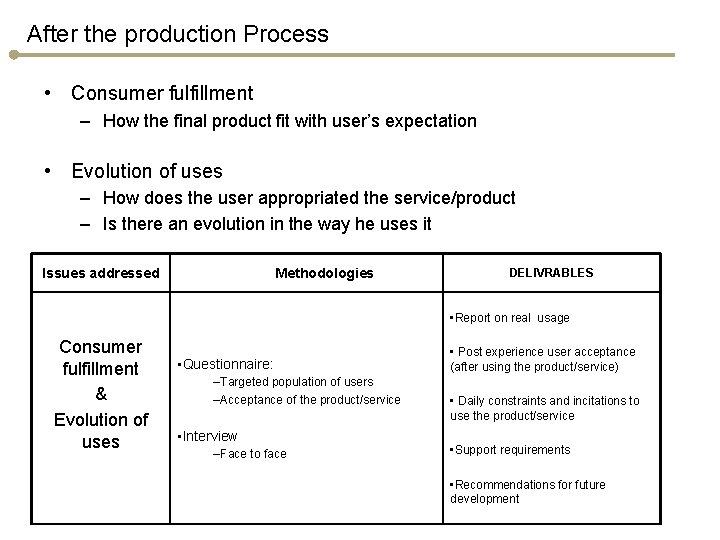
After the production Process • Consumer fulfillment – How the final product fit with user’s expectation • Evolution of uses – How does the user appropriated the service/product – Is there an evolution in the way he uses it Issues addressed Methodologies DELIVRABLES • Report on real usage Consumer fulfillment & Evolution of uses • Questionnaire: –Targeted population of users –Acceptance of the product/service • Interview –Face to face • Post experience user acceptance (after using the product/service) • Daily constraints and incitations to use the product/service • Support requirements • Recommendations for future development
Thanks for your attention contact@marsouin. org enquete@marsouin. org eric. jamet@mshb. fr severine. erhel@mshb. fr