
Usability Techniques for Webbased Services Diversity and Technology
Usability Techniques for Web-based Services Diversity and Technology CHI 2000 1 Lindenberg, Neerincx Pemberton, Van Dijk
Universal Accessibility Design for All CHI 2000 2 Lindenberg, Neerincx Pemberton, Van Dijk
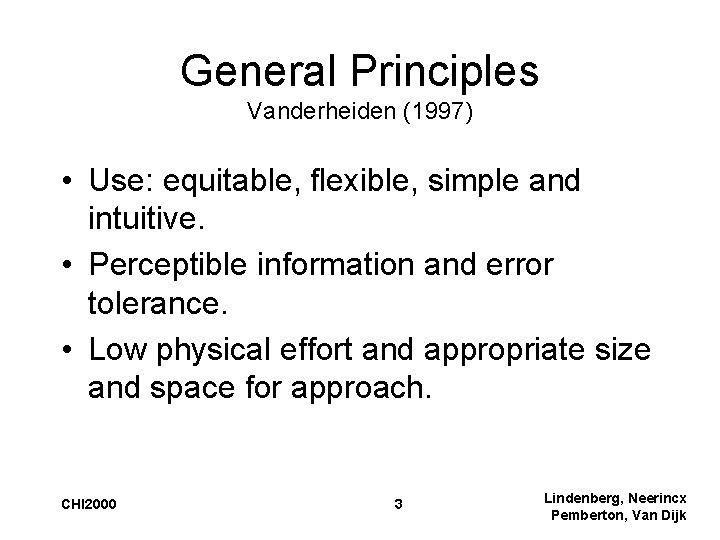
General Principles Vanderheiden (1997) • Use: equitable, flexible, simple and intuitive. • Perceptible information and error tolerance. • Low physical effort and appropriate size and space for approach. CHI 2000 3 Lindenberg, Neerincx Pemberton, Van Dijk
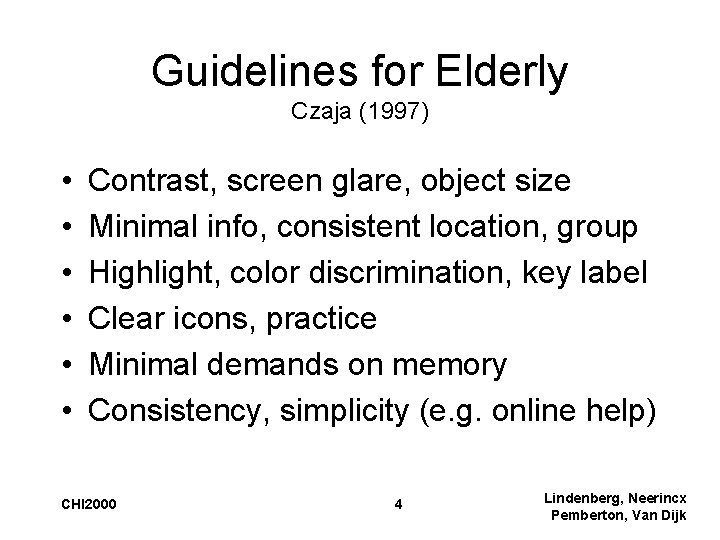
Guidelines for Elderly Czaja (1997) • • • Contrast, screen glare, object size Minimal info, consistent location, group Highlight, color discrimination, key label Clear icons, practice Minimal demands on memory Consistency, simplicity (e. g. online help) CHI 2000 4 Lindenberg, Neerincx Pemberton, Van Dijk

Web Content Guidelines (W 3 C) http: //www. w 3. org/TR/WAI-WEBCONTENT • • Auditory/visual alternatives/not color alone Markup and style sheets Natural language, tables, pages User control, access of embedded UIs Device independence, interim solutions W 3 C technologies, context information Clear navigation and simple documents CHI 2000 5 Lindenberg, Neerincx Pemberton, Van Dijk
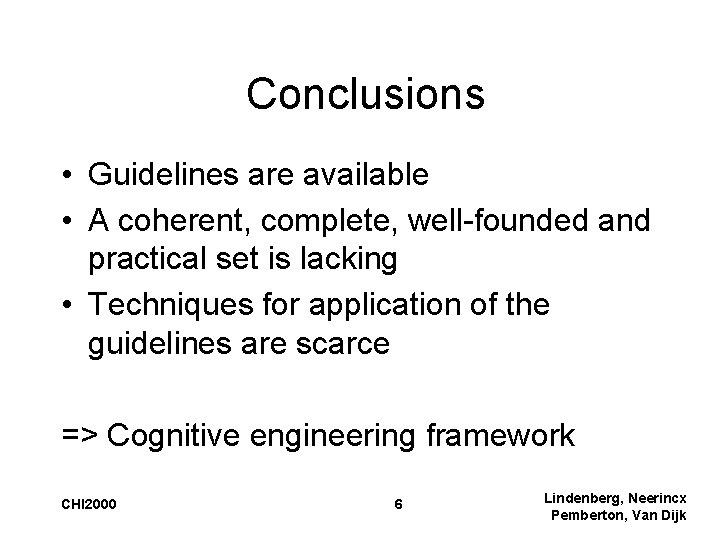
Conclusions • Guidelines are available • A coherent, complete, well-founded and practical set is lacking • Techniques for application of the guidelines are scarce => Cognitive engineering framework CHI 2000 6 Lindenberg, Neerincx Pemberton, Van Dijk
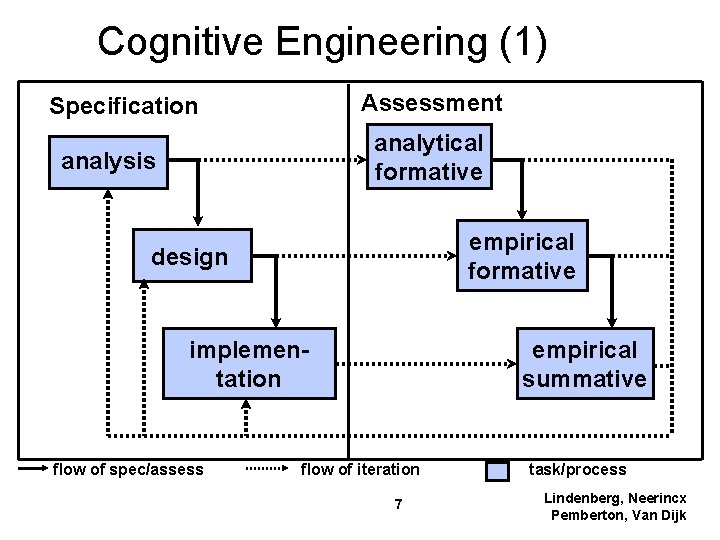
Cognitive Engineering (1) Assessment Specification analytical formative analysis empirical formative design implementation flow of spec/assess empirical summative flow of iteration 7 task/process Lindenberg, Neerincx Pemberton, Van Dijk
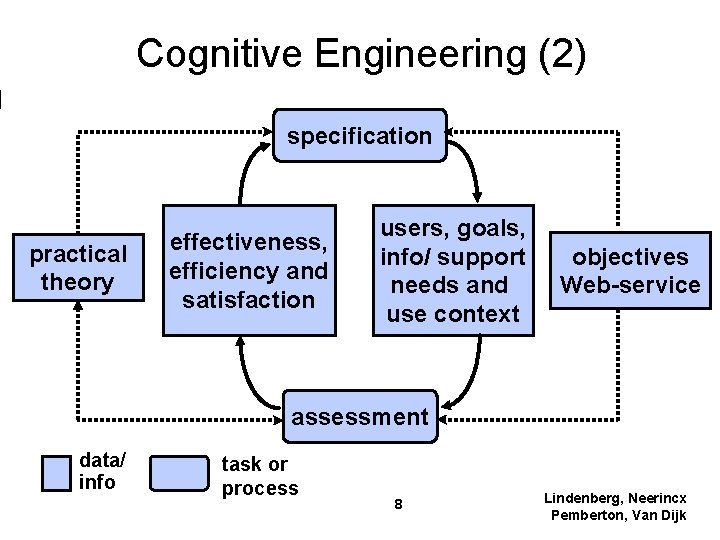
Cognitive Engineering (2) specification practical theory effectiveness, efficiency and satisfaction users, goals, info/ support needs and use context objectives Web-service assessment data/ info task or process 8 Lindenberg, Neerincx Pemberton, Van Dijk
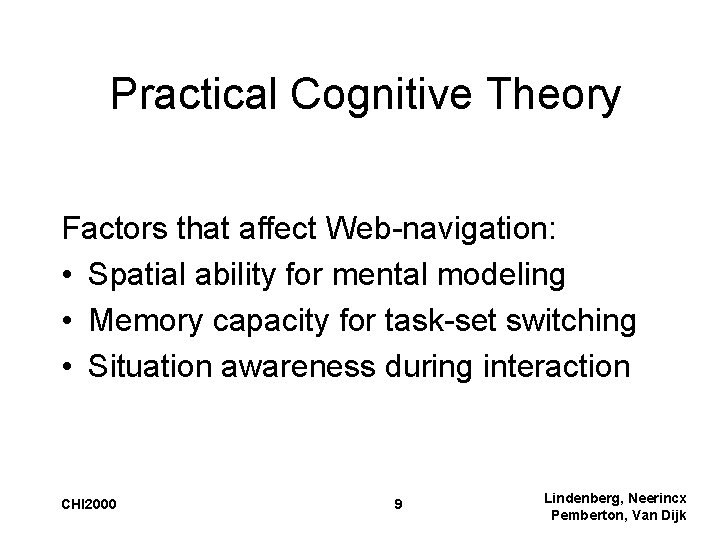
Practical Cognitive Theory Factors that affect Web-navigation: • Spatial ability for mental modeling • Memory capacity for task-set switching • Situation awareness during interaction CHI 2000 9 Lindenberg, Neerincx Pemberton, Van Dijk
Theoretical and Empirical Based User Requirements for Elderly CHI 2000 10 Lindenberg, Neerincx Pemberton, Van Dijk
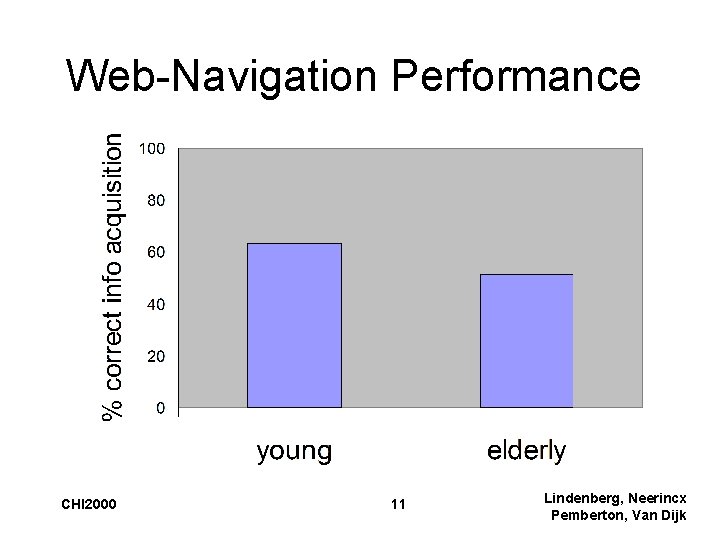
Web-Navigation Performance CHI 2000 11 Lindenberg, Neerincx Pemberton, Van Dijk
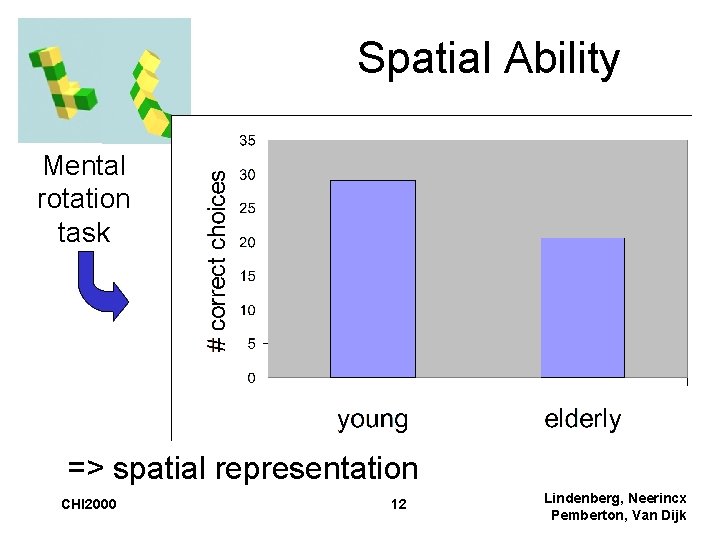
Spatial Ability Mental rotation task => spatial representation CHI 2000 12 Lindenberg, Neerincx Pemberton, Van Dijk
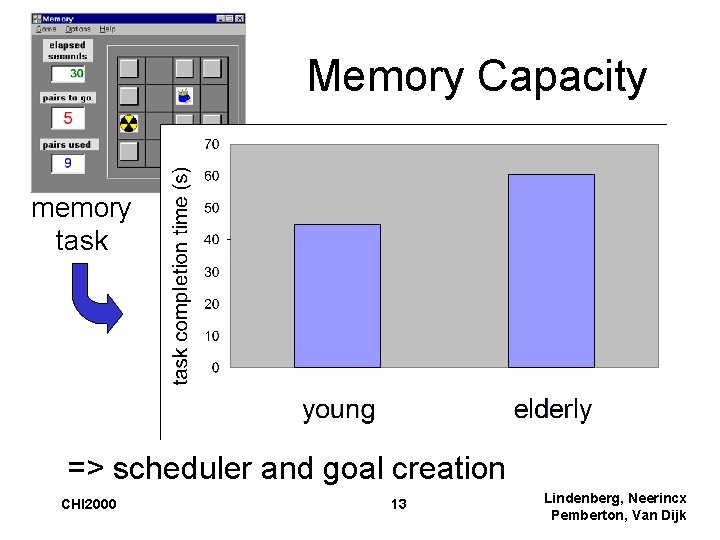
Memory Capacity memory task => scheduler and goal creation CHI 2000 13 Lindenberg, Neerincx Pemberton, Van Dijk
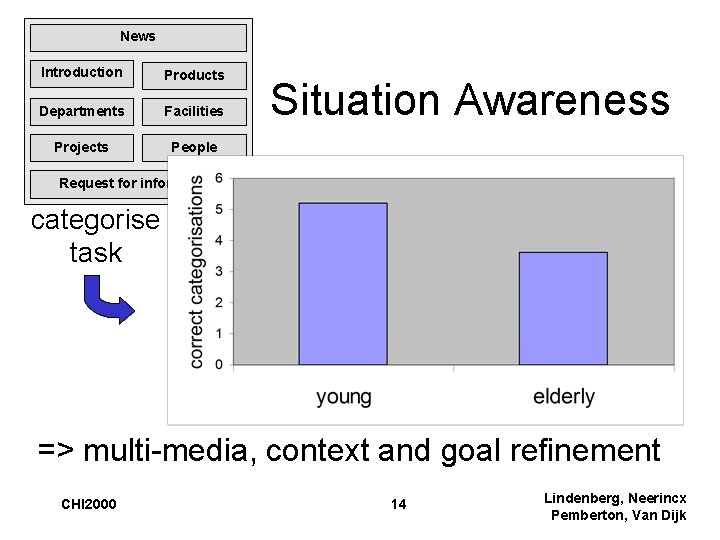
News Introduction Products Departments Facilities Projects People Situation Awareness Request for information categorise task => multi-media, context and goal refinement CHI 2000 14 Lindenberg, Neerincx Pemberton, Van Dijk
Transform User Requirements into Navigation Support for Elderly CHI 2000 15 Lindenberg, Neerincx Pemberton, Van Dijk
Analysis • Map user requirements on current support functions • Prioritize according to “Web-service objectives” • Estimate implementation costs => synthesize support concepts CHI 2000 16 Lindenberg, Neerincx Pemberton, Van Dijk
Design and Implementation Three support functions: • categorizing landmarks • history map • navigation assistant CHI 2000 17 Lindenberg, Neerincx Pemberton, Van Dijk
Evaluation Three usability measures: • effectiveness • efficiency • satisfaction CHI 2000 18 Lindenberg, Neerincx Pemberton, Van Dijk
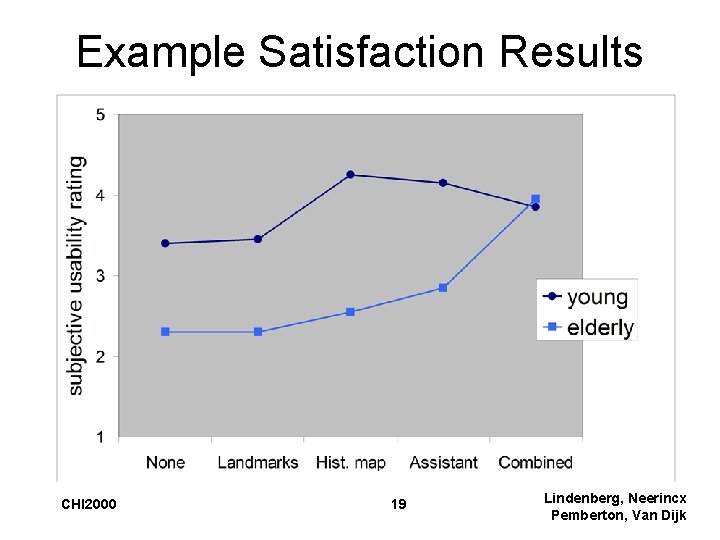
Example Satisfaction Results CHI 2000 19 Lindenberg, Neerincx Pemberton, Van Dijk
Conclusions • Individualization of Web-interfaces is needed to realize “Universal Accessibility” • Design for all results in adaptive interfaces (no “boring uniformity”) • Elderly users need more navigation support CHI 2000 20 Lindenberg, Neerincx Pemberton, Van Dijk
- Slides: 20