
Usability and Human Factors Unit 3 a Cognition
Usability and Human Factors Unit 3 a Cognition and Human Performance
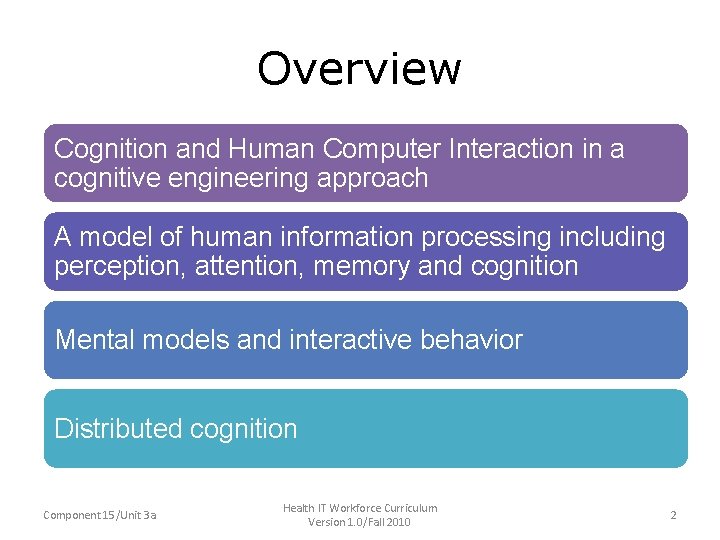
Overview andand Human Computer Interaction in a • Cognition Human Computer cognitive engineering approachengineering Interaction in a cognitive Aapproach model of human information processing including memory and cognition • perception, A model attention, of human information processing including perception, attention, memory Mental models and interactive behavior and cognition • Mental models and interactive behavior Distributed cognition • Distributed cognition Component 15/Unit 3 a Health IT Workforce Curriculum Version 1. 0/Fall 2010 2
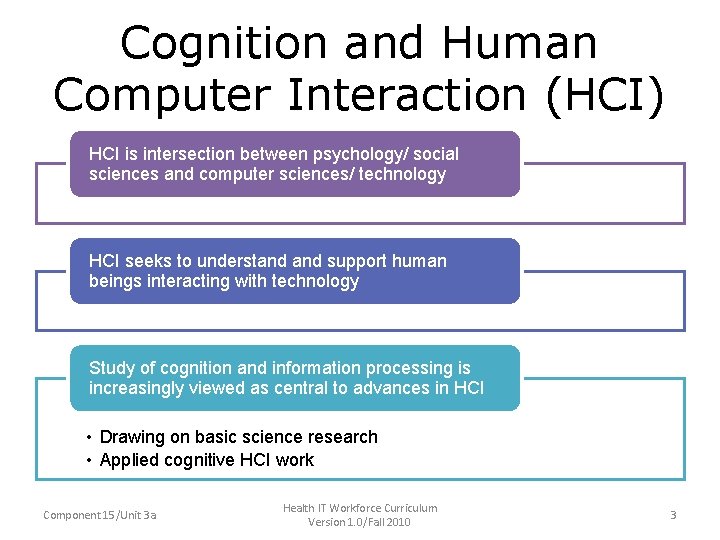
Cognition and Human Computer Interaction (HCI) HCI isis intersection between psychology/ social psychology/ • HCI intersection between sciences and computer sciences/ technology social sciences and computer sciences/ technology HCI seeks to understand support human • HCI and support beingsseeks interactingto withunderstand technology human beings interacting with technology • Study of cognition and information processing is increasingly viewed as central to advances in HCI processing is increasingly viewed as • Drawing on science research central tobasic advances in HCI • Applied cognitive HCI work – Drawing on basic science research Health IT Workforce Curriculum Component 15/Unit 3 a 1. 0/Fall 2010 – Applied cognitive. Version HCI work 3
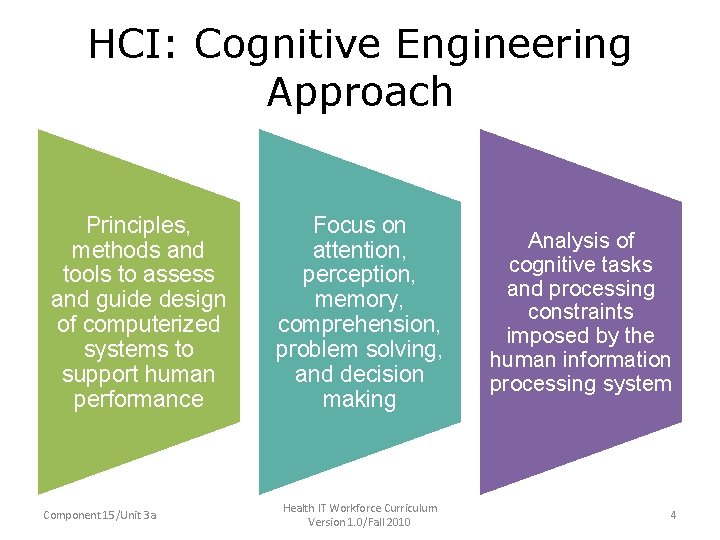
HCI: Cognitive Engineering Approach • Principles, methods and tools to assess and guide design of computerized systems on to. Principles, support human. Focus performance Analysis of methods and attention, cognitive tasks to assess perception, • tools Focus on attention, perception, and memory, processing and guide design memory, constraints comprehension, problem solving, and of computerized comprehension, imposed by the systems to making problem solving, decision human information support human and decision processing system • Analysis tasks and processing performanceof cognitive making constraints imposed by the human information processing system Component 15/Unit 3 a Health IT Workforce Curriculum Version 1. 0/Fall 2010 4
Cognitive Theory and HCI • Informative • Useful research findings – Useful research findings Predictive • • Predictive Providing tools to model user behavior – Providing Prescriptive tools to model user behavior • Providing advice for design or evaluation • Prescriptive Explanatory – Providing advice for design or evaluation • Accounting for user behavior • Generative Explanatory • Provide design dimensions and constructs to inform design and selection of – Accounting for user behavior external representations • Generative Component 15/Unit 3 a Health IT Workforce Curriculum Version 1. 0/Fall 2010 5
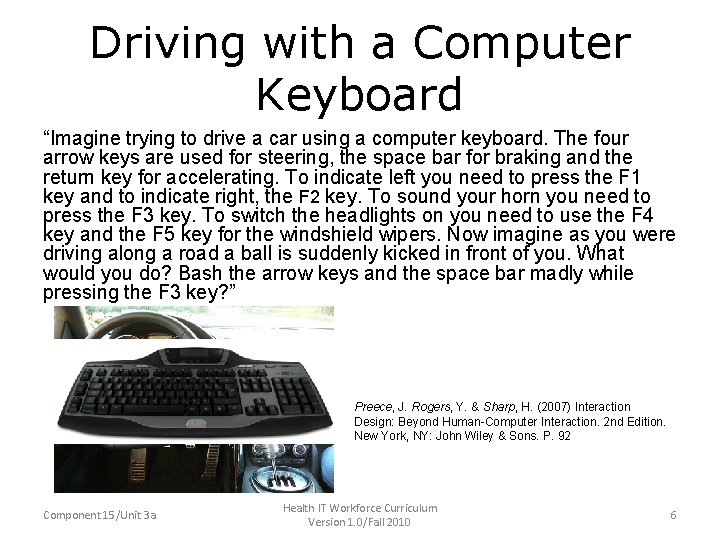
Driving with a Computer Keyboard “Imagine trying to drive a car using a computer keyboard. The four arrow keys are used for steering, the space bar for braking and the return key for accelerating. To indicate left you need to press the F 1 key and to indicate right, the F 2 key. To sound your horn you need to press the F 3 key. To switch the headlights on you need to use the F 4 key and the F 5 key for the windshield wipers. Now imagine as you were driving along a road a ball is suddenly kicked in front of you. What would you do? Bash the arrow keys and the space bar madly while pressing the F 3 key? ” Preece, J. Rogers, Y. & Sharp, H. (2007) Interaction Design: Beyond Human-Computer Interaction. 2 nd Edition. New York, NY: John Wiley & Sons. P. 92 Component 15/Unit 3 a Health IT Workforce Curriculum Version 1. 0/Fall 2010 6
Human Information Processing • Human information theory information processing theory processing deals with how people receive, store, integrate, retrieve, and use information. HIP model recognizes 3 subsystems: • A basic HIP model recognizes 3 subsystems: • Perceptual system processing sensory information • Motor system controlssystem action – Perceptual processing sensory • Cognitive system provides the processing that connects the two systems information HIP – model provides a basis from which to make predictions about human Motor system controls action performance – Cognitive system provides the processing that connects the two systems Health IT Workforce Curriculum Component 15/Unit 3 a 7 Version 1. 0/Fall 2010
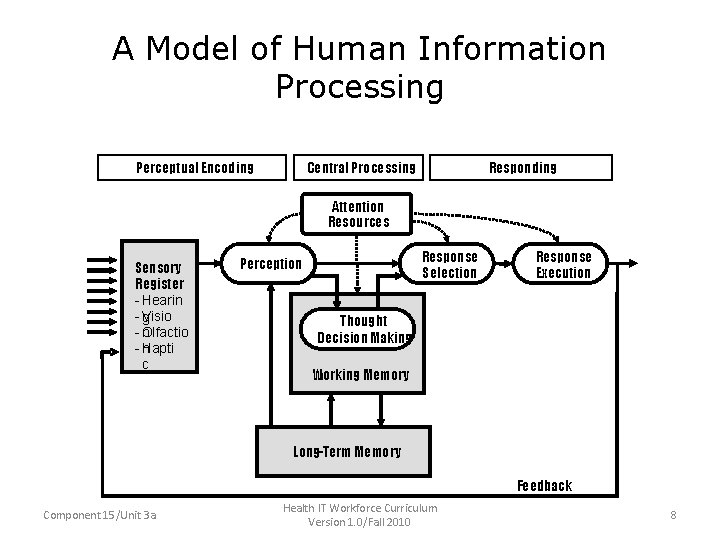
A Model of Human Information Processing Perceptual Encoding Central Processing Responding Attention Resources Sensory Register - Hearin -g Visio - Olfactio n - Hapti n c Response Selection Perception Response Execution Thought Decision Making Working Memory Long-Term Memory Feedback Component 15/Unit 3 a Health IT Workforce Curriculum Version 1. 0/Fall 2010 8
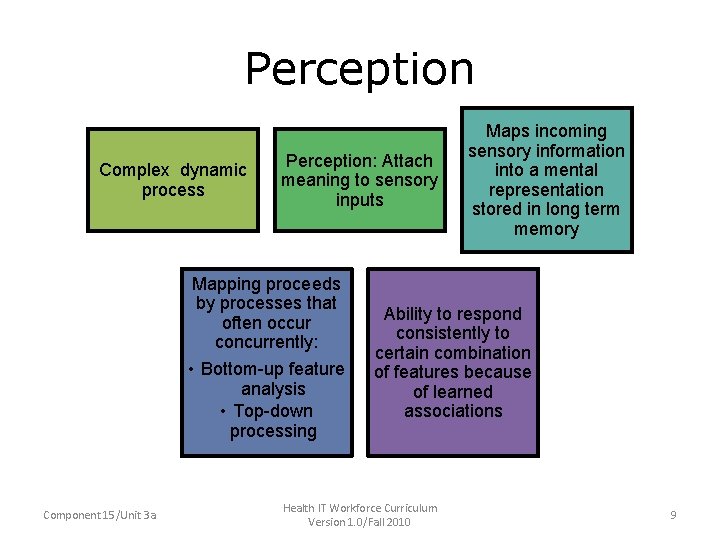
Perception Maps incoming sensory information into a mental representation stored in long term memory • Complex dynamic process Perception: Attach Complex dynamic meaning to sensory process • Perception: Attach inputs meaning to sensory inputs Mapping proceeds • Maps incoming sensory information into a by processes that Ability to respond often occur mental representation stored into long term consistently concurrently: combination memory • Bottom-up feature ofcertain features because analysis of learned • Mapping proceeds by processes that often associations • Top-down processing occur concurrently: – Bottom-up feature analysis Health IT Workforce Curriculum Component 15/Unit 3 a Version 1. 0/Fall 2010 – Top-down processing 9
Gestalt Organization Principles • Perceptual organizing principle: – How we perceive structure in our environment • • • Proximity Containment Similarity Closure Continuation • Basic principles with clear implications for web design Component 15/Unit 3 a Health IT Workforce Curriculum Version 1. 0/Fall 2010 10
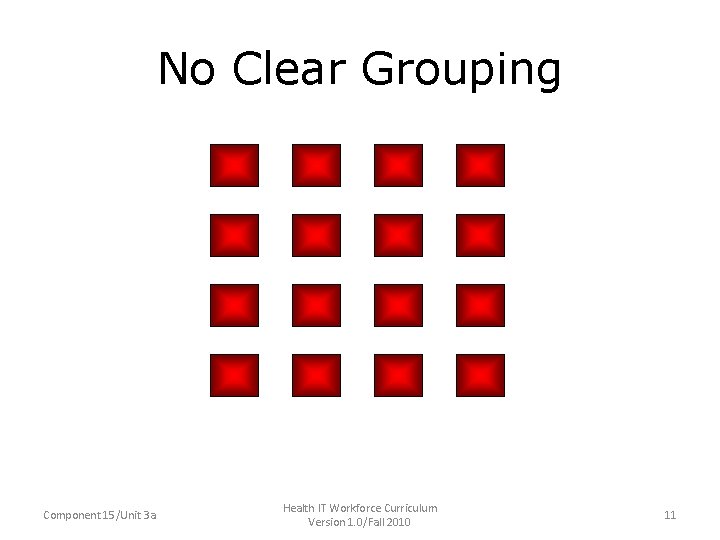
No Clear Grouping Component 15/Unit 3 a Health IT Workforce Curriculum Version 1. 0/Fall 2010 11
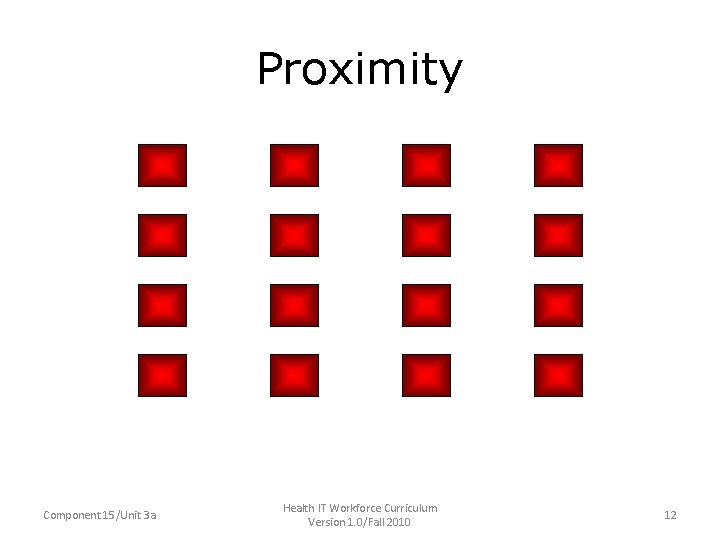
Proximity Component 15/Unit 3 a Health IT Workforce Curriculum Version 1. 0/Fall 2010 12
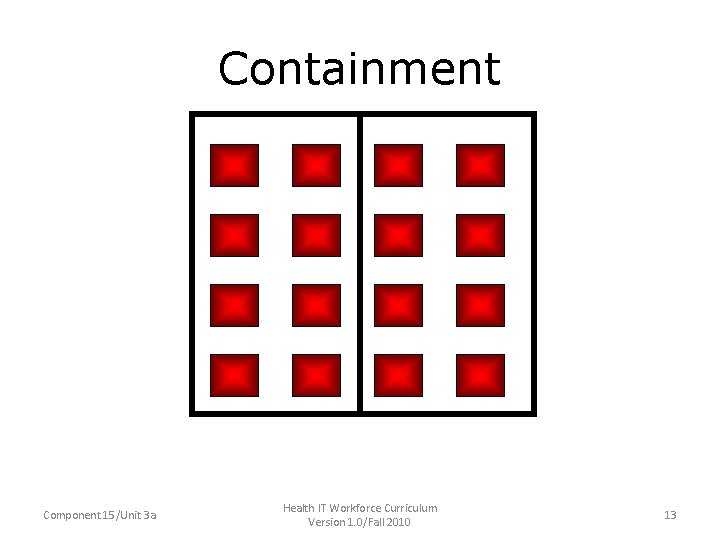
Containment Component 15/Unit 3 a Health IT Workforce Curriculum Version 1. 0/Fall 2010 13
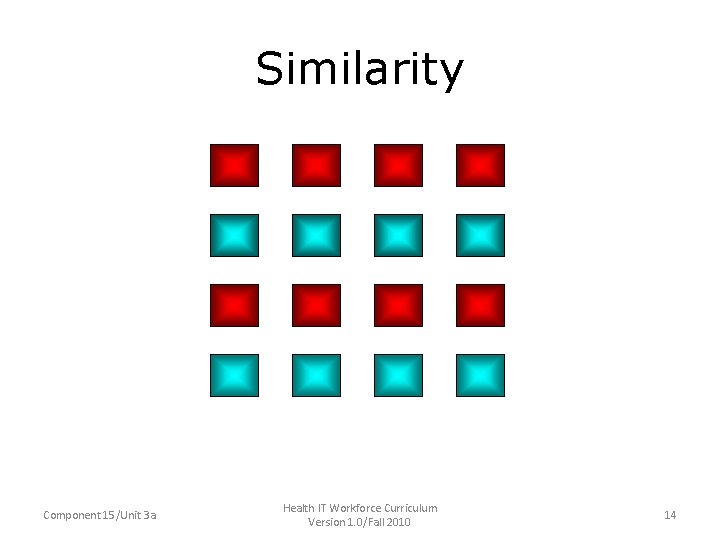
Similarity Component 15/Unit 3 a Health IT Workforce Curriculum Version 1. 0/Fall 2010 14
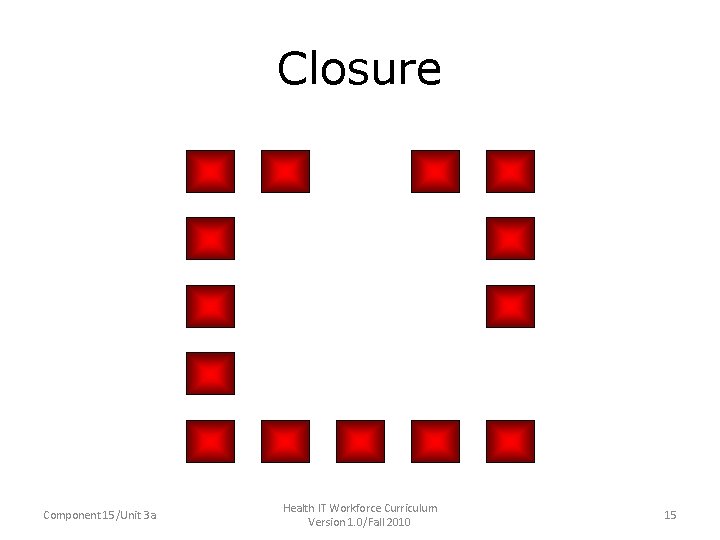
Closure Component 15/Unit 3 a Health IT Workforce Curriculum Version 1. 0/Fall 2010 15
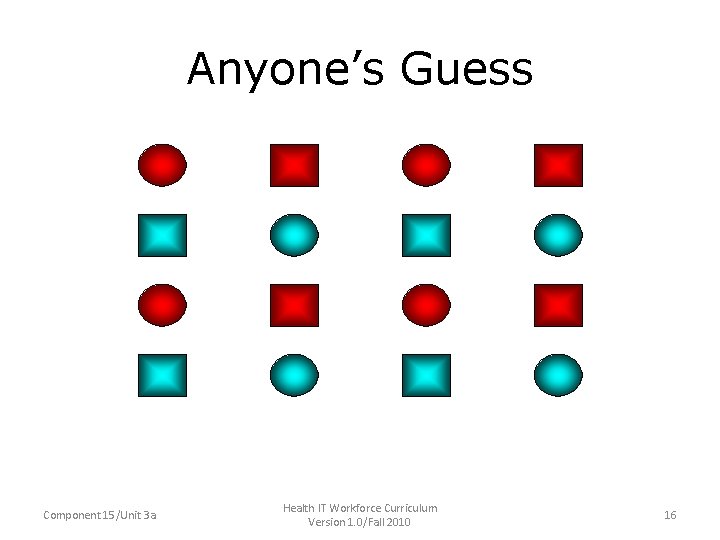
Anyone’s Guess Component 15/Unit 3 a Health IT Workforce Curriculum Version 1. 0/Fall 2010 16
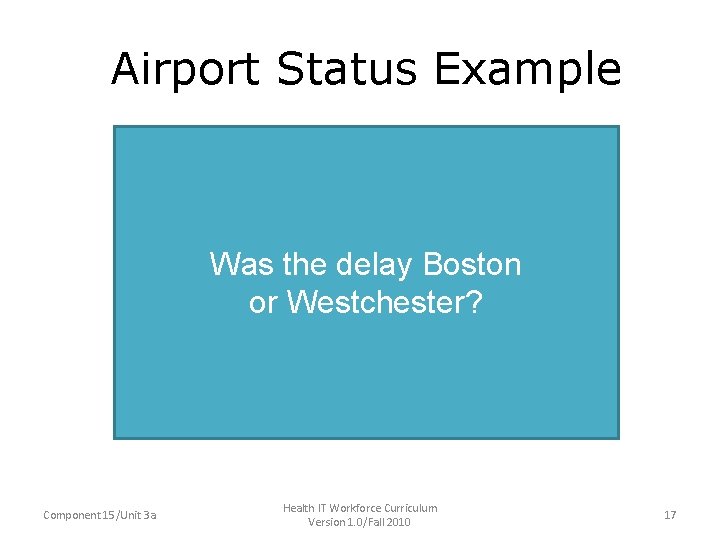
Airport Status Example Philadelphia • Was the Newark delay Boston or Westchester? On time JFK Boston Delay Was the delay Boston La Guardia Westchester or Westchester? On time Component 15/Unit 3 a On time Newberg Long Island On time Health IT Workforce Curriculum Version 1. 0/Fall 2010 17
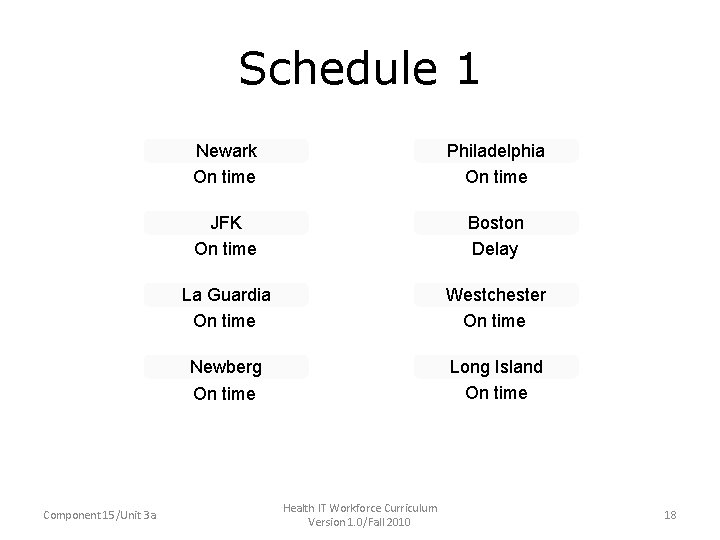
Schedule 1 Component 15/Unit 3 a Newark On time Philadelphia On time JFK On time Boston Delay La Guardia On time Westchester On time Newberg On time Long Island On time Health IT Workforce Curriculum Version 1. 0/Fall 2010 18
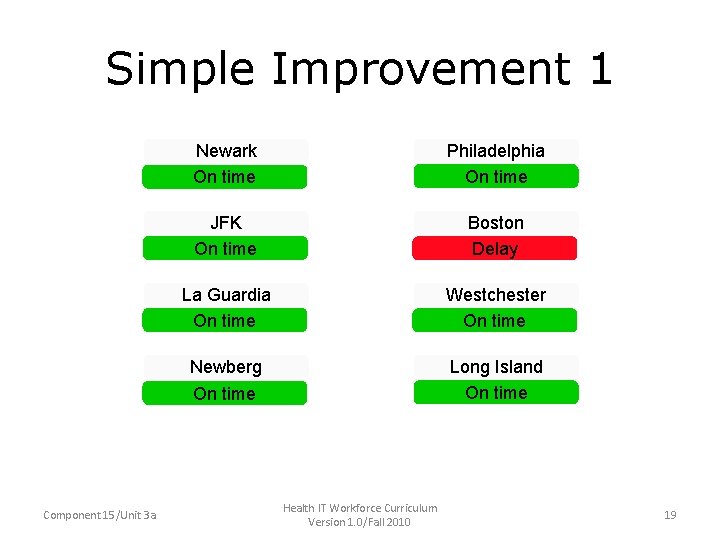
Simple Improvement 1 Component 15/Unit 3 a Newark On time Philadelphia On time JFK On time Boston Delay La Guardia On time Westchester On time Newberg On time Long Island On time Health IT Workforce Curriculum Version 1. 0/Fall 2010 19
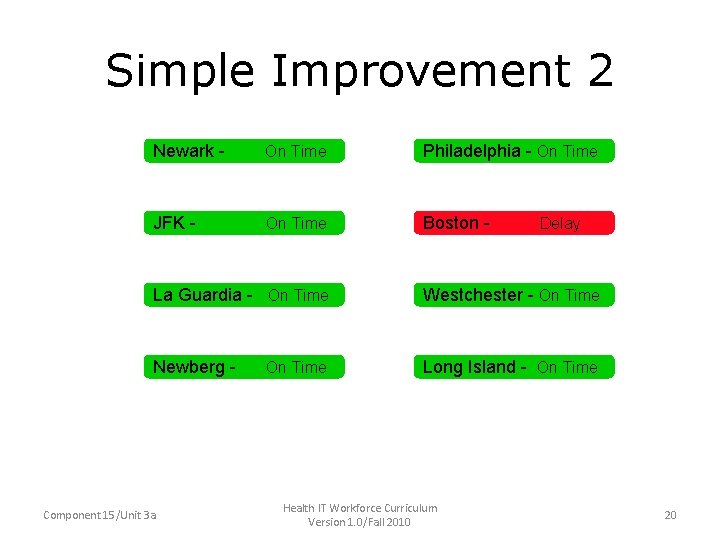
Simple Improvement 2 Newark - On Time Philadelphia - On Time JFK - On Time Boston - Delay La Guardia - On Time Westchester - On Time Newberg - Long Island - On Time Component 15/Unit 3 a On Time Health IT Workforce Curriculum Version 1. 0/Fall 2010 20
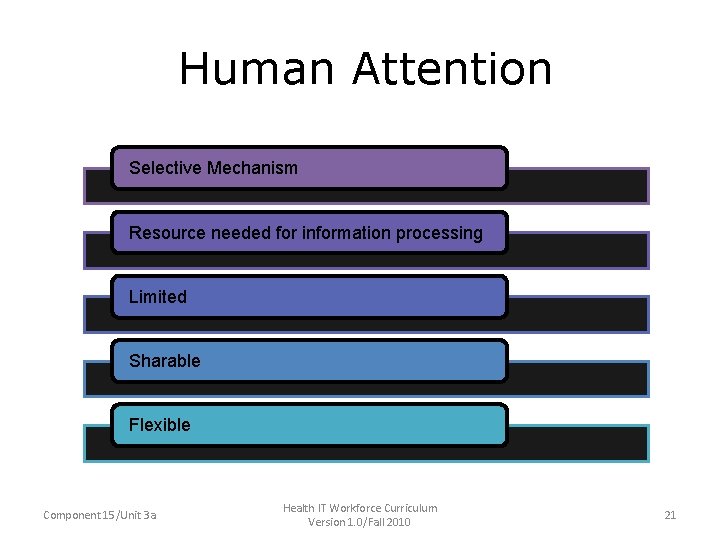
Human Attention • Selective Mechanism • Resource needed for information processing • Limited • Sharable • Flexible Component 15/Unit 3 a Health IT Workforce Curriculum Version 1. 0/Fall 2010 21
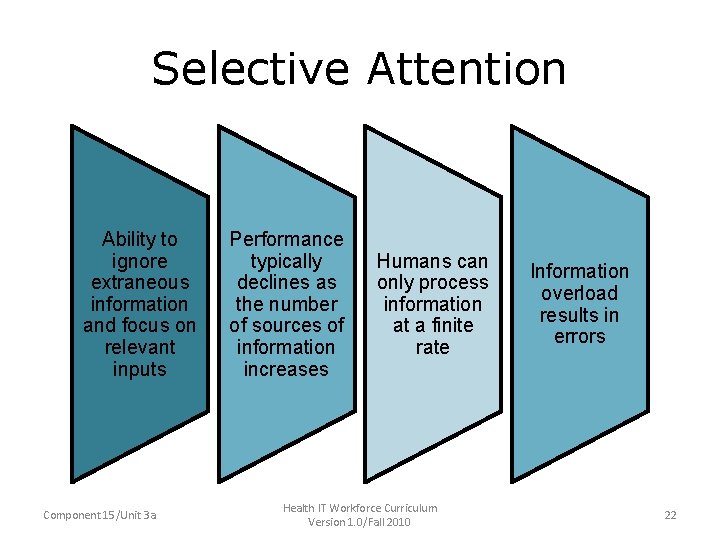
Selective Attention • Ability to ignore extraneous information and focus on relevant inputs • Performance typically declines as the Ability to Performance Humans can ignore typically Information number information extraneousof sources declines as of only process overload information the number results in increases and focus on of sources of at a finite errors relevant information rate • Humans canincreases only process information at a inputs finite rate • Information overload results in errors Component 15/Unit 3 a Health IT Workforce Curriculum Version 1. 0/Fall 2010 22
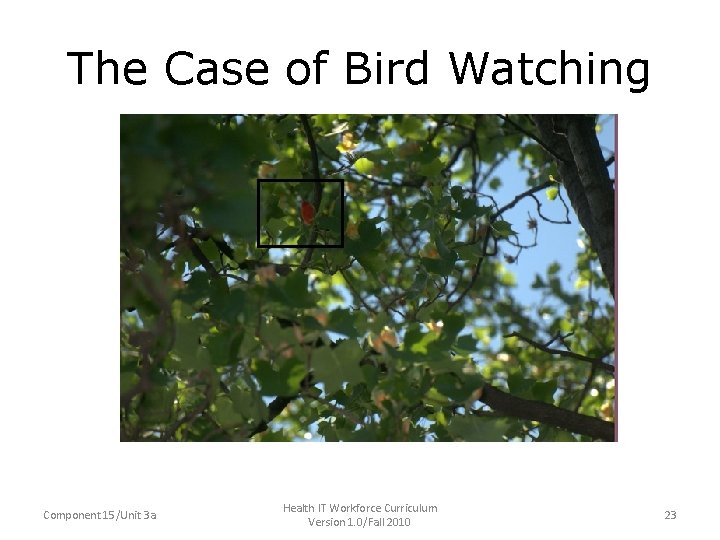
The Case of Bird Watching Component 15/Unit 3 a Health IT Workforce Curriculum Version 1. 0/Fall 2010 23
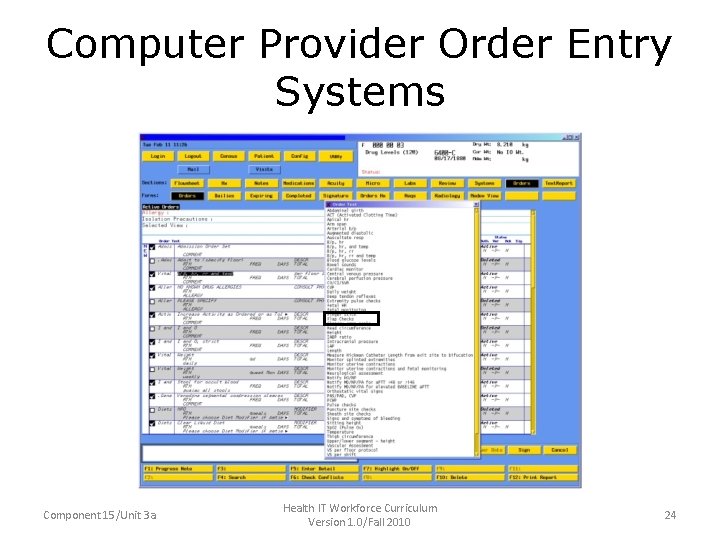
Computer Provider Order Entry Systems Component 15/Unit 3 a Health IT Workforce Curriculum Version 1. 0/Fall 2010 24
Representational Effect • External representations asgraphs, images, representations such assuch images, tables, icons, audibleicons, sounds, audible written symbols are graphs, tables, sounds, instruments of thinking written symbols are instruments of thinking • Rep Effects: Different representations of a common abstract structure (samestructure meaning) can significantly common abstract (same affect performance meaning) can significantly affect • performance Compare 37 x 93 and XXXVII x XCIII – Compare 37 x 93 and XXXVII x XCIII Component 15/Unit 3 a Health IT Workforce Curriculum Version 1. 0/Fall 2010 25
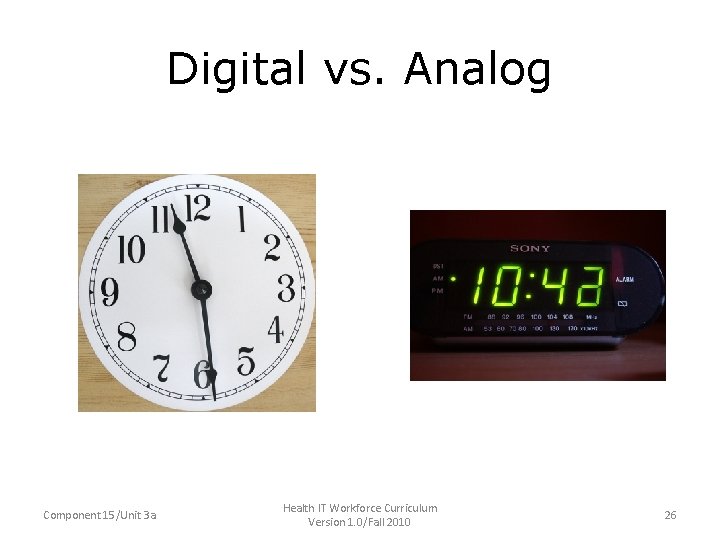
Digital vs. Analog Component 15/Unit 3 a Health IT Workforce Curriculum Version 1. 0/Fall 2010 26
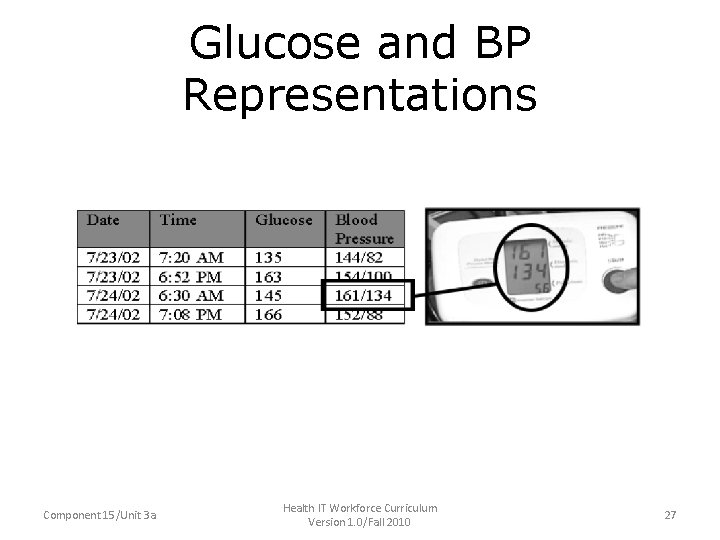
Glucose and BP Representations Component 15/Unit 3 a Health IT Workforce Curriculum Version 1. 0/Fall 2010 27
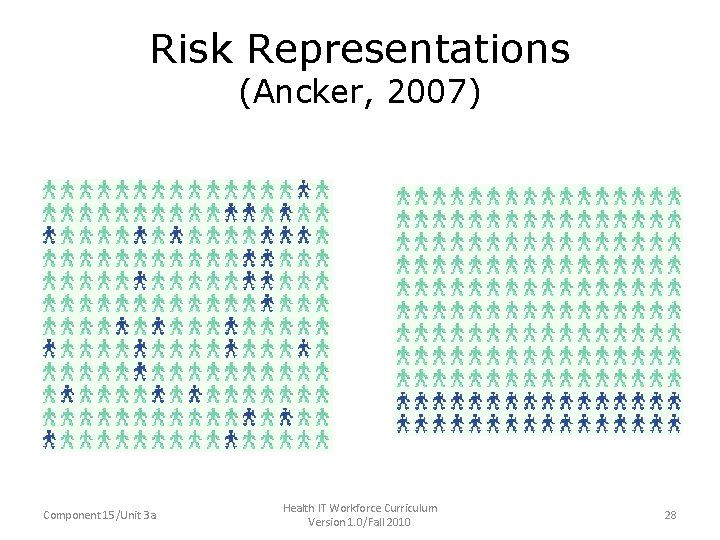
Risk Representations (Ancker, 2007) Component 15/Unit 3 a Health IT Workforce Curriculum Version 1. 0/Fall 2010 28
- Slides: 28