
US Imperialism 1898 1920 List 3 things you

- Slides: 80
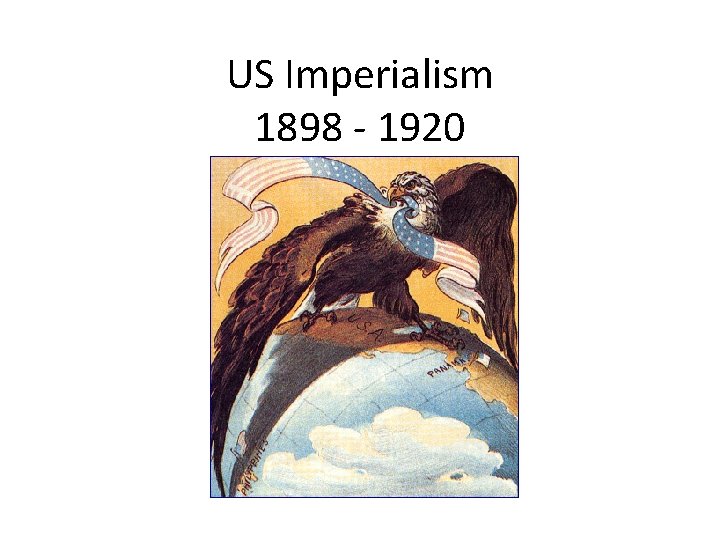
US Imperialism 1898 - 1920
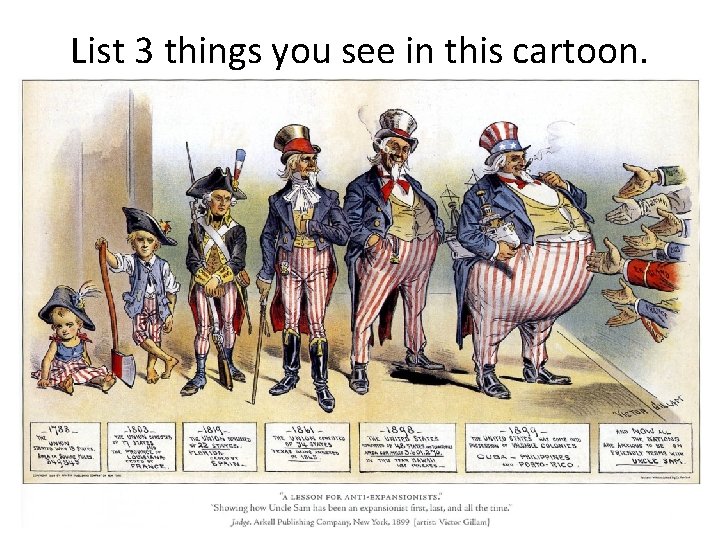
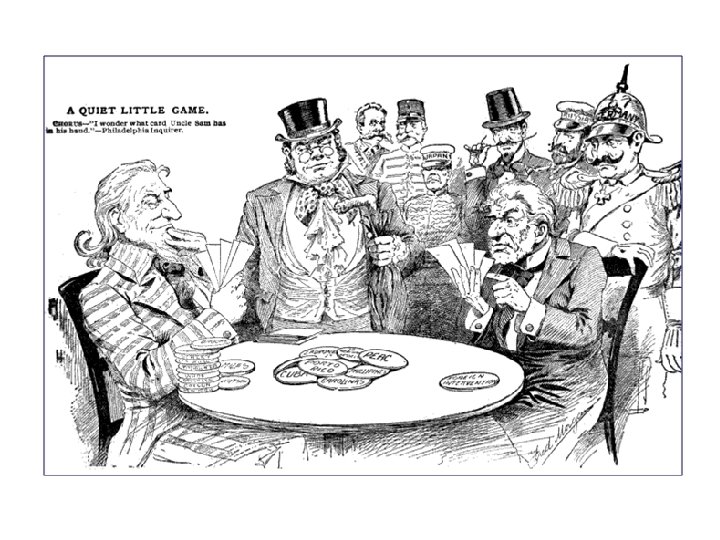
List 3 things you see in this cartoon.
Objective • Define imperialism, isolationism, and expansionism. • Evaluate the arguments for and against US imperialism at the end of the 19 th century. • Analyze the causes and effects (short-term & long-term) of US imperialism inside and outside the US.
Questions to think about… • How does imperialism affect the countries that come under an imperial power? (pros and cons) • Is imperialism always a good or bad thing? • How have US actions in the past affect our relationships with other countries today?
US Imperialism During the late nineteenth and early twentieth centuries, the United States pursued an aggressive policy of expansionism, extending its political and economic influence around the globe.
Create a Concept Map • Use Inspiration on your computer. • For each of the terms, create at least two bubbles (one for the word, one with a definition/explanation in your own words). • Include at least 3 pictures (clipart, draw, or internet) • Be creative as you organize your concept map. For Example
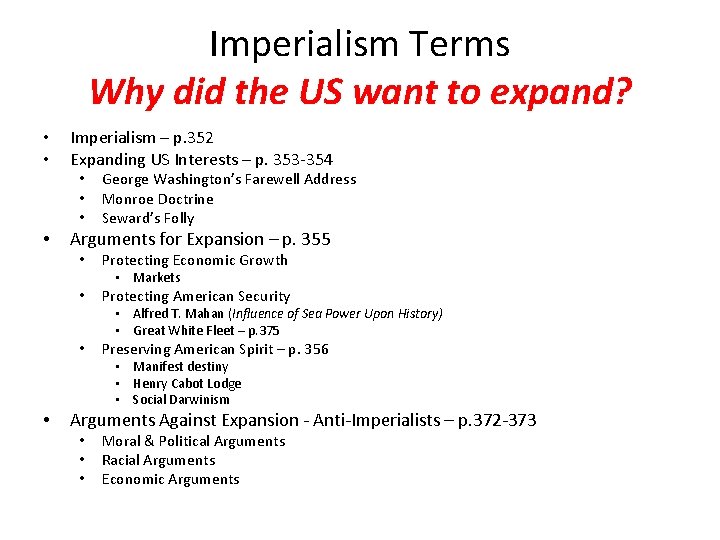
Imperialism Terms Why did the US want to expand? • • Imperialism – p. 352 Expanding US Interests – p. 353 -354 • • George Washington’s Farewell Address Monroe Doctrine Seward’s Folly Arguments for Expansion – p. 355 • Protecting Economic Growth • Markets • Protecting American Security • Alfred T. Mahan (Influence of Sea Power Upon History) • Great White Fleet – p. 375 • Preserving American Spirit – p. 356 • Manifest destiny • Henry Cabot Lodge • Social Darwinism • Arguments Against Expansion - Anti-Imperialists – p. 372 -373 • • • Moral & Political Arguments Racial Arguments Economic Arguments
Why did the US want to expand?
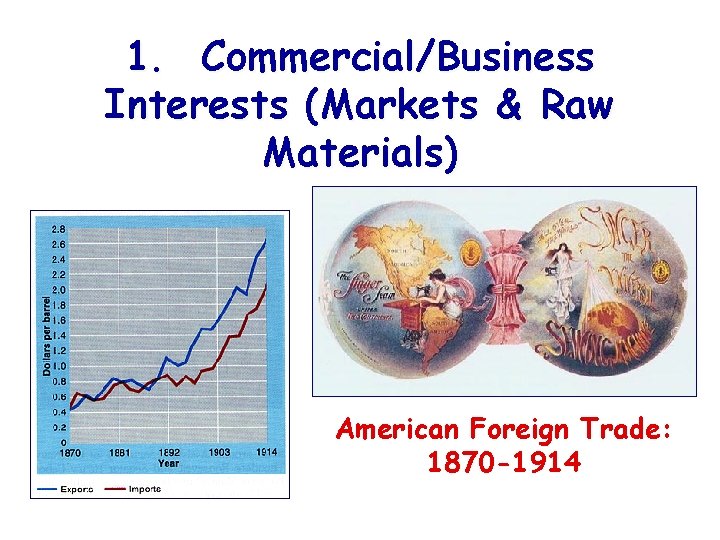
1. Commercial/Business Interests (Markets & Raw Materials) American Foreign Trade: 1870 -1914
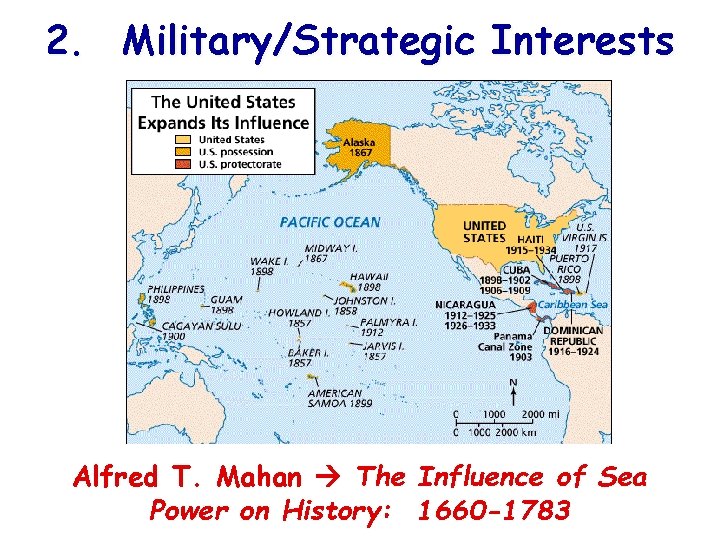
2. Military/Strategic Interests Alfred T. Mahan The Influence of Sea Power on History: 1660 -1783
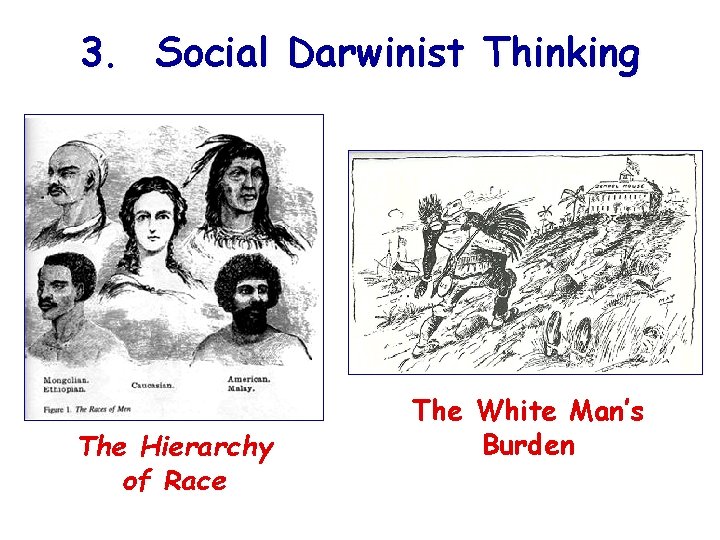
3. Social Darwinist Thinking The Hierarchy of Race The White Man’s Burden
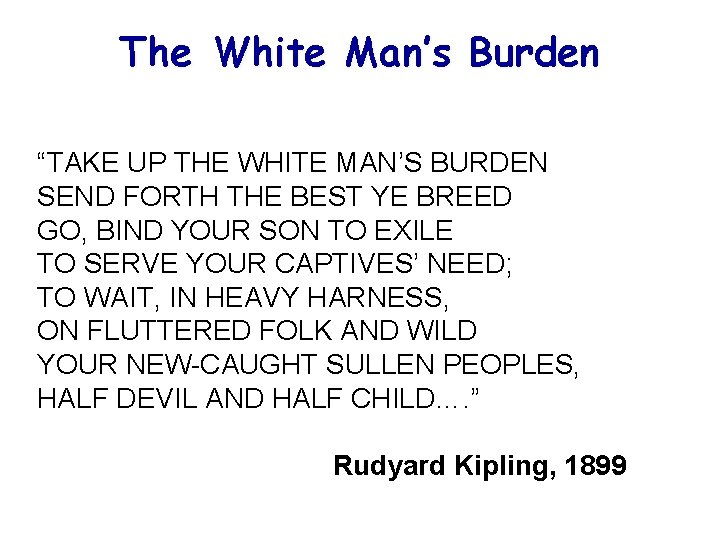
The White Man’s Burden “TAKE UP THE WHITE MAN’S BURDEN SEND FORTH THE BEST YE BREED GO, BIND YOUR SON TO EXILE TO SERVE YOUR CAPTIVES’ NEED; TO WAIT, IN HEAVY HARNESS, ON FLUTTERED FOLK AND WILD YOUR NEW-CAUGHT SULLEN PEOPLES, HALF DEVIL AND HALF CHILD…. ” Rudyard Kipling, 1899
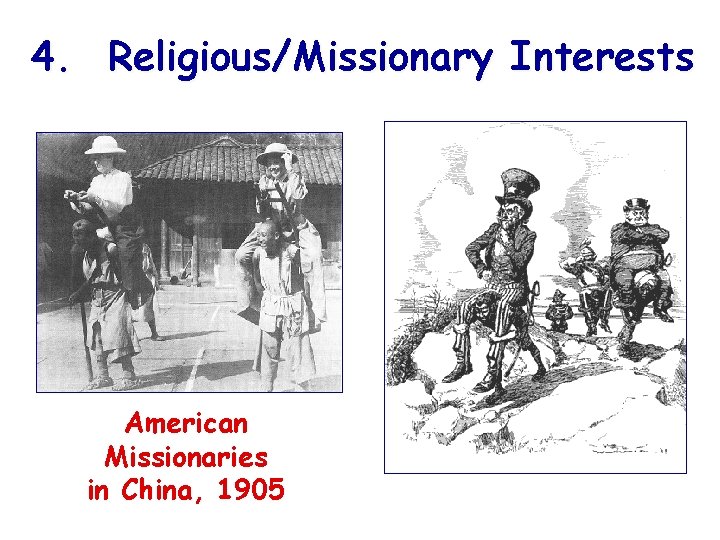
4. Religious/Missionary Interests American Missionaries in China, 1905
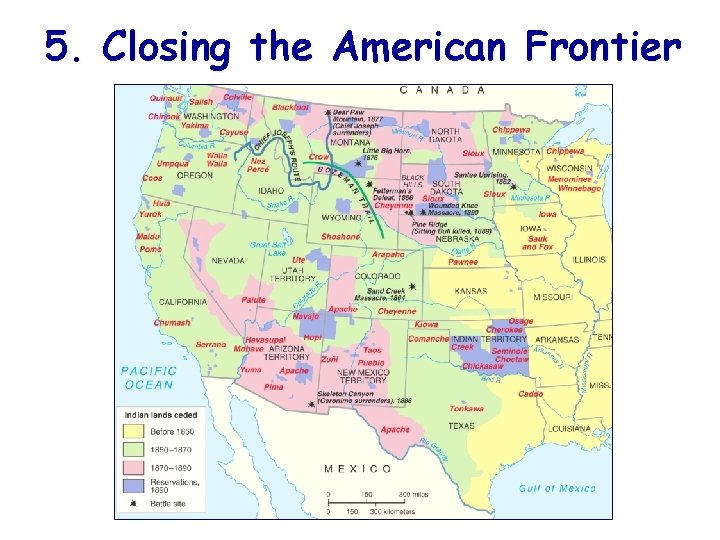
5. Closing the American Frontier
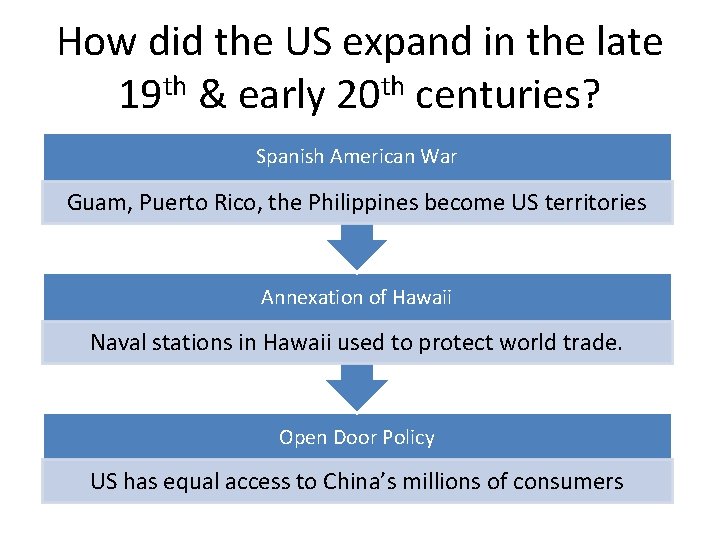
How did the US expand in the late 19 th & early 20 th centuries? Spanish American War Guam, Puerto Rico, the Philippines become US territories Annexation of Hawaii Naval stations in Hawaii used to protect world trade. Open Door Policy US has equal access to China’s millions of consumers
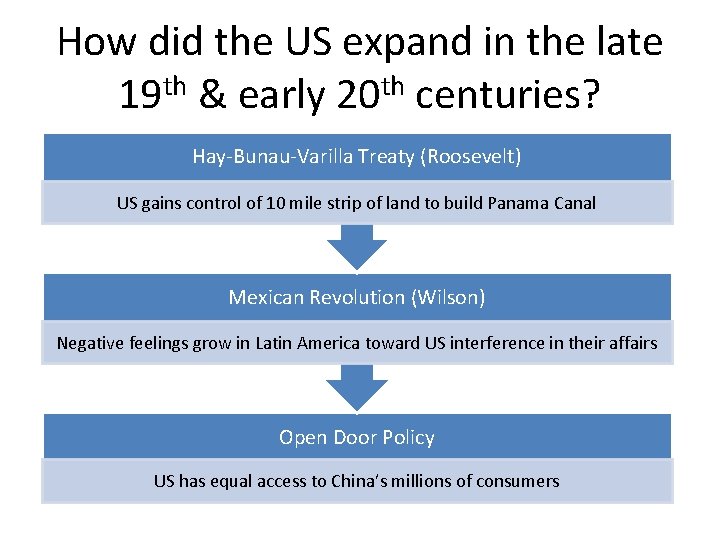
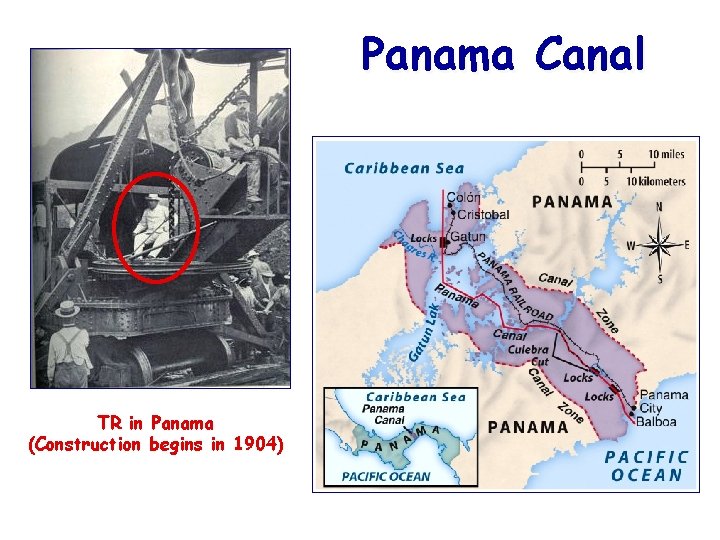
How did the US expand in the late 19 th & early 20 th centuries? Hay-Bunau-Varilla Treaty (Roosevelt) US gains control of 10 mile strip of land to build Panama Canal Mexican Revolution (Wilson) Negative feelings grow in Latin America toward US interference in their affairs Open Door Policy US has equal access to China’s millions of consumers
Presidential Diplomacy • Mc. Kinley – Open Door Policy • Roosevelt – Big Stick Diplomacy – Roosevelt Corollary • Taft – Dollar Diplomacy • Wilson – Moral or Missionary Diplomacy – Mexican Revolution (Pancho Villa)
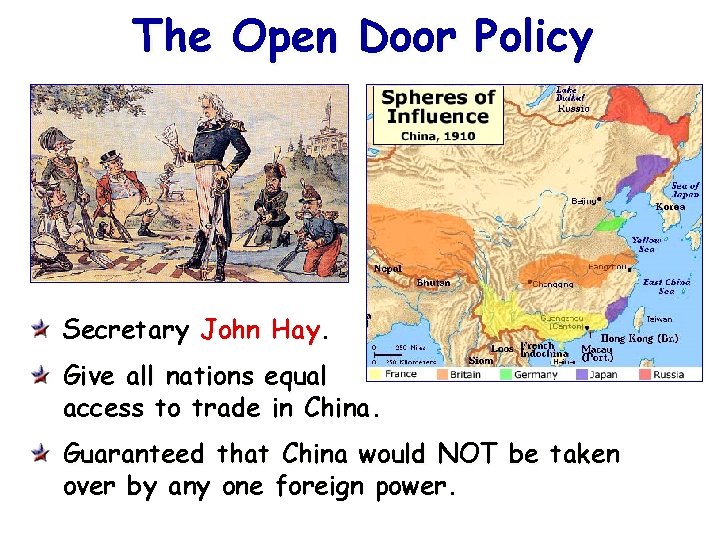
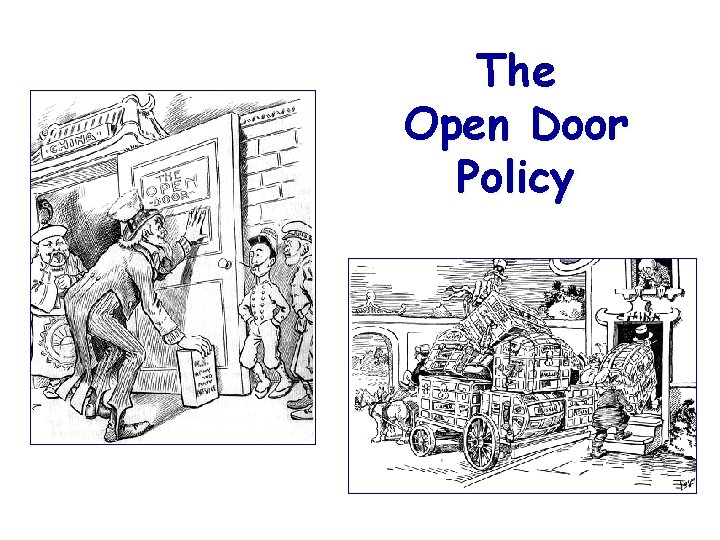
OPEN DOOR POLICY • Who? Secretary of State John Hay for Mc. Kinley • Target? China & Spanish American War • Goals: – Access to ports – New Markets – No country gets special privileges – US maintains a “sphere of influence”
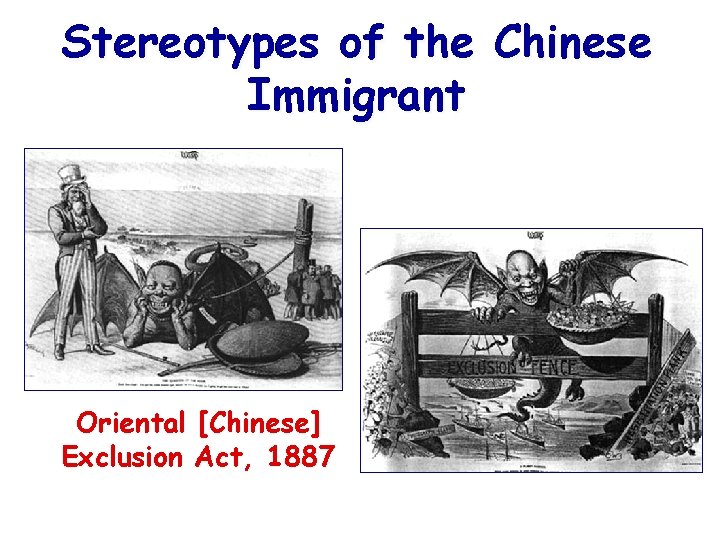
Stereotypes of the Chinese Immigrant Oriental [Chinese] Exclusion Act, 1887
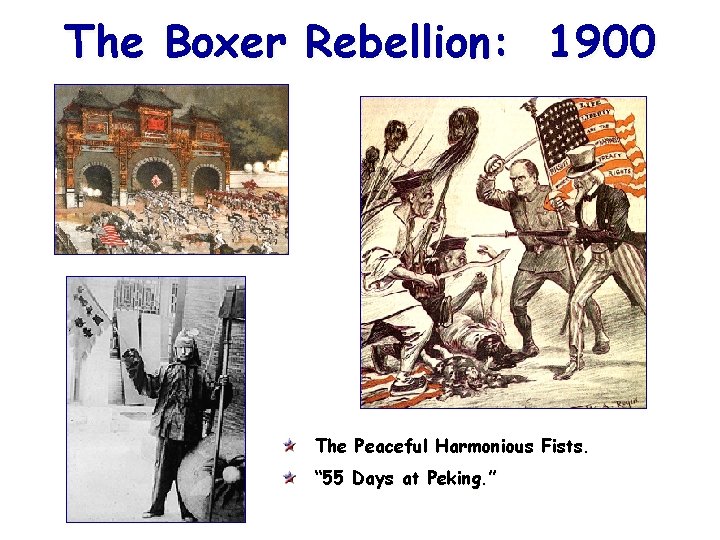
The Boxer Rebellion: 1900 The Peaceful Harmonious Fists. “ 55 Days at Peking. ”
The Open Door Policy Secretary John Hay. Give all nations equal access to trade in China. Guaranteed that China would NOT be taken over by any one foreign power.
The Open Door Policy
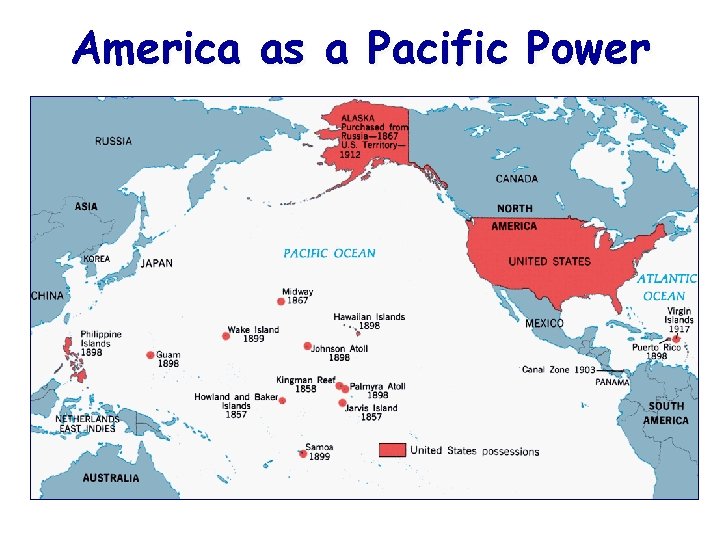
America as a Pacific Power
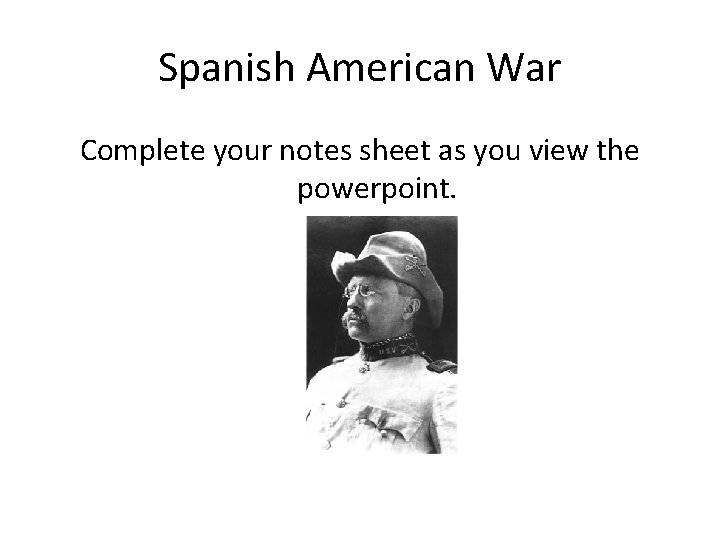
Spanish American War Complete your notes sheet as you view the powerpoint.
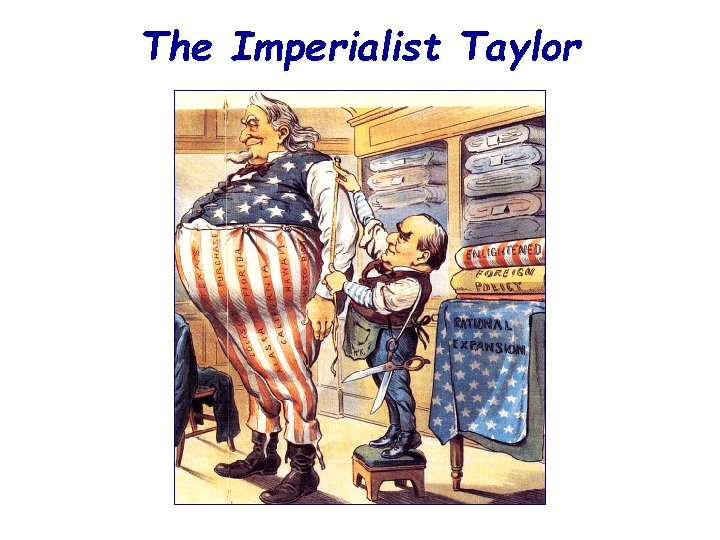
The Imperialist Taylor
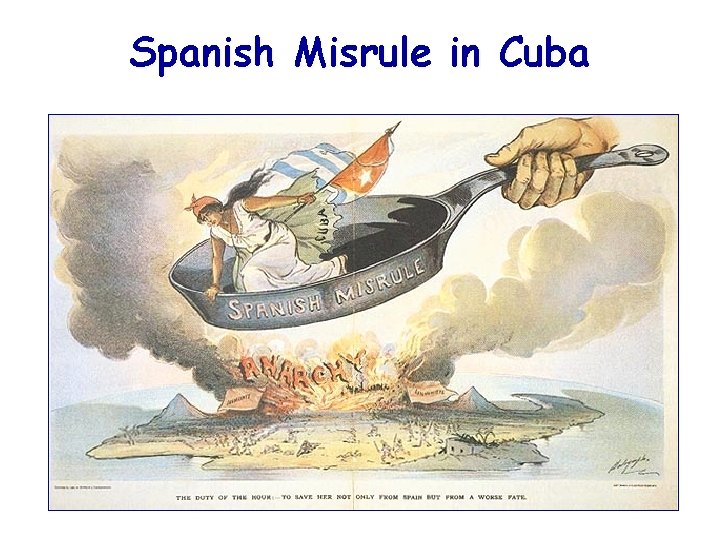
Spanish Misrule in Cuba
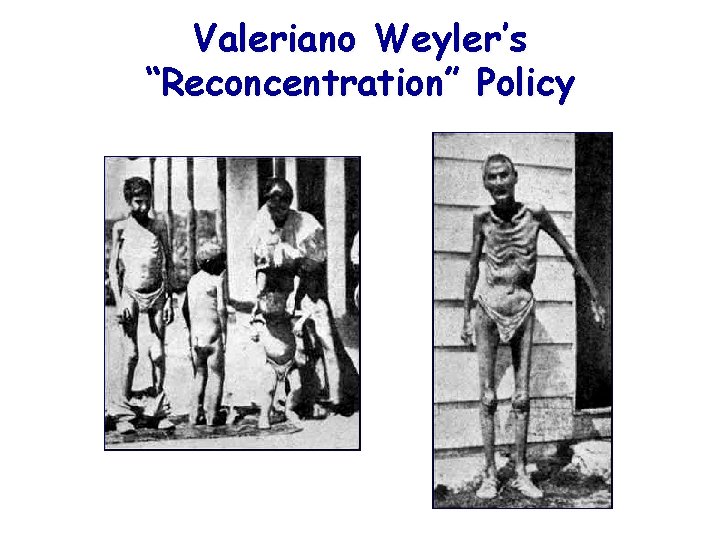
Valeriano Weyler’s “Reconcentration” Policy
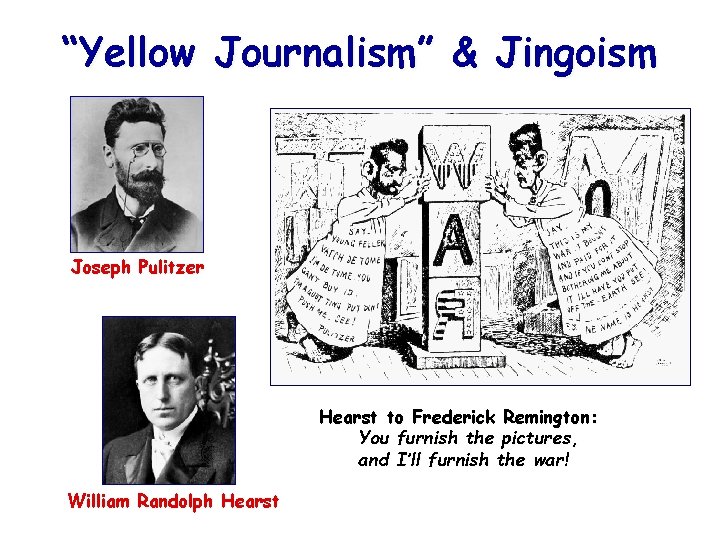
“Yellow Journalism” & Jingoism Joseph Pulitzer Hearst to Frederick Remington: You furnish the pictures, and I’ll furnish the war! William Randolph Hearst
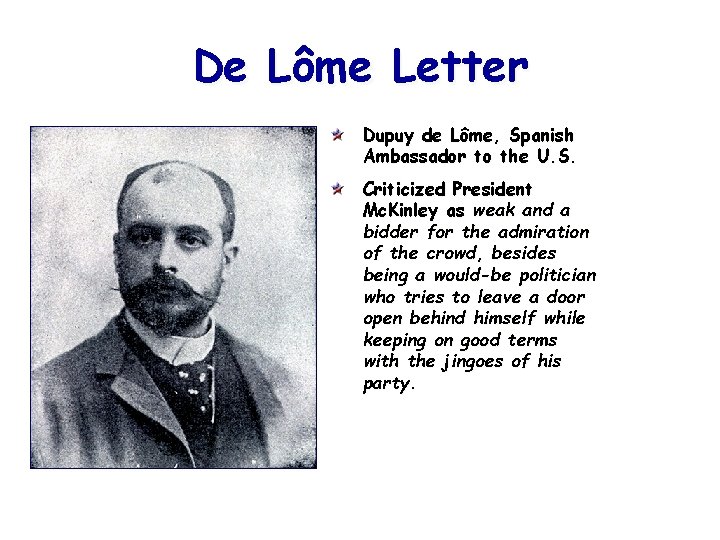
De Lôme Letter Dupuy de Lôme, Spanish Ambassador to the U. S. Criticized President Mc. Kinley as weak and a bidder for the admiration of the crowd, besides being a would-be politician who tries to leave a door open behind himself while keeping on good terms with the jingoes of his party.
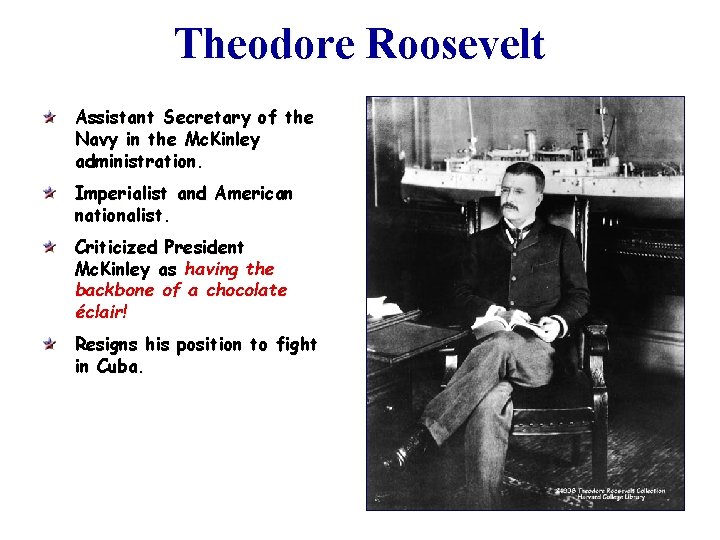
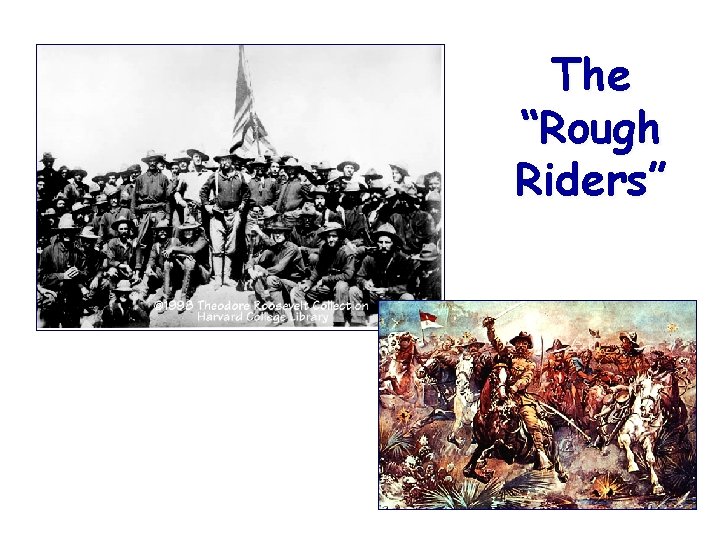
Theodore Roosevelt Assistant Secretary of the Navy in the Mc. Kinley administration. Imperialist and American nationalist. Criticized President Mc. Kinley as having the backbone of a chocolate éclair! Resigns his position to fight in Cuba.
The “Rough Riders”
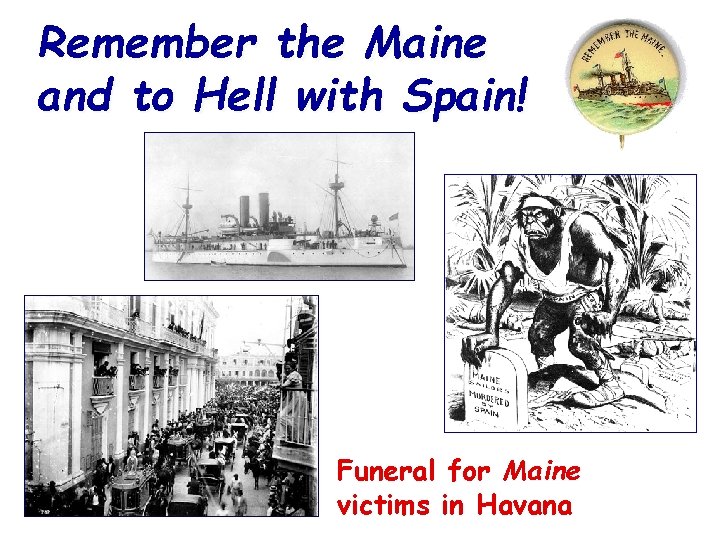
Remember the Maine and to Hell with Spain! Funeral for Maine victims in Havana
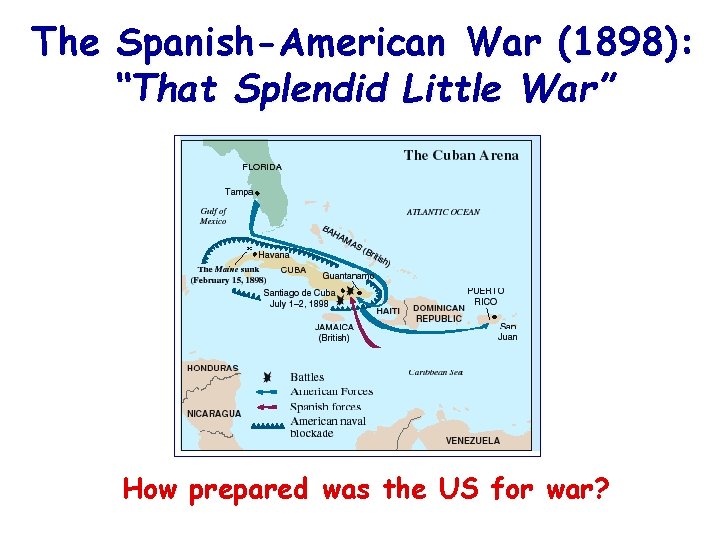
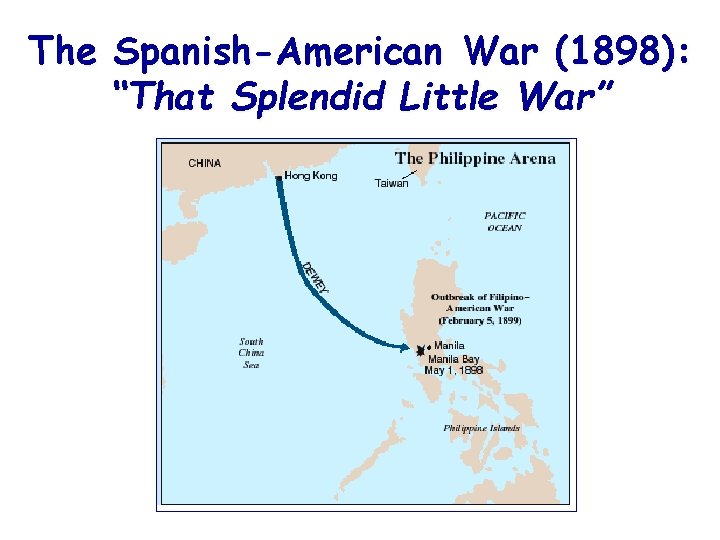
The Spanish-American War (1898): “That Splendid Little War” How prepared was the US for war?
The Spanish-American War (1898): “That Splendid Little War”
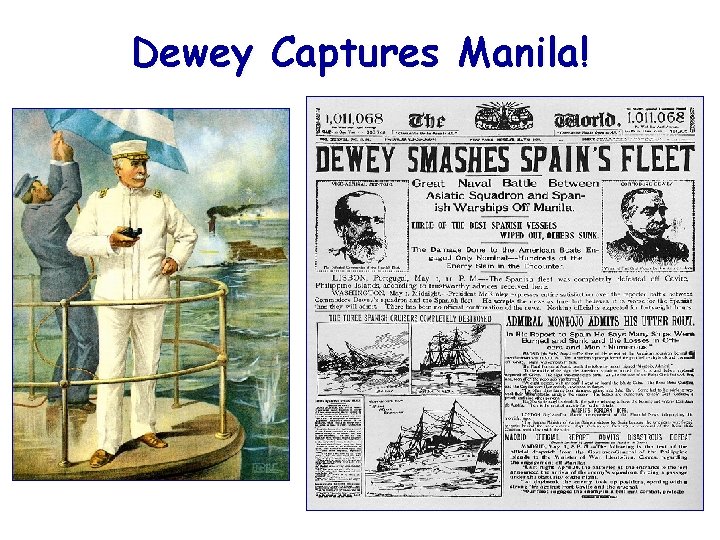
Dewey Captures Manila!
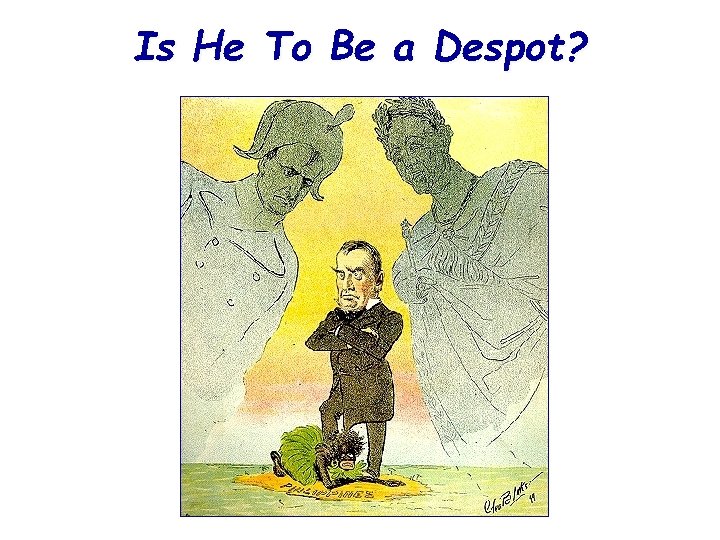
Is He To Be a Despot?
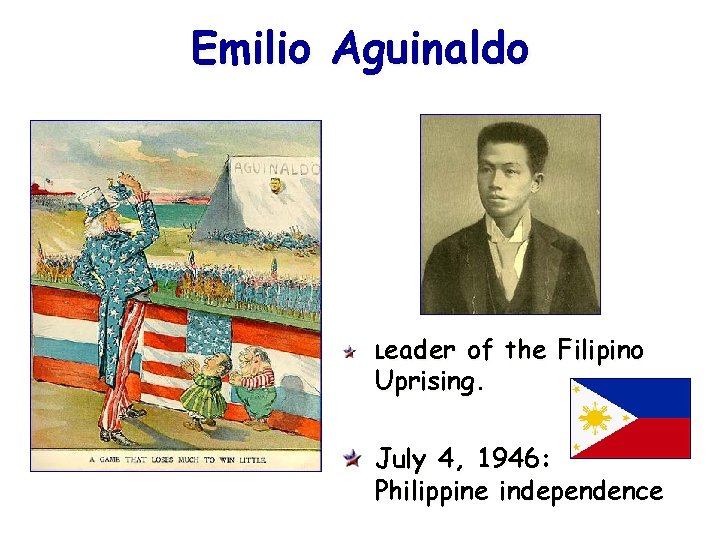
Emilio Aguinaldo Leader of the Filipino Uprising. July 4, 1946: Philippine independence
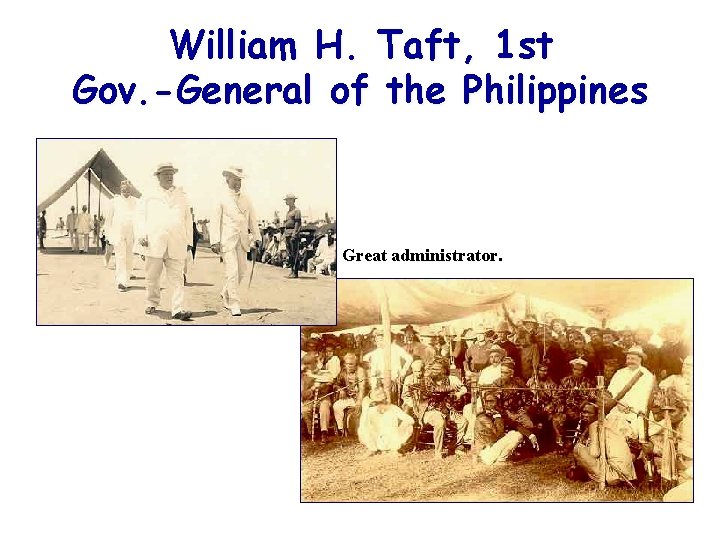
William H. Taft, 1 st Gov. -General of the Philippines Great administrator.
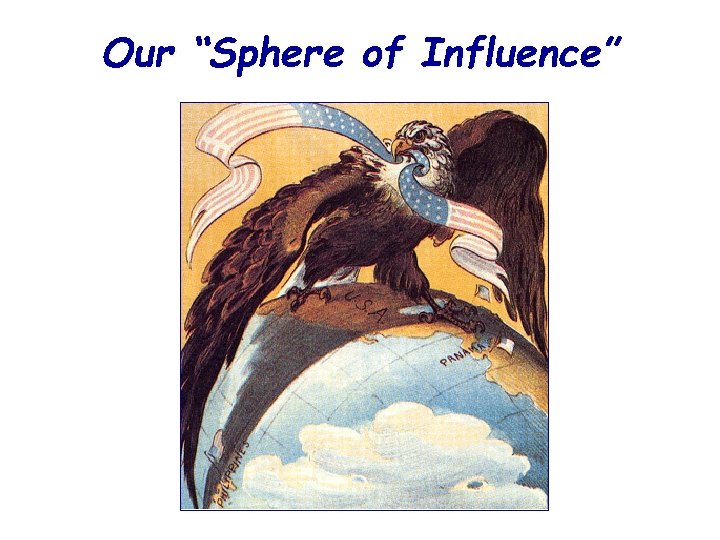
Our “Sphere of Influence”
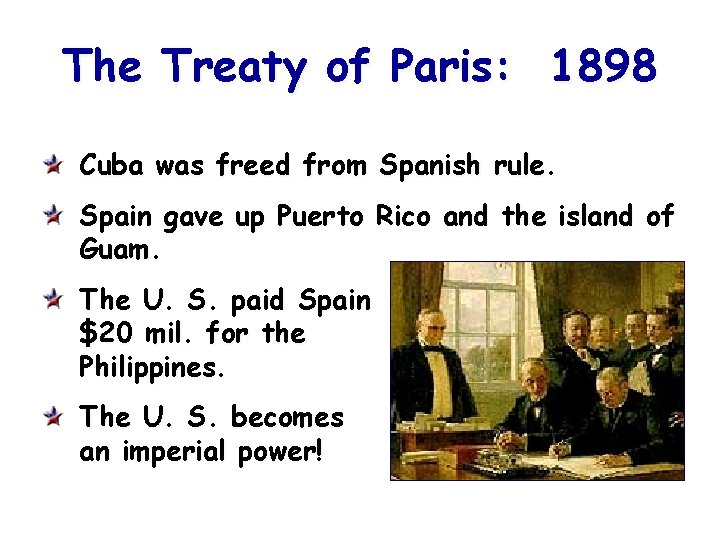
The Treaty of Paris: 1898 Cuba was freed from Spanish rule. Spain gave up Puerto Rico and the island of Guam. The U. S. paid Spain $20 mil. for the Philippines. The U. S. becomes an imperial power!
The American Anti-Imperialist League Founded in 1899. Mark Twain, Andrew Carnegie, William James, and William Jennings Bryan among the leaders. Campaigned against the annexation of the Philippines and other acts of imperialism.
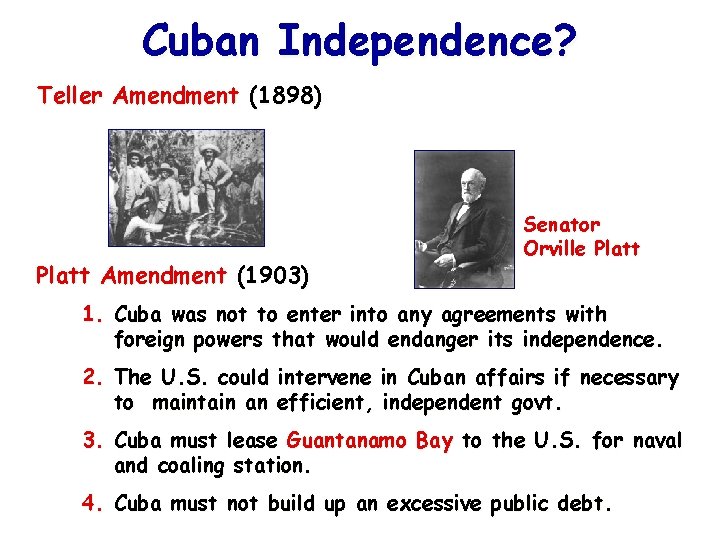
Cuban Independence? Teller Amendment (1898) Platt Amendment (1903) Senator Orville Platt 1. Cuba was not to enter into any agreements with foreign powers that would endanger its independence. 2. The U. S. could intervene in Cuban affairs if necessary to maintain an efficient, independent govt. 3. Cuba must lease Guantanamo Bay to the U. S. for naval and coaling station. 4. Cuba must not build up an excessive public debt.
Puerto Rico: 1898 1900 - Foraker Act. § § § PR became an “unincorporated territory. ” Citizens of PR, not of the US. Import duties on PR goods 1901 -1903 the Insular Cases. § Constitutional rights were not automatically extended to territorial possessions. § Congress had the power to decide these rights. § Import duties laid down by the Foraker Act were legal!
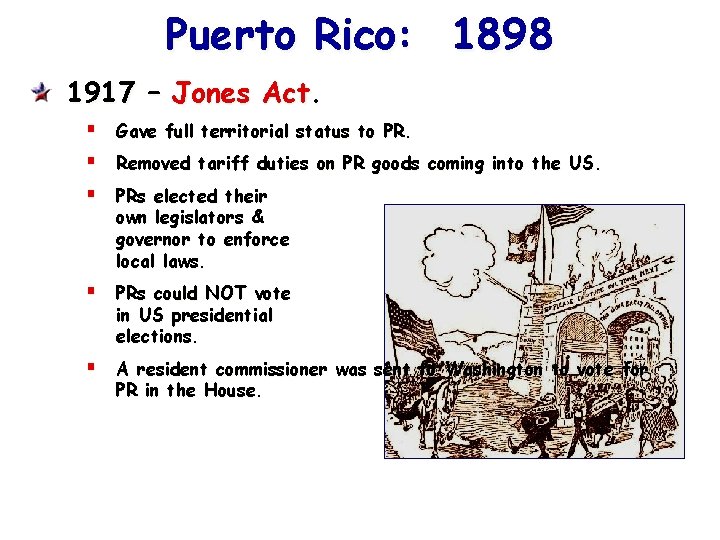
Puerto Rico: 1898 1917 – Jones Act. § Gave full territorial status to PR. § Removed tariff duties on PR goods coming into the US. § PRs elected their own legislators & governor to enforce local laws. § PRs could NOT vote in US presidential elections. § A resident commissioner was sent to Washington to vote for PR in the House.
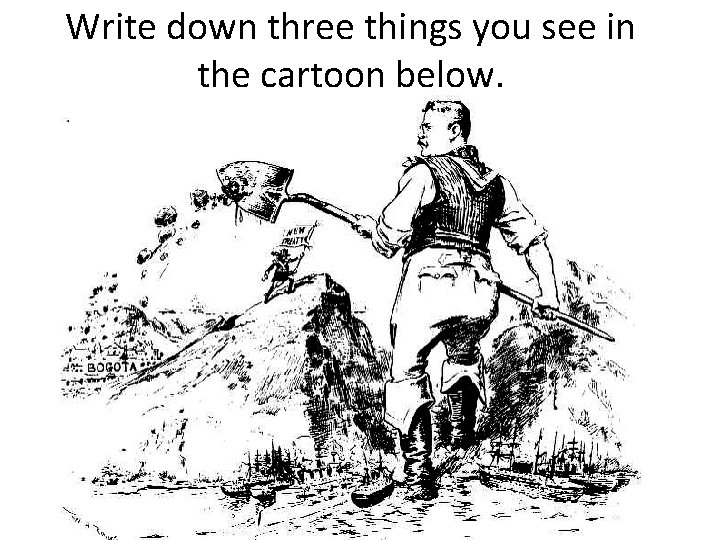
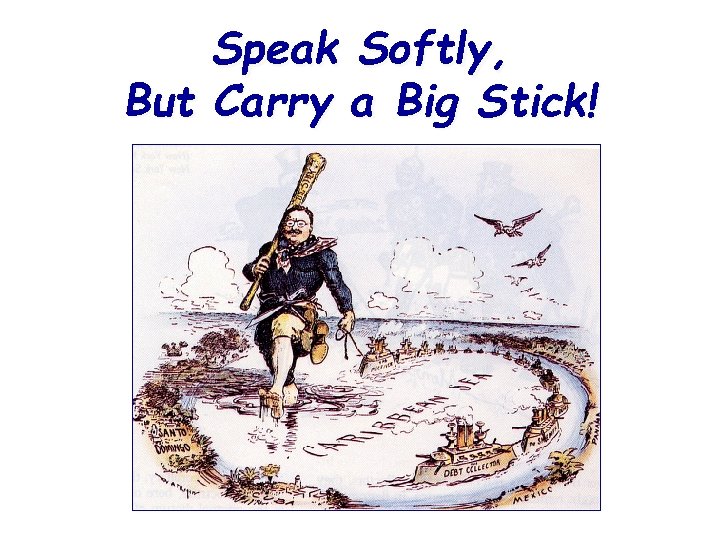
Write down three things you see in the cartoon below.
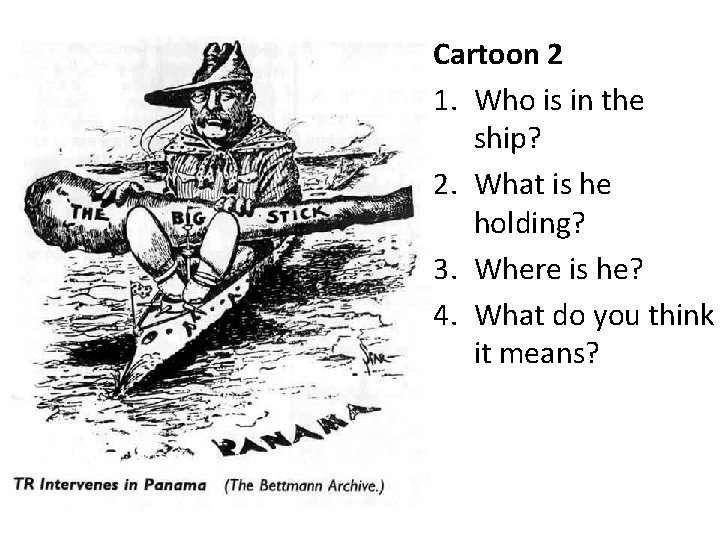
Cartoon 2 1. Who is in the ship? 2. What is he holding? 3. Where is he? 4. What do you think it means?
“BIG STICK” DIPLOMACY • Who? Theodore Roosevelt (Pres. 1901 -1909) • Target? Latin America, Caribbean nations • Rationale: – Any disorder in regions would force US to send in troops to protect its interests, investments $$$ – Keep Europe out of region if nation defaults on loans
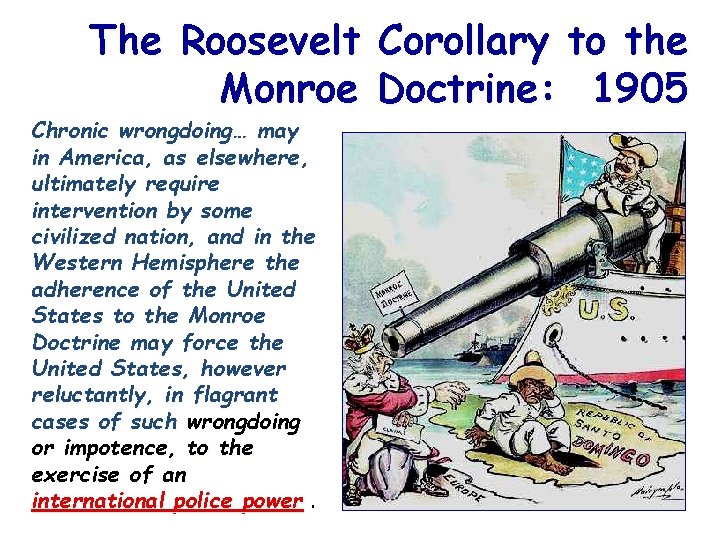
The Roosevelt Corollary to the Monroe Doctrine: 1905 Chronic wrongdoing… may in America, as elsewhere, ultimately require intervention by some civilized nation, and in the Western Hemisphere the adherence of the United States to the Monroe Doctrine may force the United States, however reluctantly, in flagrant cases of such wrongdoing or impotence, to the exercise of an international police power.
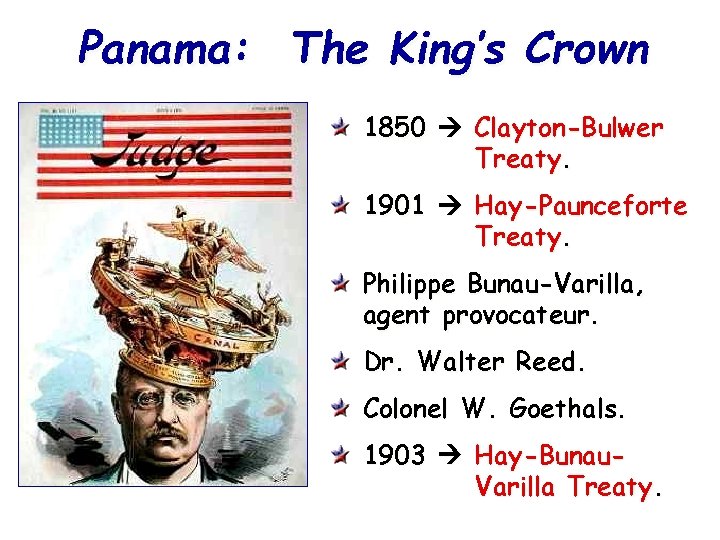
Panama: The King’s Crown 1850 Clayton-Bulwer Treaty. 1901 Hay-Paunceforte Treaty. Philippe Bunau-Varilla, agent provocateur. Dr. Walter Reed. Colonel W. Goethals. 1903 Hay-Bunau. Varilla Treaty.
Panama Canal TR in Panama (Construction begins in 1904)
Speak Softly, But Carry a Big Stick!
“BIG STICK” DIPLOMACY • Rationale cont. : – Any disorder in regions would force US to send in troops to protect its interests, investments $$$ – Keep Europe out of region if nation defaults on loans – US takes over Panama Canal construction (complete in 1911) yellow fever • US offered to pay Columbia, but it was slow to respond • US urges Panama to revolt, sends US ships to back rebels • Panama declares independence & US buys canal rights from new country
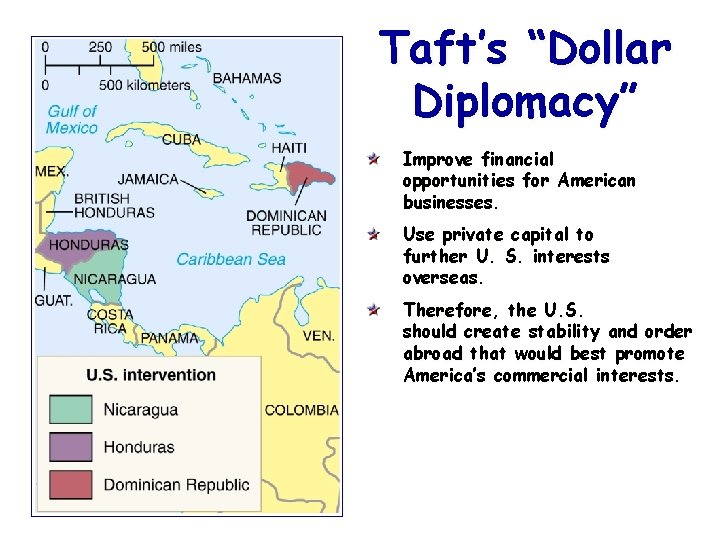
Taft’s “Dollar Diplomacy” Improve financial opportunities for American businesses. Use private capital to further U. S. interests overseas. Therefore, the U. S. should create stability and order abroad that would best promote America’s commercial interests.
DOLLAR DIPLOMACY • Who? President William H. Taft • Target: Latin America, Caribbean & Asia • Rationale: – US relies on loans & investments to settle regions – Favors $$ but would use military to “stabilize” nations
MORAL OR MISSIONARY DIPLOMACY • Who: President Woodrow Wilson • Target: Latin America, Caribbean & Mexico • How it worked: – US told nations what was wrong with their govts & how to fix them. US favors democracies – US send military to fix problems as a last resort. (That usually happened) – Mexico & Pancho Villa were thorns in Wilson’s side – Mexicans revolt against US-friendly leader. US investors back dictator, but Wilson won’t recognize. Wilson briefly supported Pancho Villa, but turned on him. Villa started raiding US border towns. US sends Army, but can’t catch him.
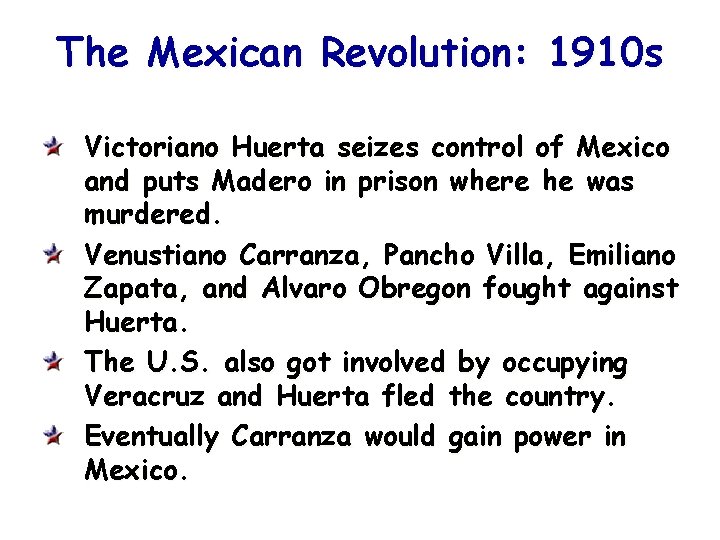
The Mexican Revolution: 1910 s Victoriano Huerta seizes control of Mexico and puts Madero in prison where he was murdered. Venustiano Carranza, Pancho Villa, Emiliano Zapata, and Alvaro Obregon fought against Huerta. The U. S. also got involved by occupying Veracruz and Huerta fled the country. Eventually Carranza would gain power in Mexico.
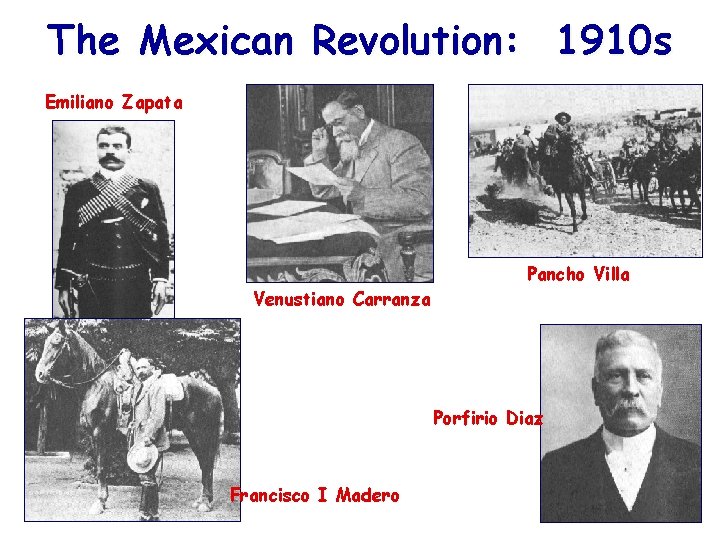
The Mexican Revolution: 1910 s Emiliano Zapata Pancho Villa Venustiano Carranza Porfirio Diaz Francisco I Madero
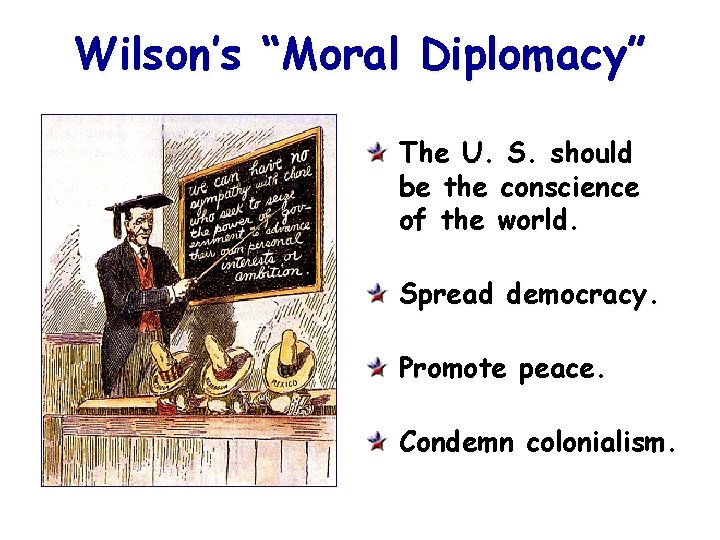
Wilson’s “Moral Diplomacy” The U. S. should be the conscience of the world. Spread democracy. Promote peace. Condemn colonialism.
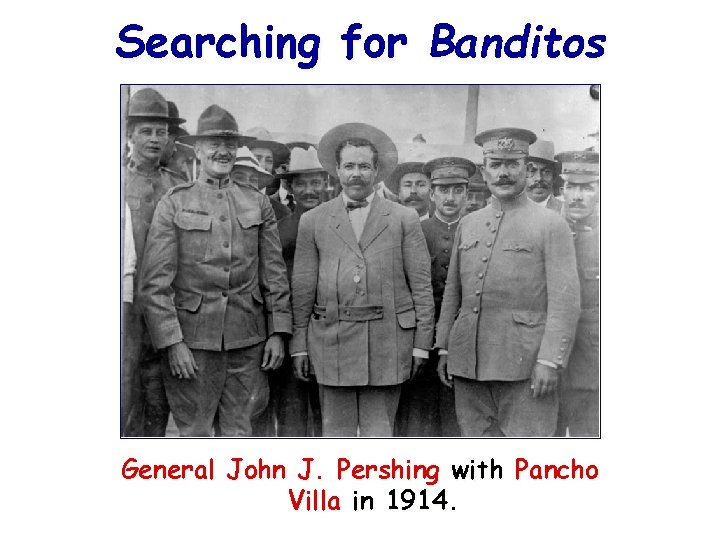
Searching for Banditos General John J. Pershing with Pancho Villa in 1914.
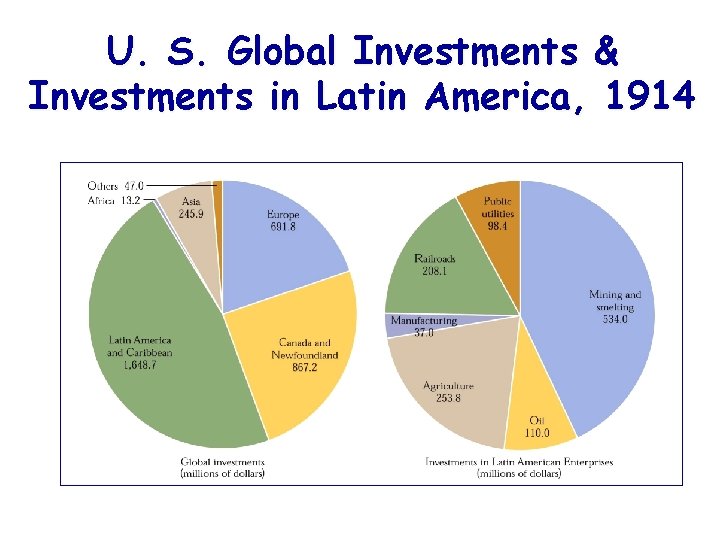
U. S. Global Investments & Investments in Latin America, 1914
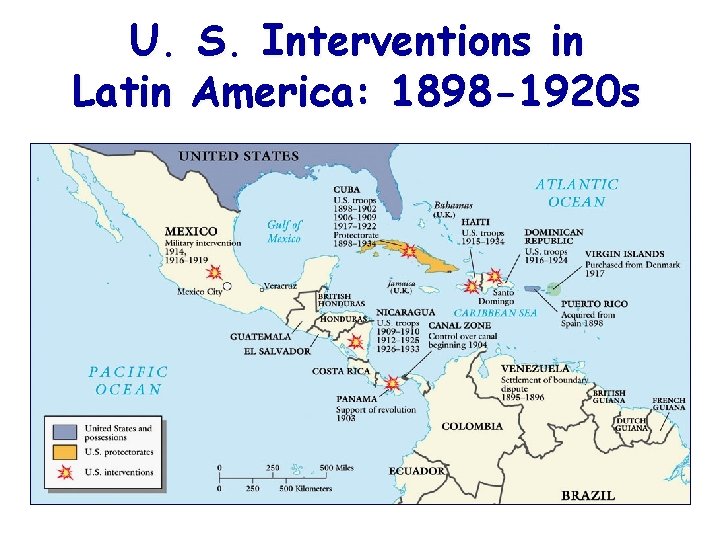
U. S. Interventions in Latin America: 1898 -1920 s
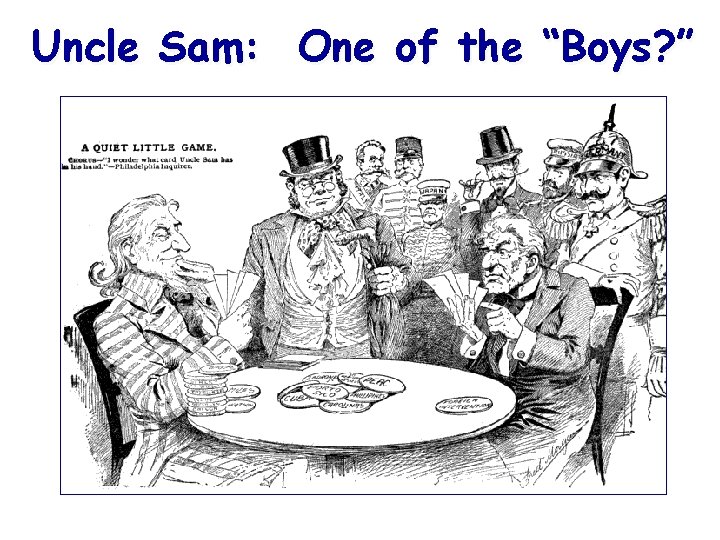
Uncle Sam: One of the “Boys? ”
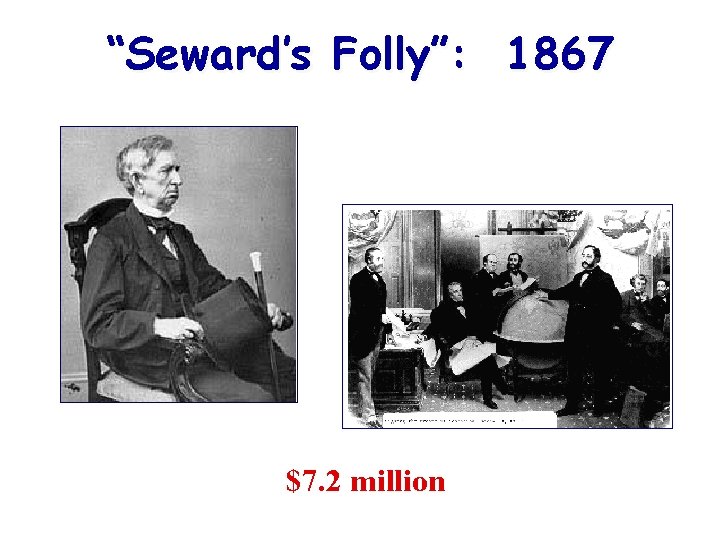
“Seward’s Folly”: 1867 $7. 2 million
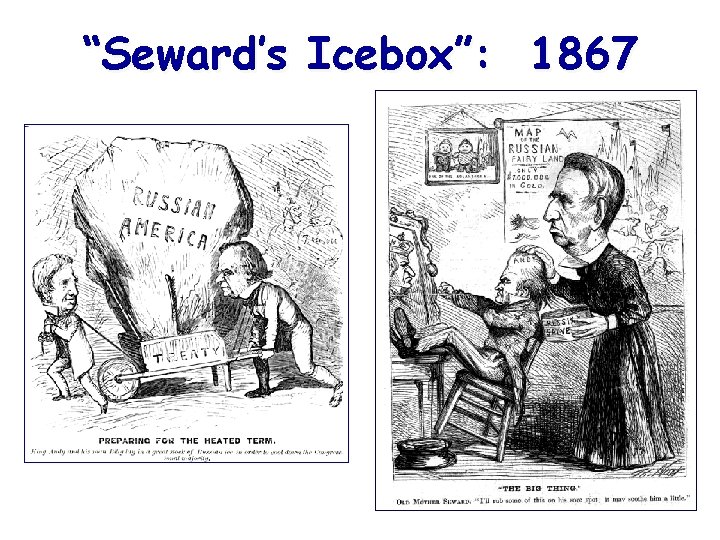
“Seward’s Icebox”: 1867
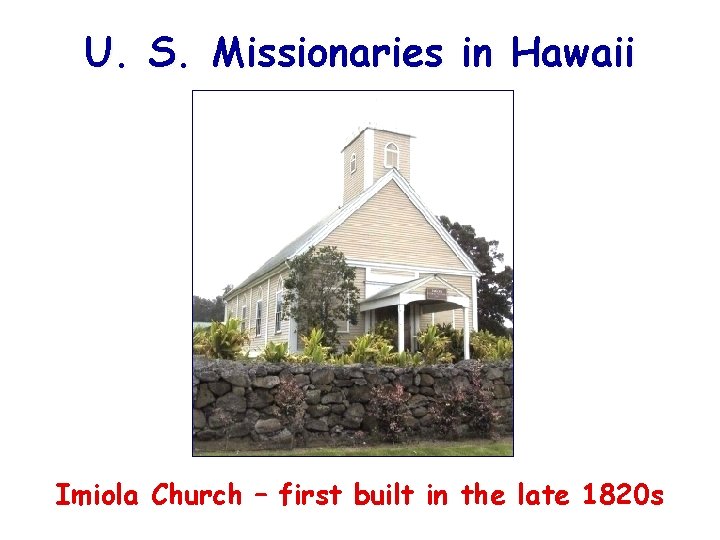
U. S. Missionaries in Hawaii Imiola Church – first built in the late 1820 s
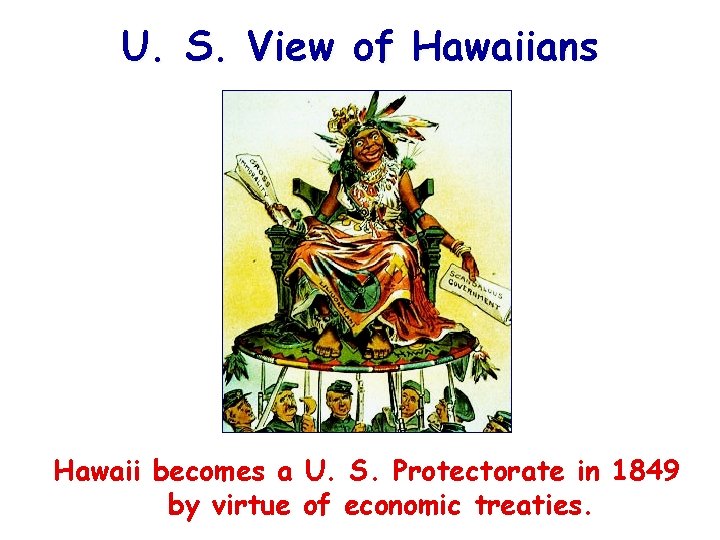
U. S. View of Hawaiians Hawaii becomes a U. S. Protectorate in 1849 by virtue of economic treaties.
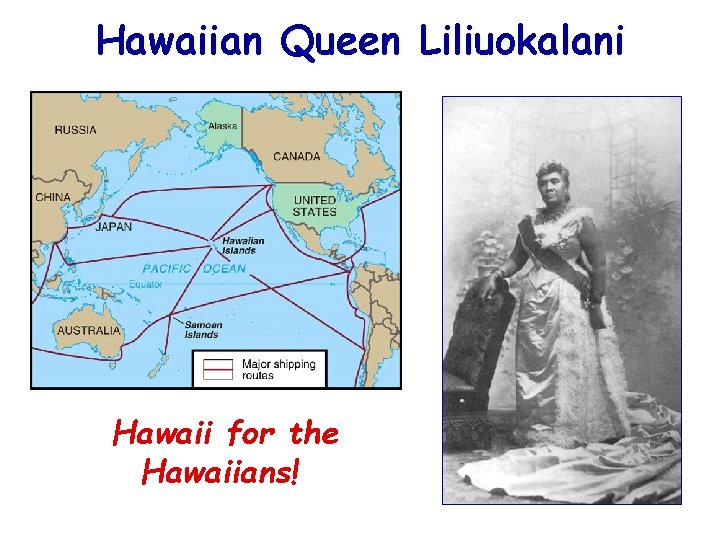
Hawaiian Queen Liliuokalani Hawaii for the Hawaiians!
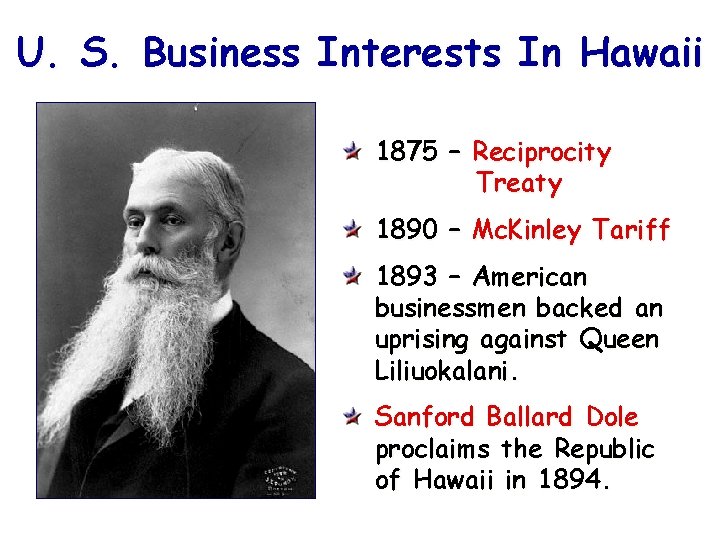
U. S. Business Interests In Hawaii 1875 – Reciprocity Treaty 1890 – Mc. Kinley Tariff 1893 – American businessmen backed an uprising against Queen Liliuokalani. Sanford Ballard Dole proclaims the Republic of Hawaii in 1894.
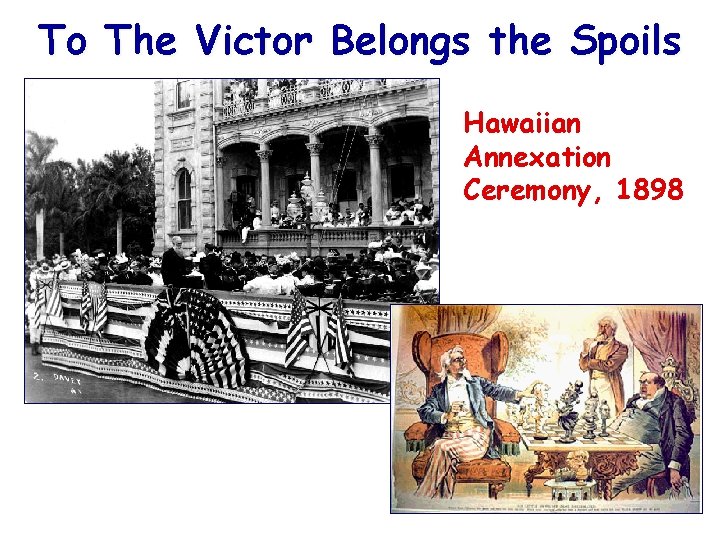
To The Victor Belongs the Spoils Hawaiian Annexation Ceremony, 1898
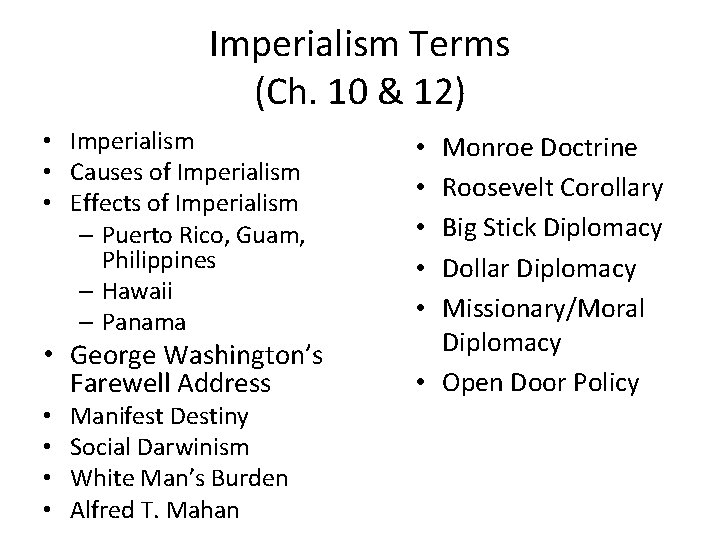
Imperialism Terms (Ch. 10 & 12) • Imperialism • Causes of Imperialism • Effects of Imperialism – Puerto Rico, Guam, Philippines – Hawaii – Panama • George Washington’s Farewell Address • • Manifest Destiny Social Darwinism White Man’s Burden Alfred T. Mahan Monroe Doctrine Roosevelt Corollary Big Stick Diplomacy Dollar Diplomacy Missionary/Moral Diplomacy • Open Door Policy • • •
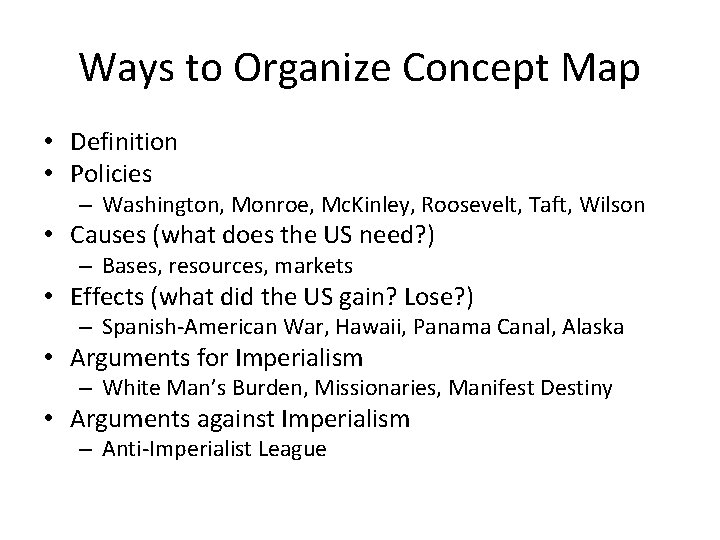
Ways to Organize Concept Map • Definition • Policies – Washington, Monroe, Mc. Kinley, Roosevelt, Taft, Wilson • Causes (what does the US need? ) – Bases, resources, markets • Effects (what did the US gain? Lose? ) – Spanish-American War, Hawaii, Panama Canal, Alaska • Arguments for Imperialism – White Man’s Burden, Missionaries, Manifest Destiny • Arguments against Imperialism – Anti-Imperialist League