
US History World War I Technology and Strategies
- Slides: 9
US History World War I Technology and Strategies
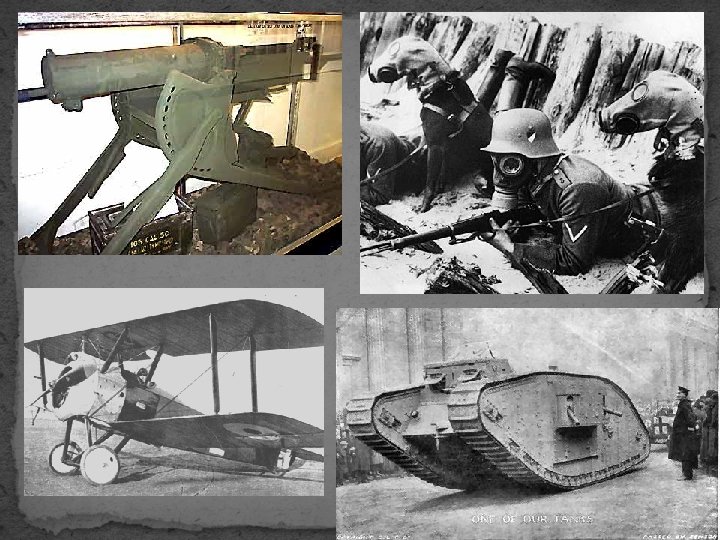
New Technology ● Machine gun ● Rapid fire weapon capable of firing 600 rounds a minute ● Airships and airplanes ● Used to transport goods ● Used in air battles or “dogfights” ● Planes could also carry and drop bombs on targets ● Tanks ● Heavy armor could travel through barbed wire ● Powerful; shots could destroy buildings ● Poison Gas (Mustard Gas)- because of its color ● Used to blind, sicken and suffocate victims ● Result was gas masks became part of standard equipment ● Anti-aircraft gun ● Used to shoot down planes
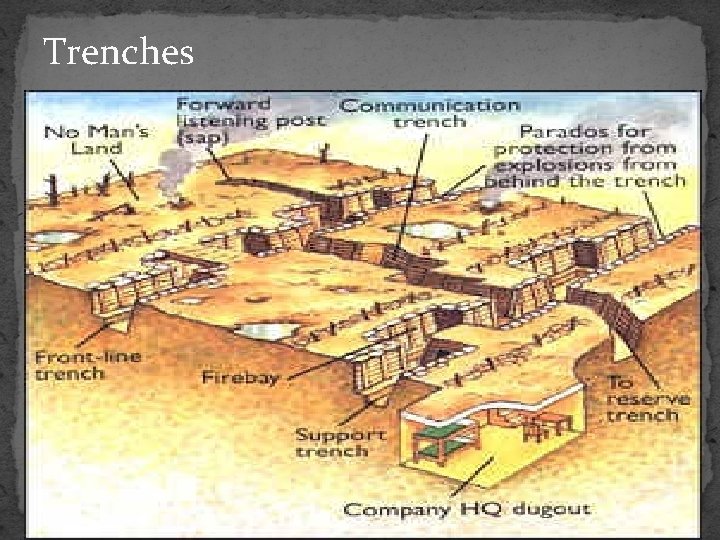
New Strategies *Due to new weapons, new strategies will be used in fighting World War I ● “Dogfights” ● Planes became very important in controlling the skies and bombing targets ● Trench Warfare ● See map on pg. 582 ● “No man’s land-“ area between trenches filled with bombs and barbed wire ● Trenches were dirty and nasty- no protection from cold or disease (trench foot) ● “Over the top-“ Soldiers jump over trench wall and charge across No Man’s Land
Trenches
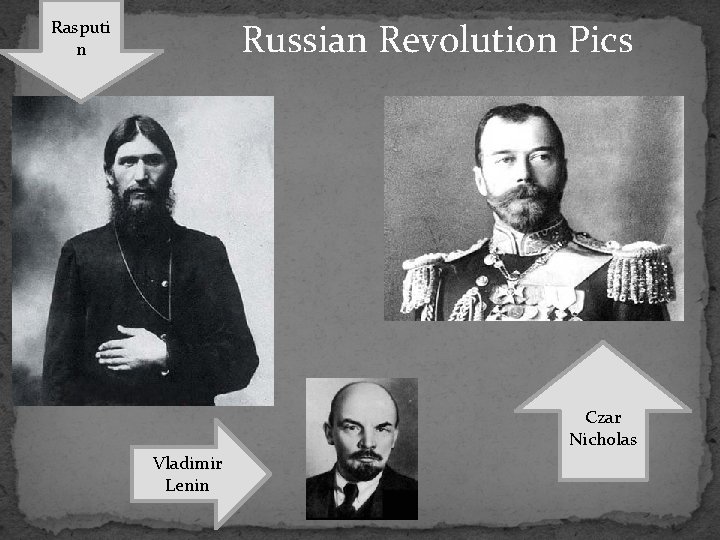
Russian (Bolshevik) Revolution *When US enters in 1917, Russia had dropped out* ● Russia ● 1917 had successful Bolshevik Revolution led by Vladimir Lenin ● Lead to set up of Communism in Russia ● Result in Russia withdrawing from World War I ● Fear of losing war due to lack of Russian army
Russian Revolution Pics Rasputi n Czar Nicholas Vladimir Lenin
US Impact ● US enters and helps turn the tide of war ● US fights many battles that push Germans out of France ● Battle of Marne- turning point of the war and an Allied victory ● November 1918 both Austria-Hungary and Germany will surrender ● November an armistice or cease-fire agreement is signed
Costs of World War I ● 22 million died- half of them civilians ● 20 million more wounded ● 10 million refugees- left without a home ● US lost 48, 000 men in battle and another 62, 000 from disease ● Additional 200, 000 wounded or emotional shock (Shell shock) ● Cost to US- $338 billion (mainly loans to other countries and equipment costs) ● Cost countries like Germany and France much more due to destruction of buildings and towns