
US History Week One Geography VOCAB REVIEW Geography
US History Week One: Geography
VOCAB REVIEW Geography – map, history of Earth Climate – temperature of environment (long period) Cash crop – food – farming, $ Immigration – comes from another country Ice Age – frozen Earth Demographics – statistic about people (race, wealth, age) • Nomads – move from place to place looking for food • Economy - $ types of jobs • • •
5 Features of Geography • • • LOCATION PLACE MOVEMENT REGION HUMAN-ENVIRONMENT INTERACTION
Location of the United States ABSOLUTE LOCATION (This is like GPS coordinates. It doesn’t change. ) • Continent: North America • Oceans: – Atlantic (east coast) – Pacific (west coast)
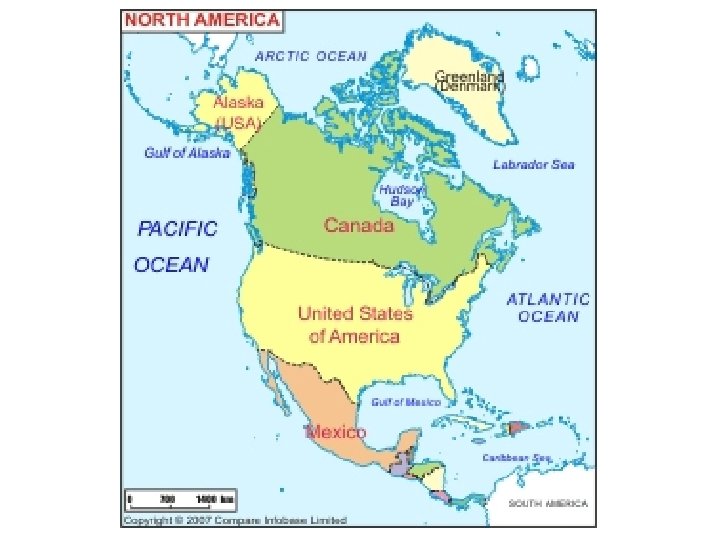
Location of the United States RELATIVE LOCATION (Where is the U. S. compared to other places? ) • Bordering countries – Canada (north) – Mexico (south • Disconnected from other areas – Technology improved – Transportation, communication – Examples: railroads, post offices…
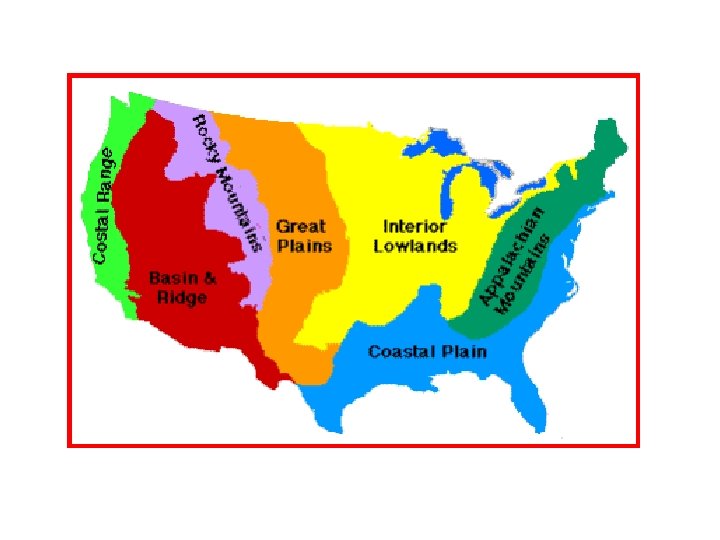
Place PHYSICAL CHARACTERISTICS (landforms, water bodies, vegetation, & climate) • Midwest (rich soil, good for farming) – Great Plains & Central Plains – Mississippi River (transport goods) • East – Appalachian Mountains • West – Rocky Mountains
Place HUMAN CHARACTERISTICS (language, religion, customs…) • Lots of immigration – many cultures • Urban – Most densely populated (most people in one area) = North East [Washington D. C. to Boston] • Good life – Longer life expectancy (people live longer) – Higher incomes (people make more money) – High literacy rates (lots of people can read & write)
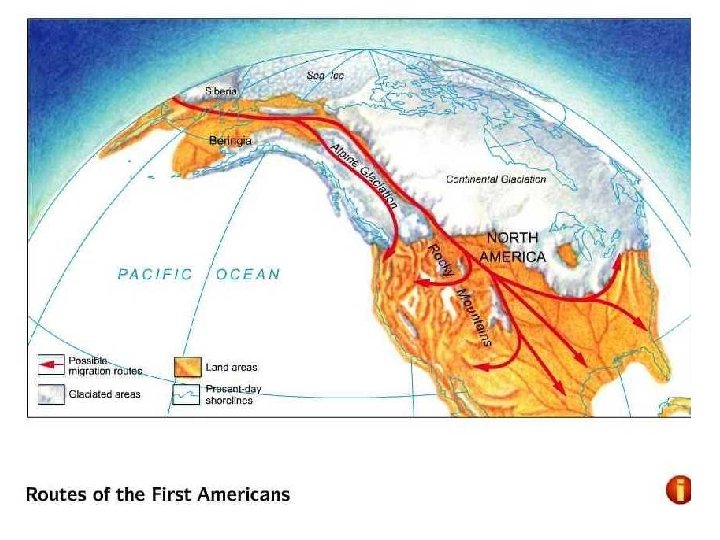
Movement BERING STRAIGHT (land bridge) • When: Ice Age (20, 000 -12, 000 years ago) • What: Ice connected Alaska & Asia • Who: Hunters from Asia crossed bridge & moved into North & South America
Movement EUROPEAN COLONIZATION & SLAVERY • 1500’s – Spain: “colonized” Florida, Southwest, Mexico • 1600’s – France & Great Britain: “colonized” East Coast – Africans: forcefully brought to U. S.
Movement WESTWARD EXPANSION • When: 1800’s • Who: – Europeans: moved West looking for gold – Native Americans: pushed off their land • Vocab: – Manifest Destiny (U. S. was meant to expand from the Atlantic Ocean to the Pacific Ocean)
Movement AFRICAN AMERICAN MIGRATION • 1890 -1920 and 1940’s • Moved from South to Northeast & Midwest • Looking for better economic opportunity
Movement SUN BELT (southern states from Florida to California) • When: 1950 • What: many moved from industrial cities in the North & Midwest to the Sun Belt • Why: warmer, job oportunities • Effect: gave South more voice in politics (South has many Republicans, conservatives)
Regions (ONE COMMON CHARACTERISTIC) • Physical: – Landform, climate • Cultural: – Economy, political organization • Examples: – Amish (PA) – New York City’s Chinatown
Human-Environment Interaction (How Did People Use the Land? ) • Mid-Atlantic (coastal plains): agriculture • South (long, hot summers): tobacco, cotton • New England (rocky soil, coast): fishing, shipbuilding, water-powered factories • Coastal cities: ports for trading goods • Tourism: parks, Niagara Falls …
Human-Environment Interaction GEOGRAPHIC PROBLEMS TODAY • Waste disposal (dumps, landfills) • Air & water pollution • Energy sources & energy use
- Slides: 18