
US History Unit 1 Colonization Technology Astrolabe increases
US History Unit 1 – Colonization
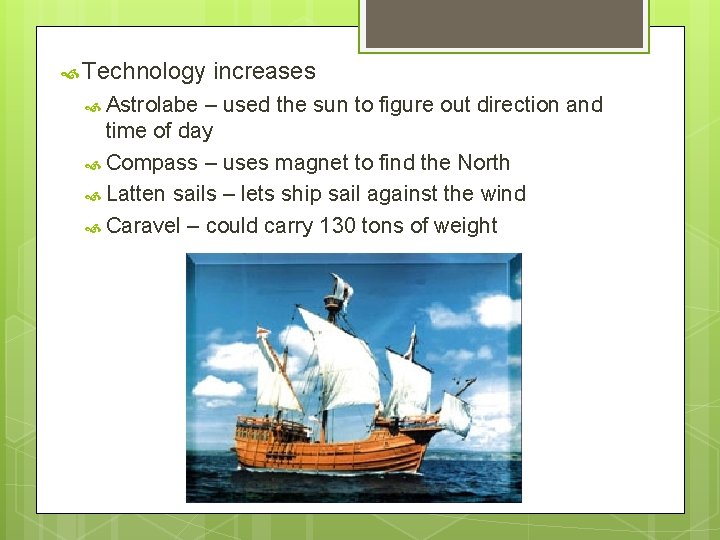
Technology Astrolabe increases – used the sun to figure out direction and time of day Compass – uses magnet to find the North Latten sails – lets ship sail against the wind Caravel – could carry 130 tons of weight
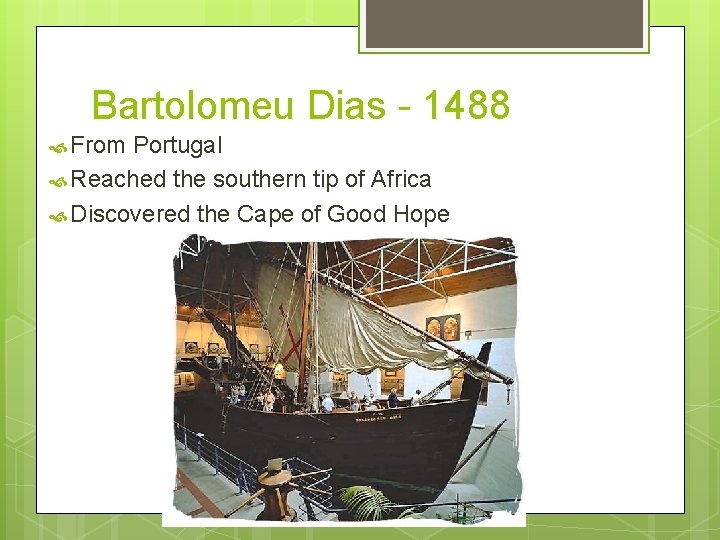
Bartolomeu Dias - 1488 From Portugal Reached the southern tip of Africa Discovered the Cape of Good Hope
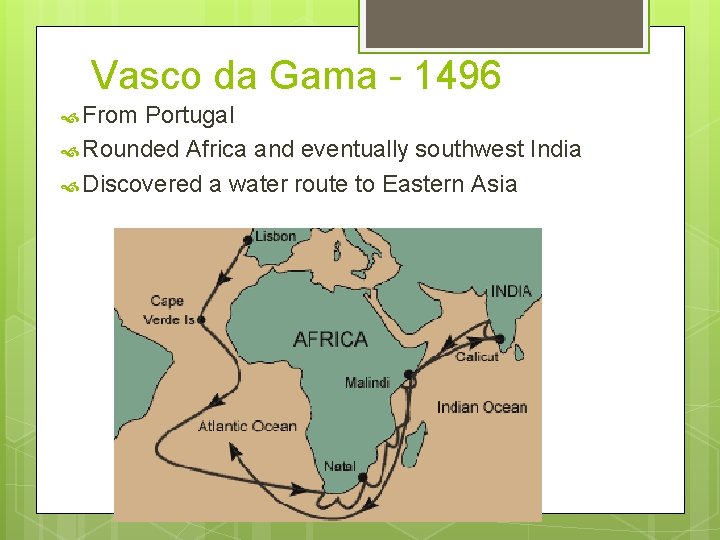
Vasco da Gama - 1496 From Portugal Rounded Africa and eventually southwest India Discovered a water route to Eastern Asia
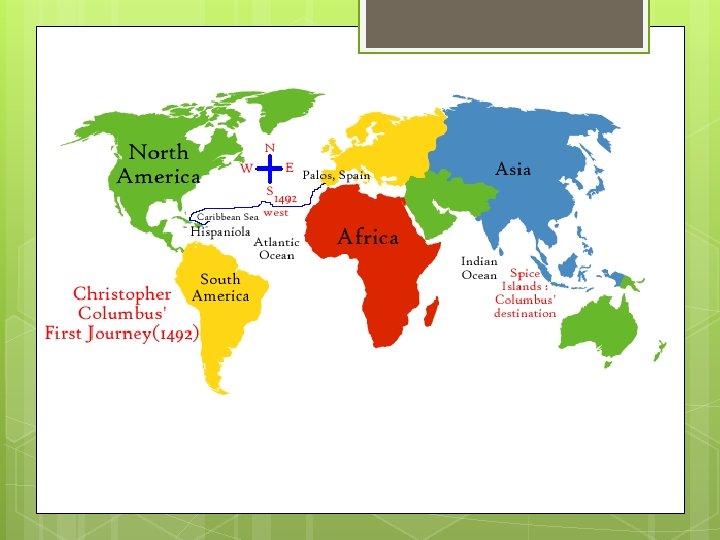
Christopher Columbus – 1492 -1502 From Italy, but Spain backed his voyage Looking for ASIA Found the Caribbean, Hispaniola, Cuba, North and South America Made people interested in the Americas because of gold
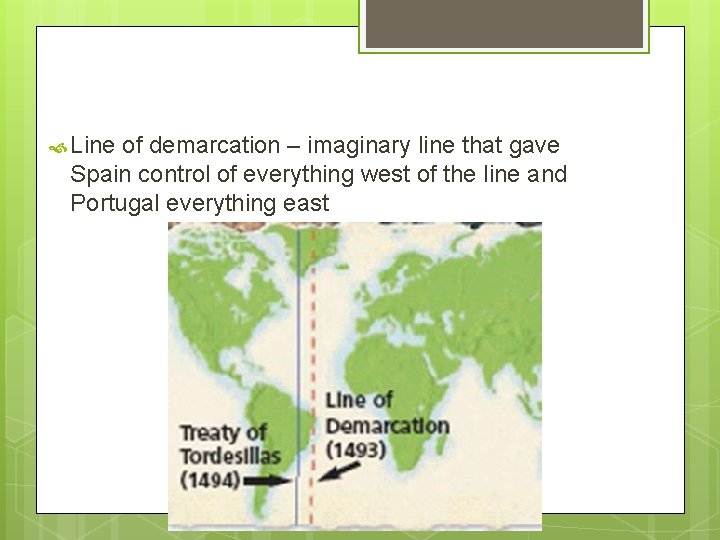
Line of demarcation – imaginary line that gave Spain control of everything west of the line and Portugal everything east
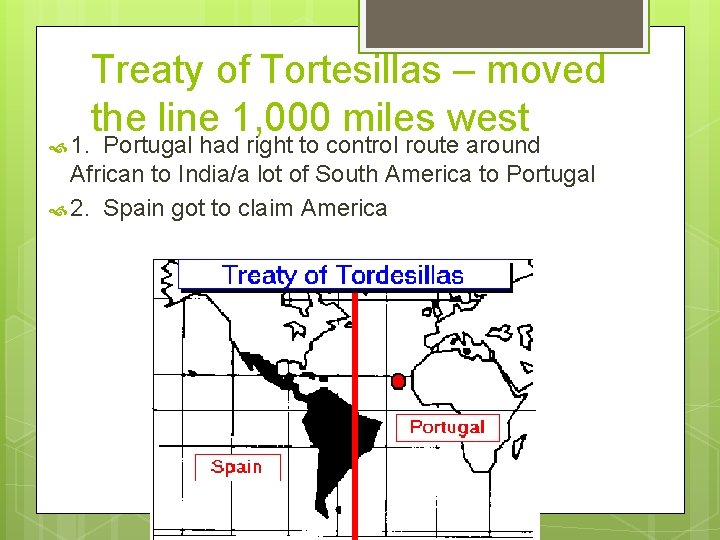
1. Treaty of Tortesillas – moved the line 1, 000 miles west Portugal had right to control route around African to India/a lot of South America to Portugal 2. Spain got to claim America
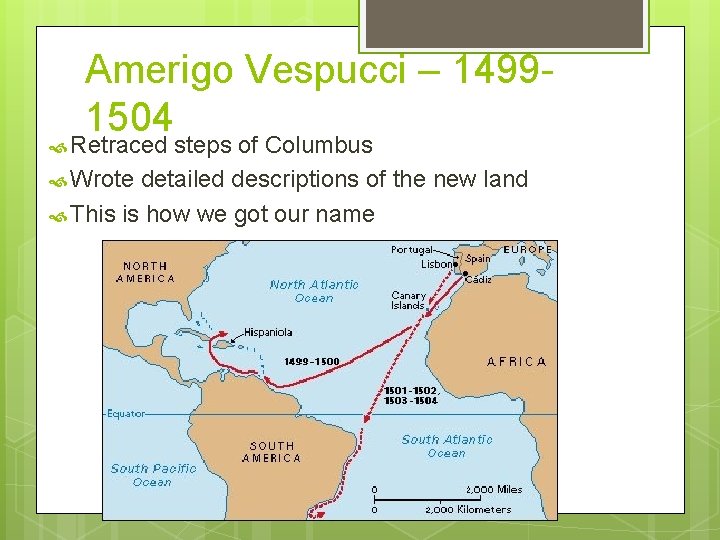
Amerigo Vespucci – 14991504 Retraced steps of Columbus Wrote detailed descriptions of the new land This is how we got our name
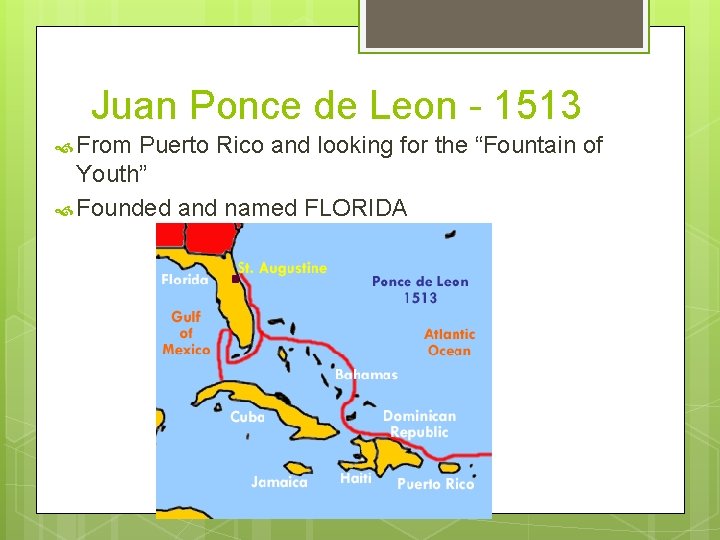
Juan Ponce de Leon - 1513 From Puerto Rico and looking for the “Fountain of Youth” Founded and named FLORIDA
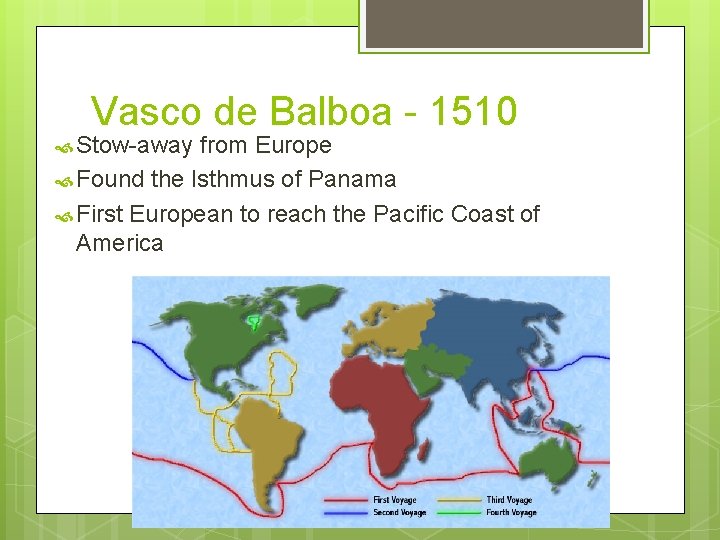
Vasco de Balboa - 1510 Stow-away from Europe Found the Isthmus of Panama First European to reach the Pacific Coast of America
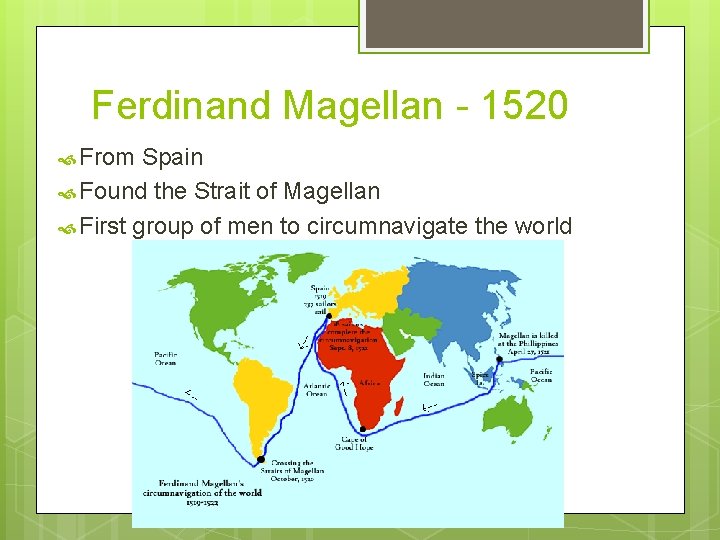
Ferdinand Magellan - 1520 From Spain Found the Strait of Magellan First group of men to circumnavigate the world
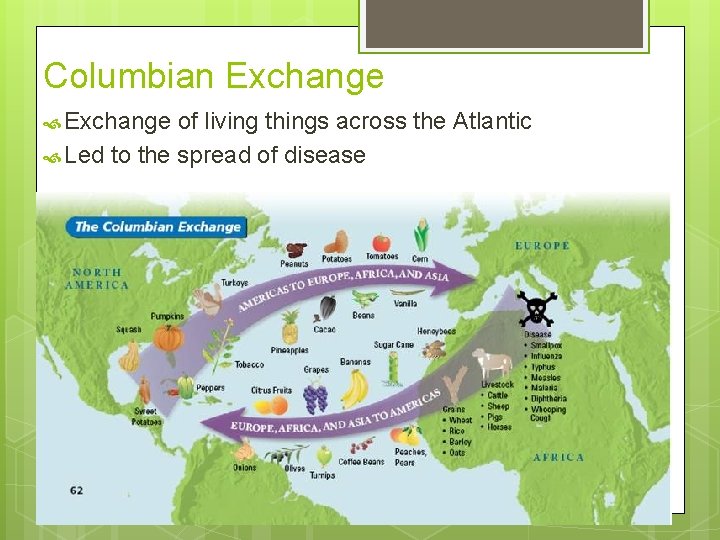
Columbian Exchange of living things across the Atlantic Led to the spread of disease
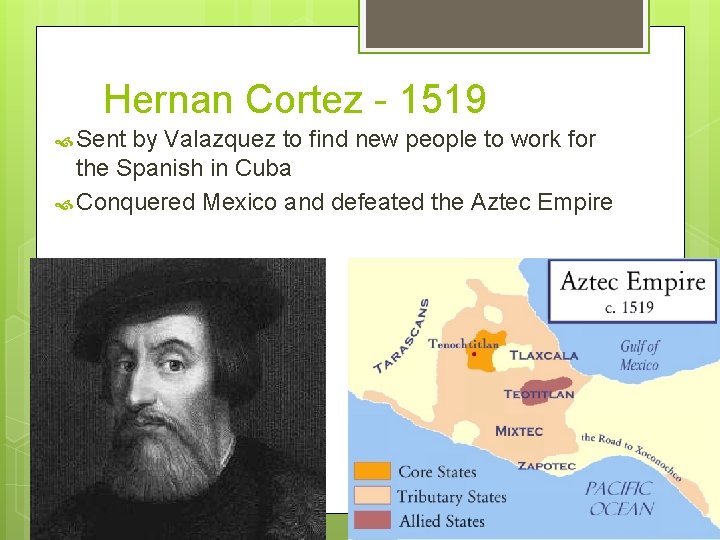
Hernan Cortez - 1519 Sent by Valazquez to find new people to work for the Spanish in Cuba Conquered Mexico and defeated the Aztec Empire
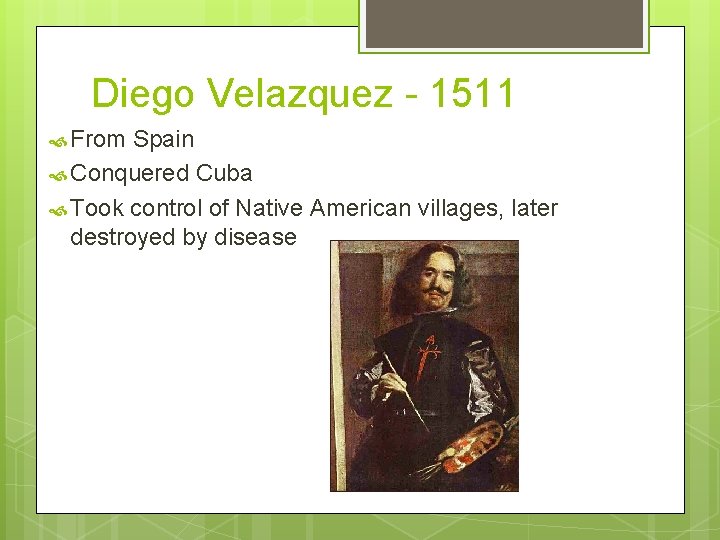
Diego Velazquez - 1511 From Spain Conquered Cuba Took control of Native American villages, later destroyed by disease
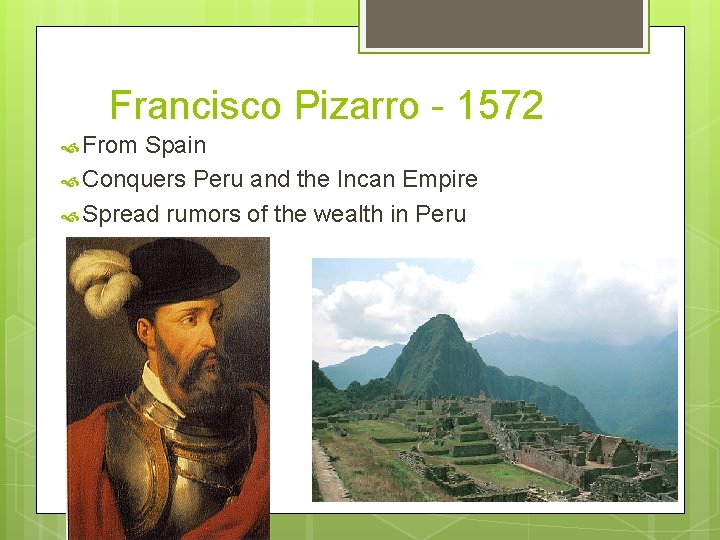
Francisco Pizarro - 1572 From Spain Conquers Peru and the Incan Empire Spread rumors of the wealth in Peru
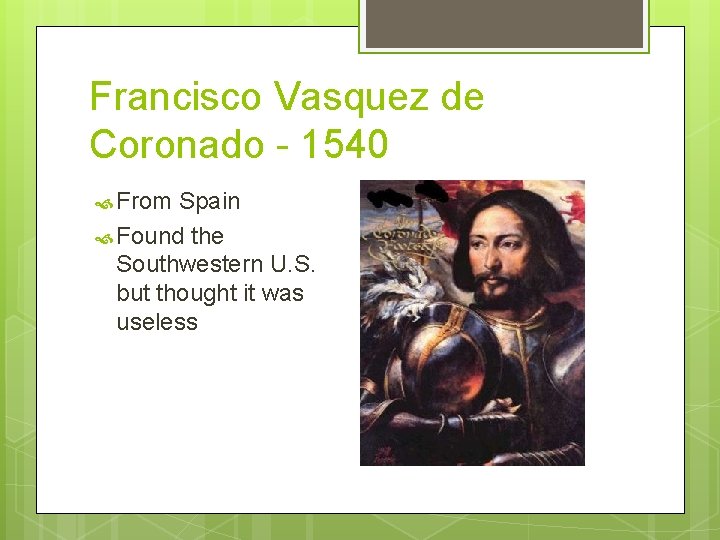
Francisco Vasquez de Coronado - 1540 From Spain Found the Southwestern U. S. but thought it was useless
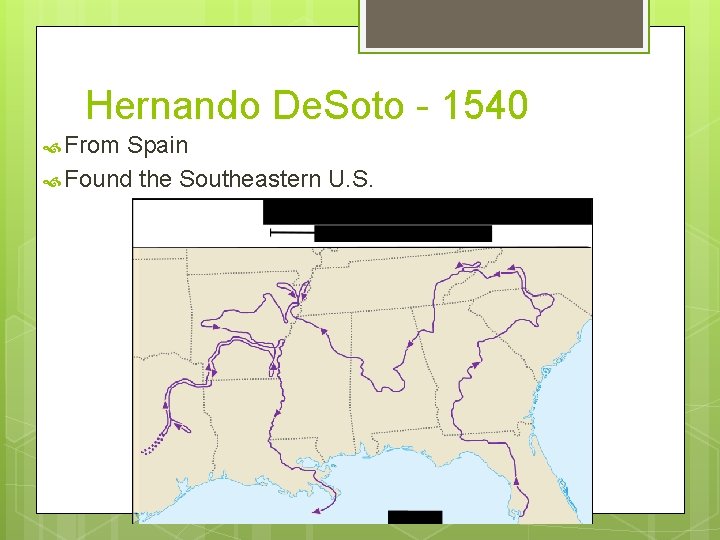
Hernando De. Soto - 1540 From Spain Found the Southeastern U. S.
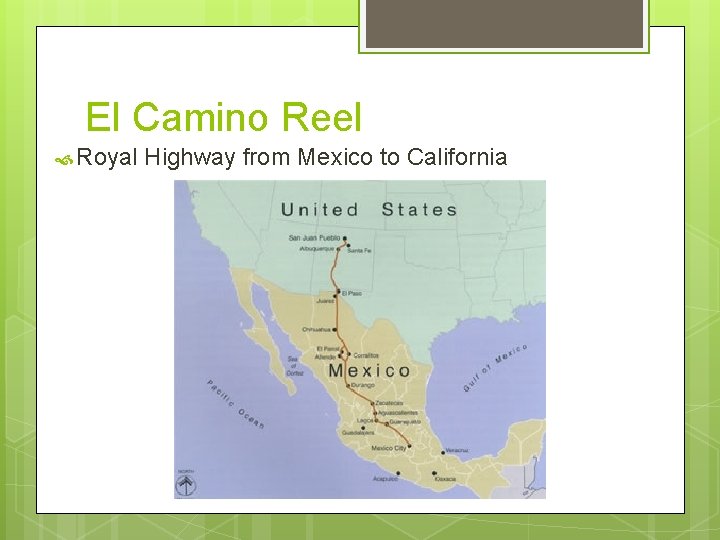
El Camino Reel Royal Highway from Mexico to California
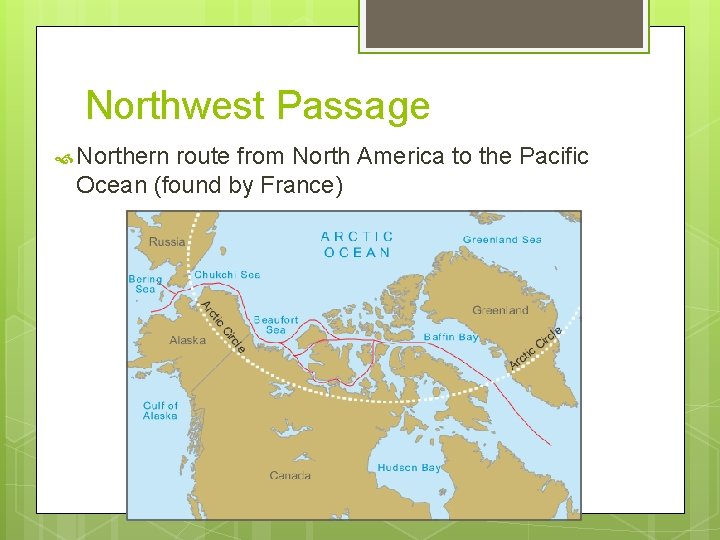
Northwest Passage Northern route from North America to the Pacific Ocean (found by France)
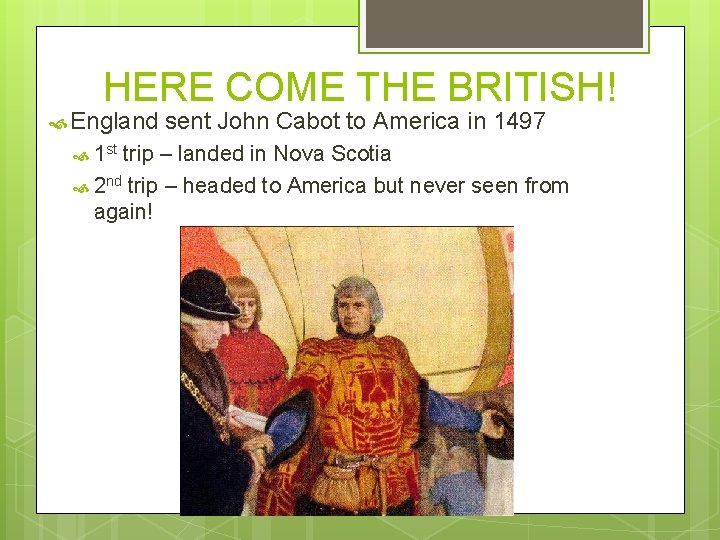
HERE COME THE BRITISH! England 1 st sent John Cabot to America in 1497 trip – landed in Nova Scotia 2 nd trip – headed to America but never seen from again!
When British landed in America shortly after Columbus, they did not claim territory because they didn’t have the money to. They saw no reason to settle and did not want to anger Spain.
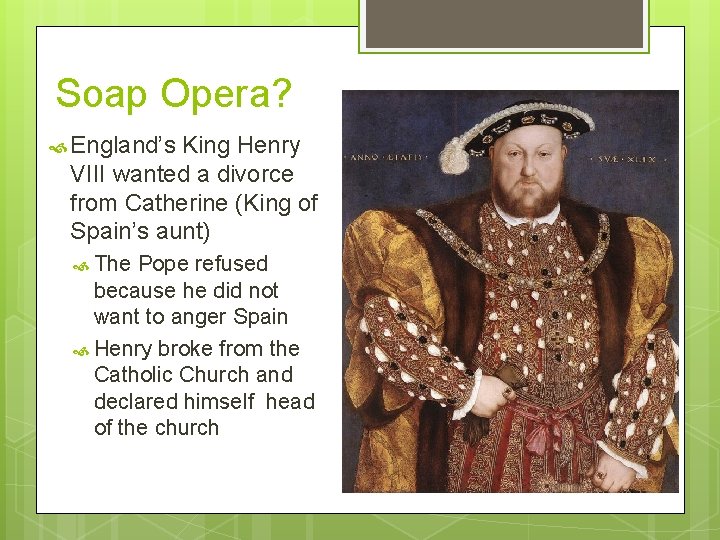
Soap Opera? England’s King Henry VIII wanted a divorce from Catherine (King of Spain’s aunt) The Pope refused because he did not want to anger Spain Henry broke from the Catholic Church and declared himself head of the church
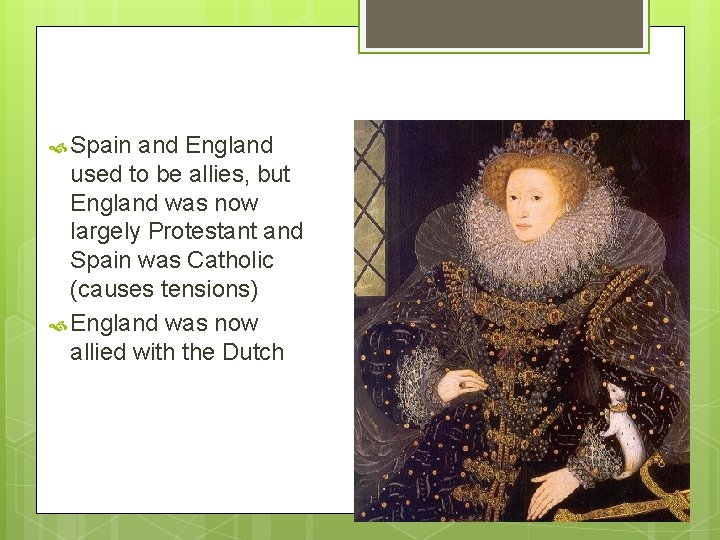
Spain and England used to be allies, but England was now largely Protestant and Spain was Catholic (causes tensions) England was now allied with the Dutch
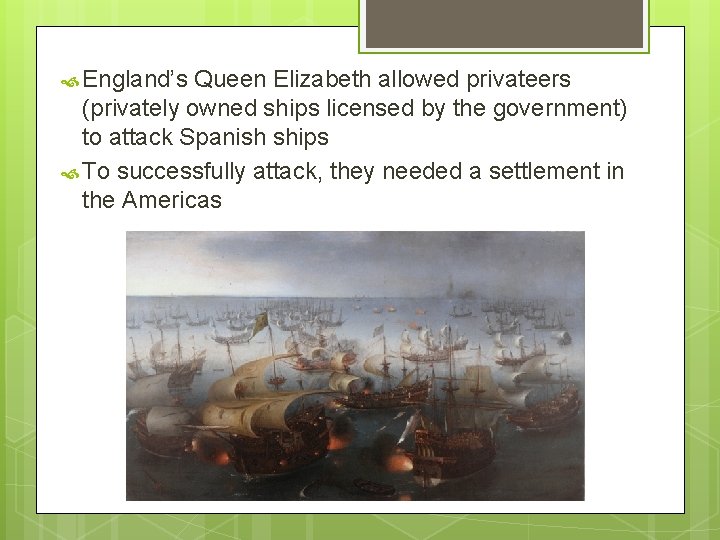
England’s Queen Elizabeth allowed privateers (privately owned ships licensed by the government) to attack Spanish ships To successfully attack, they needed a settlement in the Americas
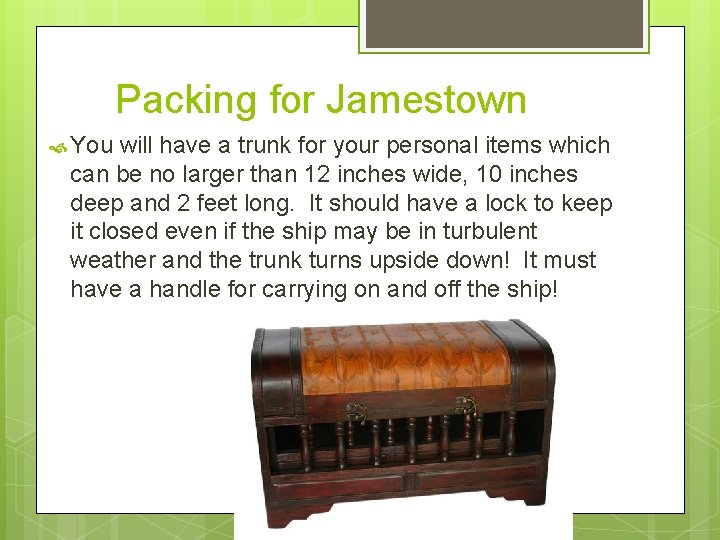
Packing for Jamestown You will have a trunk for your personal items which can be no larger than 12 inches wide, 10 inches deep and 2 feet long. It should have a lock to keep it closed even if the ship may be in turbulent weather and the trunk turns upside down! It must have a handle for carrying on and off the ship!
There are very few detailed records of supplies for the earliest voyages to Jamestown. Therefore, historians have looked to later voyages, such as those in 1620 and 1622, in order to find any detailed lists of cargo. Among these were weapons (light armor, muskets, swords), tools (axes, saws, hammers, nails), utensils (dishes, iron kettles, pans), spices (sugar, pepper, ginger), food (salted pork and beef, peas, wheat, oatmeal), garden seeds (carrots, lettuce, garlic), clothing and miscellaneous items (lanterns, candles, and books). The very first settlers to arrive planned to barter with the native peoples for food; therefore, they must have brought items with them that they surmised would be items the Powatans would desire.
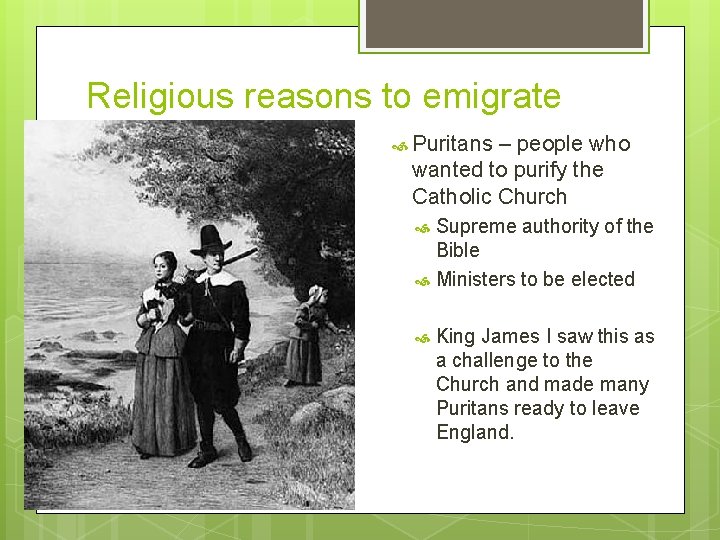
Religious reasons to emigrate Puritans – people who wanted to purify the Catholic Church Supreme authority of the Bible Ministers to be elected King James I saw this as a challenge to the Church and made many Puritans ready to leave England.
Economic reasons to emigrate England was producing more wool than needed and prices fell. Lots of unemployment and no job opportunities

Joint-stock companies pool money for many investors for large projects (ie – settle ‘new world’)
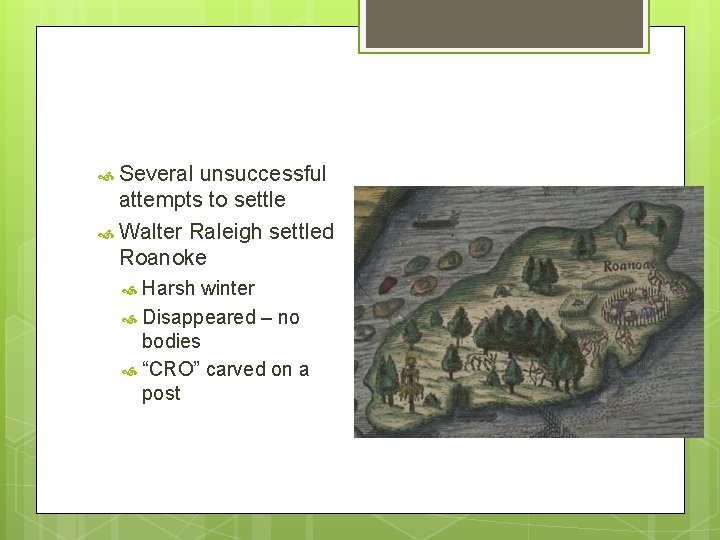
Several unsuccessful attempts to settle Walter Raleigh settled Roanoke Harsh winter Disappeared – no bodies “CRO” carved on a post
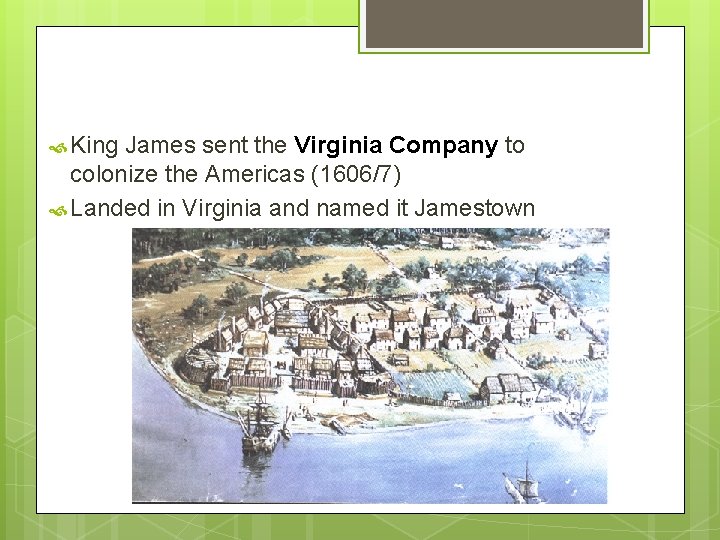
King James sent the Virginia Company to colonize the Americas (1606/7) Landed in Virginia and named it Jamestown
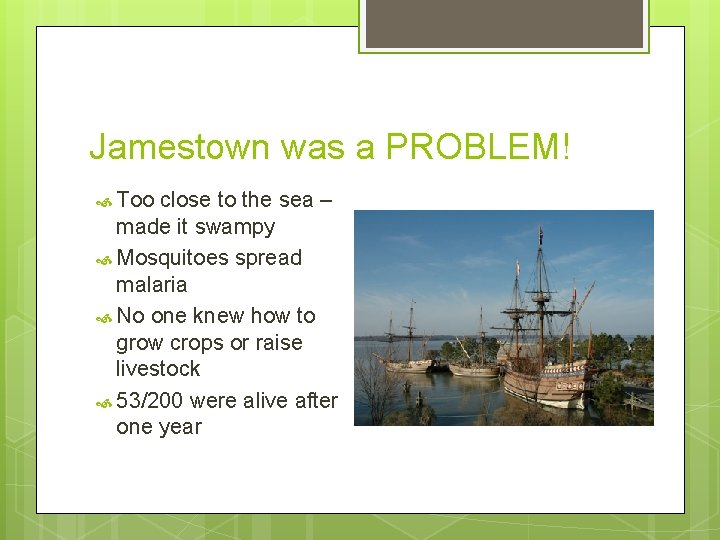
Jamestown was a PROBLEM! Too close to the sea – made it swampy Mosquitoes spread malaria No one knew how to grow crops or raise livestock 53/200 were alive after one year
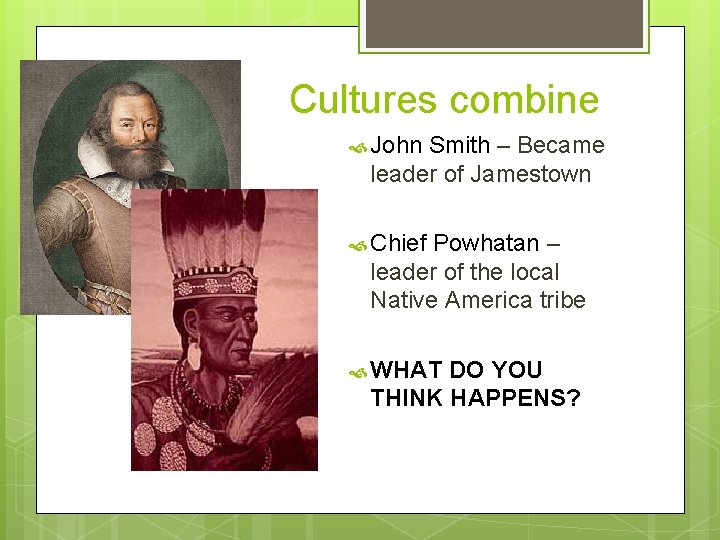
Cultures combine John Smith – Became leader of Jamestown Chief Powhatan – leader of the local Native America tribe WHAT DO YOU THINK HAPPENS?
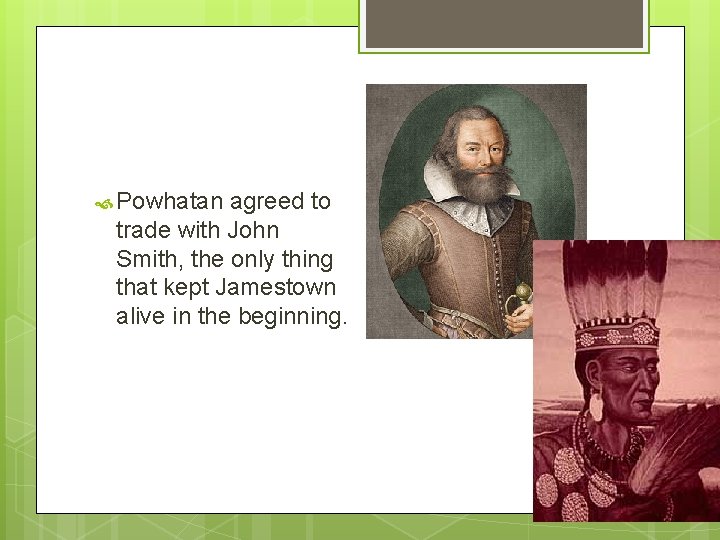
Powhatan agreed to trade with John Smith, the only thing that kept Jamestown alive in the beginning.
There was not enough food for all settlers, but Smith and de la War had headed back to England.
Settlers began stealing food from the Native Americans and were attacked. Settlers began eating dogs, rats, snakes, toadstools, and horsehides. Some ate the corpses of buried settlers.
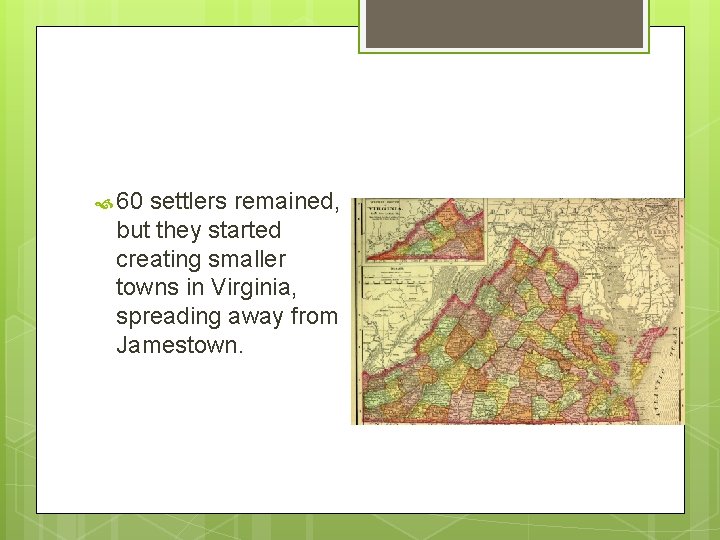
60 settlers remained, but they started creating smaller towns in Virginia, spreading away from Jamestown.
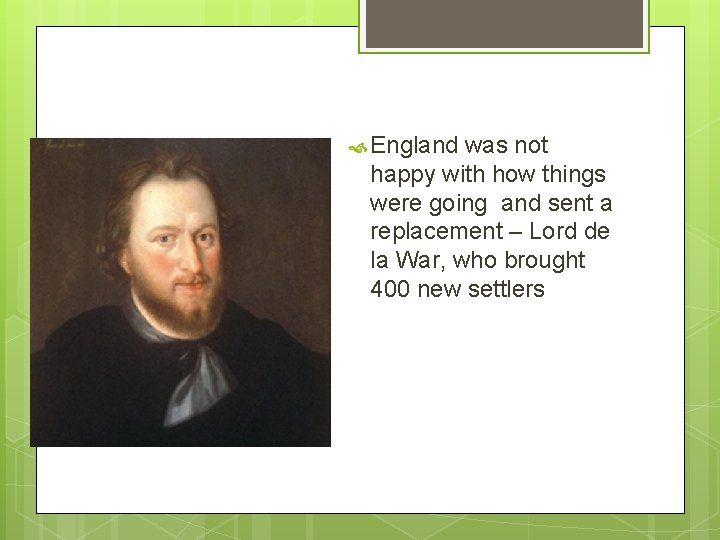
England was not happy with how things were going and sent a replacement – Lord de la War, who brought 400 new settlers
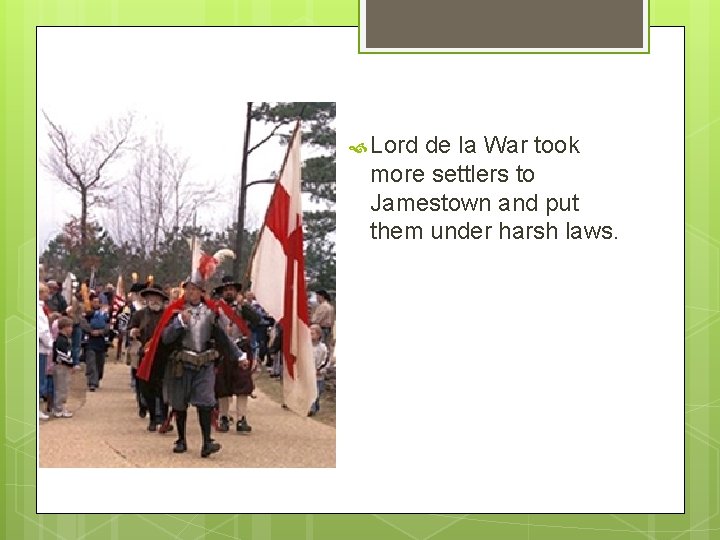
Lord de la War took more settlers to Jamestown and put them under harsh laws.
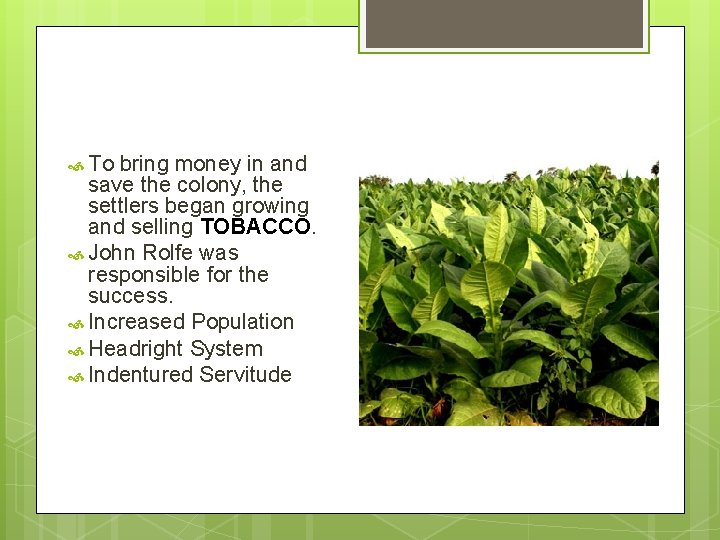
To bring money in and save the colony, the settlers began growing and selling TOBACCO. John Rolfe was responsible for the success. Increased Population Headright System Indentured Servitude
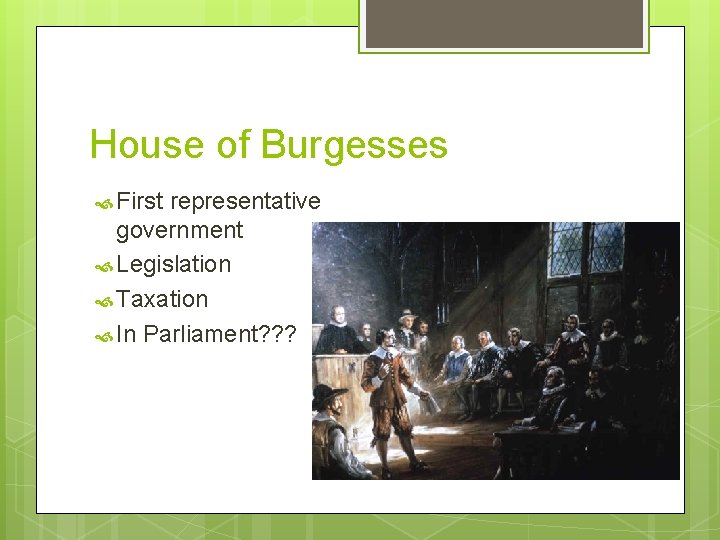
House of Burgesses First representative government Legislation Taxation In Parliament? ? ?
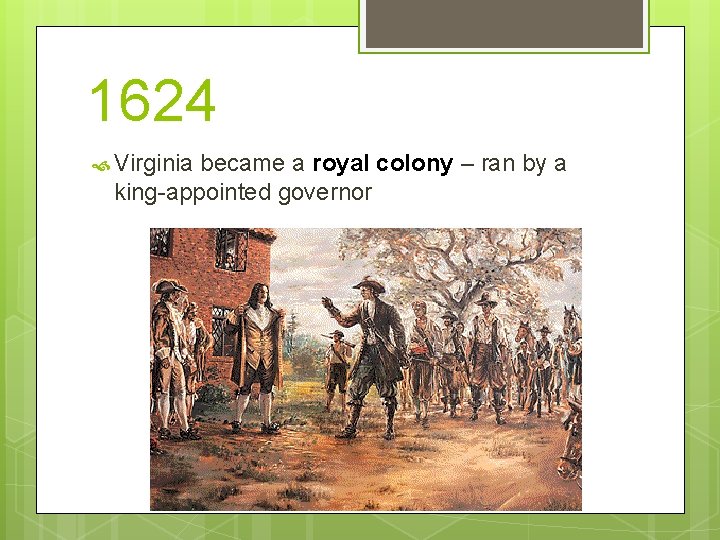
1624 Virginia became a royal colony – ran by a king-appointed governor
Relations Deteriorate Colonial-Indian Relations Economic Tension in Colonies King Phillip’s War (16751678) Headright Sassamon Bacon’s New England ‘the spark’ Powhatan’s Revolt > Indentured Taxes Rebellion (1676) Western colonists vs. Doeg Tribe Bacon vs. Berkley
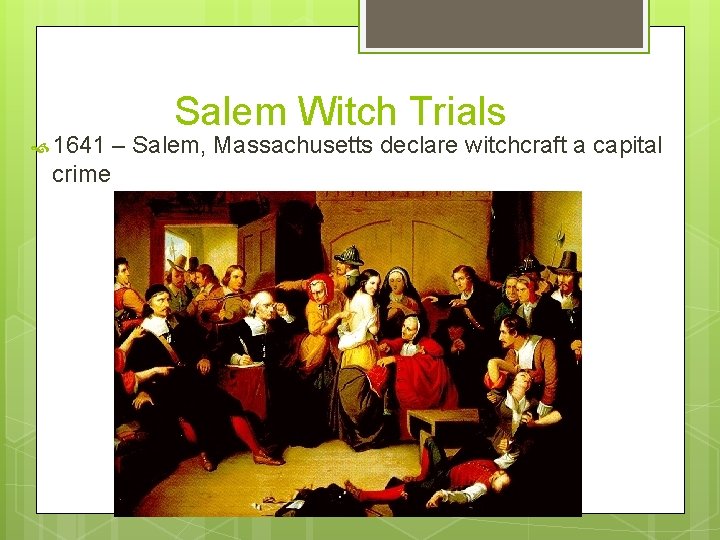
1641 crime Salem Witch Trials – Salem, Massachusetts declare witchcraft a capital
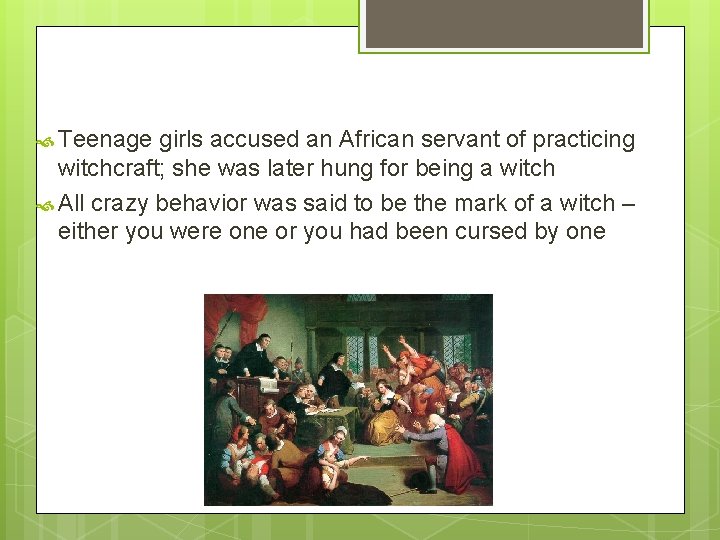
Teenage girls accused an African servant of practicing witchcraft; she was later hung for being a witch All crazy behavior was said to be the mark of a witch – either you were one or you had been cursed by one
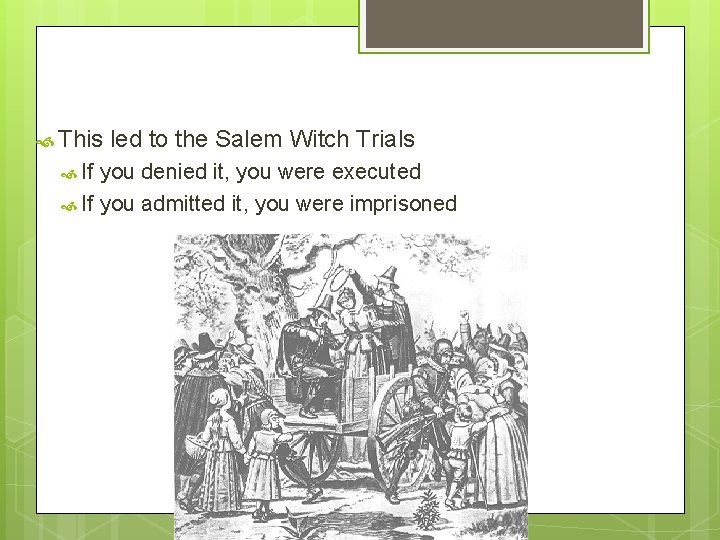
This If led to the Salem Witch Trials you denied it, you were executed If you admitted it, you were imprisoned
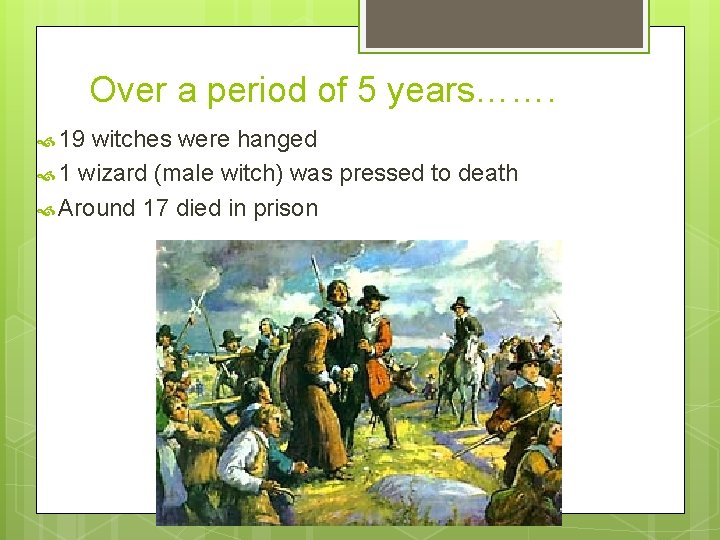
Over a period of 5 years……. 19 witches were hanged 1 wizard (male witch) was pressed to death Around 17 died in prison
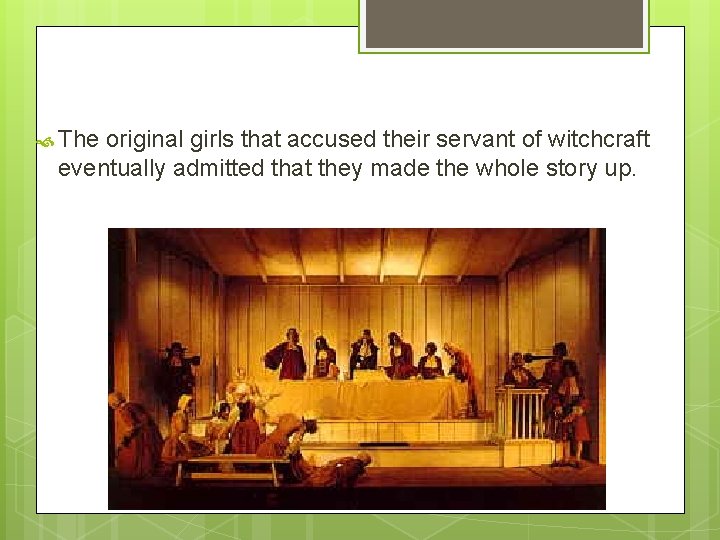
The original girls that accused their servant of witchcraft eventually admitted that they made the whole story up.
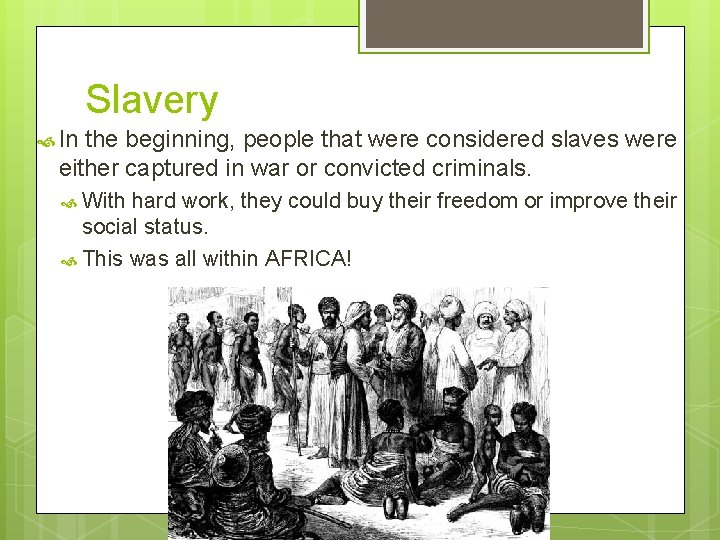
Slavery In the beginning, people that were considered slaves were either captured in war or convicted criminals. With hard work, they could buy their freedom or improve their social status. This was all within AFRICA!
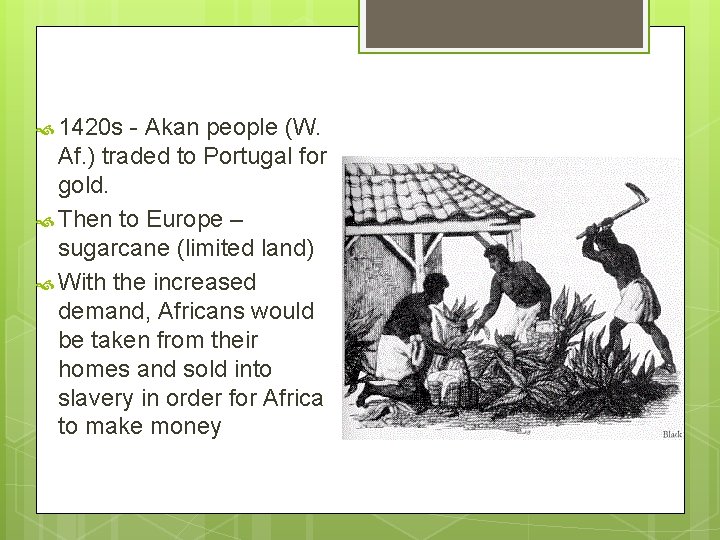
1420 s - Akan people (W. Af. ) traded to Portugal for gold. Then to Europe – sugarcane (limited land) With the increased demand, Africans would be taken from their homes and sold into slavery in order for Africa to make money
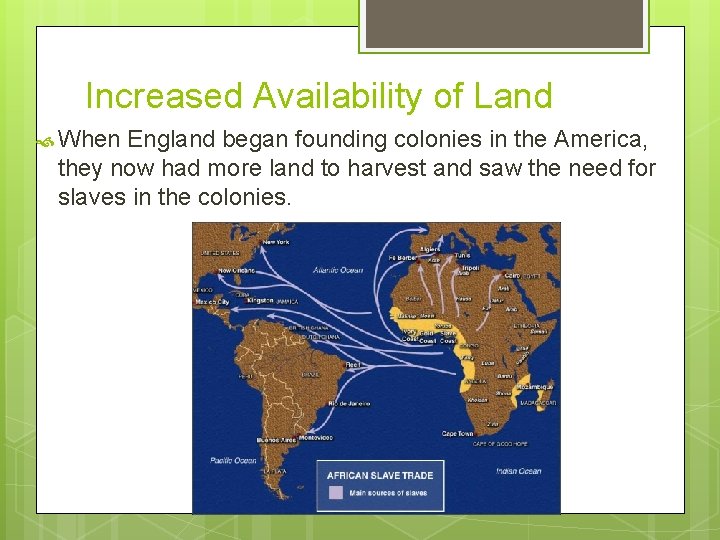
Increased Availability of Land When England began founding colonies in the America, they now had more land to harvest and saw the need for slaves in the colonies.
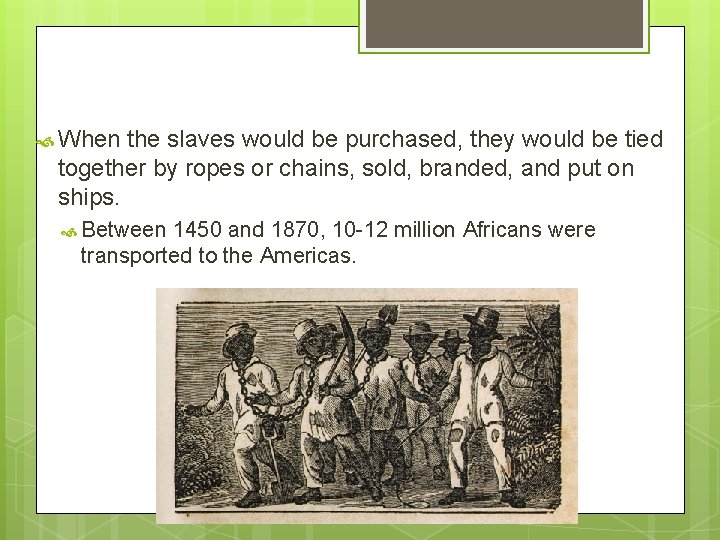
When the slaves would be purchased, they would be tied together by ropes or chains, sold, branded, and put on ships. Between 1450 and 1870, 10 -12 million Africans were transported to the Americas.
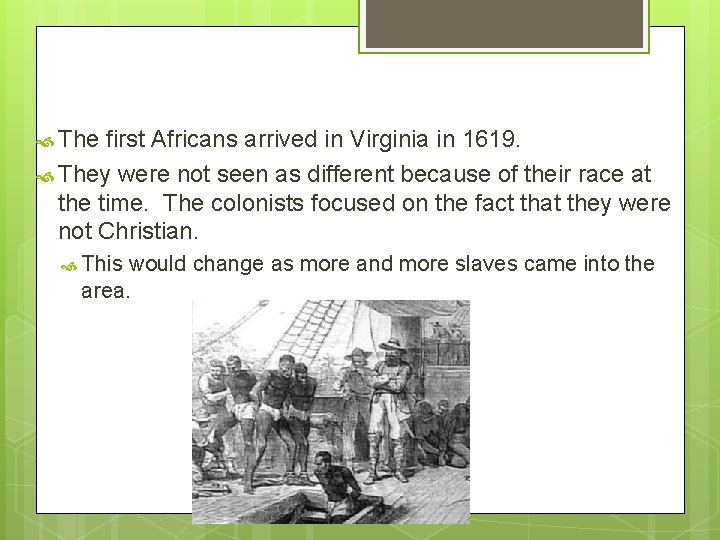
The first Africans arrived in Virginia in 1619. They were not seen as different because of their race at the time. The colonists focused on the fact that they were not Christian. This would change as more and more slaves came into the area.
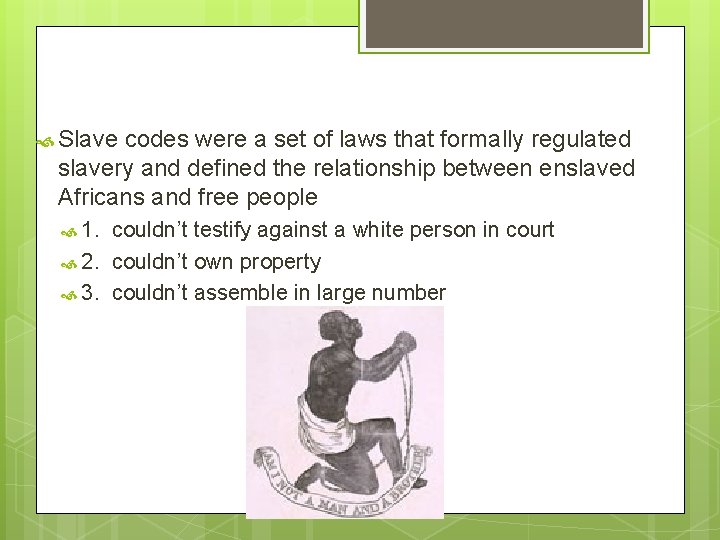
Slave codes were a set of laws that formally regulated slavery and defined the relationship between enslaved Africans and free people 1. couldn’t testify against a white person in court 2. couldn’t own property 3. couldn’t assemble in large number
Thinking Changes Enlightenment – rational thinking in science, math, politics, society (Franklin) Increased gov’t separation from church…pulled church population away from faith When coupled with urbanization and diverse economic conditions = social mobility! What happened in Massachusetts in 1691? Great Awakening, Jonathan Edwards respond to ‘enlightened ideas’ “however you may have reformed your life in many thinkg, ” as a sinner you were destined for hell unless you had a “great change of heart. ”
Great Awakening Need for an emotional experience that brings one closer to God Christian churches increase Independent Higher denominations (Baptists, Methodists) Education (Princeton, Brown, Columbia, Dartmouth)

What are the consequences of new thinking?
- Slides: 58