
US HISTORY Economic and Social Change Mid1800 s


- Slides: 17
US HISTORY Economic and Social Change Mid-1800 s
ECONOMIC CHANGE § West: more settlement, growth of farming (corn, wheat), land exploitation § North: industrialization § South: greater reliance on farming (cotton) and slavery because of industrialization
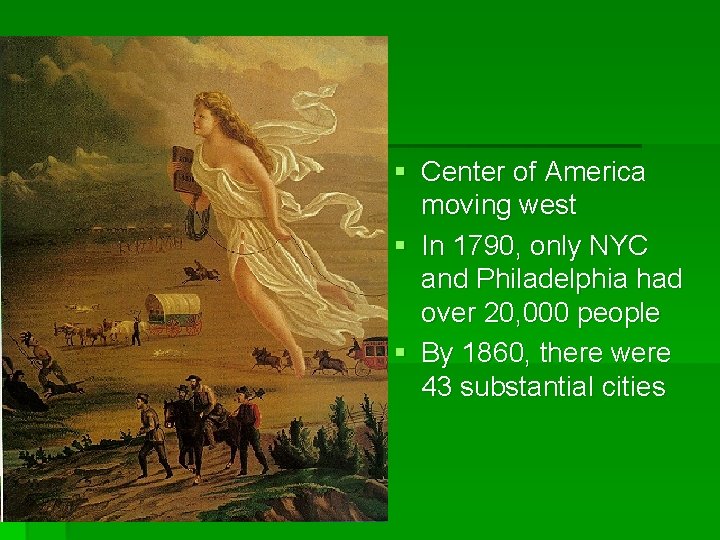
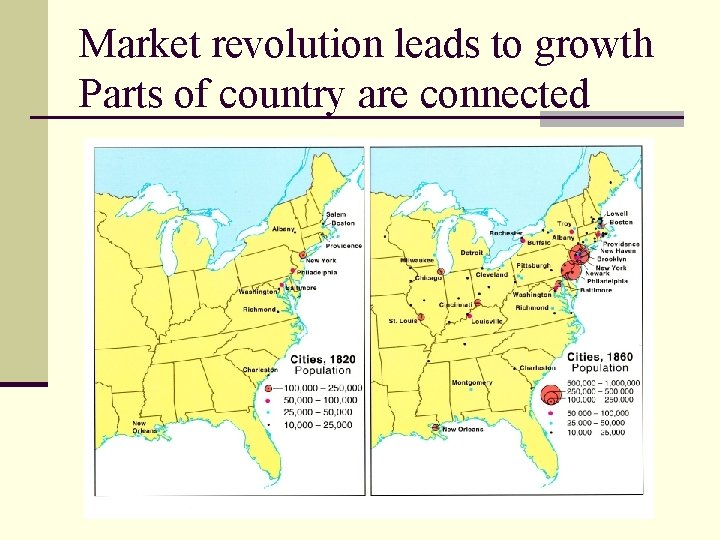
§ Center of America moving west § In 1790, only NYC and Philadelphia had over 20, 000 people § By 1860, there were 43 substantial cities
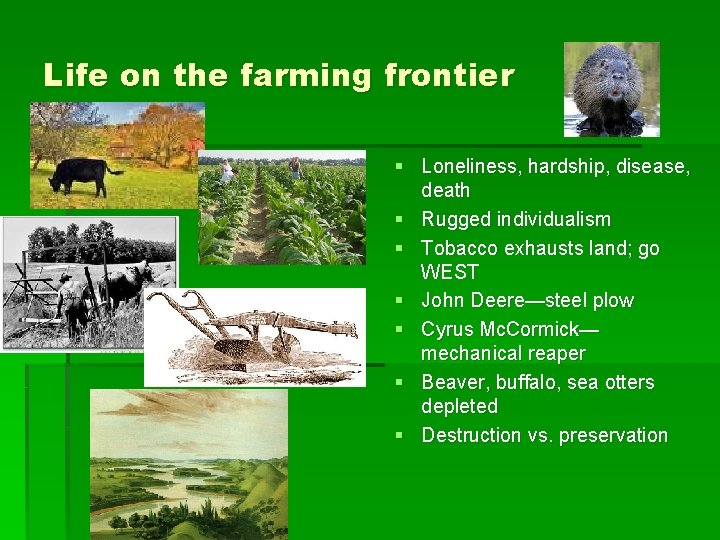
Life on the farming frontier § Loneliness, hardship, disease, death § Rugged individualism § Tobacco exhausts land; go WEST § John Deere—steel plow § Cyrus Mc. Cormick— mechanical reaper § Beaver, buffalo, sea otters depleted § Destruction vs. preservation
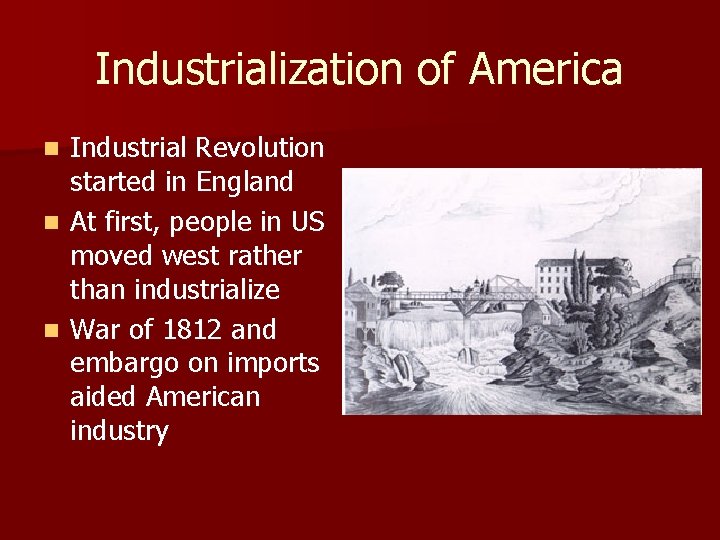
Industrialization of America Industrial Revolution started in England n At first, people in US moved west rather than industrialize n War of 1812 and embargo on imports aided American industry n
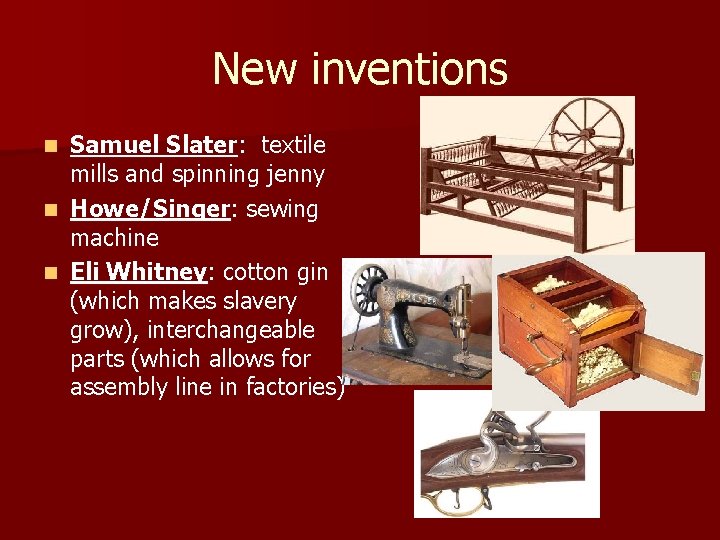
New inventions Samuel Slater: textile mills and spinning jenny n Howe/Singer: sewing machine n Eli Whitney: cotton gin (which makes slavery grow), interchangeable parts (which allows for assembly line in factories) n
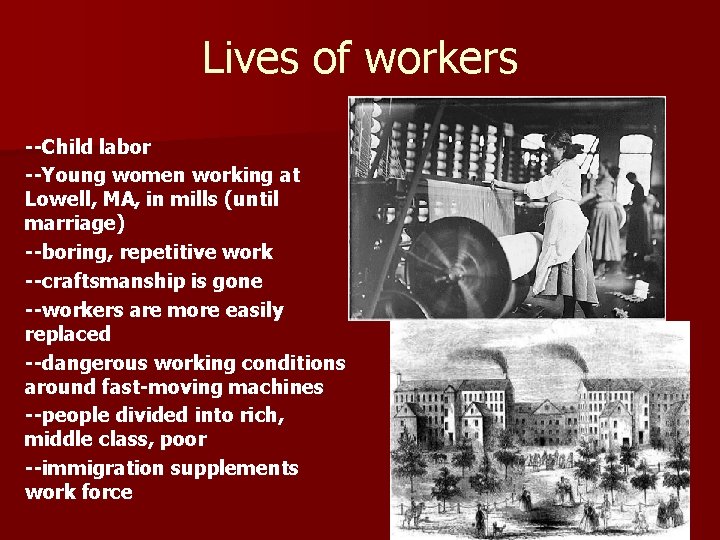
Lives of workers --Child labor --Young women working at Lowell, MA, in mills (until marriage) --boring, repetitive work --craftsmanship is gone --workers are more easily replaced --dangerous working conditions around fast-moving machines --people divided into rich, middle class, poor --immigration supplements work force
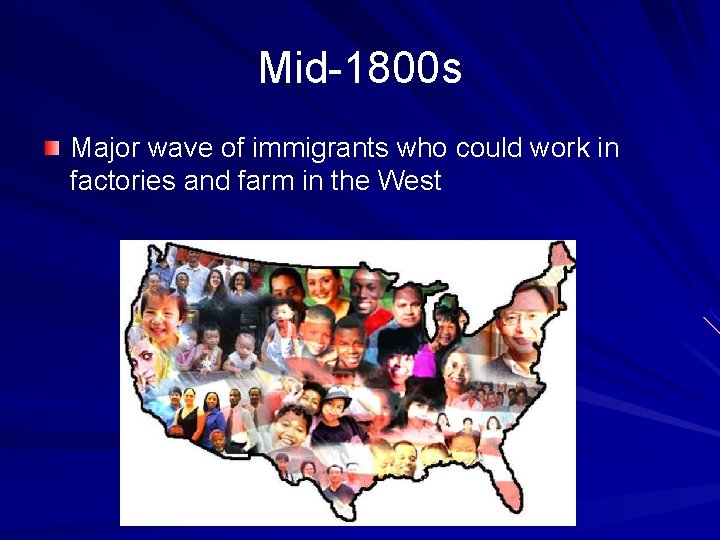
Mid-1800 s Major wave of immigrants who could work in factories and farm in the West
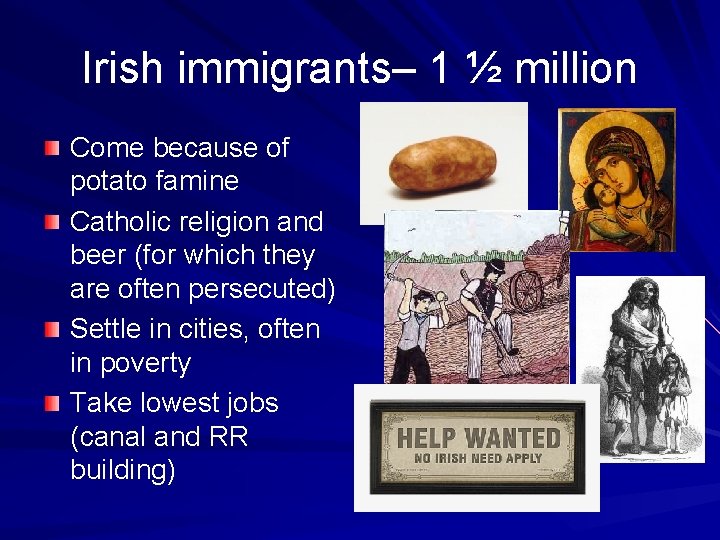
Irish immigrants– 1 ½ million Come because of potato famine Catholic religion and beer (for which they are often persecuted) Settle in cities, often in poverty Take lowest jobs (canal and RR building)
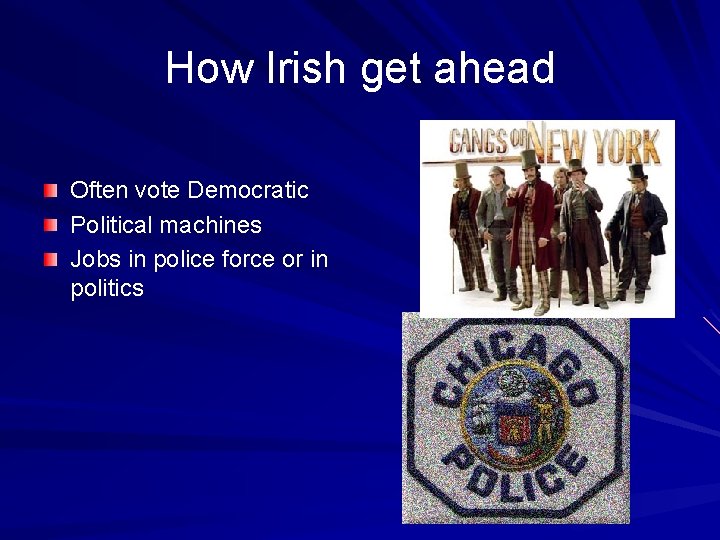
How Irish get ahead Often vote Democratic Political machines Jobs in police force or in politics
German immigrants— almost as many Come for political reasons Often settle out west (farms, or in cities like Milwaukee), more skilled Also bring beer Introduce Conestoga wagon, Christmas tree, kindergarten
Nativism: hatred of immigrants
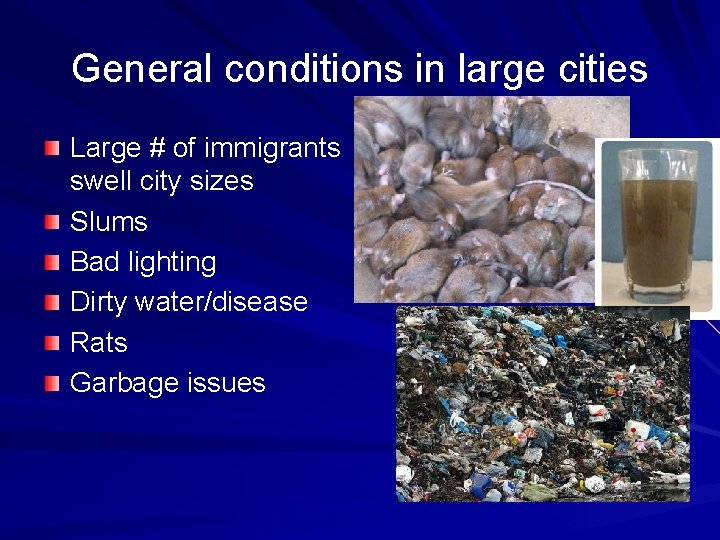
General conditions in large cities Large # of immigrants swell city sizes Slums Bad lighting Dirty water/disease Rats Garbage issues
Market revolution leads to growth Parts of country are connected
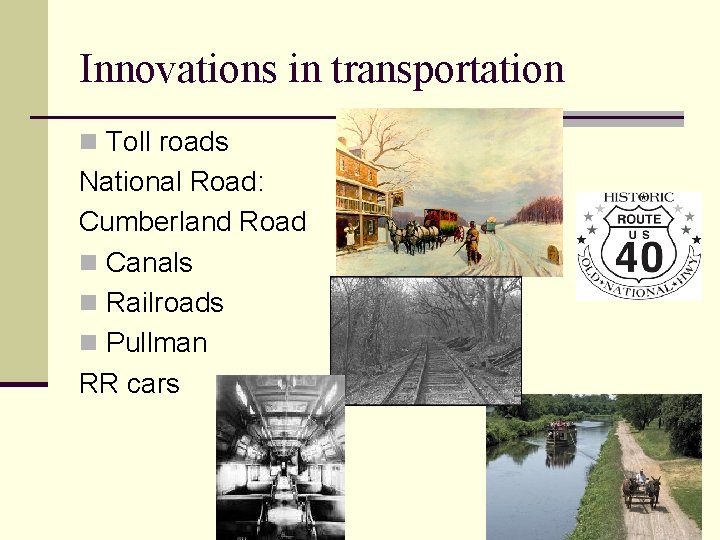
Innovations in transportation n Toll roads National Road: Cumberland Road n Canals n Railroads n Pullman RR cars
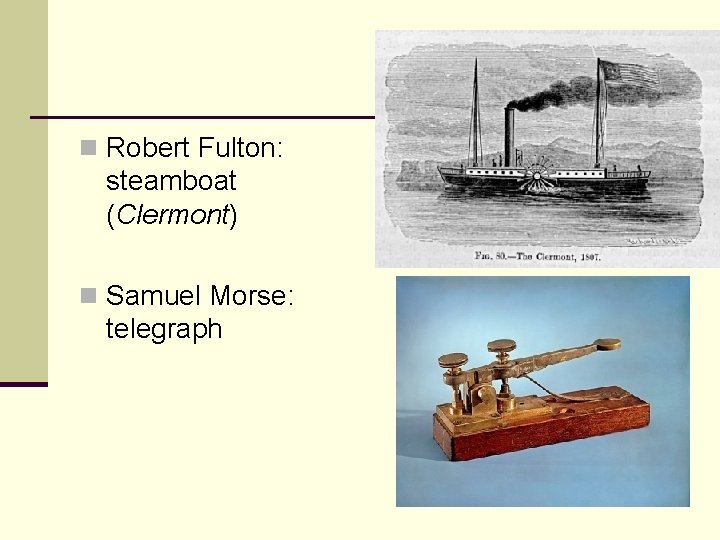
n Robert Fulton: steamboat (Clermont) n Samuel Morse: telegraph
Changes in society help lead to various reform movements