
US ECONOMIC IMPERIALISM 28 3 Notes Independence meant
- Slides: 13
US ECONOMIC IMPERIALISM 28. 3 Notes
Independence meant little… • Most citizens stuck in poverty cycle • Worked for landowners, paid in vouchers=debt peonage • Unequal distribution of land
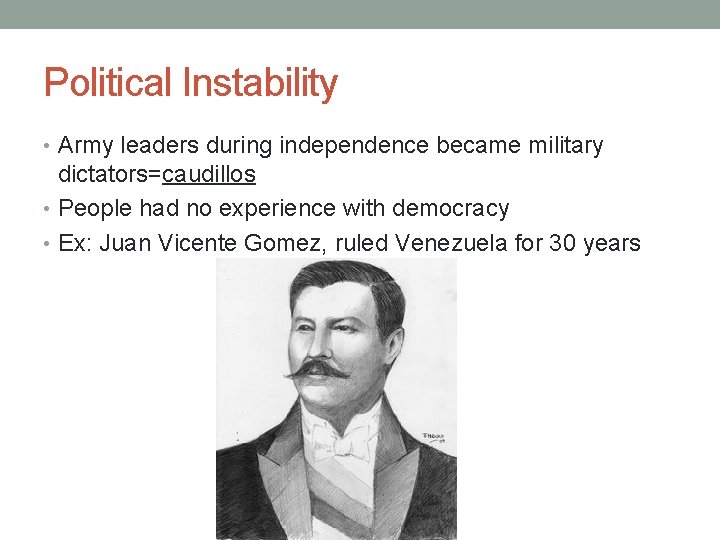
Political Instability • Army leaders during independence became military dictators=caudillos • People had no experience with democracy • Ex: Juan Vicente Gomez, ruled Venezuela for 30 years
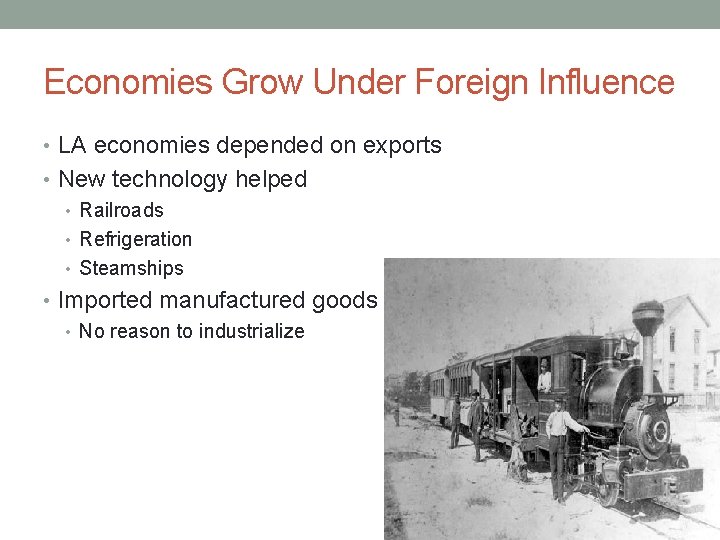
Economies Grow Under Foreign Influence • LA economies depended on exports • New technology helped • Railroads • Refrigeration • Steamships • Imported manufactured goods • No reason to industrialize
Outside Investment and Interference • LA countries borrowed money at high interest rates • Couldn’t always pay back money • New Age of “Economic Colonialism”
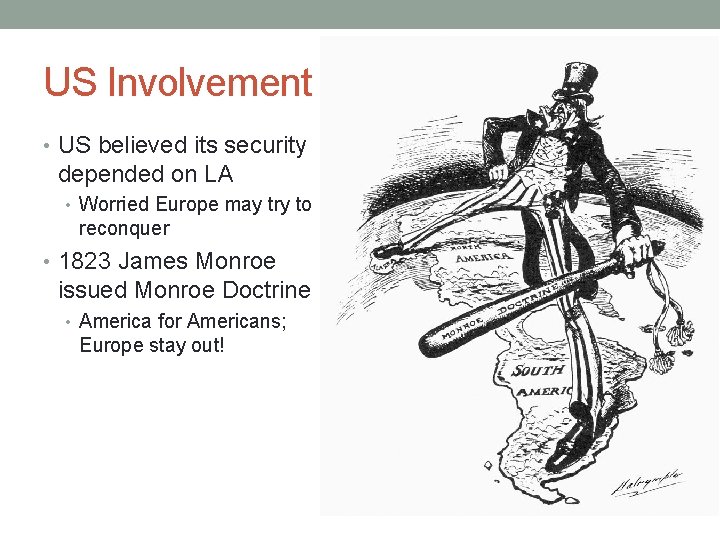
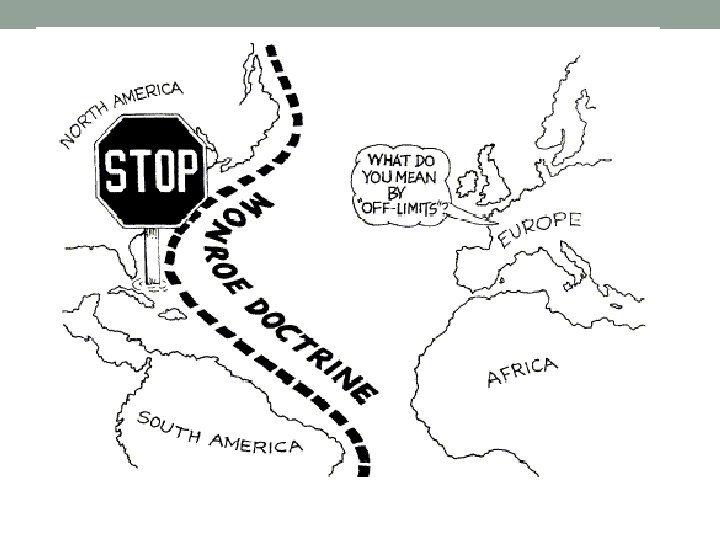
US Involvement • US believed its security depended on LA • Worried Europe may try to reconquer • 1823 James Monroe issued Monroe Doctrine • America for Americans; Europe stay out!
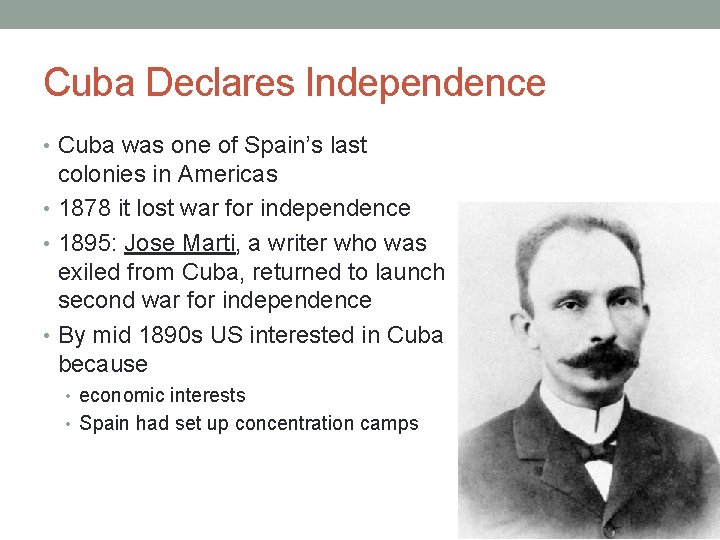
Cuba Declares Independence • Cuba was one of Spain’s last colonies in Americas • 1878 it lost war for independence • 1895: Jose Marti, a writer who was exiled from Cuba, returned to launch second war for independence • By mid 1890 s US interested in Cuba because • economic interests • Spain had set up concentration camps
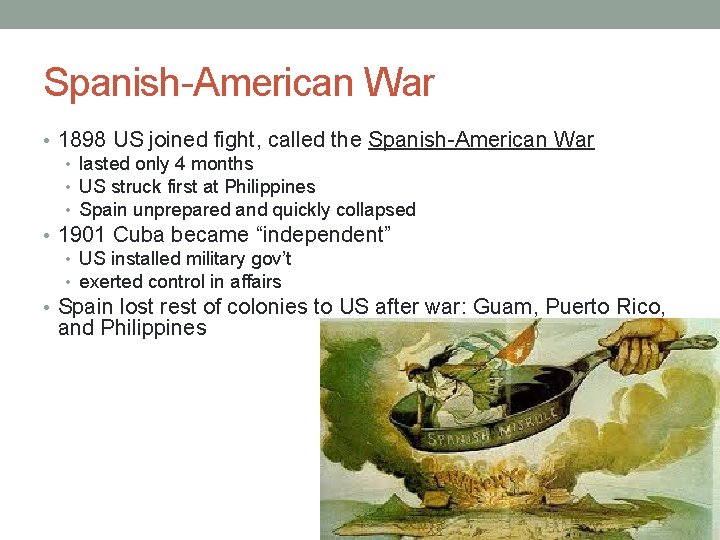
Spanish-American War • 1898 US joined fight, called the Spanish-American War • lasted only 4 months • US struck first at Philippines • Spain unprepared and quickly collapsed • 1901 Cuba became “independent” • US installed military gov’t • exerted control in affairs • Spain lost rest of colonies to US after war: Guam, Puerto Rico, and Philippines
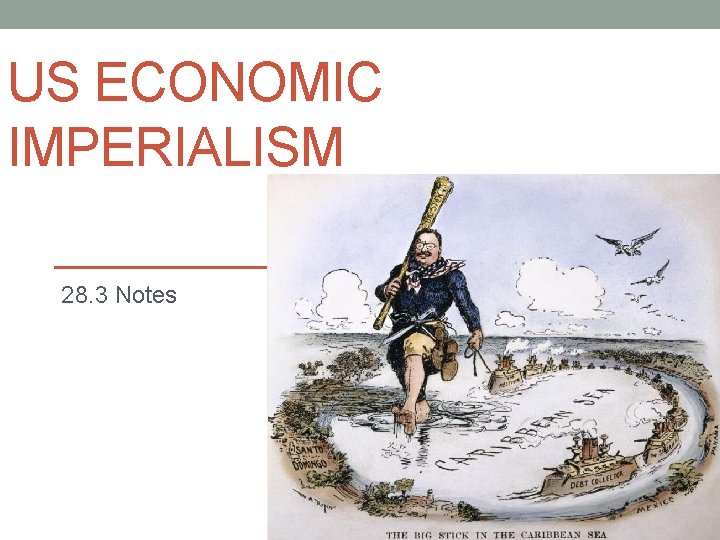
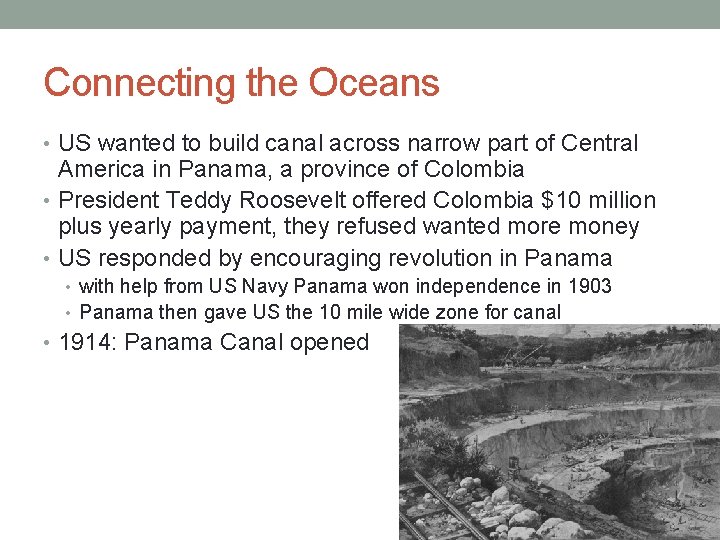
Connecting the Oceans • US wanted to build canal across narrow part of Central America in Panama, a province of Colombia • President Teddy Roosevelt offered Colombia $10 million plus yearly payment, they refused wanted more money • US responded by encouraging revolution in Panama • with help from US Navy Panama won independence in 1903 • Panama then gave US the 10 mile wide zone for canal • 1914: Panama Canal opened
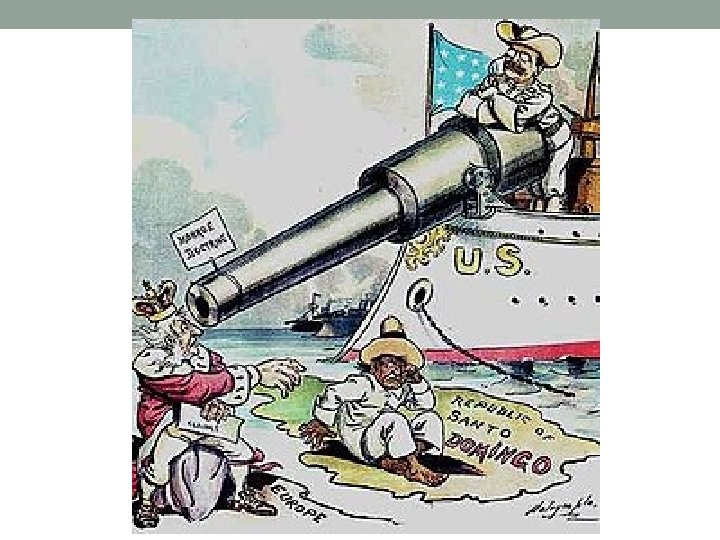
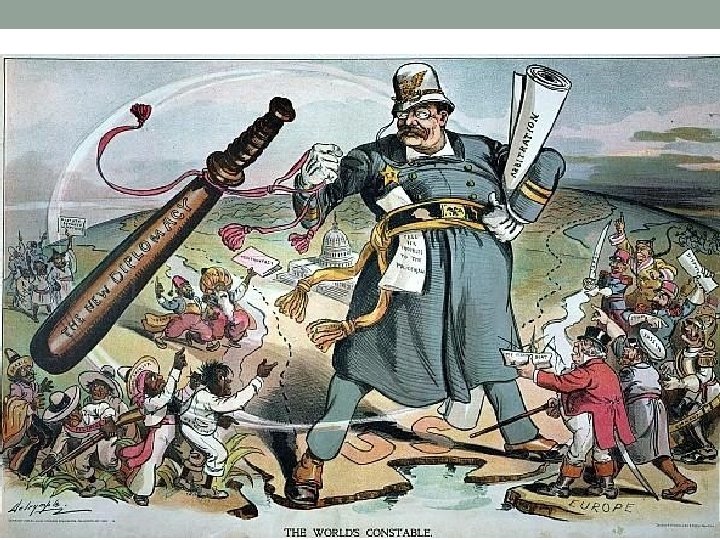
The Roosevelt Corollary • Panama Canal, presence in Cuba, and large investments in LA strengthened US’s foothold there • To protect economic interests, Teddy issued the Roosevelt Corollary: gave US right to be an international police power in Western Hemisphere • US used the Corollary as justification several times when intervening in LA