
Urodynamics What is it An overview Phil OLoingsigh


- Slides: 44
Urodynamics – What is it? An overview Phil O’Loingsigh
Definition Urodynamics is the study of pressure and flow relationships during the storage and transport of urine within the urinary tract Chapple, Mac. Diarmid and Patel 2009
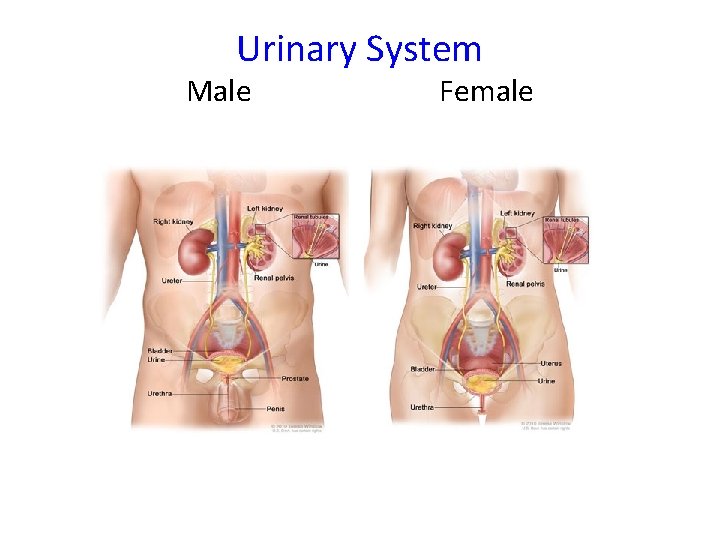
Urinary System Male Female
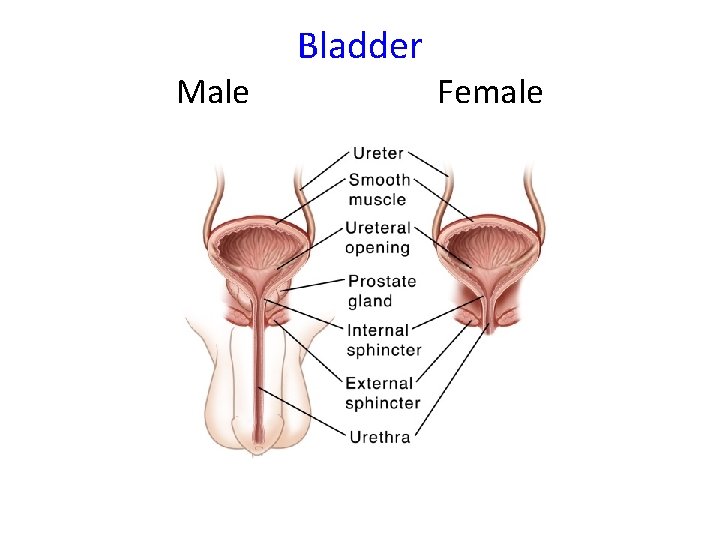
Male Bladder Female
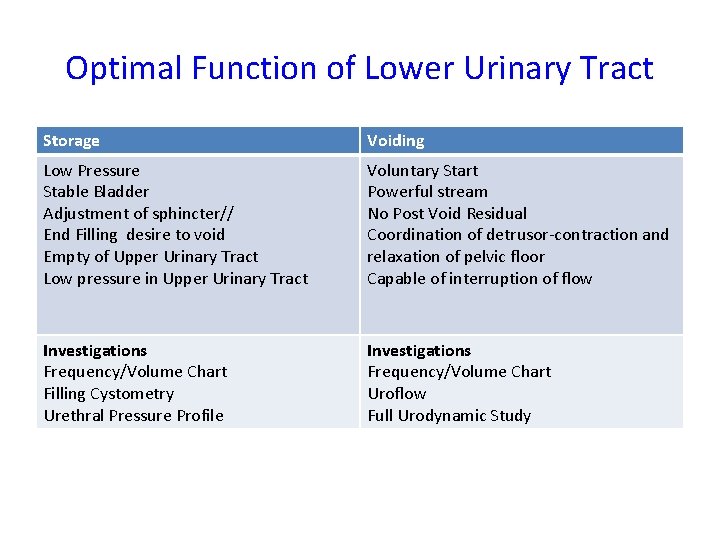
Optimal Function of Lower Urinary Tract Storage Voiding Low Pressure Stable Bladder Adjustment of sphincter// End Filling desire to void Empty of Upper Urinary Tract Low pressure in Upper Urinary Tract Voluntary Start Powerful stream No Post Void Residual Coordination of detrusor-contraction and relaxation of pelvic floor Capable of interruption of flow Investigations Frequency/Volume Chart Filling Cystometry Urethral Pressure Profile Investigations Frequency/Volume Chart Uroflow Full Urodynamic Study
Urodynamic Tests • Uroflow Studies • Full Urodynamic Study • Urethral Pressure Profile
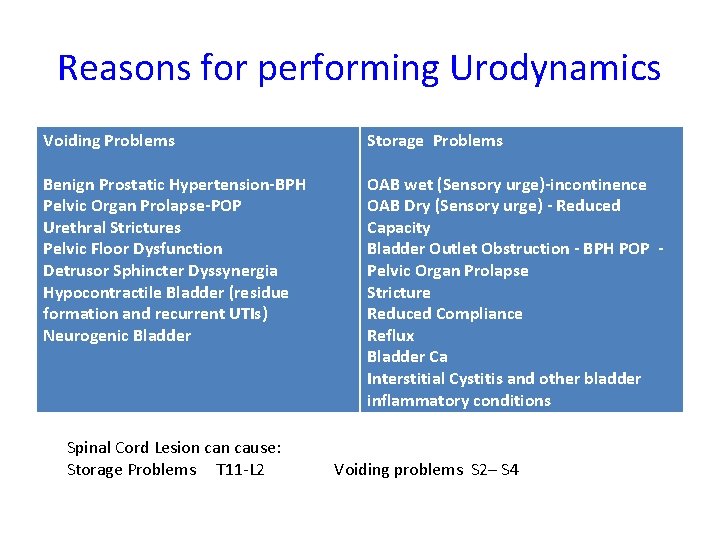
Reasons for performing Urodynamics Voiding Problems Storage Problems Benign Prostatic Hypertension-BPH Pelvic Organ Prolapse-POP Urethral Strictures Pelvic Floor Dysfunction Detrusor Sphincter Dyssynergia Hypocontractile Bladder (residue formation and recurrent UTIs) Neurogenic Bladder OAB wet (Sensory urge)-incontinence OAB Dry (Sensory urge) - Reduced Capacity Bladder Outlet Obstruction - BPH POP Pelvic Organ Prolapse Stricture Reduced Compliance Reflux Bladder Ca Interstitial Cystitis and other bladder inflammatory conditions Spinal Cord Lesion cause: Storage Problems T 11 -L 2 Voiding problems S 2– S 4
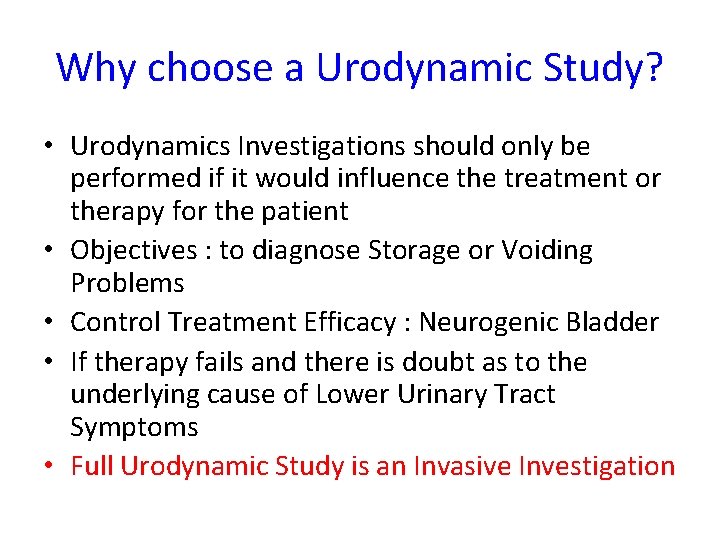
Why choose a Urodynamic Study? • Urodynamics Investigations should only be performed if it would influence the treatment or therapy for the patient • Objectives : to diagnose Storage or Voiding Problems • Control Treatment Efficacy : Neurogenic Bladder • If therapy fails and there is doubt as to the underlying cause of Lower Urinary Tract Symptoms • Full Urodynamic Study is an Invasive Investigation
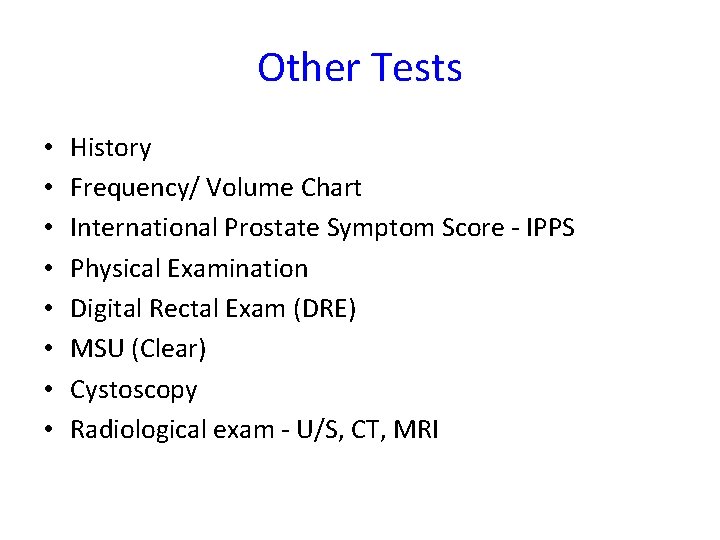
Other Tests • • History Frequency/ Volume Chart International Prostate Symptom Score - IPPS Physical Examination Digital Rectal Exam (DRE) MSU (Clear) Cystoscopy Radiological exam - U/S, CT, MRI
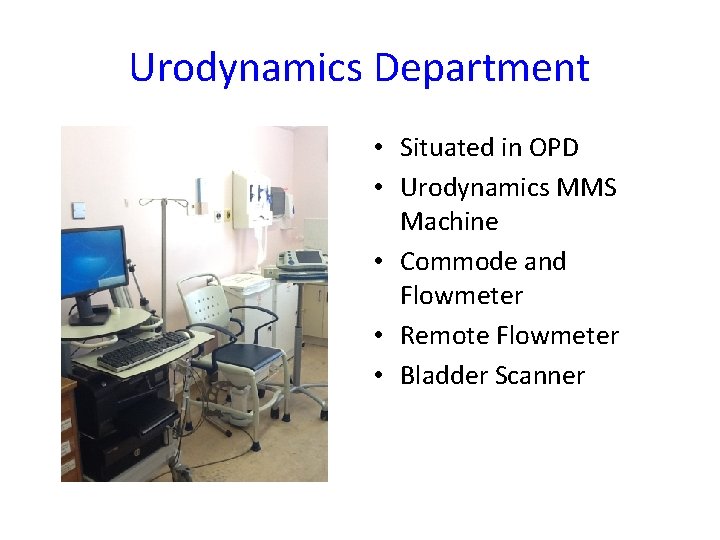
Urodynamics Department • Situated in OPD • Urodynamics MMS Machine • Commode and Flowmeter • Remote Flowmeter • Bladder Scanner
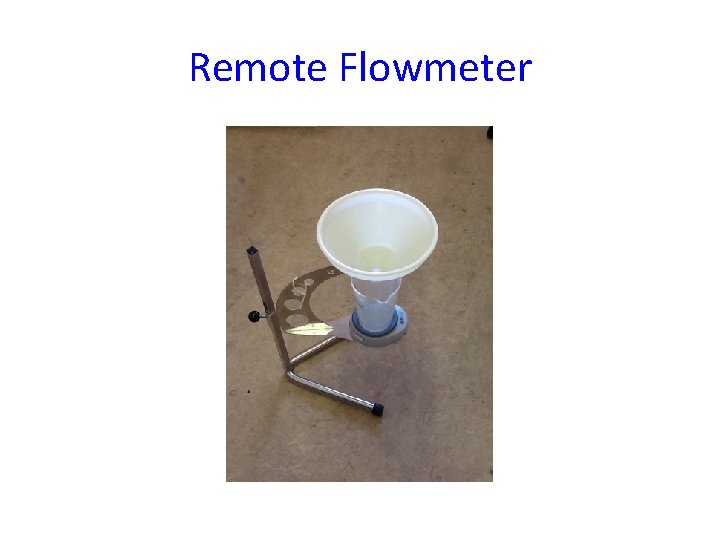
Remote Flowmeter
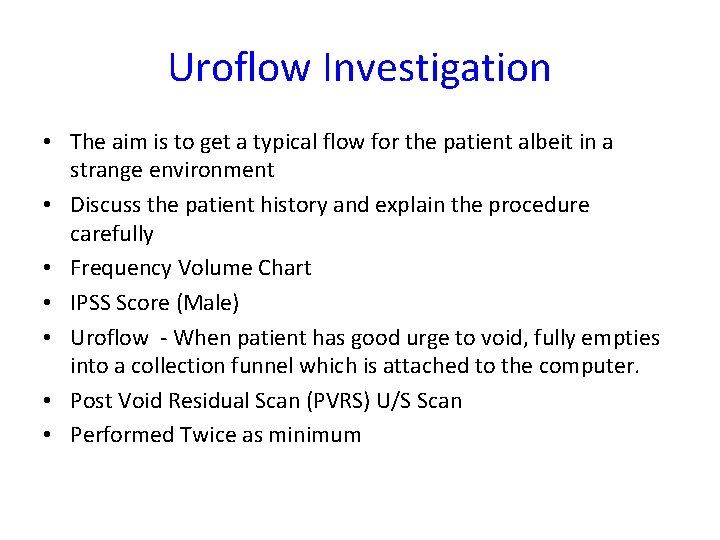
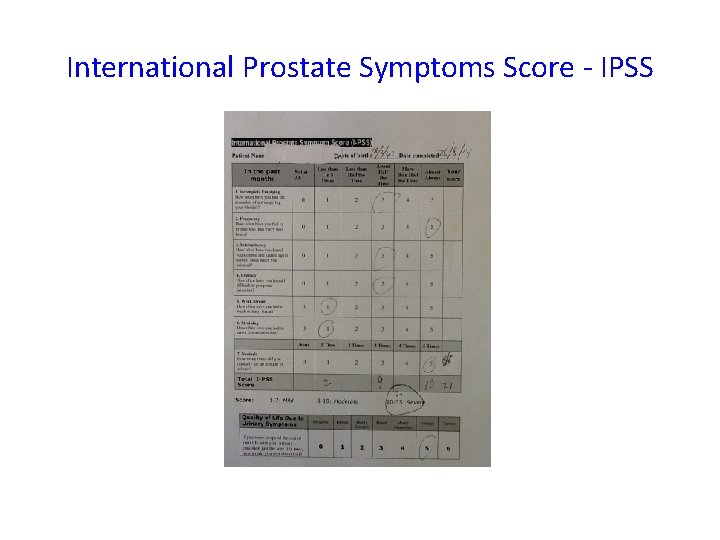
Uroflow Investigation • The aim is to get a typical flow for the patient albeit in a strange environment • Discuss the patient history and explain the procedure carefully • Frequency Volume Chart • IPSS Score (Male) • Uroflow - When patient has good urge to void, fully empties into a collection funnel which is attached to the computer. • Post Void Residual Scan (PVRS) U/S Scan • Performed Twice as minimum
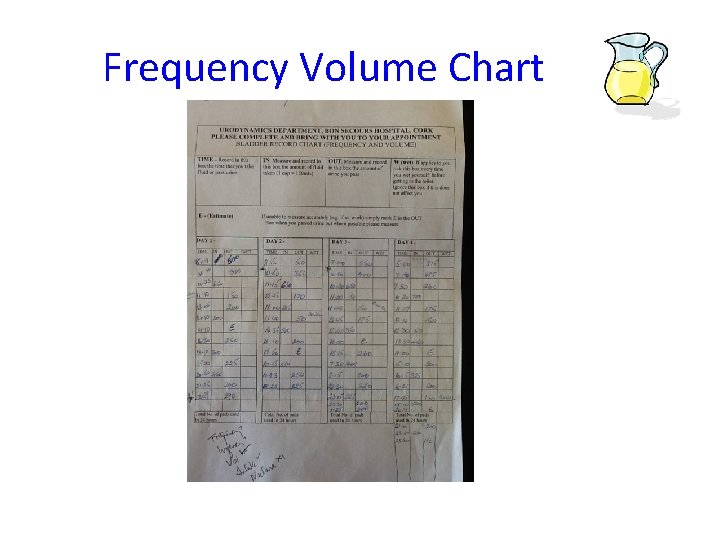
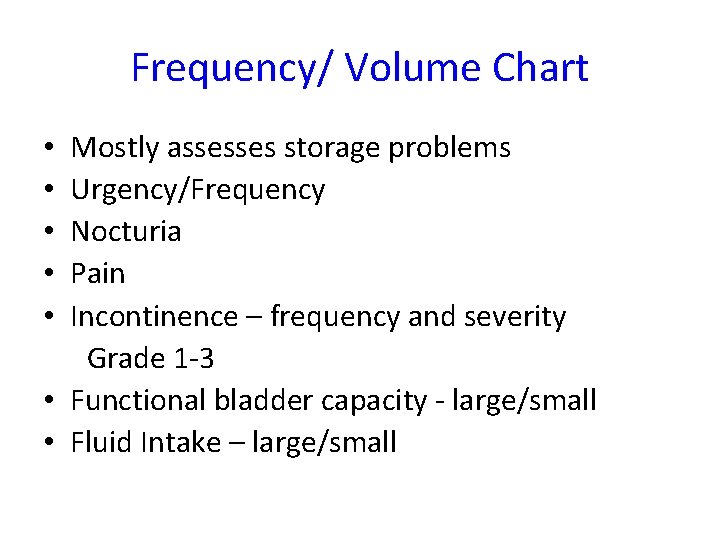
Frequency Volume Chart
Frequency/ Volume Chart Mostly assesses storage problems Urgency/Frequency Nocturia Pain Incontinence – frequency and severity Grade 1 -3 • Functional bladder capacity - large/small • Fluid Intake – large/small • • •
International Prostate Symptoms Score - IPSS
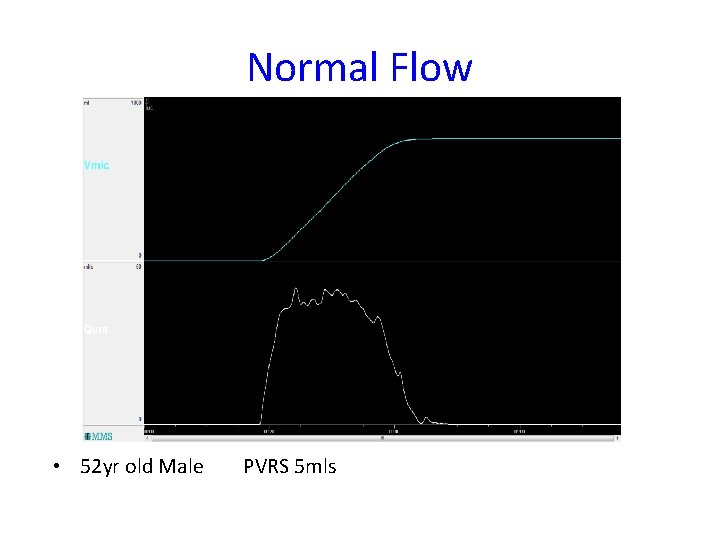
Normal Flow • 52 yr old Male PVRS 5 mls
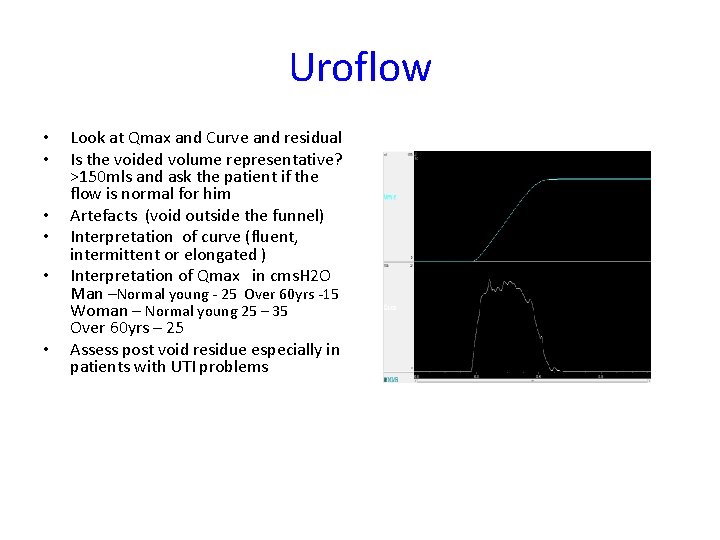
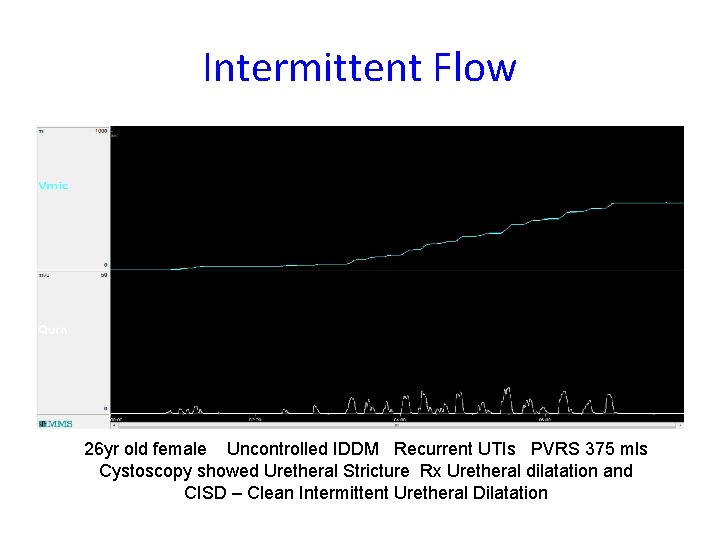
Uroflow • • • Look at Qmax and Curve and residual Is the voided volume representative? >150 mls and ask the patient if the flow is normal for him Artefacts (void outside the funnel) Interpretation of curve (fluent, intermittent or elongated ) Interpretation of Qmax in cms. H 2 O Man –Normal young - 25 Over 60 yrs -15 Woman – Normal young 25 – 35 Over 60 yrs – 25 Assess post void residue especially in patients with UTI problems
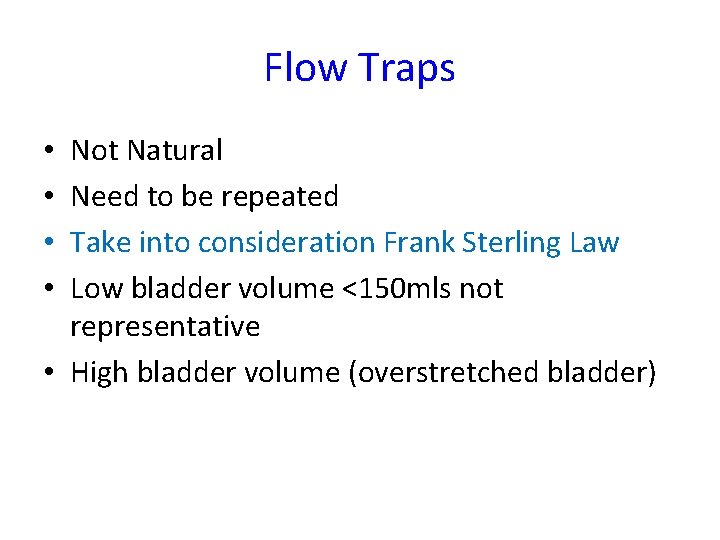
Flow Traps Not Natural Need to be repeated Take into consideration Frank Sterling Law Low bladder volume <150 mls not representative • High bladder volume (overstretched bladder) • •
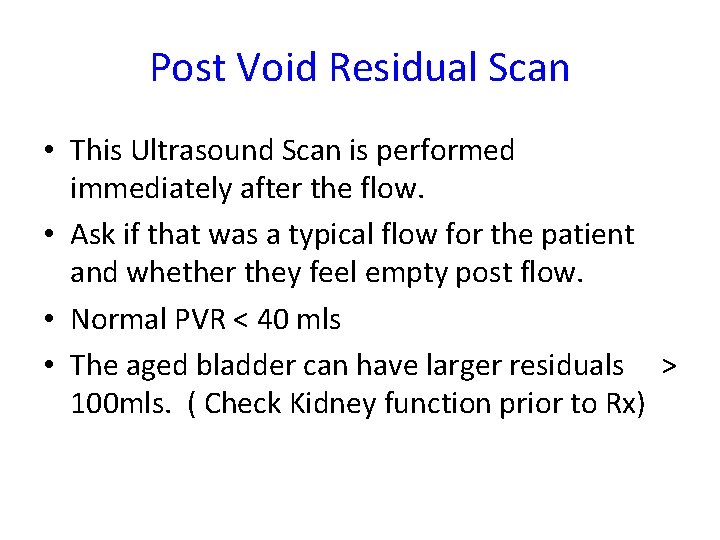
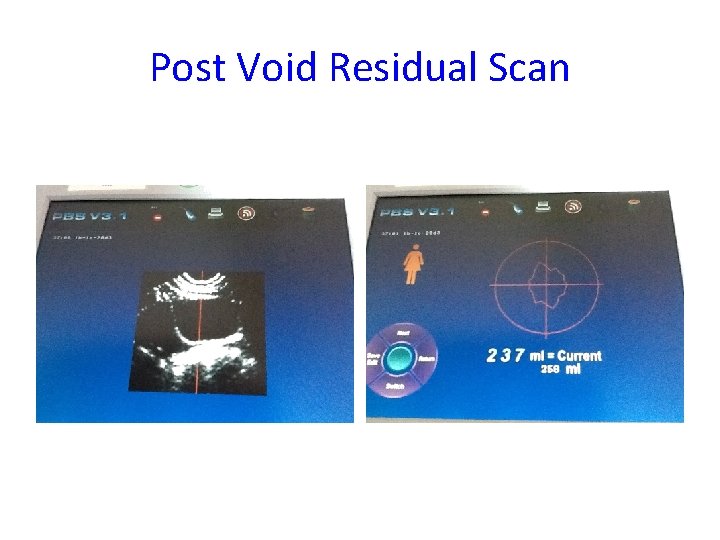
Post Void Residual Scan • This Ultrasound Scan is performed immediately after the flow. • Ask if that was a typical flow for the patient and whether they feel empty post flow. • Normal PVR < 40 mls • The aged bladder can have larger residuals > 100 mls. ( Check Kidney function prior to Rx)
Post Void Residual Scan
Intermittent Flow 26 yr old female Uncontrolled IDDM Recurrent UTIs PVRS 375 mls Cystoscopy showed Uretheral Stricture Rx Uretheral dilatation and CISD – Clean Intermittent Uretheral Dilatation
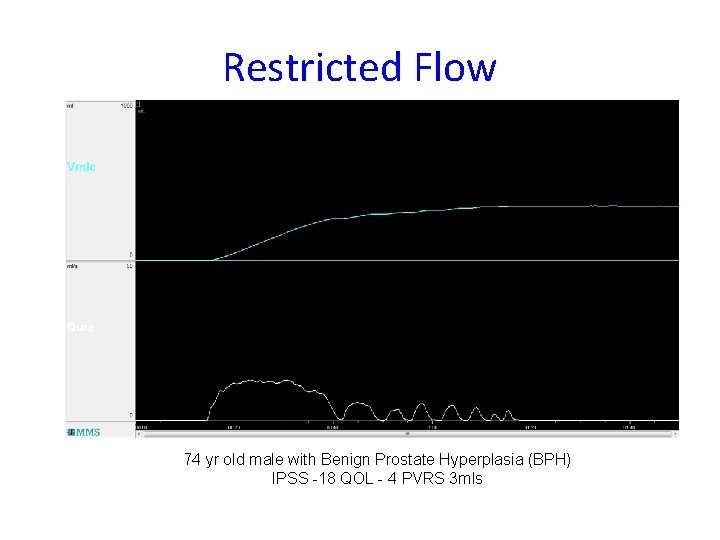
Restricted Flow 74 yr old male with Benign Prostate Hyperplasia (BPH) IPSS -18 QOL - 4 PVRS 3 mls
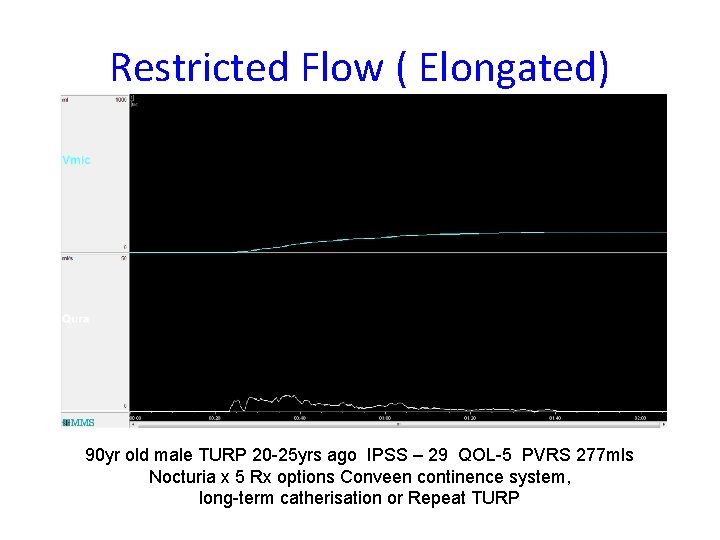
Restricted Flow ( Elongated) 90 yr old male TURP 20 -25 yrs ago IPSS – 29 QOL-5 PVRS 277 mls Nocturia x 5 Rx options Conveen continence system, long-term catherisation or Repeat TURP
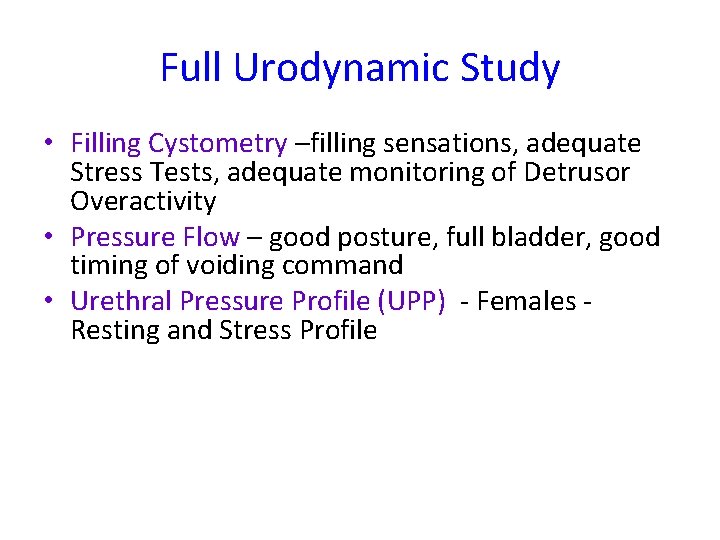
Full Urodynamic Study • Filling Cystometry –filling sensations, adequate Stress Tests, adequate monitoring of Detrusor Overactivity • Pressure Flow – good posture, full bladder, good timing of voiding command • Urethral Pressure Profile (UPP) - Females Resting and Stress Profile
Test Quality Depends on the skill and knowledge of the performer and its supervision T raining and supervision • Training must initially be given under the supervision of an identified preceptor. This should normally be for a minimum of 20 sessions if 3– 4 patients are seen per clinic. It is anticipated that this would involve attending a regular clinic for a period of 6 months. • Within the first 12 months of commencing practical training, the trainee should attend a relevant theoretical course. • Written evidence of observations of clinical practice and formal testing of a minimum of 30 cases must be undertaken and completed to the satisfaction of preceptor before the trainee is deemed competent to practice unsupervised. • Attendance at a regular MDT meeting to present and discuss interesting or challenging management of cases seen. Joint statement on minimum standards for urodynamic practice in the UK April 2009
To enhance Quality one needs: • Up to date knowledge of Lower Urinary Tract function and disease • Technical knowledge of the equipment • Use/develop protocols for Urodynamics • Regular discussion of Urodynamic Results with colleagues /supervisor
Placement of catheters • Bladder probe -double lumen catheter Bladder - Vescicle Pressure P(ves) • Rectal Probe –placed into rectum Abdominal Pressure P(Abd) Test by asking patient to squeeze buttocks
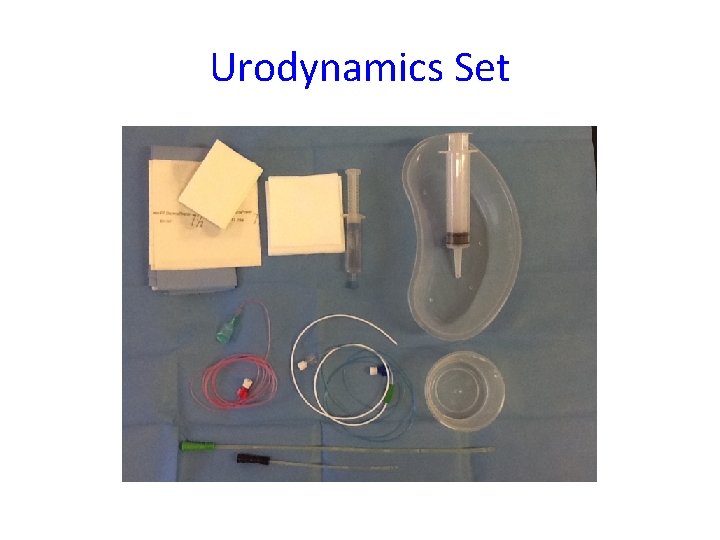
Urodynamics Set
Full Urodynamic Study • Post Uroflow a catheter is passed into bladder to remove the residual urine – so the test starts with a completely empty bladder. • Zero transducers to air at level of Symphysis Pubis Filling Cystometry • Cough before start and every 50 mls while filling –mark if leak yes/no • ICS 2002 definition of sensations
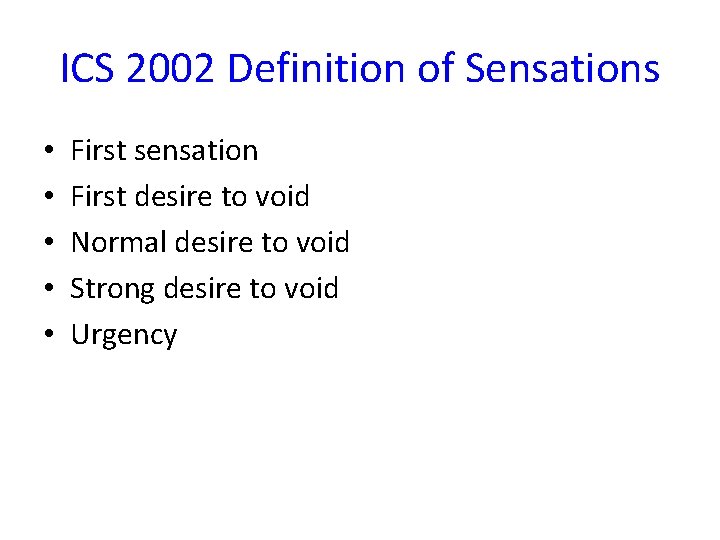
ICS 2002 Definition of Sensations • • • First sensation First desire to void Normal desire to void Strong desire to void Urgency
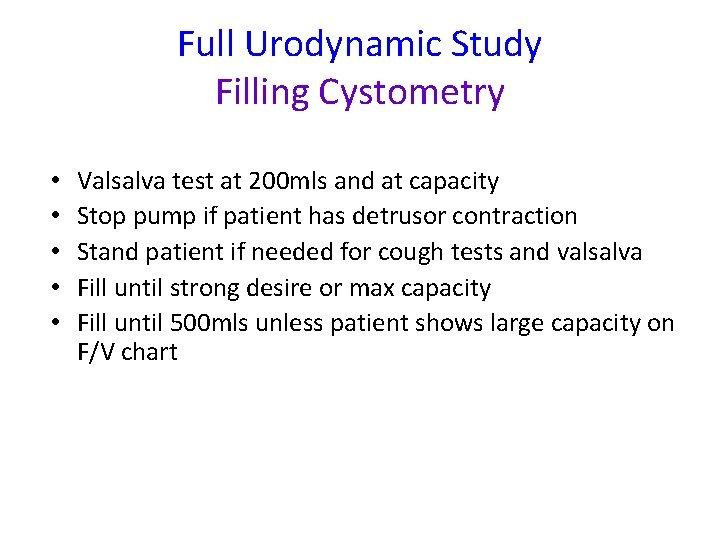
Full Urodynamic Study Filling Cystometry • • • Valsalva test at 200 mls and at capacity Stop pump if patient has detrusor contraction Stand patient if needed for cough tests and valsalva Fill until strong desire or max capacity Fill until 500 mls unless patient shows large capacity on F/V chart
Full Urodynamic Study Pressure flow study • Coupled with Cystometry • Void on nurses command • Try not to start void during detrusor contraction • Patient empties fully
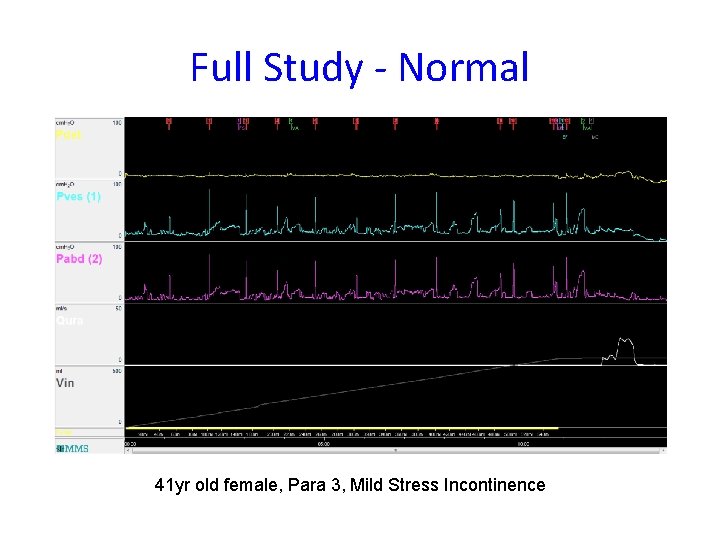
Full Study - Normal 41 yr old female, Para 3, Mild Stress Incontinence
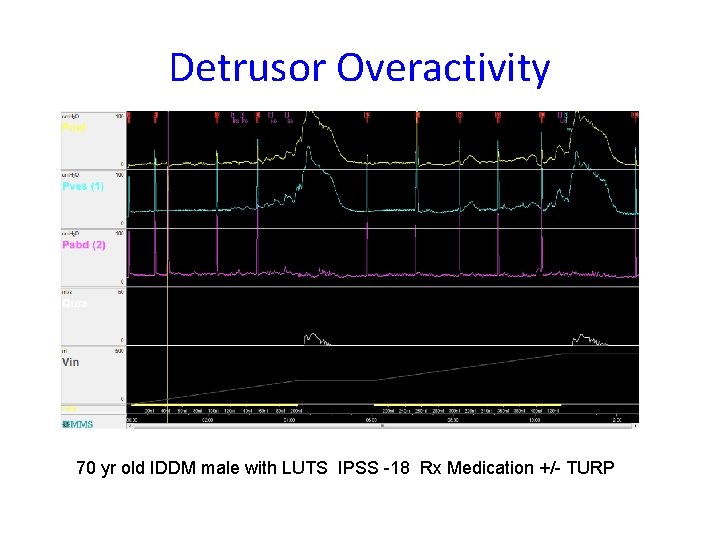
Detrusor Overactivity 70 yr old IDDM male with LUTS IPSS -18 Rx Medication +/- TURP
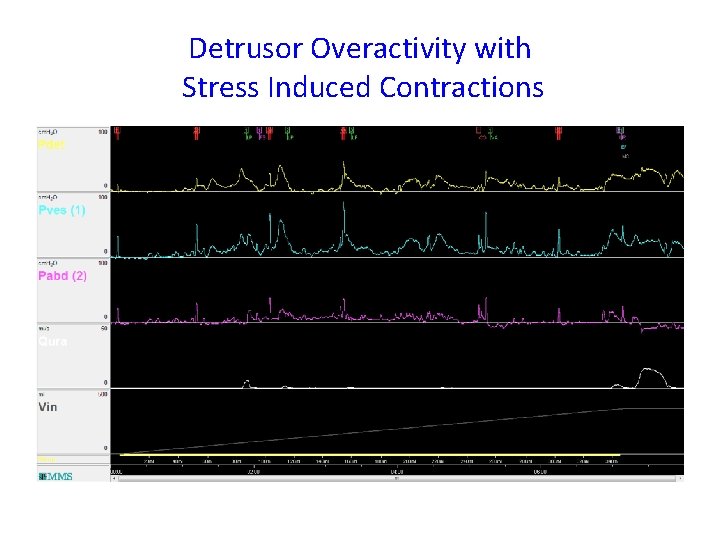
Detrusor Overactivity with Stress Induced Contractions 39 yrs old Female with Mixed Incontinence
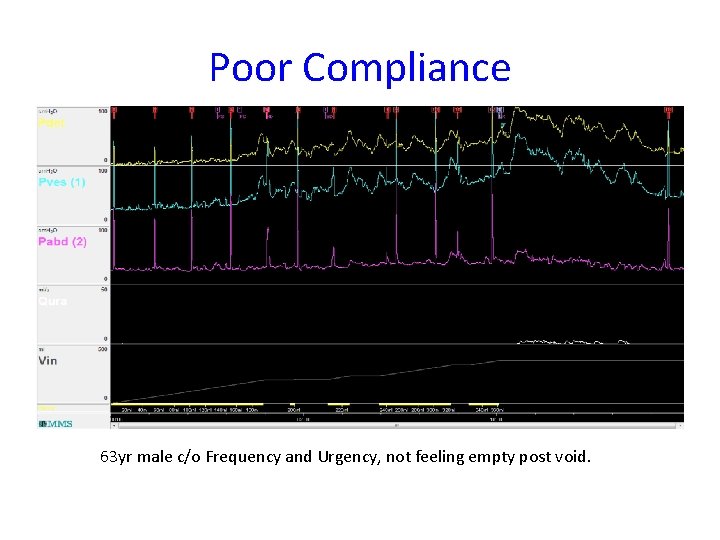
Compliance • Reduced in Neurogenic patient with long-term Detrusor Overactivity and Detrusor Sphincter Dyssynergia • Reduced post radiation of prostate • Normal compliance < 5 cm. H 2 O increase over 100 mls
Poor Compliance 63 yr male c/o Frequency and Urgency, not feeling empty post void.
Uretheral Pressure Profile • Measures the length of the Urethera and the Detrusor Sphincter Pressure. • Used to diagnose Detrusor Sphincter Insufficiency < 20 mm. H 2 O. • Uretheral Strictures • Important pre op study for Colpo- suspension (Sling Op)
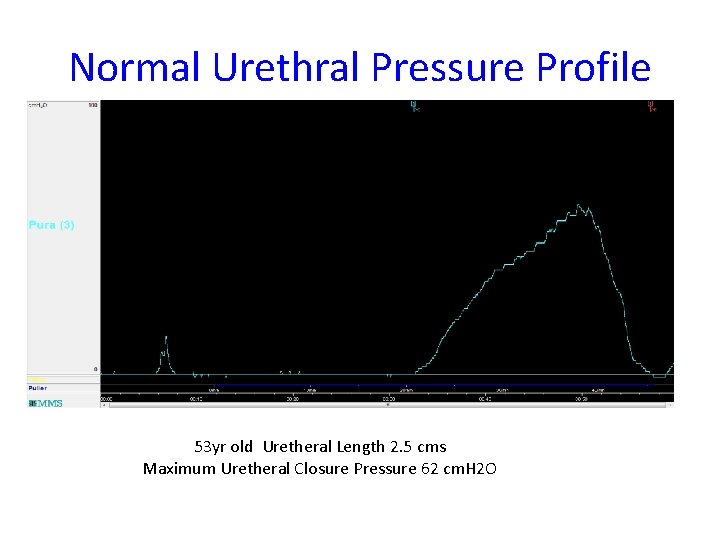
Normal Urethral Pressure Profile 53 yr old Uretheral Length 2. 5 cms Maximum Uretheral Closure Pressure 62 cm. H 2 O
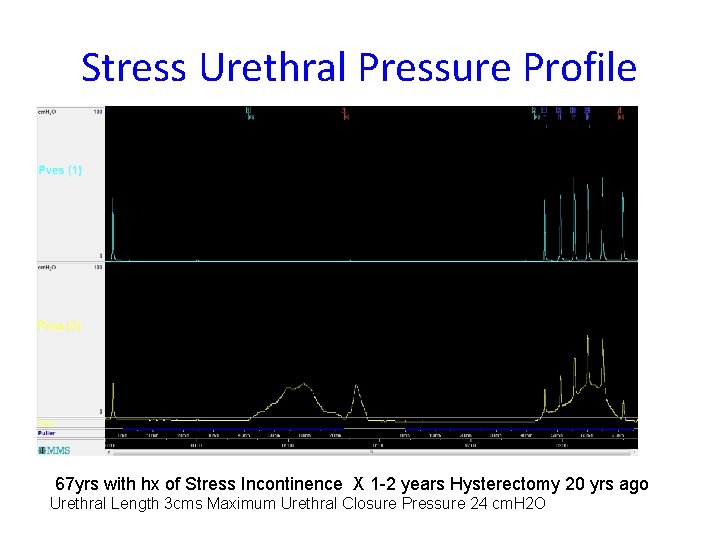
Stress Urethral Pressure Profile 67 yrs with hx of Stress Incontinence X 1 -2 years Hysterectomy 20 yrs ago Urethral Length 3 cms Maximum Urethral Closure Pressure 24 cm. H 2 O
Post Procedure • Advise patient that they may see some blood stain as they Pass urine. Drink extra water to flush it out • 3% of patients develop UTI – advise to go to GP for antibiotics if symptomatic • Patients can contact Urodynamics Dept for any concerns
In Practice • MSU 10 days –a week prior to Study and results faxed to OPD 0214342093 • Frequency Volume Charts • Michigan Incontinence Symptom Index • IPSS
Sources of Information • www. ic-network. com • www. ics. org • www. iaun. ie • Company Nurse Advisors Hollister, BBraun, SCA Hygeine (Tena) • Urodynamics department BSH 0214801942 THANK YOU