
Urine formation Video What is urine Urine is


- Slides: 32
Urine formation Video
What is urine? Urine is a liquid waste product of the body secreted by the kidneys by a process of blood filtration and excretion through the urethra.
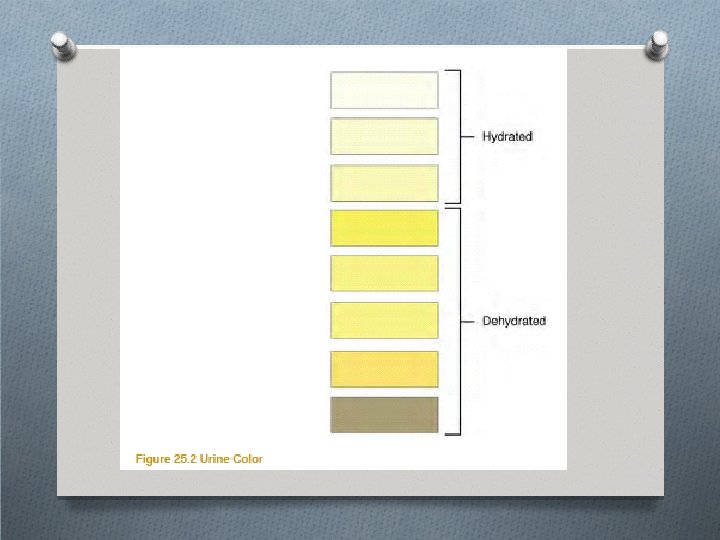
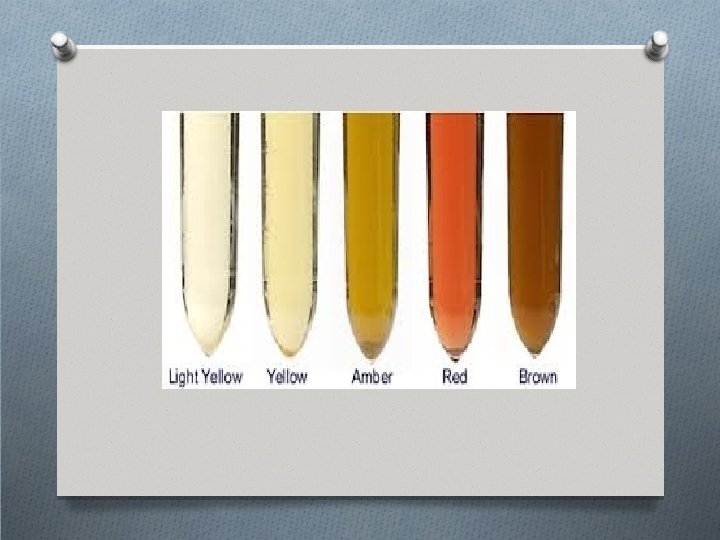
Composition O Urine is a transparent solution that can range from colorless to amber but is usually a pale yellow. It is normally odorless but can acquire strong odors due to bacterial action. O Urine is an aqueous solution of metabolic wastes such as urea, dissolved salts, and organic compounds. O Most noticeably, ammonia is produced by breakdown of urea, a major component of urine.
Hazards O Urea is toxic and can be irritating to skin and eyes. High concentrations in the blood can cause damage to organs of the body. Low concentrations of urea such as in urine are not dangerous.
Characteristics O The typical bright yellow color of urine is caused by the pigment urochrome as well as the degradation products of billirubin and urobillin.
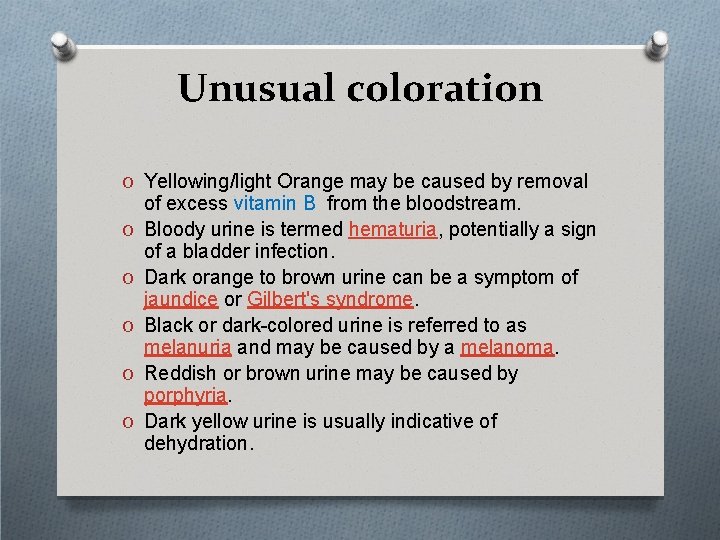
Unusual coloration O Yellowing/light Orange may be caused by removal O O O of excess vitamin B from the bloodstream. Bloody urine is termed hematuria, potentially a sign of a bladder infection. Dark orange to brown urine can be a symptom of jaundice or Gilbert's syndrome. Black or dark-colored urine is referred to as melanuria and may be caused by a melanoma. Reddish or brown urine may be caused by porphyria. Dark yellow urine is usually indicative of dehydration.
Turbidity O Turbid urine may be a symptom of a bacterial infection. O and can also be due to crystallization of salts such as calcium phosphate.
PH O The p. H of urine can normally vary between 4. 5 and 8. (average around 6). O Strongly acidic or alkaline urine may be symptomatic of disease.
Volume O O O The amount of urine produced depends on numerous factors including : state of hydration, activities, environmental factors, age, and health. In adult human, the average production is about 1 2 L per day. Polyuria is a condition of excessive production of urine (> 2. 5 L/day), in contrast to oliguria where < 400 m. L are produced per day, or anuria with a production of < 100 m. L per day.
Density or specific gravity O It is the ratio of the weight of a volume of urine to the weight of the same volume of distilled water at a constant temperature. O Normal urine density or specific gravity values vary between 1. 003 -1. 035 (g. cm-3) , and any deviations may or may not be associated with urinary disorders.
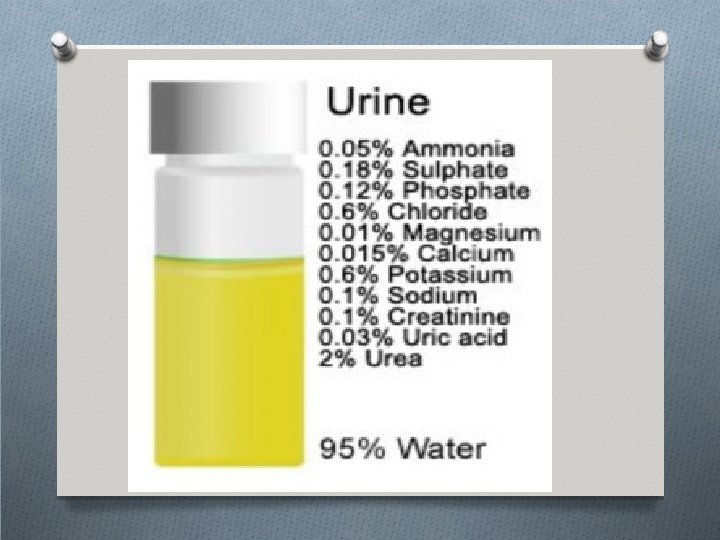
Substances found in normal urine O Urine is aprox. 95% water. O The other components of normal urine are the solutes that are dissolved in the water component of the urine.
Organic molecules O These are electrically neutral and can be relatively large (compared with the 'simpler' ions). These include: O Urea O Creatinine O Others
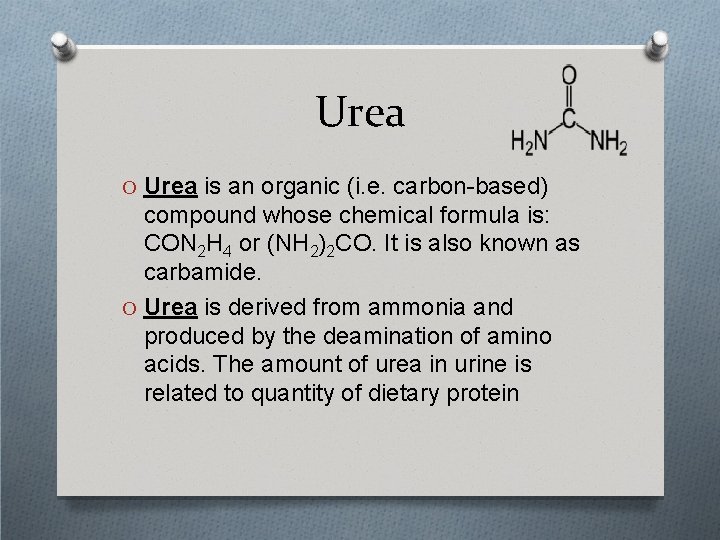
Urea O Urea is an organic (i. e. carbon-based) compound whose chemical formula is: CON 2 H 4 or (NH 2)2 CO. It is also known as carbamide. O Urea is derived from ammonia and produced by the deamination of amino acids. The amount of urea in urine is related to quantity of dietary protein
Creatinine O Creatinine is a normal (healthy) constituent of blood. O It is produced mainly as a result of the breakdown of creatine phosphate in muscle tissue. O It is usually produced by the body at a fairly constant rate (which depends on the muscle mass of the body).
Uric acid O Uric acid is an organic (i. e. carbon-based) compound whose chemical formula is: C 5 H 4 N 4 O 3. Due to its insolubility, uric acid has a tendency to crystallize, and is a common part of kidney stones.
Other substances/molecules O Example of other substances that may be O O O found in small amounts in normal urine include : carbohydrates, enzymes, fatty acids, hormones, pigments, and mucins (a group of large, heavily glycosylated proteins found in the body).
Ions O Sodium (Na+) : Amount in urine varies with diet and the amount of aldosterone (a steroid hormone) in the body. O Potassium (K+) : Amount in urine varies with diet and the amount of aldosterone (a steroid hormone) in the body. O Chloride (Cl-) : Amount in urine varies with dietary intake (chloride is a part of common salt, Na. Cl).
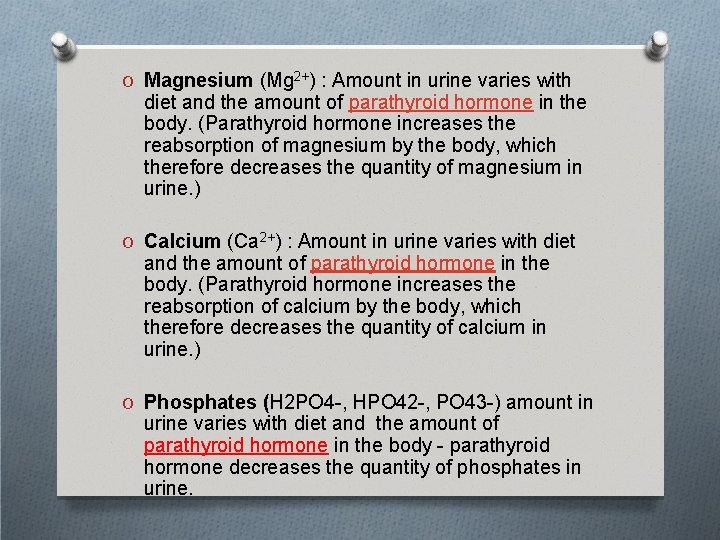
O Magnesium (Mg 2+) : Amount in urine varies with diet and the amount of parathyroid hormone in the body. (Parathyroid hormone increases the reabsorption of magnesium by the body, which therefore decreases the quantity of magnesium in urine. ) O Calcium (Ca 2+) : Amount in urine varies with diet and the amount of parathyroid hormone in the body. (Parathyroid hormone increases the reabsorption of calcium by the body, which therefore decreases the quantity of calcium in urine. ) O Phosphates (H 2 PO 4 -, HPO 42 -, PO 43 -) amount in urine varies with diet and the amount of parathyroid hormone in the body - parathyroid hormone decreases the quantity of phosphates in urine.
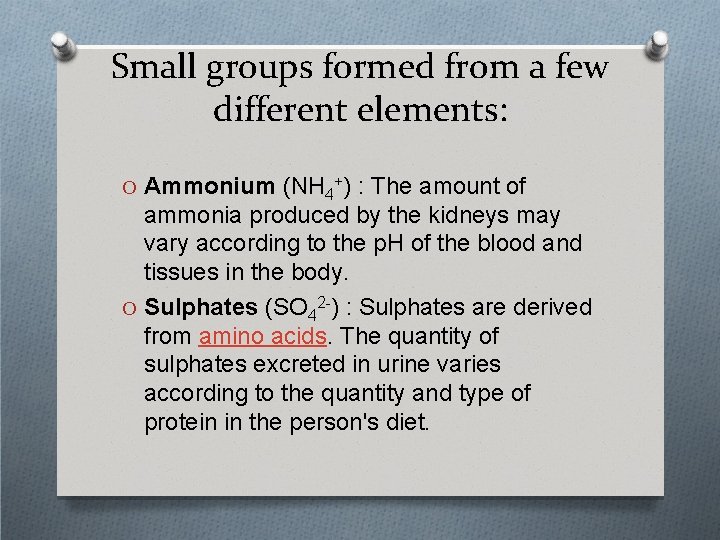
Small groups formed from a few different elements: O Ammonium (NH 4+) : The amount of ammonia produced by the kidneys may vary according to the p. H of the blood and tissues in the body. O Sulphates (SO 42 -) : Sulphates are derived from amino acids. The quantity of sulphates excreted in urine varies according to the quantity and type of protein in the person's diet.
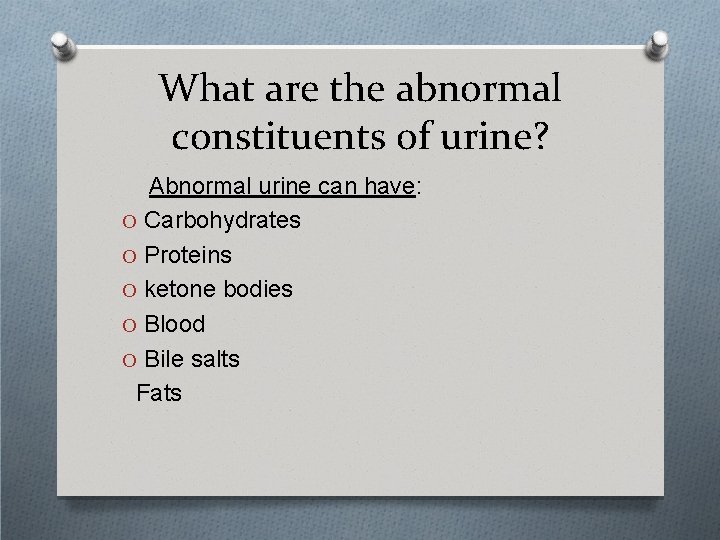
What are the abnormal constituents of urine? Abnormal urine can have: O Carbohydrates O Proteins O ketone bodies O Blood O Bile salts Fats
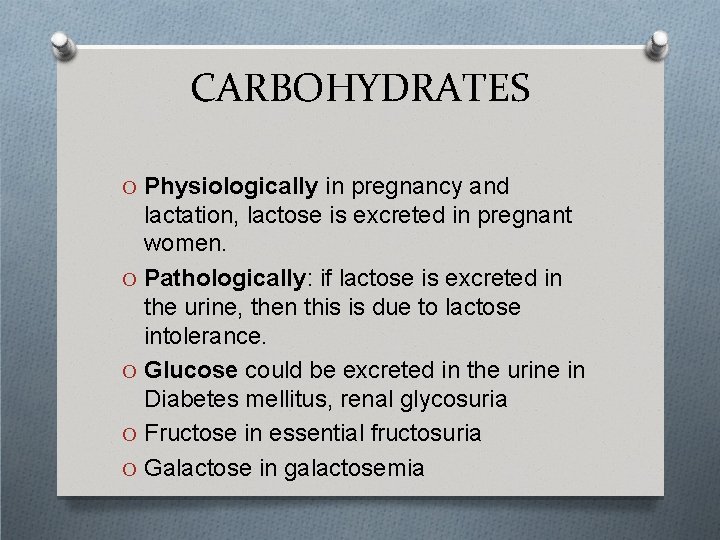
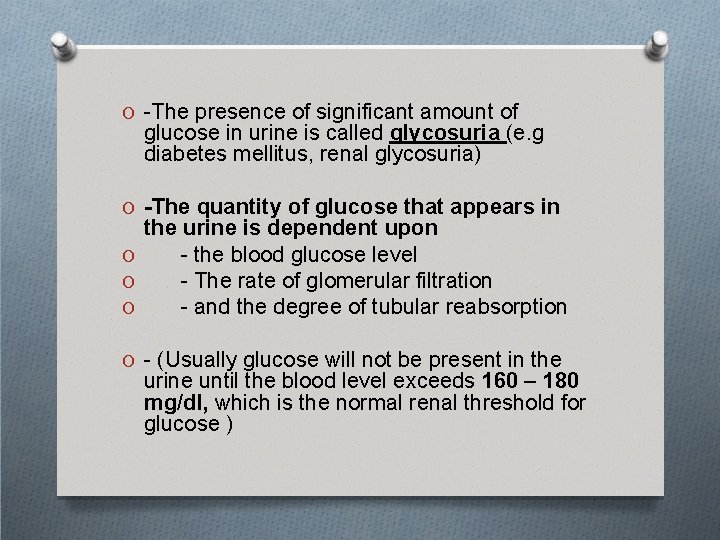
CARBOHYDRATES O Physiologically in pregnancy and lactation, lactose is excreted in pregnant women. O Pathologically: if lactose is excreted in the urine, then this is due to lactose intolerance. O Glucose could be excreted in the urine in Diabetes mellitus, renal glycosuria O Fructose in essential fructosuria O Galactose in galactosemia
O -The presence of significant amount of glucose in urine is called glycosuria (e. g diabetes mellitus, renal glycosuria) O -The quantity of glucose that appears in the urine is dependent upon O - the blood glucose level O - The rate of glomerular filtration O - and the degree of tubular reabsorption O - (Usually glucose will not be present in the urine until the blood level exceeds 160 – 180 mg/dl, which is the normal renal threshold for glucose )
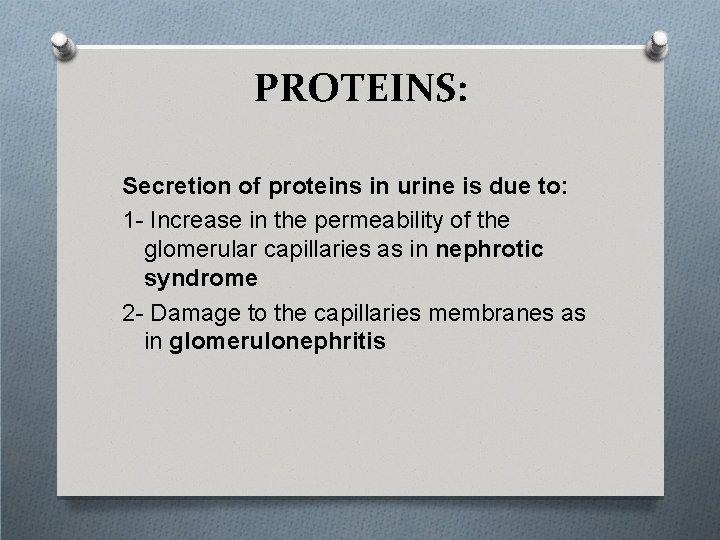
PROTEINS: Secretion of proteins in urine is due to: 1 - Increase in the permeability of the glomerular capillaries as in nephrotic syndrome 2 - Damage to the capillaries membranes as in glomerulonephritis
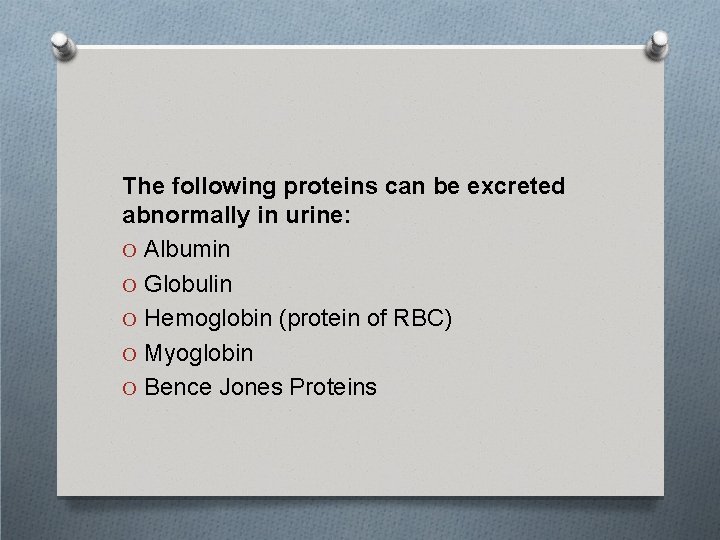
The following proteins can be excreted abnormally in urine: O Albumin O Globulin O Hemoglobin (protein of RBC) O Myoglobin O Bence Jones Proteins
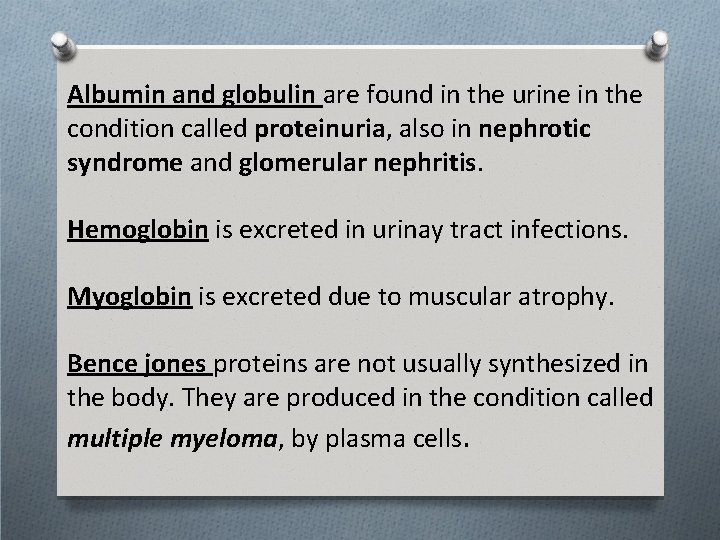
Albumin and globulin are found in the urine in the condition called proteinuria, also in nephrotic syndrome and glomerular nephritis. Hemoglobin is excreted in urinay tract infections. Myoglobin is excreted due to muscular atrophy. Bence jones proteins are not usually synthesized in the body. They are produced in the condition called multiple myeloma, by plasma cells.
KETONE BODIES Are formed during the catabolism of fatty acids They are basically three chemicals : O acetone O acetoacetic acid O Beta-hydroxy butaric acid All the three are the intermediates in lipid metabolism. Defect in metabolism can lead to presence of ketone bodies in urine
Increased catabolism of fats is due to : O starvation O increased fat intake O decreased carbohydrates in take O diabetes ketoacidosis
RBC/ HEMOGLOBIN In certain disease state such as: O hemolytic anemia O Urinary tract infections O Renal trauma
BILE SALTS: In Jaundice BILE PIGMENTS: in obstructive jaundice Q: The main bile pigments are bilirubin and biliverdin and these are the catabolism of hemoglobin. Ultimately these leave the body in feces and small amount in the urine ** Presence of bile pigments in the urine helps to diagnose increased production of bilirubin which is an indication of liver dysfunction