
Urine Collection Techniques Reading Assignment CTVT pages 604
- Slides: 28
Urine Collection Techniques Reading Assignment: CTVT pages 604 -609 & DRG pages 434 -436
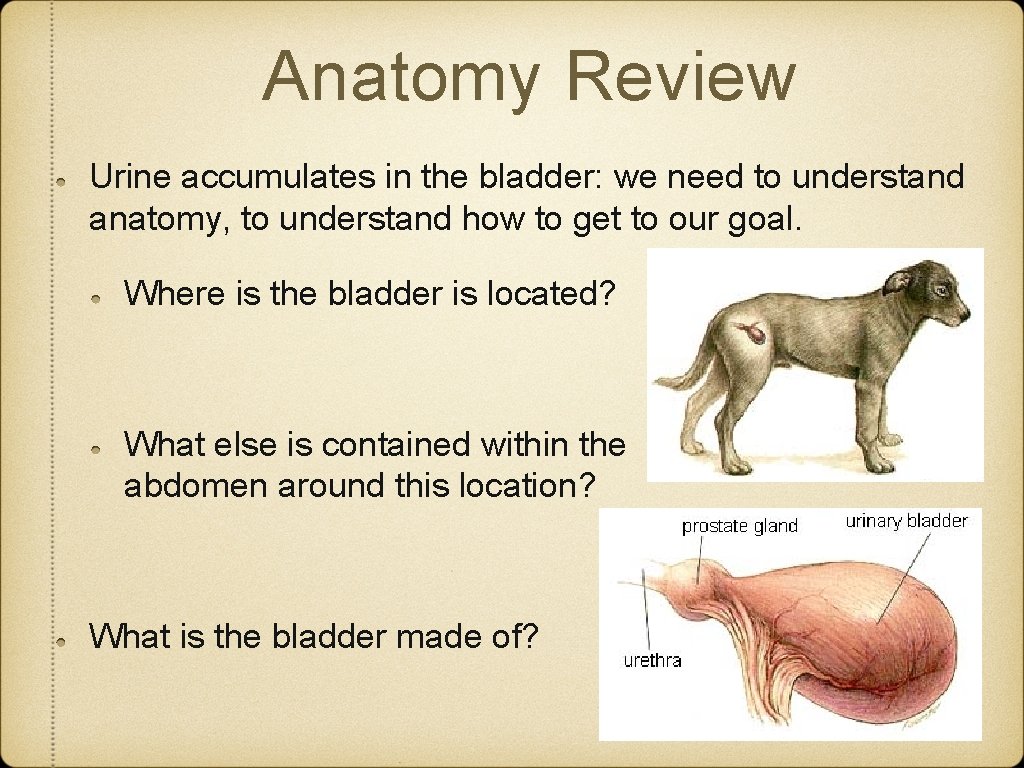
Anatomy Review Urine accumulates in the bladder: we need to understand anatomy, to understand how to get to our goal. Where is the bladder is located? What else is contained within the abdomen around this location? What is the bladder made of?
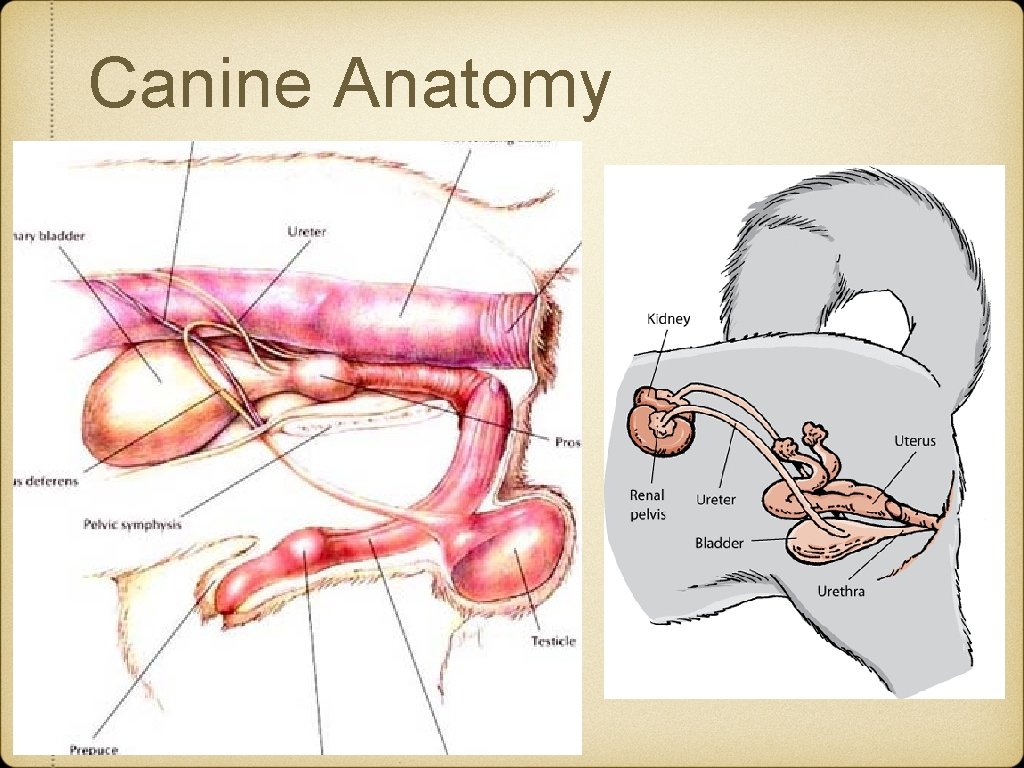
Canine Anatomy
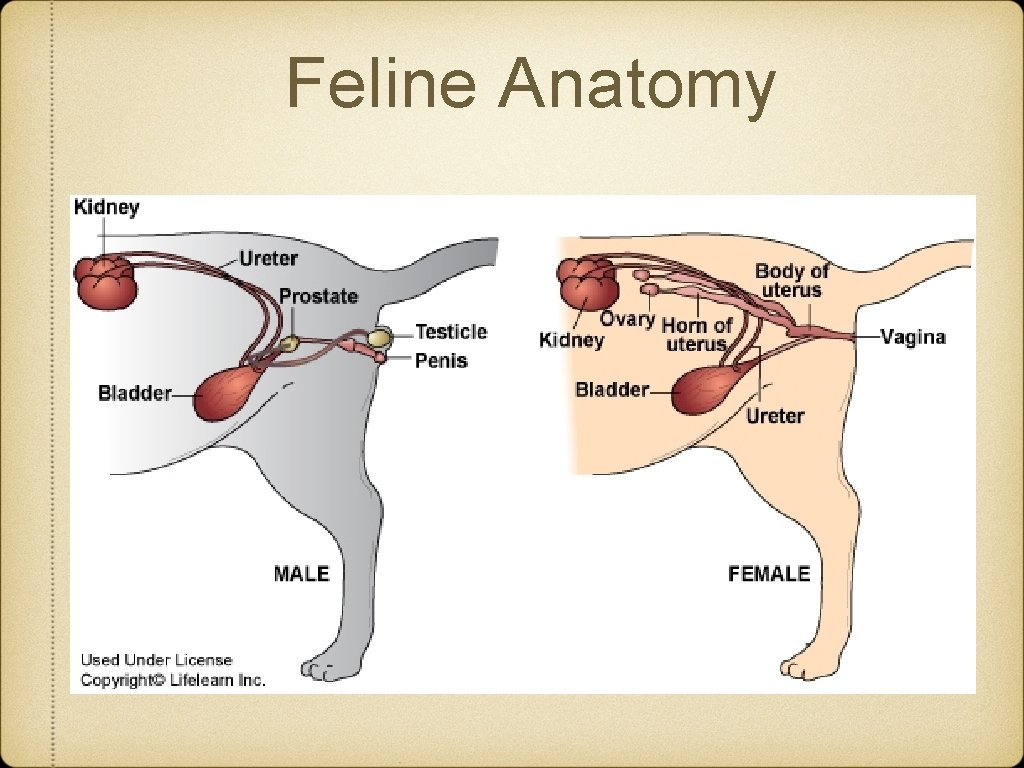
Feline Anatomy
Indications for Urine Collection Why would a veterinarian request a urinalysis? Concern with bladder or kidneys Urolithiasis, infection, dehydration, disease (FLUTD, FIC, blocked tom, pyelonephritis) What exactly are we testing for? Color, specific gravity, ketones, protein, glucose, hematuria, crystals, microorganisms, etc. *Note: samples tested for bacteria/fungi are typically sent out referred to as “culture and sensitivity”
Collection Techniques Voided/Free catch Manual expression Urinary catheter Cystocentesis
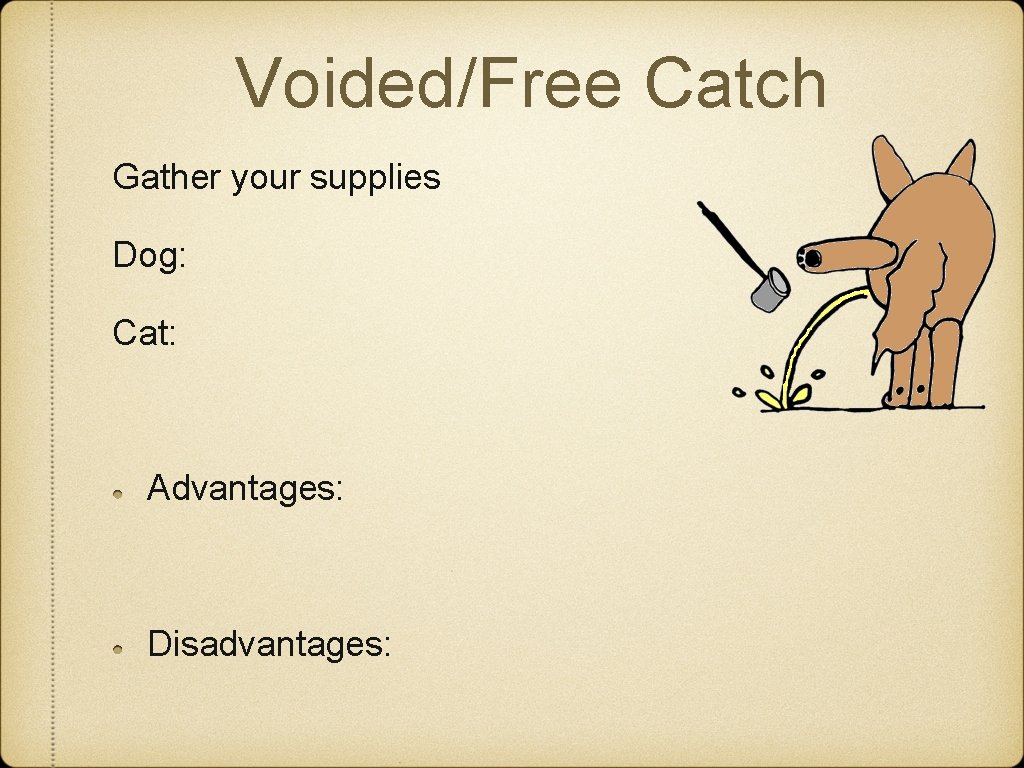
Voided/Free Catch Gather your supplies Dog: Cat: Advantages: Disadvantages:
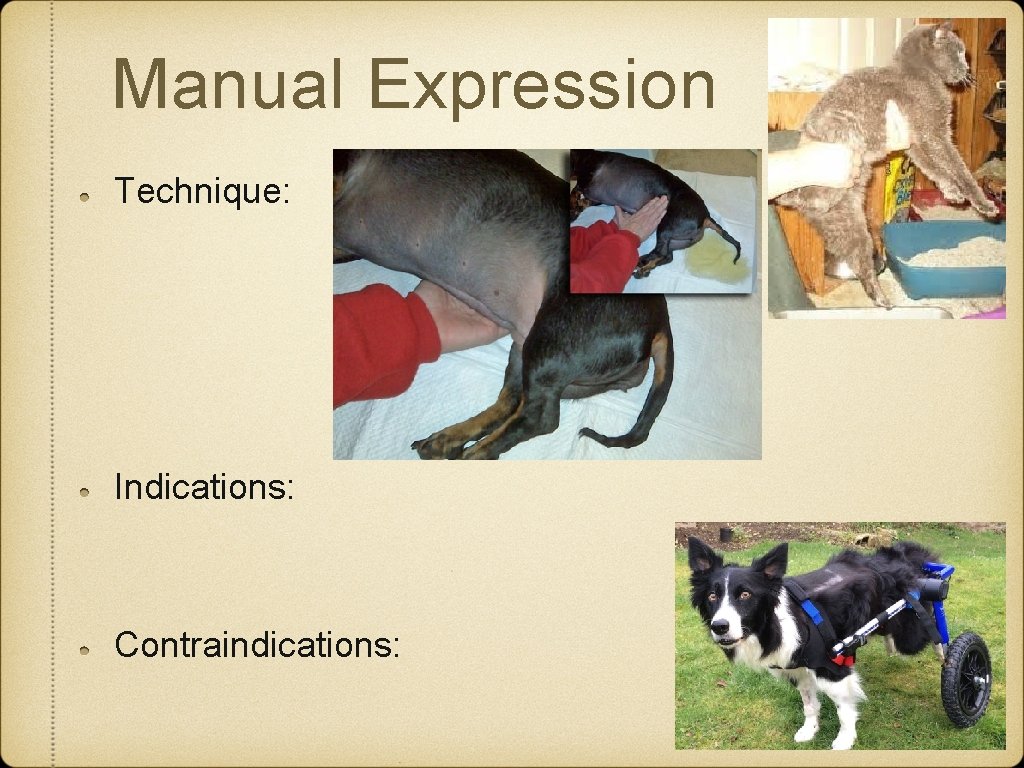
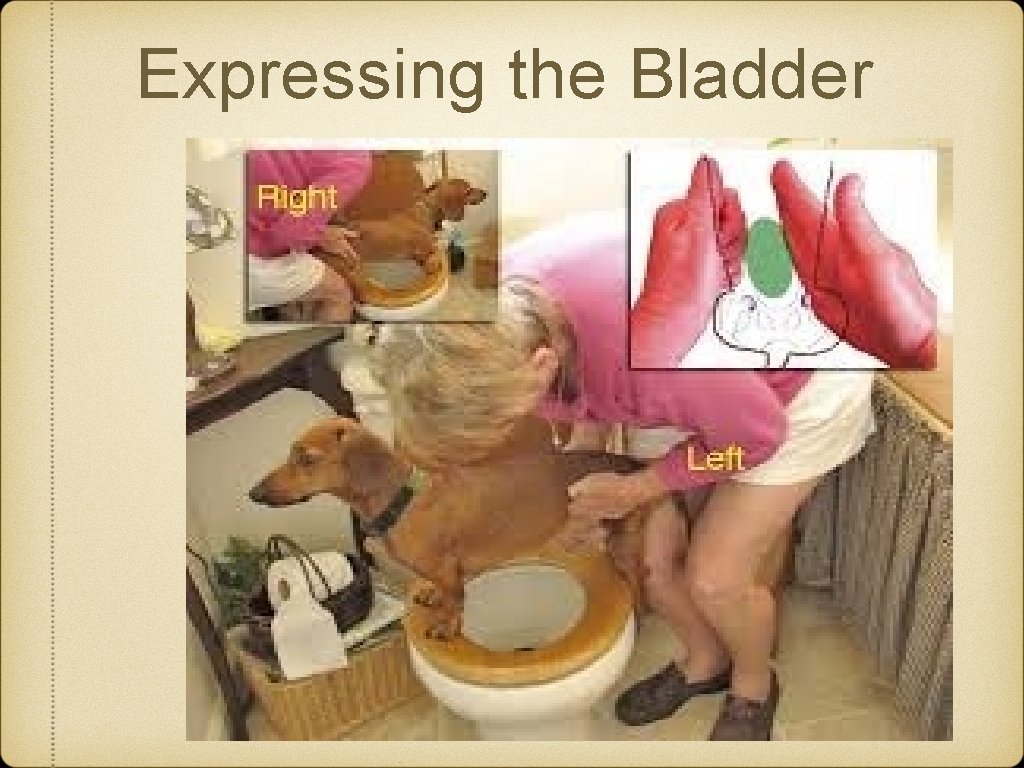
Manual Expression Technique: Indications: Contraindications:
Manual Expression • Advantages: • Disadvantages: • Complications that could happen:
Expressing the Bladder
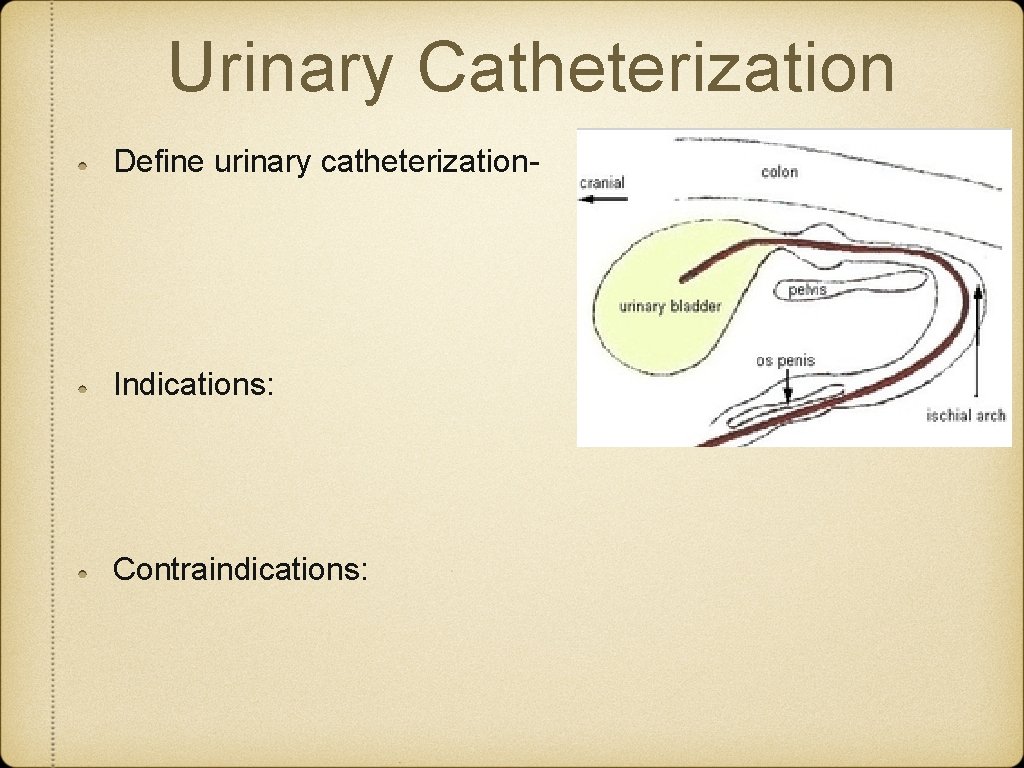
Urinary Catheterization Define urinary catheterization- Indications: Contraindications:
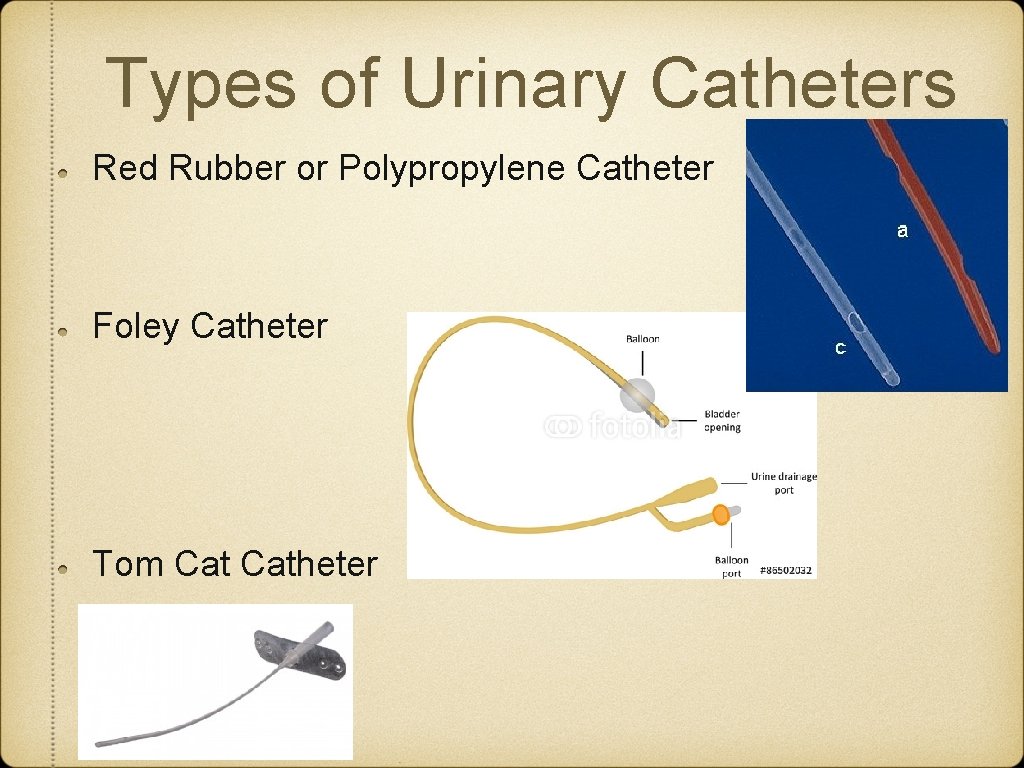
Types of Urinary Catheters Red Rubber or Polypropylene Catheter Foley Catheter Tom Catheter
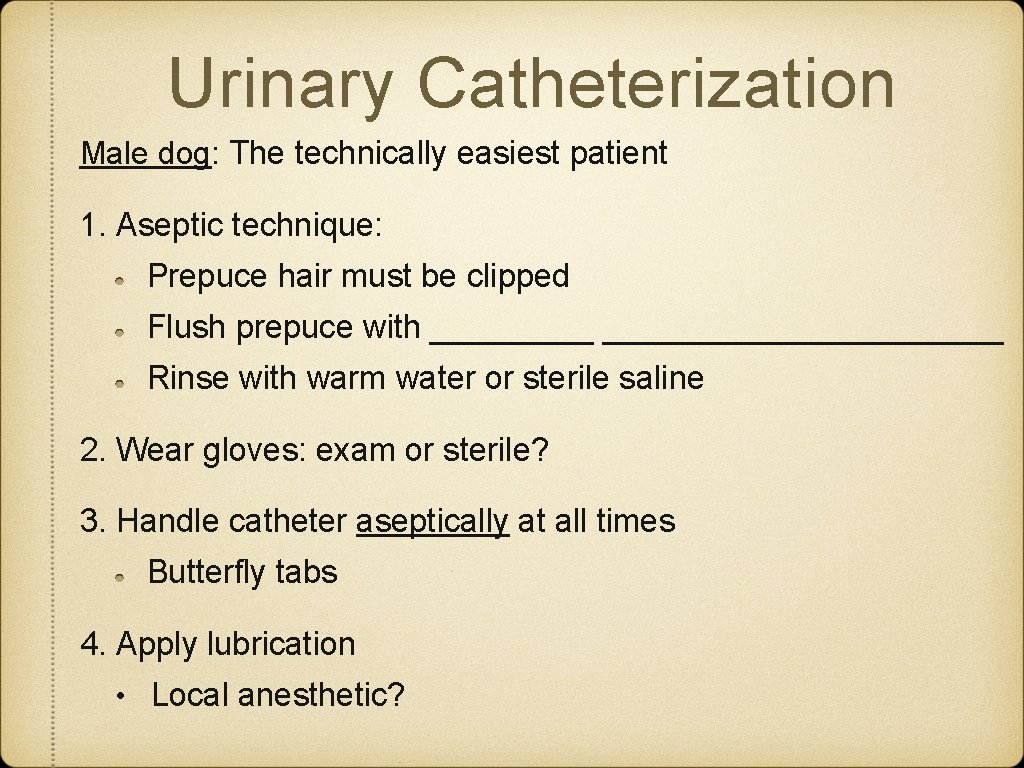
Urinary Catheterization Male dog: The technically easiest patient 1. Aseptic technique: Prepuce hair must be clipped Flush prepuce with ________________ Rinse with warm water or sterile saline 2. Wear gloves: exam or sterile? 3. Handle catheter aseptically at all times Butterfly tabs 4. Apply lubrication • Local anesthetic?
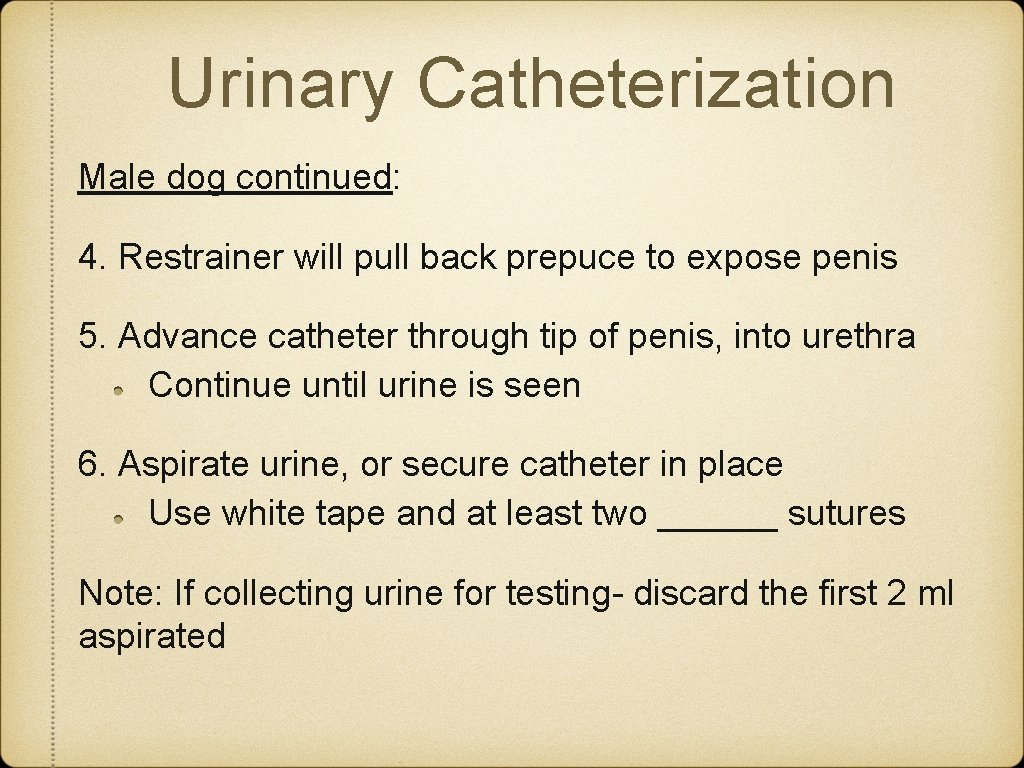
Urinary Catheterization Male dog continued: 4. Restrainer will pull back prepuce to expose penis 5. Advance catheter through tip of penis, into urethra Continue until urine is seen 6. Aspirate urine, or secure catheter in place Use white tape and at least two ______ sutures Note: If collecting urine for testing- discard the first 2 ml aspirated
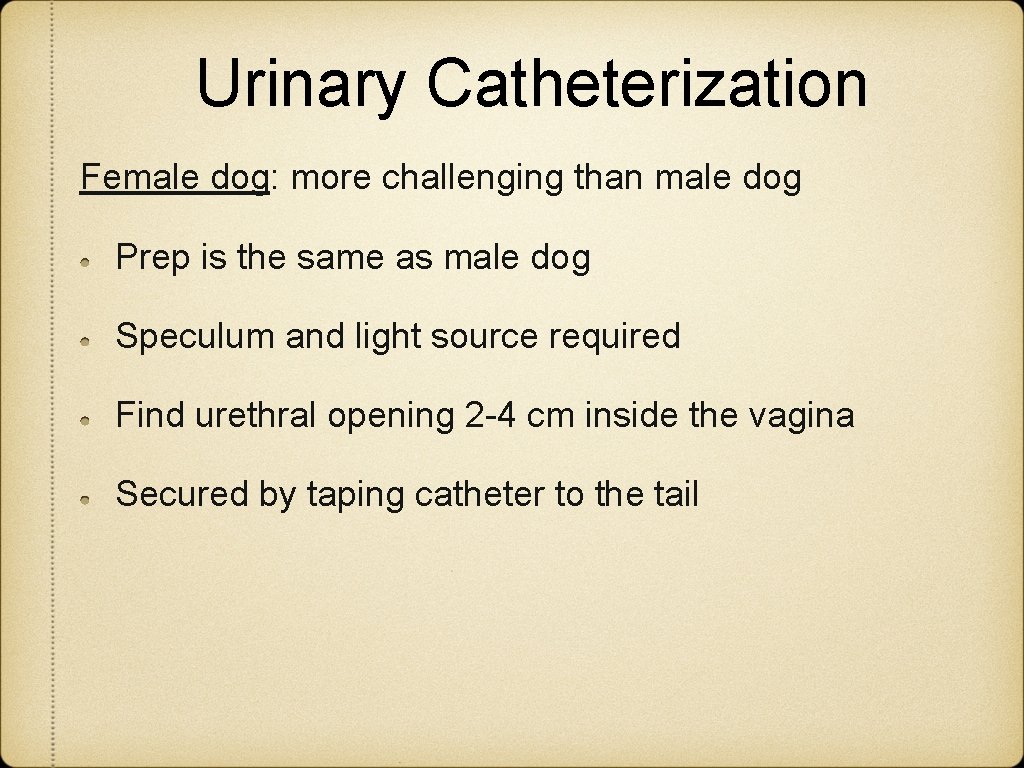
Urinary Catheterization Female dog: more challenging than male dog Prep is the same as male dog Speculum and light source required Find urethral opening 2 -4 cm inside the vagina Secured by taping catheter to the tail
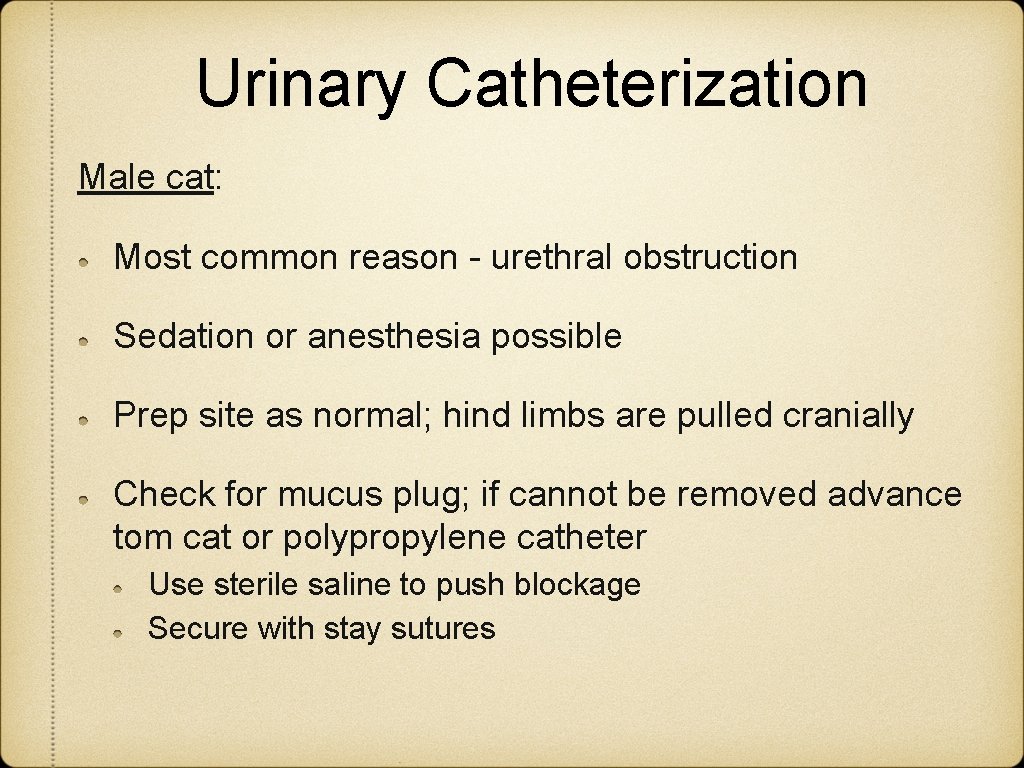
Urinary Catheterization Male cat: Most common reason - urethral obstruction Sedation or anesthesia possible Prep site as normal; hind limbs are pulled cranially Check for mucus plug; if cannot be removed advance tom cat or polypropylene catheter Use sterile saline to push blockage Secure with stay sutures
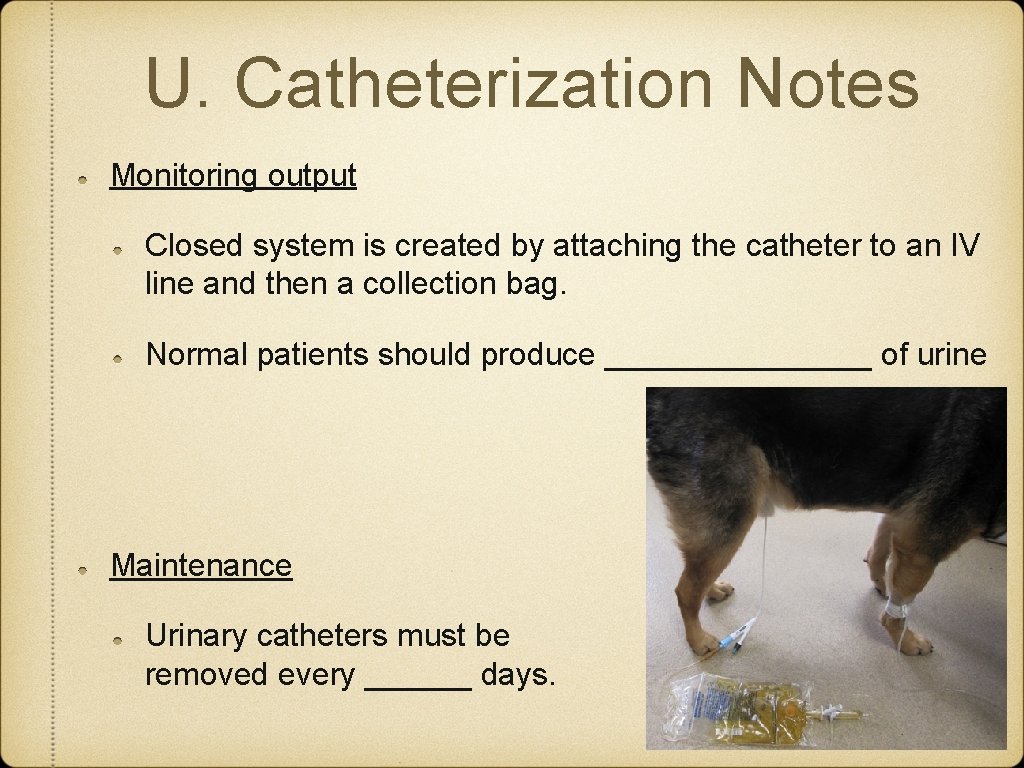
U. Catheterization Notes Monitoring output Closed system is created by attaching the catheter to an IV line and then a collection bag. Normal patients should produce ________ of urine Maintenance Urinary catheters must be removed every ______ days.
Urinary Catheterization Complications from receiving a urinary catheter:
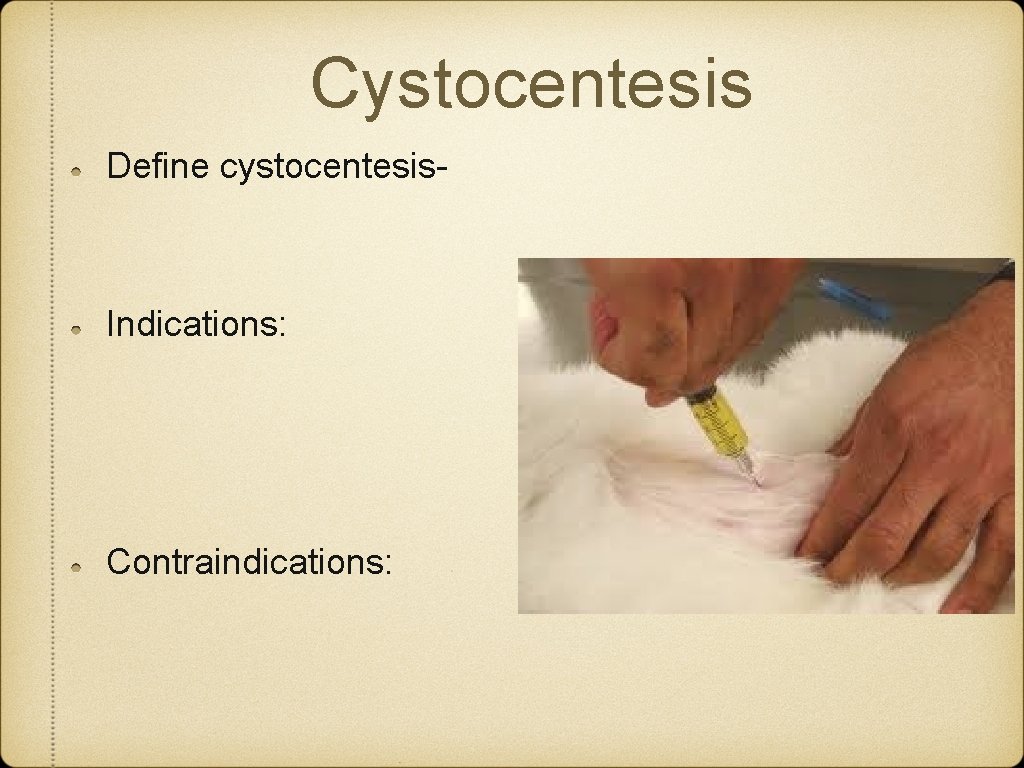
Cystocentesis Define cystocentesis- Indications: Contraindications:
Cystocentesis Advantages: Sample is free from all contaminations/disease in lower urinary tract Considered the most sterile form of urine collection Quick, minimal supplies Minimizes iatrogenic UTI or trauma Complications: Possible laceration of bladder Trauma/laceration of other anatomy Iatrogenic hematuria
Cystocentesis Gather your supplies Dog: Cat: Positioning Dog: Cat:
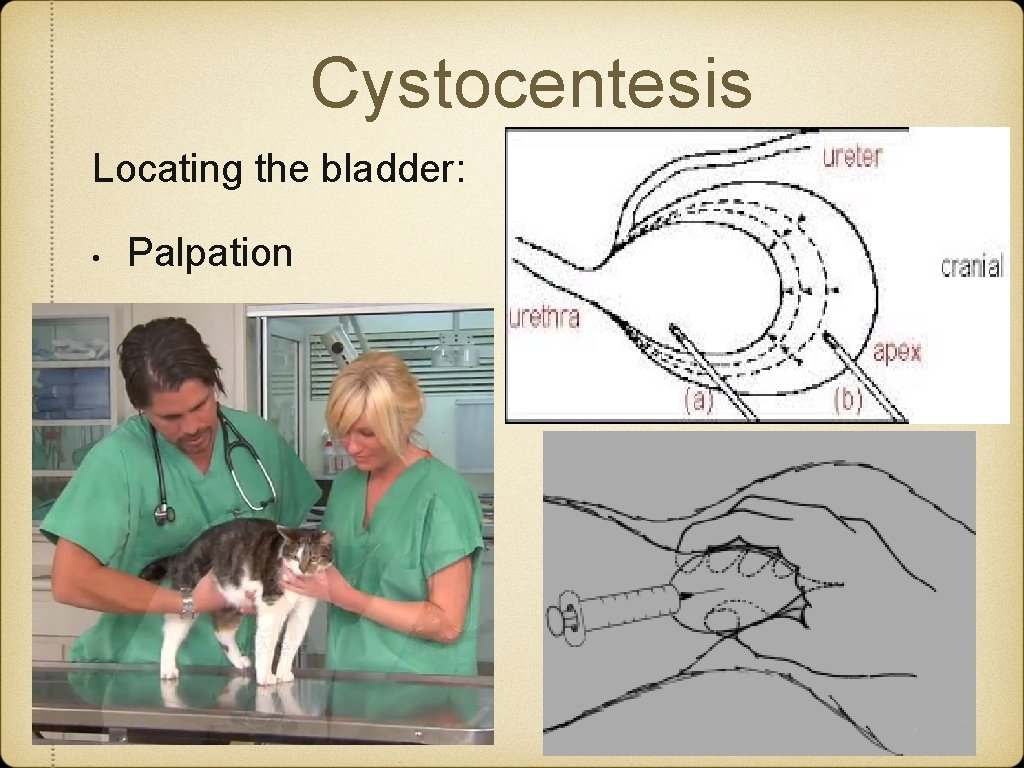
Cystocentesis Locating the bladder: • Palpation
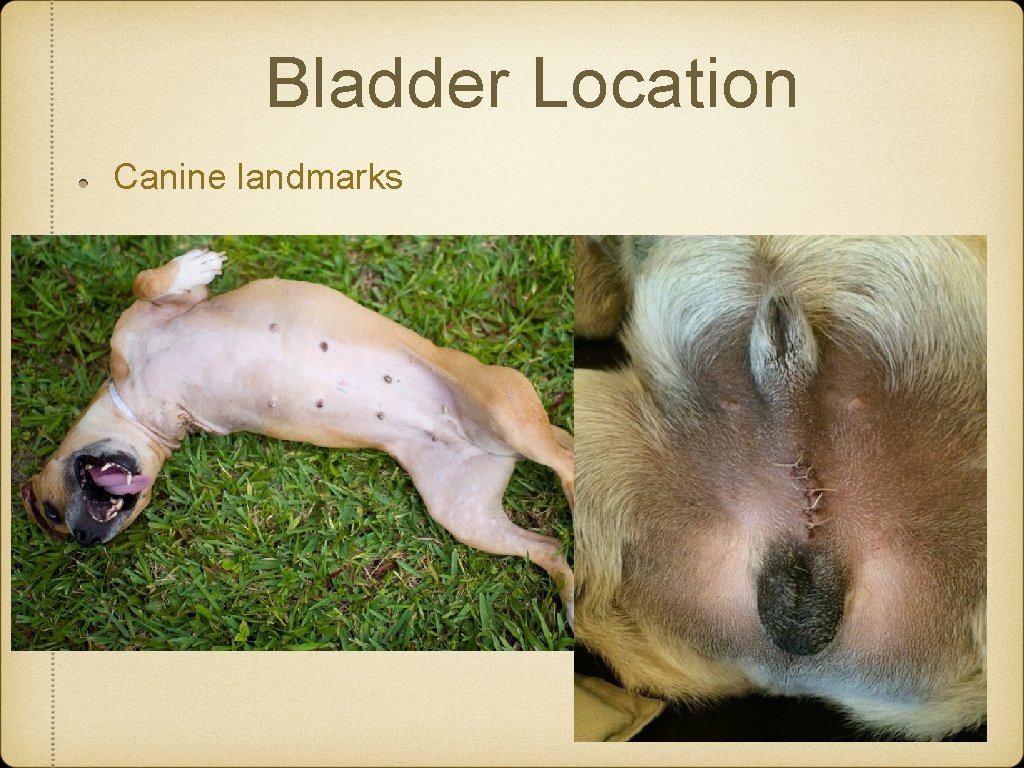
Bladder Location Canine landmarks
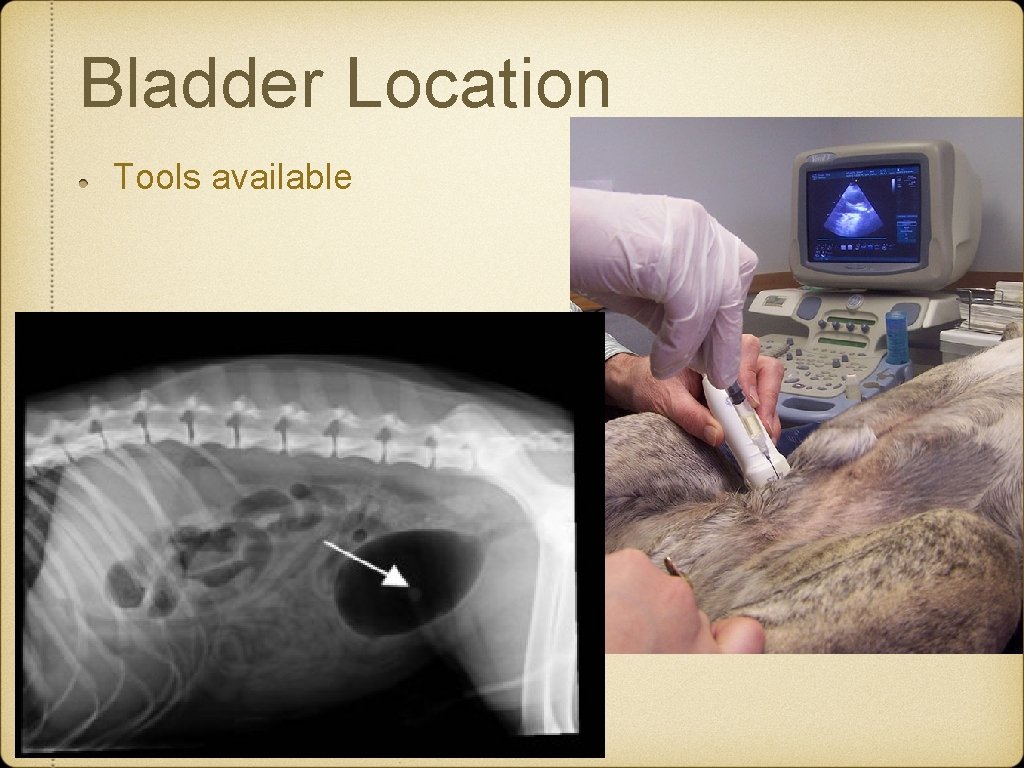
Bladder Location Tools available
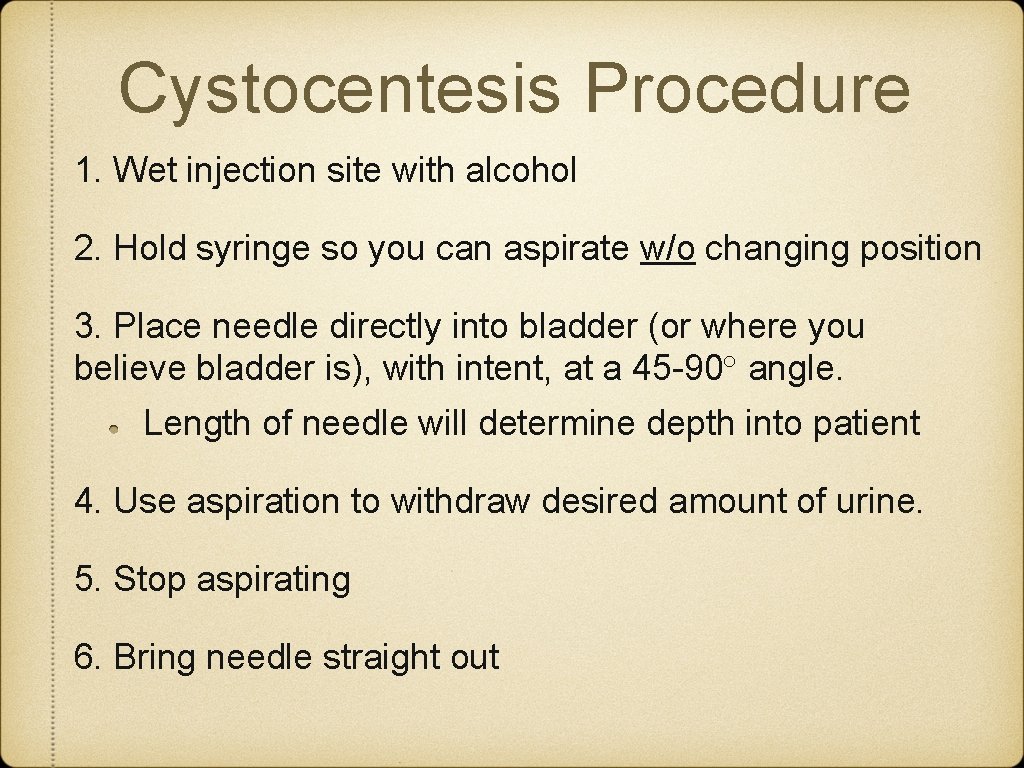
Cystocentesis Procedure 1. Wet injection site with alcohol 2. Hold syringe so you can aspirate w/o changing position 3. Place needle directly into bladder (or where you believe bladder is), with intent, at a 45 -90° angle. Length of needle will determine depth into patient 4. Use aspiration to withdraw desired amount of urine. 5. Stop aspirating 6. Bring needle straight out
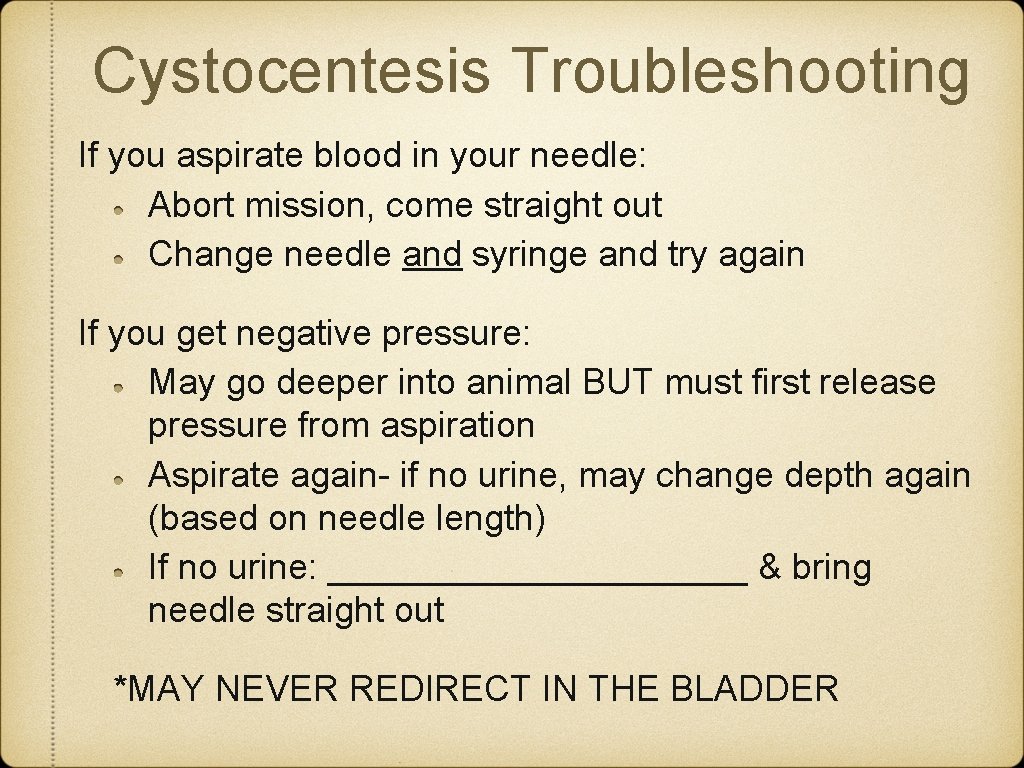
Cystocentesis Troubleshooting If you aspirate blood in your needle: Abort mission, come straight out Change needle and syringe and try again If you get negative pressure: May go deeper into animal BUT must first release pressure from aspiration Aspirate again- if no urine, may change depth again (based on needle length) If no urine: ___________ & bring needle straight out *MAY NEVER REDIRECT IN THE BLADDER
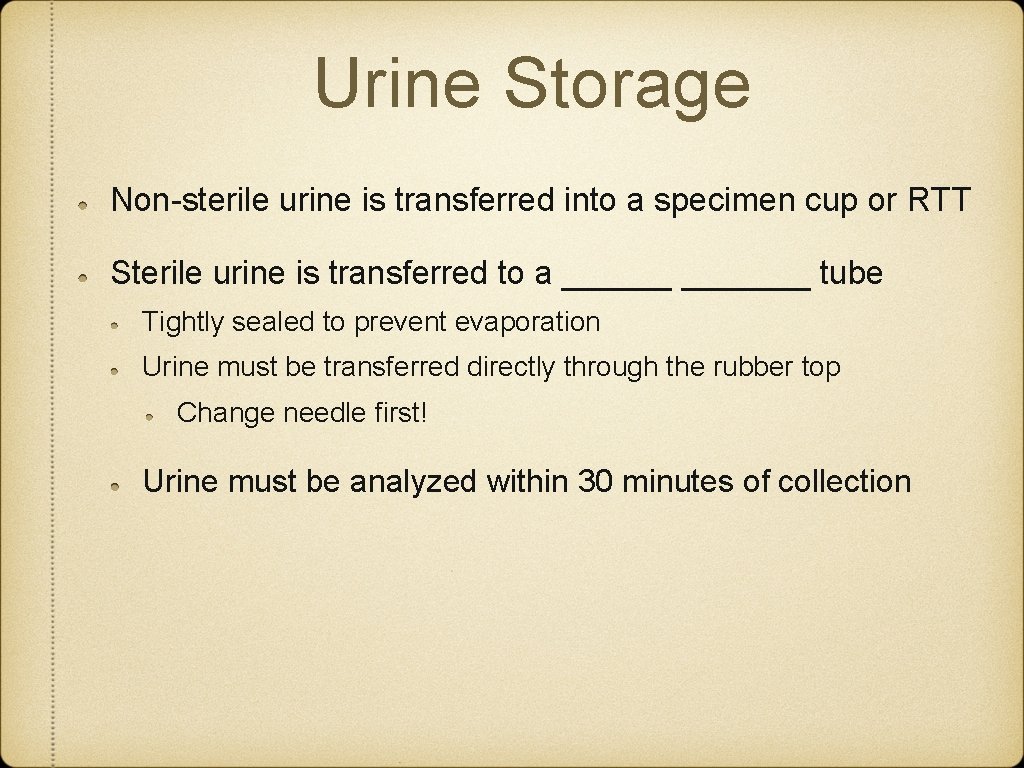
Urine Storage Non-sterile urine is transferred into a specimen cup or RTT Sterile urine is transferred to a _______ tube Tightly sealed to prevent evaporation Urine must be transferred directly through the rubber top Change needle first! Urine must be analyzed within 30 minutes of collection
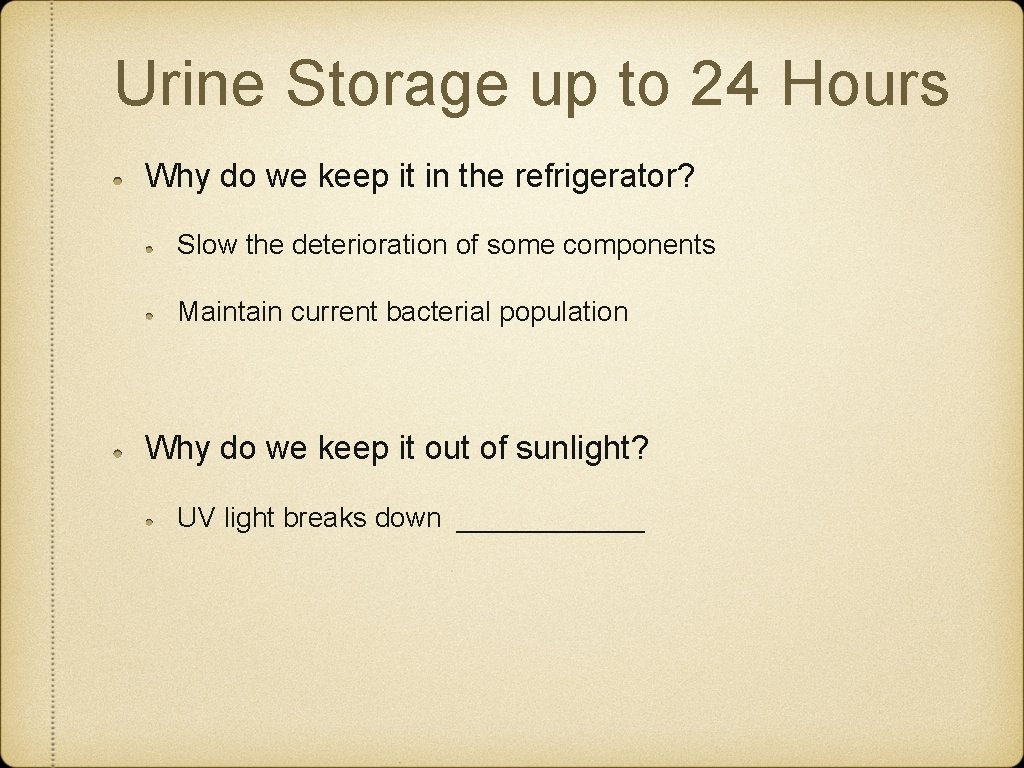
Urine Storage up to 24 Hours Why do we keep it in the refrigerator? Slow the deterioration of some components Maintain current bacterial population Why do we keep it out of sunlight? UV light breaks down ______