
URINE AND ITS COMPONENTS PRESENTATION FROM DEW DIAGNOSTIC



- Slides: 19
URINE AND ITS COMPONENTS PRESENTATION FROM: DEW DIAGNOSTIC LABORATORY BY: MRS OGUNJIMI & MRS BELLO
URINE �Urine is a liquid by-product of metabolism in humans and in many animals. Urine flows from the kidneys through the ureters to the urinary bladder. Urination results in urine being excreted from the body through the urethra. �The cellular metabolism generates many by-products which are rich in nitrogen and must be cleared from the bloodstream, such as urea, uric acid, and creatinine. These by-products are expelled from the body during urination, which is the primary method for excreting water -soluble chemicals from the body. A urinalysis can detect nitrogenous wastes of the mammalian body.
KEY POINTS �urine: A liquid excrement consisting of water, salts, and urea, which is made in the kidneys then released through the urethra. �urinalysis: A urinalysis (UA), also known as Routine and Microscopy (R&M), is an array of tests performed on urine, and one of the most common methods of medical diagnosis. �diabetes: A group of endocrine diseases whereby a person has high blood sugar due to an inability to produce, metabolize, or respond to the hormone insulin. �urinary cast: Tiny structures formed from bound abnormal cells and molecules within the nephrons that are excreted in urine.
OBJECTIVES § Give an overview of the anatomy and physiology of the urinary system § Explain how urine is produced and its components § Describe the types of urine samples and tests
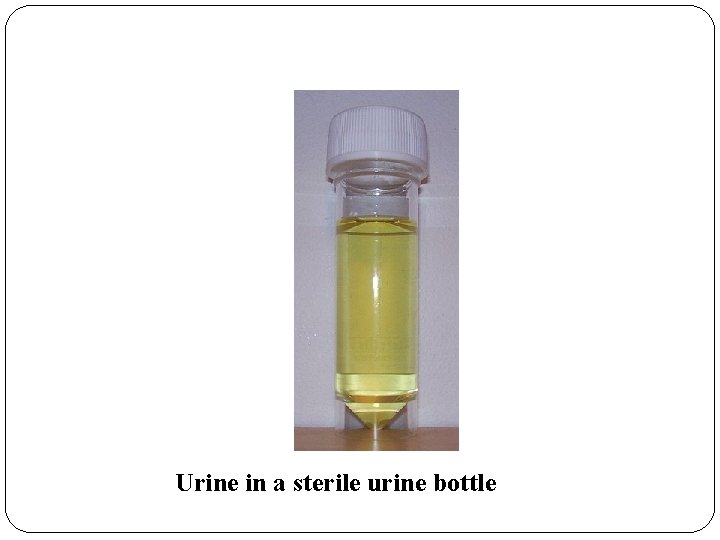
Urine in a sterile urine bottle
URINALYSIS � A urinalysis (UA), also known as routine and microscopy (R&M), is an array of tests performed on urine, and one of the most common methods of medical diagnosis. Urinalysis means the analysis of urine, and it is used to diagnose several diseases. The target parameters that are measured or quantified in urinalysis include many substances and cells, as well as other properties, such as specific gravity. A part of a urinalysis can be performed by using urine test strips, in which the test results can be read as the strip’s color changes. Another method is light microscopy of urine samples.
When doctors order a urinalysis, they will request either a routine urinalysis or a routine and microscopy (R&M) urinalysis; the difference being that a routine urinalysis does not include microscopy or culture. R&M is used specifically for culturing bacteria found in urine, which can make it an important tool for diagnosing specific urinary tract infections.
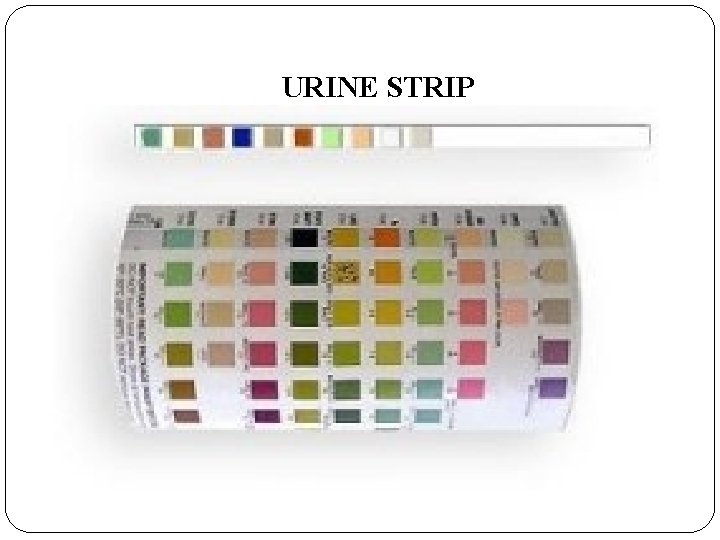
TEST STRIP URINALYSIS Test strip urinalysis exposes urine to strips that react if the urine contains certain cells or molecules. Test strip urinalysis is the most common technique used in routine urinalysis. A urine test strip can identify: � Leukocytes—their presence in urine is known as leukocyturia. � Nitrites—their presence in urine is known as nitrituria. � Proteins —their presence in urine is known as proteinuria, albuminuria, or microalbuminuria. � Blood—its presence in urine is known as hematuria. � p. H—the acidity of urine is easily quantified by test strips, which can identify cases of metabolic acidosis or alkalosis.
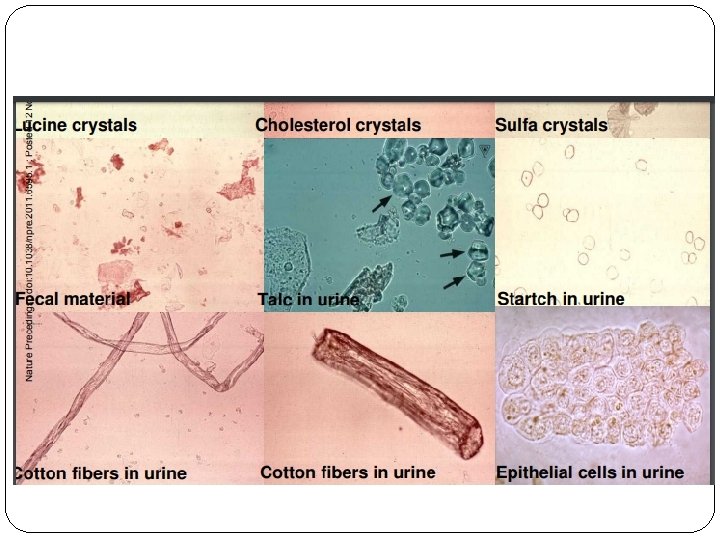
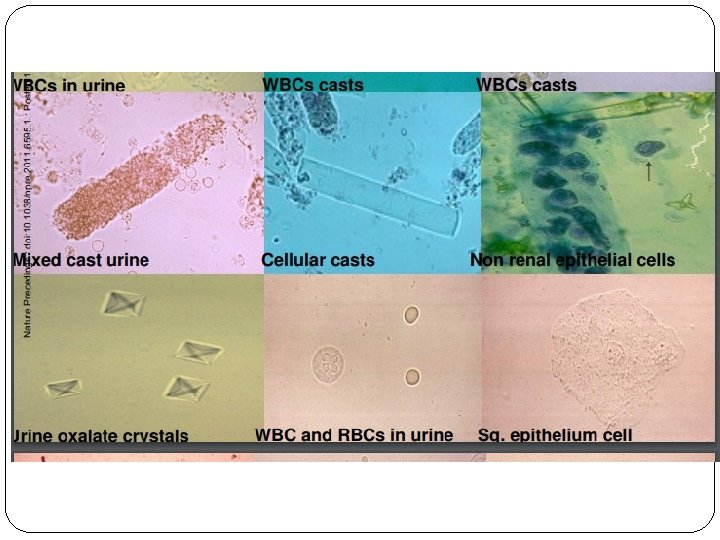
URINE MICROSCOPY The numbers and types of cells and/or material, such as urinary casts, can yield a great detail of information and may suggest a specific diagnosis. A urinary cast is any tiny structure found in urine that consists of multiple molecules or cells bound together. �Casts form within the nephron when abnormal cells and molecules are filtered from blood, and are excreted as the bound structures in urine. Microscopy can identify casts in urine and use them to diagnose kidney diseases, by characterizing symptoms such as: �Red blood cell casts are associated with glomerulonephritis, vasculitis, or malignant hypertension.
� White blood cell casts are associated with acute intestitinal nephritis, exudative glomerulonephritis, or severe pyelonephritis. � Epithelial cell casts are associated with toxin-induced, acute tubular necrosis, hepatitis, and cytomegalovirus. � (Heme) granular casts are associated with acute tubular necrosis, and are often composed of proteins, especially antibodies. � Hyaline casts are associated with dehydration; it is the most common type of cast. � Bacterial casts are associated with urinary tract infection; the cast may be cultured in order to identify the causative organism of the cast.
OTHER TESTS § Pregnancy tests – EIA (enzyme immunoassay test) used to detect human chorionic gonadotrophin (h. CG), secreted by the placenta. § STIs - chlamydia
URINE STRIP
SOME CHEMICALS THAT CAN BE FOUND IN URINE (NOT NORMAL COMPONENTS § § § § § Ketones. p. H – acid/alkaline balance. Blood Bilirubin (urobilinogen) Glucose Protein Nitrates Leukocytes drugs Phenylketones – indicates PKU – a rare genetic disorder of one of the liver enzymes. If left, can cause a build up of the chemical in the blood and brain which can cause mental development issues and epilepsy – screened for in babies 1 st week of life with heel prick test.