
Urinary System Year 8 Science Chapter 3 5
- Slides: 21
Urinary System Year 8 Science – Chapter 3. 5
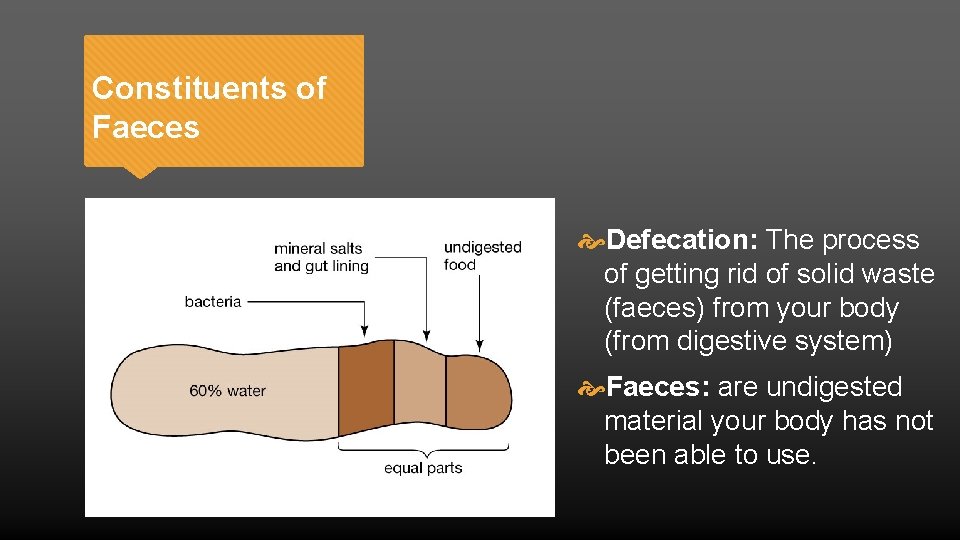
Constituents of Faeces Defecation: The process of getting rid of solid waste (faeces) from your body (from digestive system) Faeces: are undigested material your body has not been able to use.
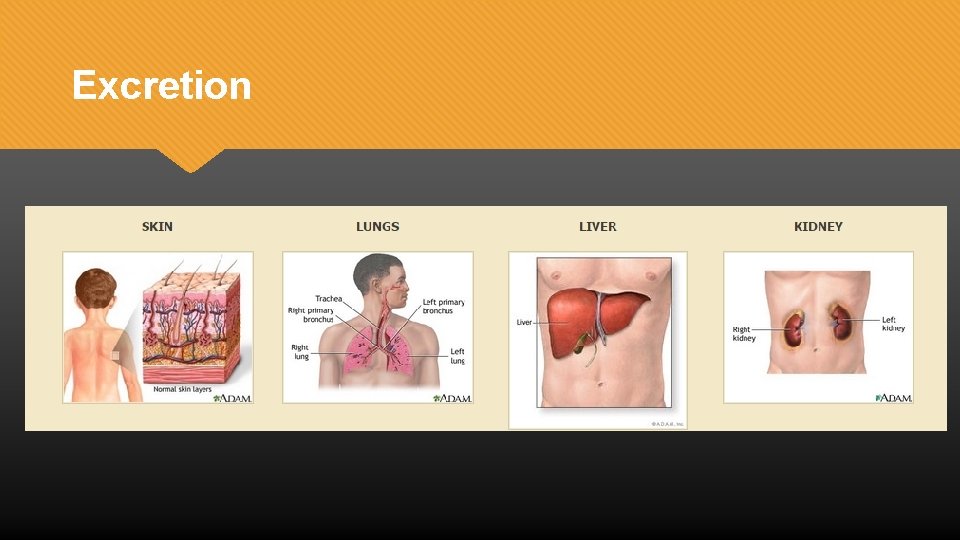
Excretion Getting rid of the wastes your body has produced is called excretion. It is the function of the excretory system. Excretory organs include - lungs - skin - liver - kidneys
Excretion
What sort of waste are there? 1. The salt you eat helps to move substances in and out of cells, and keep these chemicals even. If there is too much salt in your body, it becomes unbalanced so salt is removed in the Kidneys 2. Cells undergo respiration and release carbon dioxide into the blood stream. The carbon dioxide is removed from the body via the Lungs 3. Proteins are broken into amino acids which can’t be stored in the body. Fats and carbohydrates are also broken down in the Liver (creating a by product called ammonia).
What sort of waste are there? 4. Ammonia is converted into urea in your liver than released into your blood and removed via your the Kidneys. 5. Undigested food that can not be absorbed in the bloodstream is made into faeces which is passed through your digestive tract (faeces contains bacteria and red blood cells that the liver breaks down).
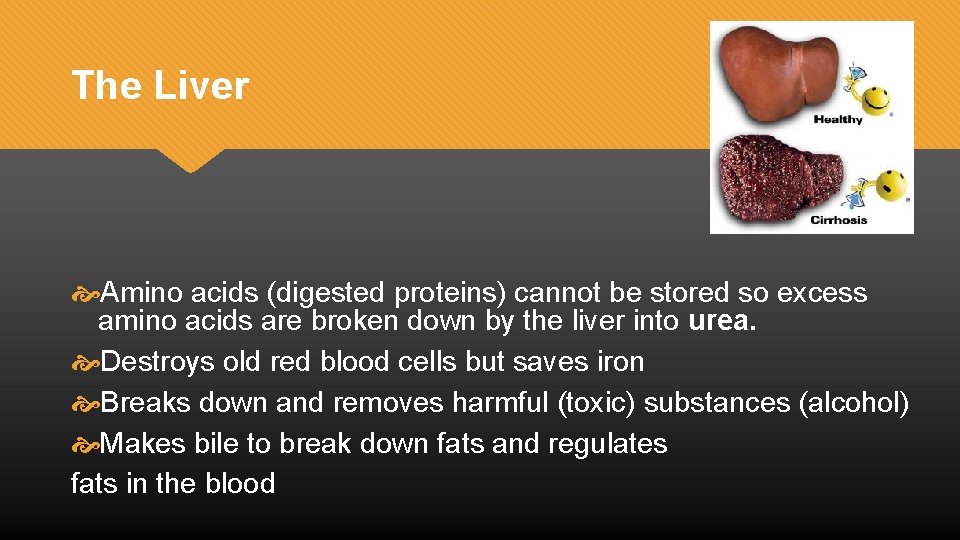
The Liver Amino acids (digested proteins) cannot be stored so excess amino acids are broken down by the liver into urea. Destroys old red blood cells but saves iron Breaks down and removes harmful (toxic) substances (alcohol) Makes bile to break down fats and regulates fats in the blood
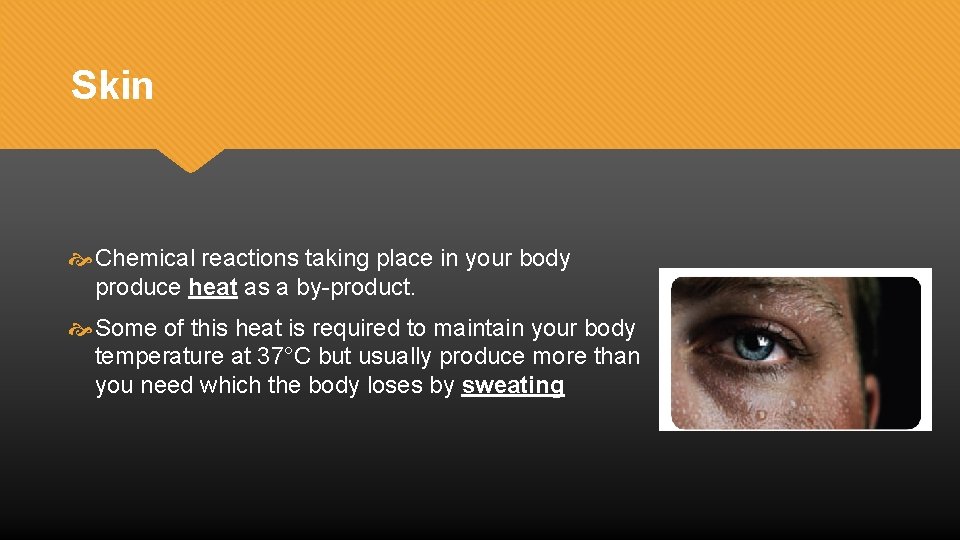
Skin Chemical reactions taking place in your body produce heat as a by-product. Some of this heat is required to maintain your body temperature at 37°C but usually produce more than you need which the body loses by sweating
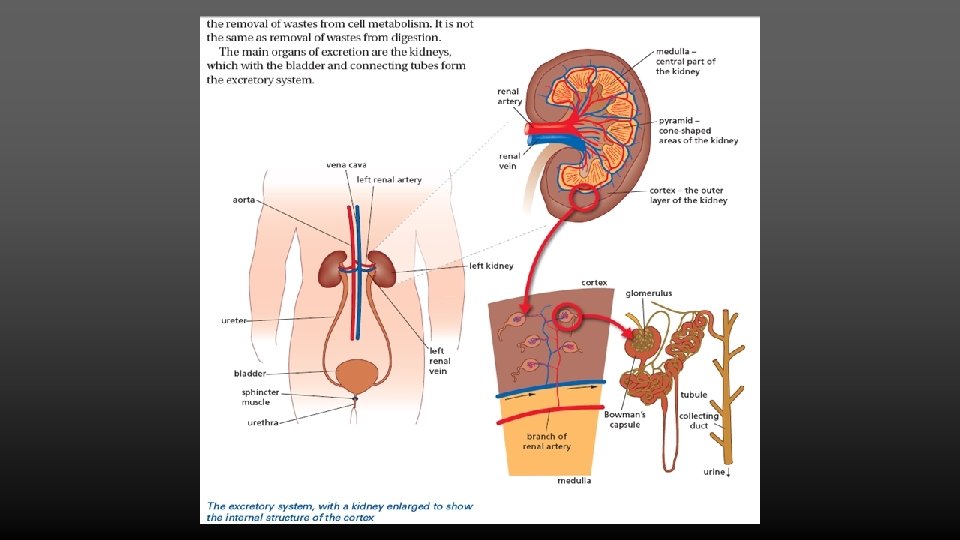
Kidney The main organs of excretion are the kidneys The kidneys: • filter your blood • excrete urea. (remove urea from the blood) • control the level of water in the body. • control salt levels in the blood.
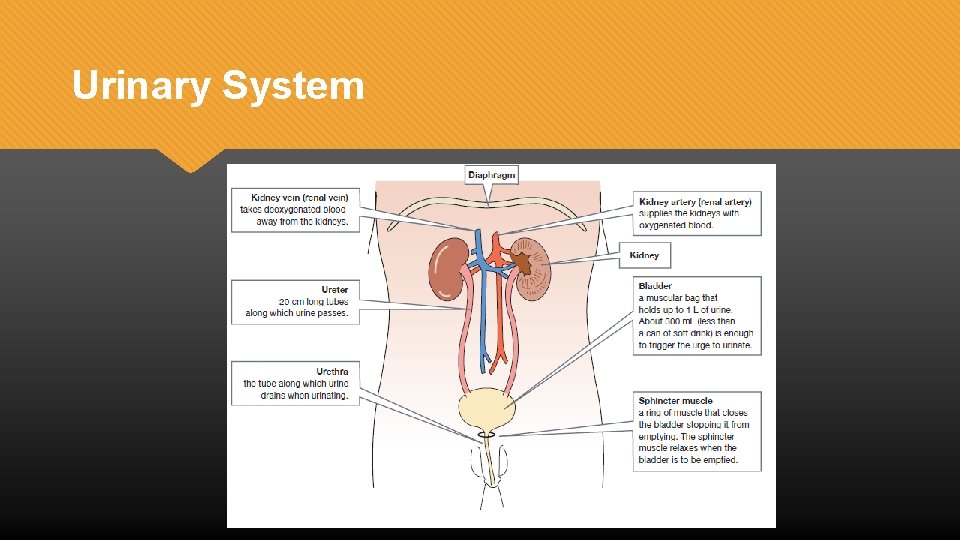
Urinary System
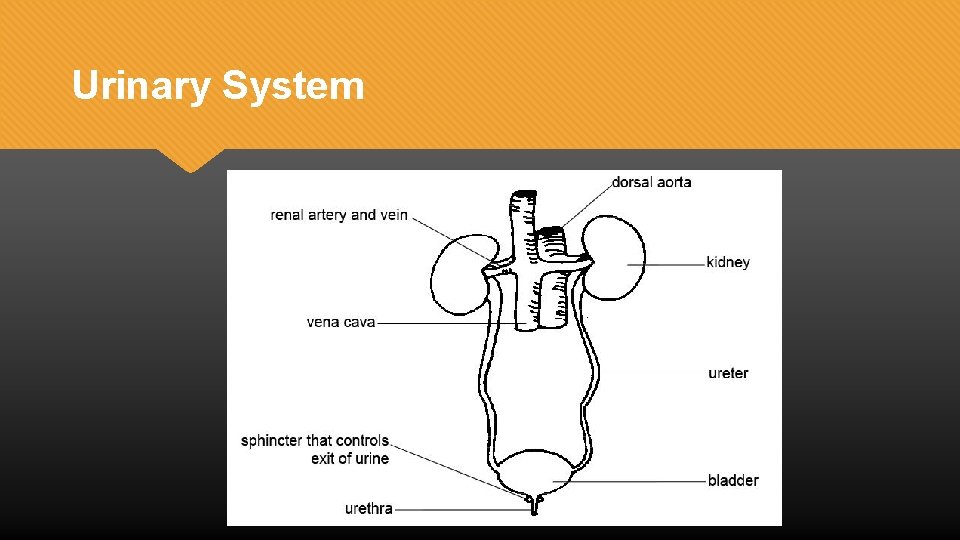
Urinary System
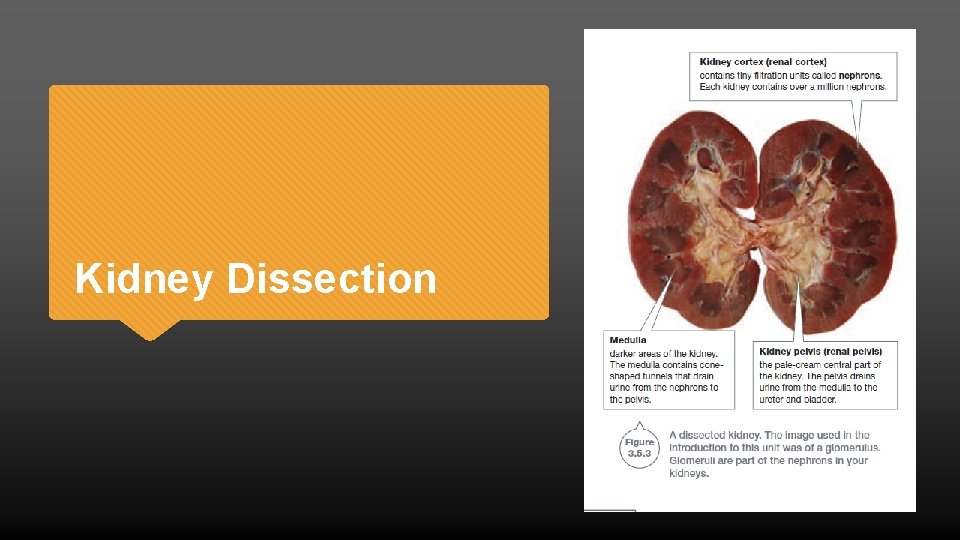
Kidney Dissection
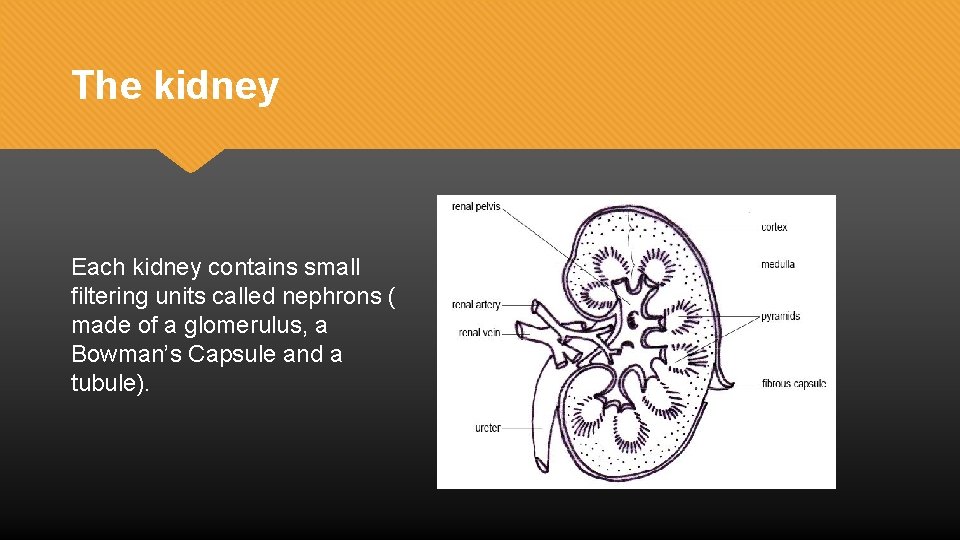
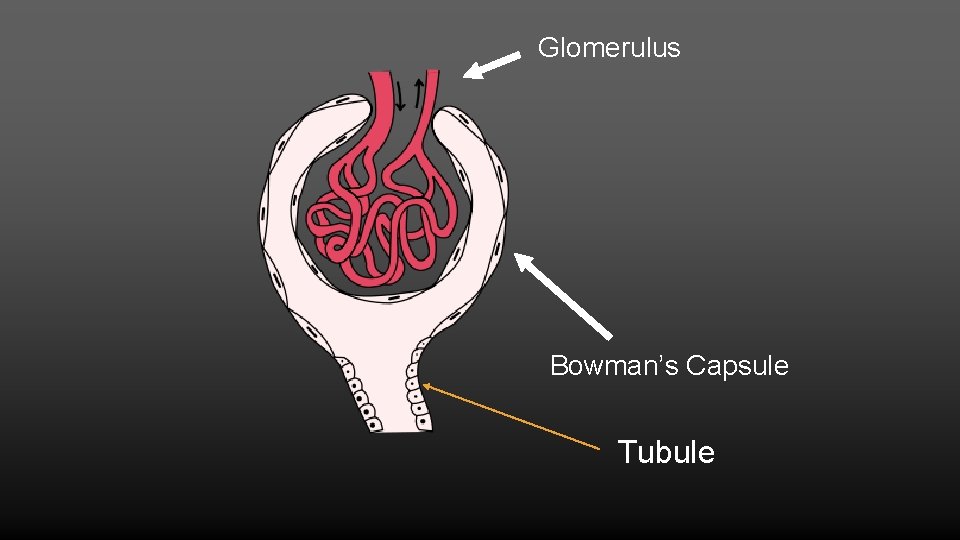
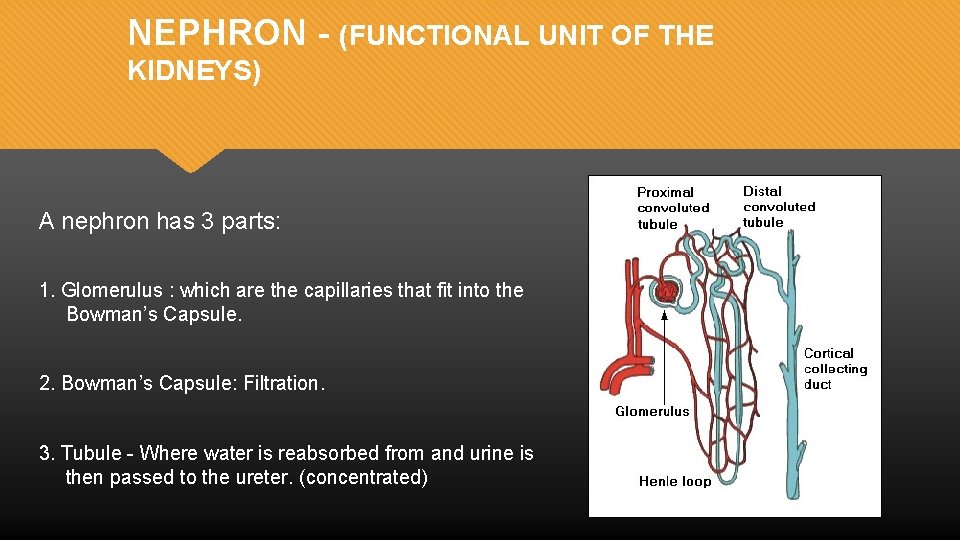
The kidney Each kidney contains small filtering units called nephrons ( made of a glomerulus, a Bowman’s Capsule and a tubule).
Glomerulus Bowman’s Capsule Tubule
Composition of Urine (Waste) Urine is made up of 95% water and 5% urea Urine contains water, glucose, sodium and potassium salts, calcium salts and urea. Presence of amino acids in urine is abnormal and may result from damaged nephrons. High levels of sugar may be due to the person having diabetes or pre diabetic condition.
Kidney disease More than 500 000 Australians a year consult their doctors about kidney disease and urinary tract infections. Eg. High blood pressure, kidney stones and infections
NEPHRON - (FUNCTIONAL UNIT OF THE KIDNEYS) A nephron has 3 parts: 1. Glomerulus : which are the capillaries that fit into the Bowman’s Capsule. 2. Bowman’s Capsule: Filtration. 3. Tubule - Where water is reabsorbed from and urine is then passed to the ureter. (concentrated)
High blood pressure Blood entering the kidneys is under pressure which helps the filtering process carried out by the kidneys. However, abnormally high blood pressure can easily damage the capillaries where the blood is filtered. This affects the functioning of the kidneys.
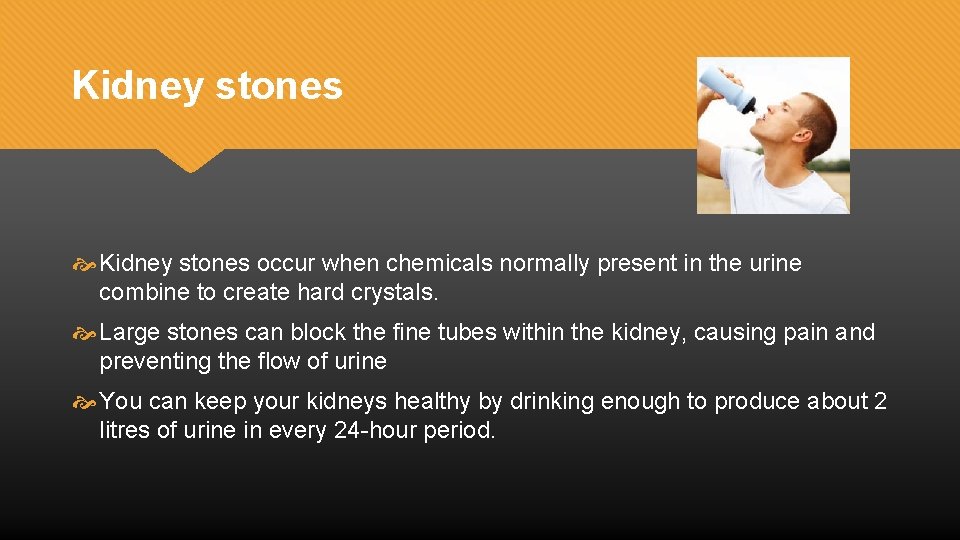
Kidney stones occur when chemicals normally present in the urine combine to create hard crystals. Large stones can block the fine tubes within the kidney, causing pain and preventing the flow of urine You can keep your kidneys healthy by drinking enough to produce about 2 litres of urine in every 24 -hour period.
Urinary Infections Most are caused by bacteria. Urine is normally sterile, so the bacteria have to come from another source. They usually enter through the urethra.